
Forklift Safety Topics: AI News, Training Trends, and Operator Best Practices for 2026 September
❓ Forklift safety AI news, training trends, and operator best practices. Learn about forklift rental, certification, electric forklifts, and OSHA
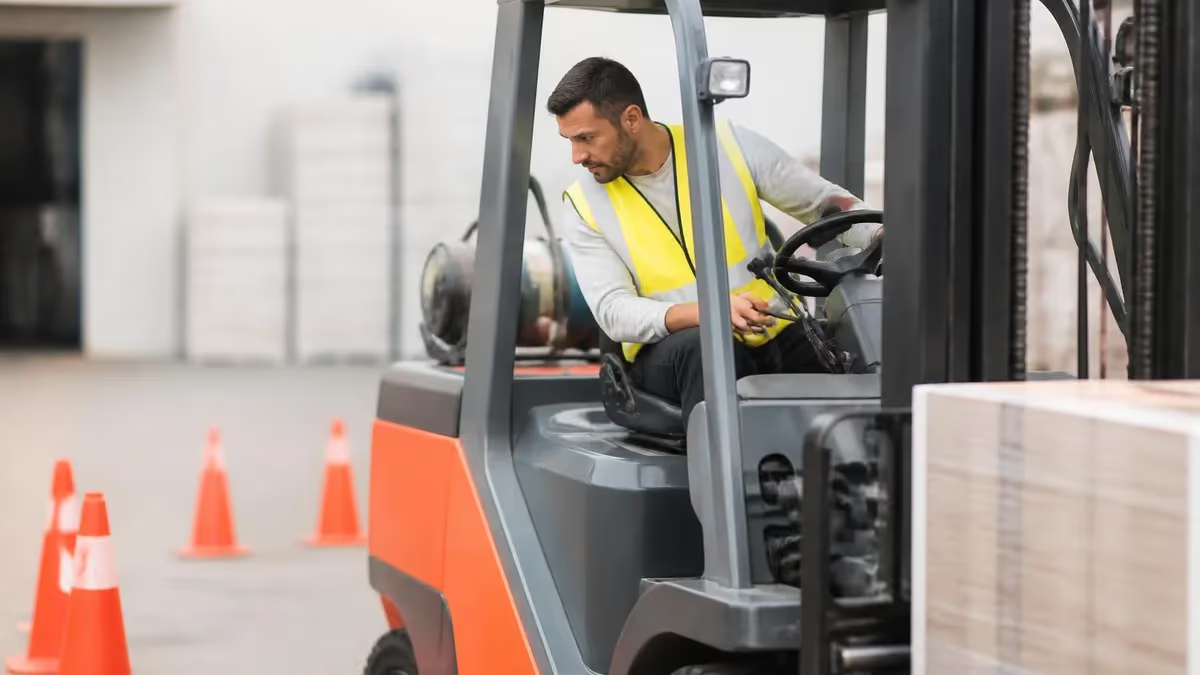
Forklift safety AI news is reshaping how warehouses, distribution centers, and construction sites protect their workers in 2026, and the pace of change has never been faster. Artificial intelligence now powers proximity sensors, pedestrian-detection cameras, speed-governing telematics, and predictive maintenance dashboards that flag a failing hydraulic line before it ever causes an incident. For the roughly 1.5 million forklift operators working across the United States, these tools mean fewer struck-by accidents and smarter daily routines. Understanding the technology, the regulations behind it, and the human habits that still matter most has become essential knowledge.
The conversation around forklift safety extends well beyond shiny new gadgets. Every conversation about safety eventually returns to fundamentals: properly maintained equipment, trained people, and a workplace culture that rewards caution. Whether your operation owns a fleet outright, leans on a forklift rental contract for seasonal surges, or mixes both strategies, the safety obligations under OSHA standard 1910.178 apply identically. AI can surface data, but it cannot replace a certified operator who performs a thorough pre-shift inspection and knows exactly how their machine behaves under load.
This guide walks through the most important forklift safety topics circulating in industry news today, blending emerging technology with timeless operating principles. We will look at how electric forklift adoption changes the safety picture, why certification of forklift operators remains the single highest-impact intervention, and what the latest accident statistics reveal about where injuries actually happen. You will also find practical checklists, comparison tables, and frequently asked questions designed to help both new and veteran operators stay sharp on the floor.
One reason safety topics dominate trade publications is the sheer cost of getting it wrong. The average forklift-related incident that results in a lost-time injury costs employers tens of thousands of dollars in workers' compensation, equipment repair, OSHA penalties, and lost productivity. A single overturned counterbalance truck can damage racking, inventory, and the building itself. AI-driven monitoring promises to reduce these events, but adoption is uneven, and many smaller operations still rely entirely on operator vigilance and supervisor oversight to keep everyone safe.
It also helps to understand the broader equipment landscape. Modern facilities run a mix of sit-down counterbalance trucks, narrow-aisle reach trucks, order pickers, pallet jacks, and the increasingly popular stand up forklift used in tight cold-storage and retail backroom environments. Each class carries unique tip-over risks, visibility challenges, and load-handling quirks. Safety news that lumps all forklifts together misses these nuances, so this article breaks topics down by equipment type wherever the distinction changes how an operator should behave.
Finally, safety is a moving target because the workforce itself is changing. Labor shortages have pushed many warehouses to hire and train operators faster than ever, sometimes compressing onboarding into a few days. New tools, automation, and AI dashboards add complexity that a rushed operator may not fully grasp. The goal of this resource is to give you a clear, current, and genuinely useful overview of forklift safety so that technology and training reinforce each other rather than working at cross purposes.
Forklift Safety by the Numbers

AI Safety Technology Trends Reshaping Forklift Operations
Camera and radar systems use machine learning to identify people in a forklift's path, triggering audible alarms or automatic speed reduction before a struck-by collision can occur in busy aisles.
Telematics sensors stream data on hydraulic pressure, battery health, and motor temperature. AI models flag components likely to fail soon, scheduling repairs before a breakdown becomes a safety hazard on the floor.
Geofencing combined with AI automatically slows or limits forklifts in designated pedestrian zones, blind corners, and ramps, removing reliance on operators remembering every restricted area during a shift.
Onboard systems log harsh braking, impacts, and seatbelt use, then generate coaching reports. Supervisors use this data to retrain operators and reward safe driving across the entire fleet.
Real-time load-center monitoring warns operators when a lift approaches its tip-over threshold, a leading cause of fatal accidents involving counterbalance and reach trucks across U.S. warehouses.
While AI technology grabs headlines, the foundation of forklift safety remains operator competency, and that begins with proper certification of forklift drivers. OSHA requires every operator to complete formal instruction, hands-on evaluation, and workplace-specific training before driving any powered industrial truck. No app or sensor changes this legal requirement. A certified forklift operator who understands load dynamics, stability triangles, and pedestrian rules prevents far more incidents than any single piece of detection hardware, because they make good decisions hundreds of times during every shift on the floor.
Forklift training in 2026 increasingly blends classroom theory with simulator practice and supervised real-world driving. The classroom portion covers OSHA regulations, the physics of the stability triangle, load capacity charts, refueling and recharging procedures, and the specific hazards of each truck class. Operators learn why a raised load shifts the center of gravity, how grade and speed interact during turns, and what to do when visibility is blocked. This theoretical grounding helps operators interpret the warnings that AI systems now generate rather than ignoring or misunderstanding them.
The hands-on evaluation is where certification becomes real. An employer or designated trainer watches the candidate maneuver through aisles, stack and retrieve pallets, navigate ramps, and respond to pedestrians. The evaluator confirms the operator can perform a complete pre-shift inspection, mount and dismount safely, and handle the specific equipment they will use on the job. Because certification is equipment-specific, an operator certified on a sit-down counterbalance truck must receive additional training before operating a stand up forklift or a narrow-aisle reach truck.
Recertification is required at least every three years, and sooner if an operator is involved in an accident, observed operating unsafely, assigned to a different truck type, or moved to a workplace with new conditions. Many employers now tie recertification to telematics data, retraining operators whose onboard systems flag repeated harsh braking or impacts. This data-driven approach represents one of the clearest examples of AI and human training reinforcing each other rather than competing for attention or budget.
Cost and access vary widely. In-house programs at large distribution centers may certify new hires in two to three days at minimal direct cost, while third-party training schools charge anywhere from $150 to $400 per operator. Online theory courses paired with employer-conducted practical evaluations have become popular for their flexibility, though OSHA is clear that online learning alone never satisfies the hands-on requirement. Whatever the format, documentation matters: employers must keep records of each operator's training, evaluation date, and the trainer's name.
For workers, certification opens doors. A documented forklift operator credential is one of the most portable, in-demand skills in warehousing, manufacturing, retail distribution, and construction. Pay scales reward certified, experienced operators, and many facilities now offer premiums for those qualified on multiple equipment classes. As automation and AI reshape the warehouse, the operators who thrive will be those who pair strong fundamental skills with comfort using the new digital tools layered on top of their machines every single day.
Forklift certification Practice Test Questions
Prepare for the Forklift certification Certification exam with our free practice test modules. Each quiz covers key topics to help you pass on your first try.
Forklift certification Certification Forkl...
Forklift certification Exam Questions covering Certification Forklift certification Maintenance and Repairs. Master Forklift certification Test concepts for certification prep.
Forklift certification Certification Forkl...
Free Forklift certification Practice Test featuring Certification Forklift certification Maintenance and Repairs Questions and Answers. Improve your Forklift certification Exam score with mock test prep.
Forklift certification Certification Forkl...
Forklift certification Mock Exam on Certification Forklift certification Operator Training and Certification Requirements. Forklift certification Study Guide questions to pass on your first try.
Forklift certification Certification Forkl...
Forklift certification Test Prep for Certification Forklift certification Operator Training and Certification Requirements Questions and Answers. Practice Forklift certification Quiz questions and boost your score.
Forklift certification Load Handling and S...
Forklift certification Questions and Answers on Load Handling and Stability. Free Forklift certification practice for exam readiness.
Forklift certification OSHA Regulations an...
Forklift certification Mock Test covering OSHA Regulations and Compliance. Online Forklift certification Test practice with instant feedback.
Forklift certification Pre-Operation Inspe...
Free Forklift certification Quiz on Pre-Operation Inspections. Forklift certification Exam prep questions with detailed explanations.
Forklift certification Refueling and Recha...
Forklift certification Practice Questions for Refueling and Recharging Procedures. Build confidence for your Forklift certification certification exam.
Forklift certification Safe Driving and Ma...
Forklift certification Test Online for Safe Driving and Maneuvering. Free practice with instant results and feedback.
Forklift certification Workplace Hazard Id...
Forklift certification Study Material on Workplace Hazard Identification. Prepare effectively with real exam-style questions.
Forklift certification Forklift Instructions
Free Forklift certification Test covering Forklift Instructions. Practice and track your Forklift certification exam readiness.
Forklift certification Forklift MCQ
Forklift certification Exam Questions covering Forklift MCQ. Master Forklift certification Test concepts for certification prep.
Forklift certification Forklift Employer R...
Free Forklift certification Practice Test featuring Forklift Employer Responsibilities. Improve your Forklift certification Exam score with mock test prep.
Forklift certification Forklift Penalties ...
Forklift certification Mock Exam on Forklift Penalties for Non-Compliance. Forklift certification Study Guide questions to pass on your first try.
Electric Forklift Safety Considerations
An electric forklift runs on a heavy lead-acid or lithium-ion battery, and charging introduces unique hazards. Lead-acid batteries release hydrogen gas during charging, so charging stations require ventilation and no-smoking zones to prevent explosions. Operators should wear face shields and acid-resistant gloves when checking electrolyte levels or handling cells.
Lithium-ion units charge faster and need less maintenance, but thermal runaway remains a rare fire risk. Modern battery management systems monitor temperature and cell voltage continuously, and AI dashboards now alert managers to abnormal heat patterns before a fire can develop in the charging area.

Forklift Rental vs. Buying: Safety and Cost Trade-Offs
- +Forklift rental provides access to newer models with the latest AI safety features
- +Rental fleets are maintained by the provider, reducing breakdown risk
- +No large upfront capital outlay, freeing budget for training
- +Easy to match equipment type to seasonal demand spikes
- +Searching forklift rental near me delivers fast local availability
- +Try before you buy to evaluate a specific model's safety performance
- −Long-term rental costs can exceed the price of purchasing outright
- −Operators must retrain on unfamiliar controls with each new unit
- −Less control over maintenance schedules and inspection records
- −Availability of a specific stand up forklift may be limited locally
- −Damage and wear charges can add unexpected cost at return
- −Mixed fleets complicate equipment-specific certification tracking
Daily Forklift Inspection Checklist for Operators
- ✓Check tire condition, pressure, and look for cuts, embedded debris, or excessive wear
- ✓Inspect forks for cracks, bending, or worn heels that reduce load capacity
- ✓Test the horn, lights, backup alarm, and any AI proximity sensors
- ✓Verify the seatbelt latches and retracts properly before driving
- ✓Examine hydraulic lines and cylinders for leaks or visible damage
- ✓Confirm brakes, including the parking brake, hold firmly on a grade
- ✓Check fluid levels or battery charge and inspect connectors for corrosion
- ✓Test steering for smooth response and listen for unusual noises
- ✓Confirm the load capacity data plate is legible and matches the truck
- ✓Review the mast operation, raising and lowering forks through full travel
- ✓Inspect overhead guard and load backrest for damage or cracks
- ✓Report any defect immediately and tag the forklift out of service if unsafe
Never skip the pre-shift inspection
OSHA requires that forklifts be examined before each shift and removed from service if any condition makes them unsafe. A five-minute inspection catches the leaking hydraulic line, the worn tire, and the failing brake before they cause an incident. No AI system replaces an operator's hands-on check — the technology supplements it, but the daily walkaround remains the cheapest, most effective safety intervention available.
Understanding where forklift accidents actually happen helps operators and managers focus their attention. OSHA data attributes roughly 70 to 100 worker deaths each year to forklift incidents, with tens of thousands more suffering serious injuries. The leading fatal event is the tip-over, which accounts for around one quarter of forklift deaths. Tip-overs happen when operators turn too fast, travel with a raised load, drive on uneven ground, or exceed the rated capacity. Many fatalities occur when an operator jumps from a tipping machine and is crushed beneath the overhead guard.
Struck-by and crushing incidents are the next major category. Pedestrians in shared aisles, workers between a forklift and a fixed object, and people standing beneath raised loads all face serious risk. This is precisely the hazard AI pedestrian-detection systems target, using cameras and radar to spot a person and slow the truck automatically. Even so, the data shows that clear traffic separation, marked walkways, and enforced right-of-way rules prevent more struck-by injuries than technology alone, because they remove the conflict before it can occur.
Falls from forklifts represent another preventable category. Workers sometimes ride on the forks or stand on a raised pallet to reach high shelves, a practice that violates OSHA rules and causes severe falls. Approved work platforms with guardrails exist for elevating personnel, and operators must never improvise. Order pickers, a specialized class of forklift designed for an operator to ride up with the load, require a full-body harness and tether, and operators need specific training distinct from standard counterbalance certification.
Loading dock incidents deserve special attention because they combine several hazards at once. Trailers can shift or roll away if not properly chocked and restrained, sending a forklift plunging into the gap. Dock plates must be rated for the combined weight of truck and load. Edge awareness is critical, as a forklift backing off a dock edge is almost always catastrophic. Many facilities now use sensor-equipped dock locks and visual signals to confirm a trailer is secure before any forklift enters.
Pedestrian and operator visibility problems cause a large share of near-misses that, with slightly different timing, would become injuries. Tall loads block the operator's forward view, requiring travel in reverse or the use of a spotter. Intersections, doorways, and blind corners concentrate risk. Convex mirrors, motion-activated lights, and AI corner-detection systems all help, but the underlying discipline of slowing down and sounding the horn at every blind spot remains the operator's responsibility on every single pass.
Finally, maintenance-related failures cause a meaningful number of incidents that proper upkeep would prevent. Brake failures, steering problems, hydraulic leaks that drop a raised load, and worn tires that reduce stability all trace back to skipped inspections or deferred repairs. Predictive maintenance powered by telematics is changing this picture, flagging components before they fail. But the technology only helps if managers act on the alerts and operators report defects honestly rather than working around a known problem to keep production moving.

Never jump from a tipping forklift. If your machine begins to tip, stay seated, grip the wheel, brace your feet, and lean away from the direction of the fall. The overhead guard and seatbelt are engineered to protect you inside the operator compartment. Operators who jump are frequently crushed beneath the falling guard — staying put saves lives.
Building a genuine safety culture is what separates facilities with occasional close calls from those with frequent injuries, and it matters far more than which forklifts you own or rent. Culture starts at the top: when managers visibly prioritize safety over raw throughput, operators feel permitted to slow down, report hazards, and refuse to operate damaged equipment. When the unspoken message is that production comes first, even well-trained operators cut corners. AI dashboards can measure behavior, but leadership decides whether that data leads to coaching or to punishment that drives reporting underground.
Clear traffic management is one of the highest-impact cultural investments. Painted walkways, physical barriers separating forklifts from foot traffic, designated crossing points, and enforced speed limits dramatically reduce struck-by incidents. Pedestrians should make eye contact with operators before crossing, and operators should always yield. Many facilities designate specific forklift-only zones during peak picking hours. These low-tech controls cost little and consistently outperform expensive detection hardware that merely reacts after a person has already entered the danger zone.
Communication systems keep everyone aligned across shifts. Daily toolbox talks, shift-handover briefings, and an easy way to report near-misses all feed a continuous improvement loop. A near-miss is a free lesson, and facilities that investigate them prevent the injury that the same conditions would eventually cause. When you research a forklift for sale or evaluate adding equipment, factor in how new machine types will affect traffic patterns, training needs, and the communication required to integrate them safely into existing workflows.
Maintenance discipline is a cultural marker as much as a technical one. Operations that honor every tag-out, act on predictive maintenance alerts, and never pressure operators to run defective equipment send a powerful message. Conversely, a culture that quietly rewards keeping a leaking forklift in service teaches operators that production trumps safety. The same logic applies to forklifts run hard in three-shift operations, where wear accumulates fast and small problems escalate into dangerous failures without rigorous preventive schedules.
Accountability must be fair and consistent to be effective. Operators respond well to safety programs that recognize good driving, share telematics data transparently, and apply consequences evenly. They disengage when they feel the system exists only to assign blame. The best programs treat AI behavior analytics as a coaching tool, sitting down with an operator whose data shows repeated hard stops to understand the root cause, which is often a congested aisle or unrealistic quota rather than carelessness.
Continuous training keeps a culture alive over time. Annual refreshers, retraining after any incident, and prompt instruction whenever new equipment or AI systems arrive all reinforce that safety is never finished. As warehouses adopt more automation, operators increasingly share the floor with autonomous mobile robots and automated guided vehicles, creating new interaction hazards that no one was trained on a decade ago. A learning culture adapts, updating its rules and retraining its people as the technology and the risks evolve together.
Putting safety knowledge into daily practice is where operators turn theory into protection for themselves and their coworkers. Start every shift with a deliberate, unhurried pre-operation inspection, treating it as a professional ritual rather than a box to check. Walk the entire machine, test every safety system, and confirm the load capacity plate matches the truck you are driving. If anything feels off — a soft brake pedal, an unusual noise, a slow hydraulic response — tag the forklift out of service and report it. Production pressure never justifies operating equipment you do not trust completely.
Master your load before you move it. Always check the weight against the capacity chart, accounting for load center and lift height, since rated capacity drops as the load moves forward or rises higher. Tilt the mast back, keep the load low while traveling, and approach pallets squarely so the forks seat fully under the load. When carrying a load that blocks your forward view, travel in reverse or use a spotter, and never attempt to balance an unstable or improperly stacked load just to save a second trip.
Respect speed and space at all times. Most facilities cap forklift speed well below what the machine can reach, and for good reason: stopping distance and tip-over risk both climb sharply with speed. Slow to a crawl at intersections, doorways, ramps, and blind corners, and sound the horn to announce your presence. Maintain at least three truck-lengths of following distance behind other forklifts, and never pass another truck in an intersection or on a ramp where visibility and traction are compromised.
Treat pedestrians as the most vulnerable people on the floor. Make eye contact before proceeding through any shared space, yield the right of way, and assume that a person on foot may not hear a quiet electric forklift approaching. Keep arms, legs, and your head inside the operator compartment at all times, and never allow anyone to ride on the forks, stand under a raised load, or walk beneath elevated forks. These rules feel obvious until a busy shift tempts someone to bend them.
Learn to use the AI tools on your machine rather than tuning them out. When a proximity alarm sounds, slow down and look — do not assume it is a false alarm. Review your telematics coaching reports honestly and use them to improve. If your facility runs predictive maintenance software, report symptoms promptly so the data has context. The operators who get the most from this technology are those who treat it as a knowledgeable copilot rather than a nagging supervisor watching their every move.
Finally, end each shift responsibly. Park the forklift in its designated area, fully lower the forks to the floor, set the parking brake, neutralize the controls, and remove the key or log off. For electric forklifts, connect the charger properly and confirm the charging area is ventilated and clear of ignition sources. Report any issues that developed during your shift so the next operator inherits a safe machine. These closing habits protect the people who follow you and keep the whole operation running smoothly day after day.
Forklift Questions and Answers
Forklift Tires: Complete Guide to Types, Sizing, Wear Patterns, and Replacement Costs
Forklift Operator Duties: Complete Guide to Daily Responsibilities, Safety Tasks, and Career Path for 2026
Forklift Dealers: Complete Guide to Buying, Renting, and Servicing Material Handling Equipment
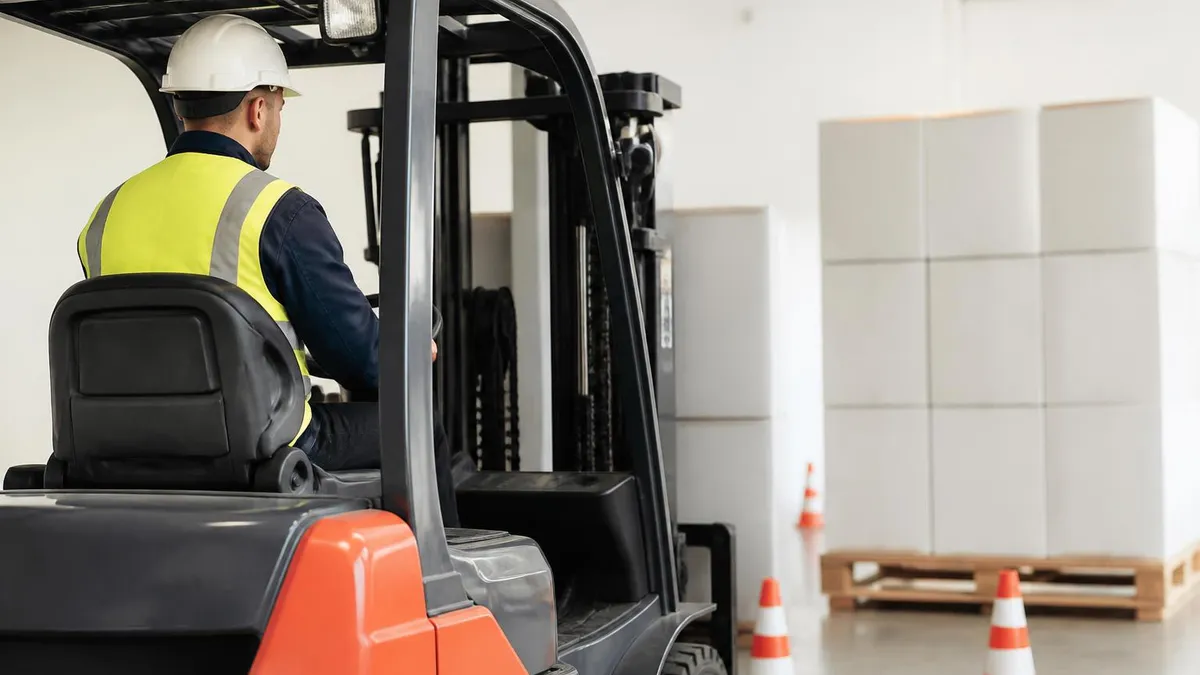
Forklift License Renewal: Complete Guide to Forklift License Expiry, OSHA Recertification, and Operator Requirements for 2026
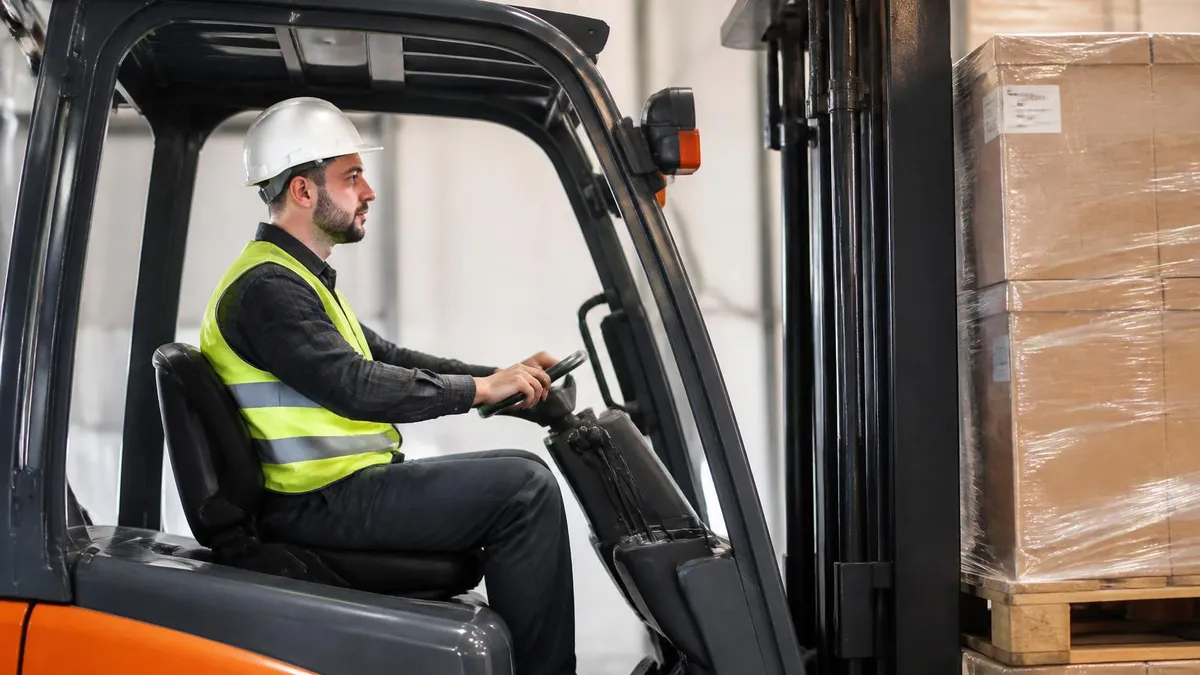
Sit Down Forklift Jobs: Complete Guide to Careers, Pay, Training, and Hiring in 2026
About the Author

Certified Crane Operator & Skilled Trades Exam Specialist
Ferris State UniversityRobert Martinez is a Journeyman Ironworker, NCCCO-certified crane operator, and forklift trainer with a Bachelor of Science in Construction Technology from Ferris State University. He has 21 years of ironworking, rigging, and heavy equipment operation experience across high-rise and industrial construction sites. Robert prepares candidates for crane operator, rigger, forklift, and skilled trades certification examinations.