
Quality Forklift Shakopee MN: Complete Guide to Dealers, Rentals, Services, and Buying Forklifts in Minnesota for 2026 September
💯 Quality forklift Shakopee MN guide: compare dealers, rental rates, electric forklift options, parts, repair services, and operator certification
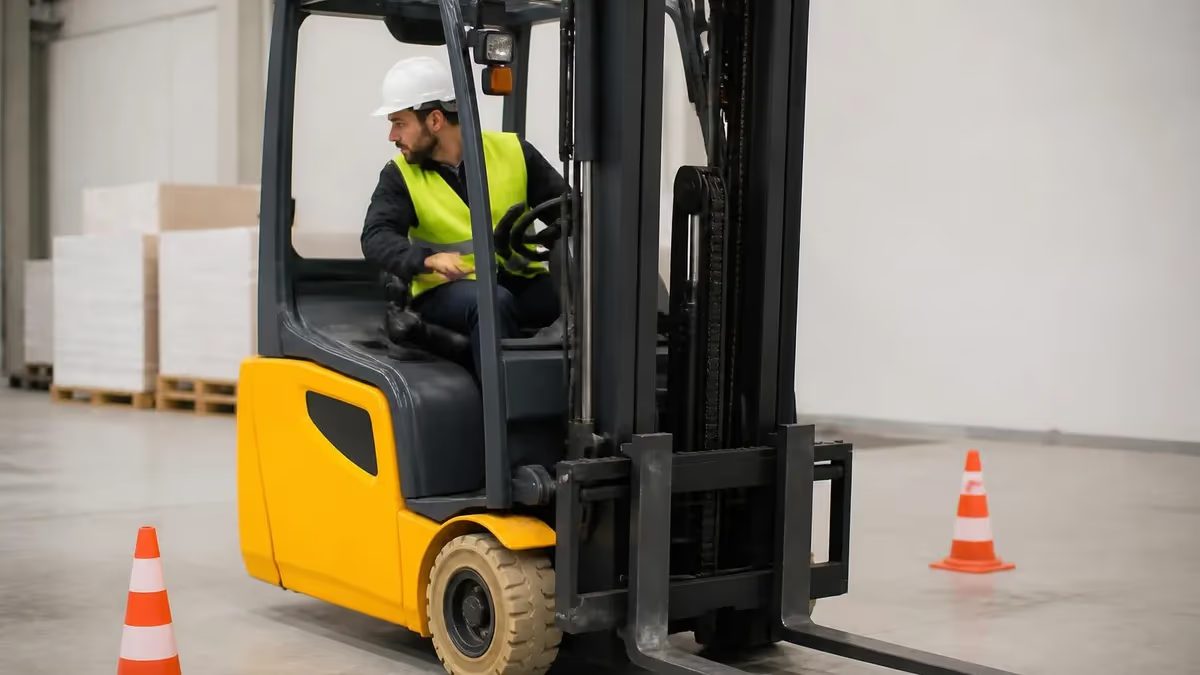
Finding a quality forklift Shakopee MN suppliers can deliver on time, at fair pricing, and with reliable after-sale support is one of the most consequential decisions a warehouse manager, contractor, or facilities director makes each year. Whether you operate a single distribution dock off Highway 169 or manage a fleet across the Twin Cities metro, the dealer you choose shapes uptime, operator safety, and your total cost of ownership for the next five to seven years. This guide walks through every angle of the buying, renting, and servicing decision.
The Shakopee corridor has emerged as one of Minnesota's busiest logistics hubs, anchored by Amazon, Shutterfly, Rahr Malting, and dozens of mid-sized 3PLs that line Valley Industrial Boulevard. That density attracts national brands like Toyota Material Handling, Crown, Hyster-Yale, and Raymond, alongside local independents that specialize in rebuilt units and rapid-response service calls. Understanding who serves what niche prevents you from overpaying or under-specifying equipment for your application.
Forklift rental remains the fastest-growing segment in 2026, with daily rates in Scott County ranging from $185 for a 5,000-lb cushion-tire IC unit to $410 for a 12,000-lb pneumatic outdoor lift. Short-term rentals dominate seasonal spikes — landscaping season, holiday fulfillment, and tax-year inventory pushes — while long-term rentals with full maintenance contracts have become a popular hedge against capital expenditure and battery technology obsolescence.
On the sales side, expect new Class I electric counterbalance models from $32,000 to $58,000 depending on capacity and battery chemistry. Lithium-ion adoption in the Shakopee market has jumped from roughly 18% of new electric sales in 2022 to over 47% in 2026, driven by faster opportunity charging and lower lifecycle costs. Used inventory, particularly off-lease three-year-old returns, offers strong value at 40-55% of new pricing with documented service history.
Service quality separates a dealer from a vendor. The best Shakopee operations maintain four-hour response windows on emergency calls, stock OEM parts for the top five brands in their territory, and offer planned-maintenance agreements that bundle quarterly inspections, hydraulic fluid analysis, and a lull forklift tire rotation schedule into a predictable monthly cost. Asking for documented response-time data is the single best way to vet a prospective partner.
Operator training is the third leg of the stool. OSHA 29 CFR 1910.178(l) requires every powered industrial truck operator to be certified before solo operation, with refresher training every three years or after any incident. Several Shakopee dealers bundle on-site certification with new equipment delivery, and independent training providers travel to facilities for groups of five or more. We cover certification pathways, common pitfalls, and verification documentation in detail below.
By the end of this guide you'll know how to compare rental quotes apples-to-apples, what to inspect on a used Toyota 8FGCU25 before signing, how to negotiate a service contract that actually pays for itself, and where to send your team for OSHA-compliant training that survives an audit. Every recommendation is grounded in real Minnesota market conditions as of May 2026.
Shakopee Forklift Market by the Numbers

Top Dealer Categories Serving Shakopee MN
Authorized Toyota, Crown, Hyster, Yale, and Raymond branches operating out of Burnsville, Eagan, and Brooklyn Park. Stock new inventory, certified used, and offer factory-backed warranties plus dedicated service vans covering Scott County daily.
Family-owned operations representing two to four brands. Often more flexible on rebuilt units, creative financing, and short-term rental swaps. Strong relationships with regional fleet managers and faster decision-making on custom configurations.
Companies like United Rentals and Sunbelt that prioritize short-term and project rentals. Massive fleet variety, walk-in availability, but typically less depth on parts, service, and long-term fleet management compared to OEM dealers.
Specialists who buy off-lease returns, rebuild to like-new specifications, and resell at 40-55% of new pricing. Best value for budget-conscious buyers willing to forgo factory warranty in exchange for documented refurbishment.
Independent technicians who don't sell forklifts but service all brands. Lower hourly labor rates ($95-$125/hr vs $145-$175 at OEMs) and ideal for out-of-warranty fleets where flexibility beats brand loyalty.
Forklift rental pricing in the Shakopee market follows a predictable tiered structure, but knowing where the inflection points sit can save you thousands annually. Daily rates apply for one to six days, weekly rates kick in at seven days and typically equal four daily rates, and monthly rates equal roughly three weekly rates. For projects longer than 90 days, ask about long-term rental purchase options that apply a portion of payments toward eventual ownership — a structure that has become standard since 2024.
The most popular rental class in Scott County is the 5,000-pound cushion-tire internal combustion forklift, used for indoor warehouse work on smooth concrete. Expect $185-$225 daily, $625-$795 weekly, and $1,850-$2,400 monthly from established dealers. Pneumatic-tire IC units for outdoor or mixed-use applications run roughly 20-30% higher because of higher acquisition cost and faster tire wear in Minnesota winter conditions.
Electric forklift rentals have closed the price gap dramatically. A 5,000-pound Class I electric counterbalance now rents for $215-$265 daily versus $185-$225 for its IC equivalent — a 12-15% premium that often pays back in fuel savings within two weeks of continuous operation. Lithium-ion units command another $40-$60 per day but eliminate battery swap labor and charging downtime entirely, making them ideal for two- and three-shift operations.
Delivery and pickup fees are where rental quotes diverge most. Standard delivery within 25 miles of a Shakopee dealer ranges $95-$175 each way, but several operators waive delivery on rentals over 30 days. Always ask whether the quoted rate includes fuel, propane tank, battery and charger, fork extensions, and a basic safety package — assuming inclusion has burned plenty of first-time renters with surprise line items.
Damage waivers and insurance riders add another 8-15% to base rental costs. Most warehouse operations already carry equipment floater coverage through their commercial policy, so check before accepting the dealer's waiver. If you do accept, read the deductible carefully; a $2,500 deductible on a $750 weekly rental erases much of the protection value for minor cosmetic damage.
For fleet operators, blended rate negotiation works well. Commit to 200+ rental days annually across multiple units and dealers will typically discount 12-18% off published rates plus waive delivery fees. Some Shakopee dealers also offer rent-to-rent swap programs where you rotate equipment quarterly to match seasonal capacity needs, smoothing cash flow versus owning peak capacity year-round. Pair this with community forklift attachment rentals — clamps, rotators, slip-sheet push-pulls — to handle specialty loads without buying single-purpose equipment outright.
One often-overlooked cost: end-of-rental return inspections. Dealers charge for excessive wear, unreturned propane tanks, missing safety stickers, and any tire damage beyond normal use. Photograph the unit thoroughly at pickup and again at return, time-stamp the images, and you'll win nearly every disputed damage claim. Document odometer or hour-meter readings on both ends to verify usage-based pricing if your agreement uses an hours-per-day cap.

Forklift certification Practice Test Questions
Prepare for the Forklift certification Certification exam with our free practice test modules. Each quiz covers key topics to help you pass on your first try.
Forklift certification Certification Forkl...
Forklift certification Exam Questions covering Certification Forklift certification Maintenance and Repairs. Master Forklift certification Test concepts for certification prep.
Forklift certification Certification Forkl...
Free Forklift certification Practice Test featuring Certification Forklift certification Maintenance and Repairs Questions and Answers. Improve your Forklift certification Exam score with mock test prep.
Forklift certification Certification Forkl...
Forklift certification Mock Exam on Certification Forklift certification Operator Training and Certification Requirements. Forklift certification Study Guide questions to pass on your first try.
Forklift certification Certification Forkl...
Forklift certification Test Prep for Certification Forklift certification Operator Training and Certification Requirements Questions and Answers. Practice Forklift certification Quiz questions and boost your score.
Forklift certification Load Handling and S...
Forklift certification Questions and Answers on Load Handling and Stability. Free Forklift certification practice for exam readiness.
Forklift certification OSHA Regulations an...
Forklift certification Mock Test covering OSHA Regulations and Compliance. Online Forklift certification Test practice with instant feedback.
Forklift certification Pre-Operation Inspe...
Free Forklift certification Quiz on Pre-Operation Inspections. Forklift certification Exam prep questions with detailed explanations.
Forklift certification Refueling and Recha...
Forklift certification Practice Questions for Refueling and Recharging Procedures. Build confidence for your Forklift certification certification exam.
Forklift certification Safe Driving and Ma...
Forklift certification Test Online for Safe Driving and Maneuvering. Free practice with instant results and feedback.
Forklift certification Workplace Hazard Id...
Forklift certification Study Material on Workplace Hazard Identification. Prepare effectively with real exam-style questions.
Forklift certification Forklift Instructions
Free Forklift certification Test covering Forklift Instructions. Practice and track your Forklift certification exam readiness.
Forklift certification Forklift MCQ
Forklift certification Exam Questions covering Forklift MCQ. Master Forklift certification Test concepts for certification prep.
Forklift certification Forklift Employer R...
Free Forklift certification Practice Test featuring Forklift Employer Responsibilities. Improve your Forklift certification Exam score with mock test prep.
Forklift certification Forklift Penalties ...
Forklift certification Mock Exam on Forklift Penalties for Non-Compliance. Forklift certification Study Guide questions to pass on your first try.
Electric Forklift vs IC Forklift: Which Wins in Shakopee?
Electric forklifts dominate indoor Shakopee warehouses for good reason. They produce zero tailpipe emissions, run 65-75% quieter than IC equivalents, and cost roughly 40% less per operating hour once you account for fuel, oil changes, and exhaust system maintenance. Modern AC drive systems deliver torque comparable to IC units, eliminating the historical complaint that electrics felt sluggish on ramps or with heavy loads.
Battery technology is the decision point. Lead-acid still leads on upfront cost but requires dedicated charging rooms with ventilation, eight-hour charging cycles, and trained battery handlers. Lithium-ion costs 2-2.5x more initially but supports opportunity charging during breaks, lasts 3,000+ cycles versus 1,500 for lead-acid, and eliminates watering, equalizing, and acid spill risk completely. For multi-shift operations, lithium-ion pays back in 28-36 months.
Renting vs Buying a Forklift in Shakopee MN
- +No capital outlay preserves cash for inventory and growth
- +Maintenance and repair costs included in monthly payment
- +Easy to scale fleet up or down with seasonal demand
- +Always operating newer equipment with current safety features
- +Tax-deductible operating expense rather than depreciating asset
- +Dealer handles disposal, resale, and end-of-life logistics
- +Try-before-you-buy on multiple brands and configurations
- −Long-term cost exceeds purchase price after 36-48 months
- −Hour caps and damage policies can trigger overage fees
- −Customization limited — stuck with standard configurations
- −Equipment availability uncertain during peak seasonal demand
- −No equity built; payments stop only when unit is returned
- −Dealer dependency creates risk if service quality drops

Forklift Rental Near Me: Pre-Delivery Verification Checklist
- ✓Confirm capacity rating matches your heaviest load plus 20% safety margin
- ✓Verify mast height clears your lowest doorway and reaches your highest rack beam
- ✓Check tire type matches floor conditions — cushion indoor, pneumatic outdoor
- ✓Inspect data plate for current annual inspection sticker from dealer
- ✓Test horn, lights, backup alarm, and seatbelt before signing acceptance form
- ✓Photograph all four sides plus mast and forks at delivery with timestamp
- ✓Confirm propane tank, charger, or fuel level is full per rental agreement
- ✓Review hour-meter reading and document on signed delivery receipt
- ✓Ask for operator manual and daily inspection checklist for the specific model
- ✓Verify your operators are certified on this specific truck class before use
- ✓Get the after-hours emergency service number from the delivery driver
- ✓Confirm pickup date, return location, and any cleaning requirements
Always negotiate the second rental, not the first
Dealers expect to win your business on the first quote, so initial pricing is usually competitive. The real savings come on renewal or second rental when they assume you'll stay out of inertia. Request a fresh quote against two competitors every six months — even loyal customers see 8-14% reductions just by demonstrating they're still shopping the market.
Service and maintenance is where forklift dealers earn long-term customer loyalty, and it's also where most buyers leave money on the table. A typical 5,000-pound forklift running a single shift accumulates 1,800-2,200 hours per year. At industry-standard service intervals of every 250 hours, that's seven to nine planned-maintenance visits annually before counting any breakdown calls. Choosing the right service partner and contract structure dramatically affects uptime and total cost of ownership.
Planned maintenance contracts in the Shakopee market run $1,400-$2,800 per truck per year depending on capacity, complexity, and inclusions. The baseline service includes engine oil and filter changes (for IC units), hydraulic fluid sampling, mast and chain lubrication, tire pressure checks, battery water top-off (for lead-acid electrics), and a 47-point safety inspection that satisfies OSHA's annual documentation requirement under 29 CFR 1910.178(q)(7).
Premium full-maintenance contracts include all parts and labor except wear items like tires and forks. Pricing runs $3,800-$5,200 annually per truck but eliminates surprise repair bills entirely. For fleets of five or more units, this structure offers excellent budget predictability and shifts repair risk to the dealer — a meaningful advantage when one major hydraulic pump replacement can cost $4,500 by itself.
Response time guarantees are worth negotiating into any service contract. Top-tier Shakopee dealers commit to four-hour response on emergency calls within their service radius, with documented penalties (free service hours or rental reimbursement) if they miss the window. Second-tier dealers offer next-business-day response, which works fine for single-shift operations but creates real pain for warehouses running into evening or weekend shifts.
OEM parts versus aftermarket is a recurring debate. For safety-critical components — mast cylinders, lift chains, brake assemblies, steering components — always specify OEM. For wear items and consumables — filters, belts, hoses, light bulbs, tires — quality aftermarket parts perform identically at 30-50% lower cost. The best dealers will be transparent about this distinction; ones who insist on OEM for everything are protecting margin, not your equipment.
Documentation discipline pays dividends during OSHA inspections and equipment resale. Maintain a service binder for each truck containing the original purchase documents, all PM visit reports, repair invoices, parts replacements with dates and hour-meter readings, and annual inspection certificates. When you sell or trade the unit, this documentation supports 8-15% higher resale value compared to identical trucks with no maintenance records.
Operator-level daily inspections are the unsung hero of forklift reliability. OSHA requires a documented pre-shift check before any powered industrial truck is operated, but compliance varies wildly across facilities. Dealers report that customers with rigorous daily inspection programs experience 40-60% fewer unplanned service calls than those who treat the requirement as paperwork. Train operators to actually look, listen, and document — not just sign the form.
Every powered industrial truck must undergo a documented annual inspection by a qualified technician per 29 CFR 1910.178. Operating a forklift past its inspection due date exposes employers to citations starting at $16,131 per violation in 2026, plus civil liability if an incident occurs. Schedule inspections 30 days before expiration to avoid lapses.
Forklift operator certification is federal law, and Shakopee employers cannot let any worker operate a powered industrial truck without it — full stop. OSHA 29 CFR 1910.178(l) requires formal classroom or online instruction, hands-on practical evaluation, and employer-issued certification documenting the operator's name, evaluation date, evaluator's name, and the specific truck type the operator is qualified to use. Generic certifications that don't name the truck class are not OSHA-compliant.
Initial certification typically takes 4-8 hours for new operators with no prior experience, split between classroom instruction on physics, stability, load handling, hazards, and OSHA regulations, followed by hands-on evaluation on the specific truck the operator will use. Costs in the Shakopee market range from $125 per operator for group training at your facility to $295 per operator at a dealer training center with individual instruction.
Refresher training is required every three years, after any observed unsafe operation, after any accident or near-miss, after any workplace condition change that affects safe operation, or when an operator is assigned to a different truck type. The three-year clock starts on the most recent evaluation date, not the original certification — so keep careful records to avoid lapses that void your compliance status during OSHA visits.
Choose between in-person, online-plus-practical hybrid, and fully on-site formats based on operation size and turnover patterns. Online theory training combined with on-site practical evaluation has become the dominant model since 2023 because it lets new hires complete classroom content during downtime, then schedule the in-person evaluation when a qualified evaluator is available. The hands-on portion cannot be skipped regardless of format.
Trainer qualifications matter more than training format. OSHA requires the evaluator to have the "knowledge, training, and experience to train operators and evaluate their competence," which most dealers satisfy through internal certification programs run by their service or training departments. Independent training companies and several Twin Cities community colleges also offer train-the-trainer programs that build in-house evaluation capability for larger employers.
Becoming a qualified forklift driver requires both classroom completion and practical demonstration of safe operation under load, in confined spaces, on ramps if applicable, and using the specific attachments the operator will encounter. Document each element of the practical evaluation on a standardized form, retain records for the duration of employment plus three years, and store originals in a location accessible during OSHA inspections.
For Shakopee employers building safety culture beyond bare compliance, consider quarterly refresher discussions, monthly toolbox talks on specific hazards, and an annual ride-along observation program where supervisors document operator behavior in real working conditions. These voluntary practices reduce incident rates by 35-50% according to multi-year studies and dramatically lower workers' compensation experience modifiers over time.
When you're ready to move from research into purchase, rental, or contract negotiation, a disciplined process protects you from common pitfalls. Start by documenting your application in writing: maximum load weight, typical load weight, lift height needed, indoor or outdoor use, floor surface, ambient temperature range, shifts per day, and any specialty attachments required. This one-page application brief becomes the foundation for every quote you request and prevents dealers from overselling capacity you'll never use.
Request quotes from at least three dealers — one national OEM, one independent multi-line, and one rental-focused specialist. Ask each for identical specifications and a five-year total cost of ownership projection that includes purchase or lease payment, planned maintenance, fuel or electricity, tire replacements, and projected resale value at year five. The cheapest sticker price rarely produces the lowest five-year cost, and the comparison spreadsheet often reveals surprising winners.
Negotiate trade-in value separately from new equipment pricing whenever possible. Dealers often pad trade-in offers and discount the new unit less, or vice versa, to make their net pricing harder to compare. Get an independent appraisal of your existing equipment from an unaffiliated dealer or industry tool like the Industrial Truck Association valuation guide, then negotiate the new purchase as a cash transaction and the trade-in as a separate sale.
For rentals specifically, lock in the rate card for 12-24 months even if your immediate need is shorter. Rates have climbed 6-9% annually since 2022 and protective contracts shield you from mid-year price hikes. Many dealers will commit to fixed pricing for repeat customers in exchange for right-of-first-refusal language giving them first chance at any future rental need before you call competitors.
When financing, compare manufacturer captive lending (Toyota Financial, Crown Financial) against your existing commercial bank relationship and independent equipment finance companies. Captive lenders often offer promotional rates on specific models for inventory clearance, but bank relationships typically beat captives on customer-specific structures like step-payment plans tied to seasonal cash flow, balloon payments, or sale-leaseback transactions.
Plan ahead for end-of-life decisions even when purchasing new equipment. Forklifts typically deliver best resale value between year four and year six of service life, before major hydraulic and electrical system overhauls become probable. A documented disposal plan baked into your initial purchase decision — sell to dealer, sell to broker, sell direct, or scrap — prevents the trap of operating tired equipment past the point where repairs exceed replacement cost. Pair this with a published forklifts for sale internal listing process to maximize value when units come up for replacement.
Finally, build long-term dealer relationships intentionally. The Shakopee forklift market is small enough that reputation travels fast in both directions. Customers who pay invoices on time, communicate honestly about needs and budget, and treat service technicians with respect get priority on emergency calls, first access to off-lease inventory, and informal pricing advantages that never appear on a published rate card. Relationships matter, and the dealer you choose becomes a multi-year partner — not just a transactional vendor.
Forklift Questions and Answers
Forklift Tires: Complete Guide to Types, Sizing, Wear Patterns, and Replacement Costs
Forklift Accessories: Complete Guide to LED Lights, Attachments, Safety Gear, and Productivity Upgrades for 2026
Forklift License Renewal: Complete Guide to Forklift License Expiry, OSHA Recertification, and Operator Requirements for 2026
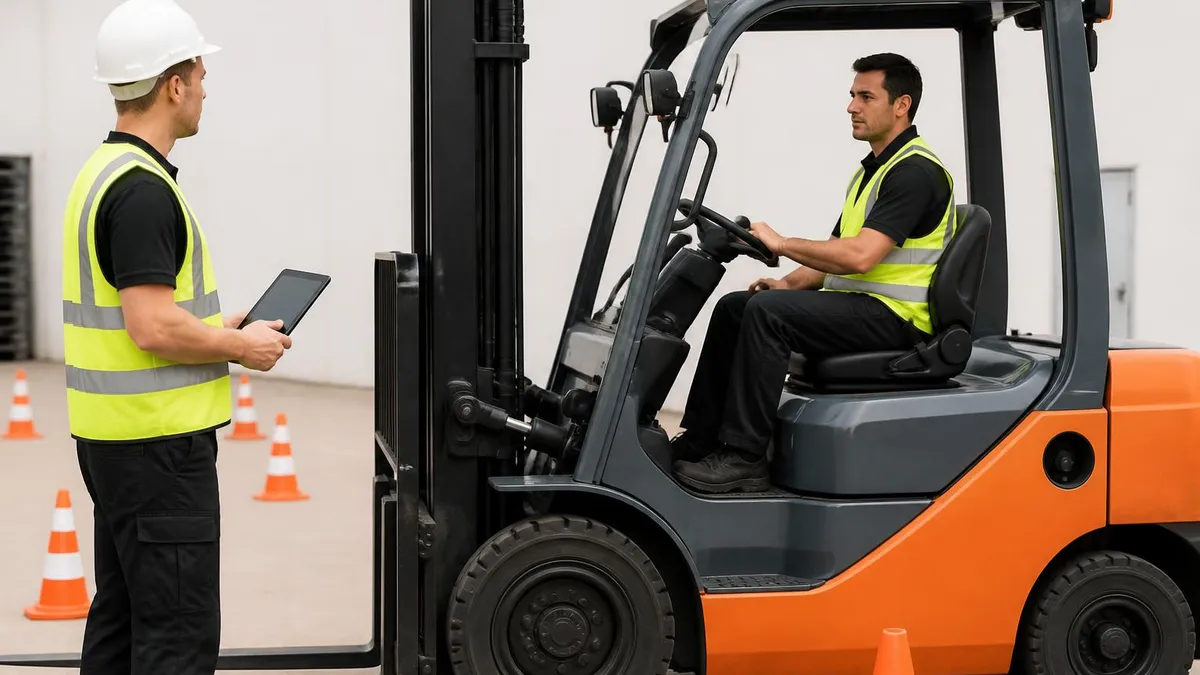
Forklift Safety Training: Complete OSHA Compliance Guide for Operators and Employers
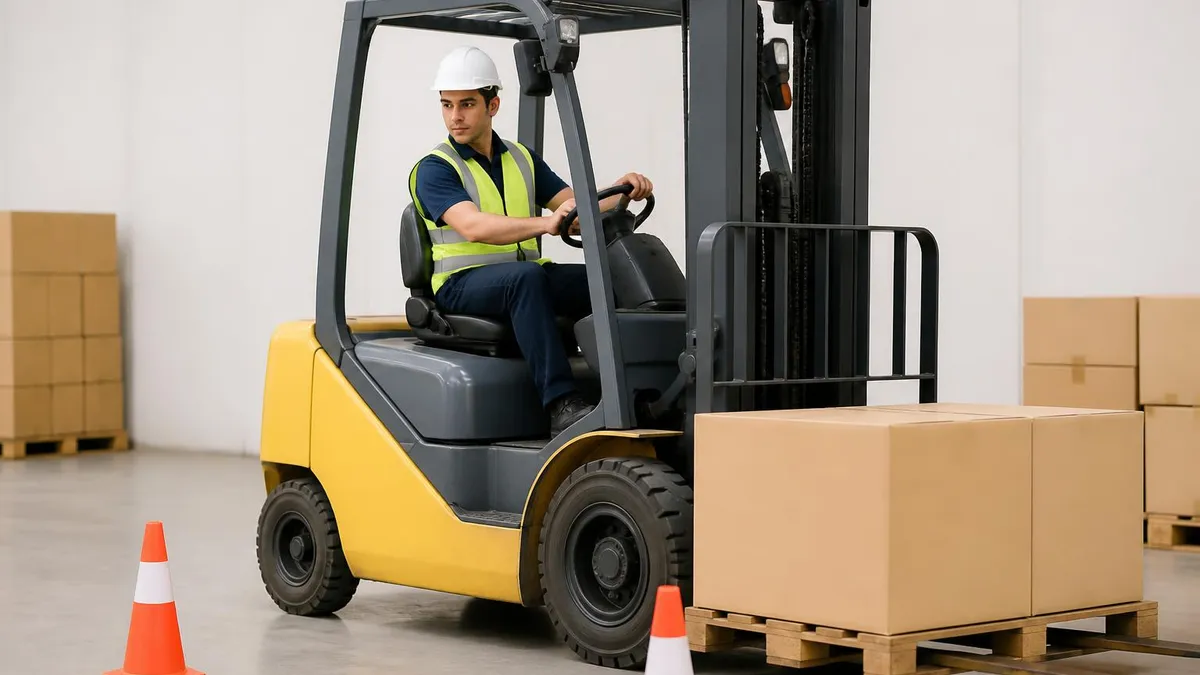
Forklift Repair Service: Complete Guide to Costs, Common Repairs, and Choosing the Right Technician
About the Author

Certified Crane Operator & Skilled Trades Exam Specialist
Ferris State UniversityRobert Martinez is a Journeyman Ironworker, NCCCO-certified crane operator, and forklift trainer with a Bachelor of Science in Construction Technology from Ferris State University. He has 21 years of ironworking, rigging, and heavy equipment operation experience across high-rise and industrial construction sites. Robert prepares candidates for crane operator, rigger, forklift, and skilled trades certification examinations.