
FDNY Test: Complete Study Guide and Practice Test Prep for the Fire Department of New York Exam
Prepare for the FDNY test with our complete study guide. 🆕 Practice questions, exam format, study schedules, and tips to pass on your first attempt.
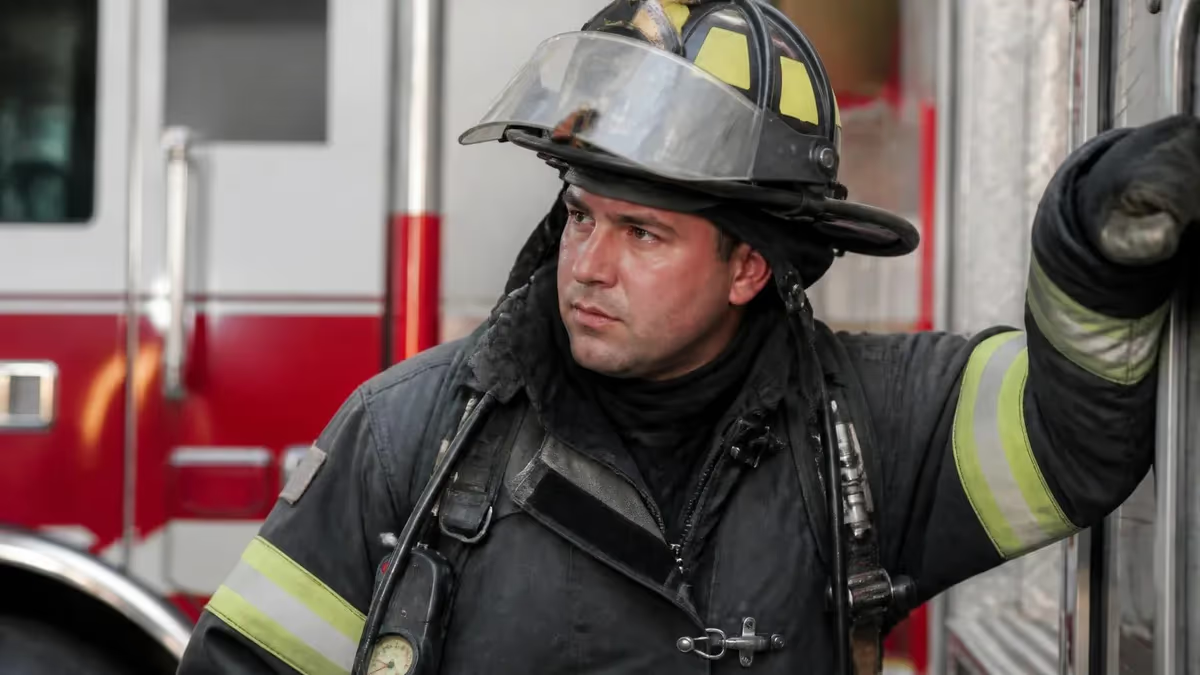
The FDNY test is one of the most competitive civil service examinations in the United States, drawing tens of thousands of applicants each time the Fire Department of New York opens its exam cycle. Passing this exam is the first critical step toward joining the ranks of New York's Bravest, and understanding exactly what the exam covers — and how to prepare for it systematically — can make the difference between an offer letter and waiting another four years for the next testing window. This guide covers everything from eligibility requirements and exam format to study strategies and practice resources.
The FDNY Firefighter Entrance Exam is administered by the New York City Department of Citywide Administrative Services (DCAS) and typically opens every four to five years. When the exam is announced, tens of thousands of New Yorkers register, but only a small fraction ultimately receive a conditional offer of employment. The written exam is the gatekeeper, and candidates who underestimate its difficulty often find themselves outside the top score bands needed to receive a timely call from the list, which can remain active for up to four years after the exam is scored.
Historically, the FDNY written exam tests cognitive abilities across several domains: logical reasoning, spatial orientation, memorization, reading comprehension, and situational judgment. These are not subjects most people review in everyday life, which is why structured preparation is so important. Candidates who spend six to twelve weeks working through practice questions and reviewing core content areas consistently outscore those who walk in cold, even when those unprepared candidates have strong academic backgrounds or relevant work experience.
Beyond the written exam, candidates must also pass a physical fitness assessment, a psychological evaluation, a medical exam, and a thorough background investigation. Each stage has eliminated significant numbers of otherwise qualified applicants. Understanding the full pipeline — not just the written test — helps you allocate your time wisely and avoid surprises that could derail your candidacy after months of preparation. This article breaks every component down in detail so you can plan with confidence.
New York City's fire service has a rich and demanding tradition. The FDNY responds to more than one million incidents per year across all five boroughs, and every firefighter on the job must be physically capable, mentally sharp, and emotionally resilient. The exam process is designed to identify candidates who have the raw cognitive and physical potential to meet those demands after completing the FDNY's rigorous 18-week Probationary Firefighter School at Randall's Island. Preparing for the exam is also, in a real sense, preparing for the job itself.
Whether you are a first-time applicant or someone who tested in a previous cycle and wants to improve your score, this guide will walk you through a structured preparation plan. You will find breakdowns of each exam section, tips for each question type, a recommended weekly study schedule, and direct links to free practice tests covering the key subject areas. For those also interested in the EMS pathway, our fdny test overview explains how the EMT and paramedic hiring processes differ from the firefighter track and what certifications you need before applying.
By the time you finish reading this article, you will have a clear picture of what the FDNY expects, what the exam actually tests, and exactly how to spend your preparation time to maximize your score. Let's start with the numbers that define the exam process, then move into the specific strategies that help candidates land in the top score bands and receive early list placements.
FDNY Test by the Numbers

FDNY Test Study Schedule
- ▸Download the official DCAS exam notice and read it in full
- ▸Take a diagnostic practice test to identify weak areas
- ▸Study deductive and inductive reasoning question types
- ▸Complete 50 logical reasoning practice questions
- ▸Review cardinal directions, floor plans, and building layouts
- ▸Practice rotating mental images of objects and spaces
- ▸Complete 40 spatial orientation drills
- ▸Study NYC street grid and borough layouts
- ▸Learn the memory palace method for storing visual details
- ▸Practice with timed 10-minute memorization passages
- ▸Review faces, names, and scene-description exercises
- ▸Take two full memorization practice sets under timed conditions
- ▸Read FDNY procedures and policies for firefighter responses
- ▸Practice extracting key facts from dense procedural text
- ▸Complete 30 situational judgment questions
- ▸Review common firefighting terminology and protocols
- ▸Complete two full-length timed practice exams
- ▸Score and analyze errors by question category
- ▸Drill the two lowest-scoring sections intensively
- ▸Review all building construction and emergency response content
- ▸Take one final full-length practice exam
- ▸Review answer explanations for every missed question
- ▸Confirm exam location, required documents, and arrival time
- ▸Rest, hydrate, and avoid cramming the night before
The written FDNY exam is divided into several distinct cognitive sections, each designed to measure a different capability that firefighters rely on daily. Understanding what each section is testing — not just what questions look like — helps you study more efficiently and perform under timed pressure. The sections most commonly included in FDNY-style civil service exams are: logical reasoning, spatial orientation, memorization and observation, reading comprehension, and mathematical reasoning. Each of these maps directly to a skill you will use on the job, from reading fire suppression orders to navigating unfamiliar buildings in zero visibility.
Logical reasoning questions present a set of facts or conditions and ask you to draw valid conclusions. These questions test your ability to follow a chain of cause and effect, which is critical in firefighting scenarios where incorrect assumptions about fire behavior or structural conditions can be fatal. Typical question formats include syllogisms, conditional statements, and sequencing problems. The best preparation strategy is to practice large volumes of these questions under timed conditions so that the reasoning process becomes automatic rather than labored.
Spatial orientation is often the section that surprises candidates the most. Questions typically show you a map, a floor plan, or a 3D object from one angle and ask you to identify what it looks like from another perspective, or to trace the most efficient route between two points. In the field, a firefighter who cannot quickly orient themselves in a smoke-filled building is in serious danger. Practicing with grid maps of real NYC neighborhoods, rotating objects mentally, and working through floor-plan exercises will build the mental agility this section demands.
The memorization section is uniquely challenging because the exam gives you a fixed amount of time to study a visual scene, photograph, or written passage, then removes that material and asks you detailed questions about it. Most candidates underperform here not because of poor memory but because they use inefficient strategies during the study phase. Chunking information, assigning emotional significance to details, and using mental spatial anchors are all techniques that dramatically improve retention during the exam's compressed memorization window.
Reading comprehension questions on the FDNY exam are based on passages drawn from firefighting procedures, departmental policies, and emergency protocols. They do not require prior firefighting knowledge — all the information needed to answer each question is contained in the passage itself. What matters is your ability to read carefully, identify the main idea, and extract specific details accurately. Many candidates lose points by answering based on general knowledge rather than what the passage actually states, so disciplined close-reading is the key skill to develop.
Mathematical reasoning on the FDNY exam is typically at the arithmetic and basic algebra level. You may encounter problems involving percentages, ratios, unit conversions, and simple geometry relevant to firefighting (hose flow rates, ladder angles, water pressure calculations). This section is very learnable with focused practice, and most candidates can reach a high score within two to three weeks of daily drill work. Brush up on fractions, decimals, and the order of operations if it has been a while since you worked with these concepts regularly.
Building construction knowledge — covered in our practice tests — is another content area that appears on many FDNY-related exams, particularly promotional exams and technical certifications. Understanding how different construction types (Type I through Type V) behave in fire conditions, where structural weaknesses develop under heat stress, and what collapse patterns are associated with each type of building gives both written exam candidates and working firefighters a critical safety edge. Solid knowledge in this area can also boost your score on the judgment-based questions that describe fire scenarios and ask what action to take.
FDNY Practice Test Questions
Prepare for the FDNY - Fire Department New York exam with our free practice test modules. Each quiz covers key topics to help you pass on your first try.
FDNY Building Construction
FDNY Exam Questions covering Building Construction. Master FDNY Test concepts for certification prep.
FDNY Community Engagement and Public Educa...
Free FDNY Practice Test featuring Community Engagement and Public Education. Improve your FDNY Exam score with mock test prep.
FDNY Emergency Medical Response
FDNY Mock Exam on Emergency Medical Response. FDNY Study Guide questions to pass on your first try.
FDNY Emergency Medical Services
FDNY Test Prep for Emergency Medical Services. Practice FDNY Quiz questions and boost your score.
FDNY Hazardous Materials Response
FDNY Questions and Answers on FDNY Hazardous Materials Response. Free FDNY practice for exam readiness.
FDNY Technical Rescue Operations
FDNY Mock Test covering FDNY Technical Rescue Operations. Online FDNY Test practice with instant feedback.
FDNY Fire Behavior
Free FDNY Quiz on Fire Behavior. FDNY Exam prep questions with detailed explanations.
FDNY Firefighting Operations and Equipment
FDNY Practice Questions for Firefighting Operations and Equipment. Build confidence for your FDNY certification exam.
FDNY Test Study Strategies by Section
Logical reasoning questions reward candidates who practice pattern recognition under time pressure. Begin each study session with 20 to 30 timed questions, tracking not just whether you got each one right but how long it took. The goal is to reach a pace of roughly 60 to 75 seconds per question without sacrificing accuracy. Focus on conditional logic statements like "If A then B" and practice identifying the contrapositive, which is the most commonly tested reasoning form on civil service exams.
A highly effective drill is to write out your reasoning for each wrong answer in one or two sentences. This forces you to understand why the correct answer is right, not just memorize it. Over several weeks, you will notice recurring error patterns — perhaps you consistently misread negatives or confuse sufficient with necessary conditions. Identifying and targeting those specific error types in the final two weeks of preparation can add several points to your score and push you meaningfully higher on the candidate list.
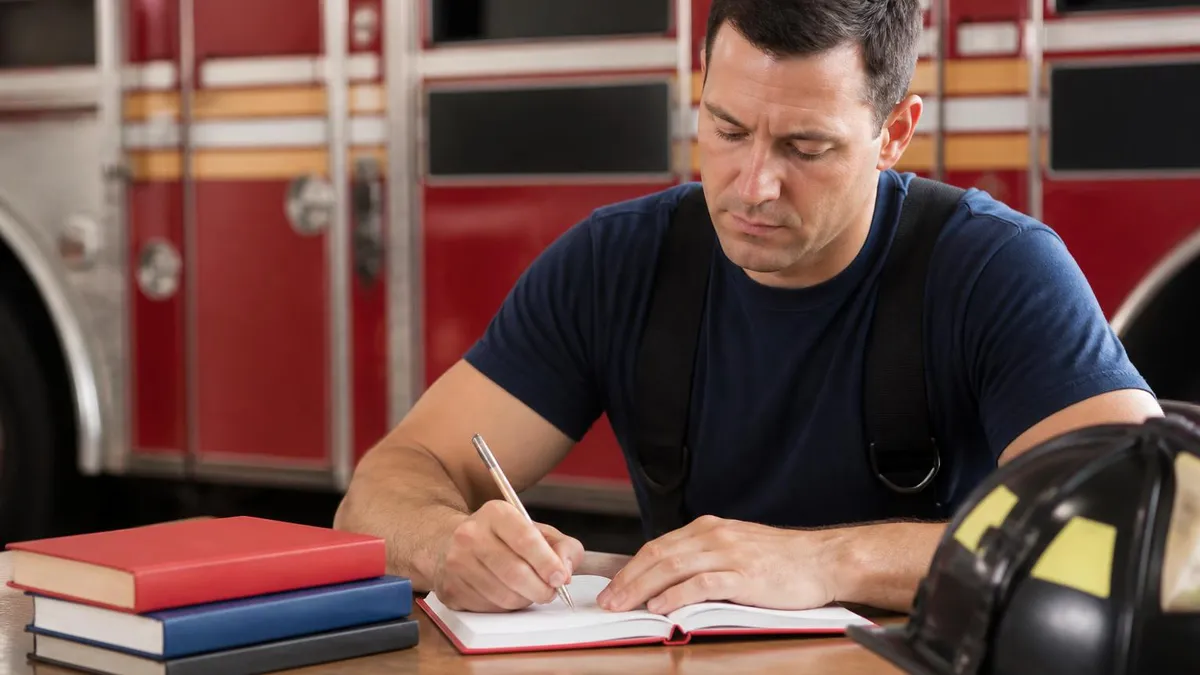
Is the FDNY Career Path Right for You?
- +Competitive starting salary of $94,000+ with regular step increases reaching $115,000 after five years
- +Exceptional pension and retirement benefits through the NYC Fire Department pension fund
- +Comprehensive health insurance coverage for firefighters and their families
- +Strong union representation through the Uniformed Firefighters Association (UFA)
- +Meaningful work with direct daily impact on community safety across all five boroughs
- +Clear promotional pathway from Firefighter to Lieutenant, Captain, Battalion Chief, and beyond
- −Exam cycles are infrequent — typically every four to five years — limiting your window to apply
- −Highly competitive with 30,000+ applicants competing for a limited number of list positions
- −Physical demands of the job are intense and cumulative, with elevated long-term health risks
- −Shift work including nights, weekends, and holidays impacts family and personal schedules
- −Lengthy hiring process from exam to academy can take two to four years after testing
- −Background investigation is thorough and certain financial, legal, or conduct issues are disqualifying
FDNY Test Preparation Checklist
- ✓Verify your eligibility: you must be a US citizen, at least 17.5 years old at application and 21 at appointment, with a high school diploma or GED.
- ✓Register during the official exam filing period — once it closes, no late applications are accepted under any circumstances.
- ✓Download and read the official DCAS exam notice from cover to cover before beginning any study activities.
- ✓Take a full-length diagnostic practice exam in the first week to establish your baseline score by section.
- ✓Build a six-week study schedule that dedicates at least 10 hours per week to active practice and review.
- ✓Complete at least four full-length timed practice exams under real test conditions before your exam date.
- ✓Target your two weakest sections with intensive daily drill work in weeks four and five of your preparation.
- ✓Review all building construction and fire behavior content, which frequently appears in situational judgment questions.
- ✓Confirm your physical readiness by training for the Candidate Physical Ability Test (CPAT) simultaneously with written exam prep.
- ✓Gather all required identification and supporting documents at least one week before your scheduled exam date.
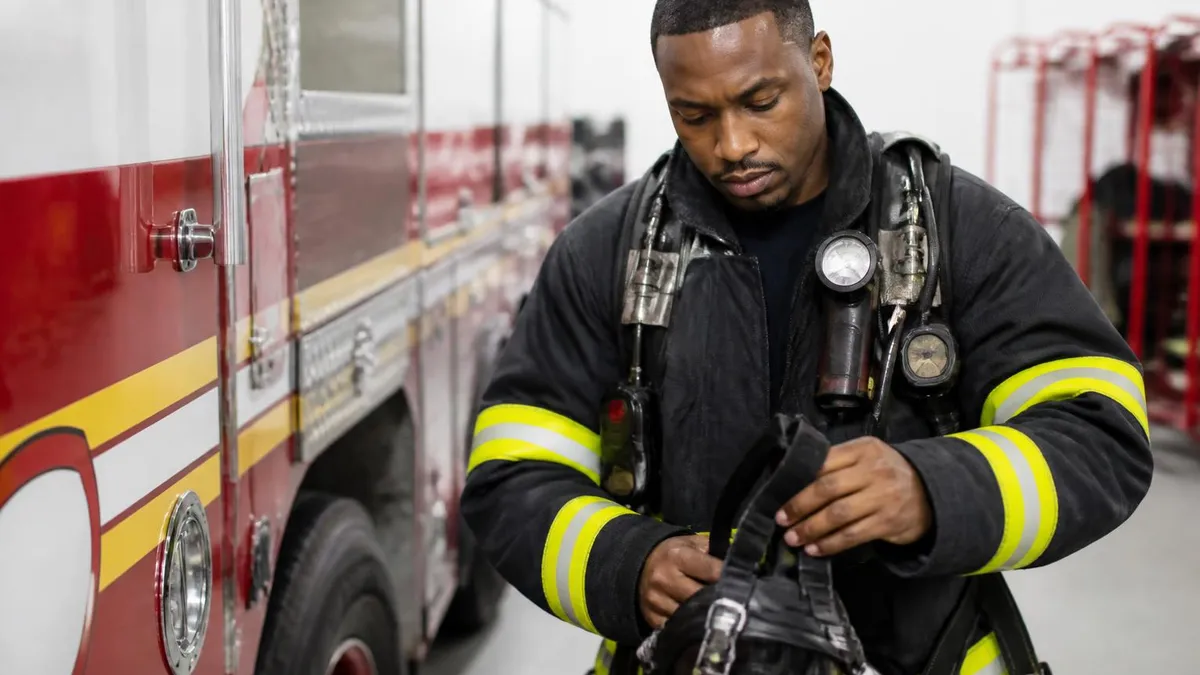
List Position Matters More Than a Passing Score
Scoring 70% on the FDNY written exam earns you a passing grade, but it almost certainly will not earn you a call from the hiring list before it expires. Candidates hired in the first two years of a list cycle typically score in the 95th percentile or above. Aim for a perfect or near-perfect score — not just a passing one — and treat every practice session as an opportunity to close the gap between your current performance and that target.
The written exam is only the first hurdle in the FDNY hiring process. Once you pass the written test and your name appears high enough on the civil service list to receive a call, you will be scheduled for the Candidate Physical Ability Test, commonly known as the CPAT. This standardized assessment measures whether candidates have the physical capacity to perform the core tasks of firefighting, and it must be passed before you can move further in the process. The CPAT consists of eight separate events completed on a continuous timed course with a required weighted vest.
The eight CPAT events are: the stair climb, hose drag, equipment carry, ladder raise and extension, forcible entry, search, rescue, and ceiling breach and pull. Each event simulates a real fireground task. The stair climb, for example, requires you to walk continuously on a StepMill machine for three minutes while wearing the weighted vest plus additional shoulder weights, mimicking the ascent of a high-rise stairwell in full gear.
The rescue event requires dragging a 165-pound weighted mannequin a specified distance, simulating a victim removal. You must complete the entire course in 10 minutes and 20 seconds or less without any breaks.
Preparing for the CPAT requires a structured physical training regimen that begins at least 12 weeks before your scheduled test date — ideally earlier. The most important physical capacities to develop are cardiovascular endurance, lower-body muscular strength and endurance, grip strength, and upper-body pulling power. Stair climbing under load is a highly specific demand, and candidates who train specifically on stair machines with weighted vests consistently outperform those who rely on general fitness training alone. Many fire departments and private training companies offer CPAT preparation programs that simulate the actual test conditions.
After passing the CPAT, candidates proceed to a medical examination conducted by FDNY physicians. This exam is comprehensive and includes vision and hearing tests, cardiac stress testing, pulmonary function assessment, and a full review of your medical history. The FDNY has specific standards for each of these areas because firefighting places extreme physiological demands on the body, and certain pre-existing conditions can create unacceptable risks in the fireground environment. If a medical condition is identified, candidates may be given an opportunity to provide additional documentation or undergo further evaluation before a final determination is made.
The psychological evaluation is another significant component of the FDNY hiring process that many candidates underestimate. This assessment — typically conducted through a combination of written psychological testing and an interview with an FDNY psychologist — evaluates emotional stability, stress tolerance, decision-making under pressure, and social functioning. There are no study materials that will help you pass a psychological evaluation, but being well-rested, honest in your responses, and clear-headed during the interview portion will serve you far better than any attempt to game the assessment.
The background investigation may be the most time-consuming and potentially disqualifying phase of the entire process. FDNY investigators will review your criminal history, driving record, employment history, financial record, and social media presence. They will also conduct interviews with former employers, neighbors, and personal references. Serious criminal convictions are generally disqualifying, as is a pattern of dishonesty during the investigation itself. Candidates are strongly advised to proactively disclose any issues they are aware of rather than allowing investigators to discover them independently, which is treated far more seriously by reviewing officials.
Throughout the entire hiring process — which can take anywhere from six months to three years after the written exam, depending on your list position — it is important to maintain your physical fitness, stay current on your contact information with DCAS, and continue working toward any remaining eligibility requirements such as EMT certification, which the FDNY requires candidates to obtain before appointment. Managing this long timeline with patience and continued preparation is itself a test of the kind of discipline and commitment the FDNY values in its recruits.
All FDNY Firefighter candidates must hold a valid New York State EMT certification by the time they receive a conditional offer of employment. If you do not already have your EMT certification, begin the course as early as possible — programs typically run 3 to 4 months and require passing both a written and practical skills exam. Waiting until you receive a list call to start the process can delay your appointment date significantly or result in your offer being withdrawn.
Understanding how the FDNY written exam is scored — and how your score translates into a list position — is essential for setting realistic preparation goals. The exam is scored on a 100-point scale, with a minimum passing score typically set at 70. However, candidates who score exactly at the cutoff are placed at the very bottom of the eligible list, while those who score 100 or near-perfect are placed at or near the top. In a competitive exam cycle with 30,000 applicants, a one- or two-point difference in score can translate to thousands of positions on the list.
Veterans receive a preference credit — typically five points added to a passing score — that can significantly improve their list position. Disabled veterans may receive a ten-point preference. These credits can be the difference between receiving a list call in the first year and waiting until the list expires. Eligible candidates should ensure their veteran preference documentation is submitted correctly and on time during the application process, as late or incomplete submissions cannot be processed after the filing period closes.
The civil service list derived from the FDNY exam typically remains active for four years. During that time, the FDNY draws candidates from the top of the list as vacancies become available. Candidates who score in approximately the top 15 to 20 percent of the list can generally expect to receive a call within the first two years of the list's life.
Those in the middle of the list may receive a call in years three or four, while candidates at the lower end of the list may not receive a call before the list expires, at which point a new exam cycle begins.
There is no formal mechanism to improve your score after the exam is administered, but candidates who are not satisfied with their results can file a formal protest if they believe specific questions were flawed or scored incorrectly. DCAS reviews all protests and, on rare occasions, will correct scoring errors or eliminate questions from the final score calculation. Filing a protest requires careful documentation and is generally only worth pursuing if you have strong evidence that a specific question had an objectively defensible alternative answer not reflected in the answer key.
For candidates who do not reach the top of the list in one cycle, the next exam announcement is an opportunity to apply everything learned from the previous attempt. Many successful FDNY firefighters tested two or more times before achieving a score and list position that resulted in a job offer. Each exam cycle, the content and format may shift slightly, but the core cognitive domains tested remain consistent. Studying using updated materials and specifically targeting the areas where you underperformed in the previous cycle is the most efficient preparation strategy for repeat candidates.
One important aspect of the scoring process that many candidates overlook is the role of residency preference. New York City residents who pass the exam receive a preference that places them ahead of non-residents with the same score. Given how competitive list positions are, NYC residency — or establishing residency before the exam filing date — can be a meaningful strategic advantage. Candidates who live just outside the five boroughs should research whether relocating before the exam period makes sense given their overall circumstances and career goals.
Our full overview of the FDNY test process, including the EMS pathway for those interested in becoming an EMT or paramedic with the fire department, provides additional context on how different entry routes are structured and what certifications are required for each. Whether you are targeting the firefighter exam, the EMS division, or promotional exams within the department, the underlying principle is the same: the candidates who prepare most thoroughly and score highest win the best opportunities, and systematic practice with realistic test materials is the single most reliable way to achieve that outcome.
On exam day itself, the choices you make in the 24 hours before and during the test can meaningfully affect your performance. Sleep is perhaps the most underrated performance factor — research consistently shows that even one night of poor sleep impairs working memory, processing speed, and error detection, all of which are directly tested on the FDNY written exam. Prioritize seven to eight hours of sleep on both the night before and the night before that, as a sleep debt built up over several nights cannot be fully recovered with a single good night's rest.
Arrive at the exam site at least 30 minutes before your scheduled check-in time. DCAS is strict about late arrivals, and being turned away because of a delayed subway or a missed bus is a catastrophic and entirely avoidable outcome. Bring all required identification documents — typically a current government-issued photo ID and your admission card — in a dedicated folder or envelope so you do not have to search for them under stress. Review the list of prohibited items in the exam notice, as bringing a cell phone or smartwatch into the testing room can result in disqualification.
During the exam itself, pace yourself carefully through each section. Most candidates have enough time to answer every question if they do not get stuck on difficult items. The correct strategy for any question you cannot resolve quickly is to make your best guess, mark it for review, and continue forward.
Return to marked questions at the end of the section if time permits. Leaving questions blank — if the scoring formula penalizes for omissions — is almost always worse than an educated guess, but confirm the specific scoring rules in the official exam notice since they vary between exam cycles.
For the memorization section, use the first 20 to 30 seconds of the allotted study time to get a big-picture overview of the material before diving into specific details. This top-down approach helps you build a mental framework that makes individual details easier to place and recall. If the memorization material is a photograph or scene, mentally divide it into quadrants and systematically scan each one, noting the most unusual or distinctive elements in each zone, as those are the details most likely to be tested.
On reading comprehension questions, always go back to the passage to verify your answer rather than relying on memory or inference. The FDNY exam is specifically designed to test whether you can extract accurate information under pressure, not whether you have background knowledge on the topic. Answers that are technically true based on general knowledge but not supported by the specific passage are traps — always choose the answer that the passage directly supports, even if a different answer seems more complete or sophisticated based on what you know.
After the exam, give yourself permission to decompress before reviewing how you did. Immediately trying to reconstruct every question and calculate your likely score creates anxiety without producing useful information, since you cannot know the final scoring until official results are released. What you can do productively in the days after the exam is continue your physical training for the CPAT, work on obtaining or renewing your EMT certification if needed, and ensure your contact information with DCAS is current so you receive all correspondence about next steps in the process.
Finally, build a support network of other FDNY candidates. Online communities, local exam prep groups, and FDNY-sponsored outreach programs connect you with people at every stage of the hiring process, from first-time applicants to candidates who are weeks away from their academy start date. These networks provide practical advice, moral support during the long waiting periods between hiring stages, and valuable firsthand information about what to expect at each step. The FDNY hiring process is a marathon, not a sprint, and having a community around you makes the journey significantly more manageable.
FDNY Questions and Answers
FDNY EMS — How New York City's Emergency Medical Service Works and How to Become an FDNY EMT or Paramedic
FDNY Marine Units: Inside the Fire Department of New York's Fireboat Fleet and Marine 6
FDNY Codes: A Complete Guide to Fire Department of New York Radio Signals, Box Numbers, and Response Codes
FDNY Firefighter Death: Line of Duty Sacrifice, Memorials, and the Legacy of New York's Bravest
FDNY Twitter and Social Media: How the Fire Department of New York Uses Digital Platforms
About the Author

Law Enforcement Trainer & Civil Service Exam Specialist
John Jay College of Criminal JusticeMarcus B. Thompson earned his Master of Arts in Criminal Justice from John Jay College of Criminal Justice and served 12 years as a law enforcement officer before transitioning to full-time academy instruction. He is a POST-certified instructor who has prepared candidates for police entrance exams, firefighter assessments, and civil service examinations across dozens of agencies.
Join the Discussion
Connect with other students preparing for this exam. Share tips, ask questions, and get advice from people who have been there.
View discussion (9 replies)