
FDNY Test Date: Everything You Need to Know to Plan and Prepare 2026 September
Know your FDNY test date and plan ahead. 🎯 Learn exam windows, registration steps, study timelines, and how to maximize your score.

The FDNY test date is one of the most important milestones on the path to becoming a New York City firefighter. Every few years, the City of New York opens a new examination cycle for Firefighter (Exam No. 2000 or whichever cycle is current), and candidates who miss the registration window or the test itself may wait years before the next opportunity arrives. Understanding when the exam is scheduled, how to register on time, and what to expect on test day is absolutely essential for anyone serious about joining the Fire Department of the City of New York.
New York City administers the written firefighter exam through the Department of Citywide Administrative Services (DCAS). DCAS controls the exam calendar, sets registration deadlines, and publishes the Notice of Examination (NOE) that contains every official detail a candidate needs. The NOE is typically released several months before the actual test date, giving candidates a defined window — sometimes just a few weeks — to submit their applications. Missing that window means waiting for the next exam cycle, which historically opens every four to six years.
Preparation timelines are everything when it comes to the FDNY written exam. Many successful firefighters begin studying six to twelve months before the anticipated test date, even before the official NOE is released. Because the City often signals exam cycles through budget announcements and civil service list expirations, savvy candidates track those signals and begin preparation early. Starting late — even two or three months before the exam — can significantly reduce a candidate's final score and ranking on the eligible list.
The written exam is only one part of the FDNY hiring process, but it is the gateway. Your score on the written test determines your position on the civil service list, and that rank directly influences when — or whether — you receive an appointment to the Fire Academy. Candidates who score in the high 90s are typically called first, while those lower on the list may wait years or never receive an appointment if the list expires. A single exam cycle can make or break a firefighting career.
This article is designed to serve as your comprehensive training guide and pillar resource for everything related to the FDNY exam timeline. We cover the exam format, registration steps, study schedules, what happens on test day, and how to continue preparing once you have submitted your application. Whether you are a first-time applicant or a returning candidate who missed a previous cycle, the information here will help you approach the process with clarity and confidence.
You should also know that the written exam is just the beginning. After passing the written test, candidates must complete a physical fitness exam (the Candidate Physical Ability Test, or CPAT), a medical evaluation, a psychological evaluation, and a background investigation before receiving a conditional appointment. Planning your fdny test date preparation around this full pipeline — not just the written component — is the smart approach that separates candidates who get appointed from those who stall mid-process.
Throughout this guide, you will find statistics, step-by-step breakdowns, practical study tips, and answers to the questions candidates ask most often. By the time you finish reading, you will have a complete picture of the FDNY exam cycle and a clear roadmap for making the most of every week between now and test day.
FDNY Exam by the Numbers

FDNY Written Exam Format
| Section | Questions | Time | Weight | Notes |
|---|---|---|---|---|
| Reading Comprehension | 25 | ~50 min | 25% | Fire department policies and procedures |
| Logical & Deductive Reasoning | 20 | ~40 min | 20% | Situational judgment and sequencing |
| Spatial Orientation | 20 | ~40 min | 20% | Map reading, floor plans, directional sense |
| Memory & Observation | 20 | ~40 min | 20% | Recall details from study booklets |
| Mathematical Reasoning | 15 | ~30 min | 15% | Basic arithmetic and problem solving |
| Total | 100 | 3.5 hours | 100% |
Registration for the FDNY written exam opens through the New York City Department of Citywide Administrative Services (DCAS) portal at nyc.gov/dcas. Once the Notice of Examination is published, candidates typically have a two-to-four week window to submit their online application and pay the filing fee, which has historically been around $68 for most applicants. Fee waivers are available for candidates who can demonstrate financial hardship, and veterans may receive preference points added to their final scores under New York State civil service law.
Eligibility requirements are straightforward but non-negotiable. At the time of appointment — not at the time of examination — candidates must be at least 17.5 years old and no older than 29 years, though veterans can have up to four years added to that ceiling. You must be a United States citizen or permanent resident authorized to work, hold a valid New York State or New Jersey driver's license, and have a high school diploma or its equivalent. Meeting these requirements on exam day is not sufficient; you must meet them when the Department actually calls you for appointment.
The residency requirement is another factor many candidates overlook. New York City currently requires new civil service hires to live within the five boroughs within 90 days of appointment. This means a candidate who currently lives in New Jersey or Long Island must plan to relocate if they receive an appointment. Some candidates move proactively during the waiting period between the exam and appointment, while others wait until an appointment letter arrives. Either way, this is a logistical planning point that must be addressed well before your first day at the Fire Academy.
Once you have submitted your registration, you will receive a test admission card in the mail. This card contains your assigned test center, reporting time, and seat number. Candidates must bring this card — along with a valid government-issued photo ID — to the exam site. Losing or not receiving your test admission card is not a reason to be excused from the exam; contact DCAS immediately if your card does not arrive at least two weeks before the scheduled test date.
The City also offers an accommodation request process for candidates with documented disabilities. Under the Americans with Disabilities Act, eligible candidates can request extended time, a separate testing room, or other reasonable accommodations. These requests must be submitted well in advance — typically during or shortly after the registration window — and require supporting documentation from a licensed professional. Do not wait until test day to raise an accommodation issue; DCAS will not be able to assist you at that point.
Veterans who are eligible for additional credits should file the appropriate civil service veteran preference documentation at the time of registration or as instructed by DCAS. New York State law provides two to five additional points on civil service exams for eligible veterans, and these points can meaningfully affect where you land on the eligible list. A one- or two-point difference in ranking can translate into being called for appointment years earlier — or at all — so do not overlook this step if it applies to your situation.
Keeping track of the full registration timeline requires consistent attention to the DCAS website and the FDNY recruitment page. Subscribe to email alerts from both agencies, follow official FDNY social media accounts, and consider joining candidate preparation groups where members often share updates about registration periods. The exam cycle does not repeat every year, so staying informed is a year-round responsibility, not just something to think about a few months before the expected test date.
FDNY Study Strategies by Phase
The first three months of FDNY exam preparation should focus on understanding the test format, identifying your weakest subject areas, and building consistent daily study habits. Download and read the Notice of Examination carefully, then obtain any study materials DCAS officially recommends. Set a baseline with a full-length practice test so you know exactly where you stand before you begin targeted review.
During this phase, dedicate at least one hour per day to active study — not passive reading. Work through practice questions in reading comprehension, spatial orientation, and memory recall, which are areas that reward repetition and systematic technique. Join a study group or preparation class if your schedule allows, because discussing reasoning strategies with other candidates often surfaces approaches you would not discover on your own.

Is the FDNY Exam Worth Pursuing?
- +Job security — FDNY firefighters hold civil service positions with strong union protections and near-guaranteed employment stability
- +Competitive salary — starting pay exceeds $45,000 with rapid step increases reaching over $100,000 within five years
- +Excellent pension and retirement benefits under the New York City pension system
- +Full medical, dental, and vision coverage for firefighters and their families
- +Meaningful public service — protecting millions of New York City residents every shift
- +Career advancement opportunities into special operations, investigations, EMS, and officer ranks
- −Exam cycles open only every four to six years, so missing the window means a very long wait
- −The eligible list is highly competitive, and candidates ranked lower may wait years for an appointment
- −Age limits mean candidates who miss one cycle may age out before the next one opens
- −The physical demands of the job and CPAT require serious long-term fitness commitment
- −Shift work, holidays, and irregular schedules affect personal and family life significantly
- −The full hiring process — from exam to academy — can take two to four years of uncertainty
FDNY Test Day Preparation Checklist
- ✓Confirm your test center address and plan your travel route at least one week in advance.
- ✓Pack your official DCAS test admission card — you cannot enter the exam without it.
- ✓Bring a valid government-issued photo ID that matches the name on your application.
- ✓Prepare at least two sharpened No. 2 pencils and a permitted eraser for the answer sheet.
- ✓Arrive at the test center at least 30 minutes before your scheduled reporting time.
- ✓Eat a balanced meal before the exam — avoid heavy foods that cause energy crashes mid-test.
- ✓Get a full eight hours of sleep the night before your FDNY test date.
- ✓Leave all electronic devices, smart watches, and study materials at home or in your car.
- ✓Read every question completely before selecting an answer — avoid rushing on early sections.
- ✓Flag difficult questions and return to them rather than spending excess time on any single item.
- ✓Stay calm during the memory observation section — use your rehearsed memorization strategy systematically.

A Passing Score Is Not Enough — You Must Rank High
Many candidates focus on clearing the 70% passing threshold, but the real goal is scoring as high as possible. Your position on the civil service eligible list is determined by your raw score, and candidates with higher scores are called for appointments first. In competitive exam cycles with 30,000+ applicants, a difference of just two or three questions can shift your rank by hundreds or thousands of positions — translating into years of waiting or no appointment at all.
After you complete the written exam, your answer sheet is scored by DCAS and a raw score is calculated based on the number of correct answers. There is no penalty for wrong answers on the FDNY written exam, which means guessing is always preferable to leaving a question blank. Your raw score is then converted to a scaled score out of 100, with 70 being the minimum to appear on the eligible list. Veterans receive their preference points added on top of this scaled score.
Once all scores are calculated and verified, DCAS publishes the eligible list — a ranked roster of every candidate who passed the exam. The list is typically published several months after the exam date, and the waiting period can feel agonizing. Your rank on this list is essentially your place in line for an appointment to the Fire Academy. The FDNY draws from the top of the list as Academy classes are formed, working down through the ranks as more firefighters are needed over the four-to-six-year life of the list.
Understanding what affects your list rank is crucial for calibrating your preparation effort. Besides your exam score, veterans preference points are the most significant factor for those who qualify. Beyond that, a higher exam score is the only lever you control. This is why investing in serious preparation — full-length timed practice exams, targeted drilling on weak areas, and consistent weekly study — pays dividends that cannot be recovered after the fact. The exam is a single event with permanent consequences for your career timeline.
Once placed on the eligible list, candidates must keep their contact information current with DCAS. The Department sends appointment letters via mail and sometimes email, and a letter that bounces due to an outdated address can cause a candidate to be passed over. If you move during the period the list is active, update your information with DCAS immediately. Some candidates have had their ranks restored after demonstrating good faith in updating information, but the process is bureaucratically difficult and not guaranteed.
The civil service list has a defined expiration date — typically four years, though the City can extend it. If the list expires before you are called, your score is no longer valid and you must wait for and pass a new exam cycle to re-enter the process. This reality underscores why scoring as high as possible matters so deeply: candidates near the top of the list are almost always called within the active life of the list, while those in the middle or lower tiers face genuine risk of the list expiring before their name comes up.
Candidates who are called for appointment will receive a packet of paperwork detailing next steps: scheduling the CPAT physical fitness test, undergoing a medical examination, completing psychological screening, and submitting to a thorough background investigation. Each of these steps is eliminatory — failing any one of them removes you from consideration even after years on the eligible list. The physical fitness component in particular catches many candidates off guard, especially those who focused entirely on written test preparation and neglected their cardiorespiratory endurance and functional strength.
The background investigation is among the most comprehensive of any municipal employer in the country. FDNY investigators will review your criminal history, financial records, employment history, driving record, and personal references. Candidates who have prior arrests — even for minor offenses — should consult with an attorney before applying to understand how their history may affect eligibility. Honesty during the background process is paramount; discrepancies between what a candidate self-reports and what investigators discover are treated far more seriously than the underlying issue itself.
The FDNY written exam registration period is typically open for only two to four weeks. Once it closes, DCAS accepts no late applications under any circumstances. Monitor the DCAS website and FDNY recruitment pages starting at least six months before the anticipated exam announcement. Missing the filing deadline means waiting a minimum of four to six years for the next exam cycle — a gap that can eliminate older candidates due to age limits at the time of appointment.
After passing the written exam and securing a place on the eligible list, the next phase of the FDNY hiring process begins in earnest. Most candidates experience a waiting period of one to three years between their exam date and their actual appointment to the Fire Academy, though this varies significantly depending on where they rank on the list and how aggressively the City is staffing up. During this waiting period, the single most important thing a candidate can do is continue developing physical fitness and keeping all required documentation current.
The Candidate Physical Ability Test — the CPAT — is a pass/fail functional fitness assessment that simulates the physical demands of firefighting. It consists of eight events performed while wearing a 50-pound vest, including stair climbing, hose dragging, equipment carrying, ladder raising, forcible entry simulation, search simulation, rescue simulation, and a ceiling breach and pull exercise. The entire course must be completed within ten minutes and twenty seconds without stopping at any station longer than permitted. Failure means disqualification, and candidates typically have a limited number of retakes.
Beginning cardiovascular and strength training at least six months before your anticipated CPAT date is strongly recommended by every preparation resource and veteran firefighter mentor. The stair climb in particular is a shock to candidates who are not specifically trained for sustained stair climbing under load. Programs that emphasize stairmaster work, weighted vest training, and upper-body pulling movements translate most directly into CPAT performance. Simply being generally fit is often not enough — functional, task-specific fitness is what the test measures.
The medical examination conducted by the FDNY Bureau of Health Services is another significant step. Candidates are evaluated on vision, hearing, cardiovascular health, pulmonary function, and musculoskeletal integrity. Disqualifying conditions exist for each category, though some conditions can be waived upon review. If you have a known medical condition — asthma, prior orthopedic surgeries, color vision deficiency — research the specific FDNY standards for that condition before investing years in the process. The FDNY Medical Division publishes guidance documents that outline their evaluation standards.
The psychological evaluation typically involves both a written assessment and an interview with a licensed psychologist. The written component measures personality traits, stress tolerance, judgment, and teamwork orientation. The interview probes your life history, motivations for the job, and how you have handled past adversity. There are no trick questions, but candidates who try to game the psychological process by answering how they think they should rather than honestly often do worse than those who engage authentically. The psychologists who conduct these evaluations are highly experienced at detecting inconsistency between written and interview responses.
Once you clear all pre-appointment hurdles, you will receive a conditional appointment letter and a report date for the Fire Academy at Randalls Island. The Academy is an eighteen-week residential program that covers fire suppression techniques, emergency medical response, hazardous materials handling, building construction, and physical conditioning. Recruits are evaluated continuously throughout the Academy, and those who fail academic or physical benchmarks may be dismissed. The Academy is demanding by design — it is the final quality gate before probationary firefighters are assigned to firehouses across the five boroughs.
For candidates who want to stay connected to the community and culture while waiting for their appointment, there are meaningful ways to engage. Volunteering with community organizations, completing EMT certification, and studying fire science all strengthen both your candidacy and your readiness. Some candidates even track community events and traditions surrounding the Department — from charity fundraisers to hockey games organized by firefighters — as a way of connecting with the culture before they earn their bunker gear. Whatever keeps your motivation high through a potentially multi-year waiting period is worth pursuing deliberately.
Practical preparation for the FDNY written exam comes down to consistency, strategy, and specificity. One of the most common mistakes candidates make is relying exclusively on general test prep books that are not calibrated to the specific FDNY exam format. The official study materials released alongside the Notice of Examination — particularly the memory booklet and any sample questions provided by DCAS — are the most valuable resources you have. Build your entire study plan around those materials, supplemented by targeted practice in each tested skill area.
Time management during the exam itself is a skill that must be rehearsed, not improvised. The written exam is long — three and a half hours of sustained concentration — and candidates who do not practice under timed conditions frequently run out of time on the final sections or make careless errors caused by fatigue. Simulate real exam conditions at least once a week during your preparation period: sit at a desk, set a timer, and complete a full-length practice test without interruptions, snacks, or phone checks. Treat it as the real thing.
The spatial orientation section is one of the most trainable areas of the exam. Many candidates avoid it because they find map-reading and floor-plan navigation unintuitive, but with deliberate practice, most people see significant improvement. Work with street maps, building diagrams, and directional challenge problems on a daily basis during your preparation period. The underlying skill — tracking your position relative to fixed landmarks as you navigate through a described route — becomes much more automatic after sufficient repetition.
For the reading comprehension section, practice reading dense procedural and policy-type documents quickly and accurately. Fire department procedures, building code summaries, and safety protocol documents are ideal practice material because they mimic the style of text that typically appears on the exam. Read a passage once, cover it, and answer the associated questions from memory combined with analytical inference — a hybrid of recall and reasoning that the exam consistently rewards.
Mathematical reasoning questions on the FDNY exam tend to focus on practical arithmetic: calculating volumes, estimating distances, determining time needed for tasks, and interpreting simple data tables. The math itself is not advanced, but it must be completed accurately under time pressure. Brush up on unit conversions, basic geometry, percentage calculations, and ratio problems. Practice completing these calculations without a calculator, since none is permitted during the exam.
Building a support system around your exam preparation dramatically improves outcomes. Candidates who study with a partner or small group stay more accountable, encounter more diverse practice questions, and often perform better than solo studiers. If you cannot find a study group locally, online forums and social media communities dedicated to FDNY exam preparation are active and genuinely helpful. Veterans of previous exam cycles frequently share insights about what the exam emphasized and how they managed the process — treat that institutional knowledge as a resource.
Finally, remember that physical and mental health are not separate from exam preparation — they are part of it. Regular aerobic exercise during the study period has been shown to improve memory retention and cognitive performance. Getting consistent sleep, maintaining hydration, and managing stress through structured relaxation not only make you a healthier candidate but a sharper test-taker. The candidates who score highest on the FDNY exam are almost always those who treated the entire preparation period — their bodies and minds, not just their study materials — as something to be deliberately optimized.
FDNY Questions and Answers

FDNY Hockey: The Rich Tradition of New York's Bravest on the Ice

FDNY Super Pumper: The Massive Fire-Fighting System That Transformed New York City's Firefighting
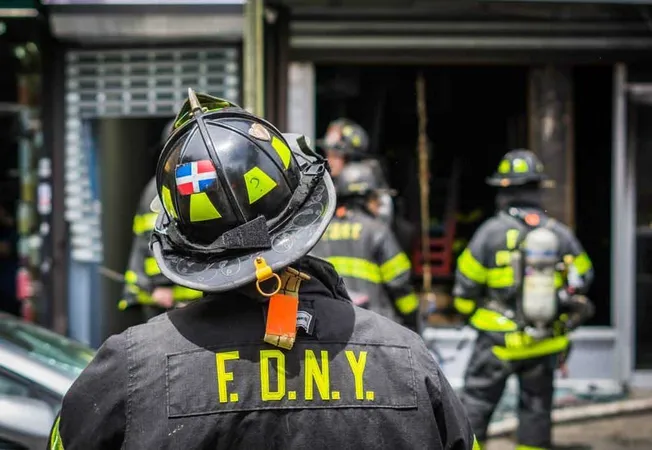
FDNY (Fire Department New York) Test: Your Guide
FDNY vs NYPD Hockey Game: Inside New York's Bravest vs Finest Heroes on Ice Rivalry
FDNY Runs and Workers: What the Numbers Really Mean
About the Author

Law Enforcement Trainer & Civil Service Exam Specialist
John Jay College of Criminal JusticeMarcus B. Thompson earned his Master of Arts in Criminal Justice from John Jay College of Criminal Justice and served 12 years as a law enforcement officer before transitioning to full-time academy instruction. He is a POST-certified instructor who has prepared candidates for police entrance exams, firefighter assessments, and civil service examinations across dozens of agencies.
Join the Discussion
Connect with other students preparing for this exam. Share tips, ask questions, and get advice from people who have been there.
View discussion (9 replies)