
FDNY Firefighter Death: Line of Duty Sacrifice, Memorials, and the Legacy of New York's Bravest
💯 FDNY firefighter death records, line of duty losses, memorials, 9/11 sacrifice, and how the Fire Department of New York honors its fallen Bravest.
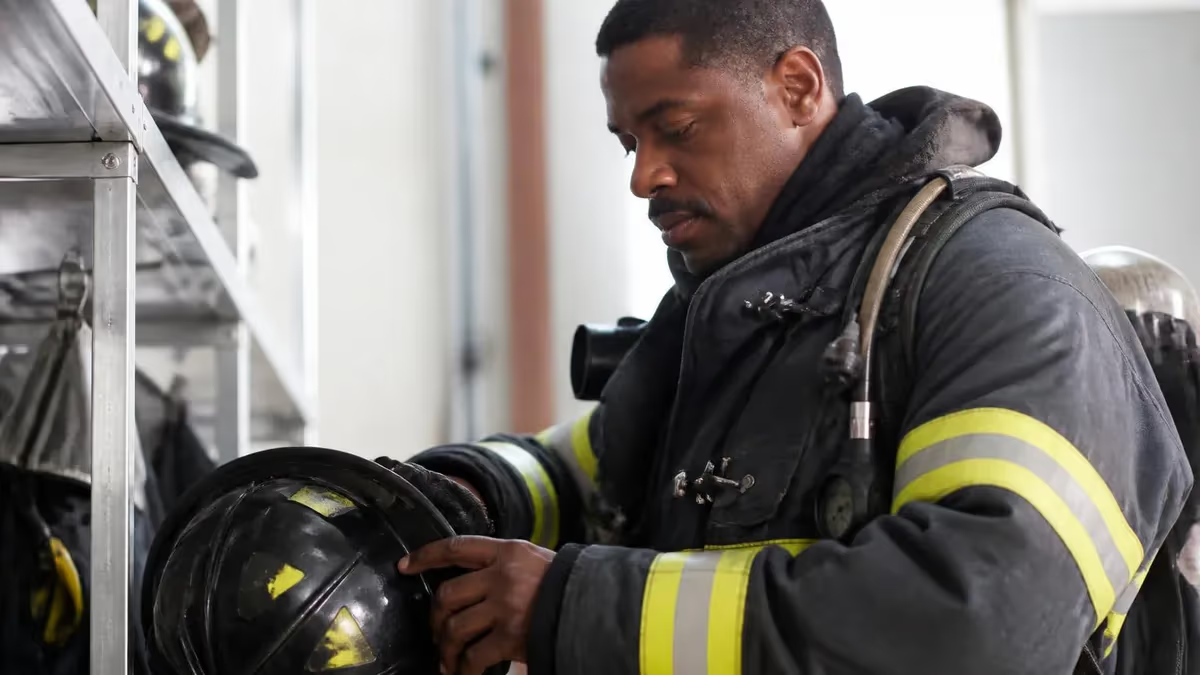
Every FDNY firefighter death sends a ripple through the Fire Department of New York that touches every firehouse from Staten Island to the Bronx. Since the department's founding in 1865, more than 1,150 members have given their lives in the line of duty, a number that includes the 343 firefighters lost on September 11, 2001, and dozens more who have died from World Trade Center-related illnesses in the years since. Each loss is recorded, honored, and remembered with a precision that reflects how seriously the FDNY takes its responsibility to those who do not come home.
Understanding the scope of these losses requires looking beyond the headlines. A line of duty death, or LODD, in the FDNY context is not limited to a firefighter killed inside a burning building. It includes deaths from collapses, falls, exposure to hazardous materials, cardiac events triggered by the physical demands of operations, and long-term illnesses tied directly to service. The department's Bureau of Health Services tracks each case meticulously, and the formal designation carries weight for families, benefits, and historical record.
The geography of these losses tells its own story. Brooklyn's busiest neighborhoods, Manhattan's narrow tenement streets, and the Bronx's high-rise public housing complexes have all claimed lives. Some firehouses have lost members multiple times across decades, and the brass plaques mounted inside those quarters become daily reminders of what the job can cost. Visitors who tour a busy firehouse will notice these memorials in the apparatus floor, the kitchen, and the bunkroom hallway, woven into the fabric of the building itself.
The cultural response inside the FDNY to a member's death is also distinctive. Department-wide notifications go out within minutes, the deceased's company is relieved of duty assignments, and a detail is established at the firehouse to receive visitors, answer phones, and support the family. The funeral arrangements that follow draw firefighters from across the country and sometimes from departments overseas, with thousands of dress uniforms lining the streets in tribute. These rituals are not optional ceremonies but core expressions of the brotherhood and sisterhood that define the service.
For civilians, researchers, and aspiring firefighters, the history of FDNY line of duty deaths offers a window into how the job has changed. Fire deaths in the early twentieth century often involved horse-drawn apparatus and untreated burns. Mid-century losses frequently came from balloon-frame tenement collapses and the introduction of synthetic materials that burned hotter and faster. Modern deaths increasingly stem from occupational cancer and cardiac illness, prompting massive investments in personal protective equipment, decontamination protocols, and medical monitoring programs.
This article walks through that history without sensationalism. It examines how deaths are recorded, the major events that shaped the department's loss numbers, the memorials that keep names alive, and the policies that have emerged from tragedy. Whether you are studying for a department exam, researching family history, or simply seeking to understand the cost of the service, the information here is drawn from public records, the FDNY's own memorial roll, and decades of documented incident reports. For broader context on how the department operates day to day, see our overview of FDNY runs and workers.
Above all, this is a story about people. Behind every number is a member with a family, a firehouse, a nickname, and a thousand small moments that defined who they were. The FDNY's commitment to remembering each one is not just policy. It is identity. And it is one of the reasons the Bravest remain among the most respected emergency responders in the world.
FDNY Line of Duty Deaths by the Numbers
Categories of FDNY Line of Duty Deaths
Deaths occurring during active firefighting operations, including burns, smoke inhalation, structural collapses, falls from heights, and being struck by debris. These represent the classic image of LODD and remain a persistent risk despite modern protective equipment.
Heart attacks and strokes triggered by extreme physical exertion during or immediately after operations. The FDNY classifies these as LODDs when a clear causal link to duty exists, reflecting the cardiovascular toll of firefighting work.
Deaths from collisions, rollovers, and being struck while responding to or returning from alarms. New York City's dense traffic and tight streets have produced apparatus-related fatalities throughout the department's history.
Cancers, respiratory diseases, and other chronic conditions linked to fireground exposures. The September 11 attacks dramatically expanded this category, and presumptive legislation now recognizes many cancers as duty-related.
A smaller but recognized category covering deaths during academy training, drills, and certain off-duty actions performed in a firefighting capacity. These cases are reviewed individually by the department.
The historical record of FDNY firefighter deaths begins in the 1860s, when the paid department replaced the volunteer companies that had served New York City for more than a century. Early losses were frequent and often gruesome, with horse-drawn steamers tipping at intersections, walls falling on members during overhaul, and rudimentary medical care offering little hope to anyone seriously burned. By 1900, the department had already buried more than a hundred members, and the public funeral procession had become a recognizable New York tradition.
The first half of the twentieth century saw fire science slowly catch up with the city's growth. The 1908 Parker Building fire in Manhattan and the 1932 Ritz Tower collapse claimed multiple firefighters and pushed the department toward better training and tactics. Equipment evolved from leather helmets and rubber coats to canvas turnout gear and self-contained breathing apparatus, though many of these advances arrived only after specific tragedies exposed the cost of going without them.
The 1960s and 1970s became known as the War Years in the FDNY, when arson, abandonment, and economic collapse turned the Bronx and parts of Brooklyn into nightly battlegrounds. Companies in busy neighborhoods responded to dozens of structural fires a day, and the cumulative risk pushed both injury and death rates higher. The 1966 23rd Street collapse, which killed twelve members in a single moment, remains one of the worst single non-9/11 incidents in department history and is studied to this day in FDNY codes and command training.
The 1980s and 1990s brought a different set of challenges. Highrise fires, hazardous materials incidents, and an aging building stock created new failure modes. The Father's Day fire in 2001, just months before the September 11 attacks, killed three firefighters in a Queens hardware store explosion and foreshadowed the depth of grief the department would soon experience on a much larger scale. By that point, the FDNY had institutionalized many of its modern safety protocols, but high-risk operations remained part of the daily reality.
The events of September 11, 2001, changed the math forever. In a single morning, the FDNY lost 343 members, more than the cumulative total of any decade in its history. Every borough was affected, but the elite rescue and squad companies suffered disproportionately, with some units losing their entire on-duty platoon. The grief that followed was layered with practical crisis: leadership succession, equipment replacement, and a nine-month recovery operation at Ground Zero that exposed thousands of additional members to toxic dust and debris.
The two decades since 9/11 have produced a different kind of loss. Cancer diagnoses among first responders began appearing at elevated rates within a few years of the attacks, and the slow accumulation of illness deaths now exceeds the original 343. This second wave has reshaped how the department thinks about exposure, decontamination, and long-term medical monitoring, and it has driven advocacy for the federal Zadroga Act and the World Trade Center Health Program that now serves tens of thousands of survivors.
Through all of this, the FDNY has maintained an unbroken practice of recording, naming, and honoring its dead. The official memorial wall at headquarters, the annual Memorial Day service at St. Patrick's Cathedral, and the bronze tablets inside individual firehouses all reflect a culture that refuses to let any member fade into anonymity. The historical arc, from horse-drawn steamers to occupational cancer, traces the evolution of the job itself.
FDNY Practice Test Questions
Prepare for the FDNY - Fire Department New York exam with our free practice test modules. Each quiz covers key topics to help you pass on your first try.
FDNY Building Construction
FDNY Exam Questions covering Building Construction. Master FDNY Test concepts for certification prep.
FDNY Community Engagement and Public Educa...
Free FDNY Practice Test featuring Community Engagement and Public Education. Improve your FDNY Exam score with mock test prep.
FDNY Emergency Medical Response
FDNY Mock Exam on Emergency Medical Response. FDNY Study Guide questions to pass on your first try.
FDNY Emergency Medical Services
FDNY Test Prep for Emergency Medical Services. Practice FDNY Quiz questions and boost your score.
FDNY Hazardous Materials Response
FDNY Questions and Answers on FDNY Hazardous Materials Response. Free FDNY practice for exam readiness.
FDNY Technical Rescue Operations
FDNY Mock Test covering FDNY Technical Rescue Operations. Online FDNY Test practice with instant feedback.
FDNY Fire Behavior
Free FDNY Quiz on Fire Behavior. FDNY Exam prep questions with detailed explanations.
FDNY Firefighting Operations and Equipment
FDNY Practice Questions for Firefighting Operations and Equipment. Build confidence for your FDNY certification exam.
Major Events That Shaped the FDNY Firefighter Death Toll
On October 17, 1966, a fire in a basement drugstore at 7 East 23rd Street in Manhattan led to a floor collapse that killed twelve FDNY firefighters in a single instant. It was the worst loss of life in a single incident in the department's history until September 11, 2001, and the youngest victim was just 25 years old.
The 23rd Street collapse fundamentally changed how the FDNY approaches commercial fires with cellars and concealed spaces. Tactics for size-up, reading smoke, and recognizing hidden fire involvement were rewritten in its aftermath, and the incident remains a required case study for new lieutenants and captains entering operational command positions throughout the city.
How Modern Reforms Have Affected FDNY Firefighter Death Rates
- +Modern bunker gear and SCBA dramatically reduce immediate fireground burn and asphyxiation deaths
- +Mandatory cardiac screening and fitness programs catch high-risk conditions before catastrophic events
- +Improved building codes and sprinkler requirements reduce the frequency of catastrophic structural fires
- +Presumptive cancer legislation provides benefits to families of members who die from occupational illness
- +Decontamination protocols at scenes reduce long-term carcinogen exposure for working firefighters
- +Lifetime WTC Health Program monitoring catches cancers and lung disease at treatable stages
- +Enhanced training in collapse recognition and rapid intervention has prevented many would-be fatalities
- −Occupational cancer remains the leading cause of LODD in the modern FDNY
- −Cardiac events still account for a significant share of duty deaths despite screening programs
- −WTC-related illness deaths continue to accumulate two decades after the attacks
- −Aging building stock and illegal subdivisions create unpredictable collapse hazards
- −Lithium-ion battery fires have introduced new and poorly understood exposure risks
- −Mental health crises and suicide among first responders remain underreported challenges
- −Rural and outer-borough response times can still complicate rescue of trapped members
How the FDNY Honors a Fallen Firefighter
- ✓Department-wide notification is issued within minutes of confirmation
- ✓The member's firehouse is relieved of run assignments and a family detail is established
- ✓Black mourning bands are placed across all department badges citywide
- ✓Apparatus from the deceased member's company is draped with black and purple bunting
- ✓Family liaisons from the Counseling Services Unit support the next of kin
- ✓Funeral arrangements include full department honors and a uniformed procession
- ✓Bagpipes from the Emerald Society Pipes and Drums lead the casket
- ✓A formal Last Alarm is broadcast over department radio at the conclusion of services
- ✓The member's name is added to the FDNY Memorial Wall at headquarters
- ✓Annual remembrance is held at St. Patrick's Cathedral for all members lost in the line of duty
The Final Radio Broadcast
At the conclusion of every FDNY line of duty funeral, dispatch transmits a Last Alarm over department radio, calling the fallen member's badge number three times. After no response, the dispatcher announces the member as out of service for the final time. Firefighters across all five boroughs stop what they are doing to listen.
The long shadow of the World Trade Center attacks continues to define the modern FDNY firefighter death story. In the immediate aftermath of September 11, the department lost 343 members in a few hours. What few people anticipated at the time was that the months of recovery work at Ground Zero, conducted in clouds of pulverized concrete, asbestos, lead, mercury, and burning jet fuel residue, would seed a second wave of deaths that has now lasted more than two decades and shows no signs of stopping.
By the mid-2000s, FDNY physicians began noticing unusual patterns. Firefighters in their thirties and forties were developing cancers typically seen in much older populations. Respiratory symptoms, sinus disease, and gastrointestinal reflux became epidemic. The Bureau of Health Services partnered with researchers at Mount Sinai and other institutions to track these conditions, and the resulting data became the foundation for federal legislation that established lifetime medical care and compensation for affected responders.
The James Zadroga 9/11 Health and Compensation Act, named for a NYPD detective who died from a WTC-related respiratory illness, was signed into law in 2011 and reauthorized in 2015. It created the World Trade Center Health Program, which now monitors more than 100,000 first responders and survivors. For the FDNY specifically, the program funds annual physicals, cancer screenings, mental health services, and prescription medications for members and retirees who responded to the attacks.
The ongoing illness deaths have changed how the department thinks about every aspect of operations. Decontamination at the scene is now standard practice, with members showering, exchanging hoods, and bagging contaminated gear before returning to quarters. Apparatus floors are kept separate from living spaces wherever possible. Diesel exhaust capture systems have been installed in firehouses citywide. These changes did not come from a single regulation but from the slow, painful accumulation of evidence about what untreated exposure can do over a career.
For families of members who die from WTC-related illness, the FDNY treats the death as fully equivalent to any other line of duty fatality. The member's name is added to the memorial wall, a full department funeral is provided, and pension and benefit calculations reflect the duty connection. This equivalence is not a small administrative detail. It represents a hard-won policy victory that took years of advocacy and that ensures families receive the same recognition and support regardless of whether their loved one died at a fire or fifteen years later from cancer.
The cultural impact within the firehouses is equally significant. Veteran members who responded to Ground Zero carry the weight of knowing that any cough, any unexplained pain, any odd lab result could be the beginning of something serious. Newer members who joined after 2001 are trained in this history from their first day at the Fire Academy. The understanding that the job's risks extend far beyond the immediate fireground is now baked into how every member approaches the work.
Looking forward, the FDNY continues to refine its approach to occupational health. New presumptive illness laws have expanded the list of conditions recognized as duty-related. Research into firefighter cancer prevention continues to influence equipment design and tactical decision making. And the department's commitment to honoring each member lost, whether on a single morning in 2001 or one by one across the decades that followed, remains unchanged.
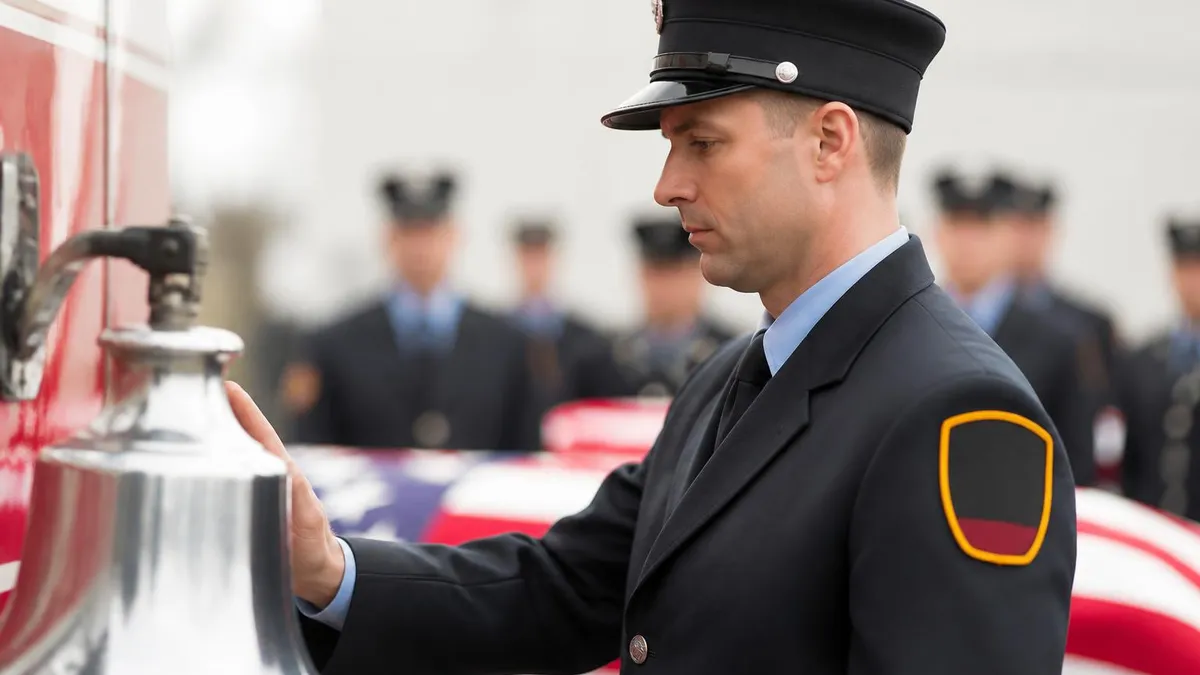
Members and family members who suspect a WTC-related condition should contact the FDNY Bureau of Health Services and the World Trade Center Health Program immediately. Early enrollment ensures access to monitoring, treatment, and benefits, and protects the historical record of duty-connected illness.
Memorials to fallen FDNY firefighters are woven into the physical and emotional landscape of New York City. Inside the lobby of FDNY headquarters at 9 MetroTech Center in Brooklyn, the Wall of Honor lists every member lost in the line of duty since the formation of the paid department in 1865. The wall is updated annually, and the ceremony to add new names draws families, surviving members, and senior leadership in a tradition that has continued without interruption for decades.
Individual firehouses maintain their own memorials, often more personal in nature. A brass plaque mounted in the apparatus floor lists every member of that company who has died in service, with the date and circumstances of each loss. Photographs hang in the kitchen and bunkroom. Helmets, tools, and turnout gear belonging to fallen members are sometimes displayed in cases. Visitors who pass through busy houses often comment on how present the dead feel in these spaces, even decades after their deaths.
The September 11 memorials occupy a category of their own. The National September 11 Memorial and Museum at the World Trade Center site lists all 343 FDNY members lost that day, and the FDNY Memorial Wall outside the firehouse of Engine 10 and Ladder 10, directly across from the Twin Towers site, offers a more focused tribute specific to the department.
The bronze bas-relief panels there depict the events of the morning and the firefighters' response in extraordinary detail. To understand how individual companies have been transformed by these losses, the story of FDNY Rescue 2 in Brooklyn provides a powerful example of how an elite unit rebuilds after catastrophic loss.
The annual FDNY Memorial Day service at St. Patrick's Cathedral in October is one of the most solemn events on the department calendar. Families of members lost that year are invited to participate, names are read aloud, and the cathedral fills with uniformed firefighters from the FDNY and dozens of visiting departments. The service is broadcast within the department and is considered required attendance for senior staff. Many members describe it as a moment of collective grief and renewal that anchors the year.
Outside New York, memorials to FDNY losses appear in unexpected places. The National Fallen Firefighters Memorial in Emmitsburg, Maryland, lists FDNY members alongside firefighters from every state. The International Association of Fire Fighters maintains its own memorial in Colorado Springs. Departments around the world have erected plaques and statues honoring the 343, and FDNY members are routinely invited to ceremonies overseas in recognition of the global impact of the September 11 losses.
Online memorials have also grown in importance. The FDNY's official website maintains searchable records of every line of duty death, with biographical information, photographs, and circumstances of loss. Independent projects, including the Firehouse Magazine memorial database and the WTC Health Program research archive, provide additional resources for families, researchers, and members of the public seeking to understand individual stories.
The cumulative effect of these memorials is to make absolutely certain that no FDNY firefighter who dies in the line of duty is forgotten. The names on the wall, the plaques in the firehouses, the annual services, and the online records all serve the same purpose: to ensure that the cost of the job is remembered as clearly as the work itself. This commitment to memory is one of the defining features of the department, and it shapes how every active member thinks about the responsibility they carry.
For those seeking to engage meaningfully with the history of FDNY firefighter deaths, there are practical ways to learn, support, and honor the legacy. Visiting the FDNY Fire Zone in Rockefeller Center or the New York City Fire Museum in SoHo provides curated exhibits that put individual losses into broader context. Both institutions display equipment, photographs, and personal items connected to members lost across the department's history, and staff members include both retired firefighters and dedicated educators.
Attending the annual Memorial Day service at St. Patrick's Cathedral in October is generally open to the public, though seating priority is given to families and active members. Standing along Fifth Avenue as the procession arrives and departs is a powerful experience that brings home the scale of the FDNY family. Many New Yorkers attend year after year as a personal commitment to remembrance, and visitors from around the world include the service in their travel plans.
Supporting the families of fallen firefighters can take many forms. The FDNY Foundation, the Stephen Siller Tunnel to Towers Foundation, the Friends of Firefighters organization, and the Uniformed Firefighters Association Widows and Children's Fund all provide direct services and financial support. Each has different focuses, from scholarship funding for children of fallen members to mortgage payoff programs for surviving spouses, and donations of any size contribute to programs that have lasting impact on real families.
For aspiring firefighters and current members of other departments, studying the operational lessons drawn from past FDNY losses is essential professional development. Case studies of incidents like the 23rd Street collapse, the Father's Day fire, the Black Sunday fire of 2005, and the Deutsche Bank fire of 2007 are taught in fire academies across the country. Understanding what went wrong, what factors contributed to the loss, and how the department changed in response builds the analytical foundation that helps prevent future tragedies.
Researchers and family historians can access extensive public records through the FDNY's archives, the New York Public Library, the Municipal Archives, and the NYPD Department of Records. Birth and death certificates, pension records, line of duty death reports, and contemporary newspaper accounts are often available with proper requests. Many families have used these resources to piece together the stories of ancestors who served and died in the department generations ago.
For those considering a career in the FDNY, the history of line of duty deaths is not a deterrent but a sobering reminder of what the job demands. Every candidate who enters the Fire Academy is briefed on the department's losses and the safety protocols that exist because of them. To learn more about the recruitment and selection process, including the rigorous physical and written exams required, our guide to FDNY jobs walks through what it takes to join the Bravest.
Finally, the simplest and most enduring way to honor the FDNY's fallen is to know their names. The Memorial Wall at headquarters is open to the public, and the online registry of line of duty deaths can be searched freely. Spending a few minutes reading the names, the dates, and the circumstances is itself an act of remembrance that reflects the spirit in which the wall was built. As the department continues to write new chapters in its history, that act of remembrance is what links every member, past and present, in a single continuous tradition of service.
FDNY Questions and Answers
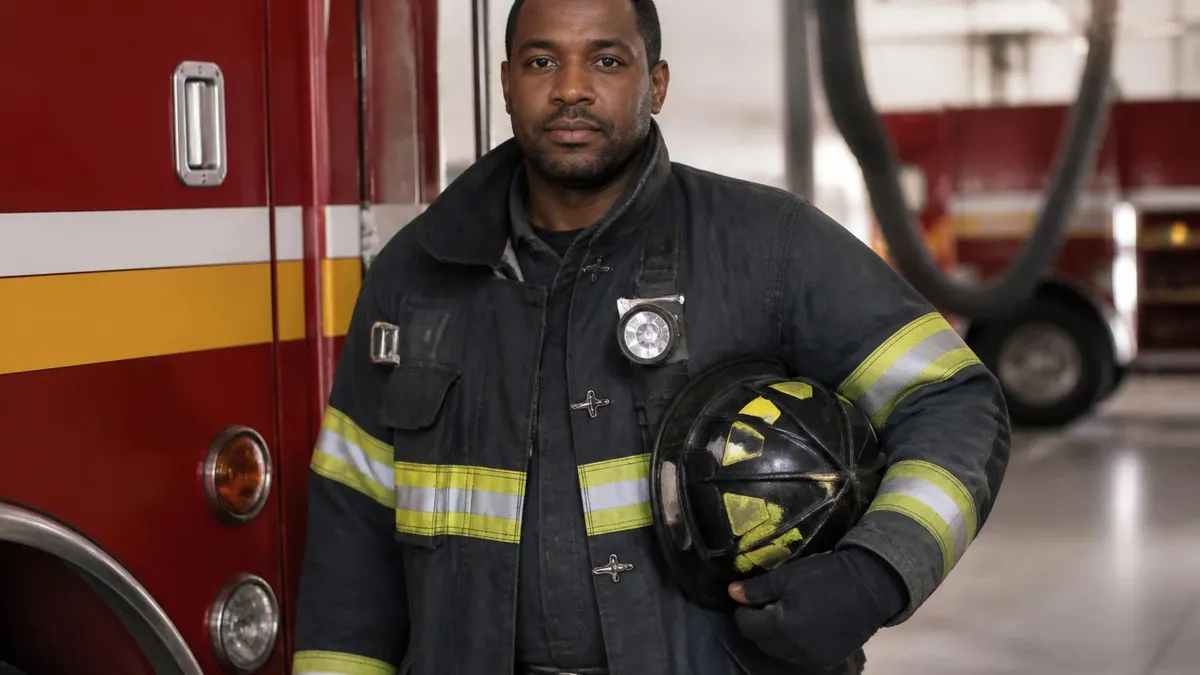
FDNY Marine Units: Inside the Fire Department of New York's Fireboat Fleet and Marine 6
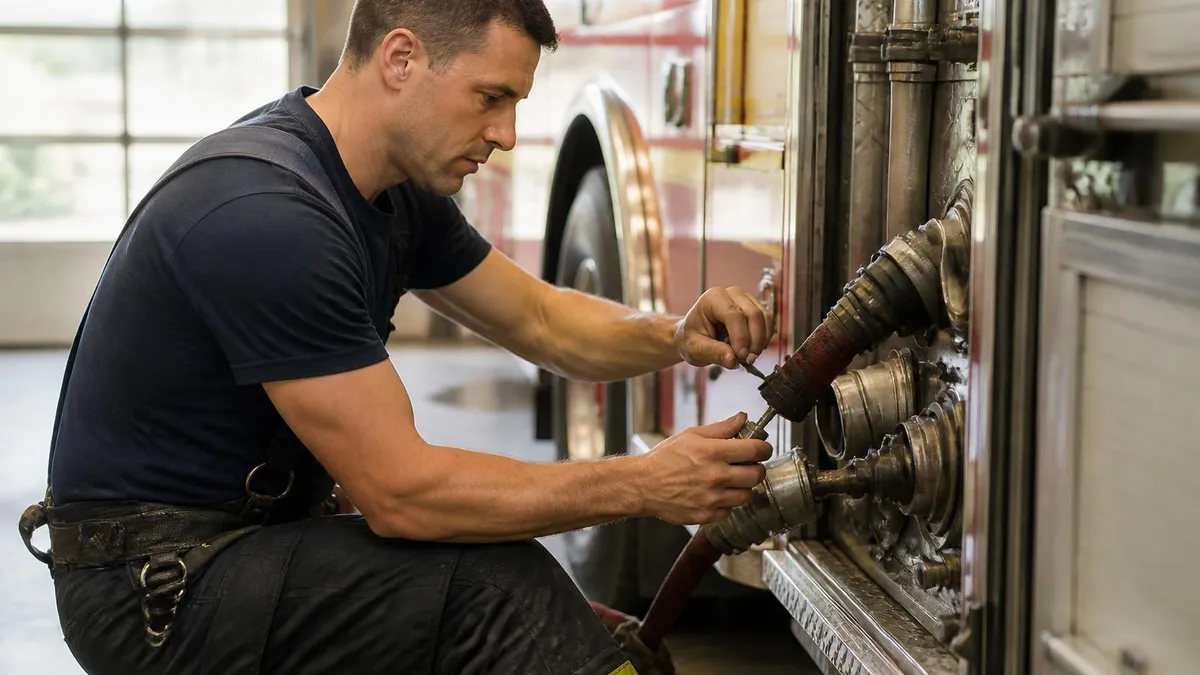
FDNY Jobs: Careers, Salaries, and How to Get Hired by the Fire Department of New York
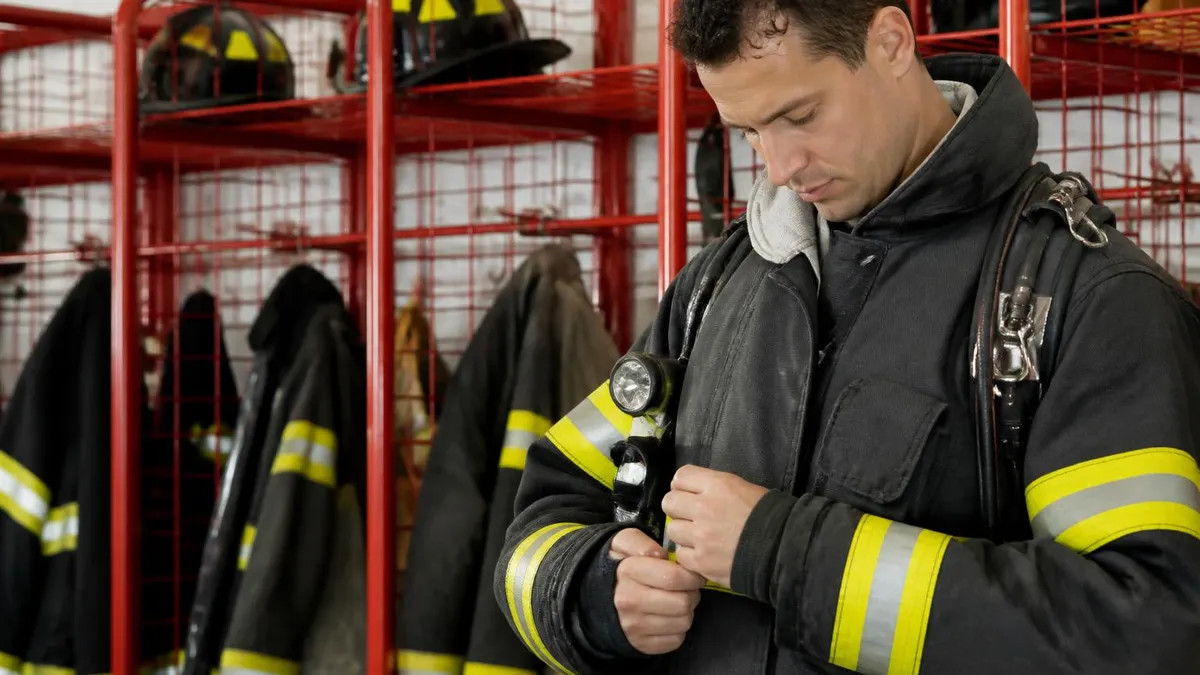
FDNY Rescue 2: Inside Brooklyn's Elite Rescue Company
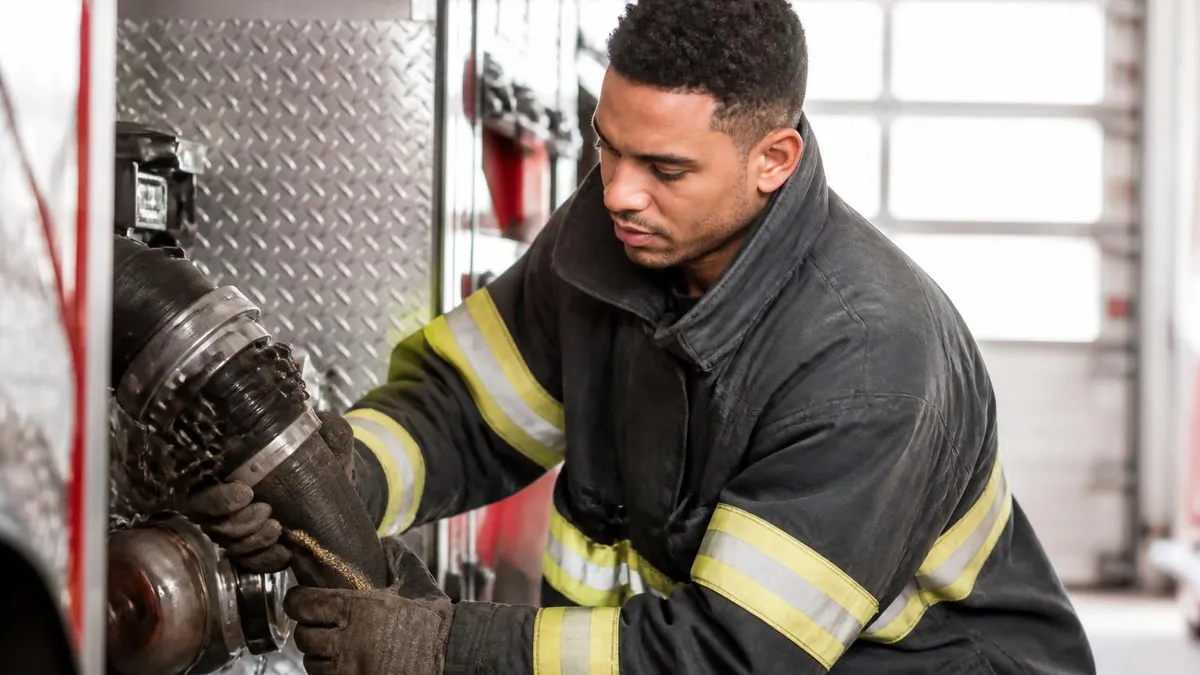
FDNY Codes: A Complete Guide to Fire Department of New York Radio Signals, Box Numbers, and Response Codes
FDNY Runs and Workers: What the Numbers Really Mean
Join the Discussion
Connect with other students preparing for this exam. Share tips, ask questions, and get advice from people who have been there.
View discussion (9 replies)