
FDNY Headquarters: Inside MetroTech Center and the Command Hub of the Fire Department of New York
FDNY headquarters guide: ✅ location at MetroTech Center Brooklyn, the divisions inside, dispatch operations, history, and how it runs NYC's fire and EMS system.
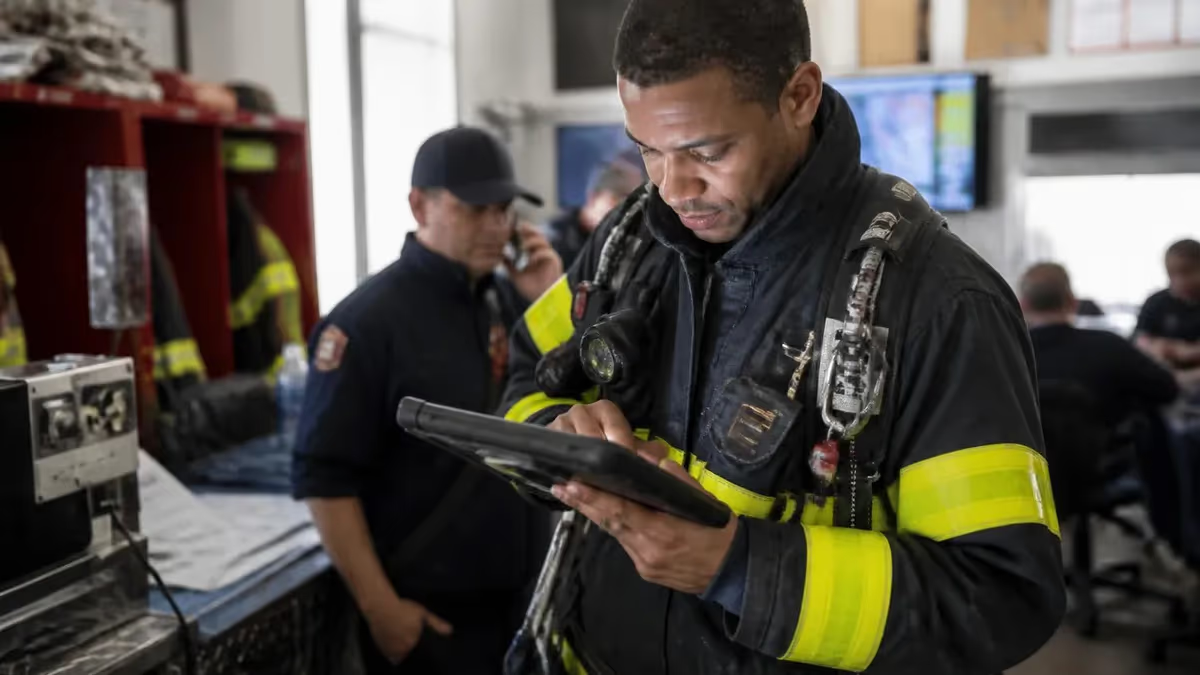
The FDNY headquarters is the central nerve system of the Fire Department of New York, the largest municipal fire department in the United States and the second largest in the world after Tokyo. Located at 9 MetroTech Center in Downtown Brooklyn, this modern administrative complex coordinates roughly 11,000 uniformed firefighters, more than 4,000 EMS personnel, and around 2,000 civilian employees who together protect the eight and a half million residents of New York City around the clock, every single day of the year.
For most New Yorkers, the FDNY exists as a fleet of red engines and ladder trucks roaring through the streets toward a fire or a medical emergency. But behind those rigs sits a sprawling command structure, and the FDNY headquarters is where that structure is organized, funded, trained, and directed. The building houses the Fire Commissioner, the Chief of Department, dozens of bureaus, and the senior staff who set policy, manage a multi-billion dollar budget, and respond to crises that range from high-rise fires to mass-casualty incidents.
Understanding the headquarters helps explain how a department this enormous actually functions on a daily basis. Decisions made on the upper floors of MetroTech ripple outward to all five boroughs, shaping how quickly an ambulance reaches a cardiac arrest in the Bronx, how a Brooklyn ladder company trains for a collapse, and how Staten Island prepares for coastal storms. The headquarters is less a single office than a coordinated ecosystem of leadership, logistics, and emergency communications.
This guide walks through everything you should know about the FDNY central command: where it sits, what happens inside its walls, the divisions and bureaus it contains, how dispatch and communications work, and the history that brought the department from scattered firehouse offices to a unified modern campus. If you are studying for an FDNY exam, researching the department, or simply curious about how New York stays protected, this is the deep dive you need.
It is worth noting that the medical side of operations runs through the same command hierarchy. The bureau that oversees ambulances and paramedics reports up through the same chain that governs firefighting, and you can read more about how that system works in our companion guide on the fdny headquarters and its emergency medical service operations. The integration of fire and EMS under one roof is one of the defining features of the modern department.
Throughout this article we will use concrete numbers, real locations, and the actual organizational language the department uses internally. Whether your interest is academic, professional, or part of exam preparation, knowing how the FDNY headquarters orchestrates its forces gives you a far clearer picture of why New York's emergency response is regarded as one of the most sophisticated in the world. Let's start by locating the building and understanding why Brooklyn became the chosen home of fire department command.
FDNY Headquarters by the Numbers
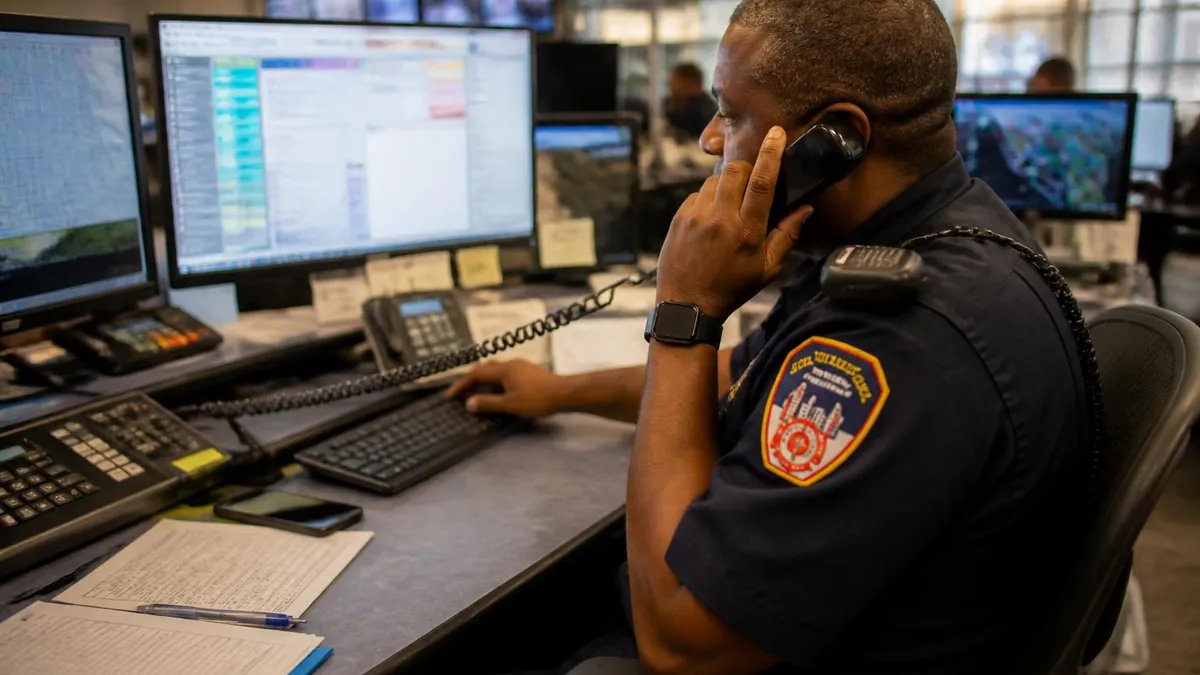
Where FDNY Headquarters Is Located
The primary FDNY headquarters building sits in the MetroTech complex in Downtown Brooklyn, a commercial campus chosen for its central location, transit access, and ability to consolidate administrative offices that were once scattered across Manhattan and Brooklyn.
Many assume the department leads from Manhattan, but headquarters has been in Brooklyn for decades. The borough's location offers near-equal access to all five boroughs and sits close to major bridges, tunnels, and subway lines feeding the citywide response network.
Headquarters works closely with the Fire Academy on Randall's Island, where new recruits train. While the academy is a separate facility, command policy, curriculum standards, and promotional direction all originate from the bureaus housed at the MetroTech headquarters complex.
Citywide dispatch is handled through specialized communications offices and borough dispatch centers that link to headquarters command. These centers process emergency calls, assign units, and feed real-time data back to senior chiefs monitoring incidents across the entire city.
Step inside the FDNY headquarters and you encounter a department organized into clearly defined bureaus, each responsible for a slice of the enormous task of protecting New York. At the top sits the Fire Commissioner, a civilian appointed by the Mayor who oversees the entire organization, controls the budget, and serves as the public face of the department. Working alongside the Commissioner is the Chief of Department, the highest-ranking uniformed officer, who directs operational firefighting and rescue strategy across all five boroughs from the command floors.
The Bureau of Operations is the beating heart of firefighting command. It supervises the divisions and battalions that contain every engine company, ladder company, rescue unit, and squad in the city. Below it, the structure cascades down through nine divisions and roughly 50 battalions, each commanded by chiefs who report upward through the headquarters chain. This pyramid lets a single decision from the command floor reach the newest probationary firefighter standing in a Queens firehouse within minutes.
The Bureau of EMS runs the ambulance and paramedic system, integrating emergency medical care into the same command structure as firefighting. This integration, finalized when EMS merged into the FDNY in 1996, means cardiac arrests, traffic injuries, and overdoses are dispatched through coordinated systems. The EMS bureau handles the majority of the department's call volume, with medical emergencies vastly outnumbering actual fires across the modern department's daily incident totals.
Training, fire prevention, and investigation each have dedicated bureaus headquartered at MetroTech. The Bureau of Training sets standards for recruits and continuing education, the Bureau of Fire Prevention enforces building codes and inspects properties, and the Bureau of Fire Investigation, staffed by fire marshals with peace officer authority, determines the cause and origin of suspicious blazes. Together they cover the full lifecycle of fire safety from prevention to response to forensic analysis.
Support functions are just as essential, even if less visible. The headquarters houses fleet management, which maintains thousands of apparatus and vehicles, plus technology, human resources, legal affairs, and budget offices. Coordinating an organization with a budget exceeding two billion dollars demands the same administrative sophistication as a major corporation, and the senior managers handling that work occupy entire floors of the MetroTech complex alongside the uniformed command staff.
The way these bureaus interlock is what allows the department to act as a unified force rather than a loose collection of firehouses. A policy change about protective equipment, a new medical protocol, or a revised inspection requirement is drafted at headquarters, vetted through the relevant bureaus, and then pushed citywide. To see how the medical side connects to the broader system, our detailed look at the fdny headquarters EMS operation explains the paramedic and EMT career path in depth.
FDNY Headquarters Dispatch and Communications
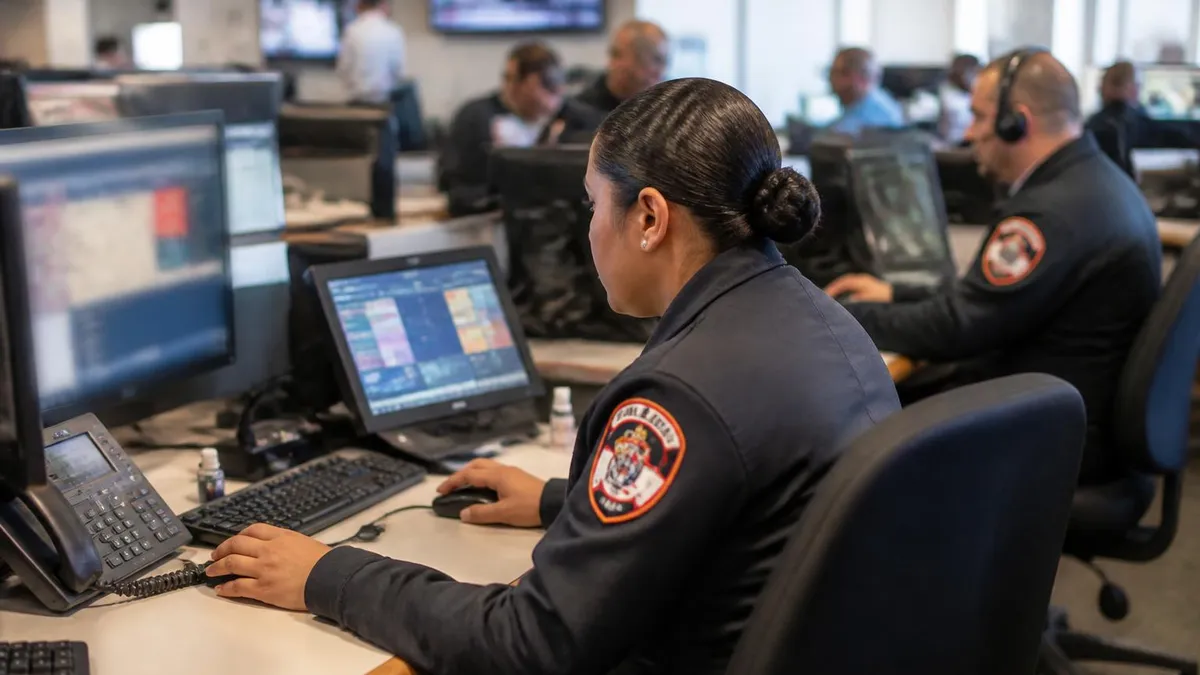
Every emergency in New York begins with a call to 911, which is routed through the NYPD's call-taking system before fire and medical incidents are transferred to FDNY dispatchers. These dispatchers work in specialized communications offices linked to headquarters command, where they verify the location, determine the nature of the emergency, and classify it so the correct units are assigned without delay.
Speed at this stage is everything. A structure fire, a cardiac arrest, and a gas leak each trigger different response packages. Dispatchers use computer-aided dispatch software to recommend the closest available units, accounting for traffic, unit status, and the specialized equipment a particular incident requires across the dense urban grid.
Centralized FDNY Headquarters: Strengths and Trade-offs
- +Unified command lets a single policy reach all 5 boroughs instantly
- +Integrated fire and EMS dispatch coordinates overlapping emergencies
- +Consolidated bureaus reduce duplicated administrative overhead
- +Central location in Brooklyn offers near-equal access to every borough
- +Real-time monitoring lets chiefs surge resources to major incidents
- +Standardized training and protocols ensure citywide consistency
- −A single command hub is a potential point of failure in a disaster
- −Large bureaucracy can slow ground-level decision-making
- −Centralization may feel distant from individual firehouse needs
- −Coordinating a 2-billion-dollar budget demands heavy administration
- −Citywide standards can overlook unique neighborhood conditions
- −Modern complexity requires constant technology investment to maintain
What FDNY Headquarters Coordinates Every Day
- ✓Setting citywide firefighting and rescue strategy
- ✓Managing the department's multi-billion dollar annual budget
- ✓Overseeing dispatch and emergency communications systems
- ✓Directing the nine operational divisions and battalions
- ✓Running the integrated EMS ambulance and paramedic system
- ✓Enforcing fire codes through the prevention bureau
- ✓Investigating suspicious fires with fire marshals
- ✓Standardizing recruit training and promotional exams
- ✓Maintaining the fleet of apparatus and support vehicles
- ✓Leading public education and community outreach programs
One command floor, eight and a half million people protected
The defining feature of the FDNY headquarters is integration: fire suppression, rescue, EMS, prevention, and investigation all report through one unified chain of command at MetroTech. This is why a single protocol change can reshape emergency response across all five boroughs within hours, giving New York one of the most responsive municipal safety systems on the planet.
The story of FDNY headquarters mirrors the story of New York's growth from a colonial port into a global megacity. For much of the 19th century, firefighting in New York was handled by competing volunteer companies, fiercely loyal to their neighborhoods and often more interested in rivalry than coordination. There was no central command in the modern sense, and the chaos of volunteer firefighting eventually pushed the city toward a professional, paid department that could be directed from a single point of authority.
The Metropolitan Fire Department was established in 1865, marking the birth of the professional FDNY. With professionalization came the need for administrative leadership: officers who could set standards, manage equipment, and coordinate companies across a rapidly expanding city. Early command operated out of various downtown Manhattan offices, growing in scope as the consolidation of New York City in 1898 brought Brooklyn, Queens, the Bronx, and Staten Island into a single municipal fire service.
Through the 20th century the department's command apparatus expanded dramatically. Two world wars, the rise of skyscrapers, the introduction of modern apparatus, and an enormous surge in building density all demanded more sophisticated central management. The department added bureaus for prevention, investigation, and training, and the administrative footprint outgrew its older quarters, eventually requiring a purpose-suited campus that could house an organization of tens of thousands under coordinated leadership.
A pivotal moment arrived in 1996 when New York City's Emergency Medical Service was merged into the FDNY. This transformed the department overnight, adding thousands of EMTs and paramedics and shifting the bulk of daily call volume from fires to medical emergencies. Headquarters had to absorb an entirely new operational culture, and the integration of EMS command into the existing structure remains one of the most significant administrative achievements in the department's history.
The terrorist attacks of September 11, 2001 left a permanent mark on the department and its command structure. The FDNY lost 343 members that day, including much of its senior command staff who had rushed to the World Trade Center. Rebuilding leadership, hardening communications, and rethinking large-scale incident command became central priorities, and many of the systems coordinated from headquarters today were shaped directly by the lessons and losses of that catastrophe.
The consolidation of administrative functions at the MetroTech Center in Brooklyn represented the modern culmination of this long evolution. Rather than scattering offices across multiple boroughs, the department brought its commissioner, chiefs, and bureaus into a coordinated campus designed for the demands of 21st-century emergency management. The result is a headquarters that reflects more than 150 years of institutional learning, every layer of it built on hard-won experience protecting a city that never stops growing.
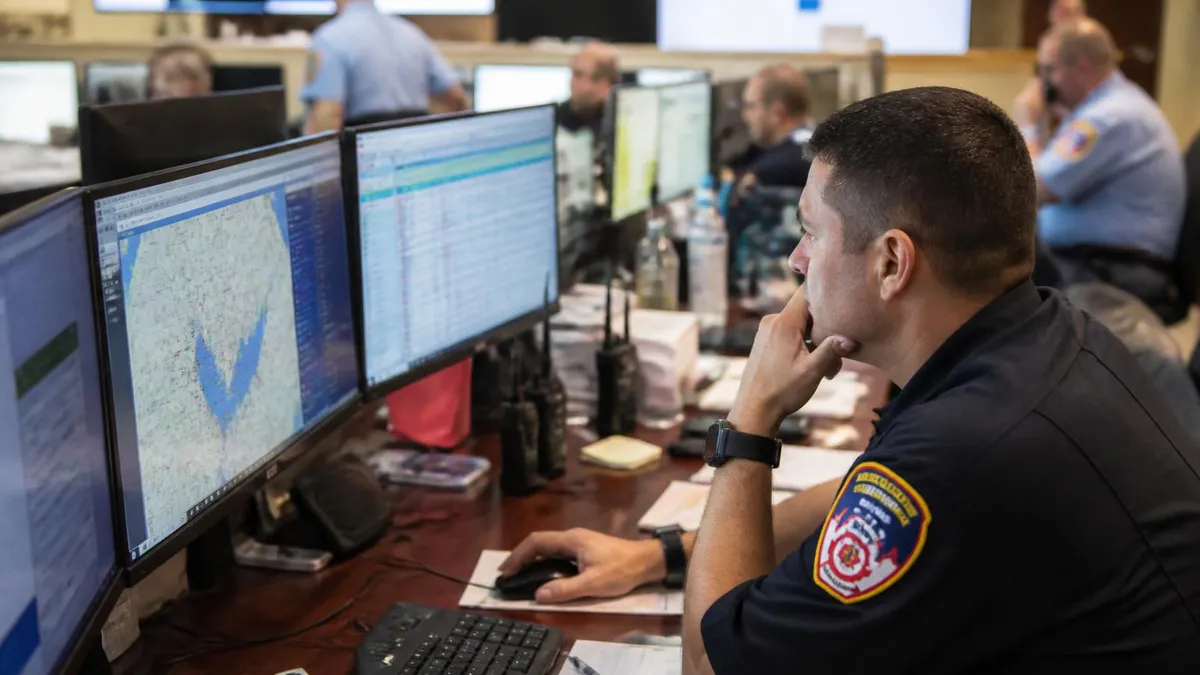
The FDNY administrative headquarters at MetroTech is a working command and office facility, not a public attraction. Visitors interested in FDNY history should instead explore the New York City Fire Museum in Manhattan, which offers exhibits, apparatus, and educational programs open to the public.
The true measure of FDNY headquarters is how its decisions translate into action on the street. When a battalion chief in the Bronx orders a second alarm at a tenement fire, that escalation flows through systems designed and monitored at MetroTech. The command floor does not micromanage every incident, but it sets the framework, the staffing, the equipment, and the protocols that determine whether the response succeeds. Headquarters is the architect; the firehouses are the builders executing the plan in real time.
Resource allocation is one of the headquarters' most consequential functions. With finite engines, ladders, and ambulances spread across nearly 500 square miles, command must constantly balance coverage. If a major fire pulls multiple companies into one neighborhood, headquarters orchestrates the relocation of units from quieter areas to fill the gap, ensuring no borough is left exposed. This citywide chess game runs continuously, invisible to the public but essential to keeping response times low.
Major incidents reveal the headquarters at its most critical. High-rise fires, building collapses, transit emergencies, and severe weather events trigger large-scale incident command, often with senior chiefs deploying to the scene while command staff coordinate logistics, mutual aid, and inter-agency cooperation from MetroTech. The department's ability to scale from a single ambulance call to a multi-alarm disaster within minutes is a direct product of how headquarters structures its chain of command and communications.
Inter-agency coordination is another headquarters responsibility that the public rarely sees. The FDNY works alongside the NYPD, the Office of Emergency Management, hospitals, utility companies, and federal partners during significant events. Headquarters maintains the relationships, the protocols, and the communications links that let these agencies operate together rather than at cross purposes, which is vital during anything from a hurricane to a coordinated emergency spanning multiple boroughs at once.
Policy and accountability also live at headquarters. When the department updates its firefighting tactics, revises medical protocols, or responds to a line-of-duty death with a safety review, those changes originate in the bureaus at MetroTech. The command staff is responsible not only for winning today's emergencies but for learning from them, refining doctrine, and protecting both the public and the members who serve. That continuous improvement loop is one of the headquarters' quietest but most important roles.
For anyone studying the department, understanding this top-down structure clarifies how every piece fits together. The radio codes, the box numbers, the divisions, and the medical protocols all connect upward to the same command hub. Our guide to the fdny headquarters EMS branch shows how that integration plays out for medical response specifically, completing the picture of a department where fire and emergency medicine operate under one unified, Brooklyn-based command.
If you are preparing for an FDNY exam or simply want to retain what you have learned about the department's command structure, a few practical study strategies will serve you well. Start by mapping the chain of command from the top down: Fire Commissioner, Chief of Department, divisions, battalions, and individual companies. Visualizing this pyramid makes it far easier to remember how authority flows and where each bureau fits, because nearly every exam topic connects back to that organizational skeleton in one way or another.
Next, treat the bureaus as distinct study units. Spend dedicated time on operations, EMS, prevention, investigation, and training, and write a one-sentence summary of what each one does. Active recall, where you close the book and try to reproduce the structure from memory, is dramatically more effective than passive rereading. Quiz yourself repeatedly until you can name the bureaus and their core functions without hesitation, then test yourself again a day later to lock the material in.
Do not neglect the communications material. Radio signals, box numbers, and response codes appear frequently and reward steady, spaced practice. Make flashcards for the most common codes and review them in short daily sessions rather than cramming. The brain retains these symbolic systems best through repeated short exposures, so even ten minutes a day over several weeks will outperform a single marathon study session the night before your exam.
Practice tests are the single highest-leverage tool available to you. They reveal exactly which topics you have mastered and which still need work, and they train you to handle the format and timing pressure of the real exam. Take a practice test early to establish a baseline, then take more as you study, tracking your score on each attempt. Watching that number climb is both motivating and a reliable signal that your preparation is genuinely working.
When you miss a question, resist the urge to move on quickly. Instead, dig into why the correct answer is correct and why your choice was wrong. This error analysis is where real learning happens. Keep a running list of your missed questions organized by topic, and you will quickly see patterns: maybe building construction is solid but EMS protocols are shaky, telling you exactly where to focus your remaining study time for maximum gain.
Finally, connect the abstract structure to concrete reality. When you read about a multi-alarm fire in the news or watch FDNY units respond in your neighborhood, ask yourself how the command structure you have studied is operating behind the scenes. Linking textbook knowledge to the real department deepens understanding and makes the material stick. Combine that curiosity with consistent practice testing, and you will walk into your exam confident, well-prepared, and genuinely knowledgeable about how the FDNY headquarters runs New York's emergency response.
FDNY Questions and Answers
FDNY EMS — How New York City's Emergency Medical Service Works and How to Become an FDNY EMT or Paramedic
FDNY Marine Units: Inside the Fire Department of New York's Fireboat Fleet and Marine 6
FDNY Practice Test Video Answers
FDNY Codes: A Complete Guide to Fire Department of New York Radio Signals, Box Numbers, and Response Codes
FDNY Commissioner: Role, History, and How Position Works
About the Author
Law Enforcement Trainer & Civil Service Exam Specialist
John Jay College of Criminal JusticeMarcus B. Thompson earned his Master of Arts in Criminal Justice from John Jay College of Criminal Justice and served 12 years as a law enforcement officer before transitioning to full-time academy instruction. He is a POST-certified instructor who has prepared candidates for police entrance exams, firefighter assessments, and civil service examinations across dozens of agencies.
Join the Discussion
Connect with other students preparing for this exam. Share tips, ask questions, and get advice from people who have been there.
View discussion (9 replies)