
FDNY Practice Test: Complete Study Guide to Pass the Fire Department Exam
Prepare with our FDNY practice test! Free questions covering building construction, EMS, and more. Start studying today. ✅

An FDNY practice test is the single most effective tool you can use to prepare for the New York City Fire Department entrance exam. The FDNY exam is notoriously competitive — thousands of candidates apply each cycle, and only a fraction of those who sit for the written test ultimately earn a spot in the Fire Academy. By working through realistic practice questions before exam day, you train your brain to recognize the question formats, manage time pressure, and identify the knowledge gaps that could cost you a passing score.
The FDNY written exam covers a broad range of topics, from reading comprehension and spatial reasoning to fire science, building construction, and emergency medical response. Many first-time test-takers underestimate how wide the content breadth really is. The exam is not simply a general aptitude test — it demands applied knowledge of how fires spread through different building types, how emergency medical systems are organized, and how firefighters communicate under extreme conditions. Structured practice is the only reliable way to build that domain knowledge before the clock starts on test day.
One of the most common mistakes candidates make is relying exclusively on studying written notes or textbooks without ever working through timed practice sets. Research consistently shows that active recall — retrieving information from memory under test-like conditions — produces far stronger retention than passive review. Every time you answer a practice question, evaluate why you got it right or wrong, and then return to it later, you are cementing that knowledge in long-term memory in a way that re-reading notes simply cannot match.
Understanding the fdny practice test communication framework, including radio codes, operational terminology, and chain-of-command language, is another layer of preparation that separates average scorers from top performers. Radio codes and dispatch protocols appear on the exam and in practical scenarios, so familiarity with how the FDNY organizes information in the field directly supports your written test performance as well as your eventual on-the-job effectiveness.
PracticeTestGeeks.com has built a comprehensive library of FDNY practice materials designed to mirror the actual exam's difficulty level, phrasing, and topic distribution. Whether you are just beginning your study journey or fine-tuning in the final days before your exam date, these free practice questions give you an accurate benchmark of where you stand and what you still need to strengthen. Each question set is organized by subject area so you can target your weakest domains first.
Setting a realistic study timeline is critical. Most successful candidates spend eight to twelve weeks preparing for the FDNY exam, dedicating at least one to two hours per day. That time should be split roughly evenly between content review and active practice testing. Starting your preparation earlier gives you the luxury of reviewing your mistakes, revisiting difficult topics, and running multiple full-length simulated exams before the real thing. Candidates who cram in the final week consistently underperform compared to those who spread their preparation over months.
The information in this guide will walk you through exactly how the FDNY exam is structured, which subject areas carry the most weight, how to build an effective study schedule, and how to use the practice tests on this site to maximize your score. Whether you are a first-time applicant or a repeat test-taker looking to improve your results, this resource is designed to give you every possible advantage on exam day.
FDNY Exam by the Numbers
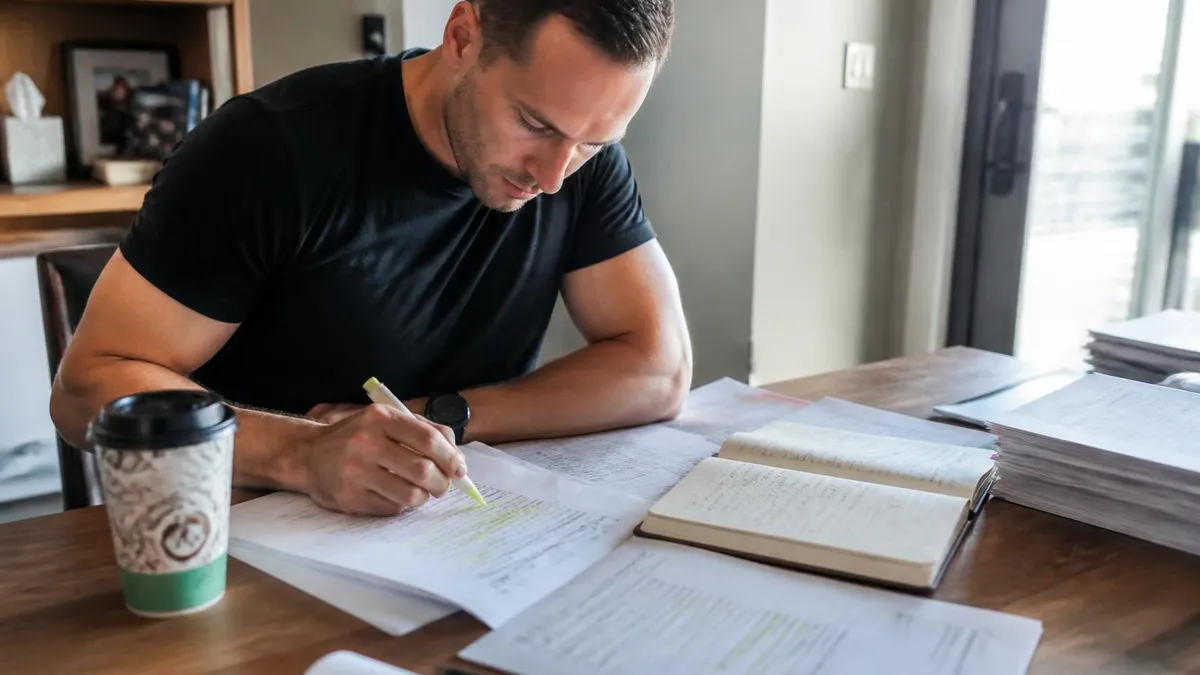
FDNY Written Exam Format
| Section | Questions | Time | Weight | Notes |
|---|---|---|---|---|
| Reading Comprehension | 20 | 45 min | 24% | Firefighter memos, procedures, maps |
| Logical & Spatial Reasoning | 15 | 35 min | 18% | Diagrams, floor plans, sequencing |
| Fire Science & Building Construction | 20 | 45 min | 24% | Fire behavior, materials, hazards |
| Emergency Medical Response | 15 | 35 min | 18% | First aid, EMS protocols, triage |
| Judgment & Situational Awareness | 15 | 30 min | 18% | Decision-making under stress |
| Total | 85 | 3.5 hours | 100% |
Understanding what the FDNY written exam actually tests is the foundation of any effective study plan. At its core, the exam measures your ability to learn and apply new information quickly, think logically under pressure, and demonstrate the spatial and mechanical reasoning skills that are essential in a fireground environment. The exam is not designed to reward raw memorization — it rewards candidates who can take a piece of information presented in the question itself and apply it correctly in a novel situation.
The reading comprehension section is often where candidates lose the most points, not because the passages are exceptionally difficult, but because test-takers rush through them. This section presents firefighting memos, standard operating procedures, and emergency protocols in written form, then asks you to answer questions based solely on what the passage states. Many candidates make the error of answering based on prior knowledge rather than what the text explicitly says. The correct answer is always supported by the passage — your outside knowledge should never override what the text tells you.
Logical and spatial reasoning questions ask you to mentally rotate diagrams, read floor plans, sequence events in the correct order, or trace the path a firefighter would take through a building based on a given map. These questions are highly learnable with practice, but they require a different kind of study than content-based topics. The best way to improve on this section is sheer repetition — the more diagram and map questions you work through, the faster and more accurately your brain processes spatial information under time pressure.
Fire science and building construction is arguably the most content-heavy section of the FDNY exam. You need to understand the stages of fire development, how oxygen supply affects fire behavior, the difference between flashover and backdraft, and how different building materials — wood-frame, ordinary construction, heavy timber, non-combustible, and fire-resistive — respond to fire conditions. This knowledge directly applies to tactical firefighting decisions, and the exam reflects that real-world importance by testing it in scenario-based questions rather than simple definition recall.
Emergency medical response questions cover first aid protocols, the chain of survival for cardiac arrest, triage categories in mass casualty incidents, and the basic operations of emergency medical services within the FDNY system. The FDNY operates one of the largest EMS systems in the country, and firefighters are expected to function as first responders in medical emergencies. These questions tend to be straightforward for candidates who have any prior first aid or CPR training, but they require careful reading because answer choices are often deliberately close to each other.
Judgment and situational awareness questions present you with scenarios — a fire is spreading rapidly, a victim is trapped, a command decision must be made — and ask what the correct course of action is. These questions are testing your understanding of firefighter priorities: life safety above all else, incident stabilization second, property conservation third. Candidates who internalize this priority hierarchy and practice applying it across a wide range of scenarios consistently perform well on this section, even without extensive firefighting experience.
Taken together, these five subject areas create an exam that is as much about cognitive adaptability as it is about domain knowledge. The best FDNY candidates are those who have built a genuine understanding of firefighting principles, not just memorized a list of facts. That deeper understanding shows up in practice test scores — and it shows up even more clearly on exam day, when the pressure is real and the questions are designed to trip up candidates who studied only the surface layer of each topic.
FDNY Study Strategies by Subject Area
Building construction is the most memorization-intensive section of the FDNY exam, and the most effective way to master it is to study one construction type at a time until you can describe its fire behavior characteristics, typical collapse mode, and tactical implications without hesitation. Start with Type V wood-frame and Type III ordinary construction, as these appear most frequently on practice questions and represent the structures firefighters encounter most often in New York City neighborhoods.
Once you have the five construction types solidly memorized, shift your focus to fire behavior within those structures — specifically how fire loads, void spaces, and renovation patterns affect suppression tactics. Pay special attention to the concept of structural compromise timelines: wood-frame structures can lose structural integrity far faster under fire conditions than fire-resistive high-rises, and the exam frequently tests whether candidates understand this critical difference and its impact on firefighter safety decisions.

FDNY Practice Tests: Benefits and Limitations
- +Builds test-taking stamina through realistic timed simulations that mirror actual exam conditions
- +Identifies specific knowledge gaps so study time targets the weakest areas first
- +Reinforces active recall, which produces far stronger long-term retention than passive review
- +Familiarizes you with FDNY question phrasing and common answer-choice traps before exam day
- +Free access to hundreds of categorized questions means no barrier to consistent daily practice
- +Tracking score trends over weeks of practice reveals whether your preparation is actually working
- −Practice tests cannot perfectly replicate the psychological pressure of the real exam environment
- −Over-reliance on practice tests without content review leaves gaps in conceptual understanding
- −Question banks can become stale if you review the same pool repeatedly without introducing new material
- −Score improvements on practice tests may create false confidence if the questions are easier than the real exam
- −Practice cannot substitute for physical fitness preparation required in later hiring stages
- −Without reviewing wrong answers in detail, repeated practice simply reinforces existing errors
FDNY Exam Day Preparation Checklist
- ✓Confirm your exam date, time, and testing location at least one week in advance through the DCAS portal
- ✓Bring two valid forms of government-issued photo identification to the testing center
- ✓Arrive at the testing site at least 30 minutes early to complete check-in without rushing
- ✓Eat a protein-rich meal the morning of the exam to maintain focus and energy throughout the session
- ✓Review your most difficult practice question categories in the 48 hours before the exam, not the night before
- ✓Get at least seven hours of sleep the two nights before your exam date — sleep deprivation impairs reasoning ability
- ✓Bring pencils, an eraser, and any permitted materials listed in your exam admission ticket
- ✓Read every question completely before selecting an answer, even if you think you know it immediately
- ✓Flag questions you are unsure about and return to them after completing the rest of the section
- ✓Trust your preparation — do not second-guess answers you felt confident about during practice testing

Scoring in the Top 20% Is More Important Than Just Passing
The FDNY written exam is scored on a ranked list system. Passing the exam does not guarantee a job offer — your rank on the eligible list determines when and whether you are called. Candidates with scores in the top 20% of all test-takers are called first, while those who barely pass may wait years before receiving an appointment notice. Aim to maximize your score, not simply clear the minimum threshold.
Understanding the FDNY scoring and appointment process is just as important as preparing for the written exam itself. The Department of Citywide Administrative Services (DCAS) administers the FDNY firefighter exam on behalf of the city, and scores are compiled into an eligible list that can remain active for up to four years. Your final score is not simply your raw exam score — it is adjusted for any additional credits you may qualify for, such as veterans preference points, which can add up to five or ten additional points depending on your service status and discharge classification.
The eligible list rank determines your appointment priority. Candidates at the top of the list are called to the next available Academy class first, while those lower on the list may have to wait through multiple class cycles before receiving their appointment notice. In high-demand cycles where many candidates score in the top range, even a one-point score difference can mean the difference between being called in the first class and waiting an additional year or more. This is why maximizing your written exam score — not merely passing — is the strategic imperative for every serious candidate.
After clearing the written exam and achieving a competitive list rank, candidates face additional screening steps before receiving a final job offer. The FDNY requires a medical examination that assesses cardiovascular fitness, vision, hearing, and general physical health. A physical performance test evaluates candidates on job-specific tasks including ladder climbing, hose handling, and equipment carrying. A psychological evaluation and a comprehensive background investigation — covering employment history, credit history, criminal record, and character references — round out the process.
The Fire Academy itself is an eighteen-week program that transforms selected candidates into certified firefighters. The curriculum covers fire suppression tactics, emergency medical response, hazardous materials operations, rope rescue, and a host of additional emergency disciplines. Academy training is physically and academically demanding, and candidates who arrive with a strong academic foundation from their exam preparation are better positioned to absorb the volume of new information the Academy delivers at a rapid pace.
Salary and benefits are a major reason the FDNY firefighter position is so competitive. Starting salaries for probationary firefighters are set by the uniformed firefighters union contract, and experienced firefighters with specialty assignments and overtime can earn substantially more. The FDNY pension system, health benefits package, and job security make this one of the most financially stable careers available in New York City without a college degree requirement, though higher education and military service are viewed favorably throughout the hiring process.
Many candidates ask whether it is worthwhile to apply multiple times if they do not receive an appointment in the first cycle. The answer is almost always yes. The exam is offered periodically, and each time you take it with better preparation, your score and list rank can improve significantly. Candidates who treat each exam cycle as a learning experience — analyzing what went wrong, targeting new weak areas, and building on prior knowledge — often achieve dramatically better results on subsequent attempts. Persistence, combined with structured practice, is the defining characteristic of candidates who ultimately succeed.
The FDNY also offers a Cadet Program for candidates between the ages of 17 and 21 who want to begin their career preparation before they are eligible to take the full firefighter exam. The Cadet Program provides early exposure to FDNY operations, mentorship from active firefighters, and a pathway to accelerated consideration during the standard hiring process. If you are in this age range and seriously considering an FDNY career, exploring the Cadet Program while simultaneously building your exam knowledge base is one of the most strategic investments you can make in your future career.
FDNY firefighter applicants must be at least 17.5 years old to take the written exam and 21 years old by the time of appointment. The maximum age for appointment is 29 years old, though military service can extend this limit by the length of active duty served, up to six years. Missing the age window is disqualifying and cannot be waived, so check eligibility requirements carefully before your planned exam cycle.
The most common and costly mistakes FDNY candidates make fall into predictable patterns — and knowing what those mistakes are before you start studying gives you a significant advantage over the majority of applicants. The first and most widespread mistake is underestimating the exam. Because the FDNY exam is a multiple-choice written test rather than a hands-on skills evaluation, many candidates assume that basic intelligence and common sense will be sufficient. The exam is specifically designed to defeat that assumption, with distractor answer choices crafted to appeal to candidates who are reasoning from incomplete or surface-level knowledge.
The second major mistake is studying without a structured plan. Candidates who open a textbook, read for an hour, and then switch to a different topic without any systematic coverage of the full content outline almost always have large blind spots on exam day.
The FDNY exam tests the full range of subject matter areas, and a disorganized study approach virtually guarantees that at least one high-weight section will be inadequately prepared. Before you study a single question, map out every topic the exam covers, estimate your current proficiency in each, and build a week-by-week plan that allocates more time to your weakest areas.
Neglecting timed practice is another critical error. Many candidates do all of their studying in a relaxed, untimed environment and then experience significant difficulty when confronted with the time pressure of the actual exam. The FDNY exam moves quickly, and candidates who have never practiced under timed conditions often find themselves rushing through the final sections, making careless errors, or running out of time entirely. Introduce timed practice sessions at least four weeks before your exam date, and simulate full-length timed exams at least twice in the final two weeks of preparation.
Failing to review wrong answers in depth is perhaps the single most self-defeating habit a practice test user can adopt. The value of a practice question is not in answering it correctly the first time — it is in understanding precisely why each wrong answer is wrong and why the correct answer is right.
Candidates who review each incorrect response, trace it back to the underlying concept it tests, and then seek out additional practice on that specific concept learn far more per hour of study time than candidates who simply note their score and move on to the next practice set.
Physical preparation is also neglected by a surprising number of FDNY candidates who focus exclusively on the written exam. While the written test is your first hurdle, the physical performance test that follows is elimination-level. Candidates who wait until after the written exam to begin physical training often find themselves underprepared for the demanding functional fitness requirements. Beginning a structured physical training program — emphasizing cardiovascular endurance, functional strength, and job-specific movement patterns — alongside your written exam preparation is the smarter, more efficient approach to the FDNY hiring process as a whole.
Finally, many candidates make the mistake of studying in isolation rather than building a peer study group or finding a mentor. Firefighters who are currently active or recently retired are an invaluable resource for exam preparation. They can explain the practical reasoning behind exam questions, share which topics the exam emphasizes most heavily in recent cycles, and provide motivational support during the long preparation period. Connecting with FDNY study groups through community organizations, social media groups, or local fire preparatory courses can meaningfully accelerate your progress and accountability.
The good news is that all of these mistakes are correctable. The candidates who pass the FDNY exam on their first attempt with competitive scores are not necessarily more intelligent than those who struggle — they are simply more disciplined, more structured, and more consistent in how they approach preparation. Use the practice resources on this site strategically, review every wrong answer with genuine curiosity, and commit to the full preparation timeline. Those three habits alone will put you ahead of the majority of candidates walking into the exam room on test day.
Practical preparation for the FDNY exam goes beyond studying content — it involves building the mental habits and physical routines that allow you to perform at your best when the stakes are highest.
One of the most powerful techniques experienced test-takers use is what cognitive scientists call spaced repetition: rather than studying a topic intensively for one or two sessions and then moving on, you review the same material across multiple sessions spaced days apart. Each spaced review forces your brain to retrieve the information from scratch, which strengthens the memory trace far more effectively than massed practice in a single sitting.
Building a daily practice routine is far more effective than occasional marathon study sessions. Setting aside forty-five to sixty minutes each day for deliberate practice — working through ten to fifteen focused practice questions, reviewing every answer explanation, and spending additional time on the topics where you made errors — compounds dramatically over a twelve-week preparation period. Daily consistency builds the kind of automatic recall that allows you to answer exam questions quickly and confidently, rather than having to laboriously reconstruct reasoning from first principles under time pressure.
Subject-matter variety within each study session helps prevent the tunnel-vision effect that occurs when candidates study only one topic for extended periods. A well-designed daily session might begin with ten minutes reviewing building construction flashcards, transition to fifteen minutes of timed reading comprehension questions, and close with ten minutes of spatial reasoning diagrams. This mixed-topic approach keeps engagement high, reinforces connections between different content areas, and mirrors the variety of the actual exam, where questions shift across topics without warning.
Mock exam simulation is the most powerful form of exam preparation available, and it is most effective when treated as seriously as the real exam. Find a quiet space with no distractions, set a strict timer, put your phone away, and work through a full-length practice set without pausing or referring to notes.
After completing the mock exam, score it immediately and record your total score and your score by section. Tracking these numbers across multiple mock exams reveals your trajectory — whether you are improving, plateauing, or regressing — and gives you objective data to adjust your study plan in response.
Community resources can supplement self-study in important ways. Many New York City libraries offer free exam preparation workshops for civil service exams including the FDNY test. Local community organizations, particularly in neighborhoods with strong firefighting traditions like Bay Ridge, Canarsie, and the South Bronx, often run informal study groups where candidates share materials, quiz each other, and discuss preparation strategies. Connecting with these communities not only improves your knowledge but builds the network of peers and mentors that will support your career long after the exam is over.
Mental preparation for exam anxiety is an underappreciated dimension of FDNY exam success. Candidates who have done the preparation work but struggle with test anxiety often underperform relative to their actual knowledge level. The most effective antidotes are thorough preparation itself — which builds genuine confidence rather than false reassurance — and deliberate breathing techniques that activate the parasympathetic nervous system in moments of acute stress. Practicing box breathing (inhale four counts, hold four counts, exhale four counts, hold four counts) during practice sessions trains this response so it is available automatically on exam day.
Remember that the FDNY exam is a starting line, not a finish line. Passing the written exam with a competitive score opens the door to one of the most respected and rewarding careers in public service. The months of preparation you invest now will continue paying dividends through every stage of the hiring process, through the Fire Academy, and throughout your career. Every practice question you answer today is a small step toward the day you walk into your first firehouse as a probationary firefighter wearing the FDNY shield.
FDNY Questions and Answers
FDNY 10 Codes: Complete Guide to Fire Department Radio Communication
FDNY vs NYPD Hockey Game: Inside New York's Bravest vs Finest Heroes on Ice Rivalry
FDNY Runs and Workers: What the Numbers Really Mean
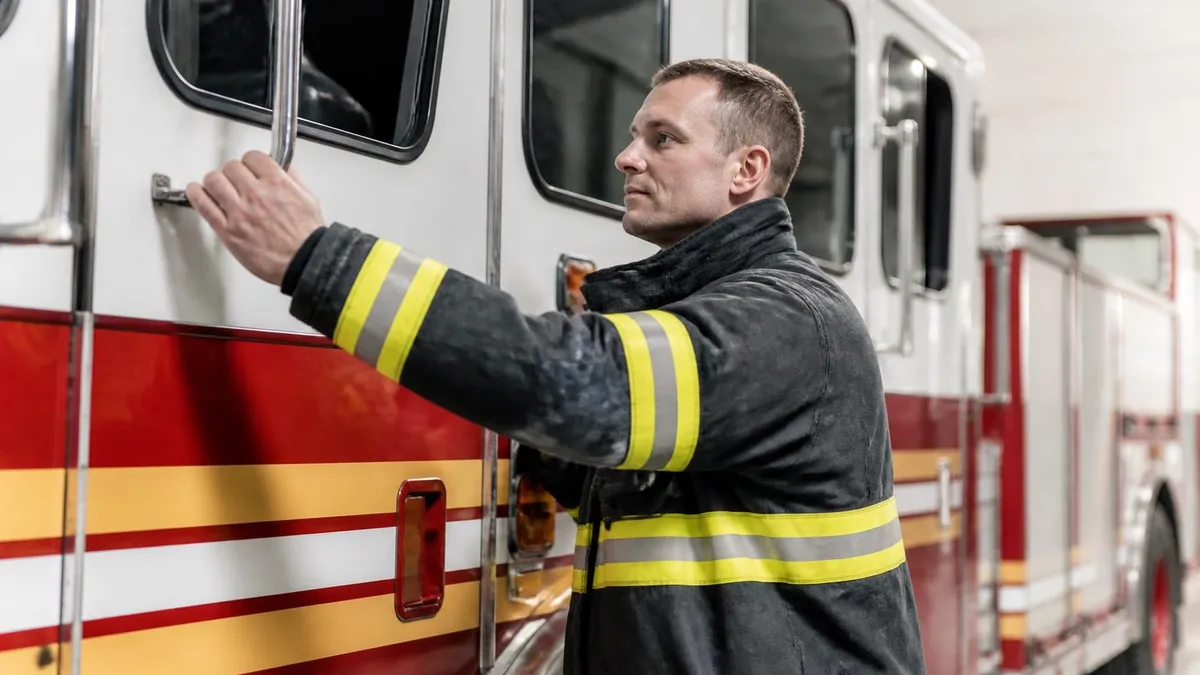
FDNY Firefighter Career: Roles, Heroes and How to Become One

FDNY Scanner: How to Listen to New York's Bravest in Real Time
About the Author

Law Enforcement Trainer & Civil Service Exam Specialist
John Jay College of Criminal JusticeMarcus B. Thompson earned his Master of Arts in Criminal Justice from John Jay College of Criminal Justice and served 12 years as a law enforcement officer before transitioning to full-time academy instruction. He is a POST-certified instructor who has prepared candidates for police entrance exams, firefighter assessments, and civil service examinations across dozens of agencies.
Join the Discussion
Connect with other students preparing for this exam. Share tips, ask questions, and get advice from people who have been there.
View discussion (9 replies)