
Best Theory Test App: Complete UK Study Guide for 2026
🧠 Find the best theory test app for your UK driving test. Compare top apps, study strategies, and practice tools to pass first time.
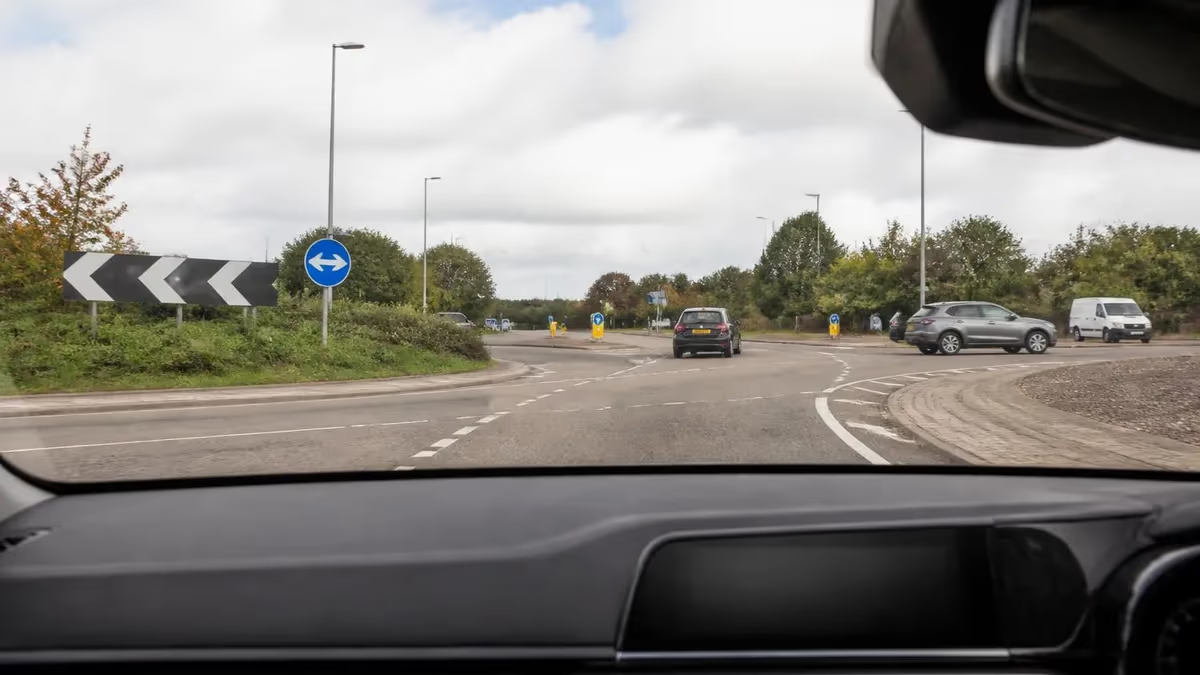
Choosing the best theory test app is one of the most important decisions you will make on your journey to passing the UK driving theory test. With dozens of options available on the App Store and Google Play, it can feel overwhelming to decide which platform will genuinely prepare you for the 50-question multiple-choice section and the challenging hazard perception clips. The right app can mean the difference between passing first time and paying for a costly resit, so this guide breaks down exactly what to look for and which features matter most. Practice with the free DVSA UK Driving Theory practice test on PracticeTestGeeks (7 questions with answer explanations).
The DVSA theory test consists of two parts: a multiple-choice section where you must score at least 43 out of 50, and a hazard perception section where you must score at least 44 out of 75. Both parts must be passed in the same sitting. Most apps focus heavily on the multiple-choice bank of over 700 official questions, but the best apps also include realistic hazard perception video simulations that closely mirror the real test environment you will face at a DVSA test centre.
What makes a theory test app truly excellent is the depth of its question bank, the accuracy of its explanations, and how well it adapts to your individual weaknesses. An app that simply shows you questions in random order is far less effective than one that uses spaced repetition to resurface topics you are struggling with. Look for apps that track your progress by category — covering areas such as road signs, vehicle safety, motorway rules, and eco-friendly driving — so you can focus your revision time where it counts most.
Many learner drivers underestimate how long it takes to properly prepare for the theory test. Research from the DVSA suggests that candidates who spend less than 20 hours studying are significantly more likely to fail. A good app will help you structure those hours efficiently by setting daily goals, reminding you to practise through push notifications, and providing mock tests that replicate the exact timing and format of the real exam. If you are also planning to best theory test app booking strategy, understanding your preparation timeline is equally important.
The UK theory test costs £23 to book, and a resit carries the same fee. When you factor in the time cost of a failed attempt — rescheduling, additional revision, and the emotional setback — investing in a quality study app is clearly worthwhile. Premium apps typically cost between £4.99 and £14.99 for lifetime access, while several strong free options exist that are supported by advertising. Either way, the return on investment compared to a resit fee is excellent.
This guide evaluates the most popular theory test apps on the market, comparing their question banks, hazard perception modules, user interfaces, and offline capabilities. We will also cover what the official DVSA materials include, how to integrate app-based study with other revision methods such as the Highway Code, and the specific study habits that correlate with first-time pass rates. Whether you are just starting your learning journey or have a test date already booked, this comprehensive resource will help you make the most of your preparation time.
Throughout this article you will find structured study schedules, checklist guides, and honest assessments of both the strengths and limitations of app-based learning. The goal is to give you a complete, practical framework so that you walk into your theory test centre feeling confident, well-prepared, and ready to pass. The theory test does not have to be a stressful hurdle — with the right tools and the right strategy, it becomes a milestone you can clear with ease.
Free DVSA UK Driving Theory Study Tools
Interactive DVSA UK Driving Theory resources on PracticeTestGeeks, free to start:
- DVSA UK Driving Theory flashcards — review key terms and concepts card by card
- DVSA UK Driving Theory study guide — topic-by-topic overview of what the exam covers
- DVSA UK Driving Theory cheat sheet — one-page printable summary for last-minute review
UK Theory Test by the Numbers
Key Facts at a Glance
| Item | Value | Details |
|---|---|---|
| Test Booking Fee | £23 | Same cost applies to every resit |
| Official Questions | 700+ | Full DVSA multiple-choice question bank |
| Total Test Time | 57 min | Combined for both sections |
| Pass Mark | 43/50 | Minimum score required on multiple-choice |

Study Schedule: 4-Week Theory Test App Plan
- ▸Complete a diagnostic mock test to identify weak areas
- ▸Study all road sign categories using your chosen app's flashcard mode
- ▸Read sections 1–5 of the Highway Code alongside app questions
- ▸Complete 50 practice questions daily in rules-of-the-road topic
- ▸Review all incorrect answers with explanations before moving on
- ▸Complete 50 vehicle safety questions daily using spaced repetition
- ▸Study motorway rules section — smart motorways, lane discipline, overhead signs
- ▸Practice eco-friendly driving and vehicle loading question sets
- ▸Introduce hazard perception training: watch 10 video clips per day
- ▸Take one full timed mock test and record your score for tracking
- ▸Complete a full hazard perception mock test (14 clips) every other day
- ▸Use app analytics to identify your three lowest-scoring topic areas
- ▸Dedicate 20 minutes daily to weakest topic categories
- ▸Study first aid, incidents and accidents, and emergency procedures
- ▸Watch DVSA hazard perception tutorial video for click-timing guidance
- ▸Complete one full timed mock test (both sections) every day
- ▸Target consistent scores of 47+ on multiple-choice before test day
- ▸Review any topic where your accuracy falls below 80%
- ▸Practise under exam conditions — no pausing, no looking up answers
- ▸Rest the evening before your test and avoid cramming new material
The most effective theory test apps share several non-negotiable features that separate genuinely useful study tools from apps that simply pad out their question counts. Understanding these core features will help you make a much more informed choice before committing to a platform. At the top of the list is complete coverage of the official DVSA question bank — every question that could appear on your actual test must be accessible within the app, along with accurate, clearly written explanations that help you understand the reasoning behind each correct answer rather than just memorising answers by rote.
Spaced repetition is perhaps the single most scientifically validated study technique available, and the best theory test apps implement it automatically. When you answer a question correctly, the algorithm delays showing it to you again. When you get a question wrong, it resurfaces more frequently until you have mastered it. This mirrors how human memory actually consolidates information and is far more efficient than simply repeating the entire question bank from start to finish every session. Over a four-week revision period, spaced repetition alone can dramatically improve your retention of difficult topics like motorway rules and vehicle fault identification.
Hazard perception simulation quality varies enormously between apps. The actual DVSA test uses HD video clips filmed from the driver's perspective, showing everyday road scenes in which one or two developing hazards are embedded. You score points by clicking at the moment you spot a hazard forming — not after it has fully developed. Some apps use low-quality or poorly produced clips that do not accurately replicate this experience. Before selecting an app, check that its hazard perception module uses realistic, well-produced footage and provides feedback on your click timing so you can refine your technique.
Offline functionality is a feature that many candidates overlook until it becomes critical. If you commute by train or underground, or if you live in an area with inconsistent mobile data coverage, an app that requires an internet connection for every session will severely limit your study opportunities. The best apps allow you to download question sets and hazard perception clips for offline use, meaning you can study on your morning commute, during a lunch break, or anywhere else without needing a reliable data connection. This flexibility can add several hours of productive revision to your weekly schedule.
Progress tracking and analytics are what transform a passive question-answering exercise into a genuinely strategic revision programme. Look for apps that show your percentage accuracy by topic category, your score trajectory over time, and how much of the total question bank you have covered. Some premium apps also display comparative statistics — showing how your performance compares to other users at the same stage of revision. This benchmark data can be motivating and helps you calibrate whether your preparation is on track for a first-time pass.
The user interface and overall app design may seem like a superficial concern compared to content quality, but a poorly designed app creates friction that discourages daily use. If the app feels clunky, takes too long to load between questions, or makes it difficult to navigate between topic areas, you are less likely to open it consistently.
The best theory test apps are intuitive, fast, and genuinely enjoyable to use — which matters enormously when you need to maintain daily revision habits over several weeks. Read recent reviews on the App Store or Google Play to get an honest picture of current usability.
Mock test functionality should replicate the real exam as closely as possible, including the 57-minute total time limit, the 50-question multiple-choice format, and the 14-clip hazard perception section. The best apps allow you to set up a full mock test with a single tap and will not let you check answers mid-test, forcing you to practise under genuine exam conditions. After completing a mock test, you should receive a detailed breakdown of every answer with explanations, your category-by-category accuracy, and a clear pass or fail verdict based on the real DVSA pass marks.
DVSA Practice Test Questions
Prepare for the DVSA - UK Driving Theory Test exam with our free practice test modules. Each quiz covers key topics to help you pass on your first try.
DVSA Eco-Friendly Driving and Vehicle Loading
DVSA Exam Questions covering Eco-Friendly Driving and Vehicle Loading. Master DVSA Test concepts for certification prep.
DVSA Hazard Awareness
Free DVSA Practice Test featuring Hazard Awareness. Improve your DVSA Exam score with mock test prep.
DVSA Incidents, Accidents and First Aid
DVSA Mock Exam on Incidents, Accidents and First Aid. DVSA Study Guide questions to pass on your first try.
DVSA Motorway Rules and Smart Motorways
DVSA Test Prep for Motorway Rules and Smart Motorways. Practice DVSA Quiz questions and boost your score.
DVSA Rules of the Road (Highway Code)
DVSA Questions and Answers on Rules of the Road (Highway Code). Free DVSA practice for exam readiness.
DVSA - UK Driving Theory Hazard Awareness ...
DVSA Mock Test covering - UK Driving Theory Hazard Awareness and Perception. Online DVSA Test practice with instant feedback.
DVSA - UK Driving Theory Motorway Rules an...
Free DVSA Quiz on - UK Driving Theory Motorway Rules and Regulations. DVSA Exam prep questions with detailed explanations.
DVSA - UK Driving Theory Road and Traffic ...
DVSA Practice Questions for - UK Driving Theory Road and Traffic Signs. Build confidence for your DVSA certification exam.
DVSA - UK Driving Theory Rules of the Road
DVSA Test Online for - UK Driving Theory Rules of the Road. Free practice with instant results and feedback.
Comparing Theory Test Apps: Free vs Paid vs Official
Free theory test apps can be genuinely useful, particularly for candidates on a tight budget. Most free platforms provide access to the full DVSA question bank and include basic progress tracking. The main trade-offs are advertising interruptions that can disrupt your focus mid-session, and the absence of advanced features like spaced repetition algorithms or downloadable hazard perception clips. For candidates with six or more weeks to prepare, a free app used consistently every day can be sufficient preparation.
However, free apps often lack the hazard perception simulation quality needed to truly prepare you for that section of the test. Many use basic click-response exercises rather than realistic video clips, which may leave you underprepared for the timing and visual complexity of the actual DVSA hazard clips. If you choose a free app, supplement it with the official DVSA hazard perception practice materials available separately, and consider upgrading to a paid option if your mock test scores plateau below the pass mark with less than two weeks remaining.
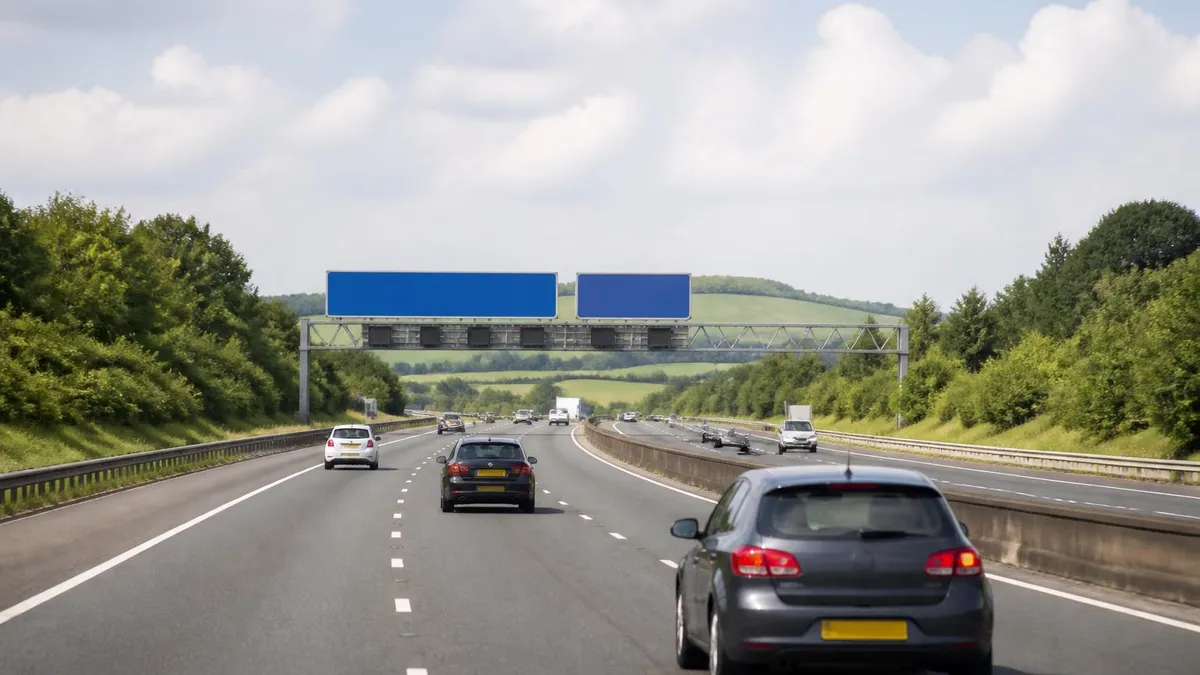
App-Based Theory Test Revision: Honest Assessment
- +Study anywhere at any time — on commutes, during lunch breaks, or at home
- +Instant feedback on every answer with clear explanations helps retention
- +Spaced repetition algorithms optimise your revision time automatically
- +Progress tracking shows exactly which topics need more attention
- +Mock tests replicate real exam conditions including time pressure
- +Most apps cost less than the price of a single theory test resit
- −Screen fatigue can reduce concentration during long study sessions
- −Free apps display ads that interrupt focus and slow the study rhythm
- −Hazard perception quality varies widely — poor apps may mislead your technique
- −Apps cannot replace physically reading the Highway Code in full
- −Over-reliance on memorising answers without understanding can backfire on novel questions
- −Some apps contain outdated question banks that no longer match the live DVSA test
Theory Test Revision Checklist: Complete Before Your Exam
- ✓Complete a full diagnostic mock test on day one to establish your baseline score
- ✓Cover all 14 topic categories in the DVSA question bank at least once
- ✓Score at least 47/50 consistently on multiple-choice mock tests before booking
- ✓Watch and score a full set of 14 hazard perception clips in timed conditions
- ✓Read the complete Highway Code, paying special attention to rules 204–266 on vulnerable road users
- ✓Revise all traffic sign shapes, colours, and meanings using flashcard mode
- ✓Study motorway rules thoroughly including smart motorway lane discipline
- ✓Review first aid procedures and accident reporting requirements from the official question bank
- ✓Complete at least five full timed mock tests (both sections combined) in the final week
- ✓Check your photo ID and test centre address the evening before your exam date
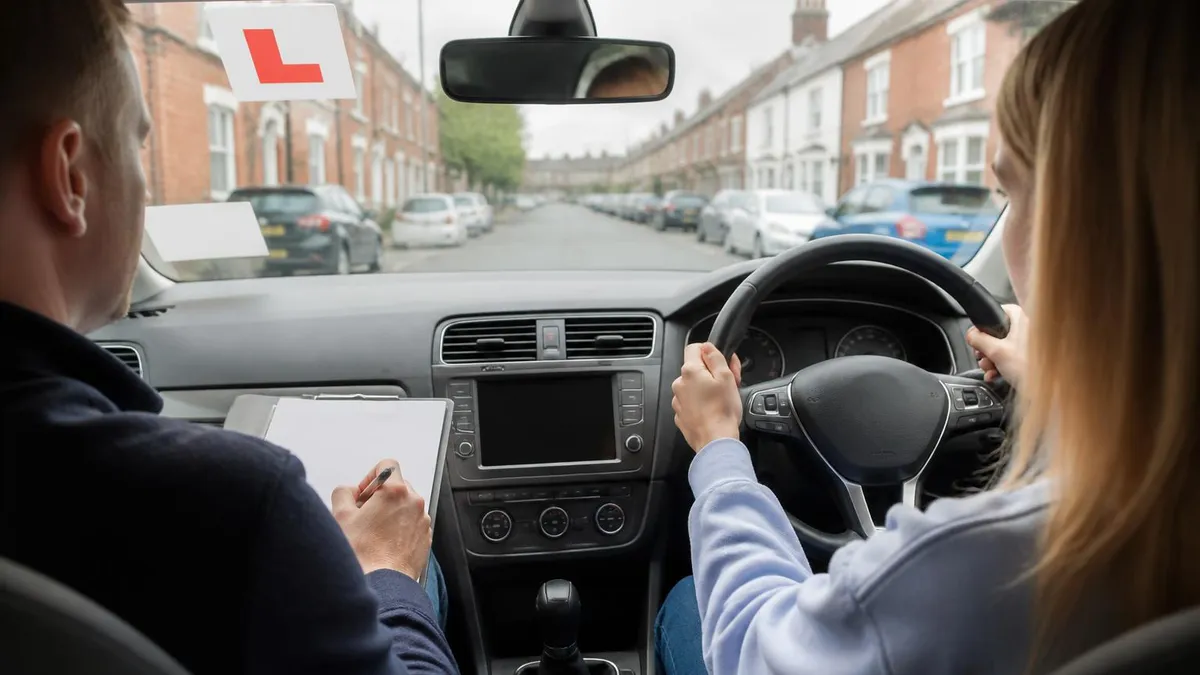
The 80% Rule: Don't Book Until You Hit It Consistently
Industry data from DVSA test centre statistics consistently shows that candidates who score above 80% on multiple-choice mock tests (40+ out of 50) during their revision almost always pass the real test. If your app mock scores regularly fall below this threshold, postpone your booking and continue studying. A week of extra preparation costs nothing compared to a £23 resit fee and weeks of additional waiting time.
The hazard perception section of the theory test trips up more candidates than the multiple-choice component, largely because it requires a fundamentally different kind of preparation. Where multiple-choice revision is about knowledge recall — knowing the correct stopping distance, the meaning of a road sign, or the legal requirement for a vehicle defect — hazard perception is about visual attention, anticipation, and click timing. Many candidates who have thoroughly revised the question bank still struggle with hazard perception because they have not invested enough time in developing this separate perceptual skill.
The test presents 14 video clips, each approximately one minute long, filmed from a forward-facing dashcam perspective. Thirteen clips contain one developing hazard, and one clip contains two — giving a maximum possible score of 75 points. You score between one and five points per hazard depending on how early you identify it as it develops.
The key word is developing: you are not rewarded for clicking when a hazard has already fully materialised (for example, after a pedestrian has already stepped into the road), but for identifying the situation that is about to become hazardous — the pedestrian stepping off the kerb, the car beginning to pull out from a side road, the cyclist starting to wobble.
The most common mistake candidates make in hazard perception is clicking too frequently in an attempt to ensure they do not miss any hazards. The DVSA system detects this pattern and will score you zero for that clip if it judges your clicking as erratic or mechanical.
This means that if you click more than roughly once every three seconds consistently throughout a clip, you risk being penalised. The correct approach is to watch attentively, identify genuine developing hazards, and click once or twice when you genuinely perceive something hazardous forming — not to carpet-bomb the screen with clicks throughout the clip.
When selecting an app for hazard perception training, prioritise one that includes genuine video footage rather than animated simulations. The best apps license their clips from professional production companies and ensure that the visual complexity, road environments, and hazard types closely match what you will encounter in the real DVSA test.
Apps that use cartoon-style or clearly low-budget footage will not give you the visual experience your brain needs to build genuine hazard detection skills. After each practice clip, the best apps will show you a timeline of where the hazard window was and where your clicks fell, allowing you to calibrate your timing accuracy.
A highly effective supplement to app-based hazard perception training is simply spending more time as a passenger in a car and actively practising hazard identification in real traffic. Rather than looking at your phone, look through the windscreen and mentally flag every situation that could develop into a hazard — the lorry pulling out ahead, the child near the kerb, the car indicating to change lane. This real-world visual training builds exactly the anticipatory attention that the test measures, and it costs nothing beyond the time you were going to spend in the car anyway.
Understanding the scoring bands helps you target your preparation more efficiently. For a clip with one developing hazard, the maximum score is 5 points (if you click in the earliest scoring window), dropping to 4, 3, 2, or 1 as the hazard develops further before you respond, and 0 if you miss it entirely or click erratically.
To achieve the 44-point pass mark from 75 available points, you need to score an average of approximately 3.1 points per hazard. This means you can afford to miss one hazard entirely or score low on a few clips, as long as you respond early and accurately on the majority. Knowing this gives you a strategic target: aim for 4 or 5 on every clip and accept that a few clips will be lower without panic.
Practising hazard perception under genuinely timed, realistic conditions in the final two weeks before your test is essential for consolidating your technique. Use your chosen app's full mock test mode that combines both sections, and resist the temptation to pause clips or replay them mid-session. The more you simulate actual test conditions — sitting upright, not replaying, clicking deliberately — the less anxiety you will experience on test day. Familiarity with the format is itself a performance enhancer, reducing the cognitive load of navigating an unfamiliar environment so you can focus entirely on the content.
You can continue preparing with the best theory test app, which includes answer explanations for every question.
You can continue preparing with the best theory test app, which includes answer explanations for every question.
For a fuller set of questions on this topic, see our best theory test app resource.
The DVSA periodically updates its official question bank, adding new questions and retiring outdated ones. If your theory test app has not been updated within the last 12 months, you may be revising questions that no longer appear on the test while missing newly introduced topics. Always check the app's last update date in the App Store or Google Play listing, and verify that the developer explicitly states their content is aligned with the current DVSA question bank. Using an outdated app is one of the most easily avoidable preparation mistakes.
Test day preparation begins the night before, not on the morning of your appointment. The most important things you can do the evening before are to verify your test centre location and journey time, ensure you have a valid photo ID that will be accepted (a photocard driving licence, passport, or other approved document), and get a full night of sleep.
Sleep is genuinely critical for test performance — cognitive research consistently demonstrates that sleep deprivation impairs the type of rapid recall and pattern recognition that the theory test demands. Resist the urge to do several hours of late-night cramming, as this is likely to hurt rather than help your performance.
Arrive at the test centre at least 10 minutes before your appointment time. DVSA test centres are typically located in purpose-built facilities in major towns and cities, and they operate a strict appointment system. If you are late, you may forfeit your test fee and need to rebook. When you arrive, you will be asked to present your driving licence and confirm your details. Personal items including your phone, smartwatch, and any study materials must be stored in a locker before you enter the testing room — nothing is permitted at your workstation beyond the provided equipment.
The testing room itself contains individual computer workstations with noise-cancelling headphones available for the hazard perception section. You will be given a brief tutorial on how to use the system before your test time begins. Do not rush through this tutorial — it is your final opportunity to familiarise yourself with the interface and ensure the audio and video are working correctly for the hazard perception clips. If you experience any technical issues during the test, raise your hand immediately rather than attempting to continue through a problem.
During the multiple-choice section, you can flag questions you are unsure about and return to them before submitting. Use this feature strategically: answer every question you know confidently first, flag anything you are uncertain about, and then use any remaining time to revisit the flagged questions.
Do not leave any question unanswered — there is no penalty for guessing, so if you genuinely do not know the answer to a question, make your best informed choice rather than leaving it blank. With 57 minutes available for 50 questions, you have just over a minute per question — more than enough time if you have revised adequately.
After submitting the multiple-choice section, there is a short break before the hazard perception clips begin. Use this time to take a few slow, deliberate breaths and mentally reset. Remind yourself of the key hazard perception technique: watch attentively, click deliberately when you see a hazard developing, and do not click erratically. If a clip feels like it has passed without any obvious hazard, stay calm — it may simply be that the hazard was subtle, or that your timing was slightly off. Move on without dwelling on individual clips, as the next one is what matters now.
Your results are displayed immediately at the end of the test. If you pass both sections, you will receive a pass certificate number which is automatically linked to your driving licence record and will be required when you book your practical driving test. If you fail one or both sections, you must wait a minimum of three working days before rebooking and retaking the entire test — both sections must be taken again even if you passed one.
Use any failed attempt as a diagnostic: review the category breakdown on your results slip to identify exactly which areas let you down, and target those specifically in your revision before the resit. For more information on your next steps, see our guide on best theory test app booking procedures to make sure you secure the earliest available resit date.
The most important mindset to carry into the test centre is calm confidence built on thorough preparation. If you have consistently scored 47 or above on multiple-choice mocks and reliably cleared the 44-point threshold on hazard perception practice, you are genuinely ready. Trust your preparation, read every question carefully before selecting your answer, and apply the attentive, deliberate approach to hazard perception that your app training has developed. Thousands of candidates pass the UK theory test every week — with the right preparation strategy, you will be one of them.
Beyond choosing the right app, the most significant factor in theory test success is the consistency and quality of your daily revision habits. Research into effective learning suggests that shorter, more frequent study sessions dramatically outperform long, infrequent cramming sessions. A candidate who studies for 30 minutes every day for four weeks will almost always outperform one who tries to cover the same material in a series of three-hour weekend sessions. This is because spaced, distributed practice reinforces memory consolidation in ways that massed practice simply cannot match, even when the total study hours are identical.
Setting a specific daily study time and treating it as a non-negotiable appointment with yourself is the single most effective habit you can build during your theory test preparation period. Whether it is 7am before work, during your lunch break, or 9pm after dinner, consistency creates momentum. Most theory test apps include notification features that will remind you to study at your chosen time — enable these and use them. The friction of remembering to open the app is removed, and the gentle prompt at your designated study time keeps the habit alive even on days when motivation is low.
Category-focused revision is more effective than random question mode for candidates who have a specific test date within four weeks. Use your app's analytics to identify your three weakest topic areas — typically these are motorway rules, vehicle loading, and first aid for many candidates — and dedicate the first 15 minutes of each session exclusively to those categories before moving on to general practice. This targeted approach ensures that your weakest areas receive disproportionate attention and improve faster than they would in an undirected random question session.
Reading the Highway Code alongside your app is not optional if you want to develop genuine understanding rather than surface memorisation. The Highway Code is the authoritative source for all UK road rules, and many theory test questions are designed to test comprehension of the underlying principles rather than simple recall of facts. Candidates who only use an app and never read the Code itself sometimes find themselves confused by questions that are phrased differently from how they remember practising them. Reading the Code gives you a conceptual framework that makes unfamiliar phrasings much easier to navigate correctly.
Revision groups and study partners can provide accountability and motivation, but they can also create a false sense of security if your group spends more time discussing questions socially than actually practising under exam conditions. If you revise with others, ensure that at least part of every session involves individual, timed practice rather than collaborative discussion. The real test is taken alone, under time pressure, and your preparation needs to reflect that reality. Use collaborative discussion to explore topics you find genuinely confusing, then consolidate your understanding through individual practice.
The week before your test should shift from learning new material to consolidating and testing what you already know. If there are still topic areas you have never covered, address them briefly, but do not attempt to learn large volumes of new content in the final week — this risks confusion and anxiety rather than genuine improvement.
Focus instead on completing full timed mock tests daily, reviewing your errors carefully, and building confidence through consistent strong scores. Your goal in the final week is to demonstrate to yourself, through repeated successful mock test performance, that you are ready — because you are.
On the morning of your test, eat a proper breakfast and allow more travel time than you think you need. Stress and hunger both impair cognitive performance, and arriving flustered because of a delayed train or a parking problem is entirely avoidable with adequate planning.
Many candidates find it helpful to complete a brief 15-minute review of their most common error topics on the morning of their test — not to learn anything new, but simply to warm up their recall and arrive at the test centre in an active, engaged mental state rather than a passive or anxious one. Then put your phone away, trust your preparation, and go pass your theory test.
Sample DVSA UK Driving Theory Practice Questions
Try these questions from our free DVSA UK Driving Theory practice tests. The correct answer and an explanation follow each question.
When should you use the left-hand lane on a three-lane motorway?
- A. Only when joining or leaving the motorway
- B. When travelling at any speed, unless overtaking
- C. Only when driving below 50 mph
- D. When carrying heavy loads
Answer: B. When travelling at any speed, unless overtaking
On a motorway, you should normally drive in the left-hand lane regardless of your speed. The middle and right-hand lanes are for overtaking only. Once you have finished overtaking, you should return to the left-hand lane. Staying in the middle or right lane unnecessarily is called 'lane hogging' and is an offence.
You witness a motorcyclist involved in a collision. They are unconscious. Should you remove their helmet?
- A. Yes, always remove it immediately
- B. No, only remove it if they are not breathing
- C. Yes, to check for head injuries
- D. No, leave it on unless there is a specific breathing problem that cannot otherwise be resolved
Answer: D. No, leave it on unless there is a specific breathing problem that cannot otherwise be resolved
A motorcyclist's helmet should only be removed if it is absolutely necessary to maintain their airway, as removal risks aggravating a spinal injury.
You arrive at the scene of a collision. A casualty is unconscious but breathing. What position should you place them in?
- A. Flat on their back
- B. The recovery position
- C. Sitting upright
- D. Face down
Answer: B. The recovery position
An unconscious but breathing casualty should be placed in the recovery position to keep the airway open and prevent choking.
What colour are direction signs on UK motorways?
- A. Green with white text
- B. Blue with white text
- C. White with black text
- D. Yellow with black text
Answer: B. Blue with white text
Motorway direction signs have a blue background with white text and white borders, distinguishing them from other road types.
DVSA Questions and Answers
DVLA Theory Test Booking: Complete Step-by-Step Guide for UK Learners
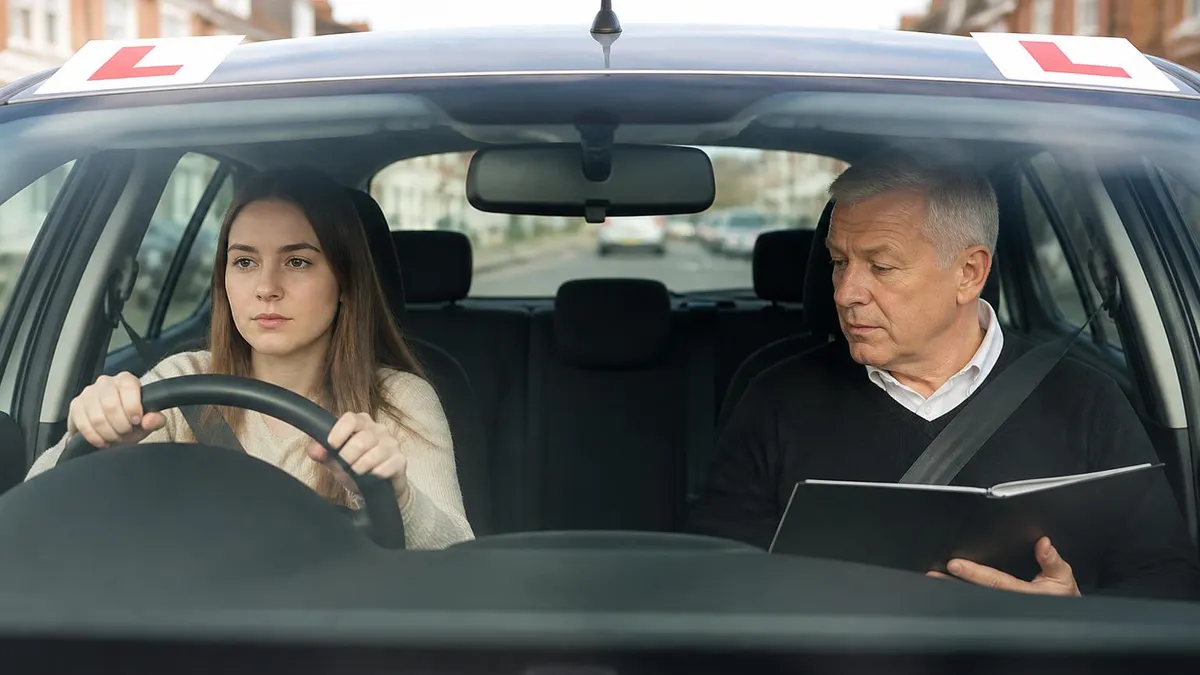
Driving Theory Test App: The Complete Study Guide for UK Learners

How to Book Your DVSA Practical Driving Test: Complete UK Guide

Learn to Drive in the UK: Complete Beginner's Guide to Getting Your Licence

DVSA Car Practical Test: Complete Guide to Passing First Time
About the Author

Licensed Driving Instructor & DMV Test Specialist
Penn State UniversityRobert J. Williams graduated from Penn State University with a degree in Transportation Management and has spent 20 years as a certified driving instructor and DMV examiner consultant. He has personally coached thousands of applicants through written knowledge tests, skills assessments, and commercial driver licensing programs across more than 30 states.