
CPR on a Dog: Complete Pet CPR Guide for Owners 2026 October
Learn CPR on a dog with step-by-step compressions, rescue breaths, and recovery position. ❓ Pet CPR techniques every owner should know in 2026 October.
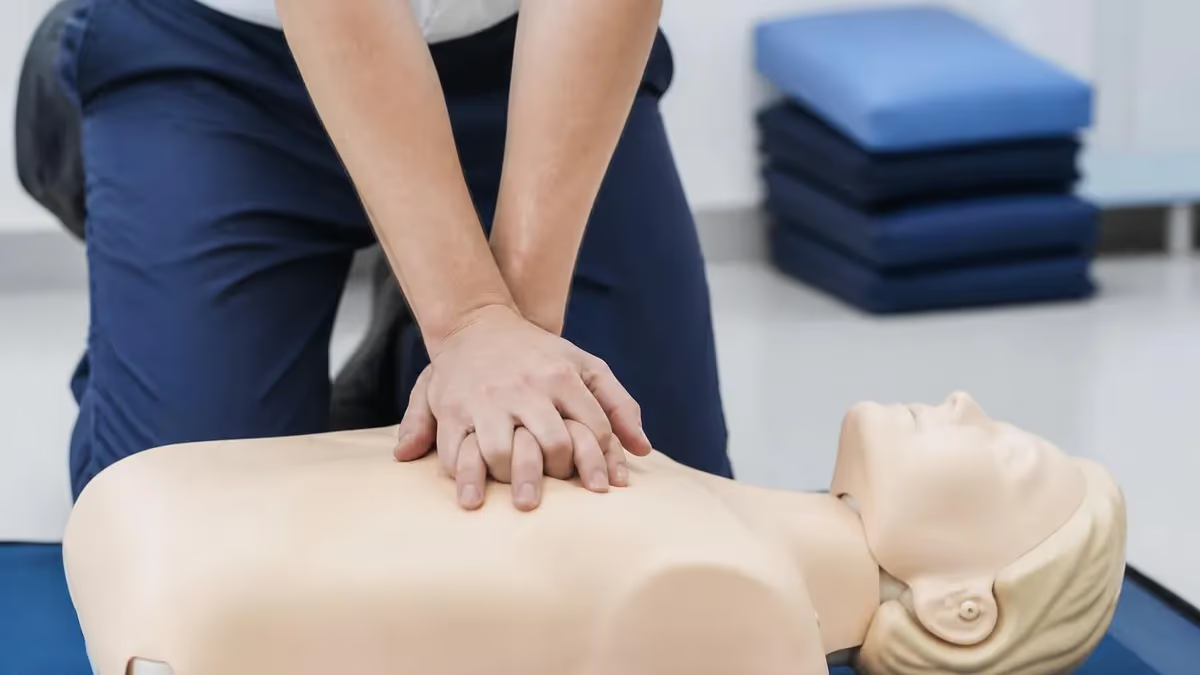
Knowing how to perform CPR on a dog can mean the difference between life and death when your pet collapses unexpectedly. While human resuscitation protocols like the acls algorithm dominate medical training, pet CPR follows similar principles adapted for canine anatomy. Roughly one in ten dogs experiences cardiac arrest at home, and without immediate intervention, survival rates drop below six percent. Learning the basics now — chest compression depth, rescue breath ratios, and how to check a femoral pulse — prepares you for the worst moment of your pet's life.
Dogs go into cardiopulmonary arrest for many reasons: choking on toys, drowning, electrical shock, heatstroke, anesthesia complications, severe trauma, or underlying heart disease. Unlike humans, dogs rarely suffer arrhythmias from coronary artery disease, so a defibrillator is seldom useful in field rescues. Instead, high-quality chest compressions combined with mouth-to-snout ventilation deliver the best outcomes. The Recover Initiative, established in 2012, standardized veterinary CPR guidelines and continues to update protocols based on outcome data.
The fundamentals overlap with human CPR more than most pet owners realize. You still aim for 100 to 120 compressions per minute, you still allow full chest recoil, and you still minimize interruptions. The differences lie in hand placement, breath delivery, and the recognition that smaller animals require gentler force and faster cycles. A toy breed Chihuahua needs single-handed compressions while a Great Dane demands two-handed effort with locked elbows similar to adult human technique.
This guide walks through every step — from recognizing arrest to safely transporting your dog to an emergency veterinary clinic. We cover breed-specific modifications, common owner mistakes, the role of the Heimlich maneuver in choking cases, and what to expect when you arrive at the ER. You'll also find a printable cpr index of compression rates, breath ratios, and emergency drug doses for the most common dog sizes.
Veterinary professionals stress that pet owners trained in CPR triple the chance of survival to hospital arrival. Yet fewer than 15 percent of dog owners have ever received formal instruction. Online courses, hands-on weekend workshops, and pet first-aid certifications are widely available, often costing less than a single vet visit. Some courses are taught by Red Cross instructors who also teach human BLS, blending pediatric and pet techniques into one comprehensive class.
Before you ever need it, practice on a stuffed animal. Time yourself doing 30 compressions in 18 seconds. Place your hands correctly on the chest. Rehearse breathing into a closed snout. Muscle memory matters when adrenaline floods your system and your dog is unresponsive at your feet. This article gives you the framework to act with confidence rather than freeze in panic.
By the end, you'll understand exactly when to start CPR, when to stop, how to coordinate with a veterinary team over the phone, and how to recognize the rare but possible return of spontaneous circulation. We'll also explore prevention — because the best CPR is the one you never have to perform.
Pet CPR by the Numbers

Pet CPR Steps Overview
Call your dog's name, tap firmly on the shoulder, and check for breathing and pulse. The femoral artery on the inner thigh provides the easiest pulse check. No response within 10 seconds means begin CPR immediately.
Lay the dog on its right side on a firm flat surface. Barrel-chested breeds like bulldogs and pugs work better on their back. Clear the airway by extending the neck and pulling the tongue forward to check for obstructions.
Place hands over the widest part of the chest for most breeds. Compress one-third to one-half the chest width at 100-120 per minute. Allow full recoil between compressions to permit cardiac refilling and venous return.
After 30 compressions, close the dog's mouth, seal your lips over the nostrils, and blow gently until you see chest rise. Give 2 breaths over 2 seconds. Avoid overinflating which can rupture lung tissue.
Maintain 30:2 cycles without interruption. Reassess every 2 minutes. Call your veterinary ER while continuing CPR if a second person is present. Transport while continuing chest compressions if possible.
Recognizing cardiopulmonary arrest in a dog requires the same observation skills you'd use to identify a human emergency — knowing the difference between heart attack vs cardiac arrest matters for pets too. A dog suffering arrest will be unresponsive, will not breathe spontaneously, and will have no detectable pulse. The gums turn pale grey or blue within seconds, pupils dilate and fix, and any spontaneous movement ceases. Time is the single most important factor: brain damage begins after four minutes of oxygen deprivation, and survival drops sharply after ten minutes without intervention.
Many owners confuse arrest with seizure or fainting. A seizing dog will paddle limbs, drool, vocalize, and recover spontaneously within a few minutes. A fainting dog (syncope) collapses but resumes normal breathing quickly. Arrest, in contrast, produces no recovery. Check the chest for rise and fall, place your ear near the nostrils, and feel for the femoral pulse high on the inner thigh where the leg meets the body. If any one of these three signs is absent for more than ten seconds, treat it as arrest.
The respiratory rate of a healthy dog ranges from 10 to 30 breaths per minute at rest, with smaller breeds breathing faster than larger ones. Agonal breathing — slow, gasping, ineffective gulps — looks like breathing but is actually a sign that the brainstem is dying. Never wait for agonal breaths to stop before beginning CPR. They indicate active arrest. Similarly, a heart rate below 50 beats per minute in a medium dog or below 60 in a small dog signals severe bradycardia that often precedes arrest.
Pre-arrest warning signs that owners should watch for include sudden collapse during exercise, prolonged coughing fits in older dogs with heart disease, blue or grey gum color, extreme lethargy with rapid shallow breathing, abdominal distension with restlessness (a sign of bloat or gastric dilatation-volvulus), and choking behavior including pawing at the face. Each of these can progress to full arrest within minutes if untreated. Knowing your dog's normal baseline — gum color, capillary refill time, resting respiratory rate — makes abnormal findings obvious.
Breed predisposition matters enormously. Boxers and Doberman Pinschers are prone to dilated cardiomyopathy and sudden arrhythmic death. Cavalier King Charles Spaniels develop mitral valve disease by age five in most cases. Brachycephalic breeds like English Bulldogs and Pugs have compromised airways that make any respiratory event more dangerous. Large deep-chested breeds — German Shepherds, Great Danes, Standard Poodles — are at high risk for gastric torsion. Knowing your breed's risks helps you act faster.
Environmental causes of arrest include drowning in pools or bathtubs, electrocution from chewed cords, heatstroke during summer car rides, ingestion of toxins like chocolate or xylitol, and traumatic injuries from car strikes. Each scenario has nuances: a drowning dog needs immediate airway clearance before compressions, while a heatstroke dog needs cooling alongside CPR. The acls algorithm taught to human providers has parallels in veterinary medicine but with different drug protocols and no defibrillation in most field scenarios.
Finally, recognize when arrest is imminent versus already happened. If your dog is unresponsive but still breathing and has a pulse, focus on stabilization, airway maintenance, and rapid transport. Begin CPR only when breathing and pulse are confirmed absent. Starting compressions on a dog with a weak but present heartbeat can actually trigger arrhythmias and worsen the situation.

CPR Practice Test Questions
Prepare for the CPR Cardiopulmonary Resuscitation Practice exam with our free practice test modules. Each quiz covers key topics to help you pass on your first try.
CPR Basic CPR
CPR Exam Questions covering Basic CPR. Master CPR Test concepts for certification prep.
CPR and First Aid
Free CPR Practice Test featuring and First Aid. Improve your CPR Exam score with mock test prep.
CPR (Cardiopulmonary Resuscitation) Adult ...
CPR Mock Exam on (Cardiopulmonary Resuscitation) Adult CPR and AED Usage. CPR Study Guide questions to pass on your first try.
CPR (Cardiopulmonary Resuscitation) Airway...
CPR Test Prep for (Cardiopulmonary Resuscitation) Airway Obstruction and Choking. Practice CPR Quiz questions and boost your score.
CPR (Cardiopulmonary Resuscitation) Cardio...
CPR Questions and Answers on (Cardiopulmonary Resuscitation) Cardiopulmonary Emergency Recognition. Free CPR practice for exam readiness.
CPR (Cardiopulmonary Resuscitation) Child ...
CPR Mock Test covering (Cardiopulmonary Resuscitation) Child and Infant CPR. Online CPR Test practice with instant feedback.
CPR (Cardiopulmonary Resuscitation) High-P...
Free CPR Quiz on (Cardiopulmonary Resuscitation) High-Performance Team Dynamics. CPR Exam prep questions with detailed explanations.
CPR (Cardiopulmonary Resuscitation) Legal ...
CPR Practice Questions for (Cardiopulmonary Resuscitation) Legal and Ethical Considerations. Build confidence for your CPR certification exam.
CPR for Specific Populations
CPR Test Online for for Specific Populations. Free practice with instant results and feedback.
CPR Airway & Breathing Management
CPR Exam Questions covering Airway & Breathing Management. Master CPR Test concepts for certification prep.
CPR Assessment & Recognition of Cardiac Ar...
Free CPR Practice Test featuring Assessment & Recognition of Cardiac Arrest. Improve your CPR Exam score with mock test prep.
CPR Chest Compressions & Defibrillation
CPR Mock Exam on Chest Compressions & Defibrillation. CPR Study Guide questions to pass on your first try.
CPR Post-Resuscitation Care & Recovery
CPR Test Prep for Post-Resuscitation Care & Recovery. Practice CPR Quiz questions and boost your score.
Compressions, Breaths & Respiratory Rate
High-quality chest compressions remain the cornerstone of pet CPR just as in human resuscitation. Aim for 100 to 120 compressions per minute — roughly the tempo of the Bee Gees' Stayin' Alive. Compress one-third to one-half the width of the dog's chest, allowing complete recoil between each compression. Lock your elbows and use your body weight rather than arm strength to maintain consistency without fatigue.
Hand placement varies by body shape. Round-chested medium and large dogs receive compressions over the widest part of the chest, similar to human cardiac compression position. Keel-chested deep dogs like Greyhounds need compressions directly over the heart at the fifth intercostal space. Barrel-chested breeds like Bulldogs work best in dorsal recumbency with compressions on the sternum, similar to human technique. Practice these positions on your healthy dog so they feel natural.
Should Every Dog Owner Learn Pet CPR?
- +Triples survival chances when professional help is more than 5 minutes away
- +Builds confidence to act decisively rather than panic during emergencies
- +Most courses cost under $100 and complete in a single afternoon
- +Skills transfer to recognizing pre-arrest warning signs and preventing crises
- +Many techniques overlap with human CPR for dual-purpose knowledge
- +Often includes first aid for choking, bleeding, fractures, and toxin exposure
- −CPR alone rarely succeeds — veterinary intervention is still essential
- −Improper technique can cause rib fractures, pneumothorax, or worsen injuries
- −Skills decay quickly without practice or recertification every two years
- −Field CPR success rates remain low even with perfect technique
- −Emotional difficulty performing CPR on your own pet can impair execution
- −No standardized certification body exists for pet CPR like AHA for humans

Pet CPR Action Checklist
- ✓Assess responsiveness by calling name and tapping the shoulder firmly
- ✓Check breathing by watching chest rise for up to 10 seconds
- ✓Feel for femoral pulse on the inner thigh near the groin
- ✓Position dog on right side on firm flat surface (or back for bulldogs)
- ✓Open airway by extending neck and clearing tongue and obstructions
- ✓Begin compressions at 100-120 per minute compressing one-third chest width
- ✓Deliver 2 mouth-to-snout breaths after every 30 compressions
- ✓Reassess pulse and breathing every 2 minutes without long interruption
- ✓Call veterinary ER while continuing CPR if a second person is available
- ✓Transport with ongoing compressions if possible until ROSC or arrival
The first 4 minutes determine outcome.
Brain damage begins after four minutes of cardiac arrest. Every additional minute without compressions drops survival by approximately 10 percent. If your nearest emergency vet is more than five minutes away, bystander CPR is the only realistic chance for survival. Start compressions immediately, even if your technique is imperfect — imperfect CPR vastly outperforms no CPR at all.
Even when CPR achieves return of spontaneous circulation, the recovery period demands immediate veterinary intervention. Approximately 35 percent of dogs that achieve ROSC in the field will arrest again within an hour without advanced support. The post-arrest care phase requires oxygen therapy, intravenous fluids, drugs to manage blood pressure and arrhythmias, and continuous monitoring of vital signs. This is identical in principle to the post-cardiac-arrest care recommended by the National CPR Foundation for human patients.
Transport should begin the moment CPR is initiated when a second person is available to drive. Place the dog in lateral recumbency on a flat, padded surface — a board, large cookie sheet, or rigid carrier. Continue compressions during transport if possible. If you must drive alone, perform two minutes of CPR, then load the dog and drive while delivering occasional rescue breaths at red lights. Call ahead so the veterinary team can prepare crash supplies before arrival.
Place your dog in the recovery position once breathing and pulse return. The recovery position for pets mirrors the human side-lying recovery position — lateral recumbency with the head slightly extended to maintain airway patency. Keep the mouth slightly open with the tongue pulled forward to prevent it from blocking the airway. Monitor breathing continuously. Cover the dog with a light blanket to prevent hypothermia, which is common after arrest due to circulatory shock.
The veterinary team will continue advanced life support upon arrival. Expect intubation, mechanical ventilation if needed, IV catheter placement, ECG monitoring, blood gas analysis, and administration of epinephrine, atropine, or anti-arrhythmic drugs depending on the underlying rhythm. Diagnostic workup includes thoracic radiographs, abdominal ultrasound, and bloodwork to identify the trigger for arrest. Treatment typically requires 24 to 72 hours of intensive care if the dog is stable enough to admit.
Cost reality matters here. ICU care for post-arrest dogs runs $1,500 to $5,000 per day at most emergency hospitals. Total bills for successful resuscitation cases routinely exceed $10,000. Pet insurance with emergency coverage dramatically changes the math — most policies cover CPR and post-arrest ICU under accident provisions. Without insurance, owners often face heartbreaking financial decisions about continuing care or humane euthanasia after stabilization fails.
The emotional toll on owners is significant. Performing CPR on your own pet is traumatic, even when successful. Many owners experience symptoms similar to acute stress disorder for days afterward — flashbacks, sleep disturbance, intrusive memories of the event. Veterinary social workers and pet bereavement counselors can help process the experience whether the outcome is recovery or loss. Don't hesitate to seek support after a serious resuscitation event.
Long-term prognosis depends on the underlying cause. Dogs arresting from anesthesia complications often recover completely. Dogs arresting from advanced heart disease, severe trauma, or sepsis face guarded prognoses even with aggressive care. Survival to hospital discharge ranges from 4 to 9 percent across studies. Of survivors, roughly 80 percent return to good quality of life within weeks. Knowing these statistics helps owners make informed decisions during the most difficult conversations with their veterinarian.
Continue CPR until one of three things happens: return of spontaneous circulation with pulse and breathing, arrival at a veterinary facility where the team can take over, or you become physically unable to continue. The decision to stop in the field is rarely correct unless you have exhausted yourself or 20+ minutes have passed without any response. Always err toward continuing.
Prevention beats resuscitation every time. Regular veterinary checkups with annual bloodwork, periodic chest X-rays for at-risk breeds, and dental cleanings to prevent endocarditis all reduce arrest risk. Maintain ideal body weight — obesity stresses the heart and complicates any emergency response. Avoid known toxins including grapes, raisins, chocolate, xylitol, macadamia nuts, onions, garlic, lilies, and many human medications. Childproof your home for pets just as you would for a toddler.
Training resources for pet CPR range from free online courses to in-person hands-on workshops. The American Red Cross offers a Pet First Aid app and online certifications. PetTech and PetSaver offer comprehensive eight-hour certification courses with manikin practice. Many veterinary clinics host free community classes. For deeper learning, the Recover Initiative publishes the same evidence-based protocols used in veterinary teaching hospitals worldwide.
Compare pet CPR to human-focused training paths. Adults learning baby cpr often pick up dog and cat techniques alongside infant skills because compression depth and breath volume considerations are similar. Pediatric Advanced Life Support (pals certification) and Advanced Cardiac Life Support (ACLS) teach drug protocols and rhythm recognition that overlap with veterinary emergency medicine. Mixed-skill courses combining human BLS, infant CPR, and pet first aid offer the best value for multi-pet households with children.
Build a pet emergency kit and store it where everyone in the household can find it. Essential contents include a muzzle (injured dogs may bite even loving owners), gauze and bandage material, hydrogen peroxide for inducing vomiting under veterinary guidance, a digital thermometer, sterile saline, a pet first aid manual, your veterinarian's number, the closest 24-hour emergency hospital phone number, and the ASPCA Poison Control number (888-426-4435). Keep a flat board or rigid carrier in the car for emergency transport.
Choking emergencies deserve special preparation since they precede a significant fraction of canine arrests. Learn the dog Heimlich maneuver: for small dogs, hold them with their head down and deliver firm back blows between the shoulder blades; for large dogs, perform abdominal thrusts just behind the ribcage with the dog standing. If the object becomes visible, sweep it out with your finger — but never blind finger sweeps, which can push objects deeper. Common choking culprits include rawhide chunks, tennis balls, bones, and corn cobs.
Heatstroke prevention is critical in summer. Never leave dogs in parked cars, even with windows cracked, even for five minutes — interior temperatures can climb 20 degrees in ten minutes. Provide shade and fresh water for outdoor dogs. Limit exercise during peak heat hours. Brachycephalic breeds and senior dogs are especially vulnerable. Early heatstroke signs include excessive panting, bright red gums, vomiting, and stumbling. Cool with room-temperature water (never ice) and transport immediately to veterinary care.
Finally, consider taking classes near me for both human and pet CPR. The combined skill set protects your entire household — human family members, children, and beloved pets. Recertification every two years keeps techniques current as guidelines evolve. The Recover Initiative updates pet CPR protocols every five years based on outcome data, and the American Heart Association publishes new human guidelines on similar cycles.
Practical preparation separates dog owners who freeze from those who act. Start by physically rehearsing CPR on a stuffed animal of similar size to your dog. Time yourself doing 30 compressions in 18 seconds. Practice hand placement, elbow lock, and the rhythmic pumping motion until it feels automatic. Rehearse the mouth-to-snout breath technique on a closed plastic bottle to feel the resistance and avoid overinflation tendencies. Muscle memory is what saves lives when adrenaline floods your system.
Map your emergency veterinary resources before you need them. Save the phone numbers and addresses of the three nearest 24-hour emergency animal hospitals in your phone with custom ringtones so you can find them instantly. Test the drive route to your primary emergency vet during daytime traffic so you know turns, parking, and entrance locations. Some hospitals require buzzer entry after hours — knowing this in advance prevents critical delays at 2 AM with an unresponsive pet in your arms.
Have a CPR helper plan. Identify which family member will perform CPR, which will drive, and which will call ahead. Roleplay the scenario at the dinner table once a year. For households with multiple pets, identify who handles other animals while CPR is in progress — barking, anxious dogs can interfere with rescue efforts and become injured themselves during chaotic transport. Pre-assigned roles eliminate decision paralysis during the actual emergency.
Document your dog's baseline vitals at the next vet visit and post them on the fridge. Record normal resting respiratory rate, heart rate, gum color, capillary refill time, and weight. These numbers help you recognize abnormality faster and give responding veterinary teams crucial reference points. Update annually for senior dogs as cardiopulmonary parameters drift with age. Include medications, allergies, and chronic conditions on the same sheet for emergency responders.
Consider pet insurance with emergency and ICU coverage before you need it. Pre-existing condition exclusions mean insurance purchased after a cardiac event won't cover ongoing related care. Comparison shop policies that specifically cover emergency surgery, ICU stays, oxygen therapy, and post-arrest care. Average premiums of $30 to $60 monthly are vastly cheaper than the $10,000+ bills typical of post-arrest hospitalization. Set up automatic payments and review coverage annually.
Teach children age-appropriate emergency responses. Younger kids can learn how to dial 911 and ask an adult, where the pet first aid kit is stored, and how to recognize emergency signs in pets. Older children and teens can learn actual CPR technique and become valuable second rescuers in a family emergency. The Red Cross Pet First Aid course is suitable for ages 12 and up. Pediatric and infant cpr training paired with pet first aid creates well-rounded household responders.
Finally, accept that even perfect preparation may not change the outcome. Field CPR success rates remain low for fundamental reasons related to underlying disease severity and the limits of bystander intervention. The point of training is not guaranteed survival — it's giving your dog the best possible chance and giving yourself the peace of knowing you did everything possible. That peace matters whether the outcome is celebration or grief. Every dog deserves an owner prepared to fight for them in the worst moment.
CPR Questions and Answers

About the Author

Registered Nurse & Healthcare Educator
Johns Hopkins University School of NursingDr. Sarah Mitchell is a board-certified registered nurse with over 15 years of clinical and academic experience. She completed her PhD in Nursing Science at Johns Hopkins University and has taught NCLEX preparation and clinical skills courses for nursing students across the United States. Her research focuses on evidence-based exam preparation strategies for healthcare certification candidates.
Join the Discussion
Connect with other students preparing for this exam. Share tips, ask questions, and get advice from people who have been there.
View discussion (5 replies)