
CPR Careers: Complete 2026 September Guide to Jobs, Certifications, Salaries, and Career Paths in Emergency Resuscitation
Explore CPR careers in 2026 September: 🏆 ACLS algorithm roles, PALS certification jobs, salaries, training paths, and the top employers hiring CPR-credentialed...
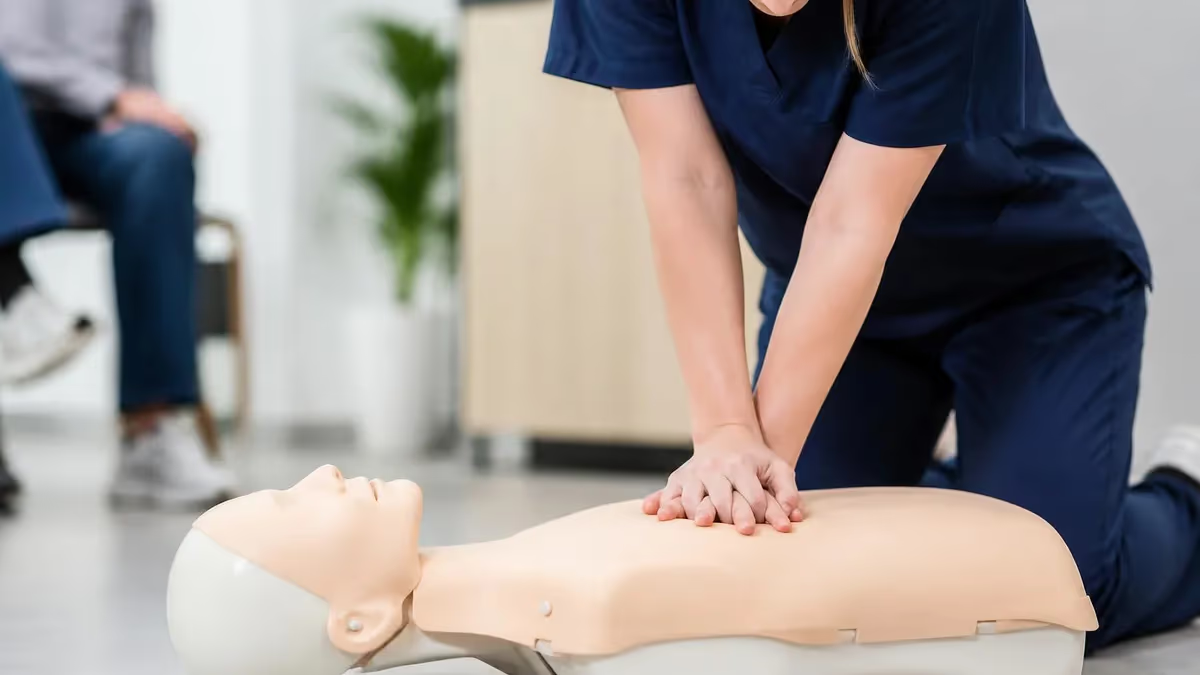
CPR careers have evolved into one of the most resilient and rewarding sectors of modern healthcare, blending technical resuscitation skills with patient advocacy, teaching, and emergency response. Whether you want to teach community classes, work bedside in an intensive care unit, ride in an ambulance, or train corporate employees, the path begins with mastering core resuscitation skills and progressing into specialty credentials. In 2026, employers across hospitals, fire departments, schools, and even tech-adjacent roles like cpr cell phone repair training franchises are hiring professionals who can demonstrate competence under pressure.
The foundation of every CPR-focused career is a basic life support card, but the real differentiator is what you build on top of it. Advanced cardiovascular life support, pediatric advanced life support, and neonatal resuscitation credentials open doors to roles paying significantly more than entry-level positions. Many candidates begin with a course from the national cpr foundation or a similar approved provider, then layer on specialty certifications as they move through paramedic school, nursing programs, or allied health pathways toward emergency medicine, critical care, or pre-hospital practice.
What makes CPR careers especially attractive is the breadth of entry points. A 17-year-old lifeguard certified in adult and infant cpr can earn a paycheck this summer, while a 45-year-old career-changer can become a certified BLS instructor in under a month and start teaching part-time. Registered nurses, respiratory therapists, EMTs, paramedics, anesthesia assistants, dental hygienists, athletic trainers, and physical therapists all share one common credential: they must maintain CPR competency, which sustains demand for instructors, course coordinators, and curriculum specialists year after year.
Salary potential ranges widely across the field. Lifeguards and CPR instructors may earn between fifteen and forty dollars an hour, while critical care nurses, flight paramedics, and emergency physicians with advanced resuscitation skills routinely earn six-figure incomes. Specialty roles such as cardiac catheterization lab nurse, code blue team leader, and simulation educator have become particularly hot in 2026, with hospitals offering signing bonuses, tuition reimbursement, and accelerated promotion tracks for clinicians who can flawlessly run the acls algorithm during high-acuity emergencies.
The job market itself looks healthy for the rest of the decade. The U.S. Bureau of Labor Statistics projects faster-than-average growth for EMTs, paramedics, registered nurses, respiratory therapists, and physician assistants through 2034. Aging baby boomers, rising rates of cardiac disease, an increased emphasis on early defibrillation, and the continued spread of public-access AEDs all keep demand high. Add in the steady churn of recertifications and the legal requirements for many workplaces to keep a certain percentage of staff CPR-trained, and the long-term outlook is excellent.
Educational requirements vary by career, but most paths share a similar structure: complete prerequisite coursework, pass a basic life support course, finish a degree or certificate program, sit a board examination, and maintain certifications through continuing education. Many roles also require background checks, drug screens, immunizations, and supervised clinical hours. Importantly, the time-to-employment can be remarkably short — a CPR instructor course is often a single weekend, while EMT-Basic programs typically run twelve to fifteen weeks.
This guide walks through every angle of CPR-related career planning in 2026, from realistic salary expectations to the credentials that unlock specific jobs. You will learn which entry-level roles get hired fastest, which advanced certifications offer the highest return on tuition, what employers look for in interviews, and how to build a portfolio of skills that compounds over a thirty-year career. By the end, you should be able to map a personalized roadmap that matches your timeline, budget, and the kind of impact you want to have on patients and communities.
CPR Careers by the Numbers in 2026

Major CPR Career Pathways and Their Credentials
EMT-Basic, AEMT, and Paramedic credentials lead to ambulance, fire-rescue, and flight medic positions. Most require BLS, ACLS, and PALS, with paramedics also completing extensive pharmacology and field rotations.
Registered nurses working in ICU, ED, PACU, or cath lab must maintain BLS plus ACLS. Pediatric and neonatal nurses add PALS and NRP. Advanced practice nurses often lead code teams and rapid response.
Respiratory therapists, anesthesia techs, surgical techs, radiology techs, and dental hygienists all maintain CPR certification. Many also pursue ACLS for procedural sedation and emergency response duties.
Certified instructors teach BLS, ACLS, PALS, Heartsaver, and first aid courses through approved training centers. This is a flexible side-career for healthcare professionals and a full-time option for training-center owners.
Police officers, firefighters, lifeguards, school nurses, athletic trainers, ski patrol, and corporate first-aid responders all rely on CPR skills. Many positions also require AED competency and first aid credentials.
Salary in CPR-adjacent careers depends on three variables: scope of practice, location, and shift differentials. Entry-level roles like lifeguard, school nurse aide, or fitness instructor typically pay between fifteen and twenty-five dollars per hour, while licensed clinicians command markedly higher rates. A staff registered nurse in a community hospital averages roughly forty dollars per hour, while a travel ICU nurse running the acls algorithm during cardiac arrests can earn three to four times that figure when combining base pay, housing stipends, and crisis-assignment bonuses.
EMS salaries vary by region and credential level. EMT-Basics in rural or volunteer-heavy regions often start near eighteen dollars an hour, while urban paramedics with five or more years of experience may exceed seventy thousand dollars annually before overtime. Flight paramedics and critical care transport medics push into the ninety-thousand-dollar range, particularly when combined with ACLS, PALS, NRP, and FP-C credentials. Fire-based EMS roles frequently include pension benefits, which dramatically raise lifetime compensation compared with private-ambulance employers.
Respiratory therapists, who manage ventilators, perform arterial blood gases, and monitor respiratory rate during sedation and emergencies, average around seventy-eight thousand dollars per year nationally. Cardiac sonographers, perfusionists, and dialysis technicians round out the higher-paid allied health roles, all of which require active BLS or ACLS. Anesthesia assistants and CRNAs work at the top of the salary curve, with CRNAs frequently earning more than two hundred thousand dollars annually thanks to their advanced airway and resuscitation expertise.
Physician careers tied closely to resuscitation skills include emergency medicine, anesthesiology, critical care, cardiology, and pediatric intensive care. These specialists complete medical school, residency, and often fellowship training, ultimately earning between three hundred thousand and six hundred thousand dollars per year depending on subspecialty and practice setting. While the pathway is long, the combination of acute-care decision making, procedural skill, and team leadership keeps physicians at the very top of the resuscitation career ladder.
Instructor and training-business income can also be substantial, although it requires entrepreneurial effort. A self-employed AHA-aligned instructor charging fifty dollars per student for BLS, with classes of ten students twice a week, can gross over fifty thousand dollars annually as a side business. Training-center owners who layer ACLS, PALS, Heartsaver, and pediatric first aid into their offerings frequently scale into six-figure businesses, particularly when they secure contracts with schools, dental groups, gyms, and corporate clients.
Geography plays a large role in compensation. California, Massachusetts, Hawaii, Oregon, and Washington consistently top the list for nursing and EMS pay, although cost of living offsets a significant portion of those gains. Texas, Florida, and several southeastern states offer lower base pay but no state income tax and lower housing costs. Rural critical-access hospitals frequently provide signing bonuses, relocation assistance, and student-loan repayment programs to attract candidates with strong resuscitation credentials.
Finally, do not overlook benefit packages, which often add twenty to thirty percent on top of base salary. Health insurance, tuition reimbursement, retirement contributions, pension multipliers, paid certification renewals, and continuing education allowances all add value. When comparing CPR-adjacent career offers, calculate total compensation rather than fixating on hourly rate alone — a slightly lower base wage paired with tuition reimbursement may dramatically out-earn a higher headline number once you complete an advanced degree or specialty credential.

CPR Practice Test Questions
Prepare for the CPR Cardiopulmonary Resuscitation Practice exam with our free practice test modules. Each quiz covers key topics to help you pass on your first try.
CPR Basic CPR
CPR Exam Questions covering Basic CPR. Master CPR Test concepts for certification prep.
CPR and First Aid
Free CPR Practice Test featuring and First Aid. Improve your CPR Exam score with mock test prep.
CPR (Cardiopulmonary Resuscitation) Adult ...
CPR Mock Exam on (Cardiopulmonary Resuscitation) Adult CPR and AED Usage. CPR Study Guide questions to pass on your first try.
CPR (Cardiopulmonary Resuscitation) Airway...
CPR Test Prep for (Cardiopulmonary Resuscitation) Airway Obstruction and Choking. Practice CPR Quiz questions and boost your score.
CPR (Cardiopulmonary Resuscitation) Cardio...
CPR Questions and Answers on (Cardiopulmonary Resuscitation) Cardiopulmonary Emergency Recognition. Free CPR practice for exam readiness.
CPR (Cardiopulmonary Resuscitation) Child ...
CPR Mock Test covering (Cardiopulmonary Resuscitation) Child and Infant CPR. Online CPR Test practice with instant feedback.
CPR (Cardiopulmonary Resuscitation) High-P...
Free CPR Quiz on (Cardiopulmonary Resuscitation) High-Performance Team Dynamics. CPR Exam prep questions with detailed explanations.
CPR (Cardiopulmonary Resuscitation) Legal ...
CPR Practice Questions for (Cardiopulmonary Resuscitation) Legal and Ethical Considerations. Build confidence for your CPR certification exam.
CPR for Specific Populations
CPR Test Online for for Specific Populations. Free practice with instant results and feedback.
CPR Airway & Breathing Management
CPR Exam Questions covering Airway & Breathing Management. Master CPR Test concepts for certification prep.
CPR Assessment & Recognition of Cardiac Ar...
Free CPR Practice Test featuring Assessment & Recognition of Cardiac Arrest. Improve your CPR Exam score with mock test prep.
CPR Chest Compressions & Defibrillation
CPR Mock Exam on Chest Compressions & Defibrillation. CPR Study Guide questions to pass on your first try.
CPR Post-Resuscitation Care & Recovery
CPR Test Prep for Post-Resuscitation Care & Recovery. Practice CPR Quiz questions and boost your score.
ACLS, PALS, and BLS: Choosing the Right Certification for Your Career
Basic Life Support is the entry-level credential every CPR career begins with. It teaches single-rescuer and team-based adult, child, and infant cpr, bag-mask ventilation, AED use, and choking relief. Lifeguards, dental assistants, fitness trainers, group home staff, and entry-level hospital techs typically need only BLS. Most courses run four to six hours and include hands-on skill checks plus a written test, with cards valid for two years before renewal.
BLS is also the prerequisite for nearly every advanced resuscitation course, so most candidates complete it first regardless of long-term goals. Course providers include the American Heart Association, American Red Cross, national cpr foundation, and Health and Safety Institute. Employers usually specify which provider they accept, so verify before paying tuition. Many hospitals offer BLS in-house at no cost to staff, which can save approximately seventy-five to one hundred and twenty-five dollars per renewal cycle.
Is a CPR-Focused Career Right for You?
- +Strong, stable demand across virtually every U.S. region and healthcare setting
- +Multiple entry points ranging from weekend instructor courses to multi-year clinical degrees
- +Tangible, life-saving impact you can clearly explain at every family dinner
- +Flexible schedules including twelve-hour shifts, weekend options, per-diem, and remote teaching
- +Excellent benefit packages with tuition reimbursement, pensions, and retirement contributions
- +Clear, well-defined career ladders with predictable certification and degree milestones
- +Portable credentials accepted in all fifty states with reciprocity through compacts
- −Emotional toll of cardiac arrests, pediatric emergencies, and end-of-life conversations
- −Physical demands including lifting patients, long shifts on your feet, and repetitive motion injuries
- −Mandatory recertifications every one to two years that require time and money
- −Shift work that frequently includes nights, weekends, holidays, and on-call obligations
- −Continuing education hours required to maintain licensure in most states
- −Workplace violence and exposure to infectious disease remain real occupational risks
- −Burnout rates are elevated in critical-care, EMS, and emergency medicine specifically

CPR Career Hiring Checklist: What Employers Want to See
- ✓Current BLS card from an approved provider, valid for at least six months past hire date
- ✓ACLS or PALS certification matching the specific job posting requirements
- ✓Active state license or registration where applicable, verified through the state board portal
- ✓Clean background check, fingerprint clearance, and current immunizations including hepatitis B and influenza
- ✓Resume tailored to the role with measurable accomplishments rather than generic duties
- ✓Two or three professional references able to speak to clinical performance under pressure
- ✓Documented continuing education hours covering the most recent certification cycle
- ✓Specialty experience listed clearly such as cath lab, NICU, flight, or pediatric emergency
- ✓Soft-skill evidence including teamwork stories, conflict resolution, and patient advocacy examples
- ✓Honest answers to behavioral interview questions about real codes, errors, and lessons learned
Bring receipts to the interview
Hospital nurse recruiters consistently report that candidates who arrive with photocopies of their BLS, ACLS, PALS, and any specialty cards already in a labeled folder advance further than those who promise to email them later. Pair this with a one-page summary of code experience, including approximate numbers and roles played, and you immediately separate yourself from the rest of the applicant pool.
The most active employers of CPR-credentialed professionals are hospital systems, fire departments, private ambulance services, ambulatory surgery centers, dialysis chains, and skilled-nursing facilities. Health systems like HCA, Kaiser Permanente, Ascension, CommonSpirit, AdventHealth, and large academic medical centers run continuous hiring pipelines for nurses, respiratory therapists, surgical technologists, and patient-care technicians. Each of these roles requires active BLS, and many require ACLS or PALS before the first shift.
Fire-based EMS agencies remain among the most desirable employers due to pension structures, predictable schedules, and strong union representation. Departments such as FDNY EMS, LA County Fire, Phoenix Fire, and Houston Fire run highly competitive academies. Candidates typically need paramedic certification, a clean driving record, demonstrated physical fitness, and additional credentials such as PALS, advanced hazmat, and rope rescue. Lateral transfers between agencies are common once you have a few years of experience.
Private ambulance providers such as AMR, Falck, and Acadian Ambulance hire EMTs and paramedics in volume, often serving as a stepping stone toward fire-based positions or critical care transport. They offer faster onboarding but lower long-term compensation than municipal agencies. Many providers also operate specialty divisions for inter-facility transports, neonatal teams, organ procurement transport, and event medical coverage, all of which let you build niche resuscitation experience.
Schools, gyms, summer camps, and youth sports leagues are major employers of CPR-certified staff. Athletic trainers, school nurses, lifeguards, and camp counselors are frequently the first responders for cardiac, respiratory, and traumatic emergencies. Many states now require defibrillators in schools and athletic facilities, and laws increasingly mandate CPR training for graduating high school students, coaches, and athletic staff, which means demand for instructors and program coordinators continues to climb.
Corporate and industrial settings represent another fast-growing segment. OSHA recommends CPR-trained employees on every shift in many industries, and large employers such as manufacturers, refineries, mining operations, distribution centers, and offshore platforms hire dedicated medics and safety officers. These positions often pay above hospital wages, particularly in remote or international assignments, and frequently include four-on, four-off rotations that allow flexible lifestyles between hitches.
An emerging non-clinical category centers on training and education. Independent training centers, online providers, hospital simulation labs, university nursing programs, and EMS academies all hire instructors, course coordinators, simulation operators, and curriculum developers. Some of the largest providers operate franchise-style models that share marketing infrastructure while leaving local instruction to certified educators. Even branded retail concepts like cpr phone repair and cpr cell phone repair franchises occasionally cross-train staff in workplace CPR readiness for liability reasons.
Finally, consider government and military pathways. The Department of Veterans Affairs employs tens of thousands of nurses, paramedics, and allied-health professionals nationwide. Military medical specialists, Navy corpsmen, Air Force pararescue, and Army combat medics receive world-class training in trauma and resuscitation, often transitioning to civilian EMS, nursing, or physician assistant programs after service. Federal positions offer pensions, generous leave, education benefits, and the unique satisfaction of caring for active-duty and veteran populations.
Most hospitals will pull you off the schedule the moment a BLS, ACLS, or PALS card expires, and EMS agencies may suspend your license. Set calendar reminders ninety, sixty, and thirty days before each expiration. Renewing late can require taking the full initial course again, which costs more time and money than a timely renewal.
Building a long-term CPR career means treating certifications as compounding investments rather than annual chores. The first decade typically focuses on accumulating clinical hours, mastering bedside skills, and earning specialty credentials such as CCRN for critical-care nurses, CEN for emergency nurses, or CCP-C for critical care paramedics. Each credential signals expertise to employers and unlocks pay differentials of roughly five to fifteen percent depending on the institution and specialty.
Mid-career professionals frequently expand into leadership, education, or advanced practice. Charge nurse, clinical educator, EMS supervisor, and code-team coordinator positions provide management exposure while still allowing hands-on patient care. Many clinicians at this stage return to school for a bachelor's, master's, or doctoral degree, often with employer tuition assistance. Advanced practice options such as nurse practitioner, physician assistant, and CRNA dramatically expand scope of practice and compensation.
For those drawn to teaching, becoming an AHA Training Center Faculty member, simulation educator, or program director offers a rewarding pivot. Simulation has exploded across nursing schools, residency programs, and military training centers. Educators design scenarios that mirror real codes, debrief teams using evidence-based frameworks, and shape the next generation of resuscitation providers. This path values strong clinical experience plus excellent communication skills and a willingness to keep learning.
Entrepreneurial career paths are increasingly common. CPR training-business owners, mobile EMS staffing companies, telehealth triage services, and continuing-education content creators can all build sustainable income streams using a strong clinical foundation. Niche markets like film-set medics, concert and festival medical teams, ski-area patrol leadership, and expedition medicine combine adventure with a healthy paycheck for clinicians willing to travel and work non-traditional hours.
Mental and physical longevity deserves equal planning. The hardest part of a thirty-year CPR career is not the codes themselves, but the cumulative toll of shift work, witnessed trauma, and physical labor. Successful long-term clinicians build daily habits around sleep, exercise, nutrition, and decompression. Many also engage in peer-support programs, employee assistance counseling, or critical incident stress management. Protecting your nervous system is just as important as recertifying your acls algorithm skills.
Financial planning is the other quiet superpower. CPR-credentialed careers offer reliable income, employer-matched retirement contributions, and often pension benefits — but only if you maximize them. Contributing enough to capture the full employer match in a 401(k) or 403(b), funding a Roth IRA, and using health-savings accounts strategically can turn a fifty-thousand-dollar paramedic salary or eighty-thousand-dollar staff nurse salary into a comfortable retirement decades down the road.
Finally, never stop networking inside the profession. Local AHA training centers, state EMS conferences, hospital-association meetings, and professional organizations such as ENA, AACN, AANA, AANP, NAEMT, and ACEP host events that introduce you to mentors, recruiters, and peers. Most senior positions in CPR-adjacent careers are filled through internal referrals long before they appear on a public job board, and a well-tended professional network reliably opens doors that résumés alone cannot.
Practical preparation for a CPR career begins long before you submit your first application. Start by reading the most current guidelines from the American Heart Association and International Liaison Committee on Resuscitation. These resources outline the latest standards for chest-compression depth, ventilation ratios, oxygen targets, capnography use, and post-arrest care. Hiring managers immediately notice candidates who can speak fluently about current evidence rather than guidelines from five years ago that may be partially outdated.
Next, build a structured study schedule. Even experienced clinicians benefit from refreshing the acls algorithm, pediatric assessment triangle, and neonatal resuscitation flow chart before high-stakes interviews or board examinations. Allocate roughly two focused hours per week, alternating between reading, video review, and active practice questions. Online question banks like the ones provided by the national cpr foundation and AHA student site offer realistic case-based practice that mirrors what you will see in megacode evaluations.
Hands-on practice is non-negotiable. Find a manikin, a colleague, or an open-skills lab and rehearse compressions, bag-mask ventilation, defibrillation pad placement, intraosseous insertion, airway adjuncts, and the recovery position. Time yourself completing a two-minute compression cycle while maintaining a rate of one hundred to one hundred and twenty per minute. Practice swapping compressors smoothly. Many candidates lose ACLS megacode points not for clinical knowledge but for clumsy team transitions.
Behavioral interview practice matters as much as clinical practice. Healthcare hiring teams ask about conflict, error, ethical dilemmas, and difficult conversations. Prepare three or four short stories using the STAR format that show situational awareness, communication, and growth. Specifically, prepare to discuss a real or simulated code where you played a role, what went well, what you would do differently, and how you supported the team afterward. Authenticity beats rehearsed perfection every time.
Mind your digital footprint. Recruiters routinely Google candidates and review LinkedIn profiles. Update your profile photo, list every active certification with expiration dates, and include a concise summary describing your specialty interests. Remove any social media content that conflicts with HIPAA, professionalism standards, or your target employer's values. Many large hospital systems and EMS agencies have publicly posted social media policies that they expect employees to follow even before hire.
Finally, plan for the long term. Schedule recertifications well in advance, track continuing education hours in a single document, and review your career goals every twelve months. Set one quantitative goal — a new credential, a new shift type, or a new role — and one qualitative goal such as improving feedback delivery, mentoring a new graduate, or contributing to a quality-improvement project. Annual reflection compounds dramatically over a decade and is the single biggest predictor of career satisfaction.
Above all, remember the patients. Every certification, every clinical hour, every salary negotiation ultimately exists to support the moment when someone's heart stops in a grocery store, a delivery room, or a highway shoulder. A career rooted in resuscitation is among the most meaningful any person can choose, and the field genuinely needs you. Whether your future job title is paramedic, ICU nurse, instructor, or emergency physician, the skills you build today will save lives many years from now.
CPR Questions and Answers
CPR Card Lookup: How to Verify, Replace, and Access Your CPR Certification in 2026
Adult CPR: Complete Step-by-Step Guide to Hands-Only and Standard CPR in 2026
CPR - Cardiopulmonary Resuscitation: Complete Study Guide 2026
Inappropriate CPR Songs: What Not to Play, Why It Matters, and Better Beat-Per-Minute Alternatives
AHA CPR Recertification: How to Recertify CPR Online with the American Heart Association in 2026
About the Author

Registered Nurse & Healthcare Educator
Johns Hopkins University School of NursingDr. Sarah Mitchell is a board-certified registered nurse with over 15 years of clinical and academic experience. She completed her PhD in Nursing Science at Johns Hopkins University and has taught NCLEX preparation and clinical skills courses for nursing students across the United States. Her research focuses on evidence-based exam preparation strategies for healthcare certification candidates.
Join the Discussion
Connect with other students preparing for this exam. Share tips, ask questions, and get advice from people who have been there.
View discussion (5 replies)