
Texas Cosmetology Continuing Education: Complete 1-Hour CE Requirements and Renewal Guide for 2026 October
Complete guide to texas cosmetology continuing education 1 hour requirements. 🆕 Find approved providers, costs, renewal steps, and deadlines for 2026 October.
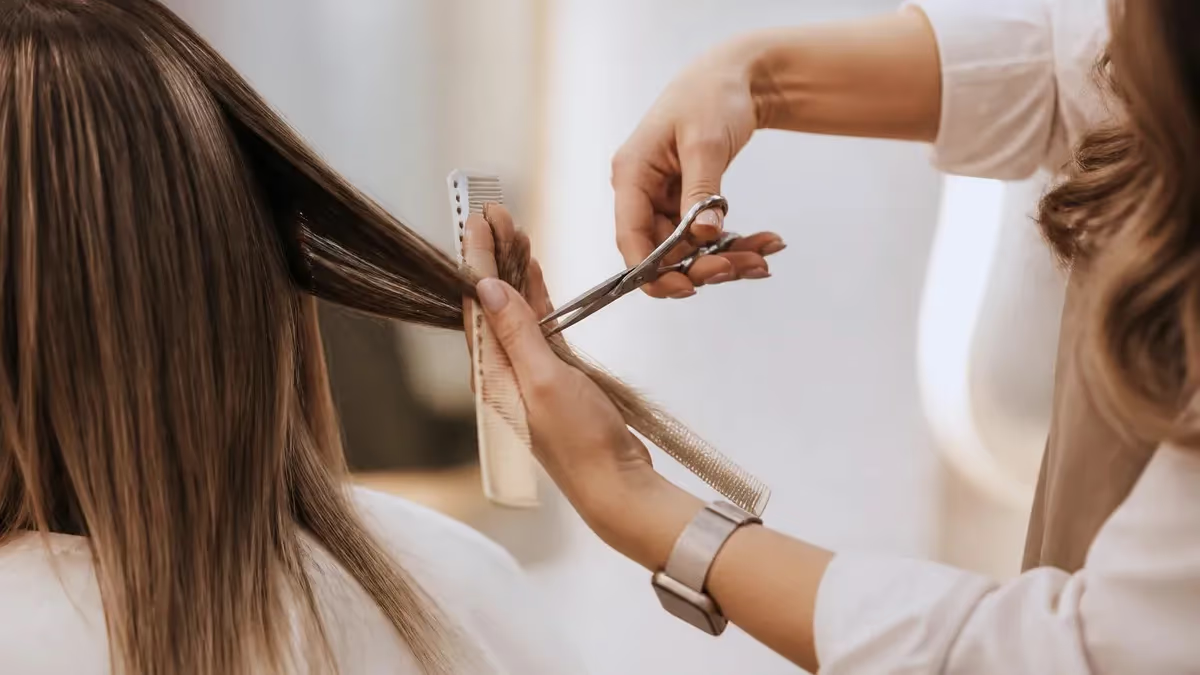
Whether you originally searched for a cosmetology school near me or you already hold an active Texas license, understanding texas cosmetology continuing education 1 hour requirements is essential for every working cosmetologist. The Texas Department of Licensing and Regulation, commonly known as TDLR, mandates that all licensed cosmetology professionals complete continuing education hours before each renewal cycle. Failing to meet these requirements can result in expired credentials, significant lost income, and potential legal consequences for practicing without a valid license in the state of Texas.
Texas requires cosmetology professionals to complete a minimum of four hours of continuing education every two years. Within that four-hour block, at least one hour must specifically cover sanitation and safety protocols, which is exactly why many professionals search for texas cosmetology continuing education 1 hour courses that satisfy this critical sanitation component. The remaining three hours can be allocated to elective topics such as advanced hair techniques, chemical services, business management strategies, or emerging industry trends that keep practitioners current with evolving standards.
The landscape of cosmetology continuing education has evolved significantly over the past several years across Texas and the broader United States. Where professionals once had to attend in-person seminars at designated locations across the state, today many approved providers offer flexible online options that accommodate busy schedules. These digital courses allow working cosmetologists to fulfill their requirements from home, on their own schedule, without closing their stations or losing valuable client appointments during peak business hours throughout the week.
Every cosmetology cosmetologist working in Texas should understand that continuing education is not merely a bureaucratic hurdle or meaningless paperwork exercise. These courses serve a genuine purpose by ensuring that licensed professionals stay informed about current health and safety regulations, emerging techniques, and evolving industry standards. When you invest time in quality continuing education, you protect both your clients and your professional reputation while keeping your cosmetology programs credentials in good standing with the regulatory authorities.
The renewal deadline for Texas cosmetology licenses varies based on your original issue date, so it is critical to check your specific expiration date well in advance of any deadlines. TDLR sends renewal notices approximately sixty days before your license expires, but waiting for that notice before starting your continuing education is genuinely risky. Many professionals find themselves scrambling at the last minute, which leads to rushed course completion and potential lapses in licensure that could disrupt their careers and client relationships significantly.
For those exploring what is cosmetology as a career path or considering how long is cosmetology school before entering the workforce, understanding the ongoing education requirements is equally important during the planning phase. Continuing education obligations extend throughout your entire career as a licensed professional, so factoring this commitment into your professional development plan from the very beginning sets you up for sustained long-term success. The cost is typically modest, ranging from fifteen to fifty dollars per course offering.
This comprehensive guide covers everything you need to know about Texas cosmetology continuing education, from approved course providers and completion timelines to renewal procedures and common mistakes that can delay your license renewal process. Whether you are a newly licensed cosmetologist completing your first renewal cycle or a seasoned veteran who has navigated this process many times before, you will find actionable information and practical strategies to make compliance as smooth and completely stress-free as possible throughout your career.
Texas Cosmetology CE by the Numbers
Key Facts at a Glance
| Item | Value | Details |
|---|---|---|
| Total CE Required | 4 Hours | Every 2-year renewal cycle |
| Sanitation Required | 1 Hour | Mandatory safety module |
| License Renewal Fee | $61 | Standard TDLR renewal |
| Renewal Cycle Length | 2 Years | From original issue date |

Steps to Complete Your Texas Cosmetology CE
Check Your License Expiration Date
Select a TDLR-Approved CE Provider
Complete the Mandatory Sanitation Hour
Finish Three Elective CE Hours
Verify Hours Reported to TDLR
Submit Your Renewal Application
Finding the right continuing education provider is one of the most important decisions Texas cosmetologists make during each renewal cycle. TDLR maintains an approved provider list that includes both in-person schools and online cosmetology school platforms offering flexible digital coursework. Only courses from TDLR-approved providers count toward your renewal requirements, so always verify a provider's approval status before enrolling and paying for any course. Using an unapproved provider means completely wasted time and money with absolutely no credit toward your renewal.
The process for completing your continuing education hours is straightforward when you approach it systematically and with adequate planning time. First, log into your TDLR online account to confirm your current license status and specific expiration date. Next, select an approved provider that offers the specific courses you need, including the mandatory one-hour sanitation and safety module. Complete all four hours of coursework, ensure you receive a certificate of completion, and verify that your provider reports your hours directly to TDLR within the required timeframe.
Many cosmetology colleges and beauty schools throughout Texas offer continuing education courses as part of their professional development programming for licensed practitioners. These institutional providers often combine traditional classroom instruction with hands-on demonstrations, giving experienced professionals the opportunity to practice new techniques under expert supervision and guidance. While these in-person options require more time commitment than online alternatives, many cosmetologists find the interactive format significantly more engaging and the networking opportunities with fellow professionals invaluable for long-term career growth.
Online continuing education has become the preferred method for most Texas cosmetologists, with approximately seventy percent of all CE completions now happening through digital platforms across the state. These courses typically feature high-quality video instruction, interactive quizzes, downloadable resource materials, and progress tracking dashboards that you can access from any device with a reliable internet connection. The flexibility to pause and resume coursework at your convenience makes online learning particularly attractive for professionals who work irregular hours or manage their own salon businesses.
Cost considerations play a significant role in provider selection for budget-conscious professionals managing multiple business expenses. Prices for a complete four-hour continuing education package range from approximately twenty dollars for basic online courses to over one hundred dollars for premium in-person workshops that include hands-on training components and take-home materials. Some providers bundle their courses with additional resources like technique demonstration videos, business management templates, or product discount codes that add meaningful extra value beyond the required credit hours.
It is essential to maintain detailed records of all continuing education completions, even though TDLR tracks provider submissions electronically through their centralized database system. Save your certificates of completion, confirmation emails, payment receipts, and any correspondence with providers for at least two full renewal cycles as personal backup documentation. In cases where a provider fails to report your hours correctly or a system error occurs, having your own records allows you to resolve discrepancies quickly without risking a lapse in your license status.
Texas also allows cosmetologists to earn continuing education credit through certain industry conferences, trade shows, and manufacturer-sponsored training events held throughout the year. These alternative pathways must still be offered through TDLR-approved providers to qualify, but they offer a more dynamic and immersive learning experience that combines formal education with exposure to new products, tools, and industry innovations. Events like the International Beauty Show and state-level cosmetology association meetings frequently offer approved CE sessions that count toward your renewal requirements.
Cosmetology Practice Test Questions
Prepare for the Cosmetology Test exam with our free practice test modules. Each quiz covers key topics to help you pass on your first try.
Cosmetology Test Anatomy and Physiology
Cosmetology Exam Questions covering Test Anatomy and Physiology. Master Cosmetology Test concepts for certification prep.
Cosmetology Test Business and Career Manag...
Free Cosmetology Practice Test featuring Test Business and Career Management. Improve your Cosmetology Exam score with mock test prep.
Cosmetology Test Chemical Texture Services
Cosmetology Mock Exam on Test Chemical Texture Services. Cosmetology Study Guide questions to pass on your first try.
Cosmetology Test Haircolor and Lightening
Cosmetology Test Prep for Test Haircolor and Lightening. Practice Cosmetology Quiz questions and boost your score.
Cosmetology Test Haircutting and Styling
Cosmetology Questions and Answers on Test Haircutting and Styling. Free Cosmetology practice for exam readiness.
Cosmetology Test Infection Control and Safety
Cosmetology Mock Test covering Test Infection Control and Safety. Online Cosmetology Test practice with instant feedback.
Cosmetology Test Nail Care and Procedures
Free Cosmetology Quiz on Test Nail Care and Procedures. Cosmetology Exam prep questions with detailed explanations.
Cosmetology Test Nail Care and Services
Cosmetology Practice Questions for Test Nail Care and Services. Build confidence for your Cosmetology certification exam.
Cosmetology Test Principles of Skin Care
Cosmetology Test Online for Test Principles of Skin Care. Free practice with instant results and feedback.
Cosmetology Test Scientific Concepts
Cosmetology Study Material on Test Scientific Concepts. Prepare effectively with real exam-style questions.
Cosmetology Test Skincare and Services
Free Cosmetology Test covering Test Skincare and Services. Practice and track your Cosmetology exam readiness.
Cosmetology Test Wigs, Hair Extensions, an...
Cosmetology Exam Questions covering Test Wigs, Hair Extensions, and Hair Additions. Master Cosmetology Test concepts for certification prep.
Cosmetology Administrative Rules
Free Cosmetology Practice Test featuring Administrative Rules. Improve your Cosmetology Exam score with mock test prep.
Cosmetology On Hair & Scalp Properties
Cosmetology Mock Exam on On Hair & Scalp Properties. Cosmetology Study Guide questions to pass on your first try.
Cosmetology
Cosmetology Test Prep for Cosmetology. Practice Cosmetology Quiz questions and boost your score.
Cosmetology License Renewal: Comparing CE Course Formats
Online continuing education courses offer the most flexible path for Texas cosmetologists who need to complete their renewal requirements without disrupting work schedules. These TDLR-approved digital platforms deliver video-based instruction, interactive assessments, and downloadable certificates upon completion. Most online courses can be started and stopped at your convenience, allowing you to work through material during slow salon hours, evenings, or weekends at your own pace from any location with internet access.
The average cost for a complete four-hour online CE package ranges from twenty to forty-five dollars, making it the most budget-friendly option available to licensed professionals. Reputable online providers include platforms specifically designed for Texas cosmetology professionals, featuring content updated annually to reflect current TDLR regulations and industry best practices. Completion certificates are typically submitted electronically to TDLR within five business days, streamlining the entire renewal documentation process considerably for busy practitioners.
Online vs In-Person Continuing Education: Which Format Is Best?
- +Complete coursework from anywhere with an internet connection on your own flexible schedule
- +Significantly lower cost averaging twenty to forty-five dollars for a full four-hour CE package
- +Pause and resume coursework at any time without losing progress or requiring rebooking
- +Access updated course materials and video demonstrations that reflect current TDLR regulations
- +Receive electronic completion certificates submitted directly to TDLR within business days
- +Available twenty-four hours a day seven days a week to accommodate any work schedule
- −Limited hands-on practice opportunities compared to in-person workshop demonstrations
- −No direct face-to-face interaction with instructors for personalized technique feedback
- −Requires reliable internet connection and self-discipline to complete without external accountability
- −Fewer networking opportunities with fellow cosmetology professionals and potential mentors
- −Some online platforms have outdated content that may not reflect the latest industry trends
- −Can feel isolating for learners who thrive in collaborative and social educational environments
Texas Cosmetology CE Renewal Checklist
- ✓Verify your exact license expiration date through your TDLR online account dashboard
- ✓Confirm your selected CE provider appears on the current TDLR approved provider list
- ✓Complete the mandatory one-hour sanitation and safety course from an approved provider
- ✓Finish three additional elective continuing education hours before your renewal deadline
- ✓Save all completion certificates and payment receipts in a dedicated digital folder
- ✓Log into TDLR to verify that your provider successfully reported all completed CE hours
- ✓Update your mailing address and contact information in your TDLR account if anything changed
- ✓Submit your online renewal application through the TDLR portal before your expiration date
- ✓Pay the sixty-one dollar standard renewal fee using an accepted payment method
- ✓Download and save your renewed license confirmation for your professional records
Do Not Wait Until the Last Minute to Complete Your Continuing Education
TDLR data shows that approximately thirty-five percent of late renewal penalties result from cosmetologists who waited until the final two weeks before their expiration date to begin continuing education coursework. Starting your CE at least three months before your deadline gives you adequate time to select quality courses, complete them thoughtfully, and verify that your provider has reported your hours correctly to avoid any gaps in your active license status.
Understanding how cosmetology license renewal connects directly to continuing education completion is crucial for maintaining uninterrupted practice rights throughout Texas. Your cosmetology license renewal cycle runs on a strict two-year schedule, and TDLR will not process your renewal application until all required continuing education hours have been reported and verified in their centralized system. This means that procrastinating on your CE coursework can directly delay your ability to renew, potentially leaving you unable to legally work until the compliance issue is fully resolved.
The renewal process itself involves several important steps beyond continuing education completion that every Texas cosmetologist must understand. You must submit your renewal application through the TDLR online portal, pay the renewal fee of approximately sixty-one dollars, and confirm that all personal information on file is current and accurate. If you have changed your name, mailing address, or primary place of employment since your last renewal, updating these details during the renewal process is mandatory to maintain compliant records with the state.
Late renewals carry financial penalties that increase progressively the longer you wait beyond your expiration date. If your license expires and you renew within ninety days, you face a late fee equal to one and a half times the standard renewal fee. After ninety days but within one year of expiration, the late penalty doubles to twice the renewal fee amount. Beyond one year of expiration, you may be required to retake portions of the licensing examination or complete additional education hours to reactivate.
Texas cosmetologists who hold multiple license types, such as combined cosmetology and esthetics or cosmetology and nail technology certifications, must complete continuing education requirements for each license category separately. However, some approved providers offer bundled courses that satisfy requirements across multiple license categories simultaneously, saving both time and money. Checking with your provider about multi-license packages can prevent unnecessary duplication of effort while ensuring you remain fully compliant across all of your professional certifications.
The one-hour sanitation and safety requirement within the four-hour continuing education mandate deserves special attention because it covers topics directly related to client health and public safety across all service categories. These courses address current TDLR sanitation rules, proper disinfection procedures for tools and equipment, bloodborne pathogen protocols, and chemical safety standards applicable to salon environments. The state considers this content so critical that it must be completed as a distinct identifiable module rather than integrated into general coursework.
For professionals who have relocated from other states, understanding how Texas continuing education requirements compare to those in your previous licensing jurisdiction is important for smooth transitions. States like Ohio and Arizona maintain their own boards with different CE mandates and hour totals. The arizona state board of cosmetology, for example, requires different hour totals and covers different mandatory topics than Texas does. Professionals who have completed a license transfer should verify which Texas-specific CE courses they need to satisfy TDLR requirements.
Military service members and their spouses receive special accommodations under Texas law regarding continuing education and license renewal deadlines that are worth understanding. Active duty personnel stationed outside Texas may qualify for deadline extensions, fee waivers, or alternative compliance pathways that acknowledge the unique challenges of military life and frequent relocations. TDLR provides dedicated assistance for military-affiliated cosmetologists, and contacting their military liaison office early in the renewal process ensures you receive all available benefits and avoid unnecessary penalties.
Practicing cosmetology with an expired license in Texas is a violation of state law that can result in fines up to five thousand dollars per incident. If your license lapses, you must immediately stop providing services until your renewal is processed and your license is reactivated. Late renewal fees range from ninety-two dollars within ninety days to one hundred twenty-two dollars after ninety days, making timely CE completion significantly more cost-effective than dealing with penalties.
Selecting the right continuing education courses goes beyond simply meeting minimum requirements and checking boxes on a compliance form. Strategic course selection can enhance your professional skills, expand your service menu, and directly increase your earning potential in the competitive Texas beauty market. Many Texas cosmetologists use their CE hours as an opportunity to explore trending techniques like balayage mastery, keratin treatment certification, or advanced color correction methods that clients are actively requesting in salons across the state.
The distinction between approved and non-approved continuing education providers cannot be overstated for Texas cosmetologists navigating the renewal process. Texas has experienced documented issues with fraudulent CE providers who collect fees but either fail to report completions to TDLR or are not actually authorized to offer credit-bearing courses at all. Before enrolling with any provider, verify their status on the TDLR website by searching the approved provider database. Legitimate providers will always display their TDLR approval number prominently and can provide verification upon request.
Professionals considering how much is cosmetology school often overlook the ongoing costs associated with maintaining their license after graduation and entering the workforce. While initial education expenses can range from five thousand to twenty thousand dollars depending on the program and institution, annual continuing education costs typically amount to less than fifty dollars per year when averaged across the two-year renewal cycle. This makes ongoing professional development remarkably affordable compared to many other licensed professions that require significantly more expensive continuing education programs.
Group learning opportunities present another valuable option for salon teams and independent cosmetologists alike during each renewal period. Some approved providers offer on-site training sessions where they bring continuing education courses directly to your salon or workspace for convenient group completion. These group sessions can be more cost-effective per person, create meaningful team-building opportunities, and ensure that all staff members complete their requirements simultaneously without disrupting salon schedules or causing coverage gaps for clients.
The content covered in Texas continuing education courses has evolved to address contemporary issues facing the modern cosmetology industry in meaningful ways. Recent course offerings include modules on inclusive beauty practices for diverse hair textures and skin types, sustainable salon operations and eco-friendly product selection, digital marketing strategies for beauty professionals, and mental health awareness for client-facing service providers. Those who completed their training at an ohio state cosmetology program or similar out-of-state institution will find that Texas CE courses reflect current national industry standards.
Technology integration in continuing education delivery continues to improve the learning experience for Texas cosmetologists across all experience levels and career stages. Modern online platforms incorporate high-definition video demonstrations, interactive skill assessments, mobile-optimized course interfaces, and progress tracking dashboards that make learning accessible from smartphones and tablets anywhere. These technological advances mean that completing your required hours no longer feels like a burdensome chore but rather an engaging educational experience delivering genuine practical value.
Planning your continuing education timeline strategically can reduce stress and maximize the value you extract from each required hour of coursework. Rather than completing all four hours in a single rushed session close to your deadline, consider spreading your courses across the full two-year renewal period. Taking one course per quarter allows you to absorb material more thoroughly, apply new techniques between sessions, and avoid the anxiety of last-minute completion that compromises learning quality and adds unnecessary pressure to your professional life.
Developing a personal continuing education strategy starts with understanding your professional goals and identifying specific skill gaps that targeted coursework can meaningfully address. Review client feedback, analyze which services generate the most revenue at your station, and consider emerging trends in your local market that could attract new clientele. If clients frequently request services you do not currently offer, selecting CE courses that build those specific competencies serves double duty by satisfying your renewal requirements while expanding your service capabilities and revenue potential.
Documentation management is a practical skill that separates organized professionals from those who face completely preventable compliance headaches during each renewal cycle. Create a dedicated email folder or cloud storage directory for all continuing education-related correspondence, including enrollment confirmations, payment receipts, completion certificates, and TDLR acknowledgment notifications. Set calendar reminders at six-month intervals throughout your renewal cycle to check your TDLR account and confirm that completed hours are properly reflected in the system accurately.
Networking during continuing education events, whether conducted online or in-person, provides benefits that extend far beyond the credit hours themselves and into your broader career trajectory. Fellow cosmetologists in your CE courses represent a peer network of professionals facing similar challenges, sharing business insights, and exchanging technique recommendations based on real-world salon experience. Many lasting professional relationships and even successful business partnerships have originated from conversations during continuing education sessions, making active engagement in discussions and collaborative activities a worthwhile investment.
Salon owners and booth renters should approach continuing education with a business management perspective as well as a technical skills focus for maximum return on investment. Courses covering client retention strategies, pricing optimization, social media marketing for beauty professionals, and financial management for small business owners can transform your CE obligation into actionable business intelligence. Understanding how to effectively market new skills acquired through continuing education helps you recoup your investment quickly by attracting clients seeking the specific advanced services your updated training qualifies you to provide.
The future of cosmetology continuing education in Texas points toward increased specialization and more rigorous content standards that reflect the growing complexity of modern beauty services. TDLR periodically reviews and updates its CE requirements to reflect evolving industry practices, new health and safety research findings, and changes in consumer expectations and demands. Staying informed about proposed regulatory changes through TDLR announcements, industry association newsletters, and professional cosmetology publications ensures you are never caught off guard by new requirements that could affect your compliance status.
For newly licensed cosmetologists completing their first renewal cycle, the continuing education process can seem intimidating, but it is genuinely straightforward once you understand the basic framework and timeline. Start by creating your TDLR online account if you have not already done so, familiarize yourself with the approved provider list, and complete at least one course early in your renewal period to build confidence with the process. First-time renewals follow exactly the same procedures as subsequent ones, so mastering the process now sets a reliable pattern for the rest of your career.
Ultimately, texas cosmetology continuing education represents far more than just a regulatory requirement imposed by the state government. It is a structured opportunity to invest in yourself, stay current with an industry that evolves rapidly, and demonstrate your commitment to professional excellence and client safety through ongoing learning. By approaching your continuing education obligations with intention and strategic planning, you transform a compliance task into a career development tool that keeps you competitive, confident, and fully qualified to deliver exceptional beauty services throughout your career.
Sample Cosmetology Test Practice Questions
Try these questions from our free Cosmetology Test practice tests. The correct answer and an explanation follow each question.
In most states, what happens if a cosmetologist fails to complete required continuing education before license renewal?
- A. The license is automatically renewed with a warning
- B. The renewal application will be denied or the license placed on inactive status
- C. A grace period of two years is granted
- D. No penalty applies if the courses are taken within 6 months
Answer: B. The renewal application will be denied or the license placed on inactive status
Failure to complete mandatory continuing education results in denial of renewal or an inactive license status until requirements are met.
Which of the following continuing education topics is most commonly required for cosmetology license renewal?
- A. Business marketing strategies
- B. HIV/AIDS awareness and bloodborne pathogens
- C. Advanced color theory
- D. Social media for salons
Answer: B. HIV/AIDS awareness and bloodborne pathogens
Many states mandate HIV/AIDS awareness and bloodborne pathogen training as part of continuing education for cosmetology license renewal due to public health requirements.
How often is it necessary to take continuing education courses?
- A. minimum of 70
- B. every three years
- C. every four years
- D. every two years
Answer: D. every two years
In Texas, licensed cosmetologists are required to complete continuing education courses every two years. This ensures that professionals stay updated on the latest industry trends, safety practices, and regulatory changes. Completing these courses is a prerequisite for license renewal.
How many hours before a cosmetology license expires should a renewal application typically be submitted?
- A. At least 30 days before expiration
- B. On the exact expiration date
- C. Within 90 days after expiration
- D. Only when requested by the board
Answer: A. At least 30 days before expiration
Most state boards recommend submitting renewal applications at least 30 days before the license expiration date to avoid lapses.
Cosmetology Questions and Answers

Cosmetology Classes Online: How Hybrid Programs Work, Cost, and Whether They Lead to Licensure in 2026
Cosmetology School Programs: Complete 2026 Guide to Curriculum, Cost, Hours and Licensing
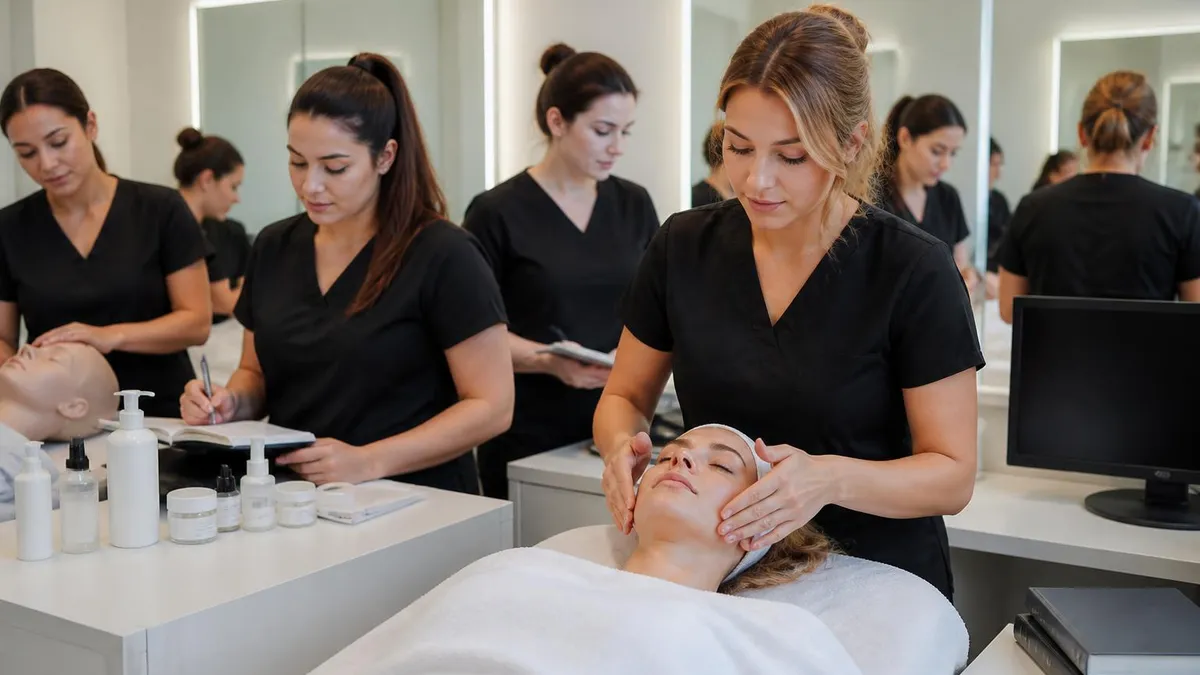
Cosmetology License Transfer From State to State: Complete 2026 Guide to Reciprocity, Endorsement, and Requirements
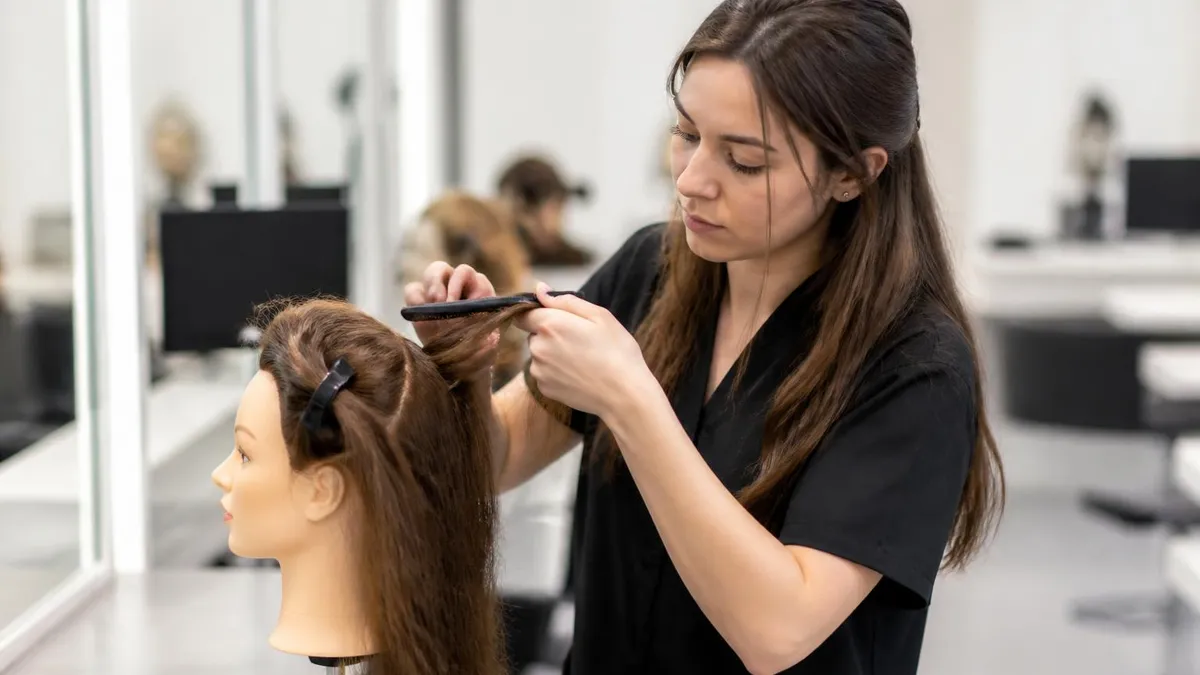
Texas Cosmetology License: Complete Requirements, Costs, and Application Guide for 2026
Cosmetology Test 2026
About the Author
Licensed Cosmetologist & Beauty Licensing Exam Specialist
Paul Mitchell SchoolsMichelle Santos is a licensed cosmetologist with a Bachelor of Science in Esthetics and Salon Management from Paul Mitchell School. She has 16 years of salon industry experience and 8 years preparing students for state cosmetology board exams in theory, practical skills, and sanitation. She specializes in licensure preparation for cosmetologists, estheticians, and nail technicians.
Join the Discussion
Connect with other students preparing for this exam. Share tips, ask questions, and get advice from people who have been there.
View discussion (6 replies)