
Cosmetology License Transfer From State to State: Complete 2026 October Guide to Reciprocity, Endorsement, and Requirements
Cosmetology license transfer from state to state: reciprocity rules, endorsement applications, fees, hours, and exam requirements for all 50 US 💡
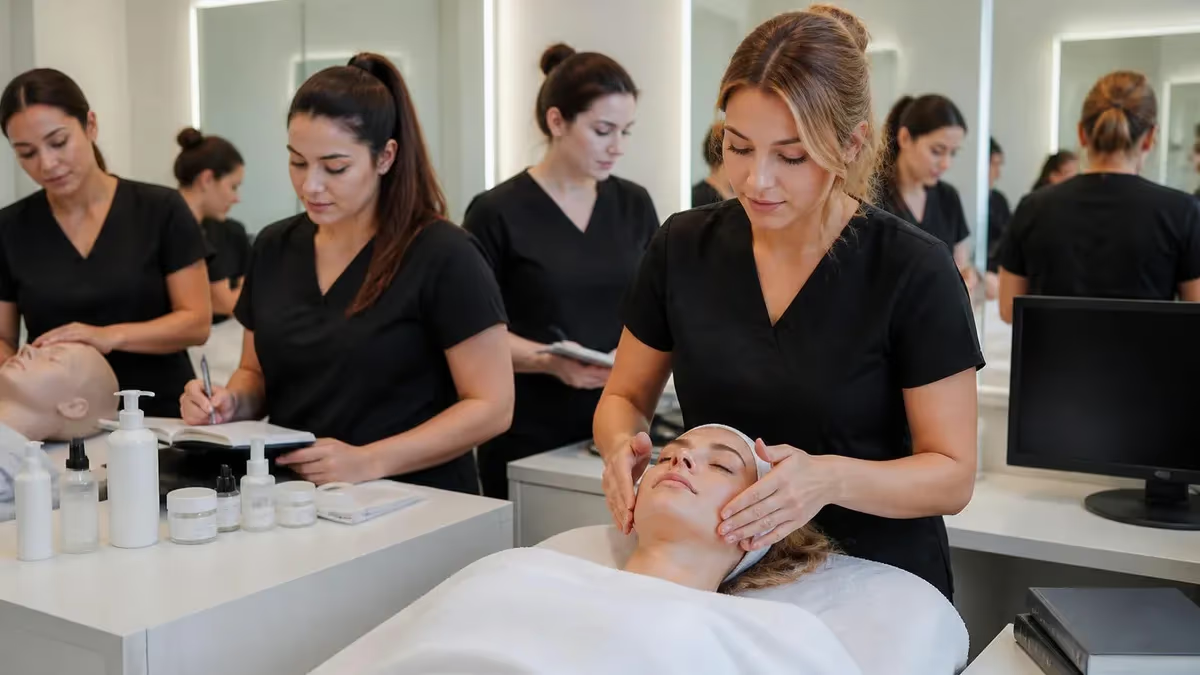
A cosmetology license transfer from state to state is the legal process of converting a valid license issued by one state board into an active license in a new state, allowing a licensed cosmetology cosmetologist to keep working without repeating an entire training program. Whether you're relocating for family, chasing a better salon market, or moving with a military spouse, understanding reciprocity and endorsement rules is the difference between cutting hair next week and waiting six months while your paperwork sits in a queue. Each state board sets its own rules, fees, and timelines.
Most people searching for a cosmetology school near me eventually ask the next question: what happens to my license when I move? The answer depends on three variables — how many training hours your original state required, how recently you took your written and practical exams, and whether your new state offers reciprocity, endorsement, or a hybrid pathway. Some states like Florida and Texas are relatively flexible, while California historically requires additional exams for incoming applicants from lower-hour states.
What is cosmetology training, exactly? It's typically a 1,000 to 2,100-hour program covering hair, skin, nails, sanitation, chemistry, and salon business. When you transfer, the receiving state compares your hours line by line against its own curriculum. If you trained in a 1,000-hour state and move to a 1,600-hour state, you may need to complete the difference through documented salon experience or supplemental coursework before your application is approved.
This guide walks through every step of the transfer process — eligibility verification, required documents, application fees, processing times, and the most common reasons applications get rejected. You'll learn how endorsement differs from reciprocity, why universal licensing recognition laws passed in 23 states since 2019 have dramatically simplified moves, and what to do if you've let your license lapse before relocating. Knowing how long is cosmetology school in both your origin and destination state is the foundation of every successful transfer.
Expect to budget between $75 and $400 in application fees, plus $50 to $150 for license verification from your original board, and potentially $200 to $500 if your new state requires you to retake a written or practical exam. Total out-of-pocket costs for a multi-state move with exam testing can reach $800, though most straightforward endorsements cost under $300. Processing typically takes four to twelve weeks once your file is complete.
The good news: federal pressure and consumer-choice advocacy have pushed states toward faster, friendlier transfer rules. Arizona, Iowa, Pennsylvania, and Missouri now grant near-automatic recognition for any out-of-state license held in good standing. The bad news: a handful of states — notably New York, New Jersey, and Hawaii — still demand full reapplication if your training hours fall short. Knowing which category your destination falls into before you pack the U-Haul will save weeks of frustration.
This article covers the legal mechanics, document checklists, state-by-state quirks, military spouse provisions, fee schedules, common rejection reasons, and timing strategies that protect your income while paperwork processes. Read it once before applying, then keep it open as a reference while you fill out forms.
Cosmetology License Transfer by the Numbers
Step-by-Step Transfer Timeline
Verify Eligibility
Request License Verification
Gather Supporting Documents
Submit Application
Complete Required Exams
Receive License
Reciprocity and endorsement are often used interchangeably, but they're legally distinct mechanisms. Reciprocity is a formal agreement between two states that mutually recognize each other's licenses — if State A and State B have reciprocity, a stylist with an A license gets a B license with minimal review. Endorsement, by contrast, is a one-way evaluation: the receiving state examines your credentials against its own standards and decides case-by-case whether to issue a license. Most US states use endorsement rather than true reciprocity.
True reciprocity agreements are rare in cosmetology because state boards historically protect local schools and testing vendors. Endorsement gives the receiving state full discretion to require additional training, supplemental exams, or salon-experience documentation. This is why two stylists with identical credentials can have wildly different outcomes when they move — one might transfer in two weeks, the other might wait three months while a board committee reviews their case.
Universal licensing recognition is the newest category, pioneered by Arizona in 2019. Under these laws, any applicant holding a valid license in good standing from another state can obtain a license in the new state with proof of residency and a clean disciplinary record — no hour comparison, no extra exams. As of 2026, twenty-three states have adopted some version of universal recognition, including Pennsylvania, Iowa, Missouri, Utah, Mississippi, and Idaho. The Arizona Board of Cosmetology and the how much is cosmetology school question are connected — universal recognition has lowered the financial barrier to interstate moves dramatically.
Military spouse provisions deserve special mention. Federal law now requires every state board to expedite licensing for active-duty military spouses, typically within 30 days of a complete application. Many states waive fees entirely for this population and accept any out-of-state license without hour comparisons. If you're a military family relocating under PCS orders, identify yourself as a military spouse on your application — it's often the fastest pathway available.
The Ohio State Board of Cosmetology, Arizona State Board of Cosmetology, and California Board of Barbering and Cosmetology each handle transfers differently, and understanding the cultural and procedural differences matters. Ohio requires 1,500 hours and tends to approve endorsement applications quickly if hours match. Arizona has universal recognition. California is famously strict — applicants from sub-1,600-hour states often face additional requirements regardless of years of experience. Researching your specific destination is non-negotiable.
License renewal status from your origin state is the second most-common application killer after missing transcripts. If your home-state license lapsed for non-payment or failure to complete continuing education hours, the destination state will see it as an inactive credential and reject the application until you reinstate. Always renew your home-state license before applying to transfer, even if you don't plan to work in your origin state again. Reinstatement after a lapse is messier than a clean renewal.
Cosmetology colleges that participated in NIC-aligned testing programs make transfers smoother because your written and practical exam scores can sometimes be accepted in lieu of new testing. Ask your school registrar whether your exam scores were reported to NIC's interstate database — if so, your destination state can pull them directly.
Cosmetology Practice Test Questions
Prepare for the Cosmetology Test exam with our free practice test modules. Each quiz covers key topics to help you pass on your first try.
Cosmetology Test Anatomy and Physiology
Cosmetology Exam Questions covering Test Anatomy and Physiology. Master Cosmetology Test concepts for certification prep.
Cosmetology Test Business and Career Manag...
Free Cosmetology Practice Test featuring Test Business and Career Management. Improve your Cosmetology Exam score with mock test prep.
Cosmetology Test Chemical Texture Services
Cosmetology Mock Exam on Test Chemical Texture Services. Cosmetology Study Guide questions to pass on your first try.
Cosmetology Test Haircolor and Lightening
Cosmetology Test Prep for Test Haircolor and Lightening. Practice Cosmetology Quiz questions and boost your score.
Cosmetology Test Haircutting and Styling
Cosmetology Questions and Answers on Test Haircutting and Styling. Free Cosmetology practice for exam readiness.
Cosmetology Test Infection Control and Safety
Cosmetology Mock Test covering Test Infection Control and Safety. Online Cosmetology Test practice with instant feedback.
Cosmetology Test Nail Care and Procedures
Free Cosmetology Quiz on Test Nail Care and Procedures. Cosmetology Exam prep questions with detailed explanations.
Cosmetology Test Nail Care and Services
Cosmetology Practice Questions for Test Nail Care and Services. Build confidence for your Cosmetology certification exam.
Cosmetology Test Principles of Skin Care
Cosmetology Test Online for Test Principles of Skin Care. Free practice with instant results and feedback.
Cosmetology Test Scientific Concepts
Cosmetology Study Material on Test Scientific Concepts. Prepare effectively with real exam-style questions.
Cosmetology Test Skincare and Services
Free Cosmetology Test covering Test Skincare and Services. Practice and track your Cosmetology exam readiness.
Cosmetology Test Wigs, Hair Extensions, an...
Cosmetology Exam Questions covering Test Wigs, Hair Extensions, and Hair Additions. Master Cosmetology Test concepts for certification prep.
Cosmetology Administrative Rules
Free Cosmetology Practice Test featuring Administrative Rules. Improve your Cosmetology Exam score with mock test prep.
Cosmetology On Hair & Scalp Properties
Cosmetology Mock Exam on On Hair & Scalp Properties. Cosmetology Study Guide questions to pass on your first try.
Cosmetology
Cosmetology Test Prep for Cosmetology. Practice Cosmetology Quiz questions and boost your score.
How Long Is Cosmetology School and What Transfers
States like Florida (1,200 hours), Massachusetts (1,000 hours), and New York (1,000 hours) have lower hour requirements, making it easier for graduates of these programs to transfer outward. If you trained in a low-hour state and want to move to a high-hour state, expect to document salon hours, complete supplemental coursework, or sit additional exams to bridge the gap.
The reverse is much easier — graduates of 1,600-plus-hour states like Texas, Oregon, or Pennsylvania almost always satisfy the hour requirements of any state they move to. This is why students considering relocation should ask their school registrar early how many states accept their program's hour total without supplemental requirements.
Cosmetology License Transfer: Pros and Cons of Endorsement
- +Preserves training investment — no need to redo 1,000+ hours of school
- +Faster than starting over — most transfers complete in 4–12 weeks
- +Lower cost than retraining — typically $200–$500 total
- +Maintains work history and salon relationships
- +Universal recognition states approve in as little as 2 weeks
- +Military spouses receive expedited 30-day processing
- +Online application portals available in 35+ states
- −Some states require hour bridging if you trained below their minimum
- −License verification fees from origin state add $25–$75
- −State law exams may be required even with universal recognition
- −Background checks delay processing by 2–4 weeks
- −Lapsed home-state licenses must be reinstated first
- −High-hour states (CA, OR, SD) often demand documentation of work experience
- −Processing can extend to 6 months in slower states like Hawaii or NJ
Cosmetology License Transfer Document Checklist
- ✓Original state license verification sent directly from your home board
- ✓Official cosmetology school transcripts showing total hours completed
- ✓Government-issued photo ID (driver's license or passport copy)
- ✓Two passport-style photographs taken within the last six months
- ✓Completed endorsement or reciprocity application form
- ✓Application fee payment via cashier's check, money order, or online payment
- ✓FBI or state-level fingerprint-based background check results
- ✓Proof of residency in the destination state (utility bill or lease)
- ✓Documentation of recent work experience if required (employer letters)
- ✓Continuing education certificates from current renewal period
- ✓Military spouse documentation if applicable (PCS orders, marriage certificate)
- ✓Affidavit of no disciplinary actions signed and notarized
Apply for the new license BEFORE you let your old one expire
Every state board treats an active license differently than a lapsed one — and the difference adds weeks or months to your processing time. Renew your home-state license even if you've already moved, keep it active until your new license is issued, then let it lapse naturally if you don't plan to return. This single strategy prevents the most common cause of cosmetology license transfer delays and rejections nationwide.
Fee structures for cosmetology license transfers vary widely, and understanding the full cost picture before you apply helps you budget accurately. The application fee itself is the most visible cost — it ranges from $75 in budget-friendly states like Pennsylvania and Iowa to nearly $400 in high-fee jurisdictions like Hawaii and California. On top of that, you'll pay your origin state $25 to $75 to issue an official license verification, which most receiving states require be sent directly from board to board rather than through the applicant.
Background check fees are another universal cost. Most states now require FBI fingerprint-based checks rather than state-only checks, and these run $50 to $90 depending on the vendor. Some states allow you to use existing fingerprints from your original licensure if they're under a year old, but most require fresh prints. Plan for a one-to-three-week turnaround on background check results, which is often the bottleneck in otherwise complete applications.
If your destination state requires a state-law exam, budget another $50 to $150 for testing fees through PSI or Pearson VUE. The exam itself is usually 50 to 75 questions on jurisdiction-specific rules — salon sanitation regulations, license display laws, scope-of-practice limits, and disciplinary procedures. These tests are not difficult for experienced stylists, but you do need to study the specific state's law and rules manual, which is typically free to download from the board's website.
Processing times depend on three factors: how complete your initial application is, whether the board requires a committee review for your case, and the board's current backlog. Universal recognition states like Arizona can issue licenses in two to three weeks. Traditional endorsement states average four to eight weeks. States with hour-bridging requirements or unusual review processes — California, New York, Hawaii — can take three to six months in some cases.
Timing your move and your application strategically can save weeks. Submit your application as soon as you have a confirmed move date, even if you haven't physically relocated yet. Most states accept proof of intent to reside (signed lease, utility hookup confirmation, or relocation orders) rather than requiring you to be physically present first. The earlier the board receives your packet, the sooner the verification and background check processes begin running in parallel.
Continuing education compliance from your origin state matters more than most applicants realize. If you let CE hours lapse, your home-state license technically becomes deficient — even if it's still showing active. Destination states sometimes flag this during their review and request proof of CE completion before issuing the new license. Stay current on your CE requirements through the entire transfer process, not just up to the application date.
Finally, factor in the income gap. The realistic worst case for an endorsement transfer is eight to twelve weeks without income. Save at least one month of living expenses before relocating, or arrange to work in a non-licensed adjacent role — retail, makeup counter, or salon receptionist — while your transfer processes. Many salons offer part-time receptionist work to incoming stylists as a bridge.
Any disciplinary action on your home-state record — even one resolved years ago — must be disclosed on the transfer application. Failing to disclose is considered fraud and grounds for permanent denial in most states. If you have past issues, include a written explanation and any rehabilitation documentation. Honesty almost always results in approval; concealment almost always results in denial and may bar you from re-applying.
Common pitfalls derail more cosmetology license transfer applications than complex legal issues. The single biggest pitfall is incomplete documentation — applicants submit packets missing one document, the board notifies them by mail weeks later, and the process restarts. Build a checklist (the one above is a good starting point), tick each item off as you collect it, and have a second person review your packet before mailing. This one step prevents the majority of multi-week delays.
The second-biggest pitfall is misunderstanding hour requirements. Stylists often assume their training automatically satisfies the destination state's requirements because they've been working successfully for years. State boards don't care about years of experience — they care about documented training hours that match a specific curriculum breakdown. Pull both states' hour requirements side by side, compare line items, and identify gaps before submitting.
Third is the address-of-record problem. Many state boards send all correspondence — license verification confirmations, deficiency letters, approval notifications — to the address on file from your original application. If you've already moved and didn't update your home-state board, critical mail goes to your old address. Update your home-state address before requesting verification, even if you've already left the state. Considering an online cosmetology school for any required hour-bridging coursework can also speed up the timeline significantly.
Fourth, applicants underestimate how strict identity-document requirements are. A photocopy of your driver's license isn't always sufficient — some states require notarized copies, some require an additional secondary ID, and many require government-issued ID rather than employer or school IDs. Read the document-requirement section twice before assuming a basic photocopy will suffice.
Fifth, fee payment methods cause unnecessary delays. Many state boards still require cashier's checks or money orders rather than personal checks or credit cards. Submitting the wrong payment type means the application sits in limbo until you mail correct payment. Online portals are growing, but verify before mailing — even some online portals charge a card processing fee that catches applicants off guard.
Sixth, applicants forget about local business licenses on top of state cosmetology licenses. Even after your state-level transfer is complete, most municipalities require a local business or occupational license to actually work in a salon. These are usually inexpensive ($25 to $100) and easy to obtain, but you can't legally take clients without them. Ask your new employer or city clerk's office about local requirements once your state license arrives.
Seventh and finally, the timing of your origin-state continuing education renewal can create unexpected friction. If your CE deadline falls during the transfer window, complete the hours anyway — destination states sometimes verify CE status mid-review, and a deficient home-state credential can pause processing. Treat your origin-state license as fully active until the new license is in your hand.
Practical strategy matters as much as paperwork compliance. Start the transfer process at least three months before your planned move date if possible. This gives you time to handle unexpected issues — missing transcripts, slow background checks, document corrections — without an income gap. If you can't start three months ahead, two months is workable for universal recognition states and four months should be your minimum for stricter jurisdictions like California or New York.
Contact the destination state board directly via phone or email before submitting your application. Boards staff helpful licensing specialists who can answer specific questions about your situation, identify red flags before you pay fees, and sometimes expedite review if you have a documented job offer waiting. A 10-minute phone call early in the process can save weeks of back-and-forth mail correspondence later.
If you're considering training enhancements to bridge hour gaps, the alabama board of cosmetology and similar boards provide guidance on which schools' supplemental courses they accept. Online and hybrid programs can often fulfill gap requirements faster than traditional in-person programs, particularly for theory hours rather than hands-on practical hours.
Network with stylists who've recently completed transfers to your destination state. Facebook groups, beauty industry forums, and Instagram communities are full of stylists who can share which specific staff members at the board are responsive, which documents tripped them up, and how long their personal process took. Anecdotal data isn't a substitute for official board guidance, but it's a powerful complement.
Salons in your destination state can be active partners in your transfer. Many salon owners write letters of employment intent that some boards accept as proof of state residency or salon-experience commitment. Some salons will even cover transfer fees as a sign-on bonus to recruit experienced stylists. Don't be shy about asking what relocation support a prospective employer offers — it's a normal part of beauty-industry recruiting.
Keep digital and physical copies of every document you submit. Scan everything before mailing, save it to cloud storage with clear filenames, and keep paper photocopies in a labeled folder. If anything goes missing in transit or processing, you can immediately resubmit without recreating the documents. This single habit has saved countless transfer applicants from starting over after a lost packet.
Once your license arrives, photograph the wall certificate and pocket card immediately, save the images, and store the originals safely. You'll need to display the wall certificate in your booth or salon — most states require it be visible to clients — and you'll need the pocket card for board inspections and renewal verification. Treat these documents as legally important as a passport.
Cosmetology Questions and Answers

Board of Barbering and Cosmetology: What State Boards Do
Cosmetology Practice Test: 350+ Free Questions and Answers
Cosmetology School Near Me: How to Find, Choose, and Enroll in the Right Program in 2026
Cosmetology Training: Complete Guide to Programs, Hours, Costs and Licensing in 2026

Cosmetology Classes Online: How Hybrid Programs Work, Cost, and Whether They Lead to Licensure in 2026
About the Author
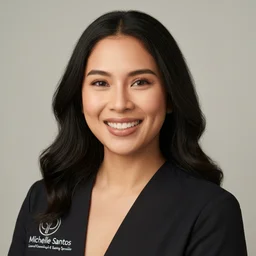
Licensed Cosmetologist & Beauty Licensing Exam Specialist
Paul Mitchell SchoolsMichelle Santos is a licensed cosmetologist with a Bachelor of Science in Esthetics and Salon Management from Paul Mitchell School. She has 16 years of salon industry experience and 8 years preparing students for state cosmetology board exams in theory, practical skills, and sanitation. She specializes in licensure preparation for cosmetologists, estheticians, and nail technicians.
Join the Discussion
Connect with other students preparing for this exam. Share tips, ask questions, and get advice from people who have been there.
View discussion (6 replies)