
Cosmetology Classes Online: How Hybrid Programs Work, Cost, and Whether They Lead to Licensure in 2026 October
Cosmetology classes online explained: hybrid hours, real costs, state board rules, and how to combine virtual theory with hands-on salon training. 🧠

Searching for cosmetology classes online has become one of the most common starting points for aspiring beauty professionals in 2026, especially for students balancing jobs, families, or long commutes. The phrase itself is a bit misleading, though, because no U.S. state allows you to earn a full cosmetology license through 100% online coursework. What does exist, and what is growing rapidly, is a strong hybrid model where theory, anatomy, infection control, business, and product chemistry are delivered through virtual classrooms while practical training happens in person.
If you have been Googling cosmetology school near me and feeling overwhelmed by tuition, hours, and scheduling, online theory components can dramatically reduce the friction. A typical accredited program now lets you complete 200 to 500 of your required hours from home, usually through a learning management system that mirrors what professional cosmetology cosmetologist licensing boards expect candidates to know on the written exam.
This guide explains exactly how cosmetology classes online work, what they cost, which states permit hybrid delivery, and how to choose a program that will actually translate into a license. We will cover state board rules, accreditation, technology requirements, hands-on kit costs, financial aid, and what your daily schedule will realistically look like.
You will also learn the difference between accredited hybrid programs and unregulated online beauty courses that sell certificates with no licensing value. This distinction matters because thousands of students each year spend money on courses that look professional online but cannot be reported to any state board as legitimate clock hours. Knowing the difference protects your time and your tuition dollars.
We will reference the rules of major state boards including the Ohio, Arizona, Texas, and California cosmetology boards, since each has slightly different rules about distance learning ratios. We will also talk about how online theory pairs with practice tests, because passing the written portion of the state board exam is just as important as your kit skills.
By the end, you will know whether online cosmetology classes are realistic for your situation, how to verify a school's accreditation, what equipment you need at home, and how to plan a path from enrollment through licensure. We will keep the focus practical: real numbers, real schedules, and real licensing law, not marketing fluff from online schools competing for your enrollment deposit.
Finally, we will tie everything back to exam prep, because the written portion of the state board test is where many online-trained students stumble. Strong theory delivery is the biggest advantage of virtual learning, and we will show you how to use it to outperform classroom-only peers on the written exam.
Online Cosmetology Classes by the Numbers
Key Facts at a Glance
| Item | Value | Details |
|---|---|---|
| Required Program Hours | 1,000–2,100 | Varies by state |
| Typical Completion Time | 9–18 months | Full-time hybrid |
| First-Time Written Exam Pass | ~71% | National average |
How Hybrid Cosmetology Programs Are Structured
Recorded lectures, interactive modules, and quizzes covering infection control, anatomy, chemistry, electricity, and product knowledge. Usually 200 to 500 documented clock hours that count toward your state requirement.
Scheduled Zoom or Teams classes with an instructor, often two to four evenings per week, used for demonstrations, Q and A, and case studies. Attendance is logged for state board reporting.
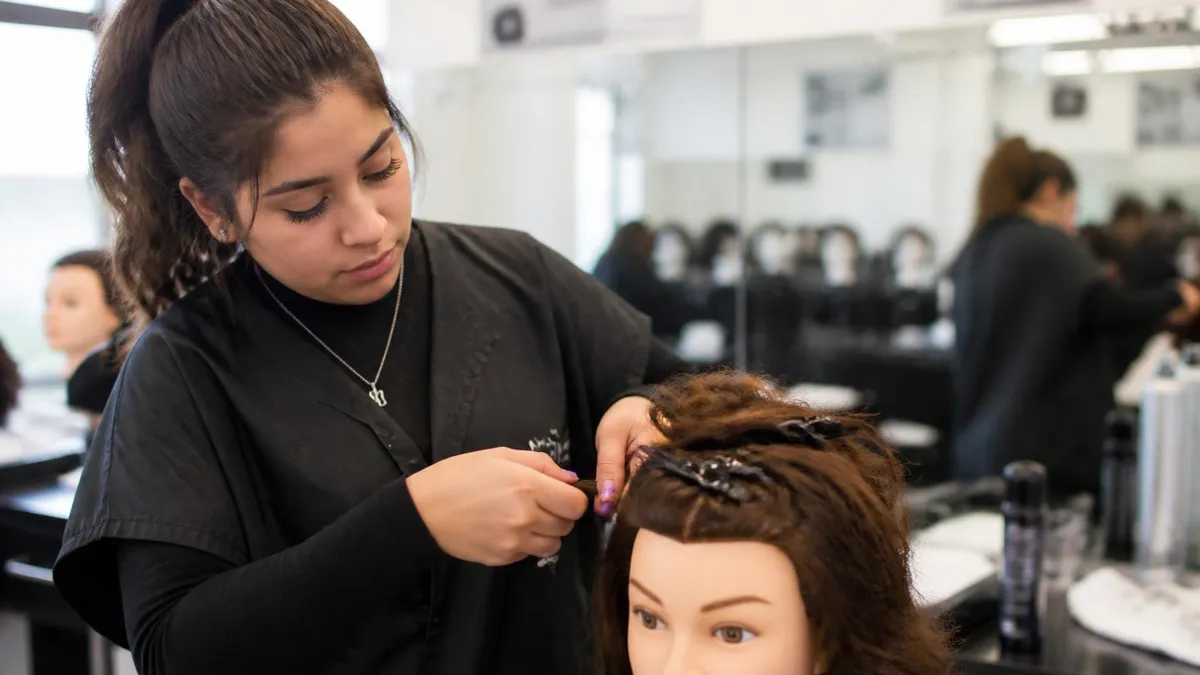
Mandatory in-person practical training on mannequins and live models for cutting, color, perms, facials, nails, and sanitation. Most programs require 30 to 40 hours per week of lab once you reach the practical phase.
Supervised paying client work in the school's student salon. These hours build speed, confidence, and time management, and are required by every state board before you can sit for the licensing exam.
Final weeks dedicated to written exam review, mock practical exams, and state-specific procedure rehearsal. This phase often returns online for theory drills while practicals continue in person.
State boards are the gatekeepers of cosmetology licensure, and they decide how many hours, if any, can be delivered online. Understanding this is critical because a program that markets itself as fully online may be perfectly legal in one state and completely unrecognized in the next. Before you enroll anywhere, confirm that the school is licensed by the state where you intend to practice, not just accredited at the federal level.
For example, the ohio state board of cosmetology currently allows accredited schools to deliver a portion of theory hours through distance education, with specific documentation requirements and proctored testing rules. The exact allowable percentage shifts as rules update, so always check the current administrative code rather than relying on a school's brochure.
Arizona is another state worth studying because it actively regulates hybrid programs. The Arizona state board of cosmetology and the broader Arizona board of cosmetology have published clear distance learning guidelines that let approved schools count synchronous virtual instruction toward total clock hours. California, by contrast, historically has been more restrictive about online delivery for the 1,000-hour curriculum it adopted after lowering its previous 1,600-hour requirement.
Texas allows distance education for theory under TDLR rules, while Florida and Georgia each maintain their own ratios. The takeaway is that you cannot generalize. A reputable school will give you a written breakdown of how many hours are online versus in person, signed off by the state board. If a school cannot produce that paperwork, walk away.
Another consideration is reciprocity. If you complete a hybrid program in one state and want to move, your new state may require additional hours, a transfer exam, or both. Boards sometimes refuse to credit online hours from another state, even if the original program was fully approved. Always plan licensure around where you will actually work, not just where you live during school.
Pay close attention to identity verification rules as well. Most boards require online students to use proctored exams, webcam monitoring, or biometric login to confirm that the enrolled student is actually doing the coursework. Programs that skip these safeguards risk losing approval, which would invalidate your hours retroactively. This has happened to students, and the financial and emotional cost is significant.
Finally, remember that cosmetology colleges that operate nationally still must hold individual approvals in each state where they enroll students. A national brand is not a substitute for state-specific licensing of the campus and the curriculum. Always verify the campus location associated with your enrollment matches your licensing state.
Cosmetology Practice Test Questions
Prepare for the Cosmetology Test exam with our free practice test modules. Each quiz covers key topics to help you pass on your first try.
Cosmetology Test Anatomy and Physiology
Cosmetology Exam Questions covering Test Anatomy and Physiology. Master Cosmetology Test concepts for certification prep.
Cosmetology Test Business and Career Manag...
Free Cosmetology Practice Test featuring Test Business and Career Management. Improve your Cosmetology Exam score with mock test prep.
Cosmetology Test Chemical Texture Services
Cosmetology Mock Exam on Test Chemical Texture Services. Cosmetology Study Guide questions to pass on your first try.
Cosmetology Test Haircolor and Lightening
Cosmetology Test Prep for Test Haircolor and Lightening. Practice Cosmetology Quiz questions and boost your score.
Cosmetology Test Haircutting and Styling
Cosmetology Questions and Answers on Test Haircutting and Styling. Free Cosmetology practice for exam readiness.
Cosmetology Test Infection Control and Safety
Cosmetology Mock Test covering Test Infection Control and Safety. Online Cosmetology Test practice with instant feedback.
Cosmetology Test Nail Care and Procedures
Free Cosmetology Quiz on Test Nail Care and Procedures. Cosmetology Exam prep questions with detailed explanations.
Cosmetology Test Nail Care and Services
Cosmetology Practice Questions for Test Nail Care and Services. Build confidence for your Cosmetology certification exam.
Cosmetology Test Principles of Skin Care
Cosmetology Test Online for Test Principles of Skin Care. Free practice with instant results and feedback.
Cosmetology Test Scientific Concepts
Cosmetology Study Material on Test Scientific Concepts. Prepare effectively with real exam-style questions.
Cosmetology Test Skincare and Services
Free Cosmetology Test covering Test Skincare and Services. Practice and track your Cosmetology exam readiness.
Cosmetology Test Wigs, Hair Extensions, an...
Cosmetology Exam Questions covering Test Wigs, Hair Extensions, and Hair Additions. Master Cosmetology Test concepts for certification prep.
Cosmetology Administrative Rules
Free Cosmetology Practice Test featuring Administrative Rules. Improve your Cosmetology Exam score with mock test prep.
Cosmetology On Hair & Scalp Properties
Cosmetology Mock Exam on On Hair & Scalp Properties. Cosmetology Study Guide questions to pass on your first try.
Cosmetology
Cosmetology Test Prep for Cosmetology. Practice Cosmetology Quiz questions and boost your score.
How Online Cosmetology Classes Are Actually Delivered
Most online theory is delivered through a learning management system such as Canvas, Moodle, or a proprietary platform. You log in, watch recorded video lessons that usually run 20 to 45 minutes, complete reading assignments from textbooks like Milady Standard Cosmetology, and take auto-graded quizzes that document your time on task. The system tracks every minute, which is how schools prove your clock hours to the state board.
The advantage is total schedule flexibility. You can study at 5 a.m. before work or at 11 p.m. after the kids are asleep. The disadvantage is the discipline required: students who treat asynchronous modules like Netflix and binge weeks at a time tend to retain less and struggle on the written exam. Steady daily pacing of one to two hours produces far better outcomes.
Cosmetology Classes Online: Pros and Cons
- +Lower commute and childcare costs save thousands over the program length
- +Self-paced theory lets fast learners move ahead and slower learners revisit content
- +Recorded lectures allow unlimited review before the written state board exam
- +Hybrid programs often cost 15 to 30 percent less than full residential schools
- +Built-in digital quizzes give constant feedback on knowledge gaps
- +Flexible scheduling makes it possible to keep a part-time job while training
- +Strong technology skills carry over to running a modern booth or salon
- −Requires high self-discipline and reliable internet to stay on schedule
- −Hands-on practice is still mandatory in person, so commuting does not fully disappear
- −Some employers prefer graduates of well-known residential schools
- −Tech glitches can cost logged hours that must be re-completed
- −Less spontaneous mentorship from instructors compared to a full campus day
- −Not every state recognizes online theory hours for licensing purposes
Enrollment Checklist for Online Cosmetology Classes
- ✓Verify the school is licensed by your specific state cosmetology board
- ✓Confirm national accreditation through NACCAS, ACCSC, or COE
- ✓Request a written breakdown of online versus in-person hour totals
- ✓Ask which learning management system the school uses and test it before enrolling
- ✓Confirm your home internet meets the minimum speed required for live class
- ✓Check that the school participates in federal financial aid if you need Pell or loans
- ✓Compare total tuition including kit, books, registration, and exam fees
- ✓Read the refund policy in detail, especially withdrawal during the online phase
- ✓Verify the school's first-time written and practical exam pass rates
- ✓Ask whether online hours transfer if you relocate mid-program
- ✓Tour the in-person campus before signing any enrollment agreement
- ✓Confirm the school provides proctored testing for state board reporting
There is no fully online path to a cosmetology license in the United States
Every state requires supervised, in-person practical hours before you can sit for the licensing exam. Programs marketed as 100 percent online either lead only to certificates of completion with no licensing value, or are reserving hands-on hours you have not yet noticed in the fine print. Always confirm the in-person component before paying tuition.
Cost is one of the biggest drivers behind online interest, so let us look at real numbers. Traditional residential cosmetology programs range from about $10,000 at community colleges to more than $25,000 at private schools. Hybrid programs that move theory online tend to fall between $6,500 and $18,000, mostly because the school saves on classroom space and can serve more students per instructor during the online portion.
Those numbers do not include your kit, which usually runs $1,200 to $2,500 and contains shears, a blow dryer, mannequin heads, capes, a rolling case, and chemistry supplies. Books add another $300 to $700, with Milady Standard Cosmetology being the most common required text. Application and exam fees from your state board generally total $100 to $250. Knowing exactly how much is cosmetology school in your area requires asking the school for a complete itemized cost sheet, not just the tuition line.
Financial aid is available if the school is Title IV approved. That means you can use Pell Grants, which currently top out around $7,395 per year for full-time students with high financial need, and federal student loans for the remainder. Many schools also offer payment plans, scholarships from beauty industry associations, and employer reimbursement if you already work in a salon. Always exhaust grant and scholarship options before taking on debt.
The return on investment depends heavily on your local market. The Bureau of Labor Statistics reports a median annual wage for hairstylists and cosmetologists around $35,000 in 2024 data, but top earners in major metros routinely clear $70,000 to $90,000 by combining services, retail commission, and tips. Specialists in balayage, extensions, or curly hair often charge premium prices and book months in advance.
Run a simple calculation: if your total program cost is $14,000 and you net $45,000 your first year licensed, you have effectively earned back the program in under four months of working. Compare that with degree programs that cost three to five times more and take twice as long. From a pure ROI standpoint, cosmetology is one of the better-performing post-secondary options when you finish and pass on the first attempt.
Watch out for predatory schools that load students up with high-interest private loans, especially programs with low completion or licensure rates. The federal College Scorecard publishes outcomes data for many beauty schools, and your state attorney general's office may keep complaint records. Spend an hour on this research before signing anything. The schools with the loudest social media ads are not always the ones with the best graduate outcomes.
Finally, factor in opportunity cost. If online theory lets you keep a $30,000-a-year job during your program, you preserve income that traditional students lose entirely. That hidden benefit is often larger than the tuition discount itself, and it is the single biggest financial argument in favor of hybrid programs for working adults.
Dozens of websites sell low-cost online cosmetology courses that look professional but are not approved by any state board. Completing one will not qualify you to sit for a state licensing exam. If a program does not list state board approvals on its site and refuses to provide them on request, it is selling a certificate with no licensing value.
Once you complete your hours and pass your school's exit exams, the path to licensure has clear steps. First, you submit a license application to your state board with proof of hours, school sign-off, and any required identification documents. Then you schedule the written exam, which most states deliver through PSI, Prometric, or a similar testing vendor. Many states also require a separate practical exam where you perform services on a model or mannequin.
Knowing how long is cosmetology school in real calendar time depends on whether you train full time or part time. Full-time hybrid students typically finish in 9 to 12 months, while part-time students may take 18 to 24 months. The online portion does not actually speed up completion much because the practical hours, which are state-mandated and in person, remain the bottleneck.
The written exam covers infection control, hair structure and chemistry, skin and nail anatomy, electricity, product safety, and state laws. Online students often outperform classroom-only students on the written portion because they have already consumed lectures multiple times, taken hundreds of LMS quiz questions, and built strong digital study habits. Treat the written exam as your home-field advantage.
For the practical exam, schools usually run mock practicals during your last term. You will demonstrate sanitation, a haircut, color application or chemical service setup, and sometimes a facial or nail service. Examiners grade not just the result but the process: timing, station setup, infection control, and client communication. Practice in real time at home with a mannequin head whenever your school allows.
License renewal is another step many new graduates underestimate. Cosmetology license renewal cycles range from one to four years depending on the state, and most boards require continuing education hours. Some states accept online CE, which is genuinely 100 percent online. Mark renewal dates on your calendar the moment your license is issued, because a lapsed license can cost hundreds in reinstatement fees.
If you plan to move after graduation, learn the reciprocity rules early. Some states automatically license out-of-state cosmetologists with equivalent hours, while others require additional training, retesting, or both. Boards publish reciprocity tables on their websites, and a 20-minute review now can save you months of delay later.
Finally, build your portfolio while you are still in school. Take high-quality before-and-after photos of every model you work on, with the client's written permission. By graduation, you should have 40 to 60 images organized by service category, plus an Instagram or TikTok presence that demonstrates your style. Your online classroom skills give you a head start on the digital marketing that drives modern booking.
Now let us talk about the daily habits that separate online cosmetology students who finish strong from those who fall behind. The single biggest factor is treating your virtual program like a job. Set a fixed start time each day, dress as if you are going to a salon, and create a dedicated workspace with good lighting and a closed door. The students who succeed in hybrid programs almost always have a physical and mental boundary around school time.
Build a weekly schedule and post it where your family or roommates can see it. Block your live class times, your asynchronous study windows, your in-person lab days, and at least two hours per week for written exam practice using a quality question bank. Sticking to a written schedule for the full program is more important than any individual study technique. Inconsistency is the silent killer of online learners.
Use active recall instead of passive review. Watching a recorded chemistry lecture twice feels productive but produces minimal retention. Instead, watch once, then close the video and write down every key term you can remember. Take a practice quiz immediately after. The discomfort of trying to recall is where actual learning happens, and it is exactly what the state board exam tests.
Connect with classmates outside of class. Hybrid programs can feel isolating, and isolation is a leading reason students drop out. Start a group chat, schedule weekly virtual study sessions, and exchange practical practice videos for peer feedback. Your future referral network starts with your classmates, so invest in those relationships during school rather than after.
Take care of your body. Online learning is sedentary, and cosmetology is the opposite. The transition into long lab days can cause back, foot, and shoulder pain that ends careers early. Build a stretching routine during your theory weeks, invest in good shoes before lab phase starts, and learn proper body mechanics from your instructor on day one of in-person training.
Practice on mannequin heads at home even during the online phase. Most schools allow or even require you to own one. Spend 30 minutes a day on sectioning, parting, and basic cuts. Muscle memory built early pays dividends when you move into live model work. You do not need to wait for lab days to start developing hands.
Finally, take care of your mental game. Imposter syndrome hits hybrid students hard because they often feel they should be learning faster than they are. Remember that everyone in your cohort is struggling with the same chemistry chapter and the same finger waves. Track small wins weekly, celebrate them, and keep your eyes on the licensure goal rather than perfection in any single moment.
Sample Cosmetology Test Practice Questions
Try these questions from our free Cosmetology Test practice tests. The correct answer and an explanation follow each question.
A salon owner must notify the state board within what timeframe if they permanently close the establishment?
- A. Within 5 years
- B. Typically within 30 days, as required by state rules
- C. Only if the board requests notification
- D. Immediately on the day of closure by phone only
Answer: B. Typically within 30 days, as required by state rules
Most states require written notification to the board within 30 days of a salon's permanent closure so the establishment license can be properly cancelled.
What should a cosmetologist do if they observe signs of a nail fungus on a client's nails?
- A. Treat the nail with an antifungal product
- B. Proceed with the service using gloves
- C. Refer the client to a physician and decline the service
- D. File down the affected area before applying polish
Answer: C. Refer the client to a physician and decline the service
Cosmetologists are not licensed to diagnose or treat nail fungus; they must refer clients to a physician and cannot perform services on infected nails.
Before application, all colors that contain aniline derivative tints must undergo a Screening to ascertain whether the client is chemically sensitive.
- A. hair porosity test
- B. patch test
- C. hair elasticity measurement
- D. strand test
Answer: B. patch test
Aniline derivative tints are common ingredients in permanent hair colors and can cause allergic reactions in some individuals. A patch test, also known as a predisposition test, involves applying a small amount of the product to a discreet area of the skin, typically behind the ear or on the inner elbow, 24-48 hours before the full application. This screening determines if the client has any sensitivity or allergic reaction to the chemicals.
A chemical peel using alpha hydroxy acids (AHAs) works primarily by:
- A. Neutralizing free radicals in the skin
- B. Loosening the bonds between dead skin cells to promote exfoliation
- C. Stimulating melanin production
- D. Increasing sebum secretion
Answer: B. Loosening the bonds between dead skin cells to promote exfoliation
AHAs dissolve the intercellular glue holding dead corneocytes together, accelerating natural desquamation.
Cosmetology Questions and Answers

Board of Barbering and Cosmetology: What State Boards Do
Cosmetology State Board Exam: Complete 2026 Study Guide and Certification Prep
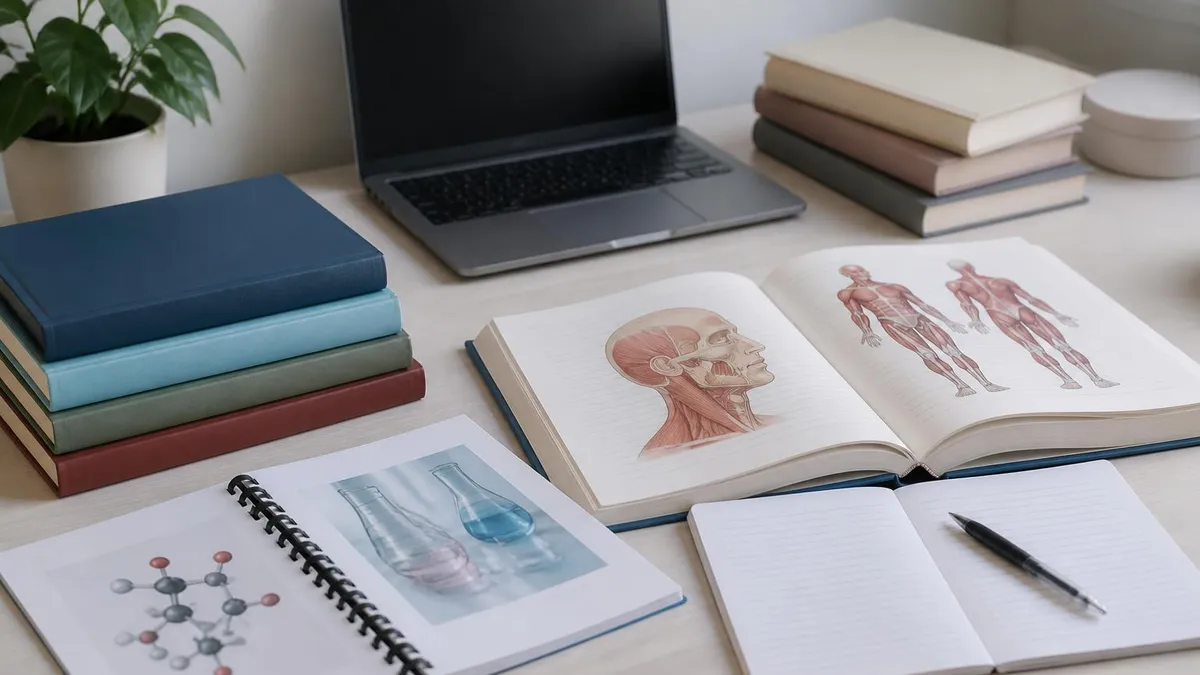
Cosmetology Programs: Hours, Curriculum, Cost and Accreditation
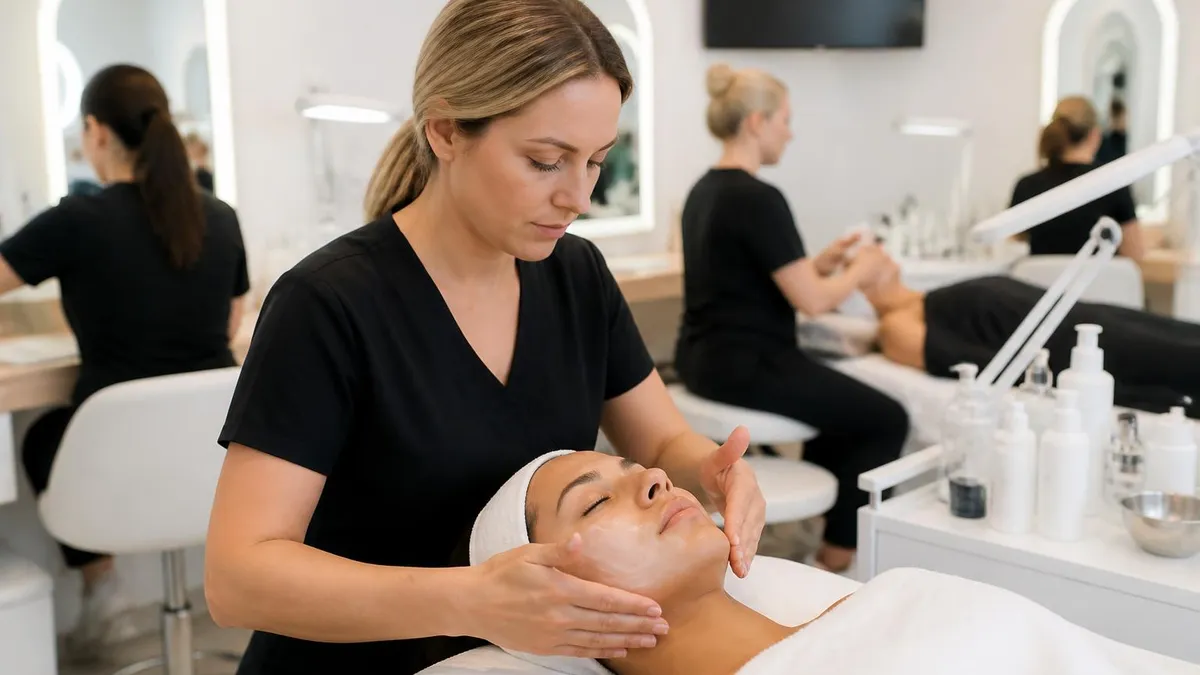
Cosmetology Practice Test: 350+ Free Questions and Answers
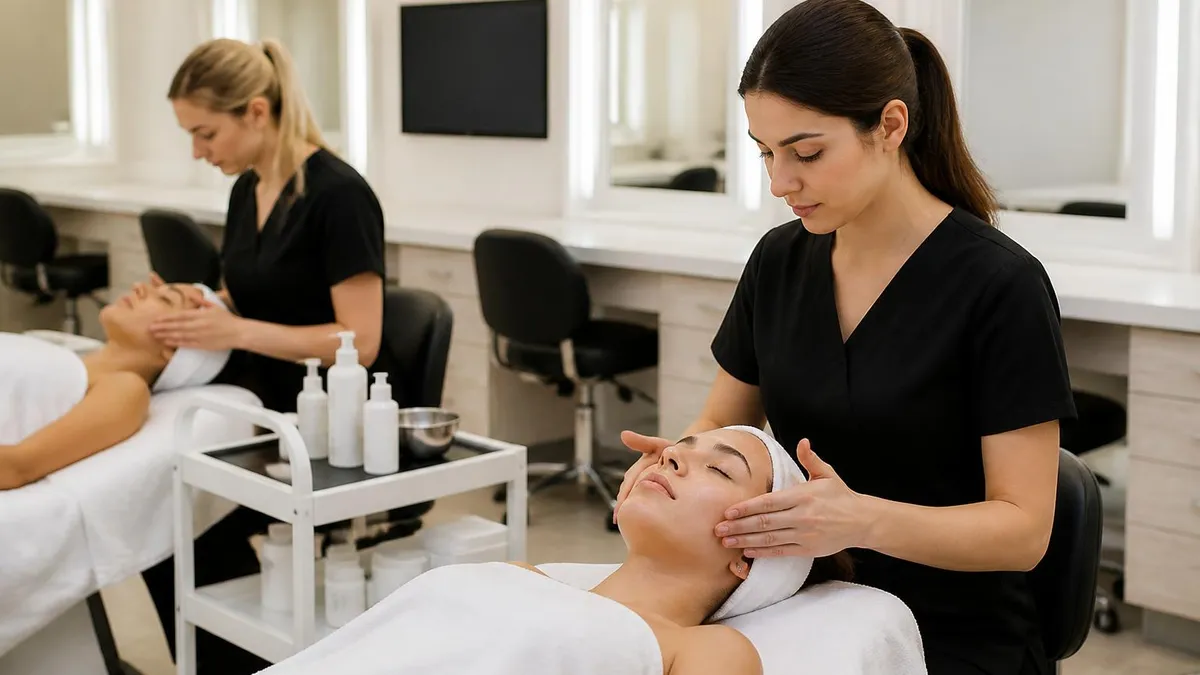
Cosmetology School Near Me: How to Find, Choose, and Enroll in the Right Program in 2026
About the Author
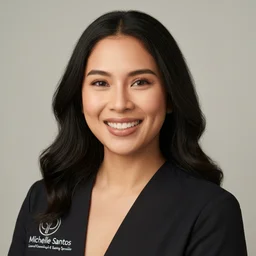
Licensed Cosmetologist & Beauty Licensing Exam Specialist
Paul Mitchell SchoolsMichelle Santos is a licensed cosmetologist with a Bachelor of Science in Esthetics and Salon Management from Paul Mitchell School. She has 16 years of salon industry experience and 8 years preparing students for state cosmetology board exams in theory, practical skills, and sanitation. She specializes in licensure preparation for cosmetologists, estheticians, and nail technicians.
Join the Discussion
Connect with other students preparing for this exam. Share tips, ask questions, and get advice from people who have been there.
View discussion (6 replies)