
Cosmetology Programs: Hours, Curriculum, Cost and Accreditation 2026 September
Cosmetology programs — ✅ state hour requirements, curriculum, accreditation (NACCAS), cost, financial aid and what to expect from a beauty school program.

What Cosmetology Programs Actually Cover
Cosmetology programs are state-approved beauty schools that prepare students for the cosmetology licensing examination required to work professionally in salons, spas and personal-care settings. Every state in the United States licenses cosmetologists, and the standard pathway is enrolment in a state-approved program, completion of a defined number of training hours, and passing both a written and a practical examination administered by the state cosmetology board.
The license itself is the legal authority to cut, colour and style hair, perform basic skin care services, and provide nail care for paying clients — without it, providing those services for hire is illegal in every state.
The programs themselves vary in length, cost and quality, but the curriculum is fairly consistent because the state hour requirement and the licensing exam standardise the content. A typical full-time student finishes in nine to eighteen months. A part-time evening student takes longer, often two years. The total tuition runs anywhere from $5,000 at a community college program to $25,000 or more at a private vocational school in a major metro. This guide walks through what to expect from cosmetology programs, how to evaluate one before enrolling, and the financial and licensing realities that shape the value of the credential.
Cosmetology programs are also one of the most accessible postsecondary pathways into a skilled trade in the United States. The minimum age is typically 16, the academic prerequisite is a high school diploma or GED, and many programs accept students directly from high school. The combination of relatively short training time, hands-on work and clear licensing pathway makes cosmetology a popular choice for students who do not see themselves in a traditional four-year college environment but want a portable, regulated credential they can carry across state lines.
Cosmetology programs at a glance
State hour requirement: 1,000 to 2,100 hours depending on state. Typical full-time length: 9–18 months. Tuition range: $5,000–$25,000. Top accreditor: NACCAS (National Accrediting Commission of Career Arts and Sciences). Federal aid (Pell, Title IV loans) available at accredited schools. Common prerequisites: age 16+, high school diploma or GED, sometimes drug screen and background check.
State Hour Requirements: The Hidden First Question
State hour requirements drive the most consequential difference between cosmetology programs in different parts of the country. Texas, California and New York all require 1,000 hours of training. Florida sets the bar at 1,200. Pennsylvania requires 1,250. Iowa, Massachusetts and Nebraska require 2,100 hours — among the highest in the country. The hour requirement directly determines program length and tuition cost, and it also affects the value of credit transfers if a student moves states mid-program. The first practical question for any aspiring cosmetologist is which state they intend to be licensed in, because that decides which programs even count.
Reciprocity between states adds a wrinkle. Once licensed in a low-hour state, moving to a high-hour state may require additional training, an examination or a documented work history. Some states offer reciprocity outright after a defined number of working hours; others require the cosmetologist to make up the gap to the local hour requirement. Aspiring stylists planning to relocate after licensure should research reciprocity rules before choosing where to enrol — sometimes it makes sense to train in the future state from the start rather than relocate the license later.
One quirk worth knowing is that the trend across the past decade has been toward fewer required hours rather than more. California reduced its requirement from 1,600 to 1,000 hours in 2022, citing labour market data showing students were ready for licensure long before the higher hour total. Texas, Iowa and several other states have studied similar reductions. The lower hour requirements reduce student debt, shorten time to first paycheck and align better with international peer countries, most of which license cosmetologists with fewer than 1,000 hours of training.

Standard Cosmetology Curriculum
Cutting, colouring, chemical relaxers, perms, blow-drying, styling and updos. Largest single block of curriculum hours. Practiced first on mannequin heads, then live clients on the school clinic floor.
Basic facial treatments, exfoliation, hair removal (waxing and threading) and product knowledge. Some programs cover esthetics in greater depth than others — confirm scope with the school.
Manicures, pedicures, gel and acrylic application, nail art and basic hand and foot massage. Sometimes split into a separate certificate program but always covered in core cosmetology hours.
Disinfection, sterilisation of tools, bloodborne pathogen training, OSHA standards and salon hygiene. Heavy emphasis on the practical because the state board examines it strictly.
Skin and hair anatomy, basic chemistry of dyes and relaxers, allergic reactions and contraindications. Foundation for safe service delivery and required on the written board exam.
Client consultation, retail product sales, scheduling, basic bookkeeping and salon marketing. Often the smallest block of hours but increasingly important for stylists planning to operate as independent contractors.
Accreditation: Why It Matters Beyond the Sticker
Accreditation is the single most important quality marker for cosmetology programs. The dominant national accreditor is NACCAS — the National Accrediting Commission of Career Arts and Sciences — which accredits the majority of beauty and barber schools in the United States. Other recognised accreditors include ACCSC and COE. State approval is separate from national accreditation: a state-approved school can issue a license-eligible certificate, but only a nationally accredited school qualifies for federal financial aid through Title IV programs and Pell grants. For students relying on federal aid, accreditation status is the gating factor before tuition is even considered.
Accreditation also matters for credit transferability and employer recognition. Salons and spas in larger metro markets often prefer hires from accredited programs because the curriculum quality is externally verified. Bridge programs to esthetics, barbering and instructor licensure also typically require an accredited cosmetology certificate as the prerequisite. Reading the school's accreditation status — visible on the NACCAS or other accreditor website — before any enrolment deposit is the most important due-diligence step in choosing cosmetology programs.
Regional accreditation is a separate question from programmatic accreditation. Some cosmetology programs sit inside community colleges that hold regional accreditation through one of the six US regional accrediting bodies. Regional accreditation is the gold standard for academic credit transfer if the student later pursues a related degree like cosmetology business management or salon ownership coursework at the bachelor's level. Standalone vocational schools, even with NACCAS accreditation, do not always offer the same transfer benefit.
How to Choose a Cosmetology Program
Confirm the school is accredited by NACCAS, ACCSC or COE for federal aid eligibility. Check the accreditor's website rather than the school's own marketing because accreditation status changes. Schools on probation or recently lost accreditation should be approached with caution.
What the Curriculum Looks Like Day to Day
The first few months of a cosmetology program are theory-heavy, with classroom lectures on chemistry, anatomy, sanitation and basic technique. Students practise on mannequin heads with synthetic hair to learn cutting, colouring and basic styling. Once foundational competence is demonstrated through internal assessments, students transition to the clinic floor. The clinic floor is the working salon attached to the school where the public can book services at reduced prices in exchange for student work supervised by licensed instructors. Most state requirements demand a minimum number of clinic-floor hours before licensure is granted.
Clinic floor work is where confidence and speed develop. Students perform haircuts, colour services, perms, manicures and basic facials on real clients, with instructor checks at set stages of the service. Time pressure on the clinic floor mirrors the pace expected in a working salon, and students who handle the clinic well graduate ready for entry-level salon work. Students who struggle with client interaction often discover it on the clinic floor before paying for their license — which is part of the value of the structured environment.
The kit a student must purchase is usually included in the program cost. A typical kit contains professional shears, combs, brushes, blow dryer, curling irons, mannequin head and stand, manicure tools, an esthetics tray and a basic colour application kit. Quality varies between programs — high-end schools issue branded professional tools that students will use throughout their careers, while bargain programs hand out generic supplies that need replacing within a few months. Asking about the kit's brand and contents during a school tour is a useful proxy for overall program investment in student outcomes.

Some cosmetology programs operate without national accreditation. They are still state-approved for licensing purposes, but federal financial aid is not available, credits do not transfer easily, and employers may discount the credential. Always verify accreditation independently through NACCAS, ACCSC or COE websites before paying any tuition deposit. Unaccredited programs are not always lower quality — but they require greater scrutiny.
Cost, Tuition and Financial Aid
Cosmetology program tuition is one of the more variable line items in any career-training comparison. Public community college programs often run $5,000 to $10,000 total for the full credit hour count, while private vocational schools in major metros charge $15,000 to $25,000 or more. The cost difference reflects facility quality, instructor experience, brand recognition and post-graduation placement support. A higher-priced program is not automatically better — pass rates, accreditation and clinic floor quality matter more than tuition alone — but the lowest-cost option is sometimes a public community college program with strong outcomes that deserves a careful look.
Federal financial aid is available at accredited programs through Pell grants and Title IV loans. The FAFSA process for cosmetology programs is the same as for any other postsecondary education. Maximum Pell grant funding covers a substantial share of tuition for low-income students. Federal loans cover the remainder, but cosmetology graduates should think carefully about loan size — the median cosmetologist salary makes high-debt payback challenging. Beyond federal aid, many states offer workforce development grants for adults retraining, and some schools provide tuition discounts for early enrolment, military veterans or scholarship competition winners.
Loan default rates among cosmetology graduates have been higher than in many other career-training fields, which is one reason the federal government has paid closer attention to gainful employment standards in vocational programs. Schools with consistently poor graduate earnings or high default rates risk losing Title IV eligibility. Reviewing the school's published gainful employment data — required for accredited programs — gives prospective students a realistic picture of starting wages and loan burden among recent graduates.
Cosmetology Program Enrolment Checklist
- ✓Verify accreditation through NACCAS, ACCSC or COE website
- ✓Check state cosmetology board first-time pass rates for the school
- ✓Tour the clinic floor during business hours, not just admin offices
- ✓Confirm student-to-instructor ratio at peak times
- ✓Get total cost in writing — tuition, kit, books, exam fees, uniforms
- ✓Confirm curriculum hours align with your state's licensing requirement
- ✓Submit FAFSA early to maximise Pell grant eligibility
- ✓Ask about job placement assistance and recent graduate outcomes
- ✓Read the enrolment contract carefully — refund schedules and withdrawal terms vary
- ✓Plan kit cost (around $1,000–$2,500 for shears, dryer, mannequin, supplies)
Apprenticeship Path: An Alternative to Cosmetology Programs
A handful of states allow licensure through apprenticeship instead of a school program. Apprenticeships pair a trainee with a licensed cosmetologist mentor in a working salon. The trainee earns hours toward licensure while working — often paid — instead of paying tuition. Apprenticeship hour requirements are usually higher than school requirements: where school students need 1,000 to 1,500 hours, apprentices may need 2,500 to 3,000. The trade-off is no tuition cost and earning income during training, in exchange for a longer total time to licensure and reliance on the quality of the supervising mentor.
Apprenticeship works well for self-motivated learners who can secure a strong mentor in a busy salon. It works less well when the salon is short-staffed or the mentor lacks the time to teach systematically, leaving the apprentice to drift. States that allow apprenticeship include Alaska, California, Idaho, Iowa, Massachusetts, Maine, Montana, Nebraska, Vermont, Washington and Wyoming, with each state setting its own rules and approved sponsor list. Most cosmetologists still come through formal programs because school-based training compresses the timeline and offers more structured curriculum coverage.
One growing model is the salon-sponsored hybrid program, where established salon chains run their own approved cosmetology schools as a feeder for their salon hires. Aveda, Paul Mitchell, Empire Beauty Schools and Regency Beauty all operate this way at scale. The advantage is a clear pipeline into specific salon brands, brand-specific product training and often a guaranteed job interview after graduation. The disadvantage is that the curriculum can lean toward the brand's product line rather than the broader market, which may matter less if the student is committed to that brand.
Life After Graduation: The State Board Exam and Licensure
Completing a cosmetology program is the entry ticket, not the finish line. After graduation, students apply to the state cosmetology board for the licensing examination. Most states use the National-Interstate Council of State Boards of Cosmetology (NIC) examination as their written and practical test, although a few states administer their own exams. The written portion covers theory across all the curriculum subjects, typically with about 100 multiple-choice questions and a roughly 75 percent pass mark. The practical portion is a hands-on demonstration of selected services on a mannequin or model, evaluated by state-appointed examiners.
Once licensed, the typical career trajectory begins with an assistant or apprentice stylist role in an established salon. New stylists work behind the chair under salon training programs while building a personal client book. Pay starts modest — often hourly wages plus tips — and rises over the first three to five years as the client list grows. Many stylists eventually transition to commission-based or booth-rental arrangements with higher earnings ceilings. A smaller share open their own salons or specialise in services like colour correction, bridal hair, extensions or barbering.

Cosmetology Program Numbers
Key Facts at a Glance
| Item | Value | Details |
|---|---|---|
| Hours required across US states | 1,000–2,100 | |
| Typical full-time program length | 9–18 mo | |
| Typical written pass mark on state board exam | 75% |
Sample State Hour Requirements
One of the lowest hour requirements in the United States. Programs typically run nine to twelve months full-time. Reciprocity with several neighbouring states for licensed cosmetologists with documented work experience.
Reduced from 1,600 hours in 2022. State board examines theory through a written test plus a practical assessment. Strong reciprocity with most other states for licensed practitioners.
1,000 hours of approved training plus a written and practical exam. New York City has a deep market for stylists in salons, spas and high-end establishments. State approval list is published online.
Slightly higher than the lowest-hour states. Programs typically run 12 to 14 months full-time. Strong tourism economy and large salon market support steady graduate placement.
1,250 training hours required. State board uses both written and practical exams. Mid-range tuition and steady demand across Philadelphia, Pittsburgh and surrounding regions.
Highest hour requirements in the country. Programs run 18 to 24 months full-time. Reciprocity from these states into lower-hour states is straightforward; the reverse usually requires additional training.
Realistic Earnings and Career Outlook
The Bureau of Labor Statistics reports a median annual wage for cosmetologists, hairdressers and hairstylists of about $33,000, with the lowest tenth percentile near $22,000 and the highest tenth above $60,000. Tips often add 15 to 25 percent on top of base earnings and are not always reflected in the published statistics. Geographic differences matter — stylists in Manhattan, San Francisco, Los Angeles and Boston earn substantially more than the national median, while stylists in smaller cities and rural towns earn closer to the bottom quartile.
Earnings depend heavily on the personal client book. A new stylist building from zero takes two to four years to develop a steady book, during which earnings often hover near minimum wage with tips. Established stylists with full books in busy salons can earn $60,000 to $100,000 or more, particularly in high-end markets. Booth-rental stylists who pay weekly rent for a chair and keep all service revenue are the highest earners but bear all marketing and overhead costs. The BLS projects modest job growth over the next decade, faster than average for personal-care services overall.
Career longevity is another consideration. The work is physically demanding — long hours standing, repetitive arm motions, exposure to chemicals — and many cosmetologists transition to less physical roles like education, salon management, product sales or platform artistry by their late thirties or forties. Building these adjacent skills through optional coursework or industry workshops while still working behind the chair is a smart hedge against the physical demands of long-term salon work.
Continuing education is part of every cosmetology license. Most states require eight to sixteen hours of approved CE per renewal cycle, covering sanitation updates, new technique training and business law refreshers. Skipping the CE requirement is the most common reason a license lapses unintentionally — the work is straightforward but it has to be tracked and renewed on time.
Tracking CE hours digitally through the state board portal is the simplest way to avoid surprises at renewal time, and most professional associations now offer the required hours through online courses.
School Program vs Apprenticeship
- +School programs offer structured curriculum coverage in defined time
- +Federal aid available at accredited schools
- +Faster path to licensure than apprenticeship in most states
- +Built-in clinic floor exposure to varied client demographics
- +Clear graduation milestone with documented hours and certificate
- −Tuition is significant — $5,000 to $25,000 plus kit and books
- −No income during training in most school programs
- −Curriculum quality varies; pass rates and accreditation matter
- −Apprenticeship requires strong mentor relationship and self-direction
- −Apprenticeship hour requirements are typically higher than school requirements
Cosmetology Questions and Answers
About the Author
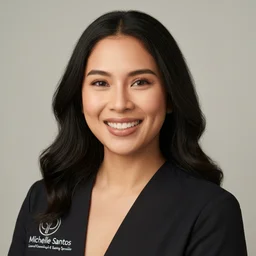
Licensed Cosmetologist & Beauty Licensing Exam Specialist
Paul Mitchell SchoolsMichelle Santos is a licensed cosmetologist with a Bachelor of Science in Esthetics and Salon Management from Paul Mitchell School. She has 16 years of salon industry experience and 8 years preparing students for state cosmetology board exams in theory, practical skills, and sanitation. She specializes in licensure preparation for cosmetologists, estheticians, and nail technicians.
Join the Discussion
Connect with other students preparing for this exam. Share tips, ask questions, and get advice from people who have been there.
View discussion (6 replies)