
Cosmetology: Schools, Programs, Licensing, and Salary Guide 2026 September
Free Cosmetology: Schools, Programs, practice test with questions and answer explanations. Prepare for the 2026 September exam with instant scoring. 🗨️
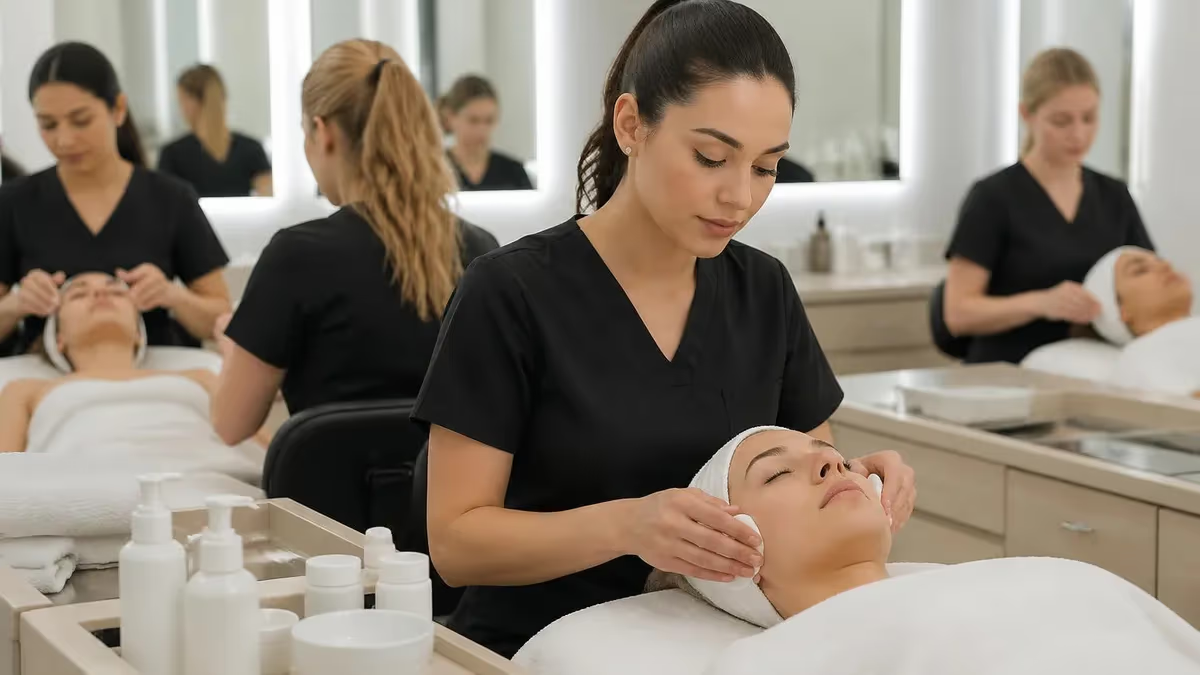
Cosmetology is one of the most accessible skilled trades in the United States — and one of the hardest to automate. You learn to cut, color, and style hair. You study skincare, nail services, and the science behind every product you'll touch. Then you pass a state licensing exam and start building a career that's genuinely yours. If you've been searching for a cosmetology school near me, you'll find programs in virtually every major city and plenty of smaller communities across the country.
What makes a cosmetology cosmetologist different from a barber or esthetician? Scope. A licensed cosmetologist holds a full-service credential covering hair, skin, and nails — three revenue streams instead of one. That breadth matters when you're building a client book. It means you can handle the haircut, the facial before prom, and the wedding-day nails all under one license. Clients who trust you with one service tend to trust you with all of them.
This article breaks down what cosmetology school actually involves, how long it takes, what it costs, how state licensing works, and what you can realistically earn once you're working. Whether you're 18 and fresh out of high school or mid-career and looking for something more creative, cosmetology offers a clear path from training to income. No four-year degree required. No six-figure student debt. Just skill, daily practice, and the willingness to show up for your clients every single day and deliver results they'll come back for.

So what is cosmetology, exactly? It's broader than most people realize. A cosmetology cosmetologist trains across multiple service categories — hair, skin, and nails — which separates them from specialists like barbers or estheticians. Your state board exam tests all of it: haircutting and styling, chemical services like color and perms, skincare basics including facials and waxing, nail care from manicures to enhancements, anatomy and physiology, infection control, and salon business management.
The licensing exam itself has two parts. A written test covers theory — chemistry, anatomy, sanitation, color science, and business law. Then there's a practical exam where you demonstrate hands-on skills on a model or mannequin. You need to pass both. Schools prepare you through classroom instruction and supervised clinical hours in a student salon where you work on real people.
Most state boards use the National Cosmetology Examination administered by the NIC, though some states run their own tests. The format varies, but the core content stays consistent across state lines. If you can master the fundamentals — understand why a chemical reaction happens, not just how to apply the product — you'll handle any version of the exam without trouble. Practice tests are genuinely the best prep tool here. They expose you to the question style, the timing pressure, and the gaps in your knowledge before exam day arrives.
How long is cosmetology school? That depends on your state and your schedule. Most states require between 1,000 and 1,600 training hours for a full cosmetology license. Full-time attendance — five days a week, six to eight hours daily — typically gets you through in 9 to 12 months. Part-time programs stretch to 18 or even 24 months. Accelerated programs compress everything into an intense schedule and can finish in as few as 8 months.
How much is cosmetology school? Private beauty schools charge $10,000 to $20,000 for a complete program. Community college cosmetology programs cost significantly less — often $3,000 to $8,000 for the same training hours. Don't forget the tool kit (shears, mannequin heads, chemicals) which adds $300 to $800. Federal financial aid through FAFSA is available at any accredited institution, and many students qualify for Pell Grants that don't need to be repaid. Apply before you assume a program's out of reach. The net cost after aid is often half the sticker price or less.
When you're comparing programs, check three things. First, the school's state board first-time pass rate — anything above 85% means the program is preparing graduates well. Second, clinical volume — how many real clients will you work on before graduation? More repetitions build better skills. Third, schedule flexibility. Evening and weekend options exist at many schools, making it possible to keep working while you train.
Types of Cosmetology Programs
A full cosmetology license covers hair, skin, and nails in a single credential. Most states require 1,200 to 1,600 training hours. This is the most common path into the beauty industry because it maximizes the services you're licensed to perform. Salon owners prefer hiring licensed cosmetologists over multiple specialists — it simplifies staffing and covers more revenue per employee.
Full programs cost more and take longer than specialist tracks, but that breadth pays off in flexibility. You can pivot between salon types, add specialties, or build a diversified service menu that keeps clients coming back for everything from cuts to facials to nail enhancements.
Cosmetology colleges come in several flavors: standalone private schools, community college vocational programs, and national chains like Paul Mitchell Schools, Aveda Institutes, and Empire Beauty School. Any program accredited by the National Accrediting Commission of Career Arts and Sciences (NACCAS) qualifies for federal financial aid. That accreditation stamp is your quality baseline.
The alabama board of cosmetology requires 1,500 training hours and administers a state-specific practical exam alongside the NIC written test. Alabama's board publishes salon inspection results and handles complaints against licensees — maintaining professional standards isn't optional. Violations lead to suspension or license revocation. Every state board operates similarly, which is exactly why the training matters.
When comparing cosmetology colleges, look past marketing materials. Check instructor-to-student ratios. Ask how many client services the average student completes before graduation. Find out whether the school has formal job placement support or leaves that entirely to you. In competitive markets, school reputation and salon partnerships can meaningfully accelerate your first hire after licensing. A school with established salon relationships often connects graduating students directly with hiring managers — that's a head start you can't get from a cold application.
Cosmetology programs teach three broad domains that map directly to the state board exam. Theory covers the science: hair structure, chemical reactions in coloring and perming, skin anatomy, microbiology for infection control, and the laws governing salon practice. This is what the written exam tests — and what cosmetology license renewal continuing education focuses on throughout your career.
The arizona state board of cosmetology requires 1,600 hours for a full license — one of the higher thresholds nationally. Arizona publishes pass rate data by school, which is genuinely useful. Schools with first-time pass rates above 85% are consistently producing prepared graduates. Schools below 70% deserve hard questions before you write a tuition check. The arizona board of cosmetology website makes this data publicly accessible.
Clinical training is where your skills actually develop. Working in the student salon on real clients builds muscle memory that textbooks can't. The number of services you complete during training matters more than the raw hour count. Schools running high-volume clinics give you more repetitions per hour. When you're evaluating programs, ask the hard question: how many client services does your average student perform before graduation?
Cosmetology as a Career: Pros and Cons
- +Short training period — 9 to 15 months vs. four years for a degree
- +Strong job security because personal care services can't go remote or get automated
- +Creative, hands-on work with immediate and visible results for every client
- +Multiple career paths including salon, spa, education, editorial, and product development
- +Location flexibility — you can transfer your license to nearly any state
- +Real potential for self-employment and building your own client base from scratch
- −Starting salaries are modest at $25K to $35K during the first two years
- −Physical demands include standing all day, chemical exposure, and repetitive motions
- −Upfront school cost of $10K to $20K may require student loans to cover
- −Commission-based income varies significantly from week to week early on
- −Retail and product sales are often expected alongside your service work
- −Building a full clientele takes two to four years of consistent effort
Cosmetology license renewal keeps your credential active and your knowledge current. Most states require renewal every one to two years with a specific number of continuing education hours between cycles. Ohio state cosmetology, for example, requires 8 CE hours per two-year renewal. Some states mandate specific topics — sanitation updates, HIV/AIDS awareness, or chemical safety. CE courses are widely available online and through beauty industry associations.
Letting your license lapse is more common — and more painful — than you'd think. Most lapsed licenses happen because the stylist moved and never updated their address with the state board. Renewal notices went to the old address. Deadlines passed. Reinstatement means extra fees, additional CE hours, and sometimes a re-examination. Keep your contact information current with your board. Set a calendar reminder 60 days before each renewal deadline. It's a five-minute task that prevents a months-long headache and protects your ability to earn a living.
The ohio state cosmetology board also licenses salon establishments separately from individual cosmetologists. If you're planning to open your own space — even a single booth — you'll need an establishment license on top of your personal one. The distinction trips up many new business owners until an inspection catches it.
Cosmetology Career Launch Checklist
- ✓Research your state's minimum training hour requirement before selecting a school
- ✓Check the school's state board first-time pass rate — target 85% or higher
- ✓Apply for FAFSA financial aid at accredited schools before comparing net tuition costs
- ✓Confirm the program includes sufficient clinical hours with real clients, not just mannequins
- ✓Review what's included in tuition vs. extras like tool kits, textbooks, and exam fees
- ✓Start an Instagram or social media portfolio early in school to build brand visibility
- ✓Begin studying for the written board exam with practice tests at least three months before graduation
- ✓Research your state's continuing education requirements for license renewal
- ✓Compare booth rental vs. commission employment models before your first job
- ✓Shadow a working cosmetologist for a day before enrolling to confirm this career suits you
Online cosmetology school is a growing hybrid concept — but it's important to understand the limits. Theory coursework like chemistry, anatomy, business law, and infection control can be delivered effectively through online platforms. Many schools now offer hybrid programs that combine online theory with in-person clinical training. The hands-on component can't be done remotely. State boards require supervised in-person hours regardless of how you complete your theory work.
Be cautious with programs marketed as fully online. A legitimate hybrid program clearly states how many in-person clinical hours are required and where they're completed — typically at a partner campus or clinical site near you. The arizona board of cosmetology, like every other state board, won't accept a license application based solely on remote coursework. If a school minimizes or obscures the in-person requirement, walk away.
That said, hybrid programs offer real advantages for working adults. You study theory on your own schedule — nights, weekends, during lunch breaks — then show up for clinical rotations on a fixed schedule. It's a practical middle ground between the convenience of online learning and the irreplaceable value of hands-on practice with real clients under instructor supervision. For parents, second-career changers, and anyone with a day job, hybrid delivery makes cosmetology school genuinely accessible.
Cosmetology courses nyc prepare graduates for one of the highest-paying markets in the country. Service prices in New York run 30 to 50% above the national average, which translates directly to higher earnings per appointment. The trade-off? Higher living costs and more competition for prime salon positions. But a stylist who builds a loyal client base in Manhattan or Brooklyn can earn $70,000 to $100,000 — figures that shift the entire financial calculus of the profession.
Cosmetology salary data from the Bureau of Labor Statistics pegs the median at around $33,400 annually. That number is misleading. It doesn't fully capture tips, which are a massive part of the picture. A stylist averaging $25 in tips per service across 30 weekly appointments earns roughly $39,000 in tips alone — often invisible in official surveys. Total compensation for an established stylist is frequently 30 to 50% higher than reported wages suggest.
Self-employment is where the real money lives for many cosmetologists. Booth rental, suite rental, or opening your own salon — each model offers the income ceiling that commission employment can't match. The transition requires business acumen alongside technical skill. Marketing, pricing, bookkeeping, maybe hiring staff. But cosmetologists who make it work consistently describe the independence as the most satisfying part of their career. School gives you the foundation; you build the rest. The ceiling is genuinely high for cosmetologists who treat their career like a business from day one.
Many prospective students assume cosmetology school is too expensive without checking their financial aid options. FAFSA-eligible Pell Grants don't require repayment and can cover a substantial portion of tuition at accredited programs. Some states also offer workforce development grants specifically for beauty industry training. Always apply for aid before making cost-based decisions — the gap between sticker price and net cost surprises most applicants.
The kenneth shuler school of cosmetology, based in South Carolina with multiple campuses, is one example of a regional chain that pairs accredited training with strong placement support. Schools like Kenneth Shuler — along with national brands like Aveda and Paul Mitchell — market partly on name recognition with employers. Graduating from a well-regarded program can open salon doors that might otherwise require a longer interview process. The cosmetological field rewards reputation, and your school's name is your first professional credential.
Interstate license transfer (called endorsement) lets you practice in a new state without repeating your training. Most states offer endorsement if you hold a current license, meet their hour requirement, and pass any additional state-specific tests. Processing takes two to six weeks. If you're planning a move soon after licensing, factor that timeline into your plans so you don't face a gap in your ability to work.
Cosmetology instructor licensing is a natural next step for experienced stylists who enjoy teaching. Most states require two to three years of licensed practice plus completion of an instructor training program. Instructor roles at cosmetology schools offer regular hours, stable income, and the deep satisfaction of developing new talent. It's a completely different lifestyle from the floor of a busy salon — and it's one reason long-term careers in cosmetology don't have to look the same decade after decade. Some instructors eventually move into curriculum development or school administration, extending their impact even further.
Cosmetology Practice Test Questions
Prepare for the Cosmetology Test exam with our free practice test modules. Each quiz covers key topics to help you pass on your first try.
Cosmetology Test Anatomy and Physiology
Cosmetology Exam Questions covering Test Anatomy and Physiology. Master Cosmetology Test concepts for certification prep.
Cosmetology Test Business and Career Manag...
Free Cosmetology Practice Test featuring Test Business and Career Management. Improve your Cosmetology Exam score with mock test prep.
Cosmetology Test Chemical Texture Services
Cosmetology Mock Exam on Test Chemical Texture Services. Cosmetology Study Guide questions to pass on your first try.
Cosmetology Test Haircolor and Lightening
Cosmetology Test Prep for Test Haircolor and Lightening. Practice Cosmetology Quiz questions and boost your score.
Cosmetology Test Haircutting and Styling
Cosmetology Questions and Answers on Test Haircutting and Styling. Free Cosmetology practice for exam readiness.
Cosmetology Test Infection Control and Safety
Cosmetology Mock Test covering Test Infection Control and Safety. Online Cosmetology Test practice with instant feedback.
Cosmetology Test Nail Care and Procedures
Free Cosmetology Quiz on Test Nail Care and Procedures. Cosmetology Exam prep questions with detailed explanations.
Cosmetology Test Nail Care and Services
Cosmetology Practice Questions for Test Nail Care and Services. Build confidence for your Cosmetology certification exam.
Cosmetology Test Principles of Skin Care
Cosmetology Test Online for Test Principles of Skin Care. Free practice with instant results and feedback.
Cosmetology Test Scientific Concepts
Cosmetology Study Material on Test Scientific Concepts. Prepare effectively with real exam-style questions.
Cosmetology Test Skincare and Services
Free Cosmetology Test covering Test Skincare and Services. Practice and track your Cosmetology exam readiness.
Cosmetology Test Wigs, Hair Extensions, an...
Cosmetology Exam Questions covering Test Wigs, Hair Extensions, and Hair Additions. Master Cosmetology Test concepts for certification prep.
Cosmetology Administrative Rules
Free Cosmetology Practice Test featuring Administrative Rules. Improve your Cosmetology Exam score with mock test prep.
Cosmetology On Hair & Scalp Properties
Cosmetology Mock Exam on On Hair & Scalp Properties. Cosmetology Study Guide questions to pass on your first try.
Cosmetology
Cosmetology Test Prep for Cosmetology. Practice Cosmetology Quiz questions and boost your score.
Paul mitchell cosmetology school locations operate across the country under the Paul Mitchell Schools brand. Their curriculum blends technical training with a strong emphasis on salon culture, professional presentation, and FUNraising (their community service program). Graduates tend to enter the workforce with polished soft skills alongside their technical abilities — a combination that resonates with upscale salons and spas.
The milady cosmetology book — officially "Milady Standard Cosmetology" — is the most widely used textbook in American cosmetology education. If your school assigns it, you'll spend serious time with it. The book covers everything from hair science to business management and serves as the primary study resource for many state board exams. Used copies are readily available and perfectly adequate; don't overpay for the latest edition unless your school specifically requires it.
Building a specialty within cosmetology is the fastest route to premium pricing. Generalists compete on price and availability. Specialists — whether in color correction, extensions, bridal styling, textured hair, or barbering techniques — compete on expertise and results. Most successful cosmetologists spend their first two to three years building broad competence, then deliberately develop a signature specialty that differentiates them and justifies higher service prices for years to come. Your specialty becomes your brand. Clients seek you out for it. Referrals multiply. And your per-hour earnings climb in a way that generalist work simply can't match.
Cosmetology Questions and Answers
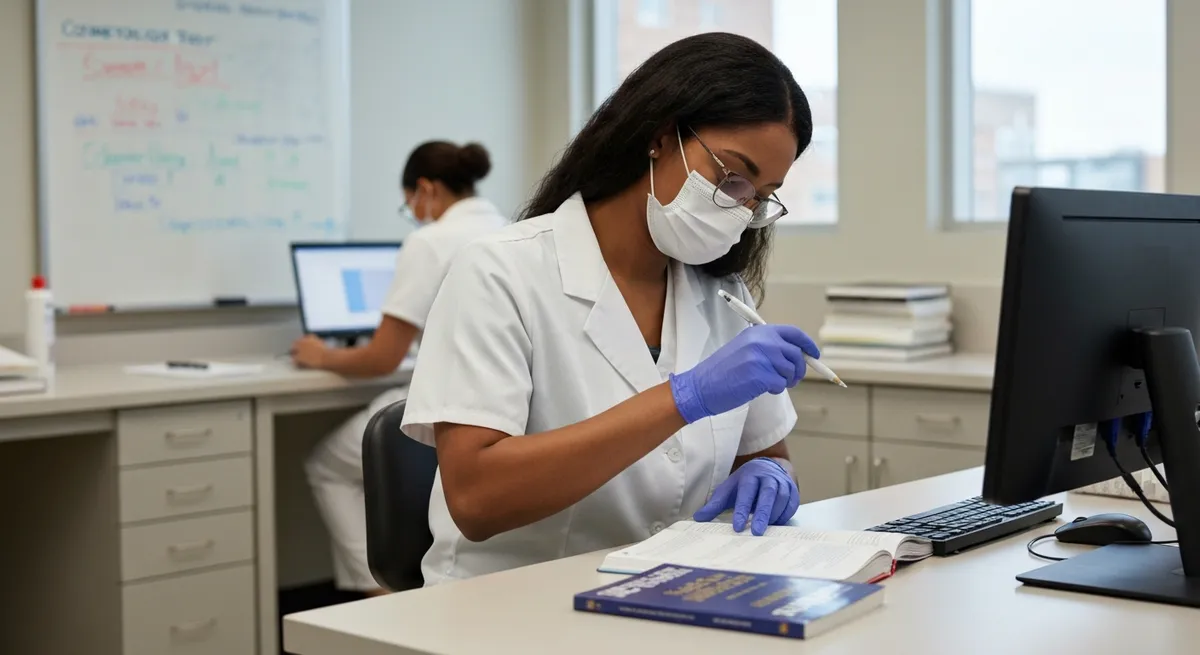
About the Author
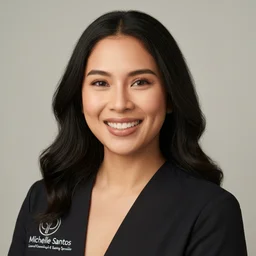
Licensed Cosmetologist & Beauty Licensing Exam Specialist
Paul Mitchell SchoolsMichelle Santos is a licensed cosmetologist with a Bachelor of Science in Esthetics and Salon Management from Paul Mitchell School. She has 16 years of salon industry experience and 8 years preparing students for state cosmetology board exams in theory, practical skills, and sanitation. She specializes in licensure preparation for cosmetologists, estheticians, and nail technicians.
Join the Discussion
Connect with other students preparing for this exam. Share tips, ask questions, and get advice from people who have been there.
View discussion (6 replies)