
Arizona State Board of Cosmetology: Members, Meetings, and How It Sets the Rules
How the Arizona State Board of Cosmetology is structured, 💡 who sits on it, when it meets, and how its rules shape your license, renewal, and exams in 2026 September.
Arizona State Board of Cosmetology: Members, Meetings, and How It Sets the Rules
The Arizona State Board of Cosmetology is the agency that decides what your training looks like, who can write your exam, and which rules a salon must follow on the day an inspector walks in. Most students hear the name once or twice, then forget about it until renewal — and that is exactly when surprises start to bite.
This guide pulls back the curtain on the board itself: the seats, the meetings, the rule-making process, and the small procedural details that quietly shape every license in the state.
If you want a wider view of how state regulators work nationwide, the board of cosmetology page covers the general structure across all 50 states. For the Arizona-specific snapshot — fees, addresses, contact channels — see the existing Arizona Board of Cosmetology overview. This article goes deeper into governance: who actually makes decisions, how those decisions become rules, and what that means for the person holding a curling iron in Tucson next Tuesday.
Here is the part nobody tells you in school. The board is not a faceless office building. It is a group of real people — practicing stylists, public members, sometimes a barber — appointed by the governor. They sit around a table, often once a month, and vote on things that change your daily working life. Continuing education hours. Disinfection rules. Whether a new technique counts as cosmetology or some other discipline. You can attend those meetings. You can speak.
Almost nobody does.
Why the Board Exists
Arizona created the board to protect the public. That phrase shows up in the statute and it matters. Every rule, every fine, every license suspension comes back to that purpose. A bad chemical service can scar a scalp. A dirty implement can spread infection. The board is the firewall — the body that says who is trained, who is licensed, and what happens when something goes wrong.
That mandate also explains why the rules feel strict. The board cannot simply trust that a graduate is ready. It has to verify, through hours logged, exams passed, and inspections completed. That verification framework is the reason your cosmetology license looks the way it does and renews the way it does.
One last framing point before we dig into structure. Boards across the country share a similar skeleton, but the Arizona variant has its own quirks — a relatively strong public-member voice, a fast rule-track when public safety is at stake, and meetings that lean toward technical detail more than political theater. People who attend their first meeting often expect drama and instead find a careful, almost dry discussion of disinfection ratios and exam pass rates. That is good news.
It means the system, when it works, is grounded in evidence and procedure rather than personality.
Arizona State Board of Cosmetology at a glance
- Established: mid-20th century under Arizona Revised Statutes Title 32, Chapter 5
- Board seats: typically 7 members appointed by the Governor
- Public meetings: usually monthly, posted on the agency website
- Disciplines regulated: cosmetology, aesthetics, nail technology, hairstyling, instructors, salons, schools
- Authority: licensing, exam approval, rule-making, discipline, inspections
Who Sits on the Board
- Seats: Majority of board
- Role: Bring field experience to votes
- Term: Usually 5 years, staggered
- Seats: At least one
- Role: Represent consumers, not licensees
- Background: Cannot hold a beauty license
- Seats: Often one
- Role: Voice for related disciplines
- Why: Cross-discipline rule clarity
- Seats: Sometimes filled by a school owner
- Role: Curriculum and hour standards
- Why: Tie training to licensing
How the Arizona State Board of Cosmetology Actually Meets
Board meetings follow a public-body rhythm. There is an agenda posted in advance under the state open-meetings law. There is a quorum requirement. There are minutes, motions, votes, and a recording. If you have never sat in on one, the format will feel like a city council session — formal, slow, deliberate, with a chairperson keeping order. The chair calls the meeting to order, the recorder confirms attendance, and the body grinds through procedural items before the substance starts.
The agenda tends to repeat itself month to month. Routine licensing approvals. Complaint hearings. School audits. Rule discussion items. Public comment near the start or end. It is during the rule discussion items that the most meaningful long-term changes happen, because those words eventually become the legal standards every salon must meet. A two-minute exchange about disinfectant brand approval can become the rule that costs every salon in the state a few hundred dollars a year.
What gets decided in those rooms
Continuing education topics get hammered out here. The board can require that renewals include hours on infection control, blood-borne pathogens, chemical safety, or new technique safety. Each topic was once a rule-making item discussed in public. Implement disinfection protocols are the second big agenda staple. The list of approved hospital-grade disinfectants gets revised periodically as new EPA-registered products come to market and older ones are deprecated.
Approved school curricula sit on the docket too. If a new technique like microblading, scalp micropigmentation, or threading emerges, the board has to decide whether it falls under cosmetology, aesthetics, body art, or another field entirely. That single decision determines who can legally perform the service and which schools can teach it. Complaint resolution is the most adversarial agenda item.
When a consumer files a complaint, the board reviews evidence, sometimes hears testimony, and votes on discipline ranging from written warning to license revocation.
School oversight rounds out the menu. Programs that fall below pass-rate thresholds can be placed on probation, audited, or de-listed from the state-approved list. Reciprocity decisions matter for working stylists who relocate. The board votes on whether to accept a license from another state and under what conditions — sometimes requiring a state-laws exam, sometimes a full re-test, sometimes a simple application fee.
The Rule-Making Process
This is the part most candidates never see, and it is where the real power sits. Arizona rules are created through a formal process under the state Administrative Procedure Act. A proposed rule is drafted, often after months of board discussion. It is published in the Arizona Administrative Register for public comment. Anyone — students, salon owners, the public — can submit written feedback or speak at a hearing. The board reviews comments, revises if needed, and votes to adopt.
After legal review by the Governor's Regulatory Review Council, the rule becomes enforceable.
The cycle typically takes 9 to 18 months from initial discussion to enforceable rule. That is why proposed changes you hear about at school may not affect your cosmetology license renewal for over a year. It also means there is a long window where public input genuinely matters. By the time a rule is voted on, the board has already heard the arguments. Show up early in the cycle if you want influence.
Late comments rarely change the outcome — at that point the procedural train has left the station and only legal flaws or major new evidence can stop it.
How a Rule Becomes Law in Arizona
Discussion at a board meeting
Drafting a proposed rule
Publication in the Administrative Register
Public hearing
Revision and final vote
Legal review and effective date
What the Board Regulates
Every category of beauty professional in Arizona — cosmetologist, aesthetician, nail technician, instructor, salon owner, and school — must hold a license issued under board authority. The board approves training hour requirements, decides which exams qualify, and sets renewal cycles. Reciprocity rules — whether an out-of-state cosmetologist can transfer in — are also board decisions. For a deep dive into what your license actually does, see the cosmetology license guide.
What Every Arizona Licensee Should Do
- ✓Subscribe to board meeting agendas (free email list on the agency site)
- ✓Read the rule-change section of the Administrative Register at least quarterly
- ✓Keep paper copies of CE certificates for 4 years past renewal
- ✓Photograph your salon during a normal day to document compliance
- ✓Know the complaint hotline and the process — not just the address
- ✓Confirm reciprocity requirements before moving to or from Arizona
- ✓Verify your license status online twice a year, not just at renewal
- ✓Save the board's public-records request form — you may need it
How the Public Can Influence the Board
Most students assume the rules drop from above. They do not. Every rule was once a discussion item, and every discussion item was triggered by someone — a complaint, a member's proposal, a staff recommendation, a public comment, a media incident. If you find a rule confusing or unfair, the board genuinely wants to hear it during the right window of the rule-making cycle. The trick is timing.
A well-argued public comment submitted on day five of a 60-day comment window carries far more weight than an angry email on day fifty-nine.
Show up to a meeting. Submit a written comment during the public-comment window. Email the board directly through the official portal — staff route messages to the relevant member. Write to your state legislator, who can pressure the agency or introduce statutory changes that override a rule. Each path works at a different speed. Public comment is the fastest for rule tweaks. Legislation is slowest but most powerful.
Professional association advocacy sits in the middle and is the most consistently effective method long-term, because associations build relationships over years.
What public comment actually looks like
You sign up at the meeting or online. You get three minutes at the microphone. You state your name, your license number if applicable, and your point. The board listens. They cannot debate you on the spot — that would violate open-meetings rules — but staff log the comment and members reference it later in deliberation. The most effective comments are specific, evidence-based, and tied to public protection. Anecdotes work better than abstract grievances.
A nail tech describing how a proposed rule would force a $1,200 equipment upgrade is more persuasive than a complaint about over-regulation in general. A school owner showing photos of a sanitation setup that already exceeds the proposed rule is more persuasive than a written objection. Bring evidence. Bring numbers. Bring real-world scenarios. Three minutes of grounded, specific testimony from a working licensee carries more weight than ten minutes of philosophical objection.
Inspections: What Inspectors Look For
Salon inspections are the part of the board's work that touches most licensees directly. An inspector arrives, usually unannounced. They check displayed licenses, sanitation, disinfectant containers, towel handling, single-use implement protocols, ventilation, and chemical storage. They observe the workflow. They may interview staff. The visit usually takes 20 to 60 minutes. A passing inspection ends with a signed report. A failed inspection triggers a return visit and, in some cases, a hearing in front of the full board.
The single most common violation in Arizona inspections is improper disinfectant solution — wrong dilution, expired solution, or implements not fully submerged. The second is missing or expired licenses on display. Both are easy to fix and embarrassing to fail on. Owners who train staff weekly on protocol almost never fail. For renewals tied to ongoing competency, the renew cosmetology license process now requires evidence of ongoing safety training in many states, Arizona among them.
Staff who feel ownership over the salon's compliance treat inspectors as colleagues. Staff who feel surveilled treat them as enemies. Guess which salons pass cleanly.
Use the License Lookup Tool
- ✓Search the licensee's name or license number on the board's free lookup page
- ✓Confirm the license is active and not expired or suspended
- ✓Look for any disciplinary actions on the record
- ✓Verify the salon establishment license matches the location
- ✓Save a screenshot before booking high-cost services
- ✓Re-check annually for renewal lapses you might have missed
When the Board Disciplines a Licensee
Inspectors are not adversaries by training. They are licensed cosmetologists who passed a state hiring process and a board-administered inspector certification. Most have worked behind the chair themselves. They understand the realities of a busy salon. They are also paid to enforce rules consistently across thousands of salons, so personal sympathy has limits. The professional approach when an inspector arrives is to greet them, offer them a clipboard rest, and let them work.
Hovering or arguing slows the visit and rarely changes the outcome.
If an inspector cites you for something you disagree with, do not argue on the spot. Sign the report, ask for a copy, and follow the formal appeal process listed on the back of the form. Appeals go through a separate review that allows you to present evidence, photographs, and documentation.
Many salons win appeals because the citation was based on a misread of the rule or an issue that had already been corrected by the time the report was filed. The appeal window is short — usually 30 days — so move quickly.
Discipline cases are public. Anyone can look up the disciplinary history of any Arizona licensee. The board takes this seriously because it is the consumer's primary protection. A complaint enters the system, staff investigate, and the case either closes with no action, closes with a warning, or proceeds to a formal hearing. At the hearing, the licensee is entitled to present a defense, call witnesses, and bring counsel.
The board votes, the order is written, and it goes on the public record. Even when the outcome is no discipline, the case file exists. Many licensees never realize this until they apply for reciprocity in another state and old complaints surface in the background check.
Engaging with the Board: Worth It?
- +Real influence over rules that shape your daily work
- +Early warning on changes that affect renewal and CE
- +Networking with school owners, association leaders, and inspectors
- +Public-record knowledge that protects you in disputes
- +Career credibility — board involvement looks great on a resume
- −Meetings are long, often during workday hours
- −Procedural learning curve — Robert's Rules feels alien at first
- −Travel to Phoenix may be required for in-person meetings
- −Slow process — change takes months or years
- −Visibility cuts both ways — you become a known name
Pros and Cons at a Glance
| Pros | Cons |
|---|---|
| Real influence over rules that shape your daily work | Meetings are long, often during workday hours |
| Early warning on changes that affect renewal and CE | Procedural learning curve — Robert's Rules feels alien at first |
| Networking with school owners, association leaders, and inspectors | Travel to Phoenix may be required for in-person meetings |
| Public-record knowledge that protects you in disputes | Slow process — change takes months or years |
| Career credibility — board involvement looks great on a resume | Visibility cuts both ways — you become a known name |
The Arizona Licensing Exam, in Practical Terms
The board does not sit a candidate down and ask questions face to face. It contracts with a national testing vendor — currently a major exam delivery company used by many state boards — to administer both the written theory exam and the practical demonstration. The board's role is to approve the content outline, set the passing score, and certify the candidates who pass.
Candidates schedule the test online, show up at an approved test center with photo identification and the school's certificate of completed hours, and complete the exam in a controlled setting.
The written portion runs roughly 100 multiple-choice questions across categories like infection control, chemistry, anatomy and physiology, hair structure, hair design, skin and nail services, and Arizona laws and rules. The passing threshold sits at 75% on most current exams. The practical demonstration tests live skill on a mannequin — chemical service setup, blood-spill protocol, sanitation, a haircut demonstration, and a chemical wave or color application depending on the version. Each task is timed and scored by trained examiners.
Many candidates underestimate the Arizona-specific portion. The general theory questions feel familiar from school, but the state laws section assumes you have actually read the board's published rules — not just the cliff-notes version from a study guide. Pull the rules PDF from the agency website and read it once, slowly, the week before the exam. The five or six points it earns can be the difference between passing and a $100 retake.
Free practice sets organized by topic are available through the cosmetology practice test resource — use them as a diagnostic, not a one-time review.
The Test Center Experience
You will go through metal-detection check-in, biometric verification, and a personal-belongings lockup before reaching the testing room. Phones are not allowed. Watches are not allowed. The proctor will provide scratch paper and a calculator if applicable. Practical exams happen in a separate skills-evaluation room with a mannequin head and the implements you supplied per the kit list. Bring your kit packed exactly as the requirements specify — a missing implement can disqualify you before you even begin.
Plan to arrive 30 to 45 minutes early. Test centers vary in how strictly they enforce late-arrival rules but the safe assumption is zero tolerance. Eat before you arrive. The written and practical combined can run four to five hours with breaks, and hungry candidates make careless mistakes.
What a Failing Score Means
If you fail one section, you only have to retake that section. Many candidates re-take just the practical or just the written. Retake fees are smaller than the original exam fee. The board does not limit how many times you may retake within the eligibility window, but most schools recommend a 30-day study gap before a second attempt to give weak areas time to absorb.
Working through your weakest section daily, using timed quizzes and mock practicals, lifts scores faster than re-reading textbooks. Once you pass both sections, the board issues the license — usually within two to four weeks — and you can begin working under a salon's establishment license.
Arizona Cosmetology by the Numbers
Cosmetology Questions and Answers
Related Cosmetology Resources
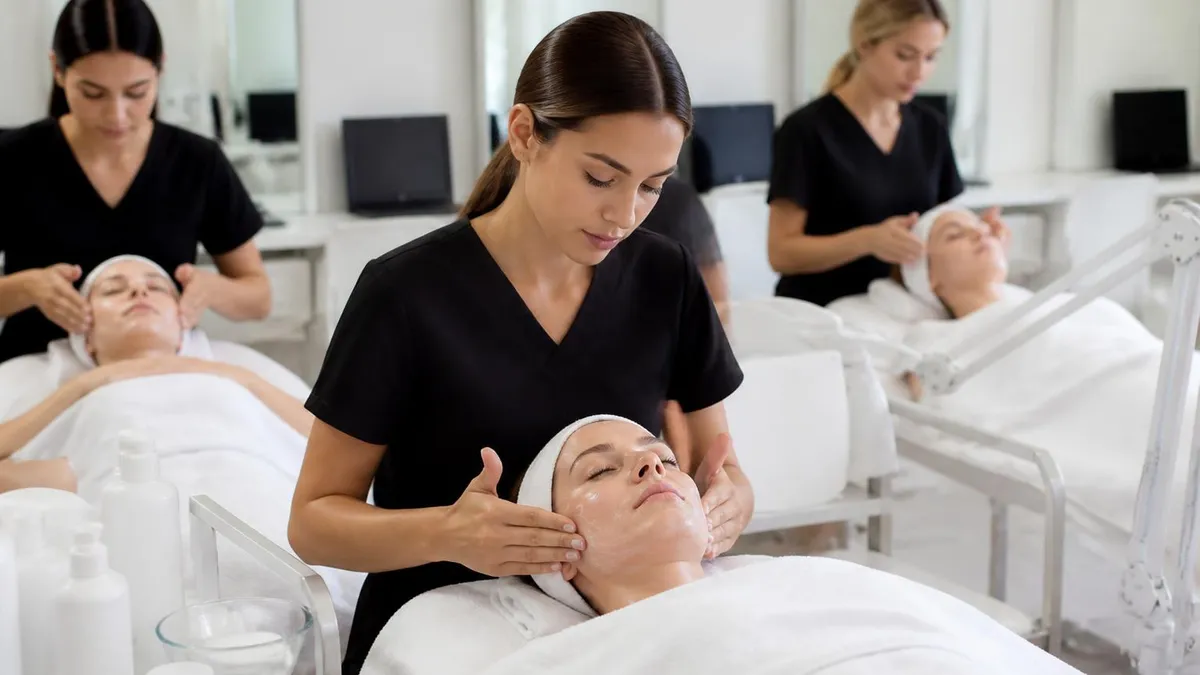
Arizona Board of Cosmetology and Barbering: Roles, Licensing, and Complaints
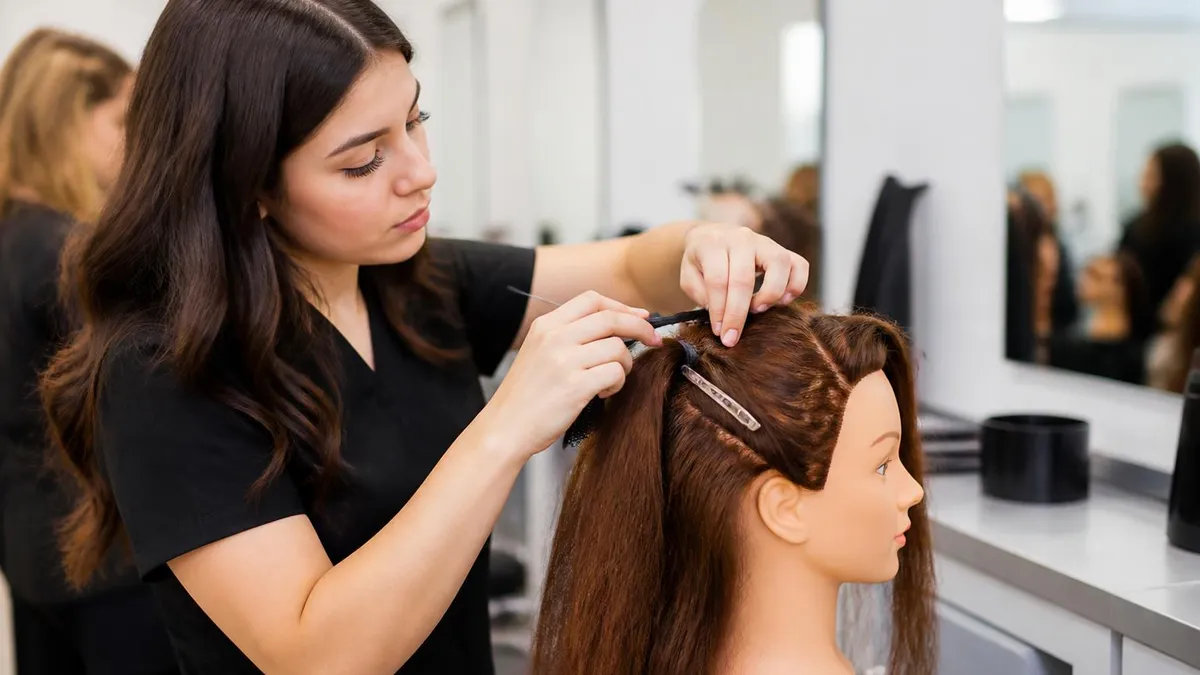
State Board of Cosmetology: Role, Functions, and How It Affects You
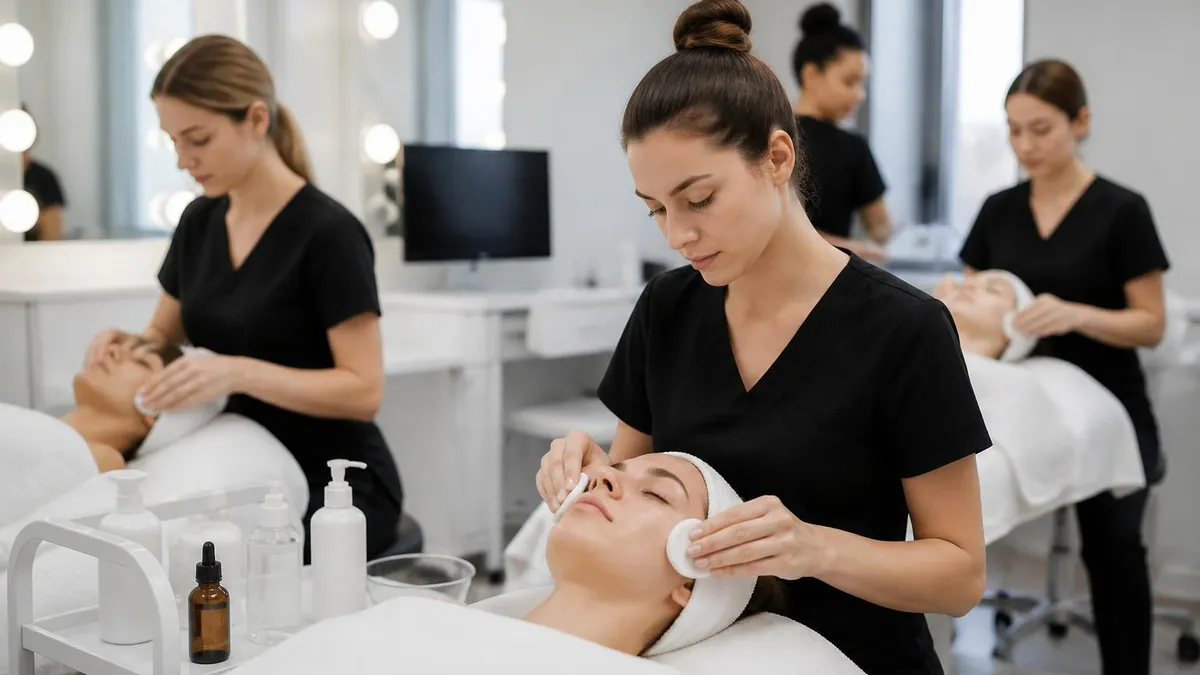
Cosmetology License: How to Get One, State Requirements, and Costs
Cosmetology License Renewal: Cycles, Fees, CE and State Rules
Cosmetology Schools: How to Choose, What to Expect, and How to Enroll
About the Author
Licensed Cosmetologist & Beauty Licensing Exam Specialist
Paul Mitchell SchoolsMichelle Santos is a licensed cosmetologist with a Bachelor of Science in Esthetics and Salon Management from Paul Mitchell School. She has 16 years of salon industry experience and 8 years preparing students for state cosmetology board exams in theory, practical skills, and sanitation. She specializes in licensure preparation for cosmetologists, estheticians, and nail technicians.
Join the Discussion
Connect with other students preparing for this exam. Share tips, ask questions, and get advice from people who have been there.
View discussion (6 replies)