
Cosmetology Schools: How to Choose, What to Expect, and How to Enroll
Find out how cosmetology schools work, what programs they offer, how long they take, and what to look for when choosing a school near you. 🎓

Cosmetology schools provide the hands-on education and supervised training hours required to qualify for a state cosmetology license. Every state requires aspiring cosmetologists to complete a minimum number of training hours at an accredited program before sitting for the state licensing exam — the national average is around 1,500 hours, though requirements range from 1,000 hours in some states to over 2,000 hours in others.
These hours are completed at a licensed cosmetology school or program, where students learn and practice cutting, coloring, chemical services, skincare, nail care, and related technical skills under the supervision of licensed instructors. Choosing the right school matters not just for the quality of your training but for your eligibility to sit the licensing exam — only programs approved by your state's cosmetology board count toward the required hours.
Cosmetology schools come in several forms. Standalone private cosmetology schools are the most common, offering focused programs that typically run 12 to 18 months full-time. Community colleges often offer cosmetology programs as part of their vocational education departments, sometimes at lower tuition than private schools. Some high schools offer cosmetology programs through career and technical education (CTE) tracks, allowing students to accumulate hours while still in school.
Beauty school chains with multiple locations, such as Paul Mitchell Schools, Aveda Institutes, and Empire Beauty Schools, combine standardized curriculum with brand recognition that can be valuable in some markets. Each format has trade-offs in cost, schedule flexibility, program culture, and career networking, and the right choice depends on your budget, location, schedule constraints, and career goals.
The variety in program length and school type means there's no single path through cosmetology education — students need to research the requirements of their specific state, confirm the school's board approval status, and evaluate programs based on their own timeline and financial situation. A student in Oregon with a requirement of 1,700 hours faces a longer program than a student in New York with a 1,000-hour requirement, even at the same school type and schedule intensity.
Understanding your state's specific hour requirement before selecting a program prevents the frustration of discovering partway through that a school's program length does not align with your state's licensing board timeline or that credits from one school won't transfer if you need to switch programs.
Cosmetology School at a Glance
- Typical program length: 1,500 hours (12–18 months full-time)
- State hour requirements: Vary from 1,000 to 2,300+ hours
- Average tuition: $6,500–$20,000 for full programs
- Financial aid available: Yes — FAFSA eligible if accredited; many schools also offer payment plans
- License required: Yes — must pass state board written and practical exams after completing hours
- Typical subjects: Haircuts, coloring, chemical services, skin care, nail care, salon management, sanitation
- Part-time options: Available at many schools; extends program to 24+ months
When choosing a cosmetology school, accreditation is the first filter. Accreditation by a recognized body — such as the National Accrediting Commission of Career Arts and Sciences (NACCAS), the Accrediting Council for Independent Colleges and Schools (ACICS), or regional accreditors — ensures the school meets minimum educational standards and allows students to access federal financial aid through FAFSA.
Non-accredited schools may offer lower tuition but cannot accept federal grants or loans, and some state cosmetology boards require graduation from an accredited program before allowing candidates to sit for the licensing exam. Verify that the school you're considering is approved by your specific state's cosmetology board regardless of its accreditation status — approval requirements vary by state.
Program curriculum is the second major consideration. All cosmetology programs cover the core technical skills — shampooing, cutting, coloring, perms, relaxers, facials, manicures, and pedicures — but the depth and breadth of coverage varies significantly. Some programs include dedicated modules on advanced coloring techniques, extensions, or esthetics that give graduates a broader skill set from day one.
Others focus tightly on exam-relevant content to maximize pass rates on the state board exam without extensive elective coverage. Visiting the school, observing classes in progress, and asking specific questions about the curriculum for techniques you want to specialize in gives you far more information than a brochure or website. Understanding what cosmetology covers as a field helps you evaluate whether a school's curriculum aligns with the career you're pursuing within the broader beauty industry.
Instructor quality is harder to evaluate from the outside but is arguably the most important factor in the quality of your training. Experienced instructors with active salon careers bring real-world insight into technique, client management, and industry trends that purely classroom-focused teachers cannot replicate. Ask schools what percentage of their instructors are currently working in the industry alongside teaching. Ask about instructor-to-student ratios during practical labs — high ratios mean less individualized feedback on technique, which slows skill development. Student-to-instructor ratios in practical labs should ideally be 10:1 or lower for meaningful hands-on correction and guidance.
Program reputation is best assessed through outcomes rather than marketing. Licensing exam pass rates are one of the most objective indicators — schools with consistently high first-time pass rates are delivering curriculum that prepares students for what the state board actually tests. NACCAS requires accredited schools to meet minimum threshold standards for graduation rates and licensing exam pass rates, and this data must be publicly disclosed.
Comparing first-attempt pass rates across programs in your area reveals meaningful differences in preparation quality that school visits and brochures rarely highlight. A school with an 85% first-attempt pass rate is producing meaningfully better outcomes than one with a 65% rate — the 20-point difference represents real students who pay retake fees, face delays entering the workforce, and in some cases lose confidence in their abilities after a preventable exam failure.
Types of Cosmetology Schools
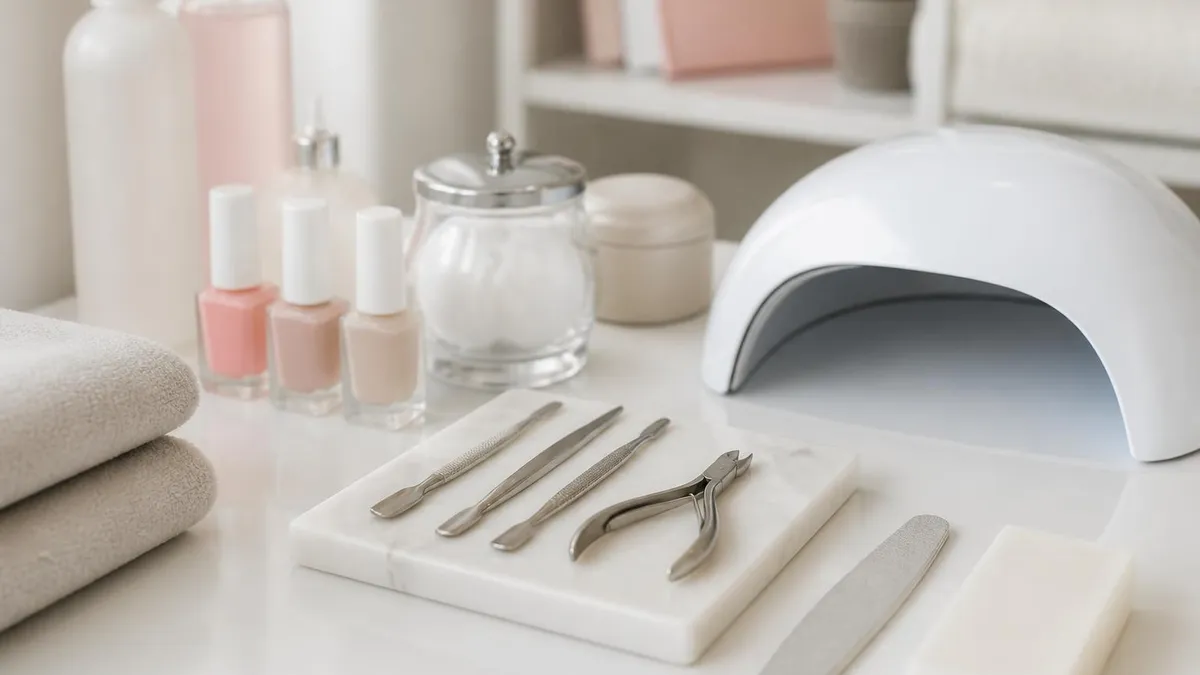
Standalone schools focused exclusively on beauty education. Most common type. Programs typically run 12–18 months full-time. Tuition ranges widely ($6,500–$20,000+). Many are FAFSA-eligible. May offer day and evening programs. Career placement services vary.
Cosmetology offered through vocational/CTE departments. Often lower tuition than private schools. May lead to an associate degree or certificate. Tends to have more structured academic support. Can be slower paced. Excellent option if cost is the primary concern.
Chains like Paul Mitchell, Aveda, Empire Beauty, and Regency. Standardized national curriculum with branded product training. Brand name recognition with some salon employers. Tuition tends to be mid-to-high range. Strong alumni networks in major markets.
Career and technical education cosmetology tracks offered at some high schools. Students accumulate hours toward state requirements while in school. Hours typically need supplementation after graduation. Cost is minimal or free. Great starting point but rarely sufficient alone.
Cognitive and theory content can be completed online, but state boards require hands-on training hours to be completed in person. Fully online cosmetology licensure does not exist. Blended programs offering online theory with in-person labs at satellite locations are emerging.
For students focused specifically on skincare rather than full cosmetology. Shorter programs (600–1,500 hours depending on state). Lower total tuition. Leads to esthetics or esthetician license rather than full cosmetology license. Good option for those with a clear skincare specialty focus.
Cost is one of the most significant factors in school selection, and the range is wide. Private cosmetology school tuition typically runs between $6,500 and $20,000 for a full program, with brand-affiliated schools on the higher end and smaller regional schools on the lower end. Community college cosmetology programs often cost $3,000 to $8,000 in total, making them substantially more affordable for budget-conscious students. Financial aid through FAFSA is available at accredited schools, and many students fund some or all of their tuition through Pell Grants — which do not need to be repaid — rather than student loans.
Before borrowing, carefully evaluate the expected income in your target market and specialty. Cosmetology licensing opens a wide income range: entry-level salon assistants may earn $25,000-$35,000 per year, while experienced stylists in high-demand markets with strong clientele can exceed $75,000-$100,000. The investment in education is recoverable, but only if you build the clientele and skills that justify higher service pricing.
Beyond tuition, factor kit and supply costs into your total budget. Most cosmetology programs require students to purchase a professional kit at enrollment that includes scissors, combs, brushes, flat irons, mannequin heads, and other tools. These kits typically cost $500 to $1,500 and are sometimes bundled into the program tuition; at other schools they are a separate purchase. Uniforms, textbooks, and state board exam fees add several hundred dollars more.
The total out-of-pocket cost for completing a cosmetology program, including all supplies and exam fees, typically runs $7,000 to $22,000 at most accredited private schools. Asking for an itemized cost breakdown — not just tuition — during enrollment consultations prevents unexpected expenses from derailing your budget mid-program. Knowing what a cosmetology license requires in your state also helps you plan whether additional specialty licenses (esthetics, nail tech, instructor) are in your long-term career path.
Financial aid counseling quality at the school also matters. Some cosmetology schools have financial aid staff who proactively help students maximize grant eligibility through FAFSA, identify state scholarship opportunities, and structure payment plans that minimize loan burden. Others provide the minimum required disclosure and leave students to figure out their options independently.
The difference between a student who graduates with $4,000 in Pell Grant funding and no loans versus one who took out $12,000 in federal student loans for the same program is often the quality of financial aid guidance received at enrollment. Ask specifically about the average award amount received by students through FAFSA, the typical split between grants and loans, and whether any state or institution-specific scholarships are available for cosmetology students in your demographic.
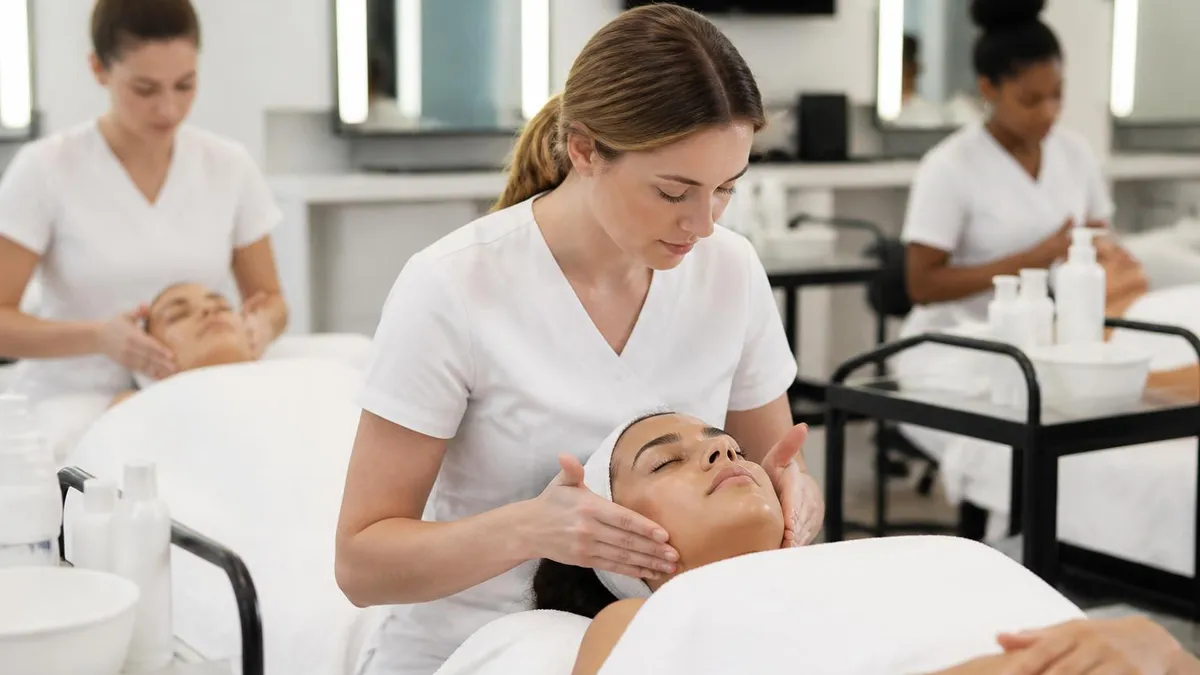
Most cosmetology schools have open or rolling enrollment rather than fall/spring semester starts. You schedule an enrollment consultation, tour the facility, review the program and costs, complete financial aid paperwork if applicable, and set a start date. Some schools have waiting lists for popular start dates.
Requirements for enrollment typically include a high school diploma or GED, government-issued ID, and proof of minimum age (usually 16–18 depending on the state). Some schools require a brief skills or aptitude assessment. Background checks are not typically required for enrollment, though some states require them for licensing.
The quality of job placement support at cosmetology schools varies dramatically and is worth investigating before enrollment. Some schools maintain active relationships with local salons and regularly connect graduating students with employers — they host career fairs, maintain job boards, and make warm introductions between employers and their best students.
Others provide minimal placement support, leaving graduates to find employment independently. The salon market in your area is a significant factor too: in a city with a strong salon industry and high demand for stylists, new graduates generally find positions quickly. In smaller markets with limited high-end salon options, building a clientele may take longer regardless of school quality.
Choosing where you want to work after school should inform your school selection. If you have a specific dream salon in mind, ask the school whether any of their recent graduates are working there. If you want to work in a brand-specific environment — a Paul Mitchell or Aveda salon, for example — attending a school affiliated with that brand gives you a natural connection into that employment pipeline.
If you want to freelance or open your own salon eventually, look for programs that include business and salon management modules alongside the technical curriculum, since the business skills needed to operate a profitable salon are rarely self-evident and often neglected in purely technique-focused programs. Exploring cosmetology school near me options with strong salon partnerships in your local market gives you the best foundation for building a client base immediately after licensure.
State licensing exam preparation should begin well before you complete your required hours. Many cosmetology students focus on practical skills throughout school and then scramble to study theory for the written exam in the weeks before their scheduled exam date. The NIC written exam covers cosmetology science, sanitation and infection control, chemical processes, scalp and hair disorders, skin diseases, and state laws — topics that require systematic study rather than passive recall.
Starting to review theory material during your final months of school, using practice tests to identify weak areas, and understanding the exam format significantly improve pass rates. Students who fail the initial attempt must pay retake fees and wait a minimum period before retesting, making thorough first-time preparation the most cost-efficient strategy. Reviewing resources for cosmetology cosmetologist exam prep helps you understand exactly what the state board evaluates and how to approach the practical component.
Specialization during school also shapes your early career positioning. Students who develop a signature specialty — balayage color, textured natural hair, bridal styling, or clinical esthetics — during their training hours enter the workforce with a differentiating skill that commands higher service prices from day one. Many school programs have dedicated specialty labs or advanced modules that students can request even when they are not officially required for the base curriculum.
Instructors who work actively in specialized areas often run informal workshops or clinics that students can attend for additional exposure. Being proactive about specialty development during the relative safety and low-stakes environment of school — where mistakes on manikins or volunteer clients are learning opportunities rather than professional setbacks — builds the technical confidence that distinguishes graduates who build clientele quickly from those who take years to establish themselves.
High-pressure sales tactics: Legitimate schools give you time to review contracts, financial aid packages, and program details. Schools that pressure you to enroll immediately or sign documents the same day you visit are a warning sign — this sales approach often precedes enrollment in low-quality programs at inflated tuition.
Unaccredited programs that accept federal aid claims: Only accredited schools are eligible to accept federal financial aid. If a school claims to accept FAFSA but is not accredited by a recognized body, verify independently through studentaid.gov before enrolling.
Vague or unavailable graduation and licensing exam pass rates: Schools must disclose graduation rates and licensing exam pass rates. If a school is evasive about these numbers, that evasion is itself informative — high-performing schools actively promote their pass rates.
Outdated equipment and techniques: The salon industry evolves quickly. Schools still primarily teaching techniques from 10-15 years ago without incorporating current color trends, cutting techniques, or social media-driven client expectations leave graduates underprepared for competitive markets.
Cosmetology education has evolved significantly in the past decade. Traditional schools emphasized rigid technique repetition on manikin heads until skills were mechanically consistent, then advanced students to clinic floors for client service. Modern programs increasingly use a blended approach: shorter manikin phases followed by earlier client exposure under close supervision, which accelerates the feedback loop between instruction and real-world application.
Clients in school clinics typically pay discounted rates for services performed by supervised students, giving them access to professional techniques at below-market prices. This clinic model benefits both students — who build skills and confidence faster through real client interaction — and the community, which gains affordable access to professional beauty services.
The rise of social media has changed what cosmetology schools need to teach. Clients increasingly arrive at salons having researched specific looks on Instagram, TikTok, and Pinterest, bringing reference photos and expecting stylists to execute complex balayage, lived-in color, or editorial cuts from a phone screen. Schools that include social media literacy — how to document your work, build a portfolio, and attract clients through a professional social presence — add practical value beyond the technical curriculum.
Some graduates find that their Instagram portfolio generates their first clients before they even start working in a salon, meaning the marketing skills developed during school have immediate income impact. Understanding how long is cosmetology school in your state helps you plan your full timeline from enrollment to first licensed day on the floor, including exam scheduling and the processing time for state license applications after you pass the board.
For students considering cosmetology as a second career or career change, the relatively short program length compared to most professional credentials makes it an accessible entry point. An adult learner who commits to a full-time program can be licensed and working within 12 to 18 months of enrollment — a timeline far shorter than nursing, teaching, or most trade certifications.
Many schools offer evening and weekend programs specifically designed for working adults, making it possible to complete cosmetology training while maintaining existing employment. The combination of relatively low credential cost, short completion timeline, and genuine income potential in the right market makes cosmetology school a sensible investment for motivated students who have done the research on their local market demand and chosen an accredited program with strong outcomes data.
- +Private school: focused program, faster completion, cosmetology-specific faculty
- +Private school: often stronger career placement networks with local salons
- +Private school: flexible start dates and part-time options at many locations
- +Community college: significantly lower tuition in most markets
- +Community college: may include academic support resources and broader campus facilities
- −Private school: higher tuition; more reliance on student loans if Pell Grant insufficient
- −Private school: quality varies widely — accreditation and pass rates must be verified independently
- −Community college: cosmetology program enrollment often limited; may have waitlists
- −Community college: sometimes slower paced; program may take longer to complete
- −Community college: placement support for cosmetology specifically may be weaker than standalone schools
Pros and Cons at a Glance
| Pros | Cons |
|---|---|
| Private school: focused program, faster completion, cosmetology-specific faculty | Private school: higher tuition; more reliance on student loans if Pell Grant insufficient |
| Private school: often stronger career placement networks with local salons | Private school: quality varies widely — accreditation and pass rates must be verified independently |
| Private school: flexible start dates and part-time options at many locations | Community college: cosmetology program enrollment often limited; may have waitlists |
| Community college: significantly lower tuition in most markets | Community college: sometimes slower paced; program may take longer to complete |
| Community college: may include academic support resources and broader campus facilities | Community college: placement support for cosmetology specifically may be weaker than standalone schools |
Cosmetology Questions and Answers
About the Author
Licensed Cosmetologist & Beauty Licensing Exam Specialist
Paul Mitchell SchoolsMichelle Santos is a licensed cosmetologist with a Bachelor of Science in Esthetics and Salon Management from Paul Mitchell School. She has 16 years of salon industry experience and 8 years preparing students for state cosmetology board exams in theory, practical skills, and sanitation. She specializes in licensure preparation for cosmetologists, estheticians, and nail technicians.