
What Is Cosmetology? Career, Schools, and Licensing 2026 September
Learn what cosmetology is, what cosmetologists do, how long school takes, 📝 and what careers and licensing options are available in the beauty industry.
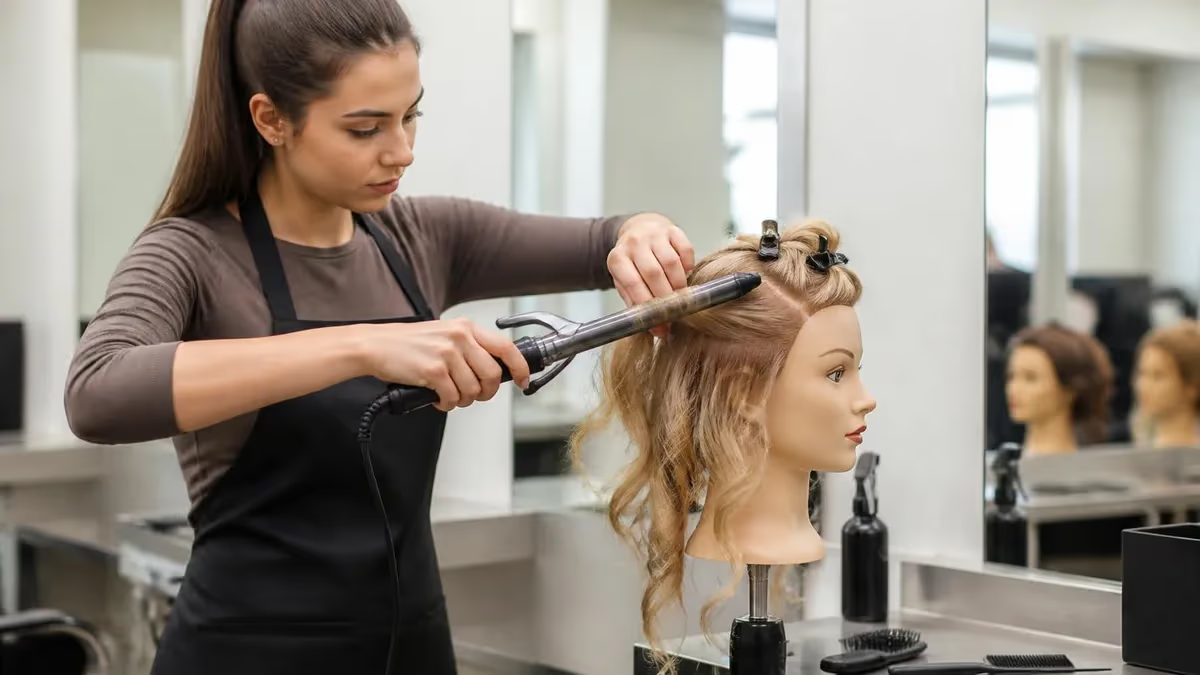
What Is Cosmetology?
Cosmetology is the professional practice of hair, skin, and nail care — the art and science of enhancing a person's appearance through beauty treatments. Cosmetologists are trained professionals who cut, colour, style, and chemically treat hair; perform skincare and facial treatments; apply makeup; and provide nail care services including manicures and pedicures. In most US states and internationally, cosmetology is a licensed profession: you must complete state-approved training, pass a licensing examination, and renew your licence periodically to practise legally.
The word cosmetology comes from the Greek kosmetikos — meaning skilled in arranging. That history reflects what the profession actually is: a blend of technical skill, creative artistry, client service, and chemistry knowledge. A cosmetologist working in a salon needs to understand the structure of hair, the chemistry of colourants and chemical treatments, the properties of skin, and the techniques for achieving a broad range of style results.
It's a profession that rewards both technical precision and creative vision. Because chemical treatments interact with the biological structure of hair and skin, cosmetology education includes meaningful science content — not just styling technique — which sets professional cosmetologists apart from untrained practitioners.
Cosmetology is a broad field with many directions. Some cosmetologists work as generalists in full-service salons, offering haircuts, colour, styling, and occasionally nail and skincare services. Others specialise — becoming dedicated hair colourists, estheticians focused entirely on skincare, nail technicians, makeup artists, or instructors at cosmetology schools.
The common thread is client-facing beauty service, though cosmetologists also work in film and television, editorial fashion, spa environments, and education. The growing market for specialised services like balayage, extensions, lash lifts, and advanced skincare has created strong demand for cosmetologists with expertise in specific techniques, making specialisation a viable and often lucrative path.
In the United States, cosmetology is regulated at the state level. Each state sets its own requirements for training hours (typically 1,000-1,600 hours depending on the state and specialisation), examination requirements, and licence renewal standards. The National-Interstate Council of State Boards of Cosmetology (NIC) administers the Cosmetology National Exam used by most states. Understanding what cosmetology training involves and what the licensing path looks like is the first step for anyone considering this career. For more on the specific cosmetology program structure including what topics are covered in cosmetology school, the program guide provides a comprehensive overview.
- What it covers: Hair care, skincare, nail care, and makeup — cosmetology is the broad beauty profession encompassing most beauty services
- Training hours: Typically 1,000-1,600 hours at a state-licensed cosmetology school depending on the state
- Licensing required: All US states require a cosmetology licence to practise professionally — training + exam + application
- Licensing exam: Most states use the NIC (National-Interstate Council) Cosmetology Exam, consisting of a written theory test and practical skills demonstration
- Average salary: Median cosmetologist salary in the US is approximately $36,000-$40,000/year, with top earners significantly higher in metro areas
- Work settings: Salons, spas, barbershops, hotels, resorts, film/TV sets, editorial fashion, cruise ships, and cosmetology schools
- Specialisations: Hair styling, colouring, esthetics (skin), nail technology, makeup artistry, and cosmetology education
The Path to Becoming a Licensed Cosmetologist
Step 1: Research Your State's Requirements
Step 2: Enrol in a State-Licensed Cosmetology School
Step 3: Complete Your Required Training Hours
Step 4: Pass the State Licensing Examination
Step 5: Apply for Your State Licence and Begin Working

What Do Cosmetologists Do? Services and Specialisations
Cosmetologists perform a wide range of beauty services depending on their training, specialisation, and workplace. In a full-service salon, a cosmetologist's day might include haircuts for multiple clients, a balayage colour service, a blowout, a keratin smoothing treatment, and consultation appointments for a wedding party booking. In a spa environment, the same licence might support facial treatments, eyebrow shaping, and eyelash extensions. The breadth of what a cosmetology licence permits varies by state.
Hair services are the core of most cosmetology work and include cutting (scissors and clippers), styling (blowouts, curling, flat ironing, updos and bridal styles), colouring (single-process colour, highlights, balayage, ombre, colour correction), and chemical treatments (perms, relaxers, keratin treatments, and straightening services). Mastering these services requires both technical training and creative skill — knowing how to execute a technique correctly is the foundation, but understanding how to adapt it to a specific client's hair type, face shape, and lifestyle is what builds a loyal clientele.
Skincare services often fall under esthetics rather than full cosmetology, but the cosmetology licence in most states permits basic skincare treatments. These include facial cleansing and exfoliation, eyebrow threading and waxing, and makeup application. Dedicated estheticians specialise exclusively in skin — performing deeper facial treatments, chemical peels, microdermabrasion, and body treatments in spa environments. Some cosmetologists hold both a cosmetology licence and an esthetics licence to offer the full range.
Nail services — manicures, pedicures, gel nails, acrylic extensions, and nail art — are covered by the cosmetology licence in some states and require a separate nail technology licence in others. Makeup artistry is part of the cosmetology curriculum and is performed under the cosmetology licence in most states, though many professional makeup artists work in film, television, and editorial settings where licencing requirements differ from salon environments.
For a detailed breakdown of what daily work looks like in different cosmetology roles and what salaries different specialisations command, the cosmetology career and salary guide covers current data by specialisation and location.
Cosmetology Specialisations
The broadest cosmetology role — cutting, colouring, chemically treating, and styling hair for salon clients. Most cosmetology school graduates begin as generalist stylists and develop specialisations (colour, extensions, precision cutting) as they build clientele and experience.
Focuses exclusively on skin health and care — facial treatments, waxing, chemical peels, microdermabrasion, and body treatments in spa or medical spa settings. Requires a separate esthetics licence (typically 260-600 training hours) in most states rather than the full cosmetology licence.
Specialises in nail care — manicures, pedicures, gel, acrylic, and dip powder nails, plus nail art. Requires a nail technology licence (typically 300-600 hours) in states that regulate nail services separately from cosmetology. Works in nail salons, spas, and full-service salons.
Teaches cosmetology theory and practical skills at licensed cosmetology schools. Usually requires a cosmetology instructor licence (additional training beyond the basic cosmetology licence), several years of professional experience, and strong knowledge of state education requirements and NIC examination standards.
Cosmetology School, Licensing, and Career
Cosmetology programs are offered at dedicated cosmetology schools and at community colleges with cosmetology departments.
- Program length: 9-18 months full-time; longer for part-time schedules. Total required hours vary by state (1,000-1,600 hours)
- Curriculum: Theory (hair science, chemistry, anatomy, state law, sanitation) + practical training (haircuts, colour, chemical services, skincare basics, nail care)
- Student salon: Most programs include a supervised student salon where enrolled students practise on real clients at discounted prices
- Tuition: $5,000-$20,000 at private cosmetology schools; community college programs may cost $3,000-$8,000
- Financial aid: Federal financial aid (FAFSA) is available at accredited cosmetology schools
When evaluating schools, ask for the NCLEX (or NIC exam) pass rate for recent graduates, student-to-instructor ratios, and what percentage of graduates are employed in cosmetology within 6 months of graduation.
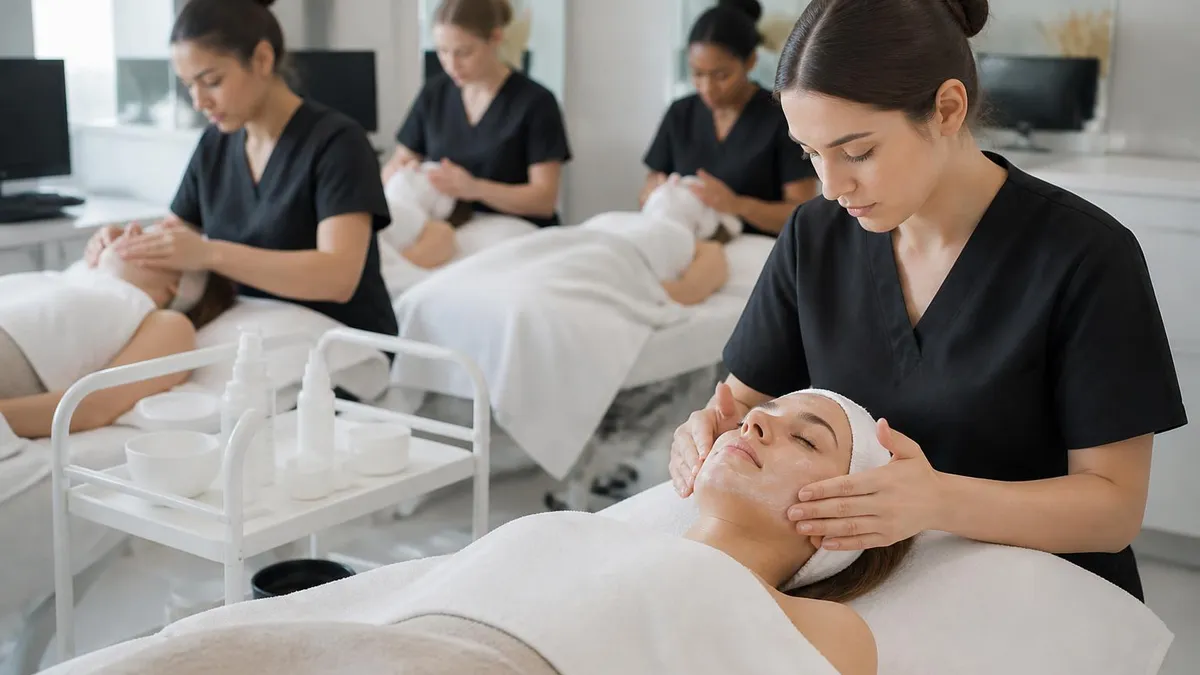
Cosmetology School: What to Expect and How to Choose
Cosmetology school is structured differently from most post-secondary education. Rather than lectures and exams, it's primarily hands-on — you spend most of your time practising techniques under instructor supervision. The theory component (typically 30-40% of total hours depending on the school and state) covers hair biology and chemistry, the anatomy of the scalp and skin, the chemistry of hair colour and chemical treatments, sanitation and infection control (critical for state licensing), nail anatomy, basic esthetics, client communication, and state cosmetology law.
The practical component begins with mannequin work — practising haircuts, roller sets, chemical applications, and styling on mannequin heads before advancing to real clients. Once you progress to the student salon floor, you work with actual clients under instructor supervision, building speed and confidence with real hair at real cost while providing discounted services. This supervised real-client work is where skills develop most rapidly — classroom instruction teaches technique, but only repeated practice on different hair types and textures builds competency.
Choosing the right cosmetology school matters more than many prospective students realise. Key factors to evaluate: the school's NIC exam pass rate for recent graduates (a proxy for teaching quality), instructor-to-student ratios (lower ratios mean more individual attention), the breadth of services covered (some schools specialise in certain techniques at the expense of others), clinic hours (time practising on real clients), and whether the school is accredited by NACCAS (National Accrediting Commission of Career Arts and Sciences), which enables federal financial aid eligibility.
Location and schedule flexibility also matter practically. Many cosmetology schools offer day and evening schedules to accommodate students who work. The total time to completion depends on whether you attend full-time (completing required hours as quickly as the schedule allows) or part-time (taking longer but balancing other commitments). Full-time students in a 1,500-hour state typically complete school in 12-14 months; part-time might take 18-24 months. For comprehensive information on what cosmetology school involves — curriculum details, what to look for, and how to compare programs — the school guide covers the selection process in depth.
What to Look For in a Cosmetology School
- ✓State board approval — the school must be licensed by your state cosmetology board; graduates of unapproved schools cannot sit for state licensing exams
- ✓NACCAS accreditation — enables federal financial aid (FAFSA) eligibility and is a quality benchmark for cosmetology education
- ✓NIC exam pass rate for recent graduates — ask the school directly; reputable schools track and share this data
- ✓Instructor-to-student ratio — lower is better; a ratio above 20:1 means limited individual instruction time
- ✓Clinic hours — the number of hours students spend working on real clients under supervision; more clinic time builds practical competency faster
- ✓Curriculum breadth — ensure the school covers all services tested on the NIC exam, not just the most popular salon services
- ✓Facilities and equipment — modern workstations, well-maintained equipment, and a properly functioning student salon indicate a well-resourced program
- ✓Tuition and financial aid options — get total cost in writing including all fees; ask about scholarship and payment plan availability
- ✓Graduate employment outcomes — what percentage of graduates are employed in cosmetology within 6 months of passing their state boards?
Cosmetology as a Career: Pros and Cons
- +Creative, client-facing work that rewards artistry and skill — different from desk-based careers with repetitive daily tasks
- +Relatively short training path compared to many licensed professions — 9-18 months to a licence rather than 4+ years
- +Self-employment potential — many experienced cosmetologists eventually rent booths or open their own salons, giving significant schedule and income flexibility
- +Constant learning and evolution — new techniques, products, and trends mean ongoing professional development is built into the career
- +Strong client relationships — many cosmetologists build loyal long-term clients and a professional community that provides personal satisfaction alongside income
- −Physical demands — standing all day, repetitive arm movements, and chemical exposure can cause physical strain over a long career; ergonomics and protective equipment matter
- −Income variance — salon income depends heavily on clientele building, tips, commission structures, and local market — starting income is often modest
- −State licensing requirements mean relocation requires a new licence in some states — though most states have reciprocity agreements with each other
- −Chemical exposure — hair colour, bleach, perms, and relaxers involve chemicals that require protective gloves, ventilation, and proper handling to avoid sensitisation
- −Upfront cost of cosmetology school tuition ($5,000-$20,000) before any income is generated — financial planning is important
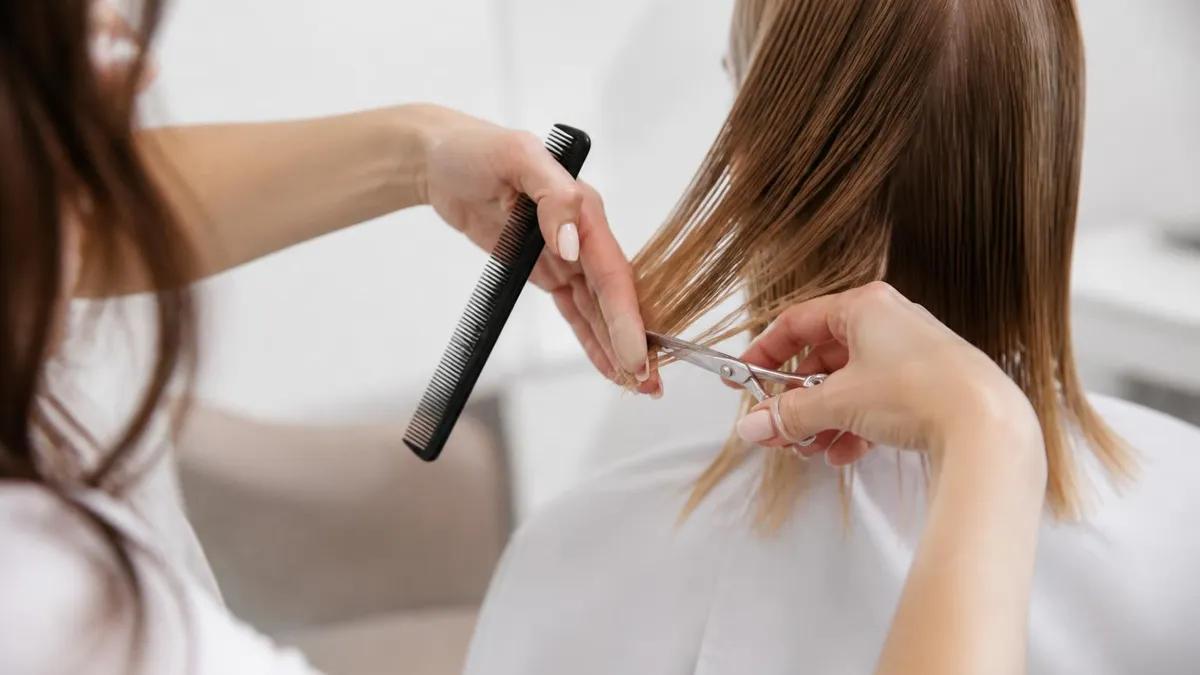
The Cosmetology Licensing Exam
The cosmetology licensing examination is required to legally practise in all US states. Most states use the NIC (National-Interstate Council of State Boards of Cosmetology) examination, which has a written theory section and a practical skills section. Some states administer their own state-specific examination, while a handful use both NIC and state components. Knowing which examination your state uses and how it's structured is essential preparation — the format, content weighting, and practical requirements differ.
The NIC written theory examination is a multiple-choice test covering cosmetology sciences (chemistry of hair, skin, and nails), services (cutting, colouring, chemical treatments, skincare, nail care), infection control and sanitation, salon business practices, and state law fundamentals. The number of questions and time allowed vary by state, but a typical written exam contains 100-120 questions with a 90-120 minute time limit. Pass marks vary by state but are commonly set at 70-75% correct.
The practical examination requires candidates to demonstrate specific cosmetology skills on a mannequin head (or in some states, a live model) in front of an examiner. Procedures tested typically include haircut (with specific technique specifications), chemical services (thermal, chemical or colour-related depending on state), and infection control setup. The practical exam is scored on execution quality, timing, safety, and adherence to the specified procedure. Many candidates underestimate the practical component — passing the theory exam without dedicated practical preparation leads to a significant number of unnecessary failures.
Preparation for both exam components benefits from structured study. The written exam responds well to practice questions covering all topic categories — weak areas identified through practice testing allow focused review before the real exam. The practical exam benefits from timed repetition of the required procedures in the school environment before exam day.
Many cosmetology schools include NIC exam prep as part of their program; supplementing with additional practice materials improves pass rates. The cosmetology licence guide covers state-by-state requirements and the full licensing application process after you pass. For exam-focused preparation, the cosmetology exam study guide covers the NIC written exam topics with practice questions by category.
Cosmetology: Key Statistics
Cosmetology Careers and Income Potential
Cosmetology careers span a wide range of environments and income levels. The beauty industry generates over $100 billion annually in the US alone, creating sustained and growing demand for skilled cosmetology professionals across salon, spa, media, and education settings. Entry-level salon work typically pays commission (40-50% of service revenue) plus tips, meaning income grows as you build clientele and service speed.
Many stylists begin at a commission salon to build skills and a client base before transitioning to booth rental — where you pay a weekly or monthly rate to rent your chair and keep 100% of your service revenue. Booth rental income scales directly with your client count and pricing, making it appealing for established stylists with loyal followings.
Income in cosmetology varies significantly by location, specialisation, and work setting. Cosmetologists in major metropolitan areas — New York, Los Angeles, Chicago, Miami — typically earn substantially more than those in smaller markets, reflecting both higher service prices and higher demand. Specialisations in colour (particularly balayage and advanced colour techniques), extensions, and bridal styling command premium pricing. Platform artists who teach techniques at industry events and brand educators who represent professional product lines both add meaningful additional income streams beyond direct client service work.
Beyond salon work, cosmetology credentials open doors to film and television, editorial fashion, cruise ship employment, and education. Film and TV hair and makeup work is heavily unionised in major production markets (IATSE Local 706 in Los Angeles) and commands significantly higher hourly rates than salon work, though it requires building industry connections and often starting with lower-budget productions. Cosmetology educators working at licensed schools earn salaries broadly comparable to community college instructors and enjoy the stable hours and employment benefits that independent salon work doesn't always provide.
Salon ownership is the long-term goal for many cosmetologists who want maximum income potential and professional autonomy. Opening a salon requires business planning, startup capital, location selection, and managing employees — skills that aren't typically part of cosmetology school curriculum but are entirely learnable through hands-on experience, mentorship, and available industry resources.
Many successful salon owners start out as booth renters who eventually transition to full space rental ownership. The cosmetology licence requirements vary by state if you plan to relocate — the cosmetology licence requirements by state guide covers which states have reciprocity agreements and what's required to transfer your licence when moving.
There is no single national cosmetology licence — each US state sets its own training hour requirements, examination standards, renewal terms, and scope of practice. What a cosmetology licence permits in one state may differ from another. Some states include nail services under the cosmetology licence; others require a separate nail technology licence. Esthetics may be covered under cosmetology in some states and require a separate esthetics licence in others. Before starting cosmetology school, verify your state's specific requirements through the state cosmetology board — not just the school's description of what the programme covers. If you plan to practise in multiple states or relocate, check each state's reciprocity and endorsement rules in advance.
Is Cosmetology the Right Career for You?
Cosmetology suits people who enjoy creative work, client relationships, and a physically active environment. It's a career built on skill development — there's always something new to learn, a technique to refine, or a trend to master. Cosmetologists who build strong client relationships often find the social aspect of the work as rewarding as the creative side: regular clients share their lives across years of appointments, creating genuine professional relationships that few office-based careers replicate.
The physical demands are real and shouldn't be underestimated. Standing for six to eight hours daily, repeated arm movements, and chemical exposure require good ergonomic habits, proper footwear, and consistent use of protective equipment. Stylists who don't develop good body mechanics early in their careers often face hand, wrist, back, and shoulder issues as their careers progress. This is an area where cosmetology school often provides insufficient preparation — seek out resources on ergonomics and professional health management proactively.
Income at entry level is modest and grows slowly in the first one to two years as you build clientele. Most cosmetology careers follow a recognisable trajectory: commission salon work for the first few years building skills and clients, transition to booth rental when the client base supports it, and eventual specialisation or ownership for maximum earning potential. Candidates who expect immediate high income are often disappointed; candidates who understand the investment period and plan accordingly typically find the career trajectory rewarding over the longer term.
The best way to test whether cosmetology is the right fit is to spend time observing or assisting in a salon before committing to school. Many salon owners welcome brief shadowing for prospective students who reach out professionally. Talking to working cosmetologists about their daily experience — the realities of building clientele, handling difficult clients, managing physical demands, and structuring income — provides perspective that school brochures and online career overviews often omit.
If the career appeals after that realistic assessment, the path through cosmetology school, licensing, and early professional development is well-defined and supported by a well-established professional community. To learn more about the specific areas covered in cosmetology licensing exams, the cosmetology career guide covers what the profession looks like at different experience levels and specialisations.
Cosmetology Questions and Answers
About the Author
Licensed Cosmetologist & Beauty Licensing Exam Specialist
Paul Mitchell SchoolsMichelle Santos is a licensed cosmetologist with a Bachelor of Science in Esthetics and Salon Management from Paul Mitchell School. She has 16 years of salon industry experience and 8 years preparing students for state cosmetology board exams in theory, practical skills, and sanitation. She specializes in licensure preparation for cosmetologists, estheticians, and nail technicians.