
Cosmetology License Requirements by State: Hours, Exams, and Career Outlook
❓ Free Cosmetology License practice test with instant feedback and detailed answer explanations. Prepare for your exam.

Cosmetology licensing in the United States requires completing a state-approved training program, passing a written and practical exam, and submitting a license application to your state board. Training hour requirements range from 1,000 hours in some states to 2,100 hours in others — a difference of more than a year of full-time study. Understanding your state's specific requirements before enrolling in a program saves time and money.
How Cosmetology Licensing Works
The path to a cosmetology license follows a consistent framework across all states, even though the specific requirements differ. Understanding the overall process helps you plan your timeline and budget.
Step 1: Choose a State-Approved Cosmetology School
You must complete your training at a school approved by your state's board of cosmetology. Accredited cosmetology schools offer programs that meet or exceed your state's minimum hour requirements and cover all topics tested on the licensing exam. When choosing a school, consider:
- State approval status: Verify the school is approved by your specific state board — not all accredited schools are approved in every state
- Program length: Full-time programs (30-40 hours per week) typically take 9-14 months. Part-time programs take 18-24 months.
- Tuition and financial aid: Cosmetology school tuition ranges from $5,000 to $20,000+. Many schools accept federal financial aid (FAFSA). Research scholarship opportunities.
- Pass rates: Ask the school for their state board exam pass rate. Schools with consistently high pass rates provide better preparation.
- Curriculum emphasis: Some schools emphasize salon-ready skills while others focus more heavily on exam preparation. The best programs do both.
Step 2: Complete Required Training Hours
During your program, you will accumulate training hours in both theory (classroom learning) and practical (hands-on) instruction. The curriculum covers hair care, chemical services, skin care, nail care, salon management, and — critically — infection control and safety procedures. Your school tracks your hours and reports them to the state board upon completion.
Step 3: Apply for the Licensing Exam
After completing your training hours, you apply to take the state board exam through your state's licensing authority. The application typically requires proof of completed training hours, identification documents, and an exam fee ($50-$200 depending on the state). Most states contract with testing companies like NIC, PSI, or Prometric to administer the exam.
Step 4: Pass the Written and Practical Exams
The written exam tests theory knowledge drawn from the Milady Standard Cosmetology textbook and your school curriculum. The practical exam tests your ability to perform cosmetology services safely and competently. Both portions must be passed. Prepare thoroughly with our Chemical Texture Services practice quiz — chemical services are among the most heavily tested topics on both exams.
Step 5: Receive Your License and Start Working
After passing both exams, you submit your license application and fee to the state board. Processing times vary from immediate (some states issue temporary licenses on the spot) to 4-6 weeks. Once licensed, you can legally perform cosmetology services for compensation in your state.
New Jersey residents applying for state and local government jobs can prepare with our free new jersey civil service — covering verbal ability, numerical ability, and civil service knowledge.
Notary candidates in Rhode Island and neighboring states often prepare using the Notary Practice Test 2026, which covers notarial duties, acknowledgments, and state-specific legal requirements.
Training Hours by State
The number of training hours required for a cosmetology license varies significantly across the United States. This table lists the required cosmetology training hours for all 50 states plus the District of Columbia.
| State | Required Hours |
|---|---|
| Alabama | 1,500 |
| Alaska | 1,650 |
| Arizona | 1,600 |
| Arkansas | 1,500 |
| California | 1,600 |
| Colorado | 1,800 |
| Connecticut | 1,500 |
| Delaware | 1,500 |
| District of Columbia | 1,500 |
| Florida | 1,200 |
| Georgia | 1,500 |
| Hawaii | 1,800 |
| Idaho | 2,000 |
| Illinois | 1,500 |
| Indiana | 1,500 |
| Iowa | 2,100 |
| Kansas | 1,500 |
| Kentucky | 1,800 |
| Louisiana | 1,500 |
| Maine | 1,500 |
| Maryland | 1,500 |
| Massachusetts | 1,000 |
| Michigan | 1,500 |
| Minnesota | 1,550 |
| Mississippi | 1,500 |
| Missouri | 1,500 |
| Montana | 2,000 |
| Nebraska | 2,100 |
| Nevada | 1,800 |
| New Hampshire | 1,500 |
| New Jersey | 1,200 |
| New Mexico | 1,600 |
| New York | 1,000 |
| North Carolina | 1,500 |
| North Dakota | 1,800 |
| Ohio | 1,500 |
| Oklahoma | 1,500 |
| Oregon | 1,700 |
| Pennsylvania | 1,250 |
| Rhode Island | 1,500 |
| South Carolina | 1,500 |
| South Dakota | 2,100 |
| Tennessee | 1,500 |
| Texas | 1,500 |
| Utah | 1,600 |
| Vermont | 1,500 |
| Virginia | 1,500 |
| Washington | 1,600 |
| West Virginia | 1,800 |
| Wisconsin | 1,550 |
| Wyoming | 2,000 |
Key observations:
- Lowest requirements: Massachusetts and New York require just 1,000 hours — the quickest path to licensure
- Highest requirements: Iowa, Nebraska, and South Dakota require 2,100 hours — more than double the minimum in Massachusetts
- Most common: 1,500 hours is the most frequently required amount, used by more than 20 states
- Trend: Several states have reduced their hour requirements in recent years as the industry has recognized that exam pass rates do not correlate strongly with higher hour requirements
Always verify current requirements directly with your state board, as hour requirements are periodically updated by state legislatures.
- ✓Review the official Milady Cosmetology exam content outline
- ✓Take a diagnostic practice test to identify weak areas
- ✓Create a study schedule (4-8 weeks recommended)
- ✓Focus on your weakest domains first
- ✓Complete at least 3 full-length practice exams
- ✓Review all incorrect answers with detailed explanations
- ✓Take a final practice test 1 week before exam day
The Licensing Exam
The cosmetology license exam is your final step before entering the profession. Understanding the exam format and what is tested helps you prepare effectively.
Written Exam Format:
Most states use exams based on the NIC (National-Interstate Council) standards or similar frameworks. The written exam is typically computer-based and consists of 100-120 multiple-choice questions. You usually have 90-120 minutes to complete it. The passing score varies by state but is typically 70-75%.
Most Heavily Tested Written Exam Topics:
- Infection control and safety — Expect 15-20% of questions on sanitation, disinfection, sterilization, bloodborne pathogens, and OSHA compliance
- Chemical services — Permanent waving, relaxing, hair coloring chemistry, developer volumes, and safety precautions account for 15-20% of questions
- Hair care sciences — Hair structure, growth cycles, scalp conditions, and shampoo/conditioning chemistry make up 10-15% of questions
- Skin care — Skin anatomy, skin types, facial procedures, and contraindications represent 10-12% of questions
- Haircutting and styling — Techniques, tools, sectioning, and elevation principles account for 10-12% of questions
Practical Exam Format:
The practical exam requires you to perform specified services while an examiner observes and scores your technique, safety practices, and finished results. Common practical exam components include:
- Haircutting (specific cut styles assigned by the state)
- Chemical waving (perm rod placement, solution application, processing)
- Hair coloring (virgin application or retouch technique)
- Thermal styling (curling iron, flat iron, or blow-dry styling)
- Roller setting
- Scalp treatment or basic facial
- Manicure
Throughout every service, examiners evaluate your sanitation practices — hand washing between services, proper tool disinfection, draping, and workstation cleanliness. Sanitation violations are the most common reason students lose points on the practical exam.
Strengthen your chemical services knowledge with our Chemical Texture Services practice questions — understanding the chemistry behind perms and relaxers is essential for both the written and practical portions of the exam.
Career Outlook and Earning Potential
The cosmetology industry offers diverse career paths with varying earning potential. Understanding the landscape helps you make informed decisions about specialization and career planning after earning your cosmetology license.
Employment Outlook:
The Bureau of Labor Statistics projects steady demand for licensed cosmetologists through 2030 and beyond. Several factors drive demand:
- Personal grooming services are recession-resistant — people continue getting haircuts and color services even during economic downturns
- An aging population requires more specialized hair and skin care services
- Social media has increased demand for appearance-related services across all demographics
- Natural and organic beauty trends create demand for cosmetologists with specialized knowledge
Salary Ranges by Role:
| Role | Annual Salary Range | Notes |
|---|---|---|
| Entry-Level Stylist | $22,000 - $30,000 | First 1-2 years, building clientele |
| Experienced Stylist | $30,000 - $50,000 | Established client base, 3-5 years |
| Senior Stylist / Specialist | $45,000 - $70,000 | Color specialist, extension expert, bridal |
| Salon Manager | $35,000 - $55,000 | Management responsibilities plus clients |
| Salon Owner | $40,000 - $100,000+ | Highly variable, depends on business success |
| Platform Artist / Educator | $50,000 - $90,000 | Brand representation, teaching, stage work |
| Film / TV / Theater Stylist | $45,000 - $80,000 | Union rates, project-based, major markets |
Income Models:
How you structure your compensation significantly affects your take-home pay:
- Commission: You earn a percentage (typically 40-60%) of the service price. Common in chain salons and some independent salons. Lower ceiling but steady income while building your clientele.
- Booth rental: You pay a weekly or monthly fee to rent a station in a salon and keep 100% of what you earn. Higher earning potential but you are responsible for your own supplies, scheduling, and marketing.
- Salon ownership: Highest earning potential but requires business investment, management skills, and financial risk. Most successful salon owners worked as stylists for 5-10 years before opening their own business.
Specialization Pays:
Cosmetologists who specialize in a high-demand niche consistently out-earn generalists. The highest-earning specializations include:
- Hair color specialist: Advanced color correction, balayage, and creative color command premium pricing ($150-$400+ per service)
- Hair extension specialist: Installation and maintenance of various extension methods ($300-$2,000+ per service)
- Bridal and event styling: Wedding and special event hair and makeup ($200-$500+ per client)
- Textured hair specialist: Natural hair care, silk presses, protective styling for textured hair types
- Trichology: Scalp and hair loss treatment — a growing niche with few specialists
Cosmetology License Pros and Cons
- +Milady certification is recognized across employers as evidence of verified competency, often required for specific roles
- +Certification provides a structured framework for professional knowledge that benefits daily work, not just the credential itself
- +Many certified professionals report salary increases of 10–20% compared to non-certified peers in the same role
- +Certification maintenance requirements create ongoing professional development that keeps knowledge current
- +The certification credential differentiates candidates in competitive hiring processes and promotion decisions
- −Milady certification fees can be substantial — exam costs, study materials, and renewal fees add up over a career
- −Certification requirements change over time; candidates who delay testing may face updated content requirements
- −Not all employers or markets equally value or require certification — the salary return varies significantly by geography and industry
- −Exam preparation requires significant time investment alongside existing work and personal responsibilities
- −Certification does not guarantee competency in practice — it validates knowledge at a point in time, not ongoing performance
Sample Milady Cosmetology Practice Questions
Try these questions from our free Milady Cosmetology practice tests. The correct answer and an explanation follow each question.
Why is maintaining a professional image important in cosmetology?
- A. To establish trust and credibility with clients.
- B. To comply with OSHA regulations.
- C. To prevent workplace accidents.
- D. To express personal style freely.
Answer: A. To establish trust and credibility with clients.
Maintaining a professional image in cosmetology is crucial for establishing trust and credibility with clients. Clients are more likely to feel confident in a cosmetologist's skills and judgment when they present themselves professionally, which includes appearance, demeanor, and communication. This professionalism builds rapport, fosters client loyalty, and enhances the salon's reputation.
What is the importance of understanding body mechanics in cosmetology?
- A. To improve client satisfaction.
- B. To prevent repetitive motion injuries.
- C. To enhance creativity in services.
- D. To speed up service time.
Answer: B. To prevent repetitive motion injuries.
Understanding body mechanics in cosmetology is vital to prevent repetitive motion injuries (RMIs) and musculoskeletal disorders. Cosmetologists perform many tasks that involve repetitive movements, awkward postures, and prolonged standing. Proper body mechanics help maintain good posture, reduce strain on joints and muscles, and ensure a longer, healthier career by minimizing physical stress.
A client with natural level 5 hair wants to achieve a level 9 blonde. This process will require lightening the hair first and then applying a separate color to tone it. Which of the following services is being performed?
- A. A single-process color
- B. A double-process color
- C. A semi-permanent color
- D. A glaze application
Answer: B. A double-process color
A double-process color is a two-step service. The first step is to pre-lighten the hair, and the second step is to apply a toner or color to achieve the desired shade. This method is necessary when a client wants to go significantly lighter, such as from a level 5 to a level 9.
A client's hair is determined to have low porosity. How will this characteristic likely affect the hair coloring process?
- A. The hair will absorb color very quickly and fade fast.
- B. The color will process faster and appear lighter than desired.
- C. The hair will be resistant to color penetration, possibly requiring longer processing time.
- D. The hair will accept color evenly but will not hold cool tones.
Answer: C. The hair will be resistant to color penetration, possibly requiring longer processing time.
Low porosity hair has a tightly packed cuticle layer, which resists moisture and chemical penetration. This makes it more difficult for hair color to be absorbed, which can lead to uneven results or require a longer processing time to ensure proper coverage.
Cosmetology License Questions and Answers
About the Author
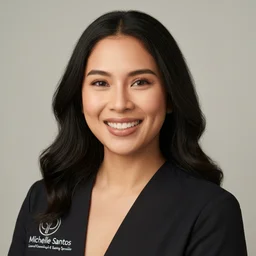
Licensed Cosmetologist & Beauty Licensing Exam Specialist
Paul Mitchell SchoolsMichelle Santos is a licensed cosmetologist with a Bachelor of Science in Esthetics and Salon Management from Paul Mitchell School. She has 16 years of salon industry experience and 8 years preparing students for state cosmetology board exams in theory, practical skills, and sanitation. She specializes in licensure preparation for cosmetologists, estheticians, and nail technicians.
Join the Discussion
Connect with other students preparing for this exam. Share tips, ask questions, and get advice from people who have been there.
View discussion (6 replies)