
Cosmetology School Near Me: How to Find, Choose, and Enroll in the Right Program in 2026 October
Find the best cosmetology school near me. Compare tuition, program length, state board requirements, and licensing steps for 2026 October enrollees. 🟢
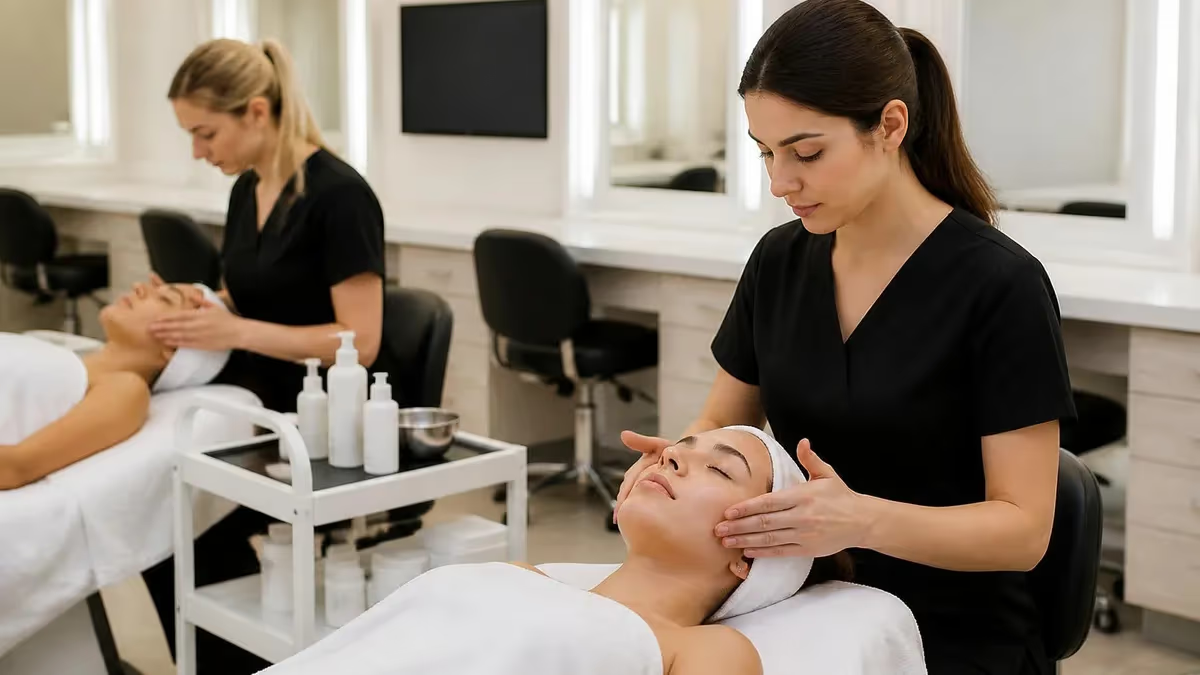
Searching for a cosmetology school near me is the first concrete step toward a creative, high-demand beauty career, and the right program shapes everything that follows. Whether you live in a major metro or a rural county, your local options likely include public community colleges, private beauty academies, and brand-affiliated institutes that all prepare you for state licensure. This guide walks through how to compare schools, what tuition really covers, how long training takes, and which state board rules you must satisfy before you can legally work behind the chair in 2026.
Cosmetology is regulated state by state, so the program you choose must be approved by the agency that issues your license, such as the what is cosmetology regulator in Arizona or the Ohio State Board of Cosmetology back east. Approval means the school has been audited for curriculum hours, sanitation standards, instructor credentials, and student-to-teacher ratios. Attending an unapproved school, even if cheaper, can disqualify your hours and force you to repeat training, so verification is the single most important step before you sign an enrollment agreement.
The federal Bureau of Labor Statistics projects steady demand for licensed cosmetologists through 2033, with a median wage that rises sharply for stylists who build a clientele or specialize in color, extensions, or chemical texture services. New graduates routinely earn tips that push effective hourly pay well above the base reported figures, and salon owners who complete advanced business coursework can scale into six-figure income within five to seven years. The earning ceiling depends far more on niche, location, and retention skills than on which school you attended.
Program length is one of the biggest variables among nearby schools. Most states require between 1,000 and 1,600 clock hours of training, which translates to roughly nine to fifteen months full time or eighteen to twenty-four months part time. A few states, such as New York at 1,000 hours and Massachusetts at 1,000, sit at the low end, while Oregon historically required 2,300 hours before reform. Always confirm the current hour requirement with your state board, because legislatures have been trimming totals to reduce barriers to entry.
Cost is the next deciding factor and varies dramatically by school type. Community college cosmetology programs often charge between $5,000 and $12,000 in total tuition because they are state-subsidized, while private academies and brand-name beauty schools commonly run $15,000 to $25,000, with elite urban institutes exceeding $30,000. Kits, books, state exam fees, and uniforms add another $1,500 to $4,000. Federal financial aid is available at any school that holds Title IV accreditation, and most accredited schools also accept payment plans or workforce-development vouchers.
Beyond the numbers, fit matters. Visit campuses, sit in on a class, talk to current students, and ask how often graduates pass the state board exam on the first attempt. A school that posts a 90 percent first-time pass rate and places graduates in salons within sixty days of licensure is doing the practical and theoretical work well. By the end of this guide you will be able to compare any two local schools side by side, ask the sharp questions admissions counselors hope you skip, and walk into your first day with realistic expectations.
Use this article as a working checklist. Bookmark it, print the requirement tables, and bring the FAQ to your campus tours. The beauty industry rewards stylists who treat their careers like businesses from day one, and choosing the right school is the first business decision you will make as a future cosmetology cosmetologist.
Cosmetology School by the Numbers
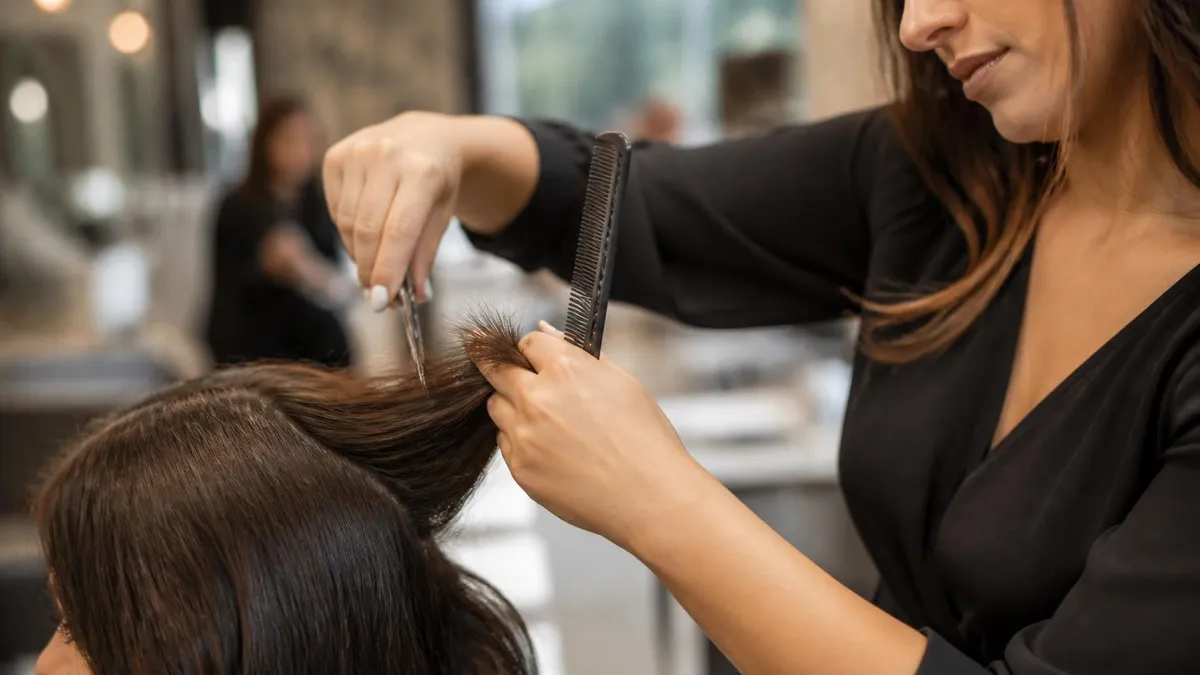
Types of Cosmetology Schools Near You
Public, state-subsidized programs costing $5,000–$12,000 total. Lower tuition, longer wait lists, and often part-time scheduling. Credits sometimes transfer toward an associate degree in salon management.
Independent for-profit schools running $15,000–$25,000. Faster start dates, smaller cohorts, and stronger placement networks. Most hold NACCAS accreditation and accept federal financial aid.
Schools tied to Aveda, Paul Mitchell, Empire, or Redken. Premium tuition of $20,000–$30,000+ but include brand product training, advanced color theory, and direct hiring pipelines into partner salons.
Free or low-cost programs for juniors and seniors. Students bank up to 1,000 hours before graduation, then complete remaining hours at a partner school after high school finishes.
Available in roughly fifteen states. Earn while you learn under a licensed mentor for 3,000+ hours. Slower than school but graduates leave debt-free with strong on-the-job experience.
Before comparing schools, it helps to define what is cosmetology actually covers. Cosmetology is the licensed practice of hair, skin, and nail services intended to enhance appearance and well-being. A cosmetology cosmetologist is trained in haircutting and styling, chemical services like color and perms, basic skin care and facials, manicures and pedicures, sanitation, anatomy, electricity and chemistry as they relate to salon tools, salon business operations, and the laws governing each of these activities in their state. The scope is broad on purpose, because most cosmetology licenses are general-practice licenses.
Curriculum is divided into theory hours and practical or clinic hours. Theory covers science, regulations, and product knowledge, while clinic hours happen on real paying clients in the school's student salon. Expect roughly 30 percent theory and 70 percent practical work, though the exact split varies by state. Schools log every hour electronically and submit the totals to the state board when you graduate, so missing classes directly delays your eligibility to test. Treat attendance the way a working stylist treats a booked appointment.
Most schools also weave career readiness into the program: resume writing, salon interviews, client retention math, social media branding, and basic bookkeeping for booth renters. A surprising number of new licensees fail not at cutting hair but at managing their book, taxes, and tips. Schools that allocate at least 100 hours to business topics produce graduates who are noticeably more financially stable in their first year. Ask any school you tour to break down exactly how many hours they spend on business and marketing.
You will spend significant time on safety and sanitation. State boards take infection control seriously, and exam questions on disinfectants, blood spill protocol, and tool sterilization make up roughly 20 percent of most written tests. Schools drill these protocols daily in clinic. Coming out of training, you should be able to recite the difference between cleaning, disinfecting, and sterilizing without thinking. This is not academic trivia, because a single sanitation violation can shut down a salon or revoke a license.
Hands-on services on real clients begin sooner than many students expect, often within the first 200 to 300 hours. The student salon charges discounted prices, and clients understand they are receiving service from a learner under instructor supervision. This live experience is where the real learning happens, since textbook techniques behave differently on actual hair textures, scalp conditions, and client moods. By graduation a typical student has performed several hundred haircuts, dozens of color services, and a wide range of nail and skin procedures.
Specialty tracks are increasingly common. Some schools let advanced students concentrate their final 200 to 400 hours on a niche such as balayage and dimensional color, textured and curly hair, extensions and wigs, or barbering. Specialization at the student level translates into a stronger portfolio and faster post-graduation income, because salons hire for gaps in their service menu. If you already know which corner of the industry excites you, prioritize schools that formally support that focus.
Finally, ask about post-graduation support. The best schools maintain alumni networks, continuing-education discounts, and license renewal reminders. Continuing education is mandatory in most states, ranging from four to sixteen hours per renewal cycle, and a school that keeps you connected after graduation pays dividends for decades. The day you sign the enrollment agreement is the start of a professional relationship, not the end of a sales process.
Cosmetology Practice Test Questions
Prepare for the Cosmetology Test exam with our free practice test modules. Each quiz covers key topics to help you pass on your first try.
Cosmetology Test Anatomy and Physiology
Cosmetology Exam Questions covering Test Anatomy and Physiology. Master Cosmetology Test concepts for certification prep.
Cosmetology Test Business and Career Manag...
Free Cosmetology Practice Test featuring Test Business and Career Management. Improve your Cosmetology Exam score with mock test prep.
Cosmetology Test Chemical Texture Services
Cosmetology Mock Exam on Test Chemical Texture Services. Cosmetology Study Guide questions to pass on your first try.
Cosmetology Test Haircolor and Lightening
Cosmetology Test Prep for Test Haircolor and Lightening. Practice Cosmetology Quiz questions and boost your score.
Cosmetology Test Haircutting and Styling
Cosmetology Questions and Answers on Test Haircutting and Styling. Free Cosmetology practice for exam readiness.
Cosmetology Test Infection Control and Safety
Cosmetology Mock Test covering Test Infection Control and Safety. Online Cosmetology Test practice with instant feedback.
Cosmetology Test Nail Care and Procedures
Free Cosmetology Quiz on Test Nail Care and Procedures. Cosmetology Exam prep questions with detailed explanations.
Cosmetology Test Nail Care and Services
Cosmetology Practice Questions for Test Nail Care and Services. Build confidence for your Cosmetology certification exam.
Cosmetology Test Principles of Skin Care
Cosmetology Test Online for Test Principles of Skin Care. Free practice with instant results and feedback.
Cosmetology Test Scientific Concepts
Cosmetology Study Material on Test Scientific Concepts. Prepare effectively with real exam-style questions.
Cosmetology Test Skincare and Services
Free Cosmetology Test covering Test Skincare and Services. Practice and track your Cosmetology exam readiness.
Cosmetology Test Wigs, Hair Extensions, an...
Cosmetology Exam Questions covering Test Wigs, Hair Extensions, and Hair Additions. Master Cosmetology Test concepts for certification prep.
Cosmetology Administrative Rules
Free Cosmetology Practice Test featuring Administrative Rules. Improve your Cosmetology Exam score with mock test prep.
Cosmetology On Hair & Scalp Properties
Cosmetology Mock Exam on On Hair & Scalp Properties. Cosmetology Study Guide questions to pass on your first try.
Cosmetology
Cosmetology Test Prep for Cosmetology. Practice Cosmetology Quiz questions and boost your score.
How Long Is Cosmetology School in Your State
Full-time cosmetology students typically attend Monday through Friday for six to eight hours daily, completing required hours in nine to fifteen months. A 1,500-hour state at thirty-five hours per week finishes in roughly forty-three weeks, allowing for holidays and personal days. Most students choose this pace because it accelerates entry into a paying job and concentrates skills before they fade.
The trade-off is income. Full-time students rarely hold more than part-time outside work, and federal financial aid typically caps living expenses tightly. Plan for tuition plus roughly $12,000 to $20,000 in personal expenses across the program. Many schools partner with local salons for paid assistant roles on evenings and weekends, which both pays bills and builds the professional network that determines first-job placement.
Local Beauty Academy vs. Community College: Which Wins?
- +Community college tuition is typically 40–60 percent lower than private academies
- +Community colleges accept Pell Grants, state aid, and workforce-development vouchers
- +Class sizes at community colleges are often smaller with more individual instructor attention
- +Credits sometimes transfer toward a salon management associate degree
- +Public schools rarely close mid-program, protecting your invested hours
- +Tuition is publicly disclosed with no hidden kit upgrades or surprise fees
- +Schedule flexibility includes evening and weekend cohorts at most community colleges
- −Community colleges have fewer start dates per year, often only fall and spring
- −Wait lists for popular cosmetology programs can stretch six to twelve months
- −Brand product training is limited compared with Aveda or Paul Mitchell institutes
- −Career services networks are smaller than private academy salon-partner pipelines
- −Equipment may be older and clinic floors less salon-like in appearance
- −Marketing and social-media curriculum is often thinner than at private schools
- −Instructors at public schools sometimes have less recent salon-floor experience
Pros and Cons at a Glance
| Pros | Cons |
|---|---|
| Community colleges accept Pell Grants, state aid, and workforce-development vouchers | Community colleges have fewer start dates per year, often only fall and spring |
| Class sizes at community colleges are often smaller with more individual instructor attention | Wait lists for popular cosmetology programs can stretch six to twelve months |
| Credits sometimes transfer toward a salon management associate degree | Brand product training is limited compared with Aveda or Paul Mitchell institutes |
| Public schools rarely close mid-program, protecting your invested hours | Career services networks are smaller than private academy salon-partner pipelines |
| Tuition is publicly disclosed with no hidden kit upgrades or surprise fees | Equipment may be older and clinic floors less salon-like in appearance |
| Schedule flexibility includes evening and weekend cohorts at most community colleges | Marketing and social-media curriculum is often thinner than at private schools |
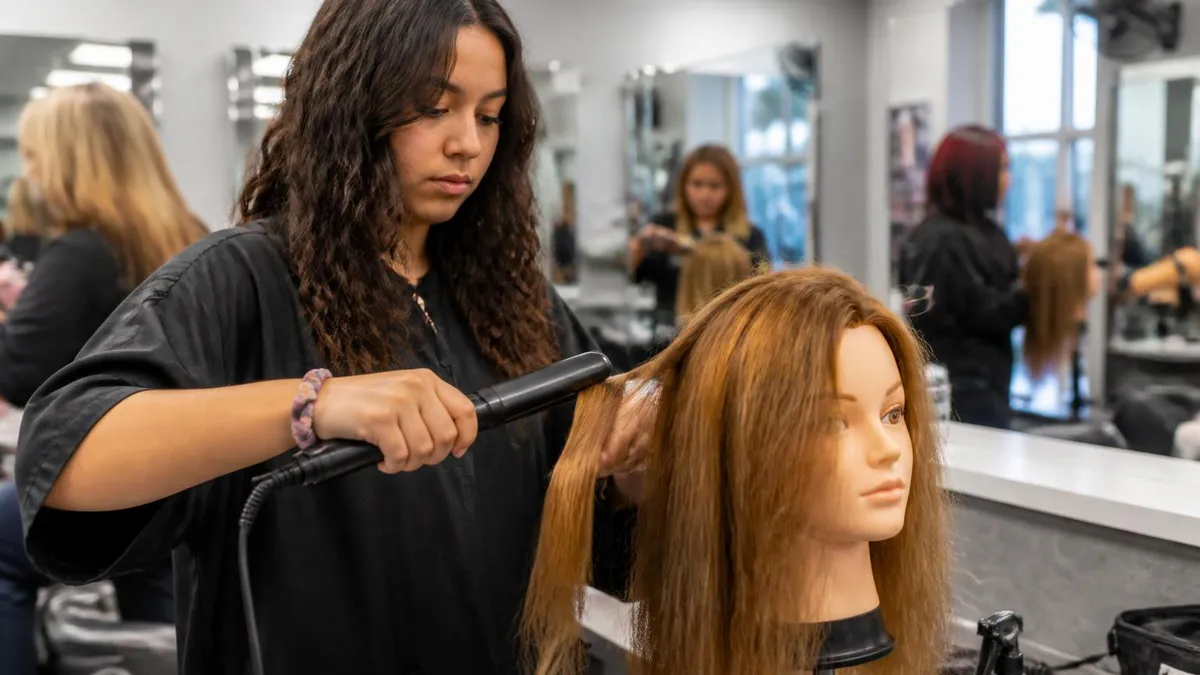
Enrollment Checklist for the Best Cosmetology School Near Me
- ✓Verify the school is licensed by your state board of cosmetology
- ✓Confirm NACCAS, COE, or regional accreditation for federal aid eligibility
- ✓Request the most recent first-time state board exam pass rate
- ✓Ask for the graduation rate and 180-day job placement rate
- ✓Tour the student clinic floor on a busy day to see real conditions
- ✓Compare total tuition including kit, books, uniform, and state exam fees
- ✓Check whether unused tuition is refundable if you withdraw early
- ✓Read the enrollment contract for clauses on missed hours and make-up policies
- ✓Confirm instructors hold current state cosmetology educator licenses
- ✓Ask about brand product training partnerships and continuing-education discounts
First-Time Pass Rate Above 80 Percent
If a school cannot or will not share its most recent first-time state board exam pass rate, walk away. Accredited schools must report this number, and a healthy program sits above 80 percent. Anything below 70 percent signals weak instruction, weak admissions screening, or both, and you will likely need expensive extra prep to pass after graduation.
Every state has its own regulator, and the agency name, application process, and renewal cycle differ widely. The Ohio State Board of Cosmetology issues licenses for Ohio cosmetology, manicuring, esthetics, and natural hair styling, with renewals every two years. The ohio state board of cosmetology publishes detailed candidate handbooks, fee schedules, and pre-licensure forms on its website, and Ohio state cosmetology students should download these on day one of school. Treating the board website as required reading prevents surprise rejections at the application stage.
Alabama operates differently. The Alabama Board of Cosmetology and Barbering requires 1,500 hours of training, passage of both a written and practical exam, and a $70 initial license fee plus exam charges. Renewals run every two years on a staggered schedule based on the licensee's birthday, and continuing education was reinstated for many license types in recent legislative updates. Alabama applicants must also submit fingerprints for a state and FBI background check, which can take four to six weeks to clear, so begin paperwork well before graduation.
Arizona is increasingly popular because the Arizona State Board of Cosmetology reduced required hours to 1,000, the lowest tier in the country. The board also offers a streamlined endorsement process for cosmetologists licensed in other states, which helps stylists relocating for spouse jobs or family. Arizona's written and practical exams are administered through PSI testing centers in Phoenix, Tucson, and Flagstaff, and most candidates schedule both exams on the same day to finish licensure quickly and start earning.
Background checks have become the most common stumbling block. Roughly forty states now require fingerprint-based criminal history reports before issuing a cosmetology license. Misdemeanors usually do not disqualify candidates, but unresolved warrants, certain felonies, or past disciplinary action in another licensed profession can trigger a board hearing. If you have any history that might raise questions, contact the board's licensing division before enrolling, not after graduation, to confirm eligibility in writing.
Reciprocity rules vary widely. A license earned in a 1,000-hour state may not transfer cleanly to a 1,500-hour state without additional training hours or a transfer examination. Some states accept any active license issued for at least one year, while others demand a full hour-for-hour audit. If you might relocate within the next five years, factor reciprocity into your school choice, because attending in a higher-hour state preserves more future flexibility.
License renewal is its own ecosystem. Most states require renewal every one to two years, with fees ranging from $40 to $120 and continuing education between zero and sixteen hours per cycle. Late renewal triggers escalating fees and, after a grace period, full license reinstatement, which can mean retesting. Set a calendar alarm sixty days before your expiration date, complete continuing education early, and pay the fee online the day the renewal window opens to avoid the annual scramble that derails busy stylists.
Lastly, watch for legislative changes. Cosmetology licensing has been a target of occupational-licensing reform in many statehouses since 2019, and bills regularly propose reducing hours, eliminating practical exams, or merging cosmetology and barbering boards. Subscribe to your state board's email list and follow the Professional Beauty Association so changes do not surprise you. A rule tweak passed during your training can shorten your path to licensure significantly.
Schools occasionally lose accreditation or state approval mid-year, and students enrolled during that window can lose months of logged hours. Always confirm current good standing directly on the state board website and the NACCAS school directory before signing any contract or paying a deposit. Screenshots of those verification pages should go in your enrollment file.
Tuition is only part of the cost of becoming a cosmetology cosmetologist. The full investment includes tuition, a starter kit of shears and styling tools, textbooks, uniforms or scrubs, state exam fees, license application fees, and travel to the testing center. For a clear breakdown across regions and school types, see our companion guide on cosmetology school near me tuition, which includes worksheets for calculating your true total. Building a complete budget before you enroll prevents the cash-flow crisis that forces some students to drop out within months of finishing.
Federal financial aid is the most common funding source. Title IV–accredited schools accept Pell Grants up to $7,395 for the 2025–2026 award year, plus subsidized and unsubsidized Direct Loans. Filing the FAFSA opens these doors, and you should file in October for the following academic year to maximize need-based aid. State grants, workforce-development vouchers through your local one-stop career center, and Workforce Innovation and Opportunity Act funding for displaced workers are additional layers most students overlook.
Scholarships exist but require effort to find. The Beauty Changes Lives Foundation awards more than a million dollars annually, the American Association of Cosmetology Schools posts a scholarship directory, and individual brands like Redken, Aveda, and Pivot Point fund competitive scholarships every year. Apply to ten or more in a single sitting, recycling essays with minor edits. Even small awards reduce loan debt that otherwise compounds for a decade after graduation.
Payment plans through schools are common but vary in fairness. The healthiest plans charge no interest, allow monthly payments matched to your in-school assistant income, and pause if you must take medical leave. Predatory plans charge effective interest above 15 percent, demand a large lump sum at enrollment, and forfeit prepayments if you withdraw. Always have a non-family adult read your enrollment contract before signing, and never sign on tour day under pressure.
Once licensed, expect ongoing professional expenses. Liability insurance runs $150 to $300 annually, professional shears that last need replacement every three to five years at $200 to $600 each, continuing education courses range from free to $500 per workshop, and license renewal fees recur every one to two years. Successful stylists treat these costs as business expenses tracked in a simple bookkeeping app, deducting them at tax time to reduce taxable income substantially.
Cosmetology license renewal deadlines deserve careful attention. Roughly 12 percent of cosmetologists nationwide allow their license to lapse at least once during their career, usually because life events crowd out paperwork. Set redundant reminders, complete continuing education at least sixty days before the deadline, and keep digital copies of all course completion certificates in cloud storage for at least seven years. A lapsed license means no legal work and no income while you scramble to reinstate.
Finally, think of school cost as the down payment on a thirty-year career, not a one-time expense. Stylists who earn $60,000 to $120,000 annually after five years recoup tuition many times over, and the licensure portability of cosmetology is unmatched in skilled trades. Hair grows in every state and every economy, recession or boom. Few credentials offer that combination of resilience, creativity, and earning potential for a year of focused training.
The final months before licensure are when good students become great ones. Treat the last 300 hours of school as exam camp. Cycle through the official state candidate handbook every week, drill written practice questions in twenty-minute blocks daily, and run full practical demonstrations under timed conditions at least twice weekly. Pair with a study partner from your cohort and grade each other's mannequin work using the official state rubric. The candidates who pass first time treat practice as deliberately as athletes do.
Build a portfolio while you are still in school. Photograph every notable haircut, color, updo, and nail set you complete on the clinic floor, with client permission. Use consistent lighting and angles, and save originals to cloud storage. By graduation you want a thirty-image portfolio organized by service type. Salons hiring new graduates rely heavily on portfolios because resumes are thin at that career stage, and a professional collection of work moves you from generic applicant to memorable candidate.
Network deliberately. Attend at least two industry trade shows or local salon events during school. Premiere Orlando, the International Beauty Show in New York, and Cosmoprof North America in Las Vegas offer student passes, and regional shows happen in nearly every state. Stylists who network find first jobs roughly 40 percent faster than those who apply only online. A single business card swap can produce a job offer that shapes the entire first decade of a career.
Practice the practical exam stations until each one feels automatic. Most states test haircutting, chemical waving, hair color application, thermal styling, manicuring, facial procedures, sanitation setup, and a blood-spill scenario. Buy or rent a mannequin head matched to the state's approved list, and run each station against a stopwatch. Time pressure is the most common reason candidates fail practical exams, not skill deficiency. Familiarity with the clock turns nervous candidates into confident ones.
Prepare your post-licensure business setup before you graduate. Decide whether you will work as a salon employee, a booth renter, or a salon-suite owner. Each path has different tax implications: employees receive W-2 income with withholding, while booth renters and suite owners are self-employed, owe quarterly estimated taxes, and can deduct supplies. Meeting with a tax professional in your final school month for one hour costs around $150 and prevents thousands in first-year tax surprises.
Take care of your body. Cosmetology is physically demanding, with cumulative strain on the wrists, shoulders, lower back, and feet. Invest in supportive shoes, anti-fatigue floor mats for your station, and shears sized correctly for your hand. Stretch wrists and shoulders daily. Career-ending repetitive strain injuries usually develop in the first three years from bad habits, then become permanent. Stylists who prioritize ergonomics from day one work comfortably into their sixties.
Mentally prepare for the income arc. Year one is often the leanest year, with new stylists earning $25,000 to $35,000 as they build a clientele. Years two and three accelerate sharply as repeat clients fill the book, and by year five top performers earn $70,000 to $100,000 or more. Knowing this curve in advance prevents the discouragement that pushes many talented graduates out of the industry during the slow early months. Patience and consistency pay off.
Sample Cosmetology Test Practice Questions
Try these questions from our free Cosmetology Test practice tests. The correct answer and an explanation follow each question.
A cosmetology school must maintain student records for a minimum period primarily to:
- A. Support future marketing campaigns
- B. Document hours for licensing and verification purposes
- C. Satisfy health insurance requirements
- D. Track retail product sales by students
Answer: B. Document hours for licensing and verification purposes
Student records, especially training hours, must be kept so licensing boards can verify completion of required education.
Which hair extension method uses a keratin adhesive applied with a heat tool to attach individual strands near the root?
- A. Tape-in method
- B. Keratin/fusion bonding
- C. Micro-link method
- D. Sew-in weft method
Answer: B. Keratin/fusion bonding
Fusion bonding uses a keratin-based adhesive melted with a heat tool to attach individual extension strands close to the scalp.
A cosmetology student who withdraws from a licensed school is required to:
- A. Immediately obtain a temporary permit
- B. Return their student permit to the state board
- C. Notify their supplier accounts
- D. Reapply for admission within 30 days
Answer: B. Return their student permit to the state board
Upon withdrawal from a cosmetology school, the student permit must be returned to the state board as it is no longer valid.
If an establishment moves, the licensee is required to file for a new establishment license and ensure that the new location complies with the Act's and this chapter's requirements. In accordance with the Act, a relocated beauty culture school must also be inspected before opening. Mobile shops are exempt from this subsection's restrictions.
- A. False
- B. True
Answer: B. True
This statement is true. When an establishment moves, the licensee must apply for a new license for the new location and ensure it meets all regulatory requirements. Relocated beauty culture schools also require re-inspection before opening to verify compliance. Mobile shops are typically exempt from these specific relocation inspection rules due to their nature.
Cosmetology Questions and Answers
About the Author
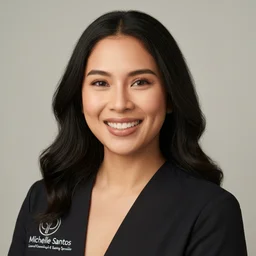
Licensed Cosmetologist & Beauty Licensing Exam Specialist
Paul Mitchell SchoolsMichelle Santos is a licensed cosmetologist with a Bachelor of Science in Esthetics and Salon Management from Paul Mitchell School. She has 16 years of salon industry experience and 8 years preparing students for state cosmetology board exams in theory, practical skills, and sanitation. She specializes in licensure preparation for cosmetologists, estheticians, and nail technicians.
Join the Discussion
Connect with other students preparing for this exam. Share tips, ask questions, and get advice from people who have been there.
View discussion (6 replies)