
Cosmetology Continuing Education: CE Hours by State Guide 2026 October
Cosmetology continuing education guide: CE hours by state (TX, SC, IL, FL, CA), online vs live webinar, board-approved providers, renewal cycles. 🆕
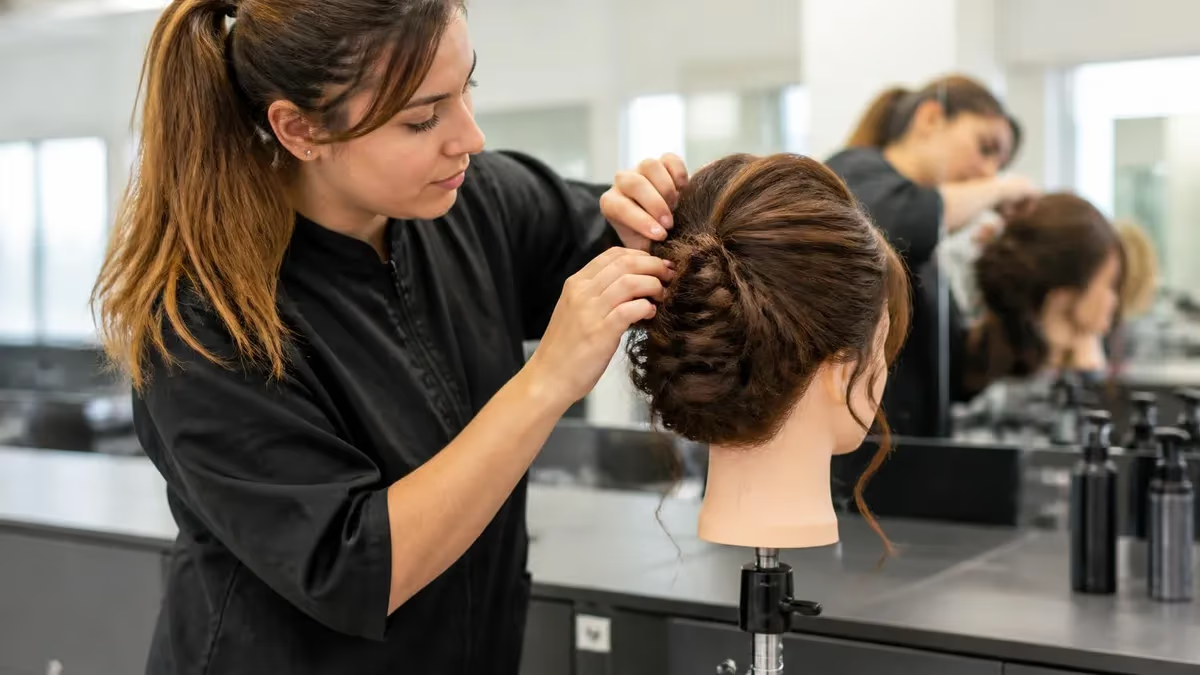
Cosmetology continuing education sits in a strange spot. Your license depends on it in some states, while in others — Texas being the headline example — the law currently asks for zero CE hours to renew. That gap confuses thousands of stylists every renewal cycle, and the rules keep shifting.
South Carolina LLR requires 4 hours each year. Illinois wants 14 hours in a two-year cycle, with a live component baked in. Florida asks for 16, including HIV/AIDS and OSHA topics. California, despite its size, runs a different game for cosmetologists than barbers — so even within one state the answer is split.
This guide pulls the moving parts together. State hour requirements, what counts as an approved provider, whether your online webinar will be accepted, how to log CE Broker credits without losing sleep, and which topics show up over and over (chemistry, sanitation, state law, infection control). You'll see why the state cosmetology board matters more than any national rule, and why two licensees can be in the same chair, the same week, and have totally different CE obligations.
Renewal cycles drive the timing. Most boards run on a 1-year or 2-year clock keyed to your birthday or your original license date. Miss the window? You'll typically pay a late fee, sometimes face a short suspension, and in a few states you'll have to retake portions of the licensing exam. That's the part nobody warns you about. Treat CE like rent — pay it on time, keep the receipt.
One thing to understand upfront: the language matters. "CE hours" and "CEU" aren't always identical. Some boards count 1 CEU as 10 contact hours; others use "CE hour" and "contact hour" interchangeably. When a provider sells you "10 CEUs," check whether they mean 10 hours or 100. The mismatch is rare in cosmetology — most boards use CE hours — but it shows up enough on out-of-state packages to be worth a second look. Read the fine print on the certificate before you upload it to your state portal.
And one more framing point. CE isn't ornamental. Boards designed it after years of complaints about stylists who memorized their textbook chemistry in school and never updated it. Chemical formulations change. So do safety standards around things like formaldehyde in keratin treatments, lash adhesive ingredients, and disinfectant contact times. The CE you take this year is genuinely different content from what you took three cycles ago — which is exactly the point.
Cosmetology CE by the Numbers
Key Facts at a Glance
| Item | Value | Details |
|---|---|---|
| IL CE hours / 2-yr cycle | 14 | |
| FL CE hours / 2-yr cycle | 16 | |
| SC LLR hours / year | 4 | |
| TX hours required | 0 |
Online cosmetology CE is now the default mode in most jurisdictions, which wasn't true even five years ago. The pandemic forced boards to accept asynchronous video coursework, and they didn't roll it back. That said — and this matters — Illinois still mandates a portion of live webinar CE for cosmetologists, and a handful of states cap how many hours can come from purely self-paced video. Read the rule, not the ad copy from a CE vendor.
The provider list is short once you filter for board approval. Elite Continuing Education, CE Broker (which doubles as the state-mandated tracking platform in Florida, Georgia, Mississippi, Tennessee and more), AhaSlides for live polling-style classes, and a handful of school-affiliated programs. Each pulls the same curriculum from state requirements — there isn't much creative latitude here. The differentiator is interface, price, and whether your hours auto-post to the state tracking system.
Sponsorship matters too. Some larger product brands — Redken, Aveda, Pivot Point, Wella — sponsor CE modules that count toward state requirements while doubling as product education. That's a sensible move if you're loyal to a line and want to deepen technical skill at the same time. Just verify the specific course holds your state's approval number. Brand-sponsored doesn't automatically mean board-approved, even if the marketing implies it. Two-minute check, saves a renewal headache.
One quiet tip: bookmark the "approved provider list" page on your state board's website. Most boards publish a PDF or searchable list with each approved provider's name, contact, and approval number. Searching that PDF for a vendor before purchase is faster than reading vendor sales copy and trying to verify claims sideways. The list also flags providers whose approval was revoked — that's information you won't get from the vendor's own site.
Quick rule of thumb
Look up your state board's current CE rule every renewal cycle — boards update topic mandates (HIV/AIDS, human trafficking awareness, OSHA) more often than you'd think. The number of hours rarely changes. The required content inside those hours does.
Texas deserves its own paragraph. As of the latest TDLR rule update, licensed cosmetologists in Texas don't have a numeric CE hour requirement to renew an active license. What you do have is a registration process every two years and a fee. Sounds easy — but if you let the license expire past the late grace period (90 days, then 18 months as expired-renewable, then dead) you're back to retesting. So while Texas skips the classroom, it doesn't skip the calendar. A surprising number of practitioners lose their ticket to practice not from CE failure but from sheer administrative drift.
Contrast that with South Carolina. The SC LLR Cosmetology Board wants 4 CE hours every year, every licensee, no exemptions for tenure. Topics must include sanitation and infection control. You log them in the state's portal. Forget — your license goes inactive on July 1, period. Stylists who relocate between TX and SC frequently get blindsided by this. Same trade, totally different rulebook.
Texas also has a quirk worth knowing about. While there's no numeric CE mandate, individual TDLR rule updates sometimes require all licensees to complete a specific short course — examples in past cycles have included rules-update courses tied to new salon safety legislation. These are usually free, 1-2 hours, and pushed out via TDLR's email list. If you're on Texas paper, subscribe to TDLR's email alerts. That single inbox subscription has saved more Texas cosmetology licenses than any continuing education provider ever has. It's also where you'll learn about scope-of-practice changes that affect what services you can offer.
South Carolina's portal is one of the better state systems in terms of usability. Log in with your license number, hit "add CE," upload the certificate as a PDF, and the hours appear in your record within 24-48 hours. If the provider has direct integration (some major vendors do for SC), hours post automatically — no manual upload. Either way, screenshot your record after each upload. The screenshot is your audit insurance if the portal ever loses an entry, which happens occasionally during system migrations.
CE Content Buckets Boards Accept
Color, relaxer, perm chemistry; pH balance; allergic reaction protocols; chemical burn first aid.
Implement disinfection, single-use rules, bloodborne pathogen exposure response, autoclave maintenance.
Most recent board rule changes, license display, scope of practice, advertising rules, complaint procedures.
Ergonomics, MSDS/SDS sheets, ventilation, fire safety, slip and fall prevention, client incident reporting.
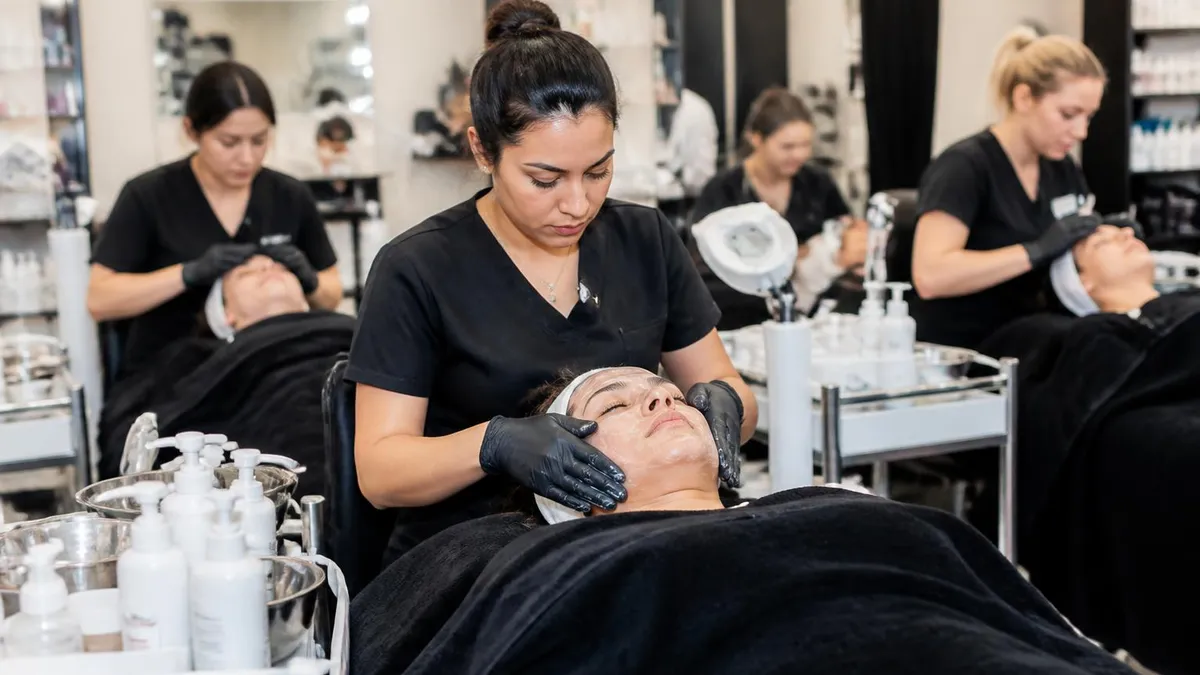
What actually counts as CE content? Boards almost universally accept four topic buckets: chemistry (specifically chemical service safety — relaxers, color, perms), sanitation and infection control, state cosmetology law and rules, and what most boards call "safe practice" which covers ergonomics, MSDS sheets, and OSHA bloodborne pathogens. Some states tack on HIV/AIDS as a separate mandatory module (Florida is the big one here). Business and salon management courses sometimes count toward elective hours, but never toward the core mandated total. That trips people up.
If you're an instructor, the bar is higher. Most boards want 8 to 16 hours, often with a pedagogy or teaching-methods component. If you hold multiple credentials — say cosmetology plus esthetics, or cosmetology plus a manager license — you may need separate CE for each, or you may be allowed to combine. The combining rule varies by state and is one of the most-asked questions board staff get. Call them. Don't guess.
Human trafficking awareness is the newest mandatory topic in several states. Florida, Illinois, Ohio, Washington, and a growing list of others now require a brief module covering how to recognize signs of trafficking in salon settings and how to report. It's usually 1 hour, often free or bundled with a sanitation package, but it has to be on file separately. Boards check for it during audits. If your last CE package was purchased before your state added the requirement, you're short by 1 hour and probably don't realize it. Pull your transcript and verify before each renewal.
Specialty technical content is where CE gets genuinely useful. Advanced color theory, balayage and freehand lightening, curly hair texture services, scalp analysis, skin disorder identification, lash extension safety — these are all topics where the rest of the industry has moved faster than school curriculum. A good annual CE plan mixes the mandatory hours (sanitation, law, safety) with one or two technical electives that genuinely improve the work you do at the chair. The mandatory hours protect your license. The electives protect your income.
State-by-State CE Snapshot
No numeric CE hour requirement. Renewal every 2 years with TDLR. Pay the fee, update your address, you're done. Late renewal window: 90 days standard, then up to 18 months expired-renewable with escalating fees. Past 18 months: retake the licensing exam.
Watch out for: address changes. TDLR mails reminders. If they don't reach you, that's still your problem.
Exemptions exist but they're narrow. Active-duty military deployment, documented medical hardship, and licensees who hold the credential but explicitly file as "inactive" can usually skip CE for that cycle. "Inactive" status means you can't practice for pay during that period — it's a parking spot, not a shortcut. Returning to active status often requires making up missed hours, sometimes within 90 days of reactivation.
Brand-new licensees frequently misread the first-cycle rule. In several states (Illinois and Florida among them), CE is not required during your first renewal if you tested into the license within the year. You'll see this called "new licensee waiver" or "first cycle exemption." After that initial cycle, the full requirement kicks in. Don't bank on the waiver covering you twice.
Reciprocity adds another layer. Moving from one state to another doesn't transfer your CE history — it transfers your license eligibility, sometimes. Each state has its own reciprocity agreements, and some require additional state-specific CE before granting full licensure. Florida, for example, requires out-of-state applicants to complete Florida-specific law and HIV/AIDS modules before activation. Texas and California have different reciprocity bars depending on which state you're moving from. If you're planning a move, contact the destination state's board months ahead, not weeks. The paperwork moves at government speed.
Going inactive to skip CE feels efficient — until you need to reactivate. Most states require makeup CE hours within 90 days of reactivation, and some won't reinstate until you've sat for a portion of the licensing exam again. Inactive is a pause button, not a delete key. The fee to reactivate is often higher than the cost of staying current would have been, and the application can take weeks to process. Boards prioritize new applicants over reinstatements during busy renewal windows. If you genuinely need a break from the chair, plan it during a low-cost CE cycle, not as an escape from CE.
The renewal calendar itself is where most violations originate. Boards send reminders by email and postal mail, but if you've moved, switched jobs, or changed your name without updating the board, those notices go nowhere. Your responsibility, not theirs. Stylists who treat license tracking the way they treat their own appointment book — calendared, color-coded, alerted — rarely get caught flat-footed. Pair that with a regular review of your board's current rule set and you'll dodge 90% of the renewal headaches that hit your peers.
Costs vary widely. Online CE packages typically run $25 to $80 for a full state-required hour bundle. Live webinar classes cost more — $40 to $120 for a 4-hour live session, sometimes including state filing fees. CE Broker access (for states that mandate it) carries its own annual subscription, around $29 to $39 depending on tier. Total annual outlay for most licensees lands somewhere between $50 and $200 — call it the cost of staying employable.
Bundling saves real money. Almost every major provider — Elite, Milady, CE Solutions, Career WebSchool — sells a complete state-required package at a 30-50% discount over buying individual hours. The trade-off is less flexibility on topics. If you specifically want advanced color CE plus mandatory sanitation, you'll either buy the bundle (probably with sanitation included but not advanced color) plus the elective separately, or you'll piece it together at retail price. Most working stylists do the bundle. The math favors it unless you're chasing very specific technical content.
Pre-Renewal CE Checklist
- ✓Confirm your state board's current required hour total for this cycle
- ✓Verify mandated topics (HIV/AIDS, OSHA, sanitation, state law)
- ✓Confirm whether live webinar hours are required separately from online video
- ✓Check that your chosen provider holds current board approval in your state
- ✓Save every certificate as a PDF — back up to cloud storage same day
- ✓Log hours in CE Broker (or your state's tracking portal) within 30 days
- ✓Update your address and email on file with the board
- ✓Pay renewal fee at least 30 days before deadline to avoid late penalties
Live webinar requirements deserve a closer look. Illinois is the cleanest example: of the 14 hours required per two-year cycle, a portion must be live, interactive, with attendance verification. That means a webinar where the instructor can see you (camera on), where you respond to live polls, and where the platform logs your start/end time. Pre-recorded video does not satisfy this — even if the same instructor delivers the same content. The interactivity is the rule. Vendors that say "counts in IL" should be able to show you their state board approval number on the spot.
For asynchronous online CE, most platforms run a video plus quiz model. You watch, you answer comprehension questions, you can't fast-forward, and at the end you download a certificate with your license number, the course code, and the board approval reference. Save those. States audit roughly 1-3% of licensees each cycle and ask for proof. No certificate, no credit, even if you genuinely took the class. Backup the PDFs to cloud storage the same day you finish them.
Audit selection is partly random and partly triggered. Random audits hit a small percentage of all licensees. Triggered audits come from a complaint, a workplace inspection that flagged irregularities, or a previous late filing. If you've ever had a renewal lapse, your name moves up the audit list — boards don't publish this but it's widely known among compliance staff. The simple defense: keep every certificate, screenshot every portal entry, and respond to audit notices within the 30-day window most boards allow. Ignoring an audit notice escalates immediately to a hearing, and that's a much worse position to be in.
Online vs Live Webinar CE
- +Online CE: self-paced, replay video segments, cheapest per hour
- +Online CE: certificates download immediately on completion
- +Live webinar: satisfies state mandates for interactive instruction
- +Live webinar: real-time Q&A with instructor, better retention
- +Live webinar: counts toward Illinois and similar live-required states
- −Online CE: pre-recorded video doesn't satisfy live-requirement states
- −Online CE: can feel disconnected, lower retention without quizzes
- −Live webinar: fixed schedule, must attend at set date and time
- −Live webinar: higher cost per hour, camera-on requirement
- −Both formats: vendor must hold current board approval in your state
What about Milady? The publisher's CE catalog is widely used because most cosmetology schools teach from Milady textbooks — so the language and chapter structure feels familiar. Their CE modules are board-approved in nearly every state, and they handle state filing for an extra fee in some cases. The catalog is broad enough to cover annual requirements and to dig into specialty topics like balayage technique, skin analysis, and advanced color theory.
Whether you take their courses or someone else's, the credit value is identical — what differs is whether you actually finish them, and that comes down to interface preference more than anything else. Practical-skill quizzes (try a cosmetology practice test) can sharpen your retention between formal CE sessions.
A few practical tips for finishing online CE without misery. Block calendar time the way you would for a client appointment — same level of seriousness. Most state-required hours can be finished in 2-3 evening sessions if you don't try to cram. Don't multitask during the video portions; the post-video quizzes are usually designed to catch passive watching, and failing the quiz means redoing the whole module. Print the course outline if your provider offers one — physical paper notes during video CE genuinely improves retention, even if you never look at them again. Old-school but it works.
One last thing before you book your hours: check whether your salon employer offers reimbursement. Many chains (Great Clips, Ulta, Regis-owned brands, mid-sized regional groups) cover CE up to a cap if you stay employed through the renewal date. Independent contractors and booth renters foot the full bill, which is deductible as a business expense if you itemize. Either way, treat CE as professional infrastructure — not as a chore — and your renewal weeks stop feeling like fire drills.
Build a CE habit that survives slow months and busy ones. Two hours a quarter beats fourteen hours in the last week of your renewal cycle. The work is easier when you spread it, your retention is better, and you genuinely pick up technique tweaks that improve service quality.
The stylists who treat CE as a year-round investment — not a deadline-driven scramble — also tend to be the ones whose retention rates with high-paying clients trend upward. There's no causal arrow you can prove, but the correlation is noticeable. Make CE part of your professional rhythm, not your annual emergency.
And if you take nothing else from this guide, take this: when in doubt, call your state board. The phone number is on every renewal notice. Board staff are generally helpful, especially in slower seasons (early in the cycle, not at the deadline). A five-minute call clarifies more than an hour of forum browsing. Cosmetology continuing education rules are state-specific by design — there is no single national answer, and anyone who tells you otherwise hasn't worked across multiple state lines. The primary source — your state board — beats every secondary article, including this one.
Sample Cosmetology Test Practice Questions
Try these questions from our free Cosmetology Test practice tests. The correct answer and an explanation follow each question.
Which of the following continuing education topics is most commonly required for cosmetology license renewal?
- A. Business marketing strategies
- B. HIV/AIDS awareness and bloodborne pathogens
- C. Advanced color theory
- D. Social media for salons
Answer: B. HIV/AIDS awareness and bloodborne pathogens
Many states mandate HIV/AIDS awareness and bloodborne pathogen training as part of continuing education for cosmetology license renewal due to public health requirements.
Inspections must be carried out after the cosmetology shops' regular business hours.
- A. False
- B. True
Answer: A. False
This statement is false. Inspections of cosmetology shops are typically carried out during regular business hours to observe normal operations and ensure compliance with health, safety, and sanitation standards. Conducting inspections during business hours allows inspectors to assess real-time conditions and practices.
In most states, what happens if a cosmetologist fails to complete required continuing education before license renewal?
- A. The license is automatically renewed with a warning
- B. The renewal application will be denied or the license placed on inactive status
- C. A grace period of two years is granted
- D. No penalty applies if the courses are taken within 6 months
Answer: B. The renewal application will be denied or the license placed on inactive status
Failure to complete mandatory continuing education results in denial of renewal or an inactive license status until requirements are met.
What is the consequence of submitting a fraudulent application to the state cosmetology board?
- A. The application is simply rejected and resubmission is allowed
- B. The applicant may face denial, fines, or criminal charges
- C. The applicant must complete 100 additional school hours
- D. The applicant must wait six months to reapply
Answer: B. The applicant may face denial, fines, or criminal charges
Submitting false information on a state board application is considered fraud and can result in permanent denial of licensure, fines, and potential criminal prosecution.
Cosmetology Questions and Answers
About the Author
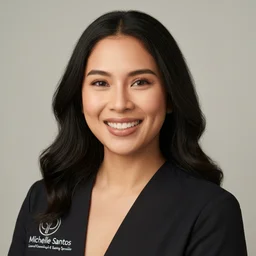
Licensed Cosmetologist & Beauty Licensing Exam Specialist
Paul Mitchell SchoolsMichelle Santos is a licensed cosmetologist with a Bachelor of Science in Esthetics and Salon Management from Paul Mitchell School. She has 16 years of salon industry experience and 8 years preparing students for state cosmetology board exams in theory, practical skills, and sanitation. She specializes in licensure preparation for cosmetologists, estheticians, and nail technicians.
Join the Discussion
Connect with other students preparing for this exam. Share tips, ask questions, and get advice from people who have been there.
View discussion (6 replies)