
Cosmetology Facts: Industry, History & Career Stats 2026 October
Cosmetology facts every student should know: $112B industry, 720K licensed pros, 1,500 training hours, plus history, salaries, and trends. ✏️
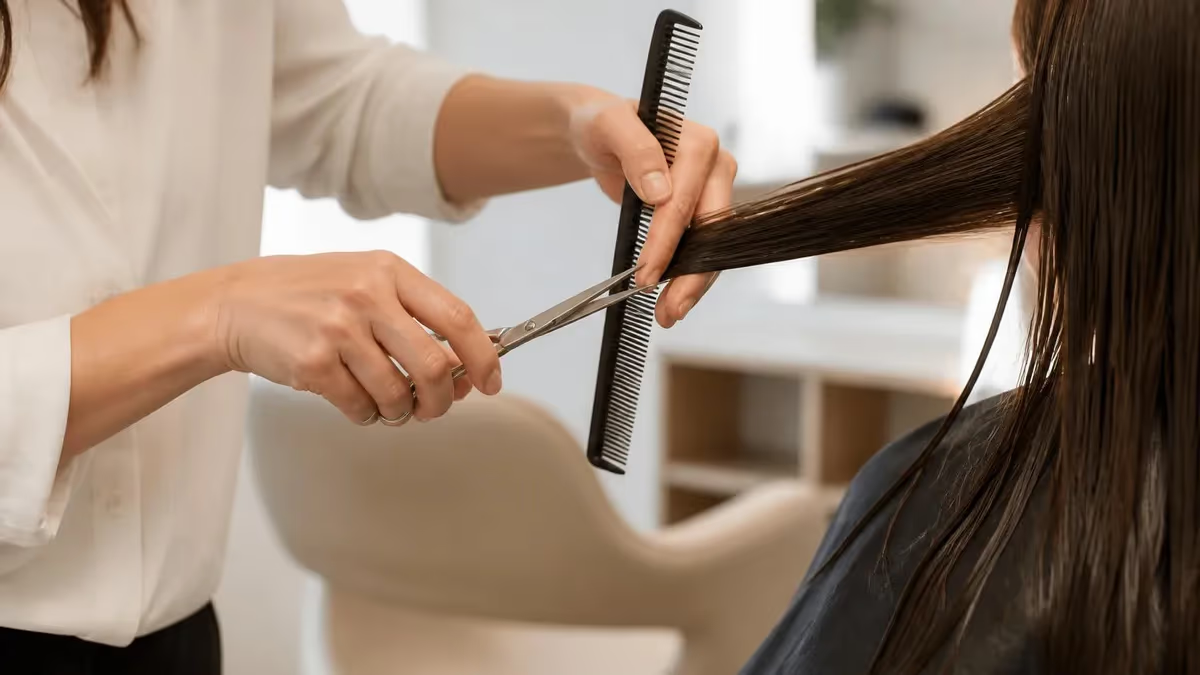
The beauty industry is bigger, older, and stranger than most people realize. The U.S. cosmetology sector pulls in roughly $112 billion a year, employs about 720,000 licensed pros, and stretches across more than 143,000 salons, spas, and barbershops.
Yet most students preparing for state board exams have no idea that the basic chemistry behind perm rods traces to a 1906 Berlin invention. Or that nail polish, in its earliest form, was a Chinese royal status symbol three thousand years before mascara existed.
This guide pulls together the most useful, surprising, and exam-relevant cosmetology facts — the kind of trivia that doubles as background knowledge for the National-Interstate Council (NIC) theory test and as small talk at a salon chair.
We cover industry size, career pathways, salary ranges, schooling hours by state, the historical pioneers you should know by name, and the trends quietly reshaping how stylists work. Some of it you'll see on a written exam. Some you'll just remember next time a client asks why keratin treatments are everywhere.
If you're studying for licensure, treat this as a flashcard pack with context. A way to anchor dry facts (1,500 training hours, NIC standardized exam, renewal cycles) inside the bigger picture of where the craft comes from and where it's heading. Stress-test retention with the cosmetology practice test after each section. Repetition beats cramming, every single time, especially in the final weeks before the exam.
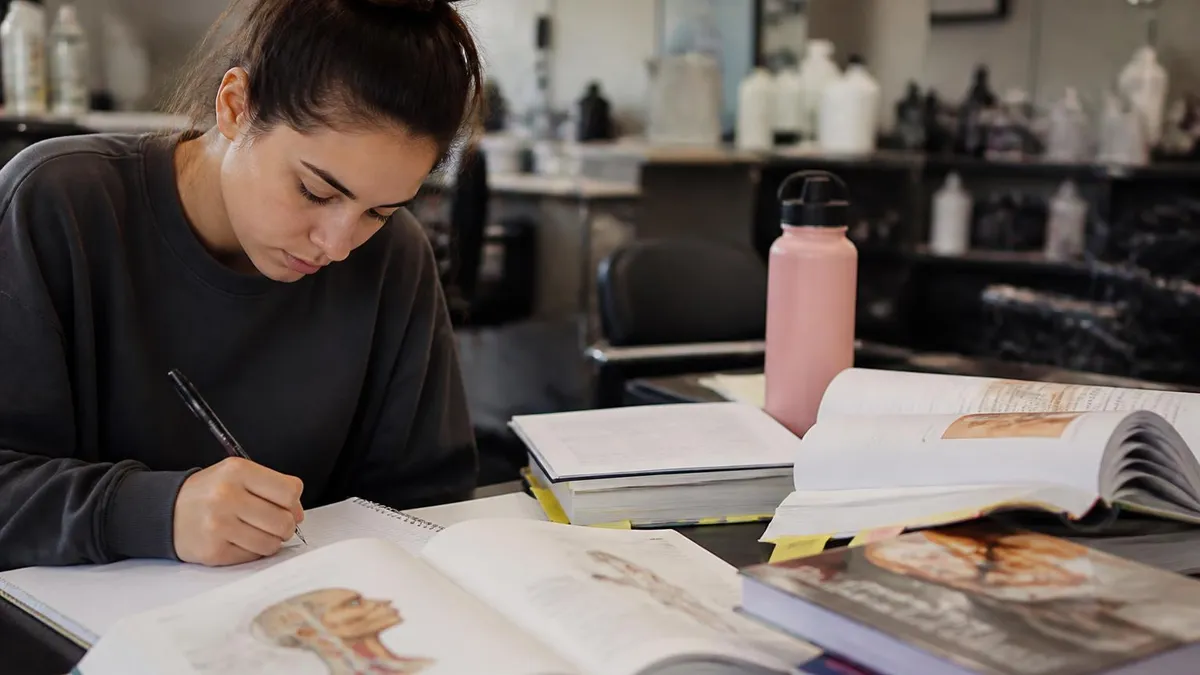
U.S. beauty industry value: $112 billion (2024). Licensed cosmetologists: roughly 720,000. Most common state training requirement: 1,500 hours. NIC standardized theory + practical exam is used in 32 states. Average base pay: $32K, plus tips that often add another $10K-$15K.
Before we hit the trivia, a fast definition. Cosmetology is the licensed practice of beauty treatments covering hair, skin, and nails — meaning a single cosmetologist can legally cut hair, color it, give a manicure, do a facial, apply makeup, and offer scalp treatments depending on state rules. Estheticians and nail technicians have narrower scopes; barbers historically focus on short hair, beards, and straight-razor work.
For a tighter explanation, the cosmetology definition page breaks down the legal scope state by state. The work is regulated because chemicals (peroxide, ammonium thioglycolate, formaldehyde derivatives) and tools (shears, lancets in some states, electric files) can cause real harm if used wrong. That's why the state board exists, why hours are mandated, and why renewal cycles exist.
Now let's look at the numbers behind the industry.
Cosmetology Industry by the Numbers
Those numbers tell a story. The salon count means almost every American zip code has a working cosmetologist within fifteen minutes. The $112 billion figure includes professional services and retail product sales — shampoos, color tubes, styling tools — which is why brands like Paul Mitchell, Aveda, and L'Oreal Professionnel pour serious money into salon partnerships. Tips, often invisible in salary reports, are the second engine of stylist income. A busy senior stylist in a metropolitan market can clear $15,000 a year in tips alone, sometimes more around the holidays.
Career paths inside cosmetology are wider than people think. Hair stylists are by far the largest group, with roughly 700,000 working professionals. Nail technicians come next at about 200,000, followed by estheticians (around 75,000), makeup artists (around 50,000), and barbers (around 40,000, though that count is growing fast as men's grooming becomes a bigger revenue line). Some pros specialize further — colorists, extension specialists, lash artists, brow technicians, scalp micropigmentation artists, trichologists. Each niche has its own client base, price ceiling, and continuing-education path.
Where you train matters less than how you train, but the brand-name schools do open doors. Paul Mitchell Schools operates more than 100 campuses across the country, making it the largest cosmetology school chain by footprint — see the Paul Mitchell cosmetology school overview for accreditation details. Aveda Institutes lean toward eco-conscious product education.
Empire Beauty Schools focus on speed-to-license. Vidal Sassoon Academy in Santa Monica is the gold standard for precision cutting. Toni&Guy academies are strong on commercial salon technique. None of those names guarantees a higher starting salary, but the alumni networks are real and useful in the first two years of a career.
Why History Shows Up on the Exam
The NIC theory test pulls history questions on sanitation pioneers, perm chemistry origins, and the founders behind modern color systems. Knowing Madam C.J. Walker, Charles Nessler, and Vidal Sassoon by name and contribution is genuinely tested — not just textbook filler.
Now for the part most students underestimate: the historical layer. Cosmetology's roots stretch back thousands of years. Cleopatra used kohl liner around 1200 BC. Roman women dyed hair with lead-based pastes (which sometimes killed them). Egyptian noblewomen reddened lips with ground beetles and ochre. Chinese royalty wore nail polish made of beeswax, egg white, and gum arabic as early as 3000 BC — the first documented nail color in human history. The color you wore on your nails signaled your court rank, and commoners caught with royal shades could be punished severely.
Modern cosmetology, the licensed profession we recognize today, has a much shorter timeline. The first permanent wave machine was invented by Charles Nessler in 1906 in London — a contraption that hung heated brass rollers from an overhead frame, weighed several pounds per curl, and took six hours to complete.
Nessler later moved to New York and refined the system. The first mass-produced lipstick rolled out in 1915 from Maurice Levy, packaged in a small metal tube similar to what we still use. The first commercial hair dryer (hood style) appeared in salons by 1920. The first cold wave (no heat needed) was patented in 1938.
African-American beauty history runs in parallel and produced one of the most important entrepreneurs in American history: Madam C.J. Walker, born Sarah Breedlove in 1867. She built a haircare empire targeting Black women, developing scalp treatments and pressing combs that solved problems no major brand was addressing.
By the time she died in 1919, she was the first self-made female millionaire in the United States — Black or white. Her company trained thousands of "Walker Agents" who sold products door to door and operated as a network of independent beauty pros. The state board exams still reference her in the history section, and rightly so.
Vidal Sassoon changed cutting in the 1960s. Before Sassoon, women's hair styles required setting, curling, and daily maintenance. Sassoon's geometric bob, debuted in 1963 on actress Nancy Kwan and refined on model Peggy Moffitt, was cut to fall naturally — no curlers, no setting lotion, no rollers overnight. That single shift, "wash and wear" hair, unlocked the modern salon model where cutting skill drove pricing. His five-point cut and the asymmetric "Mary Quant" bob are still tested in advanced cutting curricula. The Vidal Sassoon Academy continues to train cutters using his exact methodology.
Other names worth memorizing: Frédéric Fekkai (founded a salon empire and a haircare line still sold at department stores), John Paul DeJoria (co-founded Paul Mitchell with Paul Mitchell himself in 1980, starting with a $700 loan), and Inez Eudora Walker (not to be confused with Madam C.J., she pioneered the modern day-spa concept in the 1970s). Sally Beauty Holdings, which dominates the professional supply chain, was founded in 1964 in New Orleans by Sally Beauty Company and is now publicly traded with more than 5,000 stores worldwide.
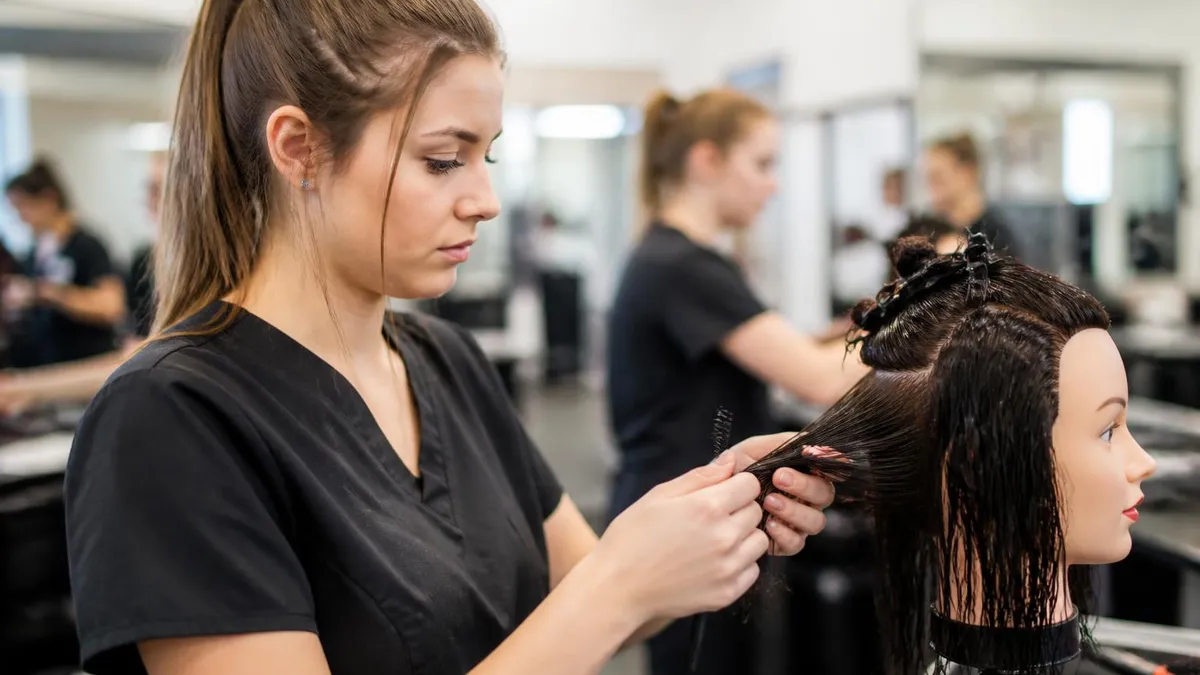
Top Cosmetology Career Tracks
~700K working pros. Cut, color, style. Tips push earnings well above base salary. Senior colorists in metros earn $70K+.
~200K pros. Manicures, pedicures, gel, acrylic, art. Average $30K but specialists in nail art hit $50K+.
~75K pros. Facials, peels, waxing, lash extensions. Spa employment averages $36K; med-spa pros earn $50K+.
~50K pros. Bridal, film, editorial. Freelance rates vary wildly — $50 to $5,000 per booking.
~40K pros. Men's cuts, beard work, straight-razor. Fastest-growing license category, up 15% since 2019.
Senior pros transition into teaching at cosmetology schools or open their own salons. Owner income varies, but profitable salons clear $80K-$200K.
The state-by-state variation in licensing is where students get caught off guard. There's no national cosmetology license in the United States. Each state board sets its own requirements, and crossing state lines often means applying for reciprocity, sometimes retraining, sometimes retesting. The minimum required hours range from 1,000 (Massachusetts, New York) to 2,100 (Oregon and a few others), with most states landing at 1,500. The NIC standardized theory and practical exams are accepted in 32 states, which makes them the closest thing to a national standard. The remaining states use their own boards.
California, New York, and Florida have the largest cosmetology workforces, driven by population and tourism. Texas comes fourth and is the fastest-growing market. Illinois, Pennsylvania, and Georgia round out the top tier. Renewal cycles vary too: most states require renewal every two years, but some (Arkansas, Louisiana) renew annually, and a handful (Alabama, Michigan) go three years between renewals. Continuing education hours are required in roughly half the states — see the cosmetology continuing education guide for specifics. Skipping CE in a state that requires it means your license lapses and you lose work eligibility until you catch up.
Licensing Snapshot by State Group
Massachusetts (1,000), New York (1,000), Florida (1,200). These states have the shortest paths to licensure. New York students often pair their training with practical apprenticeship work since 1,000 hours is barely enough to learn color theory, cutting, and chemistry. Reciprocity from these states into 1,500-hour states usually requires additional hours.
Online programs are now a recognized part of the training landscape, though no state allows you to earn a full license entirely online — the practical hours on actual heads (mannequins or live models) cannot be replicated by video. Hybrid programs combine online theory (history, sanitation, chemistry, business) with mandatory in-person practical hours. The cosmetology classes online overview lists which states accept hybrid hour reporting. Programs typically run 12-18 months full-time, or 18-30 months part-time. The cosmetology school duration guide compares actual class hours to calendar months at major chains.
Tuition is the other variable. Community college programs often run $5,000-$8,000 total. Brand-name private academies (Aveda, Paul Mitchell, Toni&Guy) charge $15,000-$25,000. Vidal Sassoon Academy advanced programs run $30,000+. Federal financial aid covers most accredited programs. Scholarships exist through state boards, brand sponsorships, and organizations like the American Association of Cosmetology Schools (AACS).
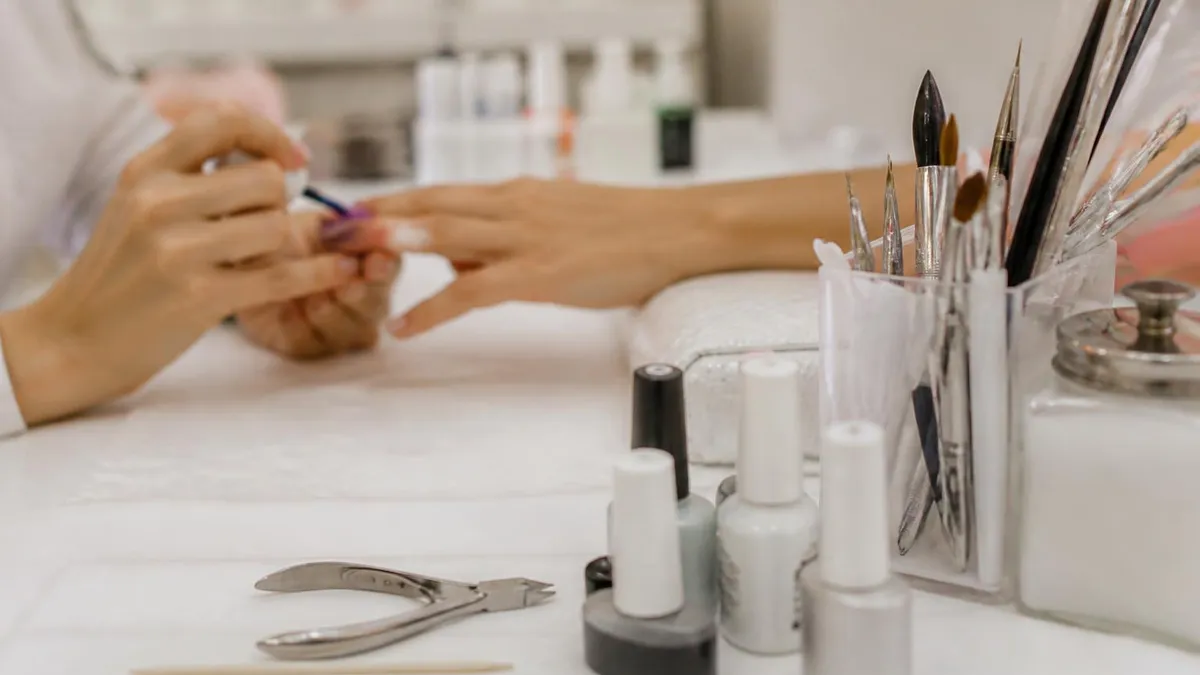
If you're aiming to actually pass the state board exam, knowing facts is only useful when you can recall them under timed pressure. The theory portion is multiple choice — typically 90 to 120 questions, 90 minutes, passing score around 75%. The practical portion runs three to four hours and covers sanitation setup, haircutting, chemical services (perms and color), and either nails or facials depending on state. Roughly 25% of first-time test takers fail at least one section. The most common failure point isn't technique — it's exam-taking pacing and skipping the sanitation prep steps that examiners actively watch for.
Common test categories worth deep review: sanitation and infection control (universal precautions, EPA-registered disinfectants, blood spill protocol), trichology (hair growth cycle, follicle anatomy), chemistry (pH scale for shampoo and color, oxidation reactions), electricity (galvanic vs faradic current for facial machines), and business law (booth rental vs commission, scope of practice limits). The history questions covered earlier in this article account for about 5-8% of the theory section.
Cosmetology Exam Prep Checklist
- ✓Memorize the hair growth cycle stages: anagen, catagen, telogen, exogen
- ✓Know the pH ranges for shampoo, conditioner, color, perm, and relaxer
- ✓Recognize bacterial vs viral vs fungal scalp conditions on sight
- ✓Practice the sanitation setup ritual until it's automatic
- ✓Identify common chemistry: ammonium thioglycolate, hydrogen peroxide, sodium hydroxide
- ✓Memorize blood spill protocol — examiners deliberately test this on practicals
- ✓Know your state's specific scope-of-practice rules for facials and waxing
- ✓Practice three core haircuts (one-length, layered, graduated) on mannequins until consistent
- ✓Drill color levels 1-10 and the underlying pigments at each level
- ✓Review electricity safety — GFCI outlets, machine grounding, modality contraindications
The future of cosmetology is shifting faster than most curricula admit. Sustainability is the single biggest commercial trend — eco-friendly product lines are growing about 20% per year, while conventional lines grow 3-4%. Aveda built its entire brand around plant-based sourcing and refillable packaging in the 1970s; today, every major brand is scrambling to launch a "green" sub-line. Salons that source low-tox color (low or zero ammonia, no PPD) charge a premium and attract younger, ingredient-conscious clients.
Technology is the second wave. AR/VR makeup apps let clients preview lipstick shades and eye looks before a single product touches their face. L'Oreal's ModiFace, Sephora's Virtual Artist, and YouCam Makeup are the dominant platforms. AI hair-color matching tools (Salon-Centric's color match scanner, Wella's IA scanner) photograph existing hair and recommend exact formula ratios in under a minute. Stylists who learn these tools early have a measurable edge. Some salons have started using AI booking systems that predict no-show probability and adjust deposit requirements per client.
Men's grooming is the third quiet revolution. The barbering license category grew 15% from 2019 to 2024, faster than any other beauty license. Beard care, men's color (camouflage gray), scalp micropigmentation, and traditional straight-razor service are all expanding rapidly. The line between barber and cosmetologist is blurring in many states — the board of barbering and cosmetology overview explains how California, Texas, and Florida consolidated their boards specifically because the scopes overlap so much.
Is a Cosmetology Career Right for You?
- +Steady demand — beauty services are recession-resistant and largely cash-positive
- +Creative outlet with daily problem-solving and visible results
- +Tip income often doubles base salary for skilled stylists
- +Path to ownership is real — many top earners run their own salons by year 5-10
- +Flexible schedules; booth rental lets you set your own hours
- +Mobility — license transfers exist in most states with one year experience
- −Physical demands are real — standing 8 hours, repetitive arm motion, chemical exposure
- −Income can be inconsistent in the first 1-2 years while building a client book
- −Self-employment taxes and lack of benefits if you booth rent
- −Chemical sensitivities can develop — about 15% of cosmetologists report contact dermatitis
- −Renewal CE requirements add ongoing time and tuition costs
- −Burnout is real — long days, demanding clients, weekend work
Pros and Cons at a Glance
| Pros | Cons |
|---|---|
| Steady demand — beauty services are recession-resistant and largely cash-positive | Self-employment taxes and lack of benefits if you booth rent |
| Creative outlet with daily problem-solving and visible results | Renewal CE requirements add ongoing time and tuition costs |
| Tip income often doubles base salary for skilled stylists | Burnout is real — long days, demanding clients, weekend work |
One last piece of context that doesn't fit neatly anywhere else: the keratin treatment revolution. The modern Brazilian keratin treatment, which smooths and straightens hair using formaldehyde or formaldehyde-releasing agents, was developed in 2003 in Brazil and exported globally within five years. By 2010, the FDA had flagged formaldehyde levels in popular brands as a safety concern.
Newer "formaldehyde-free" versions use glyoxylic acid or other smoothing chemistries with milder vapor profiles, though some research suggests the smoothing effect is shorter-lived. The treatment remains one of the highest-ticket services in a salon menu — typically $250 to $600 per session — and represents a meaningful share of senior stylist income.
The Japanese thermal reconditioning system, by contrast, was developed in the late 1990s and uses ammonium thioglycolate plus heat to permanently straighten hair. It's permanent in the sense that new growth comes in unstraightened and the old work doesn't reverse — meaning regrowth lines have to be touched up every six to nine months. Both treatments are tested on the chemistry portion of advanced state boards.
Color science is also evolving fast. Direct dyes (the kind that don't require developer) used to be limited to fashion colors — pink, blue, purple. Now demi-permanent and semi-permanent direct dye lines exist for natural tones, allowing stylists to add gloss and tone without lifting underlying pigment. This is gentler on the hair shaft and faster in the chair. Bond builders (Olaplex was first, K18 and Smartbond followed) chemically repair disulfide bonds during chemical services and have changed what's possible with bleach work — clients can now go from box dye black to platinum in fewer sessions with less damage.
One trivia gem that surprises most students: the modern blow dryer as we know it didn't exist for home use until the 1920s, and the handheld version most people picture was patented in 1925 by a French company. Hood dryers in salons came first, around 1920, and were the standard tool through the 1950s. The flat iron, by contrast, traces to Erica Feldman in 1872, who patented a heated metal tool intended for crimping. Modern ceramic and tourmaline plates didn't show up until the late 1990s, which is why your grandmother's hair stories include burnt smells and uneven results.
Word of caution about studying: textbooks often present these facts in dry list format. The exam doesn't. Questions weave history into scenarios — for example, "A client requests a Sassoon-style geometric bob. Which cutting principle drives the look?" Memorizing names without context is a trap. Pair every name with one contribution and one approximate date, and you'll handle the question regardless of how it's framed.
Sample Cosmetology Test Practice Questions
Try these questions from our free Cosmetology Test practice tests. The correct answer and an explanation follow each question.
A client has a history of scalp sensitivity. Which type of relaxer would be most appropriate?
- A. Sodium hydroxide (lye) relaxer
- B. Guanidine hydroxide (no-lye) relaxer
- C. Ammonium thioglycolate relaxer
- D. Calcium hydroxide relaxer without activator
Answer: B. Guanidine hydroxide (no-lye) relaxer
Guanidine hydroxide (no-lye) relaxers have a slightly lower pH than sodium hydroxide relaxers and are generally better tolerated by sensitive scalps.
What is the term for the number of individual hair strands per square inch on the scalp?
- A. Texture
- B. Porosity
- C. Density
- D. Elasticity
Answer: C. Density
Hair density refers to the number of hair strands per square inch and is classified as thin, medium, or thick.
The graduation haircut is characterized by:
- A. All hair cut to the same length
- B. Hair stacked with weight built at the perimeter
- C. Layers that create maximum volume throughout
- D. Disconnected sections with no blending
Answer: B. Hair stacked with weight built at the perimeter
A graduated cut stacks hair so length increases gradually, building weight and a 'wedge' shape at the perimeter.
Lymphatic drainage massage during a facial is intended to:
- A. Stimulate sebum secretion from glands
- B. Reduce puffiness by encouraging lymph fluid movement away from tissues
- C. Exfoliate the surface layer of the skin
- D. Increase melanin production for a more even tone
Answer: B. Reduce puffiness by encouraging lymph fluid movement away from tissues
Gentle lymphatic drainage techniques use light, directional strokes to facilitate the removal of excess interstitial fluid and metabolic waste through the lymphatic system.
Cosmetology Test Questions and Answers
About the Author
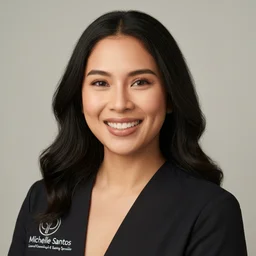
Licensed Cosmetologist & Beauty Licensing Exam Specialist
Paul Mitchell SchoolsMichelle Santos is a licensed cosmetologist with a Bachelor of Science in Esthetics and Salon Management from Paul Mitchell School. She has 16 years of salon industry experience and 8 years preparing students for state cosmetology board exams in theory, practical skills, and sanitation. She specializes in licensure preparation for cosmetologists, estheticians, and nail technicians.
Join the Discussion
Connect with other students preparing for this exam. Share tips, ask questions, and get advice from people who have been there.
View discussion (6 replies)