
Cosmetology School Locations: Find Beauty Schools by City and State
📝 Find cosmetology schools near you — Somerset KY, Tucson AZ, Tennessee, Virginia, and more. Compare programs, costs, and licensing requirements by city.
Finding a Cosmetology School in Your City
Looking for a cosmetology school close to home? You're not alone. Every year, tens of thousands of students across the US search for accredited beauty programs in their specific city or region — and the options vary more than you'd think. A school in Somerset, KY will look very different from one in Stockton, CA or Wethersfield, CT. Tuition, program length, state board pass rates, and job placement all differ by location.
This guide covers the cities and regions we get the most questions about. Whether you're in Tennessee, Virginia, the Texas Hill Country, or the Pacific Northwest, we've pulled together what you need to know before you apply. We'll cover typical program structures, what accreditation looks like in each state, and the questions you should ask every school you visit.
Want to know how long is cosmetology school in your state? Or curious about how much is cosmetology school where you live? We've got full guides on both. This article focuses specifically on location-by-location breakdowns so you can zero in on what's available near you.
One thing worth knowing upfront: the cosmetology school landscape in the US is fragmented. Unlike four-year colleges, beauty schools aren't clustered in college towns — they're spread across suburbs, strip malls, and community college campuses in cities of every size. That's actually good news if you're trying to stay local. There's likely something within a reasonable commute wherever you are. The challenge is figuring out which option is worth your time and money. That's what this guide is for.
One practical tip before you dive in: use your state's cosmetology licensing board website as your starting point, not Google Maps. The board's school directory is updated when schools lose their licenses or close — Google listings lag months behind. You don't want to show up for a tour at a school that closed its doors last spring. Start official, then cross-reference with school websites and visit in person before committing.
Cosmetology School Fast Facts by State
How to Evaluate Local Cosmetology Schools
Before diving into specific cities, it's worth understanding what separates a solid cosmetology program from a mediocre one — regardless of where it's located. The fundamentals don't change whether you're looking at cosmetology schools near me in a major metro or a smaller community college offering in rural Tennessee.
Accreditation is non-negotiable
Two bodies accredit most US cosmetology schools: NACCAS (National Accrediting Commission of Career Arts and Sciences) and COE (Council on Occupational Education). You want one of these. Why? Federal financial aid — including Pell Grants and student loans — is only available at accredited schools. If a school can't tell you its accreditor, walk away.
State licensing hours matter
Every state sets its own required training hours for licensure. Most fall between 1,000 and 1,600 hours. Tennessee requires 1,500. California requires 1,000 (one of the lowest). Virginia sits at 1,500. Texas is 1,000. This matters because it affects how long your program will take and, often, how much it costs. A school advertising a '9-month program' in California might take 14 months for the same curriculum in Tennessee — just because of state hour requirements.
Check the state board pass rate
Schools are required to disclose their state board exam pass rates. Aim for 75% or above. Some schools in competitive markets have pass rates above 90%. This number tells you whether the school's curriculum is actually preparing students for licensure, not just taking their tuition money.
You can also look up cosmetology schools by city using state licensing board directories — most states publish active school lists online. Cross-reference that with any school you're considering to confirm it's still in good standing.
Financial aid and cost transparency
Total program cost at accredited schools typically runs $6,000–$20,000 for a full cosmetology license program. Community colleges often come in at the lower end. Private beauty schools vary widely. Always ask for the total cost upfront — kits, supplies, licensing fees, and exam registration included. Surprises at the end are common at less transparent programs.
Cosmetology School Locations Covered in This Guide
Pulaski County's main city in south-central Kentucky. Limited local options — most students commute to Lexington or London, KY. State requirement: 1,500 hours.
Three major Springfields, three different states. Illinois has multiple accredited options. Massachusetts and Missouri each have at least one active program near the city center.
Florida's oldest city. Several accredited schools serve the St. Johns County / Jacksonville corridor. Florida requires 1,200 hours for licensure.
San Joaquin Valley hub with multiple options including community college programs. California's 1,000-hour requirement makes programs shorter and often less expensive than most states.
Strong regional school network across Nashville, Memphis, Knoxville, and Chattanooga. Tennessee requires 1,500 hours and has a well-established licensing framework.
Affluent Houston suburb with several private beauty academies. Texas requires 1,000 hours. Houston-area schools tend to be well-funded with strong job placement networks.
Northern Michigan's largest city. Smaller market — NMC (Northwestern Michigan College) and private academies serve the region. Michigan requires 1,500 hours.
Arizona's second-largest city with several accredited cosmetology programs. Arizona requires 1,600 hours — one of the higher state requirements. Strong financial aid availability at accredited schools.
Southern US Cosmetology School Locations
Cosmetology School in Somerset, KY
Somerset is the seat of Pulaski County — a small city in south-central Kentucky with a tight-knit community and growing healthcare and service sectors. If you're hunting for a cosmetology school in Somerset KY specifically, your in-town options are limited. The city doesn't have a large standalone beauty academy. What you'll typically find are programs through Lake Cumberland area vocational schools and career tech centers, which may offer cosmetology tracks at a reduced cost compared to private schools.
Most Somerset-area students who want a full accredited program end up commuting roughly 40 minutes north to the Lexington metro or about 30 minutes to the London, KY area. Kentucky's licensing requirement is 1,500 hours, so expect programs to run 12–18 months full-time. Costs generally range from $7,000–$14,000 depending on the school and whether you qualify for Pell Grants.
If you want to stay local, check with the Pulaski County Board of Education's career and technical education programs — they sometimes run cosmetology tracks at the high school level that are open to adult learners.
Cosmetology Schools in Tennessee
Tennessee is one of the stronger states for cosmetology education, mostly because the 1,500-hour requirement means schools have more time to build real competency. Nashville, Knoxville, Memphis, and Chattanooga each have multiple accredited options. In smaller cities and suburbs, community cosmetology schools and franchise academies like Paul Mitchell Partner Schools fill the gaps.
Tennessee's state board (Tennessee Board of Cosmetology and Barber Examiners) publishes a current list of licensed schools — always cross-check before enrolling. Pass rates at Tennessee schools vary, but the top performers consistently run above 80%. Job placement is strong in Nashville and its suburbs, where the salon and spa market has grown alongside the broader population boom in Middle Tennessee.
Cosmetology School in Wichita Falls, TX
Wichita Falls sits in north-central Texas near the Oklahoma border. The city has a modest but functional cosmetology training ecosystem. Vocational cosmetology programs are available through Vernon College's Wichita Falls campus, which offers a more affordable path than private academies. Texas requires only 1,000 training hours, so students can complete a full program in roughly 10–12 months full-time.
Private beauty schools in the area offer more hands-on training environments and tighter class sizes. Costs in Wichita Falls tend to be lower than in Dallas or Houston — expect $6,000–$12,000 for most programs. Look for schools that offer evening or weekend schedules if you're working while training.
Cosmetology School in The Woodlands, TX
The Woodlands is one of Houston's most affluent master-planned communities, and the cosmetology school landscape reflects that. Several private academies operate in and around the area, targeting students who want a polished, well-resourced training environment. Texas's 1,000-hour requirement keeps program timelines short. You can realistically complete a full cosmetology license program in under a year if you're attending full-time.
The Houston metro job market is one of the best in the South for newly licensed cosmetologists — high population density, strong demand for salon services, and a culture that values personal care mean new grads here tend to find placement faster than in smaller markets. Look for programs that have formal salon externship arrangements with established Woodlands-area salons. That network matters more than the diploma when you're job hunting.
Western Cosmetology School Locations
Cosmetology School in Stockton, CA
Stockton is one of the Central Valley's largest cities and has a solid cosmetology school ecosystem to match. California's 1,000-hour requirement is one of the lowest in the country, which keeps programs shorter and, in theory, less expensive. San Joaquin Delta College in Stockton offers a cosmetology program at community college rates — often under $5,000 total — making it one of the most affordable paths to licensure in the state. Private academies in the area run higher, typically $10,000–$18,000.
California's state board (Bureau of Barbering and Cosmetology) maintains a searchable license lookup. Always verify a school's current status before enrolling — California has had issues with schools closing abruptly and leaving students in limbo.
Cosmetology School in Tucson, AZ
Arizona requires 1,600 training hours — more than most states — which means Tucson programs tend to run 14–18 months full-time. The upside is that Arizona graduates often come out of school with more hands-on experience than peers in lower-hour states. Pima Community College offers a cosmetology program that's among the more affordable options in the city. Several private academies operate near the UA campus and on the south side of town.
Tucson's salon market is smaller than Phoenix's, but the city's younger demographics and university population create consistent demand for cosmetology services. State board pass rates at Tucson's top schools hover around 80–85%.
Cosmetology School in Ventura, CA
Ventura County, just north of Los Angeles, has several accredited beauty schools serving the Ventura, Oxnard, and Camarillo corridor. California's 1,000-hour rule applies here too. Ventura programs tend to be private academies — think Marinello, COBA Academy, and similar chains — with tuition in the $10,000–$16,000 range. Proximity to the LA market is a real advantage for job placement once you're licensed.
Cosmetology School in Traverse City, MI
Traverse City is small by Midwest standards, but it punches above its weight in terms of tourism, hospitality, and personal care services. Northwestern Michigan College (NMC) is the primary educational institution in the area and has offered cosmetology training — though program availability can change, so confirm current offerings directly. Michigan requires 1,500 hours. Private cosmetology schools in TC are small operations; expect close-knit classes and more personalized instruction than you'd get at a large urban academy.
Northeast & Mid-Atlantic Cosmetology School Locations
Cosmetology Schools in Springfield
There are three major cities named Springfield worth knowing about. Springfield, IL has the Capital Area Career Center and several private academies. Springfield, MA — in the Pioneer Valley — is served by schools in the greater Western Mass corridor. Springfield, MO has a few options including programs at Ozarks Technical Community College. Missouri requires 1,500 hours; Illinois and Massachusetts have their own requirements (1,500 and 1,000 respectively). Whichever Springfield you're in, check the state board's school directory first.
Cosmetology School in St. Augustine, FL
St. Augustine is a tourism-heavy market in northeast Florida, which means consistent demand for salon and spa services. Florida's 1,200-hour requirement is moderate. St. Johns County is close enough to Jacksonville that many students choose schools in the Jacksonville metro and commute. Locally, look for programs affiliated with Florida's public career and technical education system — they tend to offer competitive pricing and strong community connections.
Cosmetology School in Wethersfield, CT
Wethersfield is a suburb of Hartford in Connecticut's Capital Region. Connecticut requires 1,500 hours for a cosmetology license. The Hartford area has a handful of accredited schools — both private academies and programs through public adult education centers. Connecticut's cost of living is high, and cosmetology school tuition reflects that: expect $12,000–$20,000 at most private programs. Connecticut Technical High School System also offers cosmetology tracks that may be accessible to adult learners in some districts.
Cosmetology School in Woodburn, OR
Woodburn is a small city in Oregon's Willamette Valley, about 30 miles south of Portland. Oregon requires 1,550 hours for licensure — slightly above the national median — which means programs take roughly 13–16 months full-time. Woodburn itself is a tight market. Most students looking for a cosmetology school near Woodburn end up at programs in Salem (15 miles south) or Portland. Chemeketa Community College in Salem offers one of the most affordable paths to an Oregon cosmetology license. Private schools in Salem and the Portland metro are plentiful, with tuition typically ranging $10,000–$17,000.
Oregon's multicultural population and growing wellness economy make it a solid job market for newly licensed cosmetologists — especially if you have bilingual skills. Woodburn's large Spanish-speaking community means bilingual stylists are in high demand at local salons.
Cosmetology School in Virginia (West Falls Church & Northern VA)
Northern Virginia has one of the most competitive cosmetology school markets on the East Coast, driven by the DC metro's population density and high per-capita income. West Falls Church specifically is served by schools in the Arlington/Falls Church corridor and further into Fairfax County. Virginia requires 1,500 hours. NOVA (Northern Virginia Community College) offers cosmetology-adjacent programs. Private academies in the area — including Aveda Institute locations and several independent schools — run $12,000–$20,000 for a full program.
The NoVA market is particularly strong for cosmetologists who want to specialize — whether in color correction, bridal styling, or medical aesthetics. Job placement rates at Northern Virginia schools tend to be high, largely because the region's disposable income supports premium salon pricing and steady client demand. Look for cosmetology school programs and costs that include externship or clinic hours at working salons — those connections are especially valuable in the DC metro.
One thing to know about VA cosmetology licensing: the Virginia Board for Barbers and Cosmetology requires a practical exam in addition to the written Cosmetology State Board exam. Make sure any school you're evaluating has a strong track record on both components. Some smaller schools in the region have solid written pass rates but lag on practical — ask specifically about each.
Typical Cosmetology School Costs by Program Type
What to Look For When Choosing a Local Cosmetology School
- ✓NACCAS or COE accreditation — required for federal financial aid eligibility
- ✓State board exam pass rate of 75% or higher — ask for the most recent year's data
- ✓Total cost transparency — get the full number including kits, supplies, and exam fees
- ✓Program length matches your state's hour requirement (1,000–1,600 hrs depending on state)
- ✓Financial aid office — Pell Grants and subsidized loans can offset a large share of tuition
- ✓Clinic hours and real-client experience — hands-on time is what builds license-ready skills
- ✓Job placement assistance — does the school have salon partnerships or a placement program?
- ✓Schedule flexibility — evening/weekend options if you're working while training
- ✓School's licensing status is current — verify with your state's cosmetology board
- ✓Class size and student-to-instructor ratio — smaller classes typically mean more attention
Cosmetology Pros and Cons
- +Cosmetology has a publicly available content blueprint — you know exactly what to prepare for
- +Multiple preparation pathways accommodate different schedules and budgets
- +Clear score reporting shows specific strengths and weaknesses
- +Study communities share current insights from recent test-takers
- +Retake policies allow recovery from a difficult first attempt
- −Tested content scope requires substantial preparation time
- −No single resource covers everything optimally
- −Exam-day performance can differ from practice test performance
- −Registration, prep, and retake costs accumulate significantly
- −Content changes between versions can make older materials less reliable
Cosmetology Questions and Answers
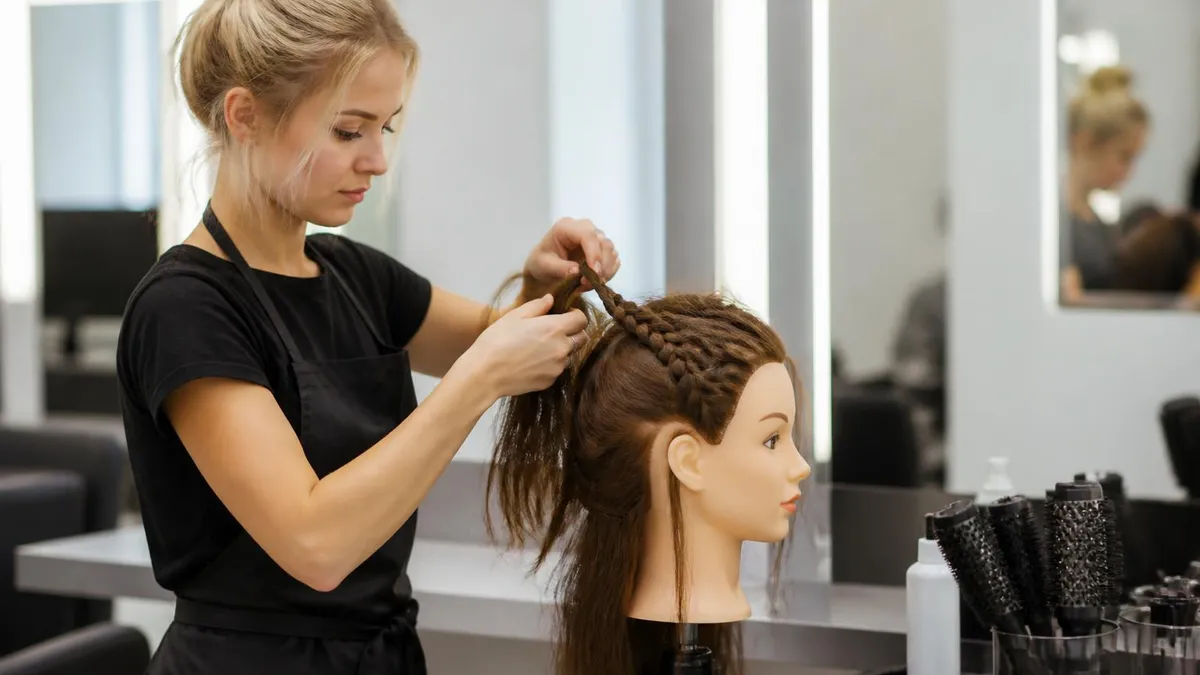
How Long Is Cosmetology School? Hours by State and Schedule
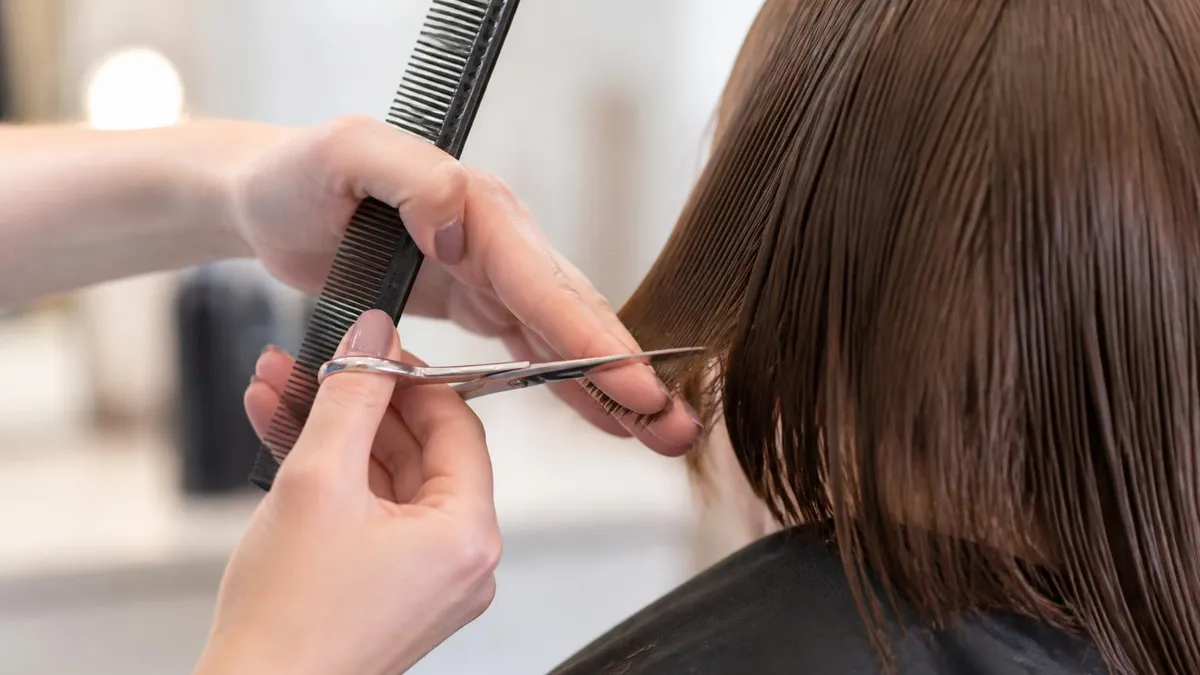
Cosmetology School Cost: Tuition, Fees, and Financial Aid 2026

Cosmetology Schools Near Me: How to Find, Compare, and Choose the Right Program in 2026
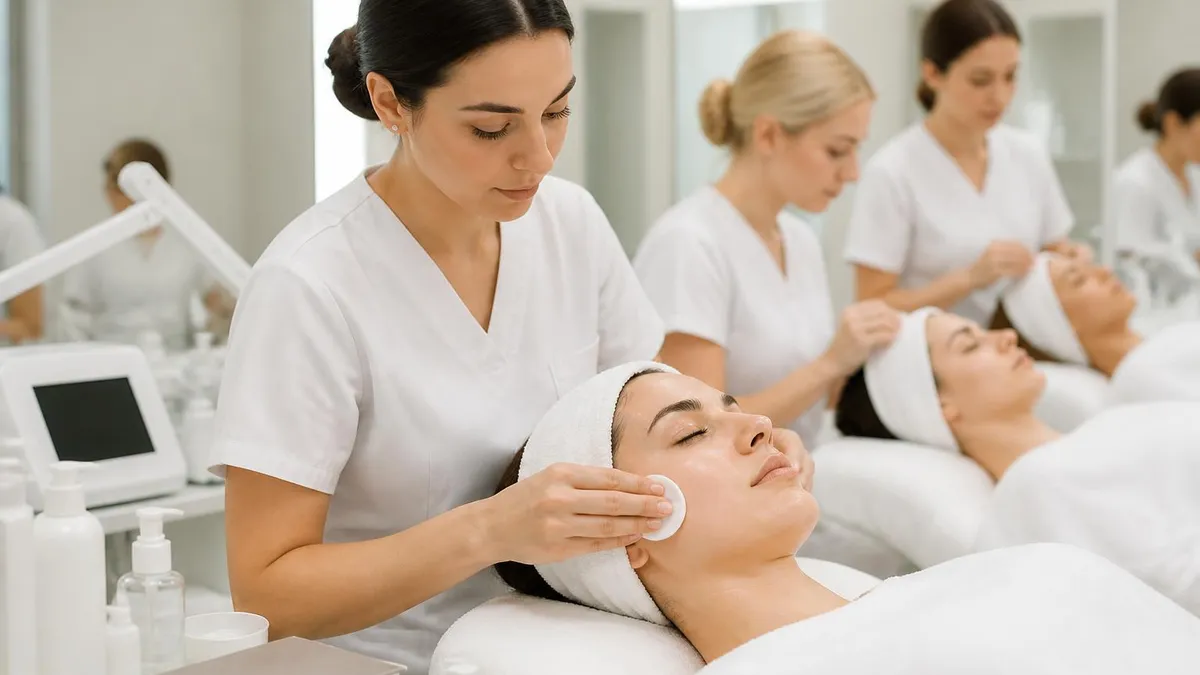
Cosmetology Schools Albuquerque: Complete 2026 Guide to Programs, Costs, Licensing, and Career Outcomes by City
About the Author
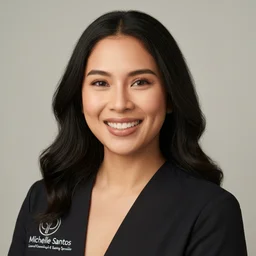
Licensed Cosmetologist & Beauty Licensing Exam Specialist
Paul Mitchell SchoolsMichelle Santos is a licensed cosmetologist with a Bachelor of Science in Esthetics and Salon Management from Paul Mitchell School. She has 16 years of salon industry experience and 8 years preparing students for state cosmetology board exams in theory, practical skills, and sanitation. She specializes in licensure preparation for cosmetologists, estheticians, and nail technicians.
Join the Discussion
Connect with other students preparing for this exam. Share tips, ask questions, and get advice from people who have been there.
View discussion (6 replies)