
California CDL Test Questions and Answers: Free Study Guide 2026 September
Get ready for your California CDL certification. 🏆 Practice questions with step-by-step answer explanations and instant scoring.
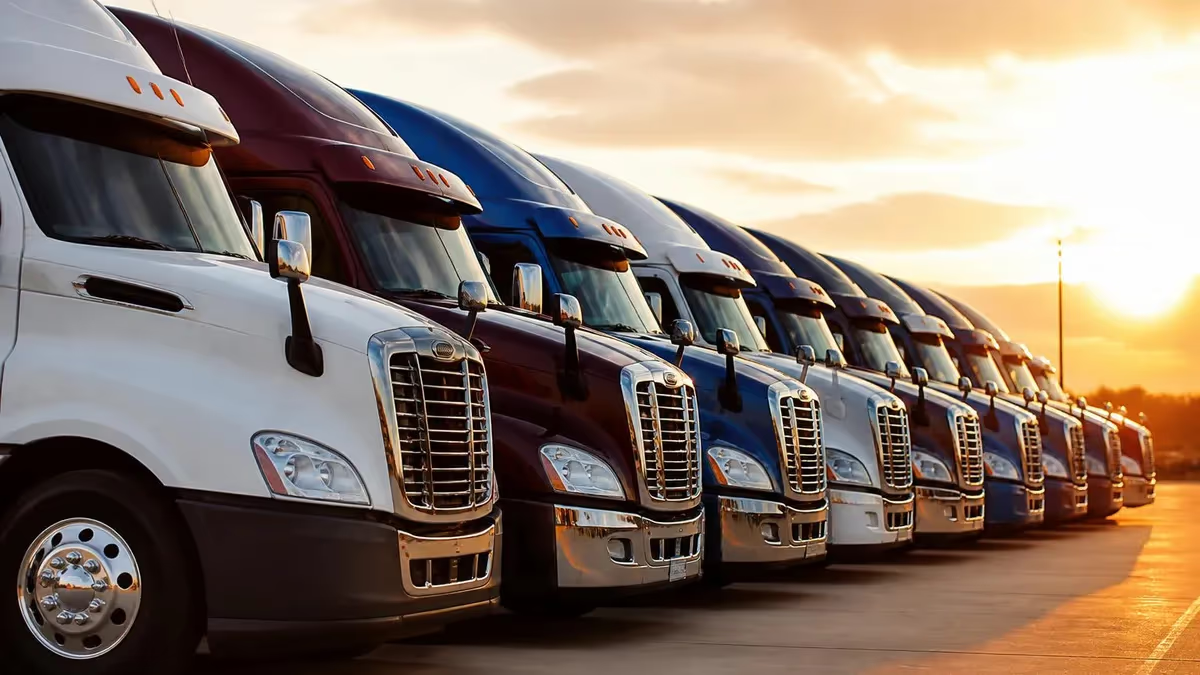
California CDL Test Questions and Answers
What You're Actually Getting Into
California's CDL knowledge test isn't the same as passing a regular driver's license exam — and a lot of people walk into the DMV thinking they can wing it. You can't. The California DMV administers separate written tests for each class and endorsement, and you need to pass every one that applies to your license type before you ever sit behind the wheel for the skills test.
Here's the thing: California has some of the strictest commercial vehicle regulations in the country. The state adopted its own emission standards, has unique weight limits on certain highways, and enforces lane restrictions that don't exist in Texas or Florida. The questions on the California CDL test reflect that — you'll see CA-specific regulations baked into the general knowledge section, not just federal FMCSA rules.
The test itself is computer-based at most DMV offices. You get 50 questions for general knowledge, and you need to answer 40 correctly. That's an 80% pass mark. Miss more than 10 and you're done — come back another day. For endorsements like HazMat or tankers, the threshold is the same: 80% across fewer questions, usually 30.
One thing California does differently from most states: the California Commercial Driver Handbook includes state-specific supplements that aren't in the federal FMCSA manual. That means if you're studying from a generic study guide written for a different state, you're leaving questions unanswered. Always use the official California DMV publication, not a generic CDL book from another state. This matters more than most applicants realize — the state-specific questions are real points on the test.
Use these cdl permit practice test to understand the full test structure before you start studying. Knowing what's on each section saves you from studying the wrong material.
California CDL Classes: A, B, and C Explained
Not every CDL is the same, and California's three classes cover very different vehicles. You need to know which class you're applying for before you study — each one has a distinct written test scope.
Class A CDL is the big one. It covers combination vehicles with a gross vehicle weight rating (GVWR) over 26,001 pounds, where the towed unit is heavier than 10,000 pounds. That's semi-trucks, tractor-trailers, tanker combinations, livestock carriers. If you want to drive an 18-wheeler across California, Class A is what you need. The written test covers combination vehicles in addition to general knowledge.
The CDL certification guide breaks down which endorsements stack on top of which class — worth reading before you schedule your DMV appointment.
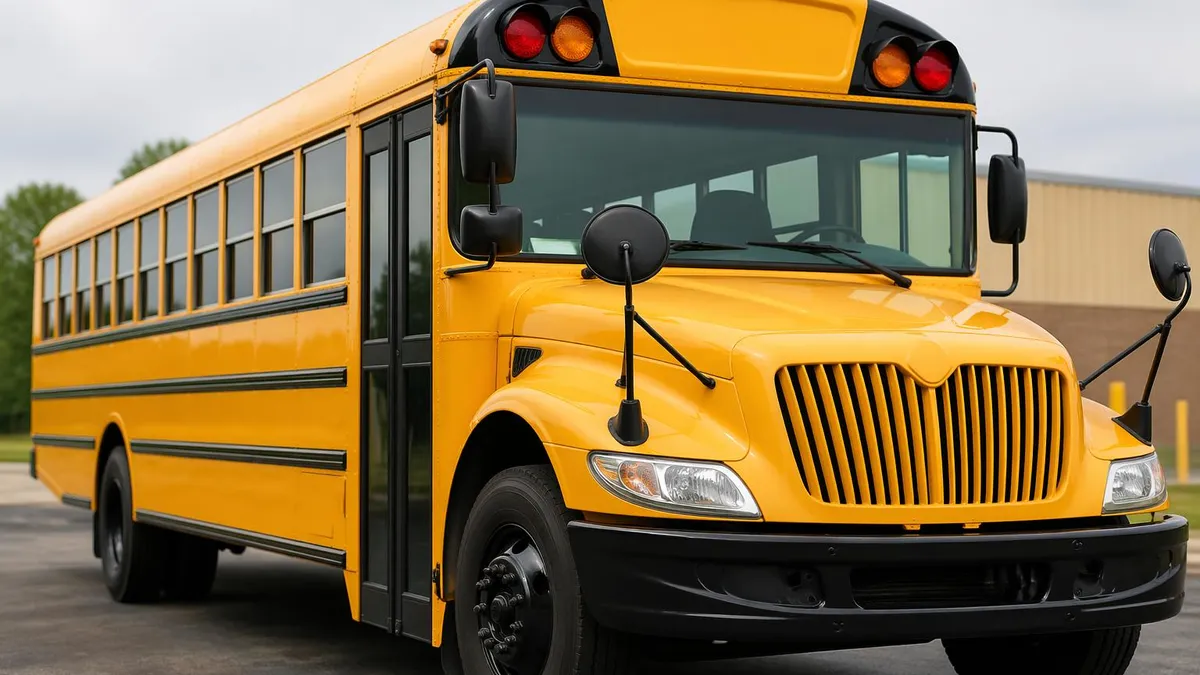
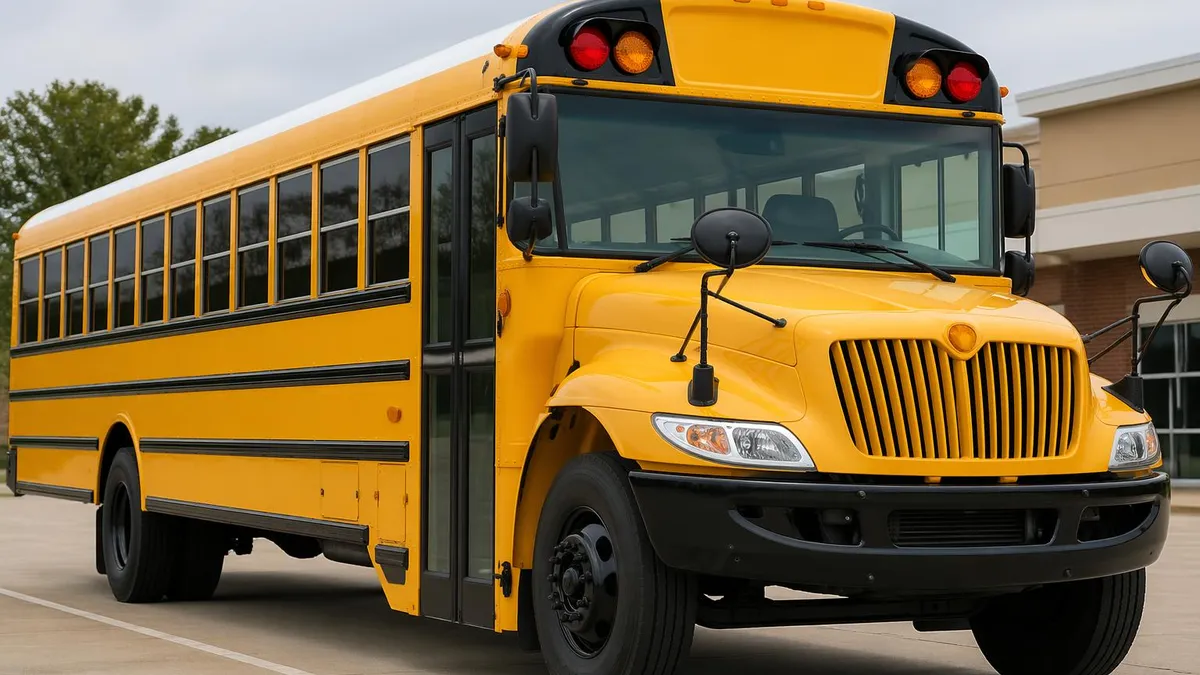
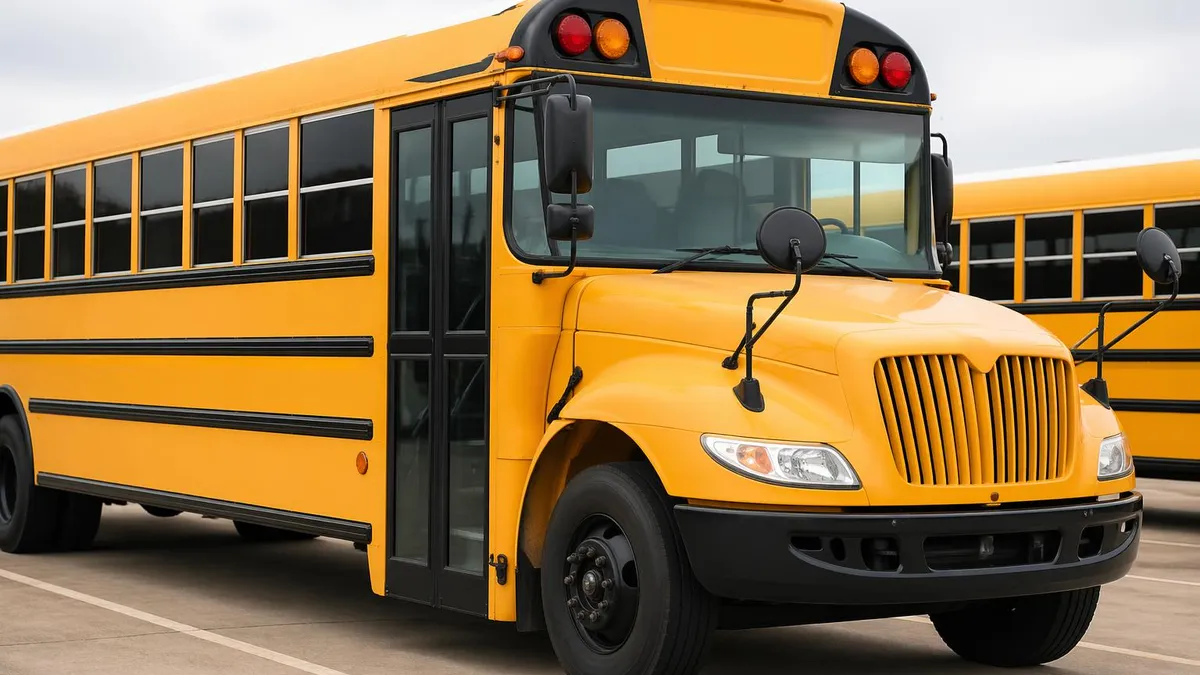
Class B CDL covers single vehicles over 26,001 pounds GVWR, or those towing something under 10,000 pounds. Think city buses, dump trucks, straight trucks, large passenger vans. A lot of municipal jobs — garbage collection, school buses, urban delivery — are Class B positions. California has significant demand for Class B holders in the Bay Area and LA metro.
Class C CDL is for smaller vehicles that carry 16 or more passengers (including the driver) or transport hazardous materials in specific quantities. Minibus operators, some paratransit drivers, and HazMat couriers often work under Class C. You won't need air brakes knowledge for a standard Class C unless your vehicle actually has them.
One important nuance: a Class A license allows you to drive Class B and C vehicles. A Class B allows Class C. But you can't go the other direction — a Class C holder cannot operate Class A vehicles. If you're unsure which class fits your target job, ask the employer first. Showing up for a Class B test when the job requires Class A means you're starting over.
California also recognizes non-CDL Class C vehicles for certain personal uses. Don't confuse the non-commercial Class C on your regular license with a Commercial Class C CDL — they're completely different designations. The commercial CDL Class C specifically covers commercial transportation involving passengers or hazardous materials, and requires the full knowledge test and skills test process.
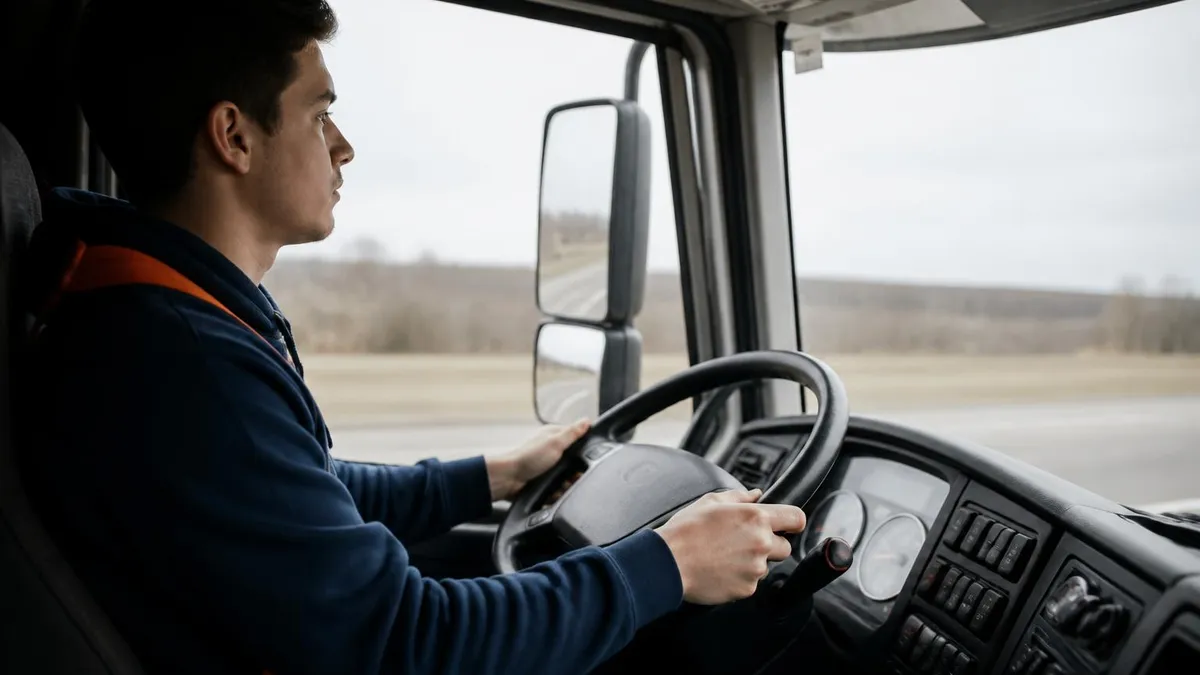
CDL Class Comparison: What Each License Covers
Vehicle type: Combination vehicles, tractor-trailers, semis
GVWR requirement: 26,001+ lbs combination, towed unit over 10,000 lbs
Common jobs: Long-haul trucker, tanker driver, flatbed operator, livestock hauler
Written tests required: General Knowledge + Combination Vehicles (+ any endorsements)
Skills test: Pre-trip, basic controls, road test in a combination vehicle
How to Get Your California CDL: Step by Step
California CDL applications go through the DMV — not a third party, not your employer. You start with a Commercial Learner's Permit (CLP) and work toward the full CDL after completing the required skills tests. Here's exactly how the process works.
First, you need to meet eligibility. You must be at least 18 for intrastate (within California only) or 21 for interstate driving. You need a valid California non-commercial driver's license. Your driving record matters — certain violations in the past three to ten years can disqualify you, including DUI convictions, leaving the scene of an accident, or using a vehicle to commit a felony.
Go to a DMV field office with your medical certificate (DOT physical from a certified medical examiner on the FMCSA National Registry), your current license, and $35 for the permit application fee. You'll also need to pass a vision test at the DMV that day. Don't skip the medical certificate step — the DMV won't even start your application without it.
Then you take the written knowledge tests. If you're applying for Class A, you'll test on General Knowledge and Combination Vehicles. Add Air Brakes if your target vehicle has them. Pass all of them — same day or separate visits — and the DMV issues your Commercial Learner's Permit. The CLP is valid for 180 days. You need to hold it for at least 14 days before your skills test.
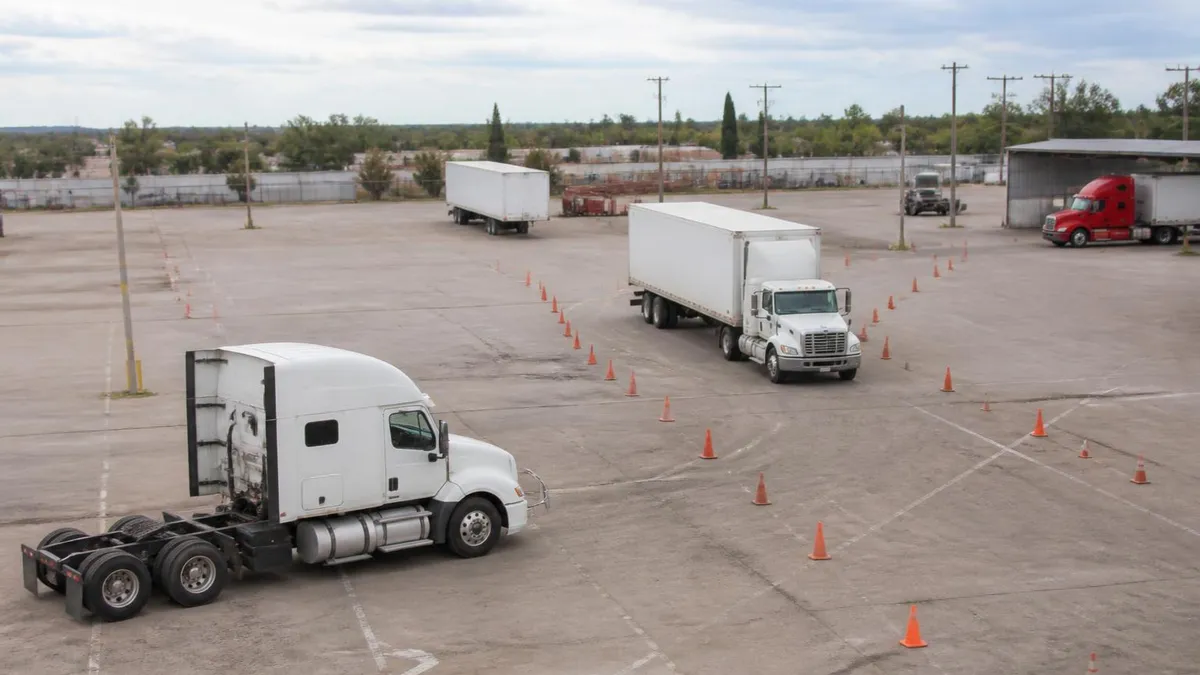
After 14 days, schedule your skills test. Three parts: a pre-trip vehicle inspection, a basic vehicle control test (backing, straight-line), and an on-road driving test. You must supply your own vehicle — or use one from a CDL training school. Pass all three and you've got your CDL.
Fair warning on scheduling: California DMV offices for CDL skills tests book out fast — especially in Los Angeles, the Bay Area, and the Central Valley. Don't wait until after your CLP arrives to start looking for an appointment. Check availability as soon as you pass your written tests. Some applicants wait 3–6 weeks for a skills test slot. Plan your 180-day CLP window around that reality.
If you're using a CDL training school's vehicle, confirm ahead of time that the vehicle type matches your target license class. Taking the Class A skills test in a Class B straight truck doesn't earn you a Class A license — the test vehicle must match the class you're applying for. That's a common and expensive mistake that forces applicants to start the skills test process over.
CDL Study Tips
What's the best study strategy for CDL?
Focus on weak areas first. Use practice tests to identify gaps, then study those topics intensively.
How far in advance should I start studying?
Most successful candidates begin 4-8 weeks before the exam. Create a structured study schedule.
Should I retake practice tests?
Yes! Take each practice test 2-3 times. Focus on understanding why answers are correct, not memorizing.
What should I do on exam day?
Arrive 30 min early, bring required ID, read questions carefully, flag difficult ones, and review before submitting.
California-Specific CDL Regulations You'll Be Tested On
This is where California diverges from what you'd study in a generic CDL manual. California has its own emission regulations, weight restrictions, and inspection requirements that appear on the knowledge test. Federal rules are the floor — California often goes further.
The California Air Resources Board (CARB) regulations affect what trucks can operate in the state. Since 2020, most diesel trucks must meet stricter emission standards than federal minimums. Drayage trucks — those operating in ports and railyards — face even tighter rules. The CDL test won't ask you to recite CARB regulations verbatim, but understanding that California has unique vehicle standards is fair game.
Weight limits on California highways are enforced aggressively. The federal gross vehicle weight limit is 80,000 pounds, and California matches that on most routes. But some local roads and bridges have lower posted limits, and you're responsible for knowing the posted limits on your route. Overweight citations in California are steep — and they come with mandatory scale stops that delay your load.
California enforces lane restrictions for commercial vehicles on freeways in urban areas. In most metro areas, trucks over a certain weight are restricted to the right two lanes. Signage varies, and ignorance isn't a defense on a citation. The test may include questions about proper lane use for commercial vehicles.
California also has its own agricultural inspection stations — the border protection stations you see on highways entering the state, but also internal checkpoints on key routes. Commercial drivers aren't usually stopped at these, but knowledge of California's agricultural quarantine system may appear in context on the exam. More relevant: California's CHP commercial vehicle enforcement is among the most active in the country. Officers can conduct roadside inspections and place vehicles out of service on the spot. Knowing what puts a vehicle out of service — and what doesn't — is exactly what the written test covers.
The CDL practice tests on this site cover both federal and CA-specific material — use them to check where your gaps are before test day. And if you're adding endorsements, the hazmat endorsement page covers the California-specific HazMat transport rules you need.
CDL General Knowledge: Top Topics Covered in California
The General Knowledge test is the core of the CDL exam — every applicant takes it, regardless of class. It covers 11 major topic areas drawn from the California Commercial Driver Handbook. Here's what gets the most weight on the exam.
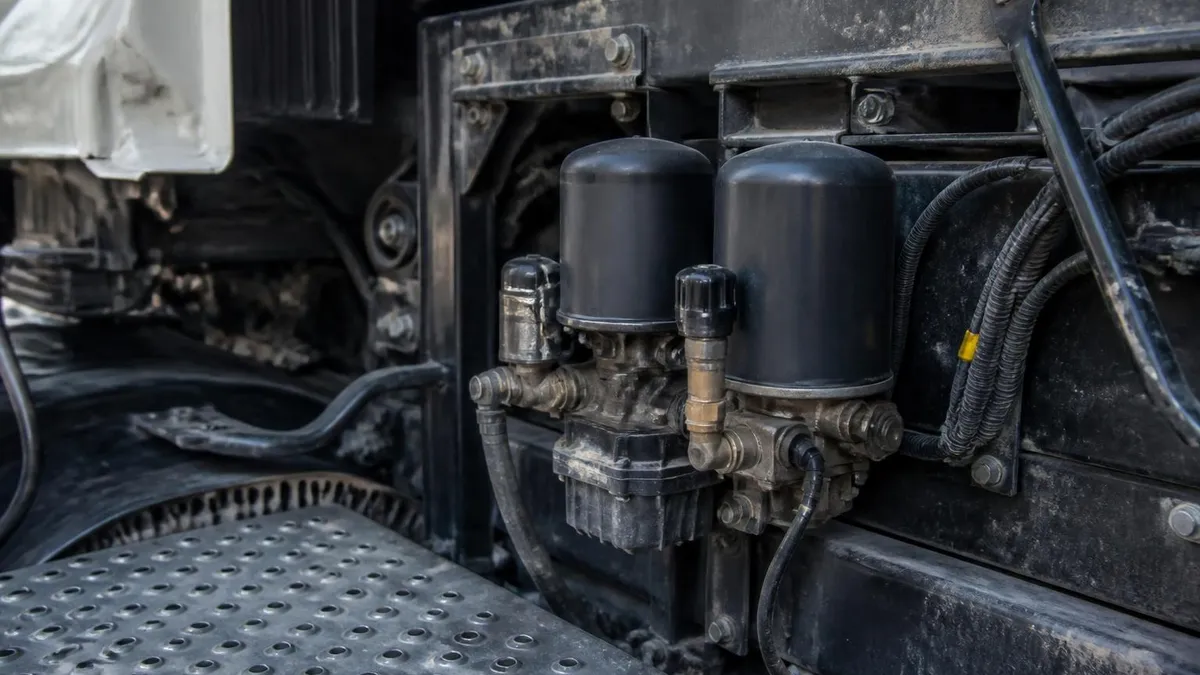
Vehicle inspections — pre-trip, en-route, and post-trip — make up a significant chunk of the test. You need to know which systems to check (lights, brakes, tires, coupling devices, mirrors, fuel), what defects are reportable, and when a vehicle is out of service. The inspection section isn't just memorization — the test asks situational questions about what you'd do when you find a specific defect.
Shifting and backing questions cover double-clutching, proper gear selection on grades, and the techniques used for alley-dock and parallel backing. California instructors emphasize that backing with mirrors alone — no assistant — is often required on the skills test too, so knowing the concepts before you're behind the wheel matters.
Cargo securement rules are federal (FMCSA Part 393) but California enforces them vigorously, especially on flatbeds. Minimum tie-down requirements, working load limits, edge protection, front-end structure — these come up on the written test and the pre-trip skills test.
Hazardous conditions and emergency procedures get their own chapter in the California handbook. This section covers skid recovery, brake failure on downgrades, tire blowouts, and vehicle fires. California's mountain passes — the Grapevine, Tehachapi, Donner — are the backdrop for many of these questions. The test may give you a scenario and ask what you'd do first. Know the correct sequence before you sit down.
Speed limits and following distance deserve focused study too. California has specific rules for commercial vehicles on grades, in tunnels, and in construction zones. The test will give you scenarios with specific vehicle lengths and speeds, and ask you to calculate following distance or identify the correct speed limit. These aren't trick questions — they're formula questions. Get the formulas memorized.
The cdl practice test has a detailed breakdown of all 11 topic areas with study tips for each. Don't skip the less obvious ones like emergency procedures and mountain driving — they show up more than people expect.
California CDL Test Day Checklist
- ✓DOT Medical Examiner's Certificate (original or certified copy)
- ✓Current California non-commercial driver's license
- ✓$35 CDL permit application fee (cash or card)
- ✓Social Security number (DMV verifies it on file)
- ✓Proof of state residency if not already on your license
- ✓Studied the California Commercial Driver Handbook cover to cover
- ✓Completed at least 3 full-length general knowledge practice tests
- ✓Reviewed Combination Vehicles section if applying for Class A
- ✓Studied air brakes material if your target vehicle has them
- ✓Booked appointment at a DMV that processes CDL applications
CDL Practice Test Questions
Prepare for the CDL - Commercial Driver's License exam with our free practice test modules. Each quiz covers key topics to help you pass on your first try.
CDL Alabama CDL Combination Vehicles Pract...
CDL Exam Questions covering Alabama CDL Combination Vehicles Practice Test. Master CDL Test concepts for certification prep.
CDL Alabama CDL General Knowledge Practice...
Free CDL Practice Test featuring Alabama CDL General Knowledge Practice Test #. Improve your CDL Exam score with mock test prep.
CDL Alabama General Knowledge CDL Practice...
CDL Mock Exam on Alabama General Knowledge CDL Practice Test. CDL Study Guide questions to pass on your first try.
CDL Airbrakes Practice Test
CDL Test Prep for Airbrakes Practice Test. Practice CDL Quiz questions and boost your score.
CDL Air Brakes Practice Test
CDL Questions and Answers on Air Brakes Practice Test. Free CDL practice for exam readiness.
CDL CLASS A COMMERCIAL DRIVER'S LICENSE PR...
CDL Mock Test covering CLASS A COMMERCIAL DRIVER'S LICENSE PRACTICE TEST. Online CDL Test practice with instant feedback.
CDL Class B Commercial Driver's License Pr...
Free CDL Quiz on Class B Commercial Driver's License Practice Test. CDL Exam prep questions with detailed explanations.
CDL Combination Vehicles Practice Test
CDL Practice Questions for Combination Vehicles Practice Test. Build confidence for your CDL certification exam.
CDL Doubles and Triples Practice Test
CDL Test Online for Doubles and Triples Practice Test. Free practice with instant results and feedback.
CDL Doubles Triples Practice Test
CDL Study Material on Doubles Triples Practice Test. Prepare effectively with real exam-style questions.
CDL General Knowledge Practice Test
Free CDL Test covering General Knowledge Practice Test. Practice and track your CDL exam readiness.
CDL General Knowledge Practice Test1
CDL Exam Questions covering General Knowledge Practice Test1. Master CDL Test concepts for certification prep.
CDL Hazardous Materials (Hazmat) Practice ...
Free CDL Practice Test featuring Hazardous Materials (Hazmat) Practice Test. Improve your CDL Exam score with mock test prep.
CDL Hazardous Materials Hazmat Practice Test
CDL Mock Exam on Hazardous Materials Hazmat Practice Test. CDL Study Guide questions to pass on your first try.
CDL Hazmat Practice Test
CDL Test Prep for Hazmat Practice Test. Practice CDL Quiz questions and boost your score.
CDL Passenger Transport Practice Test
CDL Questions and Answers on Passenger Transport Practice Test. Free CDL practice for exam readiness.
CDL Road Signs and Signals Practice Test
CDL Mock Test covering Road Signs and Signals Practice Test. Online CDL Test practice with instant feedback.
CDL School Bus Endorsement Practice Test
Free CDL Quiz on School Bus Endorsement Practice Test. CDL Exam prep questions with detailed explanations.
CDL School Bus Endorsement S Practice Test
CDL Practice Questions for School Bus Endorsement S Practice Test. Build confidence for your CDL certification exam.
CDL Tanker Practice Test
CDL Test Online for Tanker Practice Test. Free practice with instant results and feedback.
CDL Class A Commercial Driver's License Pr...
CDL Study Material on Class A Commercial Driver's License Practice Test -1. Prepare effectively with real exam-style questions.
CDL Class A Driver's License Practice Test -2
Free CDL Test covering Class A Driver's License Practice Test -2. Practice and track your CDL exam readiness.
CDL Class A Driver's License Practice Test -3
CDL Exam Questions covering Class A Driver's License Practice Test -3. Master CDL Test concepts for certification prep.
CDL Class A Driver's License Practice Test -5
Free CDL Practice Test featuring Class A Driver's License Practice Test -5. Improve your CDL Exam score with mock test prep.
CDL Class B Commercial Driver's License Pr...
CDL Mock Exam on Class B Commercial Driver's License Practice Test -2. CDL Study Guide questions to pass on your first try.
CDL Class C CDL with Hazmat Endorsement Pr...
CDL Test Prep for Class C CDL with Hazmat Endorsement Practice Test. Practice CDL Quiz questions and boost your score.
CDL Class C CDL with Hazmat Endorsement Pr...
CDL Questions and Answers on Class C CDL with Hazmat Endorsement Practice Test -2. Free CDL practice for exam readiness.
CDL Class C CDL with Hazmat Endorsement Pr...
CDL Mock Test covering Class C CDL with Hazmat Endorsement Practice Test -3. Online CDL Test practice with instant feedback.
Studying for the California CDL Test: What Actually Works
Most people who fail the CDL written test fail it for one of two reasons: they only read the handbook once, or they over-studied sections they already know while ignoring the sections that trip people up. Neither approach works.
Start with the California Commercial Driver Handbook — the actual DMV document, not a third-party summary. Read it straight through once before you do anything else. The goal isn't to memorize it; it's to get a mental map of what's covered. Then take a diagnostic practice test. Your weak areas will show up immediately.
The sections that surprise people most? Hazardous materials (even if you're not getting the H endorsement, general knowledge includes basic HazMat awareness), pre-trip inspection sequences, and coupling/uncoupling procedures for combination vehicle applicants. These feel abstract until you've practiced them repeatedly.
For California specifically — read the sections on mountain driving, brake fade, and engine braking. California has some significant grades (the Grapevine on I-5, the passes on US-395) and the test reflects that real-world context. You'll get questions about proper downhill gear selection and how to handle brake failure on a steep descent.
Don't skip the hours-of-service rules section. A lot of CDL applicants assume they already know this from news coverage about trucking regulations — they don't. The test gets specific about mandatory rest periods, on-duty vs. driving time distinctions, and how to complete a driver's log. These questions are free points if you study them, and trap questions if you don't.
Review the night driving and adverse conditions sections too. Fog is a real hazard on California highways — particularly in the Central Valley during fall and winter — and reduced visibility driving gets its own coverage in the handbook. Questions about proper speed in fog, following distance adjustments, and when to pull off are on the test. They're not hard questions once you've read the material.
Take practice tests under timed conditions. The DMV doesn't give you unlimited time, and the pressure of the clock makes people second-guess correct answers. Training yourself to move steadily through 50 questions saves time. The CDL exam prep guide has a structured 4-week study plan that works well for most applicants.
Getting Your CDL in California: Pros and Cons
- +One of the highest truck driver wages in the country
- +Port of LA/Long Beach creates massive demand for Class A drivers
- +Strong union presence with Teamsters in many sectors
- +CARB-compliant fleet requirements mean newer, better-maintained trucks
- +Large number of CDL training schools and employer-sponsored programs
- −Higher cost of living reduces wage advantage for newer drivers
- −CARB emissions rules add complexity for owner-operators
- −DMV appointment availability can cause delays in scheduling tests
- −More state-specific regulations to study compared to most other states
- −HazMat TSA background check adds time and paperwork to the process
California CDL Questions and Answers
About the Author

Licensed Driving Instructor & DMV Test Specialist
Penn State UniversityRobert J. Williams graduated from Penn State University with a degree in Transportation Management and has spent 20 years as a certified driving instructor and DMV examiner consultant. He has personally coached thousands of applicants through written knowledge tests, skills assessments, and commercial driver licensing programs across more than 30 states.
Join the Discussion
Connect with other students preparing for this exam. Share tips, ask questions, and get advice from people who have been there.
View discussion (7 replies)