
CDL Practice Tests 2026: Free Online Prep for Every Endorsement
Pass the CDL exam with confidence. Practice questions with detailed explanations and instant feedback on every answer. 🔎

What changed for the CDL knowledge tests in 2025–2026
- English-language proficiency is an active enforcement item. 49 CFR 391.11(b)(2) requires every CMV driver to read and speak English well enough to converse with the public, understand traffic signs, and respond to officials. FMCSA began roadside out-of-service enforcement in June 2025 and on August 10, 2026 proposed codifying ELP as a formal out-of-service violation (comments due October 9, 2026). (source)
- Non-domiciled CDLs restricted. An interim final rule effective September 29, 2025 sharply limited state authority to issue non-domiciled CLPs/CDLs to foreign-domiciled drivers; the final rule effective March 16, 2026 limits eligibility to specific employment-based nonimmigrant statuses, with validity capped at one year or the I-94 expiration, whichever is sooner. (source)
- Medical certification went electronic. Since June 23, 2025, National Registry medical examiners transmit exam results to FMCSA, which posts them to your state's CDLIS record — new interstate CLP/CDL applicants no longer submit a paper medical card to the DMV in most cases (49 CFR 383.71 and 383.73). (source)
- Self-reporting of traffic convictions ended. Effective July 22, 2026, CDL holders no longer have to report out-of-state traffic convictions to their home state, because states now exchange violations electronically. (source)
- Test format is unchanged: the pass mark is 80% on every knowledge test (49 CFR 383.135); a failed air-brakes test triggers an air-brake restriction and a failed combination test blocks a Class A permit; retakes must use a different test version. (source)
- ELDT still applies. First-time Class A/B, P, S and H applicants must complete Entry-Level Driver Training from a Training Provider Registry provider — before the skills test, or before the hazmat knowledge test for H (in force since February 7, 2022). (source)
- Hazmat TSA fee is $85.25 (since January 1, 2025; reduced rate $41.00 for eligible TWIC holders), valid five years. (source)
- New state option: effective March 10, 2026, states may waive the H endorsement for Class A drivers hauling up to 1,000 gallons of jet fuel for seasonal agricultural aircraft operations. (source)
Last verified: September 18, 2026 against the eCFR (49 CFR parts 380, 383, 391), the Federal Register (FMCSA rules) and TSA.gov.
Test Format at a Glance
Every state uses the same federally standardized knowledge tests: general knowledge, 50 questions; air brakes, 25; combination vehicles, 20 (Class A only); hazmat, 30; and 20 each for the passenger, school bus, tank and doubles/triples endorsements, following the AAMVA CDL test model that 49 CFR 383.133 requires states to use. The pass mark is 80% on every test (49 CFR 383.135) — 40 of 50 on general knowledge, 20 of 25 on air brakes, 16 of 20 on combination vehicles, 24 of 30 on hazmat. Questions are multiple-choice; tests are untimed in most states, though appointment slots are limited. There is no federal test fee — each state DMV sets its own knowledge test, permit and license fees, and the only federal charge is TSA's $85.25 hazmat security threat assessment. Passing general knowledge earns a commercial learner's permit (CLP) that is valid for up to one year without retesting (49 CFR 383.25); P, S and N endorsements can be added to the permit, while H, T and X are added to the full CDL. Practice with the free CDL practice test on PracticeTestGeeks (850+ questions with answer explanations).
Free CDL Study Tools
Interactive CDL resources on PracticeTestGeeks, free to start:
- CDL Road Signs and Signals Practice Test 1 — 25 questions with instant scoring and answer explanations
- CDL flashcards — review key terms and concepts card by card
- CDL study guide — topic-by-topic overview of what the exam covers
- CDL cheat sheet — one-page printable summary for last-minute review
Passing your CDL exam starts with solid preparation, and the best way to prepare is by working through cdl practice tests that mirror the real thing. Whether you're going after a Class A, Class B, or Class C license, practice tests help you identify weak areas before test day — not during it. The questions on these tests cover general knowledge, air brakes, combination vehicles, hazmat, tanker endorsements, and more. Every state builds its knowledge tests from the FMCSA-approved question pool modeled on the AAMVA CDL Test System (49 CFR 383.133), so the core material stays consistent no matter where you're testing.
If you're studying for your learner's permit, cdl class a practice tests and cdl permit practice tests are where you should focus first. The permit exam is entirely written — no driving component — which makes it ideal for self-study with online practice questions. Federal rule 49 CFR 383.135 requires you to score 80% or higher on the general knowledge test and on every endorsement test you're pursuing — that standard applies in all 50 states and D.C. Missing that mark by a question or two is frustrating, and it's completely avoidable with enough reps on realistic practice material.
This page gives you direct access to free CDL practice tests organized by subject area, plus a breakdown of what each endorsement exam covers and how to structure your study time. You'll find state-specific tips, a checklist for test day, and answers to the most common questions from first-time CDL candidates. Let's get right into it and start preparing.
The CDL permit exam structure is straightforward but demands real study time. You'll face 50 questions on the general knowledge section — topics like vehicle inspection, basic control, safe driving practices, and cargo handling. Cdl permit practice tests that simulate this format give you the clearest picture of what to expect. Questions are multiple-choice, and the passing threshold sits at 80% in every state because it is set federally in 49 CFR 383.135(a)(1) — there is no state that accepts less.
For cdl class a practice tests specifically, you'll also need to pass the combination vehicles section (20 questions) and the air brakes section (25 questions). These aren't optional for Class A — they're required because Class A vehicles are combinations (tractor-trailers) that use air brake systems. Skipping practice on either section is a gamble most candidates shouldn't take: under 49 CFR 383.135, failing the combination test means no Class A permit, and failing the air brakes test puts an air-brake restriction on your permit or license. Taking commercial driver's license practice tests that cover all three sections together gives you the most realistic rehearsal for the actual permit exam.
Class B and Class C candidates have a simpler path. Class B requires general knowledge plus air brakes (if your vehicle has them). Class C requires general knowledge plus whichever endorsement applies — passenger, school bus, or hazmat, for example. The endorsement sections range from 20 to 30 questions each, and they all use the same 80% passing standard.
Class b cdl practice tests focus heavily on vehicle inspection procedures, passenger transport rules (if you're adding a P endorsement), and air brake operation. The Class B license covers single vehicles over 26,001 pounds or vehicles towing trailers under 10,000 pounds. Think city buses, dump trucks, delivery trucks, and box trucks. If you're going into local delivery or municipal transit, this is your license class.
Commercial driver's license practice tests for Class B are slightly less intensive than Class A because you're not dealing with combination vehicle dynamics — jackknifing, coupling/uncoupling, and trailer sway aren't part of your exam. But don't mistake simpler for easy. The general knowledge and air brakes sections are identical to Class A, and those alone account for 75 questions. Underpreparing for either section is the most common reason candidates fail on their first attempt.
What separates successful CDL candidates from everyone else? Volume of practice. Your state's FMCSA-approved question pool is large, each test version must contain 25% new questions with the rest reshuffled (49 CFR 383.133), and a retake must use a different version. Doing 5 or 10 practice questions won't cut it. You want to cycle through the full bank multiple times until you're consistently scoring above 90% — that gives you a comfortable buffer on test day when nerves might cost you a question or two.
CDL Endorsement Exam Breakdown
Questions: 50 multiple-choice
Passing Score: 80% (40 correct)
Topics: Vehicle inspection, safe driving, cargo handling, emergency procedures, trip planning
Required For: All CDL classes (A, B, C) — you must pass it before a commercial learner's permit (CLP) can be issued (49 CFR 383.71)
Study Tip: Focus on vehicle inspection and cargo securement — they account for roughly 30% of questions.
State-specific CDL exams use the same federal question bank, but testing logistics vary. Cdl practice tests iowa candidates take, for example, follow the same 80% threshold and question format as every other state. Iowa's DOT administers the written test at county treasurer offices, and you'll need to bring your medical examiner's certificate (DOT physical card) plus proof of Iowa residency. Federal rules let a state give the knowledge test in a foreign language as long as no interpreter is used (49 CFR 383.133), so check Iowa's current language options when you book.
Il cdl practice tests — that's Illinois — work similarly but are administered through the Secretary of State's office. Illinois offers the CDL written exam at Secretary of State CDL facilities statewide. One thing to plan for: a passenger endorsement requires both a knowledge test and a skills test under 49 CFR 383.93, even on a Class B vehicle such as a transit bus. Check your specific state's CDL manual to avoid surprises at the testing window.
The broader point is this: practice tests don't change by state, but the testing experience does. Appointment requirements, accepted ID types, retake waiting periods, and available languages all vary. Your state's CDL manual — available free as a PDF from the DMV or DOT website — is the authoritative source for local rules. Study the federal material for content, but read your state manual for logistics.
Cdl practice tests nebraska and practice cdl tests for other Midwest states follow the same federal framework. Nebraska administers CDL knowledge tests through the Department of Motor Vehicles, with locations in Lincoln, Omaha, and several smaller cities. There is no federal fee for CDL knowledge tests — Nebraska, like every state, sets its own per-attempt fee and retest waiting period, so confirm both on the Nebraska DMV fee schedule before you go. Whatever the wait, federal rules require the retake to be a different version of the test (49 CFR 383.133).
For candidates in the Great Plains and Midwest, the agricultural exemption is worth knowing about. Some states allow farm vehicle operators to drive certain commercial vehicles without a CDL if they stay within a specific radius of the farm. The federal farm-vehicle exception in 49 CFR 383.3(d) covers vehicles used within 150 miles of the farm, for instance. But if you're hauling commercially — even farm products to a distant market — you'll need the full CDL. Practice cdl tests prepare you for the real exam regardless of which exemption might apply to your situation down the road.
One pattern across all Midwest states: winter driving questions appear more frequently than you'd expect on the general knowledge section. Questions about black ice, reduced visibility, tire chains, and cold-weather pre-trip inspections show up regularly. If you're taking your test in July, don't skip the winter driving material — it's in the question bank year-round and you'll likely see several questions regardless of the season.
Online CDL Practice Tests: Advantages and Drawbacks
- +Available 24/7 from any device with internet access — study on your schedule
- +Instant scoring shows exactly which topics need more work
- +Free options cover the same 20 federal knowledge areas (49 CFR 383.111) as paid alternatives
- +Realistic format mimics the actual DMV testing interface
- +Unlimited retakes let you drill weak areas until they become strengths
- +State-specific versions account for local endorsement requirements
- −Some free sites use outdated questions from older CDL manual versions
- −Online tests can't replicate the pressure of a timed DMV testing session
- −Answer explanations vary in quality — some sites just show correct/incorrect
- −Mobile formatting on certain sites makes reading longer questions difficult
- −No substitute for studying the full CDL manual — tests alone leave knowledge gaps
- −Paid premium sites often repackage the same public CDL manual content at a markup
Pros and Cons at a Glance
| Pros | Cons |
|---|---|
| Instant scoring shows exactly which topics need more work | Some free sites use outdated questions from older CDL manual versions |
| Realistic format mimics the actual DMV testing interface | Online tests can't replicate the pressure of a timed DMV testing session |
| Unlimited retakes let you drill weak areas until they become strengths | Answer explanations vary in quality — some sites just show correct/incorrect |
| State-specific versions account for local endorsement requirements | Mobile formatting on certain sites makes reading longer questions difficult |
You might see mentions of crist cdl practice tests in online forums — Cristopher "Crist" Padilla runs a popular YouTube channel and website focused on CDL exam prep. His material covers the same federal question bank but packages it with video explanations that some learners find more accessible than plain text. It's free, ad-supported content. The questions themselves aren't unique to his platform; they're drawn from the same FMCSA source material every prep resource uses.
Texas cdl practice tests deserve specific mention because Texas is the largest CDL market in the country. The Lone Star State issues more commercial licenses annually than any other state, and its DPS (Department of Public Safety) testing centers stay busy. Texas requires the standard general knowledge test plus relevant endorsements; retake waiting periods and fees are set by DPS, not federally, so check the current DPS schedule. The state publishes its CDL manual in English and other languages — confirm current availability on the DPS site.
Regardless of which state you're in or which prep resource you use, the strategy stays the same: work through the full question bank multiple times, track your scores by topic, and double down on anything below 85%. The questions on your actual exam are drawn randomly — you can't predict which specific questions will appear, but you can eliminate weak spots so none of them catch you off guard.
CDL Test Day Preparation Checklist
- ✓Study the CDL manual cover to cover — at least two full read-throughs before test day
- ✓Complete a minimum of 500 practice questions across all sections you plan to test
- ✓Score 90%+ consistently on practice tests before scheduling your real exam
- ✓If you're a first-time Class A/B, P, S or H applicant, finish Entry-Level Driver Training from a Training Provider Registry provider — required before your skills test (or before the hazmat knowledge test) since Feb 7, 2022
- ✓Get your DOT physical from a National Registry medical examiner — since June 23, 2025 the examiner's result is transmitted electronically to your state, but bring your copy of the certificate anyway
- ✓Carry a government-issued photo ID and proof of residency for your state
- ✓Arrive at the DMV or testing center at least 30 minutes before your appointment
- ✓Know which endorsements you're testing for — each is a separate scored section
- ✓Bring payment for testing fees — there is no federal fee; each state sets its own per-attempt knowledge test fee
- ✓Get a full night's sleep — fatigue causes careless mistakes on questions you know
- ✓Review your weakest topic area one final time the morning of the exam
Free cdl practice tests are everywhere online, and most are perfectly adequate for exam prep. The key distinction isn't free versus paid — it's whether the questions reflect the current CDL manual. States must refresh 25% of the questions in every new test version (49 CFR 383.133), and some free sites lag behind by a year or more. Check the copyright date or last-updated notice on any practice test site before investing serious study time there.
Cdl hazmat practice tests free options are particularly important because the hazmat endorsement is widely regarded as the hardest CDL knowledge section. The 30-question hazmat exam tests memorization-heavy material — nine hazard classes, specific placarding requirements, loading and unloading procedures, and emergency response protocols. Free practice tests that provide detailed answer explanations (not just correct/incorrect) are worth seeking out for this endorsement specifically.
Beyond the written test, remember that the hazmat endorsement requires a TSA security threat assessment with fingerprinting — $85.25 since January 1, 2025 (reduced rate $41.00 for valid TWIC holders in states that accept it), valid for five years — and, for first-time H applicants, ELDT hazmat theory before the knowledge test. The written portion is just one gate. But it's the gate most candidates stumble at first, which is why targeted hazmat practice tests matter so much. Aim for 90%+ on practice before attempting the real exam — that extra 10% margin above the 80% passing score absorbs the inevitable test-day nerves.
Sites like trucker country cdl practice tests and similar platforms aggregate the federal question bank into themed quizzes organized by endorsement. Trucker Country is one of several free resources that CDL candidates recommend in trucking forums and subreddits. Their general knowledge and air brakes sections get the most positive reviews, though the interface feels dated compared to newer prep sites. The content itself is solid because it's all drawn from the same FMCSA source.
Cdl general knowledge practice tests should be your starting point regardless of which license class you're pursuing. Every CDL candidate — Class A, B, or C — takes the general knowledge exam. It's the broadest section, covering safe driving, vehicle inspection, basic control of your vehicle, shifting, communicating, space management, hazard awareness, emergency procedures, and pre-trip inspection. That's a lot of ground, which is exactly why practice repetition matters so much here.
The most effective study pattern we've seen from successful candidates: read one chapter of the CDL manual, then immediately take a practice quiz on that chapter's material. This interleaving of reading and testing locks the information into long-term memory far better than reading the entire manual first and testing later. Cognitive science backs this up — active recall during the learning process beats passive review every single time without exception.
Failed your written exam? Federal rules (49 CFR 383.133) only require that your retake use a different version of the test; the waiting period, number of attempts, and retest fee are set by your state and range from next-day retesting to a wait of a week or more. Your commercial learner's permit itself is valid for no more than one year from initial issuance without retaking the knowledge tests (49 CFR 383.25). Check your state's specific retake policy before test day so you know your options if things don't go as planned.
Ohio cdl practice tests follow the same federal format administered through the Ohio BMV. Ohio is notable for its CDL testing flexibility — the state offers walk-in testing at many BMV locations, which is increasingly rare as other states shift to appointment-only models. Ohio sets its own knowledge test fee (there is no federal fee), and you can test for multiple endorsements in a single visit. Study the Ohio CDL manual (available free on the BMV website) for state-specific rules around school zones and winter driving.
Mo cdl practice tests — Missouri — are administered through the Department of Revenue. Missouri's written CDL exam follows the standard federal format, with the test fee set by the Department of Revenue. One useful detail: Missouri allows you to take the written exam at any examination station, not just the one nearest your home address. That flexibility helps if your local office has long wait times. The state's CDL manual is straightforward and tracks the federal handbook closely with minimal state-specific additions.
Across both Ohio and Missouri — and really all states — the biggest study mistake candidates make is focusing only on general knowledge and neglecting endorsement-specific material. If you're testing for hazmat, tanker, or doubles/triples, those sections require dedicated study time. Each endorsement has its own question set, and the material doesn't overlap much with general knowledge. Treat each endorsement as its own separate mini-exam and practice accordingly.
CDL Practice Test Questions
Prepare for the CDL - Commercial Driver's License exam with our free practice test modules. Each quiz covers key topics to help you pass on your first try.
CDL Alabama CDL Combination Vehicles Pract...
CDL Exam Questions covering Alabama CDL Combination Vehicles Practice Test. Master CDL Test concepts for certification prep.
CDL Alabama General Knowledge CDL Practice...
CDL Mock Exam on Alabama General Knowledge CDL Practice Test. CDL Study Guide questions to pass on your first try.
CDL Airbrakes Practice Test
CDL Test Prep for Airbrakes Practice Test. Practice CDL Quiz questions and boost your score.
CDL CLASS A COMMERCIAL DRIVER'S LICENSE PR...
CDL Mock Test covering CLASS A COMMERCIAL DRIVER'S LICENSE PRACTICE TEST. Online CDL Test practice with instant feedback.
CDL Hazmat Practice Test
CDL Test Prep for Hazmat Practice Test. Practice CDL Quiz questions and boost your score.
CDL Tanker Practice Test
CDL Test Online for Tanker Practice Test. Free practice with instant results and feedback.
CDL Class A Commercial Driver's License Pr...
CDL Study Material on Class A Commercial Driver's License Practice Test -1. Prepare effectively with real exam-style questions.
Iowa cdl practice tests — revisiting the Hawkeye State — are worth additional detail for candidates in that region. Iowa's DOT offers the CDL written exam at DOT service centers and many county treasurer offices, which gives rural candidates easy access without traveling to a major city. Test fees are set by the state, so confirm the current per-section fee on the Iowa DOT fee page. Iowa also has a strong agricultural CDL pipeline, with many candidates coming from farm backgrounds who already understand vehicle operation basics.
Mi cdl practice tests — Michigan — are administered through the Secretary of State's office. Michigan sets its own fee for the CDL knowledge test and requires appointments at most branch offices. The state's CDL manual includes Michigan-specific rules around seasonal weight restrictions on certain roads, which can appear on the exam. Michigan, like every state, requires CDL applicants to self-certify their driving type (non-excepted interstate, excepted interstate, non-excepted intrastate, or excepted intrastate) under 49 CFR 383.71 — a detail worth knowing before the knowledge exam.
Whether you're in Iowa, Michigan, or any other state, the preparation approach stays constant: master the federal material through repeated practice testing, read your state's CDL manual for local rules, and don't schedule your real exam until you're consistently scoring well above the 80% minimum. The candidates who end up failing their CDL exam typically studied just barely enough to pass — and "just enough" leaves zero margin for test-day jitters or an unlucky question draw.
Sample CDL Practice Questions
Try these questions from our free CDL practice tests. The correct answer and an explanation follow each question.
Every ____ miles (or every three hours, whichever comes first), you should make sure the cargo is secure.
- A. 50
- B. 250
- C. 150
- D. 225
Answer: C. 150
To ensure cargo remains secure throughout a trip, commercial drivers are required to stop and inspect their cargo every 150 miles or every three hours, whichever comes first. This regular check helps identify and address any shifting, loosening, or damage to the cargo or its securing devices. Maintaining cargo security is vital for safety and preventing spills or damage.
You should check your tires every ____ or every ____ when driving in very hot weather.
- A. 1 hour, 50 miles
- B. 2 hours, 100 miles
- C. 3 hours, 200 miles
- D. 5 hours, 250 miles
Answer: B. 2 hours, 100 miles
Commercial drivers must regularly inspect their tires to ensure safety, especially in hot weather where tire temperatures and pressure can increase significantly. The recommended guideline for these checks is every 2 hours or every 100 miles. This frequent inspection helps identify potential issues like under-inflation or overheating before they lead to dangerous tire failures.
When you are transporting cargo, you should check your cargo is secure every _____ miles.
- A. 50
- B. 150
- C. 225
- D. 75
- E. 250
Answer: B. 150
Federal regulations and safety best practices for commercial drivers require regular checks of cargo security. Checking every 150 miles ensures that cargo has not shifted during transit, which could lead to instability, damage, or accidents. This interval provides frequent monitoring to maintain safe transportation.
When is a HazMat endorsement required on a CDL?
- A. When transporting materials in quantities requiring placarding or any select agent/toxin
- B. Only when transporting explosives or radioactive materials
- C. Only for interstate shipments of hazardous materials
- D. Only when the shipment exceeds $10,000 in declared value
Answer: A. When transporting materials in quantities requiring placarding or any select agent/toxin
A HazMat endorsement (H endorsement) is required whenever a driver transports hazardous materials in quantities that require placarding, OR any amount of a material listed as a select agent or toxin. Obtaining this endorsement requires passing a knowledge test and a TSA security threat assessment background check.
Take the full CDL practice test
If you want more targeted practice, the cdl practice test pdf page covers the same material with additional questions and explanations.
CDL Questions and Answers
CDL Career Overview: Driving Jobs, Salaries, and How to Get Started
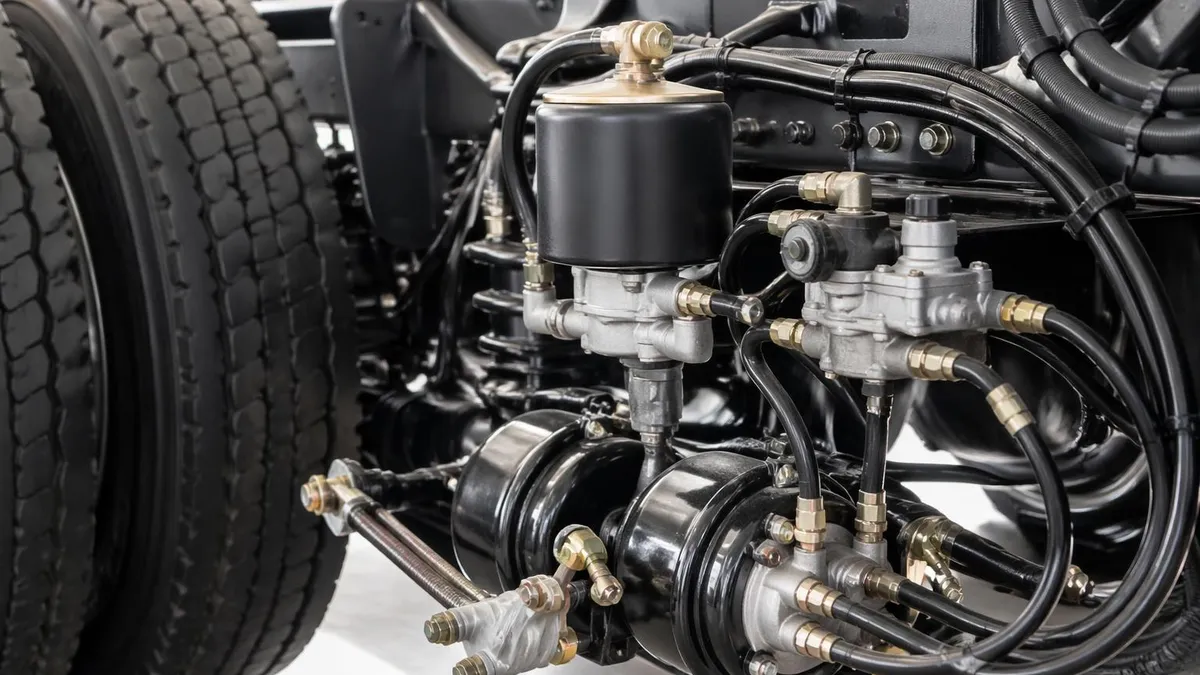
CDL Exam Eligibility: DOT Requirements, Medical Exams, and How to Qualify
CDL Hazardous Materials Study Guide and Essential Study Materials
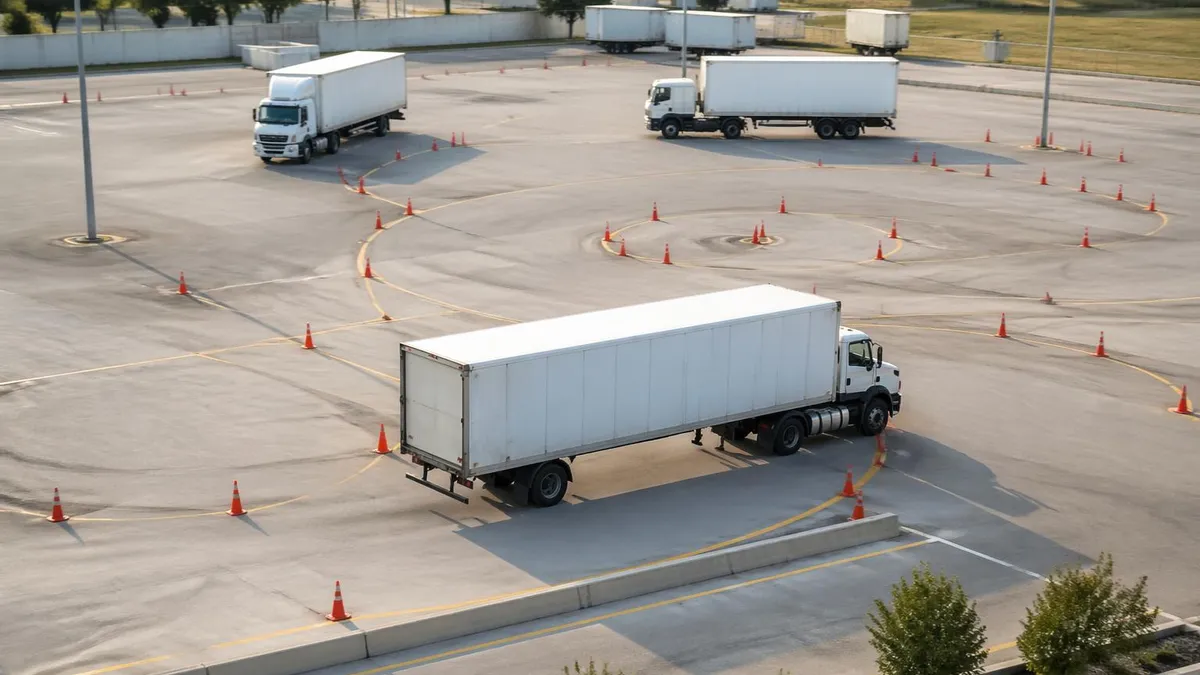
CDL General Knowledge Test: What You Need to Know About Subject Knowledge
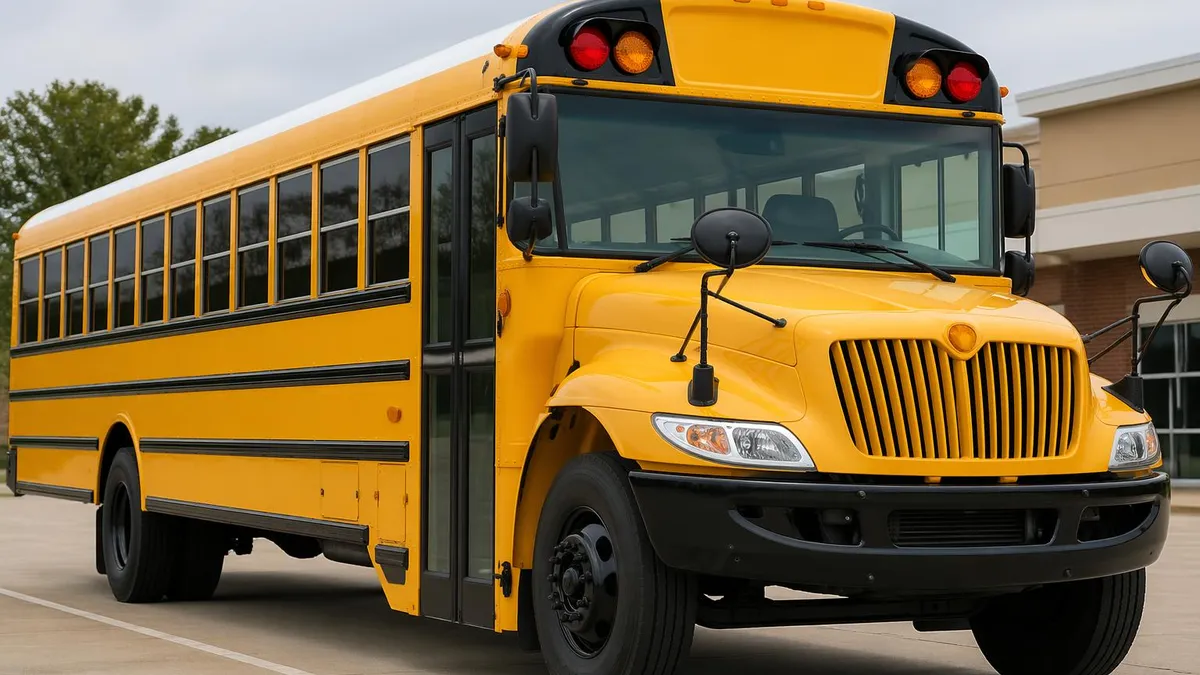
CDL Certification Guide: DOT Requirements, Study Tips & Endorsements
How this page was made: written with AI tools. Exam facts are checked against the official sources listed below. Not reviewed by a subject-matter expert. Editorial policy
Sources & references
Exam facts on this page (fees, format, dates, passing scores) are checked against these official sources; the date is our last check. Editorial policy