
California CDL Handbook: Your Complete Study Guide from CA DMV 2026 September
California CDL Handbook from CA DMV - download the PDF, 📚 study every section, pass the written and skills tests on your first attempt.
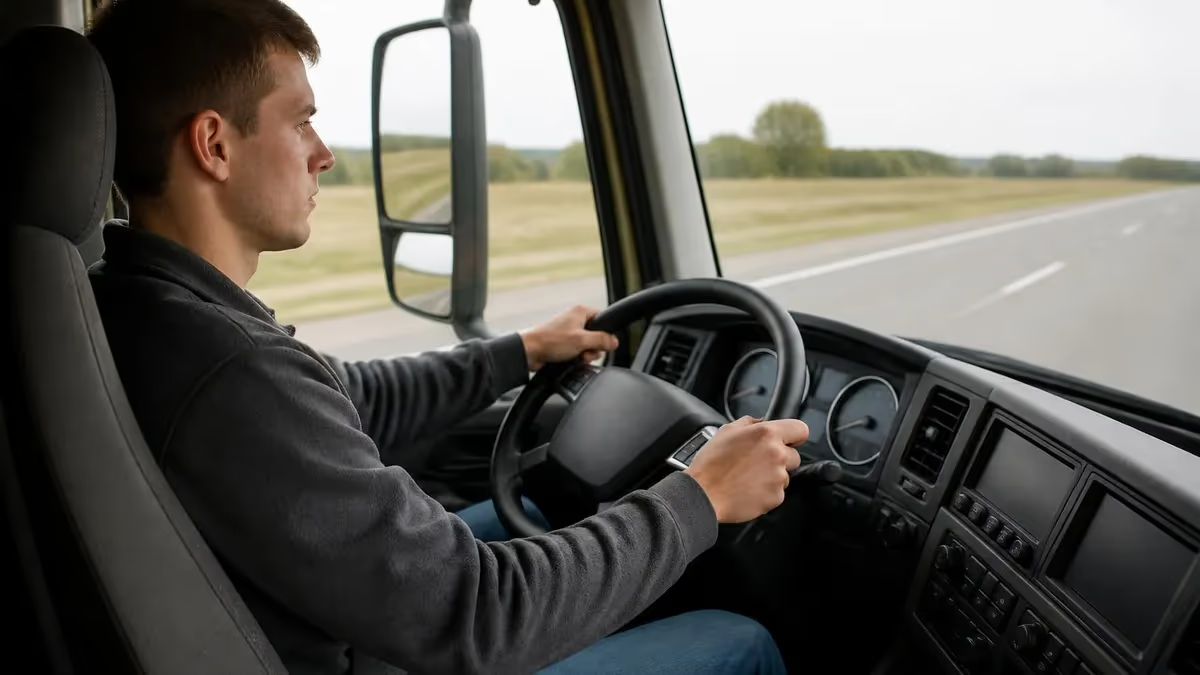
If you want a commercial driver license in the Golden State, there's one document you can't skip - the California CDL Handbook. Published by the California Department of Motor Vehicles, it's the source material for every written knowledge test you'll face. And here's the thing most applicants miss: examiners don't pull questions from random trucking websites or YouTube videos. They pull straight from this book. So if you've been studying anywhere else first, you've been doing it backwards.
The handbook isn't light reading. It runs hundreds of pages, covers everything from air brake mechanics to hazardous materials placarding, and uses the kind of technical language that can make your eyes glaze over by page 30. But you don't need to memorize every word. You need to know which sections matter for your license class, which endorsements you're chasing, and how California's rules differ from federal baselines. That's what this guide walks you through.
Whether you're a first-time applicant aiming for a Class A to drive 18-wheelers across I-5, a bus driver upgrading to a passenger endorsement, or a tank operator hauling fuel through the Central Valley - the handbook covers it. And once you understand how to use it properly, the written test stops feeling like a guessing game and starts feeling like an open-book exam you already memorized.
Here's a reality check before you dive in. California's commercial driving environment is uniquely demanding. You've got mountain grades in the Sierra, dense urban congestion in LA and the Bay Area, agricultural haul routes through the Central Valley, and ports moving more freight than almost anywhere else in the country. The handbook isn't just bureaucratic paperwork - it's training material designed to keep you alive on roads where the margin for error is small and the consequences of a mistake can be catastrophic. Treat it that way and your study time becomes meaningful instead of tedious.
California CDL Handbook by the Numbers
Key Facts at a Glance
| Item | Value | Details |
|---|---|---|
| Sections in handbook | 11 | |
| Knowledge test questions | 50+ | |
| Minimum pass score | 80% |
You can grab the California CDL Handbook one of two ways. The fastest route is the official CA DMV website at dmv.ca.gov - search for "Commercial Driver Handbook" and you'll land on a page with the PDF download plus an interactive online version. Both are free. Both are identical in content. The PDF is better for offline study; the web version is better for quick lookups while you're at a desk.
You can also walk into any California DMV field office and ask for a printed copy at the counter. They usually have stacks of them. No appointment needed, no purchase required - it's a public document. Some applicants prefer the paper version because they can highlight, dog-ear pages, and write notes in the margins. Whatever works for your brain, use it.
One thing to watch: make sure you're downloading the current year's edition. California updates the handbook regularly to reflect new federal regulations, ELDT requirements, and state-specific changes. An older copy might still teach you the basics, but you could miss a recent rule change that shows up on the test.
Direct Download Link
Official source: Visit dmv.ca.gov and navigate to the Driver Handbooks section, then choose Commercial Driver Handbook. The PDF opens in your browser and you can save it to any device for offline study. There's also a Spanish edition - Manual del Conductor Comercial - available on the same page. Printed copies are free at any California DMV field office, no appointment required. Always confirm you have the current year's edition before you start studying.
The handbook is organized into eleven main sections, and not all of them apply to every applicant. Here's how it breaks down. Section 1 covers introduction material - what a CDL is, who needs one, classes of licenses, disqualifications. Section 2 is Driving Safely. Think defensive driving, vehicle inspection, controlling speed, managing space, fatigue, distracted driving. Everyone takes this section's content on the General Knowledge test, regardless of class.
Section 3 is Transporting Cargo Safely. It covers weight distribution, securing loads, cargo balance, and what happens when you skip a strap. Section 4 is Transporting Passengers - relevant if you're driving buses or shuttles. Section 5 is Air Brakes, and if your truck has air brakes (most do), you'll need to pass this endorsement test or face an L restriction on your license. Section 6 covers Combination Vehicles - tractors with trailers - which you'll need for any Class A license.
Section 7 is Doubles and Triples, the endorsement for pulling more than one trailer. Section 8 covers Tank Vehicles, including how liquids slosh and what surge feels like at 60 mph. Section 9 is Hazardous Materials - the most technical section, and the one that requires a federal background check on top of the written test. Section 10 covers School Buses, for anyone driving kids to and from school. And Section 11 is Pre-Trip Inspection - the checklist you'll perform aloud during your skills test.
CDL License Classes and Endorsements in California
Any combination of vehicles with a gross combination weight rating of 26,001 pounds or more, provided the towed vehicle is over 10,000 pounds. This is what you need to legally operate tractor-trailers, doubles, triples, and most large freight rigs on California highways. The Class A test pulls from Section 1, Section 6, and Section 11 of the handbook.
Single vehicles with a gross weight rating of 26,001 pounds or more, or such vehicles towing another not exceeding 10,000 pounds. Think dump trucks, large delivery box trucks, transit buses, garbage trucks, and concrete mixers. Class B drivers focus on Sections 1, 2, 5, and 11 of the California Commercial Driver Handbook.
Vehicles under 26,001 pounds but transporting 16 or more passengers (including driver) or carrying hazardous materials requiring placards. This covers smaller commercial passenger vans, shuttle buses, and certain hazmat-only delivery vehicles in California. Class C still requires CDL-level testing despite the smaller vehicle size.
Add-on certifications: H (hazmat), N (tank), P (passenger), S (school bus), T (doubles/triples), X (combined tank + hazmat). Each requires extra written knowledge tests pulled directly from the corresponding handbook section. Hazmat additionally requires a federal TSA background check that takes 30-60 days to process before issuance.
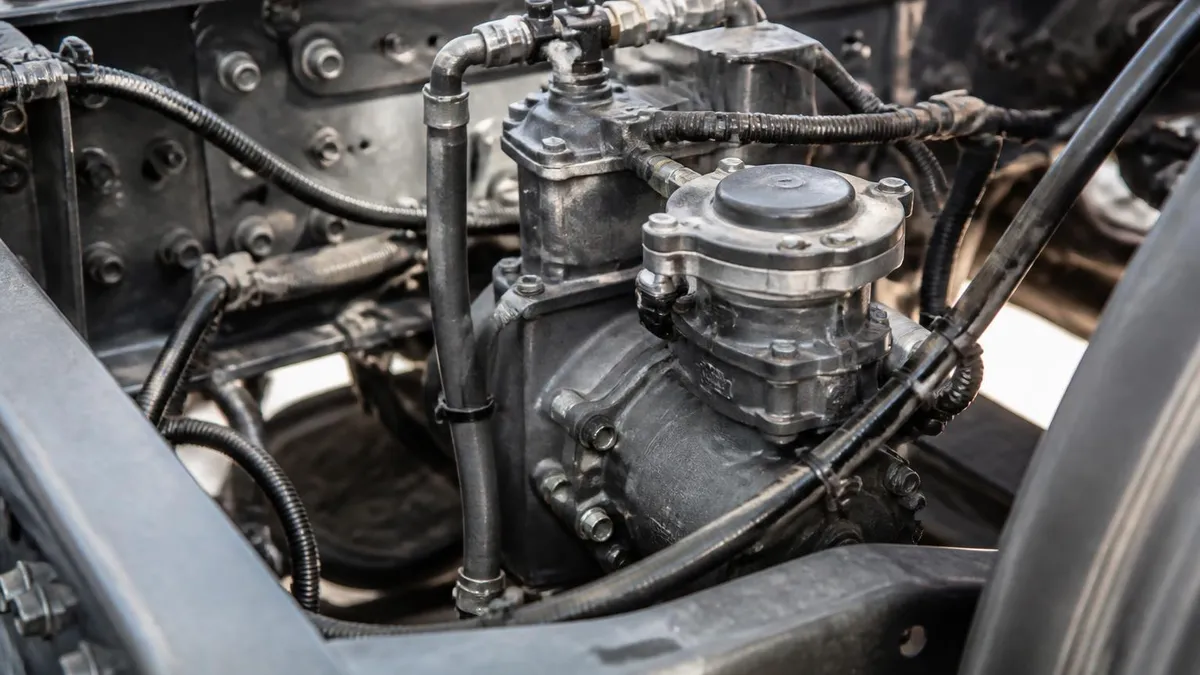
Endorsements are where the handbook gets specialized. A basic Class A or Class B lets you drive within certain limits, but the moment you want to carry passengers, fuel, chemicals, or kids - you need an endorsement. And every endorsement means another knowledge test pulled directly from the handbook section that covers it.
The hazmat endorsement (H) is the strictest. You'll study Section 9 cover to cover, take a 30-question written test, and then submit fingerprints for a TSA background check. That last part is federal, not state - California has no control over the timeline, which can run 30 to 60 days. Plan ahead. The tank endorsement (N) requires you to understand outage, baffles, surge dynamics, and stop distances on partially-filled loads. Get hazmat plus tank together and you have the X combo endorsement.
Passenger (P) and school bus (S) endorsements both require Section 4 knowledge plus, for school bus, Section 10. School bus drivers also face additional California-specific requirements like a Special Driver Certificate and First Aid training. Doubles/triples (T) is one of the easier endorsement tests but it's a Class A-only add-on. You can't get T on a Class B because Class B vehicles don't pull trailer combinations like that.
California CDL Eligibility and Application Requirements
You must be at least 18 to hold a California CDL (21 for interstate driving and hazmat endorsements). A valid California driver license is required, plus you must pass a DOT medical exam from an FMCSA-certified examiner. No disqualifying convictions in the past 7-10 years depending on offense type. You'll need proof of legal presence in the U.S. and proof of California residency such as a utility bill or rental agreement.
Restrictions work the opposite way. Where endorsements add privileges, restrictions take them away. If you take your skills test in a vehicle without air brakes, you get an L restriction - no air-brake-equipped vehicles allowed. Test in an automatic and you'll see an E restriction limiting you from manual transmission rigs. Skipped the full air brake testing? You'll get a Z restriction. Test in a Class A without pulling a tractor-trailer combo? You'll get an O restriction limiting you to combinations connected by something other than a fifth wheel.
These matter for employment. A trucking company that hauls with manual transmissions won't hire you if you have an E restriction. So pick your test vehicle carefully. If you intend to drive manuals professionally, test in a manual - even though it's harder. The short-term pain of a tougher skills test saves you from a restriction that limits your job options for the life of your license.
California also stacks on its own state-specific certifications worth knowing about. School bus drivers need a Special Driver Certificate from the CHP - that's a CA-only credential on top of the federal S endorsement. Farm labor vehicle drivers need a separate certificate. Drivers transporting hazardous waste face additional state registration. None of this is covered in the federal CDL framework, which is why reading every page of the California handbook matters - it surfaces these state-level layers that out-of-state material simply won't mention.
State enforcement is strict: California enforces tighter weight, emissions, and hours-of-service rules than federal minimums. Maximum gross vehicle weight is 80,000 pounds on most state highways. CARB regulations require post-2010 engines or DPF retrofits on many commercial trucks. Hours of service mirror federal FMCSA rules but enforcement is aggressive at Caltrans weigh stations - know the 11/14/70 hour limits cold and keep your logbook or ELD records current at all times.
So how do you actually study this thing? Don't read it linearly like a novel. The handbook is a reference document, and studying it like one will burn you out before you finish Section 3. Instead, start with your target license class and work outward. If you're going for a Class A with hazmat, your study plan is Section 1 (general knowledge), Section 2 (driving safely), Section 5 (air brakes), Section 6 (combinations), Section 9 (hazmat), and Section 11 (pre-trip). The other sections are skippable unless you want extra endorsements.
Read each section once for comprehension. Then come back with a highlighter and mark numbers, distances, weights, and time intervals. These are the facts that show up on the test. You'll see questions like "what's the minimum stopping distance for a fully-loaded combination at 55 mph?" or "when must you stop at a railroad crossing in a hazmat-placarded truck?" The numbers are non-negotiable - get them wrong and you lose the question.
After two read-throughs, switch to practice tests. Sample questions cement the material faster than another read of the source text. You'll find practice tests free online, including a full library right here on PracticeTestGeeks. Run through them until you're scoring 90% or higher consistently. The actual DMV written test requires 80% to pass, but you want a buffer because real test anxiety drops your score 5-10 points compared to home practice.
One technique that works for almost everyone: build flashcards from the handbook glossary. Air brake terminology alone has dozens of unfamiliar terms - slack adjusters, S-cam, spring brake, foundation brake, low-air warning. If you can't define them on demand, you'll stumble on the test. Same for hazmat material classes, placards, and shipping paper requirements. Flashcards take an hour to make and save you from the slow-bleed of missing easy vocab questions.
And don't ignore the appendix material. The pre-trip inspection checklist in Section 11 is often printed as a foldout or appendix. Photocopy it, laminate it, and walk through your test vehicle with it in hand every practice session. The DMV examiner uses the same checklist - if you've memorized it cold, the inspection portion of your skills test becomes a formality rather than a stressful performance.

California CDL Study Checklist
- ✓Download the current-year California CDL Handbook PDF directly from dmv.ca.gov - avoid third-party copies that may be outdated or modified
- ✓Identify exactly which sections of the handbook apply to your target license class and the specific endorsements you plan to add
- ✓Read each required section twice - once for general comprehension, then again with a highlighter for technical details
- ✓Mark every number in the handbook: weights, stopping distances, time intervals, ages, percentages, gallons, axle limits
- ✓Take free practice tests on PracticeTestGeeks until you score 90% or higher consistently across all topic areas
- ✓Schedule your DOT medical exam early and obtain your Medical Examiner's Certificate before applying at the DMV
- ✓Complete Entry-Level Driver Training (ELDT) with an FMCSA-registered provider before scheduling your CDL skills test
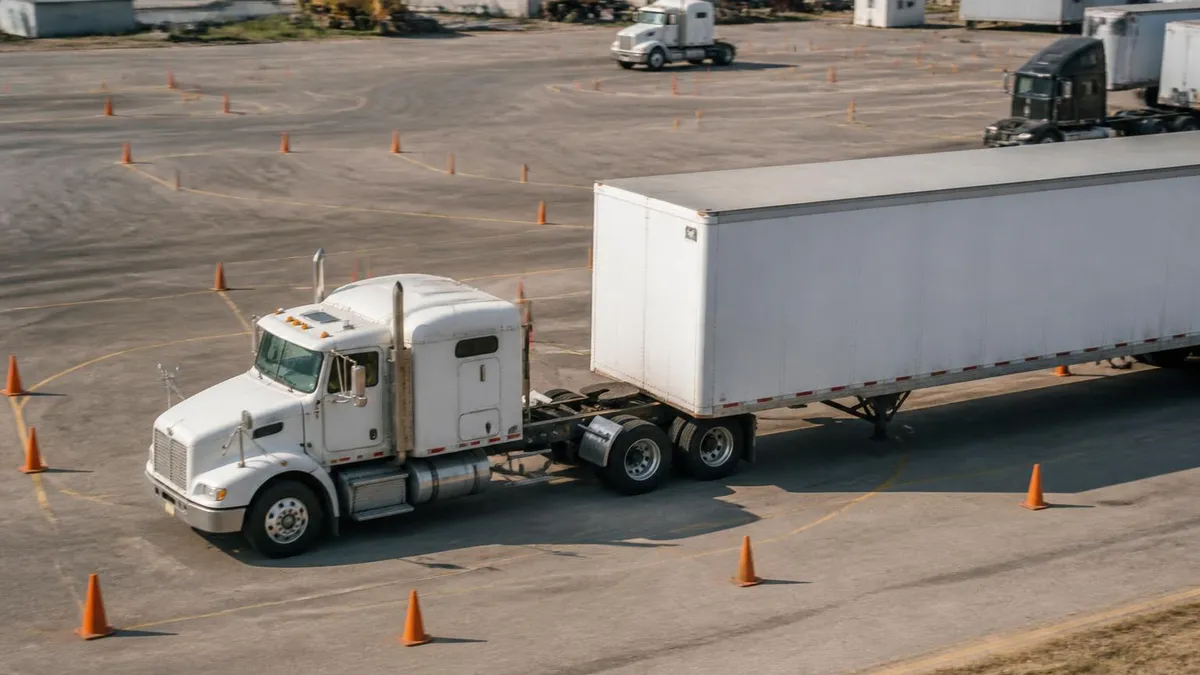
The written knowledge test isn't the only hurdle. After you pass it, you're issued a Commercial Learner's Permit (CLP) - and that permit must be held for at least 14 days before you can attempt the skills test. Use those 14 days wisely. Get behind the wheel with a CDL holder, practice pre-trip inspection until you can do it in your sleep, and rehearse backing maneuvers like offset back, parallel park, and alley dock.
The skills test has three parts: vehicle inspection (the famous pre-trip), basic vehicle control (backing maneuvers in a controlled area), and the road test (driving in traffic with the examiner riding shotgun). Section 11 of the handbook teaches you exactly what the examiner expects during inspection. You'll point to components, name them, and explain what you're checking for. Miss a critical item like a leaking air line and you fail on the spot.
The road test evaluates your ability to handle real traffic - lane changes, turns, intersections, hill starts if applicable, freeway driving, and railroad crossings. California examiners are known for being thorough but fair. They want safe drivers on the road, not perfect drivers. Demonstrate situational awareness, smooth control inputs, proper mirror checks, and full stops at every stop sign and you'll do fine.
California CDL Handbook Pros and Cons
- +Official source material - every test question comes from these pages
- +Free to download or pick up at any DMV field office
- +Available in English and Spanish
- +Updated regularly to reflect current federal and state regulations
- +Includes the complete pre-trip inspection checklist used on skills test
- −Dense technical writing that can be hard to parse without prior trucking experience
- −Hundreds of pages - covers material for endorsements you may not need
- −No practice questions or interactive elements within the document
- −Doesn't cover California car driver rules - that's a separate handbook
- −Diagrams and tables can be small or hard to read in printed copies
One thing the California CDL Handbook does not cover is the rules of the road for regular passenger vehicles. If you're new to California or moved here from another state, you also need to read the California Driver Handbook - the standard one for car drivers. That document covers right-of-way laws, speed limits, parking rules, DUI consequences, and the points-based suspension system that California uses to track moving violations.
Why does this matter for CDL applicants? Because your commercial license sits on top of your regular driver license. If you accumulate too many points or pick up a serious moving violation in your personal vehicle, your CDL can be suspended or downgraded along with your Class C license. Commercial drivers are held to a stricter standard: a DUI in your personal car still gets your CDL pulled. A reckless driving conviction in a Honda Civic disqualifies you from operating an 18-wheeler. The two licenses are linked - so know both books.
While we're on the subject of California-specific concerns, let's talk smog and weight. CARB (the California Air Resources Board) maintains some of the strictest diesel emissions rules in the country. Trucks older than the 2010 emissions standard generally need diesel particulate filter retrofits to operate legally in the state. The handbook touches on environmental compliance briefly, but the deeper rules live in CARB documents and the FMCSA-California portal. If you're hauling for an out-of-state carrier doing California runs, you're still subject to these rules the moment you cross the state line - ignorance isn't a defense at a roadside inspection.
Weight enforcement is also serious here. Caltrans operates weigh stations across the major freight corridors, and California will ticket overweight rigs aggressively. The maximum gross vehicle weight on most highways is 80,000 pounds, with axle weight limits that mirror federal bridge formula calculations. Section 3 of the handbook walks through cargo distribution, but pair that knowledge with real-world axle weight tickets from a portable scale before you load - it saves money and your CSA score.
One last piece of advice: don't try to learn the handbook in a single weekend. Spaced repetition beats cramming for technical material like this. Spread your study sessions over two to four weeks, hitting one or two sections per day with practice questions sprinkled between. Your retention will be vastly better, and you'll walk into the DMV with confidence instead of a head full of half-remembered figures.
Test day itself deserves a quick mention. Show up early, bring all required documents - permit, medical card, vehicle registration, proof of insurance, ELDT certificate, and a vehicle that's safe and clean. Examiners notice presentation. A muddy cab and a missing reflective triangle won't fail you outright, but they set the tone. And nerves are normal - even seasoned drivers feel them on test day. Breathe, follow your training, and trust the prep work you put in.
The California CDL Handbook is your single best resource for passing the written tests and starting your career as a commercial driver. Use it, mark it up, and pair it with hands-on practice. Pass the tests, get the permit, complete your ELDT, schedule your skills test - and you'll be holding a California CDL within a few months of starting. The handbook is free, the path is well-defined, and thousands of new drivers walk this exact route every year. Now it's your turn.
CDL Questions and Answers
About the Author

Licensed Driving Instructor & DMV Test Specialist
Penn State UniversityRobert J. Williams graduated from Penn State University with a degree in Transportation Management and has spent 20 years as a certified driving instructor and DMV examiner consultant. He has personally coached thousands of applicants through written knowledge tests, skills assessments, and commercial driver licensing programs across more than 30 states.
Join the Discussion
Connect with other students preparing for this exam. Share tips, ask questions, and get advice from people who have been there.
View discussion (7 replies)