
Commercial Driver's License: Complete CDL Application Guide 2026 September
Complete Commercial Driver's License guide: ✍🏼 Class A, B, C, endorsements, ELDT, DOT medical, road test, FMCSA rules, fees, and timelines.
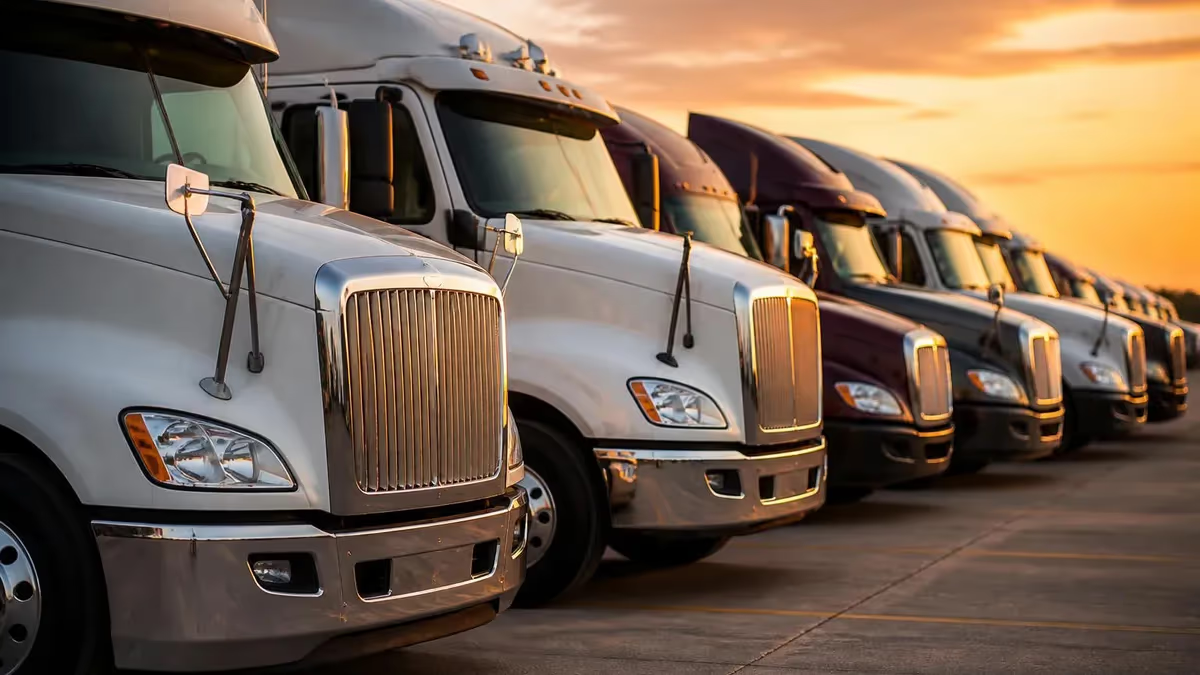
A Commercial Driver's License, almost always shortened to CDL, is the federal credential you need before you climb behind the wheel of a tractor-trailer, a school bus, a fuel tanker, or pretty much any heavy commercial vehicle in the United States. It is not just a fancier version of your everyday driver's license. It sits inside a separate regulatory framework run by the Federal Motor Carrier Safety Administration (FMCSA).
Here's the catch. The CDL system is federal in design, but states actually issue the license. That split is where most new applicants get tripped up. Federal law (49 CFR Part 383) sets the floor. Your state DMV runs the testing, the fees, and the plastic card itself.
So when people ask, "How long does it take to get a CDL?" the honest answer is: it depends on which state you're in, what class of license you want, and which endorsements you need. A trucker who relocates from Florida to Oregon doesn't lose their CDL — but they do have to transfer it within 30 days of establishing residency.
You're reading this because you want a clear, no-nonsense walkthrough. Good. This guide covers what a CDL actually is, the difference between Class A, B, and C licenses, the endorsements (H, N, P, S, T, X), the Entry-Level Driver Training (ELDT) requirements that took effect in 2022, the DOT medical exam, and the long but predictable journey from your Commercial Learner's Permit to your road test.
One quick framing note. This is a national overview, accurate for any applicant in the United States. Every state adds its own wrinkles. California has a special "tanker rollover" segment in the road test. Texas allows fingerprinting at private vendors instead of DPS offices. New York requires a 5-hour pre-licensing course on top of ELDT. Use this guide for the federal framework, then check your state's commercial driver handbook (free PDF on every state's DMV site) for the local details.
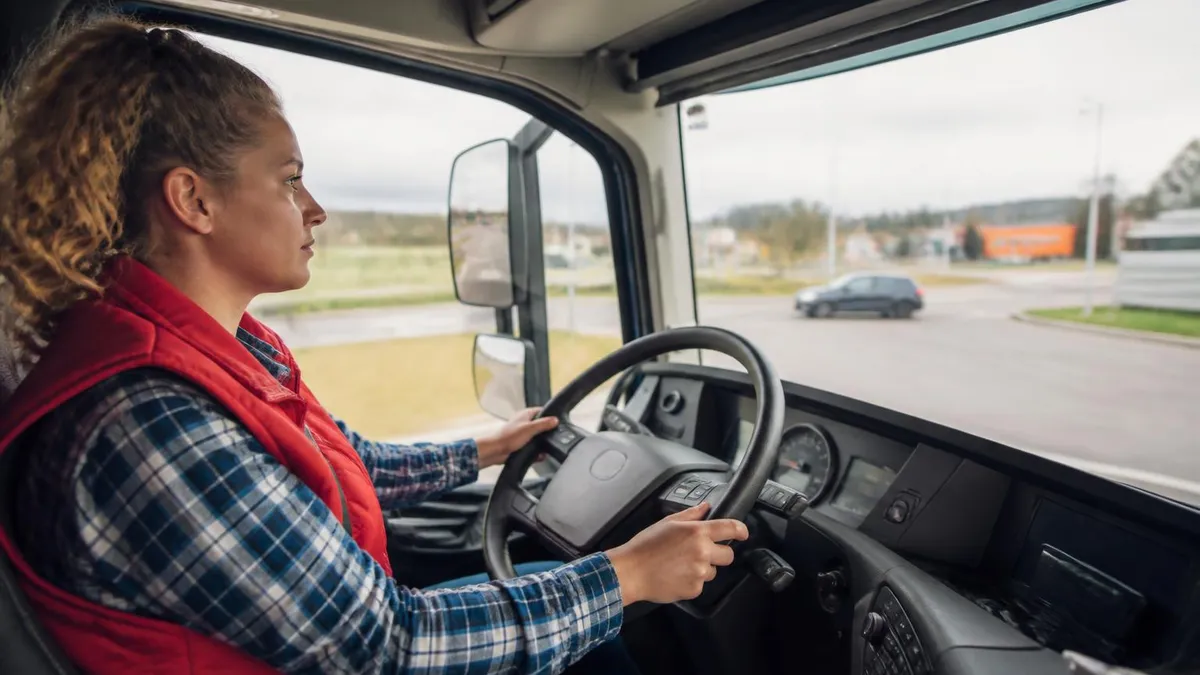
CDL by the Numbers
Key Facts at a Glance
| Item | Value | Details |
|---|---|---|
| Minimum Age for Interstate CDL | 21+ | |
| CLP Hold Time Before Road Test | 14 Days | |
| Typical CDL Renewal Cycle | 8 Years |
Step back for a second. Why does the CDL even exist? Before 1986, anyone with a regular driver's license could legally operate an 80,000-pound semi. Truly. Congress fixed that with the Commercial Motor Vehicle Safety Act, which created the modern CDL framework and forced every state to adopt a uniform minimum standard for licensing professional drivers.
The reasoning was crash data. Large-truck crashes were disproportionately deadly, and drivers were jumping from state to state to escape suspensions. The CDL closed that loophole by creating a national database — the Commercial Driver's License Information System, or CDLIS — that tracks every commercial driver and every disqualification across all 50 states.
That history matters because it explains why the application process feels heavy. The FMCSA isn't just checking whether you can parallel park. It is verifying that you understand air-brake systems, that your eyes meet the 20/40 standard, that your blood pressure isn't a stroke waiting to happen, and that you haven't lost a license under another name in a different state. Every check exists because a previous crash made it necessary.
You only get one CDL nationwide. The "one driver, one license, one record" principle is the foundation of CDLIS. When you apply in Ohio for a new credential, the system queries every state where you've held any license in the last decade. If there's a suspension you forgot to mention, the application gets flagged before the photo step. Be honest on your application; the system already knows.
You need a Commercial Driver's License if you operate any of the following:
- Any single vehicle with a gross vehicle weight rating (GVWR) of 26,001 lb or more
- Any combination of vehicles where the GCWR is 26,001 lb or more and the towed unit exceeds 10,000 lb
- Any vehicle designed to transport 16 or more passengers (including the driver)
- Any vehicle hauling hazardous materials in quantities requiring placarding under 49 CFR Part 172
The thresholds for needing a CDL sound technical, and they are. But they're how the FMCSA draws the line between "personal" driving and "commercial" driving. Notice that the rule is about vehicle weight and capacity, not about whether you're paid.
A volunteer driver shuttling a 16-passenger church van still needs a CDL with a Passenger endorsement. A farmer hauling his own grain across state lines in an 80,000-pound rig still needs a Class A. The license follows the vehicle, not the business model. Roadside inspectors don't care about your paycheck — they care about the registration sticker and the GVWR plate on the door jamb.
That said, there are exemptions sprinkled through Part 383. Military drivers operating military vehicles, certain farm equipment within 150 air-miles of the farm, firefighters in fire apparatus, recreational vehicle operators on personal trips, and a few other narrow categories don't need a CDL.
If you think you might qualify for an exemption, check your state DMV's commercial-driver handbook. Don't assume. The penalties for driving a CMV without the right credential are steep: federal civil penalties up to $5,000 per violation, plus state-level fines and the kind of insurance consequences that end careers.
It's also worth knowing that the CDL is a "license to test" credential. Having one doesn't guarantee a job. Carriers run their own pre-employment checks under FMCSA Part 391, including a three-year motor vehicle record review, a drug and alcohol test (now mandatory in the federal Clearinghouse), and a road test that often exceeds the state DMV's exam. New drivers regularly discover that their first month on the job is essentially an extended interview with their carrier's safety department.
CDL Classes Explained
Combination vehicles: tractor-trailers, double and triple trailers, tankers, livestock carriers, flatbeds. GCWR of 26,001 lb or more where the towed unit is over 10,000 lb. Most versatile class — a Class A driver can also operate most Class B and C vehicles with proper endorsements.
Heavy straight vehicles: straight trucks, large buses (including city transit, tourist, and school buses), segmented buses, box trucks, dump trucks with small trailers. Single vehicle with GVWR of 26,001 lb or more, or such a vehicle towing under 10,000 lb.
Small specialty vehicles that don't meet Class A or B size thresholds but transport 16+ passengers (including driver) or carry placarded hazardous materials. Common examples: small HazMat trucks, 15-passenger shuttles, mini-buses.
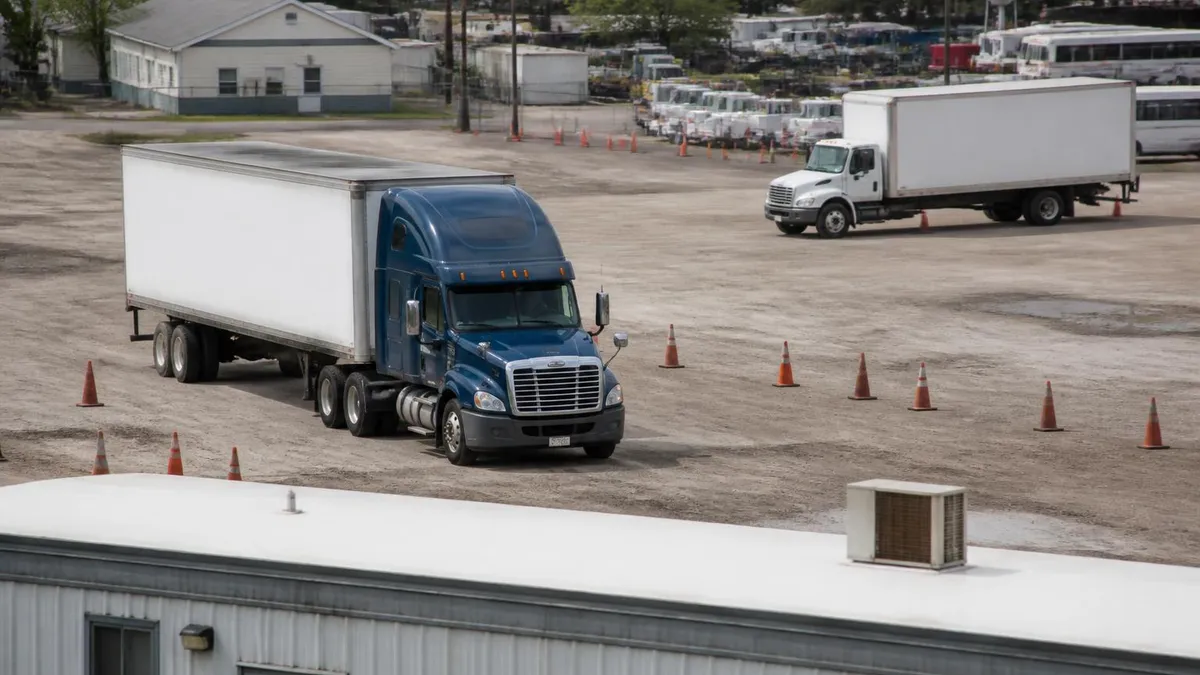
Choosing a class isn't about ambition; it's about the job you actually want. If you plan to drive over-the-road freight or long-haul work, Class A is the only option that makes sense — you'll need it to pull a 53-foot trailer.
If you're aiming for a local delivery route, a city bus driver position, or a construction job operating a straight dump truck, Class B is your target and Class A would be overkill. Class C is the narrowest category and only applies when passenger counts or HazMat placards trigger the requirement on an otherwise smaller vehicle.
One important point that catches people off guard. The class on your license sets the ceiling, not the floor. A Class A driver can operate Class B and Class C vehicles. A Class B driver cannot operate a Class A.
So if you're hesitating between A and B and you can spare the additional training time, A gives you more flexibility down the road. That said, ELDT requirements for Class A are roughly 30% more demanding than Class B in most training programs. Factor in the cost and time.
Beyond the class, you also have to think about endorsements. These are letter codes added to your CDL that authorize you to drive specific specialized vehicles or haul specific cargo. Without the right endorsement, your CDL alone is not enough.
The flip side of endorsements is restrictions. A restriction is a letter or code added to your CDL that limits what you can drive. The most common restrictions are L (no air brakes), Z (no full air brakes, partial air-brake systems only), E (no manual transmission), O (no fifth-wheel connections), M (no Class A passenger vehicles), and N (no Class A or B school buses). Take your skills test in the vehicle type closest to the job you actually want, or you'll be back at the DMV paying to remove a restriction later.
CDL Endorsements Explained
Required to transport hazardous materials in quantities that require placarding under 49 CFR Part 172. Includes flammable liquids, explosives, radioactive materials, and corrosives.
Adds a written exam covering HazMat regulations and a TSA security threat assessment (fingerprints + background check). The TSA review alone takes 30 to 60 days. The H endorsement must be renewed with a fresh TSA check every five years.
Endorsements compound. You can stack multiple endorsements onto a single CDL, but each one means another written test (or in the case of P and S, another skills test) and another fee. The most common combinations you'll see at truck stops are H+N (the X for fuel haulers), P+S for school transit drivers, and T+H for OTR LTL operators.
Plan your endorsement strategy around the jobs you actually want, not the ones that sound interesting. Adding a HazMat endorsement, for example, requires a TSA threat assessment that costs roughly $87 and can take two months — pointless if you're never going to haul placarded freight.
Some carriers will reimburse endorsement costs after you complete a probation period. Ask in the interview. A motor carrier desperate to hire often covers the HazMat fee, the TSA appointment, and even the time you spend studying for the endorsement exam. Don't pay out of pocket if the company gains direct benefit from the endorsement.
Now let's walk through the actual application process. This is where federal rules meet state procedures, and it's the part most CDL guides hand-wave through. We'll keep it concrete and walk through each step in the order you'll actually encounter it at the DMV counter.
Every first-time CDL applicant, every applicant upgrading from Class B to Class A, and every applicant adding a P, S, or H endorsement must complete Entry-Level Driver Training (ELDT) through an FMCSA-registered training provider before sitting for the CDL skills test.
Theory training is not capped by hours but must cover a specific 30-topic curriculum. Behind-the-wheel training has no minimum hour requirement either — you must demonstrate proficiency. Your training provider must self-certify your completion in the FMCSA Training Provider Registry within two business days. No certification, no road test.
With ELDT in mind, here's the path most applicants follow. The exact sequence can shift slightly by state — Texas and California, for example, have additional state-specific paperwork — but the federal backbone is the same nationwide.
Reading the checklist below, you'll notice the steps cluster into three phases. Pre-CLP paperwork (age verification, driving record, medical exam, DMV self-certification) happens before you even open a study guide. The CLP phase (knowledge tests, the 14-day hold, ELDT) is where you do the real learning. The CDL phase (skills test, fees, issuance) is the finish line.
Many candidates compress the timeline by completing pre-CLP paperwork while still studying for the knowledge tests. There's no rule against booking your DOT physical on day one. In fact, getting that medical card in hand early protects you from a nasty surprise three weeks into ELDT.
CDL Application Step-by-Step
- ✓Verify you meet the minimum age — 18 for intrastate driving in most states, 21 for interstate or HazMat work.
- ✓Pull a current copy of your driving record from every state you've held a license in for the last 10 years.
- ✓Schedule and pass the DOT physical with a certified medical examiner listed in the National Registry.
- ✓Self-certify your driving category at the DMV (interstate non-excepted is the most common).
- ✓Study and pass the written knowledge tests for general knowledge plus any endorsements you want.
- ✓Receive your Commercial Learner's Permit (CLP) — and hold it for a minimum of 14 days.
- ✓Complete FMCSA-registered ELDT theory and behind-the-wheel training; provider self-certifies you in the TPR.
- ✓Pass the three-part skills test: pre-trip inspection, basic vehicle control, on-road driving.
- ✓Pay state fees and have your CDL issued — typically a temporary paper license first, then a plastic card by mail.
The DOT medical exam (the "DOT physical") derails more first-time applicants than any other step. You must be examined by a medical examiner listed in the FMCSA National Registry of Certified Medical Examiners.
The standard exam looks at vision (20/40 corrected in each eye with at least 70-degree field), hearing (forced whisper at five feet, or audiometric loss less than 40 dB at 500/1000/2000 Hz), blood pressure (under 140/90 for a two-year card), and a long list of conditions like diabetes on insulin, sleep apnea, cardiovascular disease, and seizure history.
The examiner issues a Medical Examiner's Certificate (commonly called the "med card") valid for up to 24 months. You must keep a copy on file with your state and present it on demand. Lose the card or let it expire and your CDL goes inactive immediately.
Fees and timelines are the other moving target. Budget around $35 to $50 for the CLP, $75 to $250 for the CDL itself, and $1,500 to $7,000 for a private ELDT program (or significantly less if your future employer sponsors training).
Add $87 for the HazMat TSA fee if you need that endorsement, and another $30 to $100 for the DOT physical. Total cost from zero to fully endorsed Class A with HazMat typically lands between $3,000 and $10,000. End-to-end timeline, assuming full-time training, is six to twelve weeks. Part-time learners commonly take three to six months.
Getting a CDL — Honest Trade-offs
- +Stable, in-demand career — the ATA projects a shortage of 160,000+ drivers by 2030
- +No four-year degree required; entry training takes weeks, not years
- +Median pay for heavy-truck drivers is roughly $54,000 per year, with experienced OTR drivers commonly clearing $75,000+
- +Geographic mobility — a CDL is portable across all 50 states
- +Multiple career tracks: OTR, regional, local delivery, transit, school bus, owner-operator
- −Strict medical requirements can disqualify drivers with certain chronic conditions
- −OTR work means weeks away from home; not compatible with all family situations
- −Hours-of-Service rules cap driving at 11 hours and on-duty at 14 hours per day
- −A single moving violation in your personal car can affect your CDL
- −Initial training cost ($3K–$10K) is a real barrier without employer sponsorship
Once you have the CLP, the 14-day mandatory hold begins. This is federal law — no state can shorten it. During the hold you can practice driving a commercial vehicle on public roads but only with a CDL holder who has the correct class and endorsements seated next to you in the cab.
Many applicants use this window to complete the bulk of their behind-the-wheel ELDT hours. After day 14, you're eligible to schedule the skills test. Some state DMVs have months-long backlogs for skills-test slots, so book the appointment the moment your CLP issues, not the moment your hold expires.
The CDL skills test itself has three parts and you must pass all three in the same vehicle class you intend to be licensed for. The pre-trip inspection is the part new drivers underestimate the most. The examiner expects you to physically point at and verbally describe roughly 100 components of the tractor and trailer, calling out what you're checking and why. Memorize the inspection script.
The basic vehicle control section is performed in a closed lot — straight-line backing, offset backing left and right, parallel parking, alley docking. Practice each maneuver until it's boring.
The on-road driving portion lasts 45 to 60 minutes and covers urban streets, highway merges, rural roads, intersections, railroad crossings, and a downshift demonstration. Examiners are looking for smooth shifting, defensive lane discipline, and complete stops at every railroad crossing whether the bus rule applies or not.
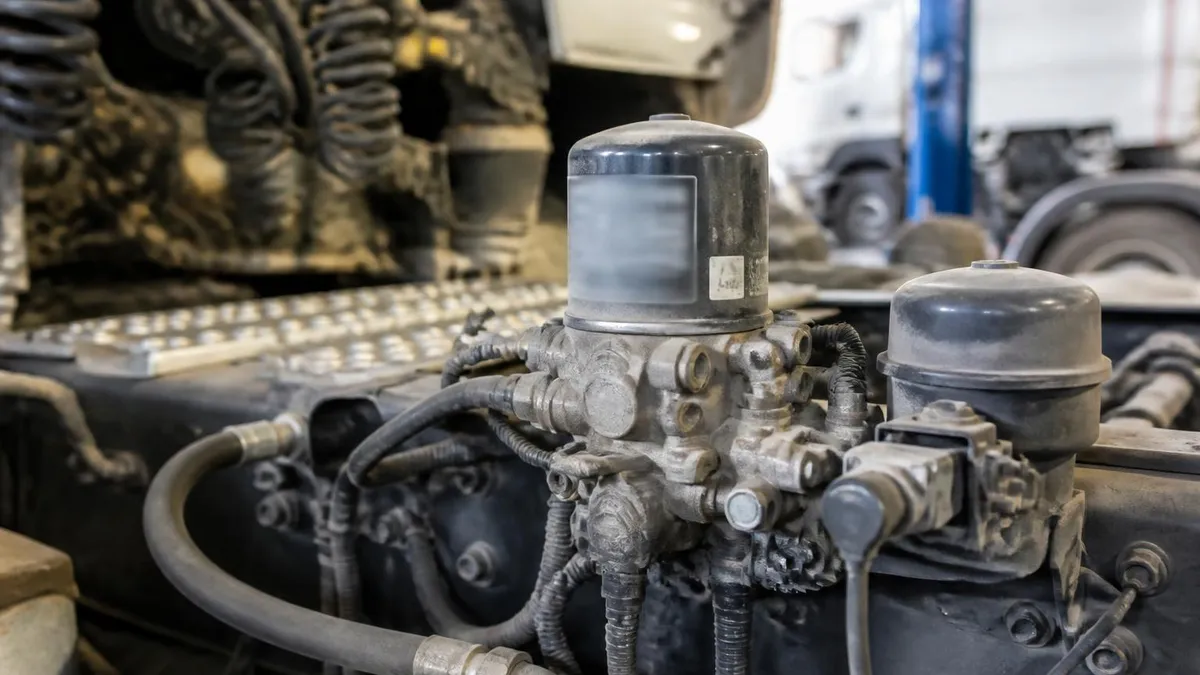
Air brakes deserve special mention. If you take and pass your skills test in a vehicle without air brakes, your CDL will be issued with an "L" restriction that prohibits you from operating any air-brake-equipped commercial vehicle. Since virtually every modern tractor-trailer, transit bus, and dump truck uses air brakes, an L restriction makes most jobs out of reach.
The fix is simple in theory: test in an air-brake vehicle and pass the air-brake knowledge test as part of your CLP. In practice, this means making sure your ELDT provider's training fleet includes air-brake equipped tractors. Easier to do it right the first time than to retest later.
After you pass all three sections of the skills test, the examiner forwards the results to the DMV. You'll receive a temporary paper license on the spot in most states; the plastic card arrives in the mail two to six weeks later. Your CDL is then good for the standard renewal cycle, usually five to eight years, varying by state.
Federal Motor Carrier Safety Regulations Part 383 is the foundation of all of this. But you'll also encounter Part 391 (driver qualifications), Part 392 (driving rules), Part 395 (Hours of Service), and Part 396 (vehicle inspection and maintenance) on the job.
New drivers don't need to memorize them, but they should know the part numbers exist and where to look when a roadside inspector mentions one. Hours of Service in particular — the 11-hour driving limit, the 14-hour on-duty window, the 30-minute break after eight hours, the 70-hour cycle — will define your daily rhythm. Electronic Logging Devices enforce these limits automatically.
If you're starting at zero today, the smartest move is to download your state's commercial-driver handbook this evening, schedule the DOT physical for next week, and identify two or three FMCSA-registered ELDT providers within driving distance. Compare costs, ask whether they help with job placement, and confirm they self-certify in the Training Provider Registry within the federal two-business-day window.
CDL Questions and Answers
About the Author

Licensed Driving Instructor & DMV Test Specialist
Penn State UniversityRobert J. Williams graduated from Penn State University with a degree in Transportation Management and has spent 20 years as a certified driving instructor and DMV examiner consultant. He has personally coached thousands of applicants through written knowledge tests, skills assessments, and commercial driver licensing programs across more than 30 states.
Join the Discussion
Connect with other students preparing for this exam. Share tips, ask questions, and get advice from people who have been there.
View discussion (7 replies)