
CDL Schools Near Me — Find Training Programs (2026 September)
Find CDL schools and truck driving training programs near you. Compare costs, program lengths, and job placement rates. FMCSA-approved schools for 2026 September. 💡
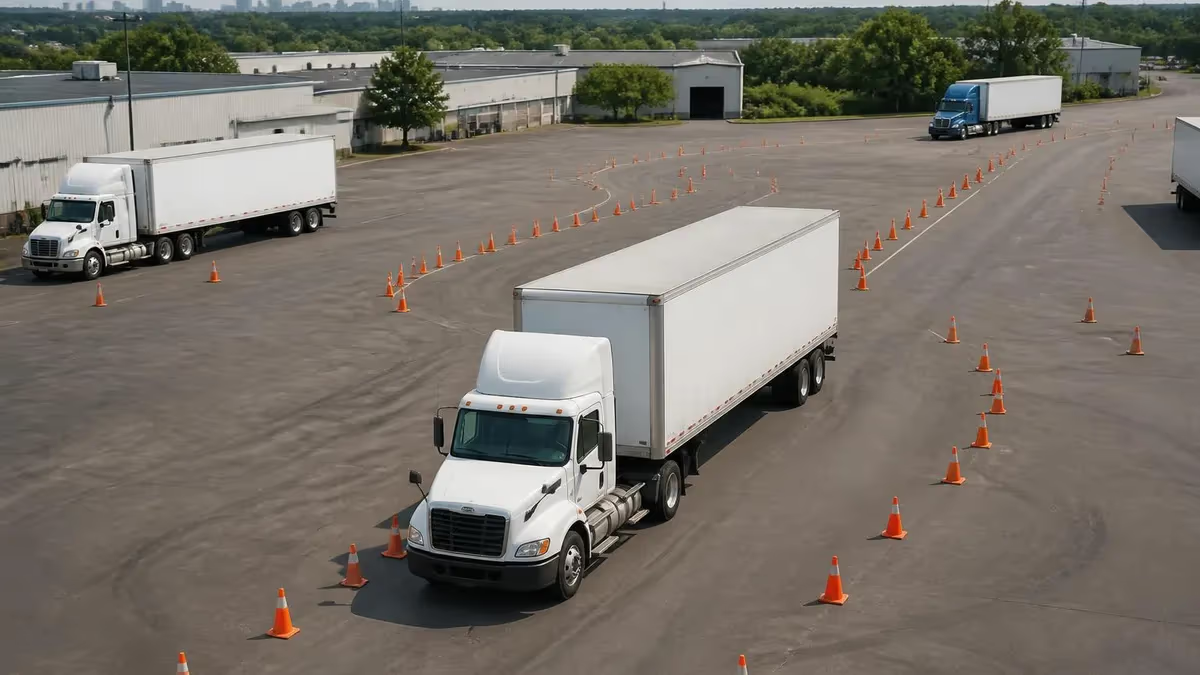
How to Find CDL Schools Near You
Finding the right CDL school is the first step toward a trucking career. Since February 2022, all new CDL applicants must complete Entry-Level Driver Training (ELDT) from an FMCSA-registered training provider.
You can continue preparing with the printable cdl practice test, which includes answer explanations for every question.
Where to Search for CDL Schools
- FMCSA Training Provider Registry (TPR): The official database at tpr.fmcsa.dot.gov lists every approved CDL school by location
- Community colleges: Many offer affordable CDL programs with financial aid eligibility
- Private truck driving schools: Faster completion times, often 3-6 weeks
- Company-sponsored programs: Major carriers like Werner, CRST, and Swift offer free training with employment commitment
What to Look For in a CDL School
- FMCSA registration: Required — unlisted schools can't certify you for the skills test
- Job placement rate: Top schools place 90%+ of graduates
- Behind-the-wheel hours: Look for 40+ hours minimum driving time
- Equipment: Training on modern trucks with automatic and manual transmissions
- Class size: Smaller classes mean more driving time per student

Important: Only FMCSA Training Provider Registry (TPR) listed schools can certify your ELDT completion. Without this certification, you cannot take the CDL skills test. Always verify a school's TPR listing before enrolling.
Types of CDL Training Programs
Community College CDL Programs
Cost: $2,000-$5,000 | Duration: 4-16 weeks
Best for budget-conscious students. Eligible for Pell Grants, WIOA funding, and federal financial aid. Longer programs but thorough training with more classroom hours.
Private CDL Schools
Cost: $3,000-$10,000 | Duration: 3-6 weeks
Fastest path to your CDL. Intensive programs with full-time schedules. Many offer financing, weekend classes, and accelerated options. Popular chains include Roadmaster, 160 Driving Academy, and SAGE.
Company-Sponsored Training
Cost: $0-$1,000 | Duration: 3-4 weeks
Major trucking companies pay for your training in exchange for a 1-2 year employment commitment. Good option if you're ready to start working immediately. Companies include CRST, Werner, Swift, and Schneider.
WIOA-Funded Programs
Cost: Free | Duration: Varies
The Workforce Innovation and Opportunity Act provides free CDL training for eligible candidates through local workforce development boards. Check your state's CareerOneStop center.
CDL Training Costs & Financial Aid
CDL training costs vary widely but financial help is available:
- Pell Grants: Up to $7,395/year at eligible schools — doesn't need to be repaid
- WIOA funding: Free training through workforce development programs
- VA/GI Bill: Covers CDL training for veterans at approved schools
- State grants: Many states offer trucking-specific scholarships and grants
- School financing: Most private schools offer monthly payment plans
- ✓Verify the school is listed on FMCSA Training Provider Registry
- ✓Compare at least 3 schools on cost, duration, and placement rate
- ✓Ask about behind-the-wheel training hours (40+ recommended)
- ✓Check if financial aid, Pell Grants, or WIOA funding is available
- ✓Read reviews from recent graduates
- ✓Visit the school if possible to see equipment and facilities
- ✓Ask about job placement assistance after graduation
- ✓Confirm which CDL class (A, B, C) the program trains for
CDL: Pros and Cons
- +cdl — structured CDL training builds a solid foundation of skills
- +Multiple training formats available: online, in-person, and hybrid
- +Hands-on practice prepares you for real-world job scenarios
- +Training programs often include job placement assistance
- +Continuing education keeps your skills current with industry changes
- −Training programs can be time-intensive (weeks to months)
- −Quality varies significantly between training providers
- −Costs for comprehensive programs can be substantial
- −Hands-on components may require travel or in-person attendance
- −Self-paced learning requires strong discipline and motivation
Pros and Cons at a Glance
| Pros | Cons |
|---|---|
| cdl — structured CDL training builds a solid foundation of skills | Training programs can be time-intensive (weeks to months) |
| Multiple training formats available: online, in-person, and hybrid | Quality varies significantly between training providers |
| Hands-on practice prepares you for real-world job scenarios | Costs for comprehensive programs can be substantial |
| Training programs often include job placement assistance | Hands-on components may require travel or in-person attendance |
| Continuing education keeps your skills current with industry changes | Self-paced learning requires strong discipline and motivation |


About the Author

Licensed Driving Instructor & DMV Test Specialist
Penn State UniversityRobert J. Williams graduated from Penn State University with a degree in Transportation Management and has spent 20 years as a certified driving instructor and DMV examiner consultant. He has personally coached thousands of applicants through written knowledge tests, skills assessments, and commercial driver licensing programs across more than 30 states.
Join the Discussion
Connect with other students preparing for this exam. Share tips, ask questions, and get advice from people who have been there.
View discussion (7 replies)