
CDL Study Guide: How to Pass the Knowledge and Skills Tests 2026 October
Complete CDL study guide: how to prepare for knowledge tests, skills test pre-trip memorization, manual strategies, prep providers, and common 🧠

CDL Study: Where Knowledge Becomes Commercial Driving Authority
Passing the Commercial Driver's License (CDL) tests requires preparing for two distinct examinations at your state DMV. First, the knowledge tests — written multiple-choice exams covering federal regulations, vehicle systems, driving practices, and class-specific or endorsement-specific content. Pass these and you receive a Commercial Learner's Permit. Second, the skills test — a hands-on three-component evaluation covering pre-trip inspection (the most common failure point), basic control skills, and on-road driving. Pass that and the DMV converts your CLP to a full CDL.
This guide walks through CDL study end-to-end: the canonical study source (your state CDL manual), prep provider supplementary tools, study strategies that produce reliable test results, the specific knowledge tests required for each CDL class and endorsement, how skills test preparation differs from knowledge test preparation, and the common failure points that derail otherwise-prepared candidates. The CDL practice test covers content tested at the DMV. The CDL permit guide walks through the CLP phase that follows knowledge test completion. The CDL DMV guide covers the broader licensing process.
The CDL study process produces meaningful learning, not just test-passing techniques. The federal regulations you study form the operational framework you'll work under for your entire commercial driving career. Pre-trip inspection sequences you memorize become the daily safety check that prevents accidents. Vehicle systems knowledge you build translates directly into mechanical awareness that keeps you out of trouble on the road.
Approach study seriously rather than cramming for a test. The candidates who pass on first attempt usually had the perspective that they were learning their profession, not just clearing a regulatory hurdle. That mindset produces better study habits and better long-term outcomes.
One useful framing: the CDL knowledge tests are gates that separate aspiring drivers from drivers ready to operate commercial vehicles safely. The federal framework demands the gate be meaningful — passing requires demonstrated knowledge, not just guessing through 50 multiple-choice questions. Approach study with the seriousness the gate demands.
Build study habits early. Consistent daily practice (even 30-60 minutes) outperforms inconsistent multi-hour sessions for content retention and exam confidence.
Bottom Line
CDL preparation involves two phases. Knowledge tests at the DMV cover General Knowledge (50 questions), plus Combination Vehicles and Air Brakes for Class A, plus endorsement-specific tests (Tankers, HazMat, Passenger, School Bus, Doubles/Triples). Use your state CDL manual as primary source plus practice test sites for drilling. Most candidates need 4-8 weeks part-time prep. Skills test preparation focuses on pre-trip inspection memorization (most common failure point), basic control skills, and road test. ELDT classroom theory covers most knowledge content as part of federally-required training.
What You're Actually Studying For
The CDL credentialing process splits study work into two distinct sequences. Knowledge test preparation focuses on memorization and comprehension of regulations, vehicle systems, and operating procedures. The content lives in your state CDL manual — typically 200+ pages of dense technical material covering federal rules, vehicle inspection procedures, driving practices, and class- and endorsement-specific details. Skills test preparation is fundamentally different — it focuses on memorizing the pre-trip inspection sequence verbatim, practicing basic control maneuvers in commercial vehicles, and developing real-world driving competence.
Most successful candidates approach these as parallel tracks. Knowledge test prep happens primarily through manual reading and practice questions. Skills test prep happens primarily through behind-the-wheel ELDT training plus pre-trip inspection memorization. ELDT theory typically covers most knowledge test content as part of federally-required training, so candidates enrolled in ELDT often find knowledge tests easier than candidates self-studying. Skills test preparation is where ELDT becomes essential — the hands-on training is what builds the competence the skills test measures.
One quirk of CDL study: while knowledge tests can be retaken indefinitely with brief waiting periods, the skills test failure has more practical consequences. Multiple skills test failures may signal preparation problems that delay your entry to commercial driving work. Treat your first skills test attempt as the real attempt — assume you need to pass on first try.
Treat the credentialing exam as a midterm rather than a final. Passing the DMV tests is the entry point to commercial driving rather than the destination. The real test of your competence comes once you're on the road handling real loads in real conditions.
Knowledge Tests Required by CDL Class
Universal 50-question test required for every CDL class. Covers federal regulations, vehicle inspection, vehicle systems, driving safely, communication, controlling speed, basic vehicle control, and emergency handling. Pass at 80 percent (typically 40 of 50 correct).
Additional 20-question test for Class A applicants. Covers coupling and uncoupling, double trailer combinations, fifth-wheel operations, and combination-specific safety practices. Required because tractor-trailer operations have unique characteristics.
25-question test for any CDL class operating vehicles with air brakes (most commercial trucks). Covers air brake components, brake checks, emergency procedures, and air brake-specific operating considerations. Required for Class A and most Class B vehicles.
25-30 question endorsement test for drivers operating vehicles carrying liquids or gases in tanks. Covers liquid surge, baffles, weight distribution, surge control during braking, and tanker-specific safety procedures. Often combined with HazMat for fuel and chemical haulers.
30-question endorsement test for drivers carrying placardable hazardous materials. Covers placards, hazard classes, emergency response, security plans, and federal HazMat regulations. Additional TSA security threat assessment with fingerprinting required beyond the knowledge test.
Each endorsement requires its own knowledge test. Passenger covers passenger transport safety, ADA requirements, emergency evacuation. School Bus adds child-specific safety, loading and unloading procedures, and railroad crossing protocols. School Bus typically combines with Passenger endorsement.
The State CDL Manual Is Your Primary Source
Every state DMV publishes a free CDL manual that contains the entirety of knowledge test content. These manuals run 200-300+ pages and cover federal rules, vehicle systems, inspection procedures, driving practices, and state-specific regulations. The manual is the canonical source for what's tested — every knowledge test question can be traced back to specific content in the manual. Skipping the manual and relying solely on practice tests typically produces shallow knowledge that struggles with the more nuanced questions on the actual DMV test.
Reading the entire manual cover-to-cover is the strongest study foundation, but most candidates supplement with active practice question drilling. Aim for two passes through the manual minimum. The first pass builds initial familiarity; the second pass with notes and highlighting solidifies retention. Pay special attention to charts on weights and dimensions, federal regulations on hours of service, vehicle inspection sequences, and emergency procedures — these are heavily tested content areas. State-specific content (state regulations, state-specific procedures) appears in supplementary chapters at the back of most manuals.
Read the manual on paper rather than screen if possible. Physical books support better attention and retention for technical content than screen reading. Print the PDF if you want to highlight and annotate; bookstore-sized copies are also available at most state DMV offices and some bookstores.
State CDL manuals are updated periodically. Verify you have the current edition before relying on older copies. Federal regulatory changes (notably the ELDT mandate from 2022) sometimes appear in newer manuals before older ones are revised. The state DMV website always has the current version.
Top CDL Study Resources
Free download from your state DMV website. The canonical source for all knowledge test content. 200-300+ pages typical. Covers federal rules, vehicle systems, inspection, driving practices, and class- and endorsement-specific content. Read twice minimum. Mark important sections; take notes on regulations and procedures.
Study Timeline for Most Candidates
Most candidates need 4-8 weeks of part-time preparation to pass CDL knowledge tests reliably. Full-time candidates can compress this to 1-2 weeks of intensive study. The exact time depends on your prior commercial driving familiarity, learning speed, and how much time you can dedicate to focused study. Candidates with no commercial driving background typically need more time than those who've worked around commercial vehicles in non-driving roles.
A reasonable 6-week part-time schedule might look like: weeks 1-2 reading the state CDL manual cover-to-cover, taking notes and identifying weak areas. Weeks 3-4 drilling practice questions with state-specific question banks, targeting weak areas. Week 5 simulating actual DMV test conditions with timed full-length practice tests. Week 6 reviewing missed questions, refreshing weak content, and scheduling the actual DMV test. This pattern produces strong first-time pass rates. The CDL practice test on this site provides state-aligned practice content for this study cycle.
Don't cram. Spaced repetition (studying across multiple weeks) produces dramatically better retention than concentrated cramming. Plan your study schedule with multiple study sessions per week rather than long single-session marathons before the DMV test.
Track your study time. Many candidates underestimate their actual time invested versus perceived study time. A dedicated study log (even simple notes) reveals when you're actually on track versus falling behind. Adjust your schedule based on actual progress, not optimistic estimates.
If working full-time during study, consider taking a few days of leave or vacation in the final week before testing for concentrated review and rest. The investment in time off often pays back in better first-attempt performance.
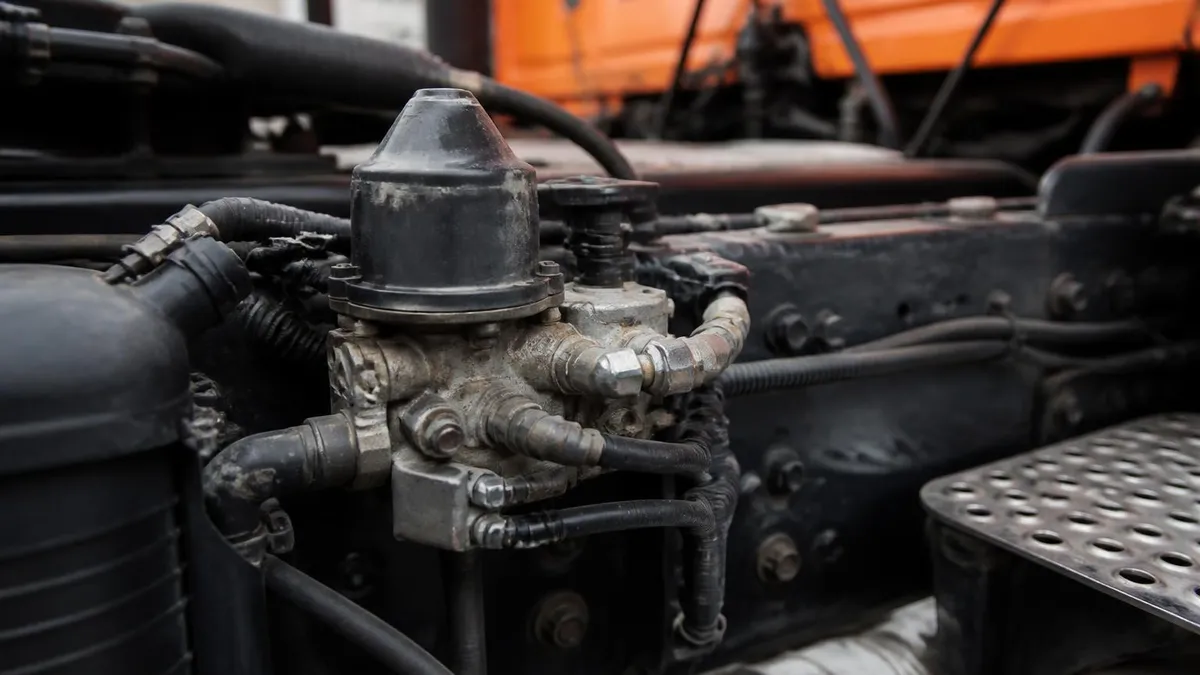
The single most common reason CDL candidates fail the skills test on first attempt is inadequate pre-trip inspection preparation. The pre-trip inspection requires you to walk around a commercial vehicle naming and explaining 100+ components in a specific sequence — describing the structural integrity, fluid levels, attachment points, and safety conditions of each. The examiner watches and grades based on completeness, sequence, and accuracy of your explanations. Memorize the inspection sequence verbatim. Practice verbally walking through it daily. Skipping this step kills first-attempt pass rates more than any other study failure.
Knowledge Test Format at the DMV
Knowledge tests are computer-based at most modern DMVs and paper-based at older or rural offices. Most states require passing at 80 percent — 40 of 50 questions correct on the General Knowledge test, similar pass rates on class-specific and endorsement tests. Some states use 80 of 100 conversion for finer granularity. You typically take all required knowledge tests in a single visit, though some states allow multi-visit completion if you need to retake specific portions.
Failed knowledge tests can usually be retaken after a brief waiting period (typically 1-3 days at most states). Each retake requires payment of the standard knowledge test fee. After multiple failures, some states impose longer waiting periods or require additional study evidence. Plan to pass on first attempt — repeated retakes signal preparation problems that may catch up with you during the more demanding skills test. The CDL permit guide walks through what happens after you pass knowledge tests.
Most modern DMVs use computer-based testing with immediate scoring. You learn your pass/fail status before leaving the test room, allowing same-day Commercial Learner's Permit issuance for candidates who pass. Older or rural offices may use paper tests with delayed scoring; the result still typically arrives within 24-48 hours.
Don't schedule the test immediately after completing your study program. Allow 2-3 days of light review and rest before testing. Cognitive fatigue affects test performance significantly; a well-rested test taker outperforms a tired one even when both have studied the same content.
Effective CDL Study Routine
- ✓Download your state CDL manual from the state DMV website
- ✓Read the manual cover-to-cover within the first 2 weeks of study
- ✓Take notes on regulations, weight/dimension limits, and emergency procedures
- ✓Drill practice questions from Driving-Tests.org or similar state-specific source
- ✓Target weak areas with focused re-reading of relevant manual chapters
- ✓Memorize the pre-trip inspection sequence verbatim for skills test prep
- ✓Practice verbal pre-trip inspection daily — out loud, full sequence
- ✓Take timed full-length practice tests in the final week before DMV visit
- ✓Schedule the DMV test only when you're scoring 85%+ on practice tests consistently
- ✓Bring required documents (ID, ELDT certificate, Med Card) to DMV
Skills Test Preparation Deep Dive
Skills test preparation has three components corresponding to the three skills test parts. Pre-trip inspection memorization is the biggest study challenge — the inspection sequence covers 100+ components, each with specific descriptions and safety considerations that must be verbalized correctly during the test. Most candidates spend 4-8 hours memorizing and rehearsing the pre-trip inspection in the final 2 weeks before their skills test attempt.
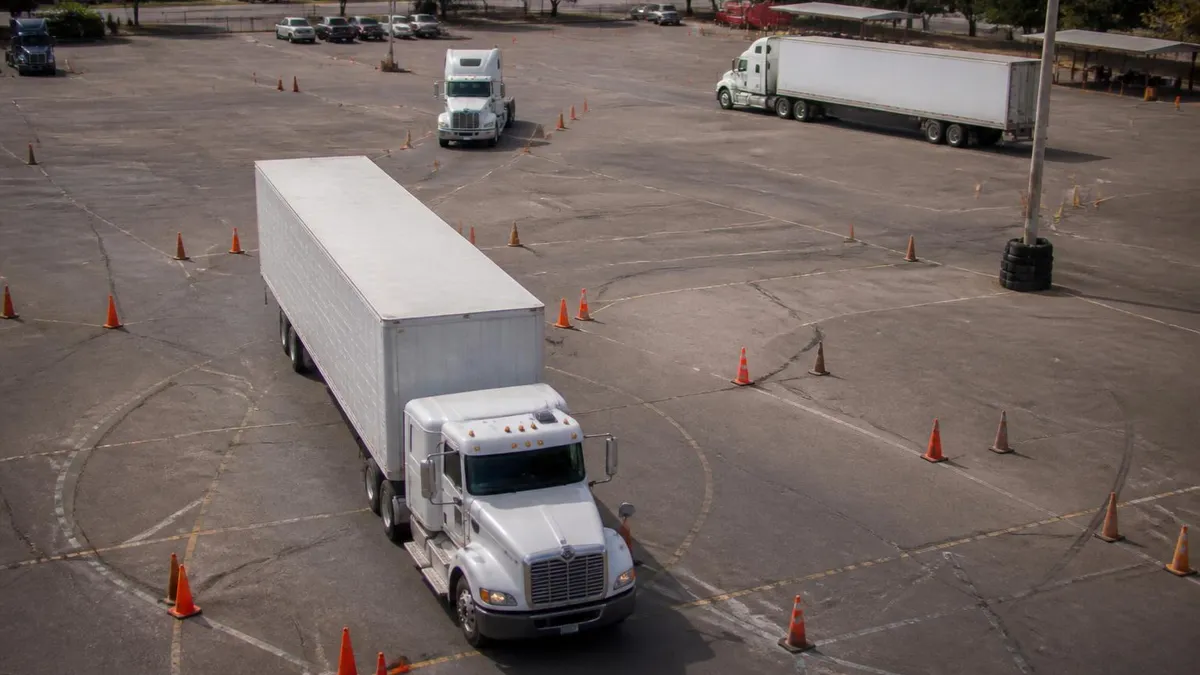
Basic control skills (straight-line backing, offset backing, alley dock backing, parallel parking) require behind-the-wheel practice in commercial vehicles. Your ELDT program typically provides this practice; some schools include additional pre-test practice in their fee structure. Plan 10-20 hours of dedicated backing practice before the skills test. Road test preparation focuses on safe driving under examiner observation — lane control, signaling, intersection navigation, speed control, hill grades. This is where ELDT behind-the-wheel training delivers the most direct preparation value. Treat the skills test as the integration test of everything ELDT has taught you.
Find an ELDT instructor or experienced CDL driver who can role-play the skills test examiner during your practice. Performing the pre-trip inspection verbally in front of someone simulating an examiner reveals gaps in your preparation that solo practice doesn't expose. Several practice sessions with feedback produce dramatically better real-test performance.
Match your practice vehicle to your skills test vehicle. The DMV will test you on a specific commercial vehicle category; your skills test vehicle must match the CDL class you're testing for. Practice in the same type of vehicle you'll test in to avoid surprise difficulties from vehicle differences.
Filming yourself performing the pre-trip inspection is one of the highest-use study techniques available. Watching the video reveals pacing issues, missed steps, and unclear verbalization in ways that solo practice doesn't expose. Many successful CDL candidates report using this technique.
HazMat Endorsement Preparation
The HazMat endorsement requires both a knowledge test and a TSA security threat assessment. The knowledge test (typically 30 questions) covers federal HazMat regulations, placards and labels, hazard classes, emergency response procedures, security plans, and HazMat-specific operational requirements. Study the HazMat section of your state CDL manual plus federal HazMat regulations summary documents from FMCSA. Pass rates run 70-80 percent typical first attempt.
Beyond the knowledge test, HazMat requires TSA Transportation Security Threat Assessment with fingerprinting at an authorized location. Cost roughly $86. Processing time 30-90 days. Some candidates fail this background check due to specific criminal history, immigration status issues, or other security concerns. The TSA clearance is separate from CDL knowledge test passage — you can pass the knowledge test and then wait for TSA clearance before the endorsement is added to your CDL. Plan HazMat pursuit early in your CDL process if endorsement is critical to your target employment.
Some carriers will pay your TSA security threat assessment fee as part of HazMat hiring packages. Negotiate this if you have a job offer contingent on HazMat endorsement. The $86 cost is modest but the timing matters when you're trying to start work on a specific date.
Some candidates skip HazMat initially and add it after their CDL is issued, treating the additional knowledge test and TSA check as separate workflows. This staged approach can simplify the initial CDL process for candidates not certain whether HazMat work is in their future.
Plan your endorsement order strategically.
CDL Study Reference
Key Facts at a Glance
| Item | Value | Details |
|---|---|---|
| Typical CDL manual length | 200-300 pages | |
| Typical passing score on knowledge tests | 80% | |
| General Knowledge test length | 50 questions |
Common Knowledge Test Failure Points
Hours of service rules, vehicle weight limits, and federal CDL regulatory requirements appear heavily on knowledge tests. Many candidates skim these chapters in the manual and lose points on questions that require specific regulatory knowledge.
Air brake components, engine systems, electrical systems, and vehicle inspection points get tested in detail. Memorize component names and basic function for major vehicle systems — particularly air brakes for any class requiring air brake endorsement.
Fire, accident response, vehicle breakdown, and other emergency procedures get tested across multiple knowledge tests. Memorize the proper response sequences. These questions favor specific procedural knowledge over general intuition.
Speed-related questions, stopping distance calculations, and braking technique questions appear on every knowledge test. Memorize the basic formulas for stopping distance components and the speed-related safety practices in the manual.
Traffic signs, road markings, signals, and warning indicators get tested across knowledge tests. Many candidates assume their general driving knowledge covers this content; commercial-specific signs and signals require focused study.
Balancing ELDT Training with Self-Study
ELDT-enrolled candidates typically receive structured instruction covering most knowledge test content as part of federally-required theory training. Many ELDT programs include practice questions, mock tests, and guided study materials. For these candidates, self-study primarily supplements ELDT — focused reading of the state CDL manual sections not deeply covered in ELDT, additional practice questions to drill weak areas, and pre-trip inspection memorization as the major out-of-class effort.
Self-paced candidates without ELDT support face heavier individual study load. You're responsible for working through the manual completely on your own, sourcing your own practice questions, and identifying your own weak areas. The risk of self-paced study is missing content areas that ELDT instructors would surface naturally. Compensate by using prep providers (Driving-Tests.org, CDL Practice Test sites) that cover the full knowledge test content explicitly. Time investment for self-paced study typically runs 50-100 hours total; ELDT-supported study can be 20-40 hours of additional individual time.
For ELDT-enrolled candidates, attend every class session including theory portions. The theory content is the foundation for knowledge tests; missing classes creates content gaps that show up on knowledge tests later. Treat ELDT theory as part of your knowledge test prep rather than as a separate compliance requirement.
Ask your ELDT instructor for specific test-prep guidance based on your weak areas. Instructors familiar with state DMV test patterns can often point you toward specific manual sections or practice question types that boost your weak content. This focused remediation is more efficient than general re-reading.
Study Approaches Compared
- +ELDT-supported: structured instruction reduces individual study burden
- +ELDT-supported: instructor feedback identifies weak areas earlier
- +ELDT-supported: peer cohort provides accountability and shared learning
- +Self-paced: lower cost without ELDT tuition
- +Self-paced: flexible schedule fits work and family commitments
- +Self-paced: free state CDL manual and practice sites provide complete content
- −ELDT-supported: ELDT tuition adds $3,000-$8,000 to overall costs
- −ELDT-supported: scheduled sessions may conflict with work or other commitments
- −Self-paced: risk of missing content areas without instructor guidance
- −Self-paced: no built-in support for skills test preparation
- −Self-paced: motivation and discipline required for sustained study
- −Self-paced: ELDT is now federally required for new CDL applicants since 2022
Sample CDL Practice Questions
Try these questions from our free CDL practice tests. The correct answer and an explanation follow each question.
You will need to pass the pre-trip vehicle inspection test ________.
- A. Before you complete the general knowledge test.
- B. Before you can proceed to the basic vehicle control skills test.
- C. After the basic vehicle control skills test.
- D. During the winter.
Answer: B. Before you can proceed to the basic vehicle control skills test.
The CDL skills test is structured in a specific sequence. You must first successfully pass the pre-trip vehicle inspection test, which assesses your ability to identify and explain vehicle components and their safe operating condition. Only after demonstrating this foundational knowledge are you permitted to proceed to the basic vehicle control skills test, followed by the on-road driving test.
On the general skills test, you will be tested on what?
- A. Your ability to drive safely in a variety of traffic situations.
- B. To see whether you know when your vehicle is safe to drive.
- C. On your ability to control your vehicle.
- D. All of the listed answers.
Answer: D. All of the listed answers.
The CDL general skills test is comprehensive, evaluating a driver's overall competency in several areas. It assesses your ability to control the vehicle safely, your knowledge of when the vehicle is safe to drive (which includes elements of the pre-trip inspection), and your performance in a variety of traffic situations during the on-road driving portion. This multi-faceted test ensures drivers possess the necessary skills for safe commercial operation.
During the basic vehicle control portion of the skills test, you will be asked to __________.
- A. Demonstrate that your vehicle is safe to drive.
- B. To fix your vehicle's engine.
- C. Move your vehicle forward, back and turn it within a defined area.
- D. Demonstrate your ability to drive your vehicle in a variety of traffic situations.
Answer: C. Move your vehicle forward, back and turn it within a defined area.
The basic vehicle control portion of the CDL skills test assesses a driver's fundamental ability to maneuver a large commercial vehicle. This typically involves demonstrating control by moving the vehicle forward, backing it up, and turning it accurately within a designated area. These exercises evaluate precision, spatial awareness, and the ability to handle the vehicle's size and weight.
During the CDL skills test for a Class A vehicle, which of the following is NOT one of the three required test components?
- A. Pre-trip vehicle inspection
- B. Basic vehicle control maneuvers
- C. Emergency brake pressure test
- D. On-road driving test
Answer: C. Emergency brake pressure test
The three mandatory components of the CDL skills test are the pre-trip inspection, basic vehicle controls (backing, turning, coupling/uncoupling), and the on-road driving test. An emergency brake pressure test is not a standalone required component.
CDL Questions and Answers
About the Author

Licensed Driving Instructor & DMV Test Specialist
Penn State UniversityRobert J. Williams graduated from Penn State University with a degree in Transportation Management and has spent 20 years as a certified driving instructor and DMV examiner consultant. He has personally coached thousands of applicants through written knowledge tests, skills assessments, and commercial driver licensing programs across more than 30 states.
Join the Discussion
Connect with other students preparing for this exam. Share tips, ask questions, and get advice from people who have been there.
View discussion (7 replies)