
CDL Meaning: What Commercial Driver's License Actually Means 2026 October
🎯 CDL stands for Commercial Driver's License. Classes A/B/C explained, endorsements, who needs one, how to get one, pay range, and disqualifying offenses.
CDL Meaning: What a Commercial Driver's License Actually Is
CDL stands for Commercial Driver's License — a federal credential required to operate commercial motor vehicles in the United States. Unlike your regular driver's license issued by a state DMV, a CDL is regulated by federal standards set by the Federal Motor Carrier Safety Administration (FMCSA) and issued by state DMVs as a uniform credential. The same CDL works in every state. Federal regulations set the floor; states can add requirements but cannot lower them. This federal framework exists because commercial vehicles operate across state lines and the patchwork of state-specific rules would be impractical for interstate commerce.
This guide walks through what CDL means in practical terms: which vehicles require one, the three CDL classes, the endorsements and restrictions that shape your scope of practice, how to get a CDL (including the mandatory federal ELDT training requirement since 2022), medical card rules, pay ranges, and the disqualifying offenses that can end CDL careers. If you're studying for the knowledge test, the CDL practice test covers the content tested at the DMV. The CDL DMV guide walks through the licensing process itself in detail.
For drivers entering the field, the CDL system can feel labyrinthine. Three classes, six common endorsements, multiple restrictions, federal-versus-state requirements, ELDT mandates, medical certifications, background checks. Each layer exists for a reason — typically a specific safety concern that emerged from earlier incidents — but together they create real complexity. This guide unpacks the layers so you can navigate the system efficiently.
The persistent driver shortage means that for committed candidates, the path from zero to licensed commercial driver to first paycheck is among the fastest in any skilled trade. Six to twelve weeks of focused effort moves you from non-driver to credentialed professional earning $50,000-$80,000 in your first year — a return on training time that few comparable credentials match.
This guide is intentionally comprehensive because half-understanding the CDL system creates risks. A driver who picks up the wrong class, misses an endorsement requirement, or doesn't maintain their Med Card discovers problems at the worst possible moment — usually during a job interview or a roadside inspection.
Bottom Line
CDL stands for Commercial Driver's License. You need one to operate vehicles with GVWR of 26,001+ pounds, vehicles transporting 16+ passengers, or vehicles hauling placardable hazardous materials. Three classes: A (tractor-trailers), B (straight trucks), C (smaller passenger/hazmat). ELDT training mandatory since February 2022. Training cost $3,000-$8,000 self-pay or free with company sponsorship. Pay ranges from $50,000-$120,000+ depending on specialty. DUI in your personal car can end your CDL career.
When You Need a CDL
Federal regulations require a CDL for any vehicle meeting one of three triggers. First, a Gross Vehicle Weight Rating (GVWR) of 26,001 pounds or more — this covers most large trucks, tractor-trailers, dump trucks, and many box trucks. Second, a vehicle designed to transport 16 or more passengers including the driver — covering most buses and large vans used commercially. Third, a vehicle of any size transporting hazardous materials in quantities requiring placards — even a small box truck hauling chemicals or fuel triggers CDL requirements with the HazMat endorsement.
The personal-versus-commercial distinction matters. Driving your personal pickup truck towing a fifth-wheel trailer for recreational purposes doesn't require a CDL even if the combined weight crosses 26,000 pounds — as long as you're not operating commercially. The line between commercial and non-commercial use is determined by purpose, signage, and how the vehicle is registered. Roadside inspectors look at vehicle weight, business name on the door, the cargo, and whether the trip is for-hire. Driving for compensation in a covered vehicle without a CDL exposes you to substantial fines and potential criminal charges.
One quirk worth knowing: certain agricultural and emergency vehicles enjoy exemptions even when they meet weight thresholds. Farm vehicles operating within 150 miles of the home farm, fire trucks responding to emergencies, and certain government vehicles can sometimes operate without CDL credentials in their narrow operating contexts. These exemptions are narrow and don't extend to commercial operators using similar vehicles for non-exempt purposes.
If you're uncertain whether your specific vehicle and use case requires a CDL, ask your state DMV directly. Don't guess. The consequences of operating without proper credentialing can include fines, vehicle impoundment, and criminal charges in some cases.
The Three CDL Classes
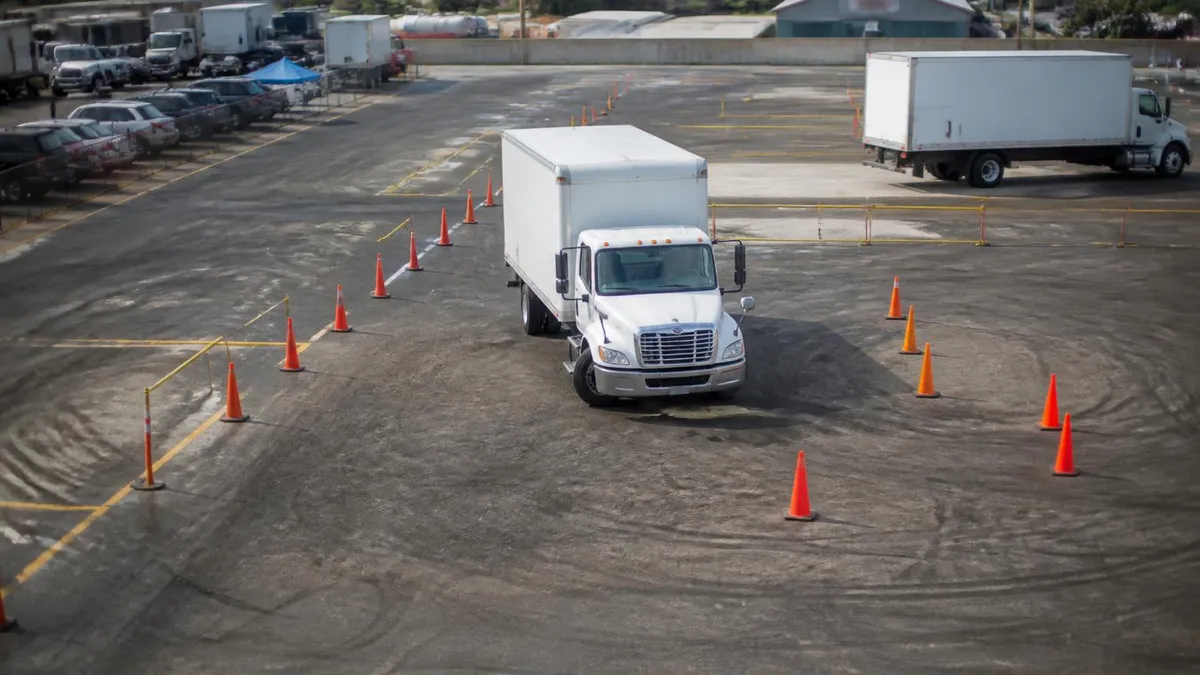
Any combination of vehicles with GVWR of 26,001+ pounds, provided the towed vehicle exceeds 10,000 pounds. Covers tractor-trailers, double trailers, livestock haulers, flatbeds, tankers. The broadest CDL — Class A holders can also operate Class B and most Class C vehicles.
Any single vehicle with GVWR of 26,001+ pounds, or such vehicle towing a trailer not exceeding 10,000 pounds. Covers straight trucks, dump trucks, large box trucks, transit and segmented buses. Class B holders can also operate Class C with proper endorsements.
Smaller vehicles that don't meet Class A or B criteria but transport 16+ passengers (including driver) or hazardous materials requiring placards. Covers smaller passenger vans, small hazmat vehicles. Most restrictive CDL class.
The practice-phase credential issued before the full CDL. Required before taking the skills test. Holder can only drive a commercial vehicle when accompanied by a CDL-licensed driver qualified in the same class. Valid 180 days, may extend once.
Most professional drivers target Class A because it opens the broadest job market — long-haul, regional, dedicated tractor-trailer routes. Class B fits drivers who specifically want straight-truck work, transit driving, or local delivery. Class C is niche, typically used for smaller passenger vans and limited hazmat work.
You can start with Class B and upgrade to Class A later, but it requires additional ELDT training plus skills test in a Class A vehicle. Most candidates target Class A from the start if they have any uncertainty about their long-term route preferences.
CDL Endorsements That Expand Your Scope
Endorsements add specialized authority to your base CDL. Each endorsement requires a separate knowledge test at the DMV, and HazMat additionally requires TSA background check and fingerprinting. The most common endorsements: H (HazMat — placardable hazardous materials), N (Tanker — liquid or gaseous loads), T (Doubles/Triples — multi-trailer configurations), P (Passenger — vehicles transporting passengers), S (School Bus — combines Passenger with specific school transit rules), and X (combined HazMat plus Tanker — common combination for chemical and fuel haulers).
The HazMat endorsement is the most restrictive. Beyond the knowledge test, you must complete TSA Transportation Security Threat Assessment with fingerprinting at an authorized location ($86 typical), receive clearance from federal authorities (30-90 days), and renew the background check every 5 years. Most other endorsements require only the DMV knowledge test plus payment of state-specific fees. Plan endorsements strategically — pursue the ones your target jobs actually require rather than collecting them for the resume.
School Bus and Passenger endorsements together open a particular career niche. School bus drivers earn solid base pay plus comprehensive benefits at school district employers, with split shifts (morning and afternoon routes) that work well for parents and others wanting non-traditional schedules. Demand for school bus drivers has been particularly high since 2020.
HazMat carries serious responsibility. Drivers hauling chemicals, fuel, or other regulated materials operate under additional federal rules including detailed manifests, route restrictions, and emergency response protocols. The TSA security check exists because hazmat materials can pose security threats if misappropriated.
Common CDL Endorsements
Authorizes operation of vehicles carrying placardable hazardous materials. Requires DMV knowledge test plus TSA security threat assessment with fingerprinting. Most stringent endorsement. Renewal every 5 years requires repeated TSA check. Adds $0.05-$0.15 per mile to pay for HazMat work; some specialty hauling pays significantly more.
Restrictions That Limit Your CDL
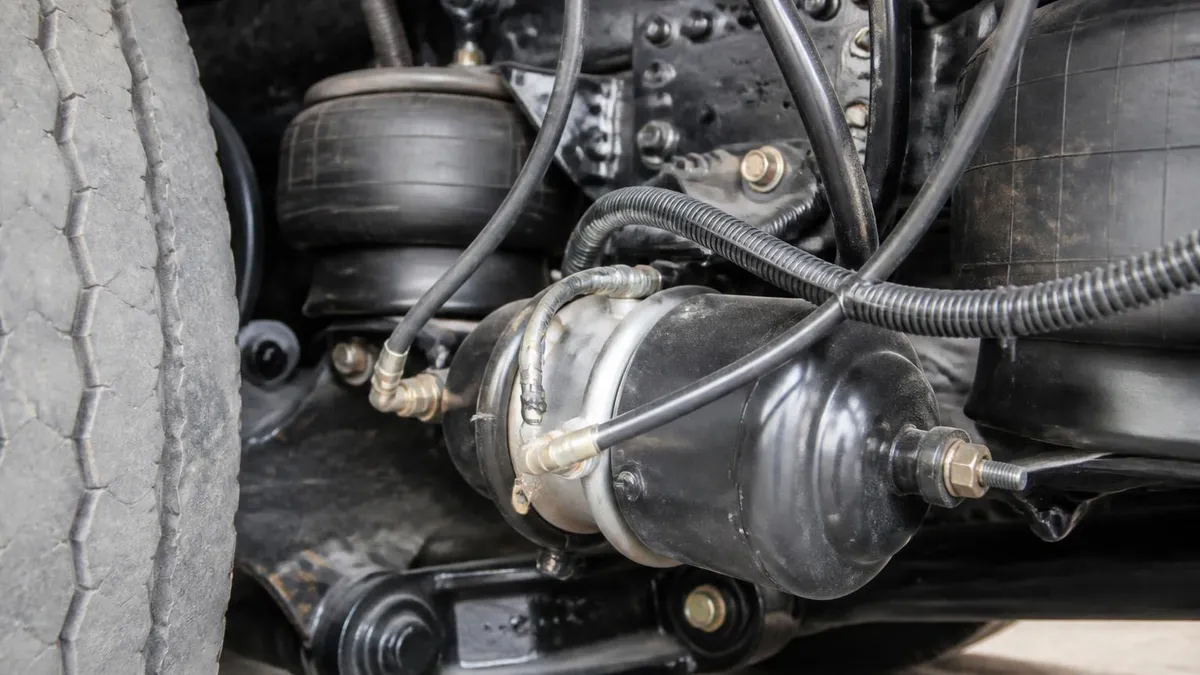
Restrictions are limitations applied based on what equipment you tested in. The L restriction (no air brakes) is the most damaging. Testing in a vehicle without air brakes, or failing the air brakes section, results in an L restriction that bars you from operating any vehicle with air brakes. Since most commercial trucks have air brakes, an L-restricted CDL severely limits job opportunities. Always take and pass the Air Brakes knowledge component, and test in a vehicle equipped with air brakes if at all possible.
Other restrictions follow the same logic. E (no manual transmission) results from testing in an automatic — bars you from manual transmission commercial vehicles. O (no fifth-wheel/tractor-trailer) results from testing in a Class A combination without a fifth-wheel. M (various medical) reflects medical waivers limiting certain operations. Each restriction limits the equipment you can operate. Plan your skills test vehicle carefully — testing in the most-capable vehicle available avoids unnecessary restrictions. Removing a restriction later requires retesting in a qualifying vehicle plus paying additional fees.
Removing a restriction later requires retesting in a qualifying vehicle plus paying additional fees. A common pattern: drivers who initially test in an automatic transmission to make their skills test easier later discover that most trucking jobs require manual. Removing the E restriction means going back to a school or test center, paying for additional skills evaluation, and committing more time. Better to test in the most-capable vehicle the first time.
Since February 7, 2022, all new CDL applicants must complete Entry-Level Driver Training (ELDT) from an FMCSA-approved provider listed on the Training Provider Registry. This applies to new CDL applicants, upgrades from Class B to Class A, and additions of HazMat, Passenger, or School Bus endorsements. The DMV verifies your ELDT completion electronically through TPR before allowing skills test scheduling. No ELDT certificate, no skills test, no CDL. Verify any school you consider is on the Training Provider Registry at FMCSA.
How to Get Your CDL
The path runs through several sequential steps. First, prepare documents: regular driver's license, Social Security card, proof of state residency, birth certificate or passport, and a current DOT Medical Examiner Certificate (Med Card). The Med Card requires a physical from an FMCSA-certified Medical Examiner — vision check, hearing, blood pressure, urinalysis, medical history review. Most healthy candidates receive a 24-month Med Card; those with monitored conditions may receive 12-month or shorter cards.
Second, complete federally-required ELDT training at an FMCSA-approved school. Programs combine theory (classroom-style instruction on safety, regulations, vehicle systems) with behind-the-wheel training (range plus public road driving). Typical cost $3,000-$8,000 for self-pay students; many large trucking carriers sponsor training in exchange for 1-2 year employment commitments after licensing.
Third, pass the knowledge tests at your state DMV for the class and endorsements you're pursuing. Receive your Commercial Learner's Permit. Practice with a qualified CDL holder for at least 14 days. Fourth, pass the skills test (pre-trip inspection, basic control skills, road test). The CDL permit guide covers the CLP phase in detail.
Total time from start to license typically runs 4-12 weeks. Full-time ELDT programs run 3-7 weeks. Add 2-3 weeks for CLP practice and skills test scheduling, plus license processing. Part-time programs extend the timeline to 3-4 months. Plan your timeline around your employer's start-date requirements if you have a job offer contingent on certification.
The 14-day minimum CLP holding period is a federal requirement designed to ensure adequate practice time before skills testing. Most ELDT programs build this practice into the curriculum naturally. CLPs that approach expiration without skills testing can be extended once for an additional 180 days.
Documents to Bring to the DMV
- ✓Valid non-commercial driver's license (current)
- ✓Social Security card (original) or W-2 showing full SSN
- ✓Birth certificate or US passport for identity
- ✓Two proofs of state residency (utility bill, lease, bank statement)
- ✓Current DOT Medical Examiner Certificate (Med Card)
- ✓Completed CDL application form for your state
- ✓ELDT certificate of completion (electronically uploaded to TPR)
- ✓Payment for fees (typically $50-$300 across application, test, license)
- ✓Glasses if you wear them — vision test required at first issuance
- ✓Proof of US citizenship or lawful presence (REAL ID era)
The DOT Medical Card
Every CDL applicant and holder needs a current DOT Medical Examiner Certificate, separate from your CDL but federally required. Get it from a Medical Examiner listed on the National Registry of Certified Medical Examiners. The exam covers vision (corrected 20/40 in each eye, peripheral 70 degrees horizontal), hearing (forced whisper or audiometer), blood pressure (under 140/90 typical maximum), urinalysis, and review of medical history including diabetes, sleep apnea, cardiac history, and certain medications. The examiner may certify you for 24 months for healthy applicants, 12 months for monitored conditions, or shorter periods for active medical situations.
The Med Card must stay current. Allowing it to expire automatically downgrades your CDL to non-CDL status — you cannot legally operate commercial vehicles until you renew. Track your renewal date and schedule re-certification at least 30 days before expiration. Some states issue automated reminders; others don't. Don't rely on state reminders alone. Drivers operating intrastate-only may be eligible for state medical variance programs that accept conditions FMCSA wouldn't — but interstate drivers must meet federal standards regardless of state variances.
Some Medical Examiners are more rigorous than others. If you have a borderline condition (controlled high blood pressure, treated sleep apnea, monitored diabetes), it can be worth seeking a Medical Examiner familiar with FMCSA standards. Some examiners conservatively decline to certify drivers who would qualify with a more experienced reviewer. The National Registry includes thousands of certified examiners; you can search by location and specialty.
Some chronic conditions are managed within FMCSA frameworks but require specific documentation. Diabetes management programs (insulin-treated diabetes was once disqualifying but is now manageable under specific protocols), sleep apnea on CPAP therapy, certain cardiac conditions with cardiologist support — all can be certified with proper documentation. Don't self-disqualify based on assumed exclusions.
CDL Pay and Job Market in 2026
CDL pay varies enormously by specialty, route type, and experience. Local delivery and short-haul driving for a single employer typically pays $50,000-$65,000 for solo drivers. Regional dedicated routes (home weekly or twice a week) pay $60,000-$85,000. Long-haul OTR (over-the-road) driving for major carriers like Schneider, Werner, or Knight-Swift pays $55,000-$80,000 for company drivers, more for team driving operations. Specialty hauling — HazMat, oversized loads, automotive transport, tankers — pays $70,000-$100,000+ for experienced drivers.
Owner-operators (drivers who own their trucks) can gross $150,000-$250,000 per year, though expenses (fuel, maintenance, insurance, payments) consume 60-70 percent of revenue. The CDL job market remains tight in 2026 — persistent driver shortage in long-haul segments, growing demand in dedicated and specialty routes driven by e-commerce and infrastructure work. Pay has grown substantially since 2020. Signing bonuses of $5,000-$15,000 are common at major carriers. Tuition reimbursement for ELDT is widely available in exchange for employment commitments.
The driver shortage isn't evenly distributed across CDL specialties. Long-haul OTR has the most acute shortage and the most aggressive recruitment. Regional and dedicated routes have moderate shortages. Local delivery and short-haul positions in metro areas are less acute. Specialty hauling (HazMat, automotive transport, refrigerated) has selective shortages depending on the specific segment. Match your job search to the segments with the strongest demand if pay maximization matters.
Owner-operator paths offer the highest income ceiling but require substantial capital investment in truck purchase, ongoing maintenance, fuel, insurance, and business operations. Most CDL drivers start as company drivers and transition to owner-operator after 2-5 years of experience and savings. Some never make the transition because the lifestyle and financial risk don't suit them.

CDL by the Numbers
Disqualifying Offenses
First offense = 1-year disqualification (3 years if HazMat-endorsed). Second offense = lifetime disqualification. Applies whether the offense occurred in a commercial vehicle or in your personal vehicle. CDL holders face stricter consequences than non-CDL drivers.
Leaving the scene of an accident involving a commercial vehicle is a serious offense. Disqualification 1 year minimum for first offense, lifetime for second. Even minor accidents must be reported per federal regulations.
Using a commercial vehicle to commit a felony (drug trafficking, etc.) results in lifetime CDL disqualification. Drug-related felonies with commercial vehicles are particularly severe — typically lifetime.
Refusing a breath, blood, or urine test when properly requested by law enforcement equals a DUI for CDL purposes. Same disqualification structure — 1 year first offense, lifetime second. Don't refuse — the consequences match a confirmed DUI.
Two serious traffic violations within 3 years = 60-day disqualification. Three within 3 years = 120-day disqualification. Serious violations include excessive speeding, reckless driving, improper lane changes, following too closely, and texting while driving commercial vehicles.
How CDL Works Across States
The CDL is a federal credential implemented through state DMVs. Once issued, your CDL is recognized in all 50 states for the duration of its validity. If you move to a new state, you must transfer your CDL to that state's DMV within 30 days (some states allow up to 60 days). Transfer typically involves surrendering your old CDL, submitting a new application, paying state-specific fees, and verifying your Med Card and ELDT records carry over.
State-level variations exist within the federal framework. Some states impose stricter requirements than the federal floor — California requires additional state-level paperwork for in-state hazmat work, Texas has its own background check requirements for school bus drivers, New York requires translator services for non-English-speaking applicants. Most variations are administrative rather than substantive. The core CDL — the credential and operating authority — is uniform nationwide thanks to federal standardization.
Transferring your CDL when you move requires attention. Most states impose 30 to 60-day windows for transfer. Driving on an old state's CDL after your residency changes can technically be a violation, though enforcement varies. Plan to handle the transfer within the first month of moving.
Pros and Cons of CDL Careers
- +Strong pay — $50,000-$120,000+ depending on specialty and experience
- +Persistent driver shortage means reliable employment
- +Many entry pathways including paid company-sponsored training
- +Multiple specialty paths (long-haul, regional, dedicated, owner-operator)
- +Travel and see the country at no personal cost
- +Owner-operator path offers substantial earning potential for entrepreneurs
- −Time away from home — long-haul drivers may be gone 2-4 weeks at a time
- −Physical demands — long hours, irregular sleep, sedentary work
- −Strict regulations on hours of service and driving logs
- −DUI in your personal car can end your CDL career
- −Med Card and renewal cycles add administrative burden
- −Owner-operator path carries significant financial risk and capital requirements
CDL Questions and Answers
About the Author

Licensed Driving Instructor & DMV Test Specialist
Penn State UniversityRobert J. Williams graduated from Penn State University with a degree in Transportation Management and has spent 20 years as a certified driving instructor and DMV examiner consultant. He has personally coached thousands of applicants through written knowledge tests, skills assessments, and commercial driver licensing programs across more than 30 states.
Join the Discussion
Connect with other students preparing for this exam. Share tips, ask questions, and get advice from people who have been there.
View discussion (7 replies)