
Free CDL Training: How to Get Your Commercial Driver's Licence for Free 2026
📝 Free CDL training is available through company-sponsored programs, workforce grants, and military benefits. Learn how to get your CDL without paying
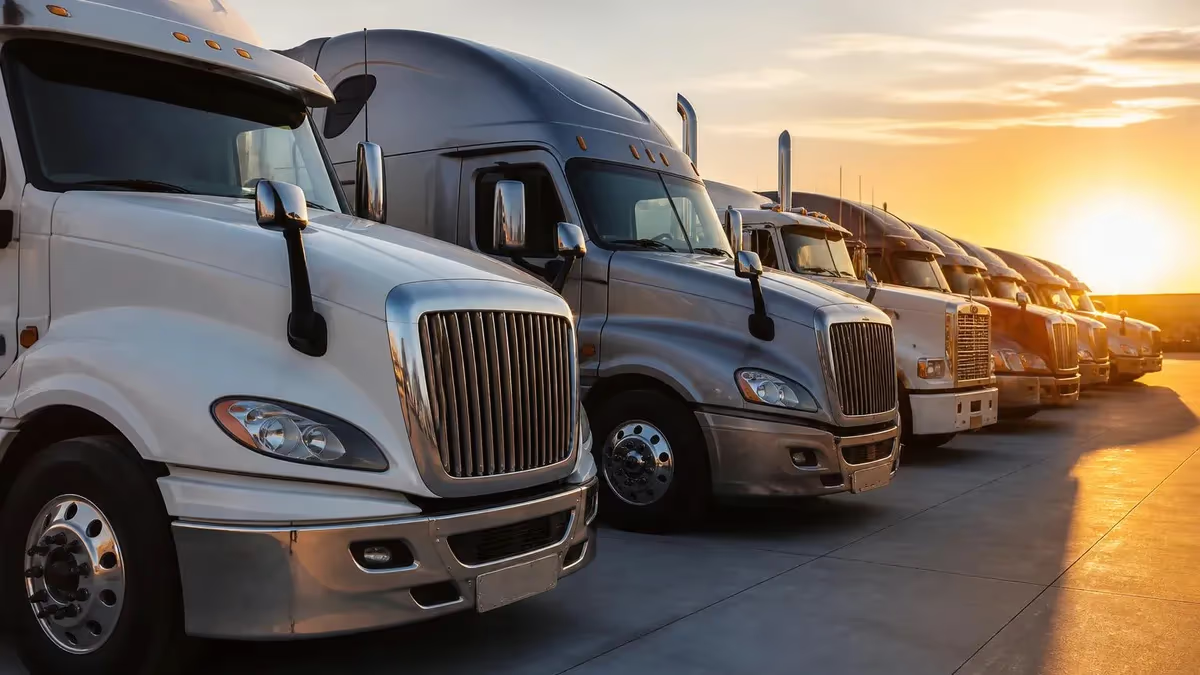
How to Get Free CDL Training
CDL training typically costs $3,000–$10,000 at a private truck driving school — a significant investment that many aspiring truck drivers struggle to afford, especially when they're trying to break into the industry without existing income from a trucking job. But paid CDL training isn't the only path. Several legitimate options exist to get your Commercial Driver's Licence without paying tuition out of pocket: company-sponsored training programmes, workforce development grants, community college programmes with financial aid, military transition programmes, and apprenticeships. Each has different requirements, trade-offs, and availability, but they all result in the same CDL credential. Practice with the free CDL practice test on PracticeTestGeeks (850+ questions with answer explanations).
The catch with most 'free' CDL training is that it's not truly free — it's subsidised in exchange for something. Company-sponsored programmes train you for free but require you to work for that company for 1–2 years afterward. If you leave early, you owe back a portion of the training cost. Workforce grants cover tuition with taxpayer funding but have eligibility requirements and limited availability. Military benefits are earned through service. Understanding these trade-offs upfront prevents surprises and helps you choose the option that genuinely fits your situation rather than the one that sounds best in an advertisement.
The trucking industry is desperate for drivers — the American Trucking Associations estimates a shortage of approximately 80,000 drivers, projected to grow over the coming decade. This shortage is exactly why so many free and subsidised training options exist: carriers and government programmes are investing in new driver pipelines because the demand far exceeds the supply. If you're willing to drive a truck, there are organisations willing to pay for your training. The question is which arrangement gives you the best start to your trucking career without locking you into unfavourable terms.
This guide covers every major pathway to free or funded CDL training, explains the requirements and trade-offs of each, and helps you evaluate which option makes sense for your circumstances. Whether you're a career changer, a military veteran, or someone who simply can't afford $7,000 for truck driving school, there's a funded pathway available — you just need to know where to look and what questions to ask.
Free CDL Study Tools
Interactive CDL resources on PracticeTestGeeks, free to start:
- CDL Road Signs and Signals Practice Test 1 — 25 questions with instant scoring and answer explanations
- CDL flashcards — review key terms and concepts card by card
- CDL study guide — topic-by-topic overview of what the exam covers
- CDL cheat sheet — one-page printable summary for last-minute review
- Company-sponsored programmes: Major carriers (CRST, Werner, Swift, Schneider) pay for training in exchange for a 1–2 year work commitment. You drive for them after graduating
- Workforce development grants: State and federal programmes (WIOA) cover CDL training costs for eligible job seekers — often through local workforce centres
- Community college with financial aid: Pell Grants and state aid can cover CDL programmes at community colleges, making them effectively free for qualifying students
- Military transition programmes: GI Bill, VET TEC, and military-to-civilian programmes cover CDL training for veterans and transitioning service members
- Apprenticeship programmes: Registered apprenticeships provide paid CDL training through employer-sponsored learn-and-earn arrangements
- Trade-off: Most 'free' options require a work commitment, eligibility qualification, or application for financial aid — truly no-strings-attached free training is rare
Free CDL Training Pathways: Step by Step
Option 1: Company-Sponsored CDL Training
Option 2: WIOA Workforce Grants
Option 3: Community College + Financial Aid
Option 4: Veterans Benefits
Option 5: Registered Apprenticeships

Company-Sponsored CDL Training: How It Really Works
Company-sponsored CDL training is the most widely available free option — and the one that requires the most careful evaluation before committing. The deal is straightforward on paper: the company pays for your CDL training (worth $3,000–$7,000), and in exchange, you agree to drive for them for a specified period (usually 12–24 months) after graduating. If you complete the commitment, the training cost is fully forgiven. If you leave early, you repay a prorated portion of the cost.
The training itself typically lasts 3–6 weeks and takes place at the carrier's own training facility or a partner school. You learn the skills needed to pass the CDL exam: pre-trip inspection, basic vehicle control (backing, turning, parking), road driving, coupling and uncoupling, and air brake operation. The training is focused on getting you CDL-ready quickly rather than providing comprehensive driver development — which means you graduate with a CDL but limited real-world experience. Many companies pair new graduates with experienced drivers for a few weeks of team driving before sending them out solo.
The quality of company-sponsored training varies significantly between carriers. Some programmes are well-structured with experienced instructors, modern equipment, and genuine investment in student success. Others are minimum-viable programmes designed to get bodies in trucks as quickly as possible, with insufficient training time and high early-career accident rates among graduates. Research the specific carrier's training programme before committing: ask about the instructor-to-student ratio, the number of driving hours included, the CDL exam pass rate, and whether the programme is accredited or state-approved.
The employment commitment is the critical factor to evaluate. Read the contract carefully before signing. Key questions: How long is the commitment period? What happens if you're fired (not just if you quit) — do you still owe the training cost? Is the repayment amount prorated or is the full amount due if you leave at any point? What are the pay and benefits during the commitment period?
Some company-sponsored programmes offer below-market pay during the commitment period because the driver has limited bargaining power — they can't easily leave without triggering the repayment clause. Compare the total compensation (pay + benefits − training cost if you left early) against what you'd earn at another carrier after paying for your own CDL training.
Despite these cautions, company-sponsored CDL training is a legitimate and widely used pathway into trucking. Millions of drivers have started their careers this way. The key is choosing a reputable carrier with a fair contract, adequate training, and competitive pay during and after the commitment period. The worst-case scenario — completing the commitment, gaining experience, and then moving to a higher-paying carrier — is still a solid career start. The best-case scenario is that you enjoy the carrier, stay beyond the commitment, and advance within the company.
For a fuller set of questions on this topic, see our cdl practice test printable free resource.
Other Free CDL Training Sources
The Workforce Innovation and Opportunity Act (WIOA) provides funding for job training through local American Job Centers. Eligibility is based on employment status and income — unemployed, underemployed, and low-income adults are prioritised. WIOA can cover the full cost of CDL training at approved schools with no repayment requirement and no employer commitment. The catch: funding is limited, not everyone qualifies, and the application process involves assessments and career planning. Start at your local American Job Center (careeronestop.org to find locations).
Many states have their own workforce training programmes that fund CDL training independently of WIOA. Some examples: California's Employment Training Panel (ETP), Texas Workforce Commission's Skills Development Fund, and New York's Individual Training Accounts. These programmes vary by state in eligibility, funding amounts, and approved schools. Check your state workforce agency's website or contact your local American Job Center to learn what state-specific CDL funding is available in your area.
If your community college offers a CDL programme, filing the FAFSA may qualify you for a Pell Grant — federal grant money that doesn't need to be repaid. Maximum Pell Grant amounts exceed the tuition of most community college CDL programmes, making the training effectively free for qualifying students. Eligibility is based on financial need (income and family size). Even if you've never attended college, you can file the FAFSA and apply for community college CDL programmes — no prior college experience is required.
Post-9/11 GI Bill covers CDL training at VA-approved schools including tuition and a housing allowance. The VET TEC programme (for IT and high-demand occupations) and various state veterans' workforce programmes also fund CDL training. Military-to-civilian truck driving transition programmes are offered by some carriers specifically for veterans. The military-trained driver with a CDL is in extremely high demand because of demonstrated discipline, experience with large vehicles, and security clearance eligibility for specialised loads (HAZMAT, government contracts).
Evaluating Free CDL Training Offers
Not all free CDL training programmes are equal. Evaluate each offer against these criteria:
- Accreditation or state approval: Is the training programme approved by your state's DMV and/or accredited by a recognised body? Unaccredited programmes may not properly prepare you for the CDL exam
- CDL exam pass rate: Ask for the programme's first-attempt CDL exam pass rate. Rates above 80% indicate quality instruction; below 60% is a warning sign
- Contract terms (company-sponsored): Read every line. Know the commitment length, early termination costs, what triggers repayment (quitting vs being fired), and pay during the commitment period
- Total training hours: Quality programmes include 120–200+ hours of instruction. Fast-track programmes under 80 hours may not provide adequate preparation
- Equipment quality: Training on modern trucks with automatic and manual transmissions prepares you for the widest range of employment. Training only on automatics limits your options
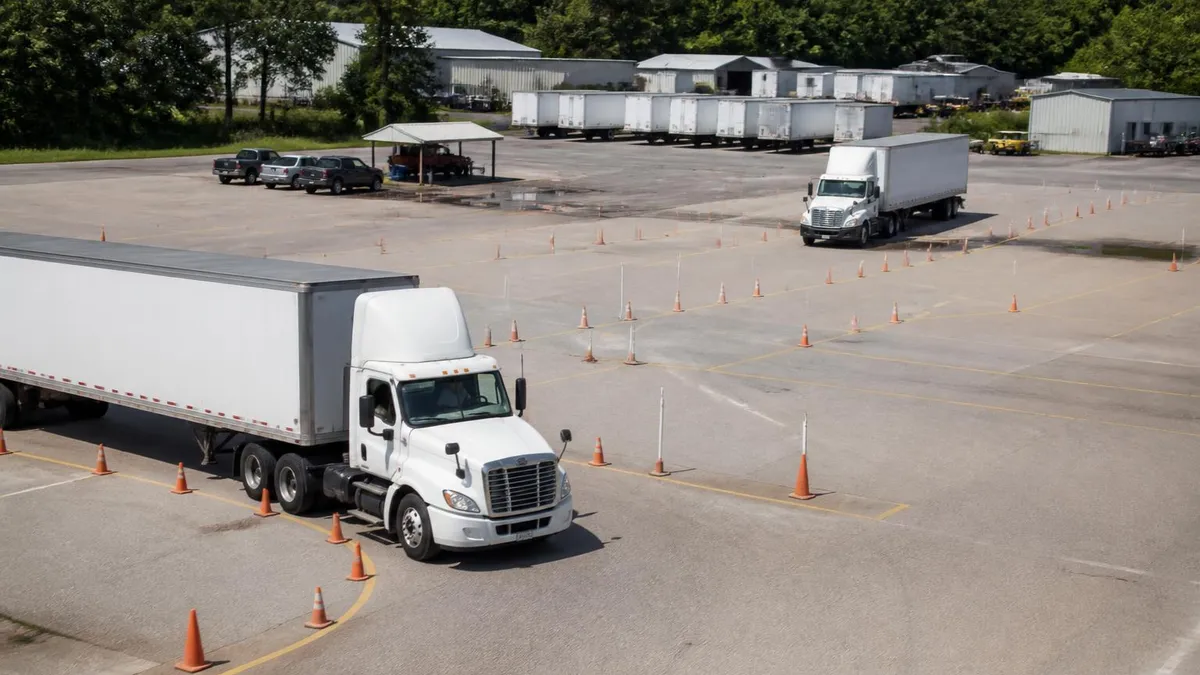
CDL Training Cost Comparison: Free vs Paid
Understanding the true cost of each CDL training option — including hidden costs and opportunity costs — helps you make the decision that's actually best for your financial situation rather than just the one that looks cheapest upfront.
Paid CDL training at a private school costs $3,000–$10,000 in tuition, takes 3–8 weeks, and gives you complete freedom to choose any employer after graduation. You owe no company anything. You can shop for the highest-paying carrier from day one. The upfront cost is real, but the freedom to earn market-rate pay immediately often recoups the tuition investment within a few months of higher earnings compared to what company-sponsored drivers earn during their commitment periods.
Company-sponsored training costs $0 upfront but locks you into a specific employer for 1–2 years at whatever pay they offer. If that pay is $10,000–$15,000 below market rate annually (which is common for first-year company-sponsored drivers), the 'free' training effectively costs you more than paying for school yourself and choosing a higher-paying employer. Run the math for your specific situation: (market rate pay × commitment period) minus (company-sponsored pay × commitment period) = true cost of 'free' training. If the difference exceeds the cost of paid CDL school, paying for your own training is the better financial decision.
WIOA grants and Pell Grants are genuinely free — no repayment, no work commitment, no catch beyond meeting eligibility requirements and completing the application process. If you qualify, these are objectively the best options because they provide funded training with complete post-graduation freedom. The limitation is availability: not everyone qualifies, funding is limited, and approved programmes may not be conveniently located.
Veterans benefits (GI Bill) are the gold standard of CDL funding — full tuition coverage, a housing allowance during training, and no repayment or commitment. Veterans who haven't used their education benefits and are interested in trucking should absolutely use the GI Bill for CDL training. It's one of the highest-value applications of military education benefits because the training is short (weeks, not years) and leads directly to well-paying employment.
Getting Free CDL Training: Action Steps
- ✓Contact your local American Job Center (careeronestop.org) to check WIOA eligibility — this is the fastest path to free, no-strings-attached CDL funding if you qualify
- ✓File the FAFSA (studentaid.gov) if you're considering a community college CDL programme — Pell Grants can cover the full tuition with no repayment
- ✓If you're a veteran, contact your VA education counsellor about GI Bill-approved CDL programmes — this is the best funding option available for eligible veterans
- ✓Research company-sponsored programmes from at least 3 carriers — compare contract terms, pay during commitment, and CDL exam pass rates before choosing
- ✓Read the full contract before signing with any company-sponsored programme — pay specific attention to commitment length, early termination costs, and what constitutes a breach
- ✓Ask about the training programme's CDL exam pass rate and the number of behind-the-wheel driving hours included — both are quality indicators
- ✓Check whether the programme trains on both automatic and manual transmissions — a manual (non-restricted) CDL opens more job opportunities than an automatic-only restriction
Company-Sponsored vs Self-Pay CDL Training
- +Company-sponsored: $0 upfront cost — you start driving and earning without taking on debt or depleting savings
- +Company-sponsored: guaranteed employment after training — you have a job waiting, not a job search ahead of you
- +Self-pay: complete freedom to choose any employer — you can shop for the highest pay, best routes, and preferred home time from day one
- +Self-pay: no contract obligations — you can switch carriers immediately if the first job isn't a good fit, without owing money
- −Company-sponsored: locked into one carrier for 1–2 years at potentially below-market pay — the 'free' training may cost more in lost wages than paying tuition
- −Company-sponsored: early termination triggers training cost repayment ($3,000–$7,000) — creating financial pressure to stay even in a bad situation
- −Self-pay: $3,000–$10,000 upfront cost — a significant barrier for people without savings or access to loans
- −Self-pay: no guaranteed job — though the driver shortage means employment after CDL completion is virtually certain for licensed drivers willing to work
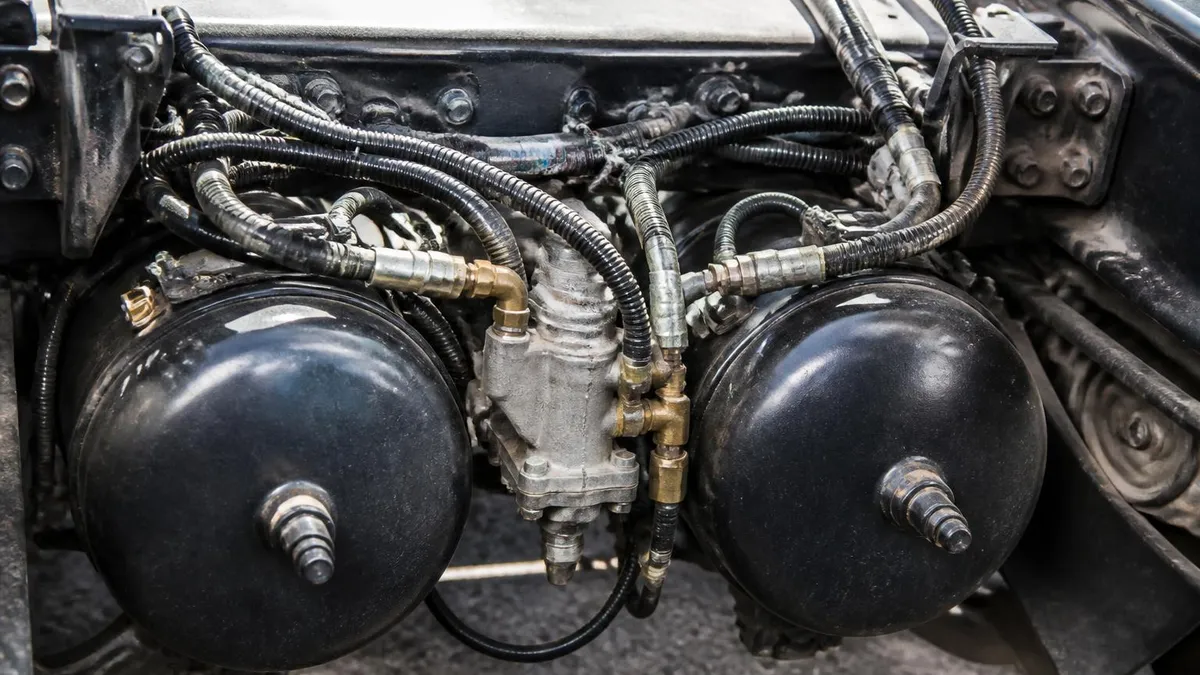
What to Expect During CDL Training
Regardless of whether your CDL training is free or paid, the training process follows a similar structure. Knowing what to expect helps you prepare and succeed.
Classroom instruction covers the knowledge you need to pass the CDL written tests: general knowledge (vehicle inspection, basic control, safe driving), air brakes (components, inspection, stopping distances), and any endorsement-specific knowledge (HAZMAT, tanker, doubles/triples). The CDL knowledge tests must be passed before you can practise driving with a CDL learner's permit. Most programmes spend the first 1–2 weeks on classroom instruction and written test preparation.
Behind-the-wheel training is the core of the programme — this is where you learn to actually drive a commercial vehicle. You practise in a training yard first: straight-line backing, offset backing, alley docking (parking a trailer in a space), and coupling/uncoupling. Then you move to road driving: shifting (if manual transmission), turning, lane changes, highway driving, city driving, and managing the vehicle's size and weight in traffic. Quality programmes provide 40–80+ hours of actual driving time; weaker programmes may provide as little as 20–30 hours, which is insufficient for most students to develop genuine competence.
The CDL skills test is the final step — administered by your state's DMV or an approved third-party tester. It consists of three parts: the pre-trip vehicle inspection (you walk around the truck and demonstrate knowledge of every component), the basic control skills test (backing manoeuvres in a testing area), and the road test (driving in traffic with an examiner). Your training programme should prepare you specifically for the skills test format used in your state. Many well-prepared students from quality programmes pass on the first attempt.
After passing the CDL skills test, you receive your CDL — either a Class A (tractor-trailer combination vehicles), Class B (straight trucks, buses), or both, depending on your training and testing. Most free training programmes focus on Class A because that's what most trucking companies need. A Class A CDL qualifies you for the widest range of driving jobs and the highest pay.
Free CDL Training: Key Numbers
- To pass each Commercial Driver's License (CDL) knowledge test, an applicant must correctly answer at least 80 percent of the questions. (ecfr.gov)
- The TSA fee for a new or renewing Hazardous Materials Endorsement (HME) threat assessment is $85.25, effective January 1, 2025. (tsa.gov)
- The TSA fee for a new or renewing Hazardous Materials Endorsement (HME) threat assessment is reduced to $41.00 for applicants who already hold a valid TWIC card. (tsa.gov)
- A state must use a different version of the test when a Commercial Driver's License applicant retakes a previously failed knowledge test. (ecfr.gov)
- A commercial learner's permit (CLP) is valid for no more than one year from its initial issue date unless the holder retakes the general and endorsement knowledge tests. (ecfr.gov)
- CDL knowledge tests may be given in written form, verbally or in automated format, and in a foreign language as long as no interpreter is used. (ecfr.gov)
- A commercial learner's permit holder must be at least 18 years old and cannot take the CDL skills test in the first 14 days after the permit is first issued. (ecfr.gov)
Facts verified Oct 18, 2026 against Federal Motor Carrier Safety Administration (FMCSA), U.S. DOT; tests administered by each state driver licensing agency. Dates that have passed are removed automatically.
CDL Exam at a Glance
| Item | Detail | Official source |
|---|---|---|
| Passing score | 80% on each knowledge test | ecfr.gov |
| Exam fee (Hazmat endorsement (TSA threat assessment)) | $85.25 | tsa.gov |
| Exam fee (Hazmat endorsement, TWIC holder) | $41.00 reduced rate | tsa.gov |
| Retake policy | Retake must use a different test version | ecfr.gov |
| Validity (Commercial learner's permit) | Max 1 year from initial issuance without retesting | ecfr.gov |
| Delivery | Written, verbal or computer; foreign language allowed, no interpreter | ecfr.gov |
| Eligibility (Commercial learner's permit) | Age 18+; 14-day wait before the skills test | ecfr.gov |
Facts verified Oct 18, 2026 against Federal Motor Carrier Safety Administration (FMCSA), U.S. DOT; tests administered by each state driver licensing agency. Dates that have passed are removed automatically.
CDL Career After Free Training: What to Expect
Whether your CDL training was free or paid, your first year as a commercial driver follows a similar trajectory — and understanding what to expect helps you set realistic expectations and make smart career decisions during the critical early period.
First-year truck driver pay ranges from $40,000 to $55,000, depending on the carrier, the type of freight, and whether you're over-the-road (OTR) or regional. OTR drivers earn more but spend weeks away from home. Regional and local drivers earn slightly less but are home more frequently. Company-sponsored drivers typically start at the lower end of this range during their commitment period; drivers who paid for their own CDL and chose their employer freely may start higher.
The first year is the hardest — physically, mentally, and logistically. You're learning to manage a 80,000-pound vehicle in all weather conditions, navigating unfamiliar cities, dealing with tight delivery schedules, and spending extended time away from home.
Driver turnover in the first year is high (some estimates exceed 90% at certain carriers), which is why the industry perpetually needs new drivers. The drivers who make it past the first year tend to stay in the industry because the pay improves, they find carriers that match their lifestyle preferences, and they develop the skills that make the job feel manageable rather than overwhelming.
After 1–2 years of experience, your options expand dramatically. Experienced drivers can move to higher-paying carriers, specialise in premium freight (HAZMAT, oversized, tanker), transition to local or regional routes with better home time, or become owner-operators. Experienced Class A CDL holders with clean driving records and no accidents are in extremely high demand — you'll receive multiple job offers without actively searching.
The CDL you earned through free training is the same credential as a CDL earned through paid training — no employer cares how you got it, only that you have it and can drive safely. Your free training investment pays the same career dividends as any paid programme — the credential is identical, the career opportunities are identical, and the earning potential is identical. The only difference is that you started without debt, which is a meaningful financial advantage during the lower-earning first year when every dollar of take-home pay matters.
Some organisations advertise 'free CDL training' that isn't what it seems. Watch for: lease-purchase schemes disguised as employment (you're classified as a contractor, not an employee, and payments for the truck consume most of your earnings); programmes that charge hidden fees after promising free training; 'training' that consists of watching videos with minimal driving time; and programmes that aren't approved by your state's DMV, meaning the training may not qualify you to test for the CDL. Legitimate free CDL training comes from reputable carriers with verifiable track records, government workforce programmes with established funding, accredited schools with financial aid, or VA-approved programmes for veterans. If a deal sounds too good to be true, research the provider thoroughly before committing.
Finding Free CDL Training Near You
Free CDL training availability varies by location — some areas have multiple options while others have fewer funded programmes. Here's how to find what's available in your area.
Start with careeronestop.org — the U.S. Department of Labor's website that locates your nearest American Job Center. These centres administer WIOA funding and can tell you which CDL programmes in your area accept workforce training grants. They also provide career counselling, job search assistance, and connections to other funded training options. This single visit or phone call can reveal every government-funded CDL training option available to you.
Search for community college CDL programmes in your state. Not all community colleges offer CDL training, but many do — and those programmes are eligible for Pell Grants and state financial aid. The community college path often provides the most comprehensive training (more driving hours, more thorough instruction) while being effectively free for students who qualify for financial aid. Contact the admissions office of nearby community colleges and ask specifically about CDL or truck driving programmes.
For company-sponsored programmes, search the websites of major carriers directly. CRST, Werner, Swift, Schneider, TMC, PAM Transport, and others all advertise their training programmes on their careers pages. Apply to multiple programmes and compare the contract terms before committing. Some carriers have training facilities in specific states — you may need to travel for the training period, with the carrier typically covering travel and lodging.
Veterans should contact their VA education counsellor or visit va.gov to search for GI Bill-approved CDL training programmes by state. The VA's WEAMS (Web-Enabled Approval Management System) database lists every approved programme. Your counsellor can also help you determine which benefit programme (Post-9/11 GI Bill, VET TEC, or state veterans' benefits) provides the best funding for your situation.
Sample CDL Practice Questions
Try these questions from our free CDL practice tests. The correct answer and an explanation follow each question.
If your brakes fail, which of the following is NOT a useful method to slow your vehicle?
- A. Pump the brakes
- B. Put the vehicle in a higher gear
- C. Use the parking brake
- D. Use an escape ramp
Answer: B. Put the vehicle in a higher gear
If your brakes fail, putting the vehicle in a *higher* gear would reduce engine braking, causing the vehicle to accelerate rather than slow down. To slow the vehicle, you would want to downshift to a lower gear to maximize engine braking, pump the brakes, use the parking brake, or find an escape ramp.
Overloading your vehicle can have bad effects on your ________.
- A. Speed control.
- B. All of the listed answers.
- C. Steering.
- D. Braking.
Answer: B. All of the listed answers.
Overloading a vehicle significantly compromises its safety and performance. It negatively impacts braking effectiveness, making it harder to stop. It also affects steering control, making the vehicle less responsive and more difficult to maneuver. Furthermore, overloading can impair speed control, especially on grades, and strain other vehicle components, increasing the risk of mechanical failure.
What is the minimum number of days you can lose your CDL if you have committed your first violation of an "out-of-service order"?
- A. 90 days.
- B. 30 days.
- C. 60 days.
- D. 15 days.
- E. 45 days.
Answer: A. 90 days.
Federal regulations specify that a first violation of an 'out-of-service order' will result in a minimum CDL disqualification of 90 days. Subsequent violations carry even longer disqualification periods.
Take the full CDL practice test
Free CDL Training Questions and Answers
How this page was made: written with AI tools. Exam facts are checked against the official sources listed below. Not reviewed by a subject-matter expert. Editorial policy
Sources & references
Exam facts on this page (fees, format, dates, passing scores) are checked against these official sources; the date is our last check. Editorial policy