
What's a Commercial Driver's License? CDL Careers, Pay, and How to Start
🔎 What's a commercial driver's license? Get the CDL career breakdown: classes, salaries, daily duties, and the steps to land your first driving job in 2026 September.

What a Commercial Driver's License Actually Is
So you're hearing the term thrown around at job fairs, on roadside billboards, even in your cousin's group chat. A commercial driver's license — or CDL — is the federal credential the U.S. requires before anybody can legally pilot a vehicle that weighs more than 26,001 pounds, hauls hazardous loads, or carries 16 or more passengers. Plain and simple.
The license isn't optional. The Federal Motor Carrier Safety Administration sets the floor. Each state then adds its own paperwork, road tests, and renewal cycles on top. That two-layer system means a Class A out of Texas isn't quite identical to a Class A out of Vermont, even though the federal core is the same.
Drivers usually get into this career for one of three reasons. Pay, autonomy, or speed of entry. You can be earning a paycheck inside ten weeks if you hustle. No four-year degree. No internship grind. Just a permit, a school, a physical, and a road test.
Here's the catch nobody mentions in the recruiting ads: holding a CDL changes how you interact with the law. Different blood-alcohol limit. Stricter medical standards. A speeding ticket in your personal car can suspend your commercial privileges. You're walking around with what amounts to a federal professional license, and the bar is higher than for a regular driver. Worth knowing before you commit.
One more thing the brochures skip. The credential rewards consistency, not flash. Drivers who treat the job like a craft — clean logs, honest pre-trips, no shortcuts at the fuel island — climb fast. The ones who treat it like a sprint burn out by month nine. Decide which one you'll be before you sign anything.
CDL Industry at a Glance

The Three Classes — And Why They Decide Your Paycheck
Classes are not interchangeable. Pick wrong and you'll either be stuck on local routes or unable to drive the rig your employer just bought. Three exist: A, B, and C. Each one unlocks a different chunk of the freight economy.
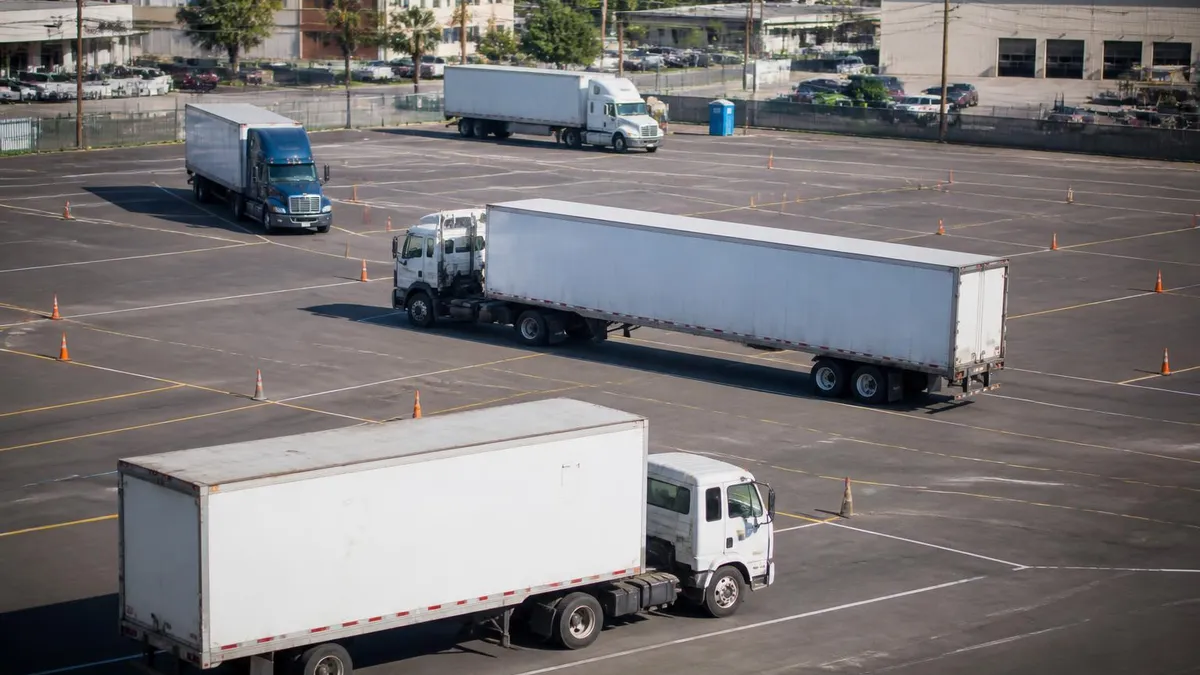
Class A. The big one. Combination vehicles with a gross combined weight rating above 26,000 pounds, where the trailer alone tops 10,000. Tractor-trailers. Tankers. Flatbeds. Doubles and triples once you add the right endorsement. The Class A is the gateway to over-the-road trucking, regional reefer work, and the heavy-haul jobs that pay six figures by year three.
Class B. Straight trucks. Dump trucks, box trucks, large buses, garbage trucks, delivery vehicles that aren't pulling a separate trailer. Pay is solid — often $50,000 to $65,000 starting — but the ceiling sits lower than Class A. Class B suits drivers who want to sleep at home every night.
Class C. The smallest of the three. Used for vehicles built to transport 16 or more people, or for placarded hazardous-material loads under the Class B weight threshold. School-bus drivers, airport shuttle operators, hazmat couriers. Class C licenses almost always require additional endorsements to be useful.
Here's the trick. A Class A holder can downshift and operate Class B and C equipment with the matching endorsements. The reverse isn't true. That single fact is why career counselors keep nudging new students toward Class A first. Our CDL certification guide breaks down the endorsement pathways in more detail.
Endorsements are the second half of the class equation. Hazmat (H). Tanker (N). Doubles and triples (T). Passenger (P). School bus (S). Each endorsement is a separate knowledge test, and a few — hazmat especially — require federal background screening. Stack the endorsements early. Drivers who walk out of school with H and N already on the card get callbacks within days.
The Three CDL Classes Side by Side
Combination vehicles over 26,000 lbs GCWR with trailers over 10,000 lbs. Tractor-trailers, tankers, flatbeds, and doubles or triples with the right endorsement. Highest pay ceiling and broadest job options.
Single-unit straight trucks and large buses — dump trucks, box trucks, garbage trucks, delivery vehicles. Solid pay, home most nights, slightly lower ceiling than Class A.
Passenger transport (16 or more riders) or smaller hazmat loads under the Class B weight threshold. School-bus drivers, airport shuttles, hazmat couriers. Requires endorsements to be useful in most jobs.
A Class A license lets you operate Class B and Class C vehicles too, but not the other way around. If you're not sure what type of driving suits you, train for Class A and keep your options open. The cost difference between Class A and Class B school is usually only a few hundred dollars, and the career flexibility you gain is significant. Class A holders can pivot into Class B local routes, school-bus driving, or shuttle work whenever they want — and the reverse migration requires a full retest. Start broad, narrow later.
What Drivers Actually Earn (and Why Numbers Vary So Much)
The internet loves to quote one big national average. Reality is messier. A Class A team driver hauling refrigerated freight from Laredo to Toronto is in a different earnings bracket than a local Class B driver delivering office furniture in Cleveland. Below is the working snapshot for 2026, drawn from BLS data and current job-board postings.
Entry-level Class A drivers — first 12 months — typically land in the $48,000 to $58,000 zone. Local routes hover toward the lower end. Over-the-road runs push higher because of the miles. Year two is where the jump happens. Most drivers pull $65,000 to $78,000 with a clean record and one full year logged.
Owner-operators are a different animal. Gross revenue can hit $250,000. Net? Often $80,000 to $110,000 after fuel, insurance, maintenance, and the truck note. People love quoting gross. The net is what feeds your family.
Three variables move the needle more than anything else. Endorsements (hazmat plus tanker adds $0.05 to $0.12 per mile), region (Pacific Northwest and Northeast pay more), and freight type (oversized, hazmat, and reefer beat dry van). Want the breakdown by state? Check the CDL salary outlook page.
Benefits matter too, and they vary wildly. Major carriers offer full medical, dental, 401(k) with match, and per-diem advantages that effectively raise take-home pay by another four to eight thousand dollars. Smaller regional outfits sometimes skip benefits entirely and offset with higher cents-per-mile. Run the math both ways before signing — gross pay alone hides the real picture.
Pay structures themselves come in three flavors. Cents per mile (the OTR standard). Hourly (most local Class B jobs). Percentage of load (common in owner-operator leases). Each has its trade-offs. Mileage pay rewards efficient drivers. Hourly pay protects you when traffic kills your week. Percentage pay can spike during freight booms but cratered drivers in the 2023 dry-van slump. Pick your structure with eyes open.
Pay Snapshot by Job Type
Over-the-road dry van pulls $52,000 to $68,000 in year one. Week-on, weekend-off rotations are common. Best entry point for new Class A holders who want maximum miles and a steady learning curve. Expect to be away from home 21 to 28 days per month, with daily mileage averaging 500 to 650 miles depending on dispatch.
A Real Day on the Job
Forget the open-road montage. A driver's day starts before sunrise with a pre-trip inspection. Brake adjustment. Tire pressure. Coupling. Lights. Logbook check. The inspection isn't theater — DOT roadside teams will write it up and pull your truck out of service if anything fails.
Then comes the dispatch. You'll get load details, a delivery window, fuel solutions, and a route. Sometimes a route the GPS doesn't know about because of bridge heights or weight restrictions. The driver — not the algorithm — owns the decision tree on the road.
Mid-shift looks like this: pumping fuel, navigating a backing situation that would terrify any four-wheeler, eating something microwaved in the truck stop, fighting an air-conditioning belt, calling your dispatcher about a closed-down receiving dock, and threading a 53-foot trailer into a residential cul-de-sac without scraping a single mailbox. Some of that is hard. Some is satisfying in a way office jobs rarely match.
By end of shift the driver completes a post-trip inspection, files the electronic logbook, and parks. Hours-of-service rules cap daily driving at 11 hours within a 14-hour window. Sleep is mandatory, federally tracked, and not optional. The clock matters as much as the route.
Weather throws the whole schedule sideways. A blizzard in Wyoming or fog on I-5 can erase a planned 600-mile day. The good drivers shut down and absorb the hit. The bad ones push, jackknife, and end careers. Decision-making in poor conditions is the single most-watched habit during a new driver's first quarter behind the wheel.
The 11-hour daily driving cap, 14-hour shift window, and 70-hour weekly limit are tracked electronically by ELDs that report directly to the FMCSA. Violating them can suspend your CDL and end your job — falsifying logs is a career-ender at most carriers.
The Path From Zero to Hired
You're 21 (or 18 for intrastate-only work). Healthy enough to pass a DOT physical. Got a regular license in good standing. That's the starting line. From there the trail looks roughly the same in every state, even if individual forms differ.
Step one: pull a copy of your state's CDL manual and start studying. The general-knowledge section, combination vehicles, air brakes, and any endorsements you'll need. Our exam prep walkthrough covers the question banks. Try our CDL General Knowledge Practice Test 1 to measure where you stand before you book the permit exam.
Step two: the commercial learner's permit. You'll show ID, pass a vision test, and clear the written exams at your state's licensing office. The permit lets you practice behind the wheel as long as a CDL holder sits in the cab with you.
Step three: training. Either a private CDL school (four to eight weeks, $3,000 to $8,000) or an employer-sponsored program where a carrier pays for your training in exchange for a one-year contract. Local school listings help you compare cost and reputation.
Step four: the road test. Pre-trip inspection. Basic vehicle controls. Driving skills. Pass all three components and you walk out with the license. Then comes the orientation week at your hiring carrier — drug screen, paperwork, truck assignment, mentor ride-alongs — and you're on the road.
About that mentor period. The first 30,000 to 60,000 miles often happen with a senior driver in the passenger seat. Some new drivers love it. Others hate splitting a sleeper berth with a stranger. The good news is most carriers run paid mentor weeks at 75 to 90 percent of solo pay, and you'll learn more in those eight weeks than the CDL school could ever teach.
Zero-to-Hired Checklist
- ✓Verify you meet the age requirement (21 federal, 18 intrastate)
- ✓Pass a DOT physical and obtain your medical card
- ✓Study the CDL manual for your state
- ✓Pass the written exams to earn a Commercial Learner's Permit
- ✓Enroll in a CDL school or employer-sponsored program
- ✓Complete the pre-trip, skills, and road-test components
- ✓Apply to carriers and complete orientation
- ✓Add endorsements (hazmat, tanker, doubles/triples) as you grow
What Carriers Actually Hire For
Skills matter, sure. But every recruiter we've talked to says the same thing: attitude and clean records win the seat. Carriers can teach backing technique. They can't teach a person to show up sober every morning for ten years straight.
That said, here's what catches a hiring manager's eye on a fresh CDL résumé. Spotless driving record. No DUIs anywhere — commercial or personal. No more than two minor violations in the prior three years. Verifiable references from instructors. Willingness to take regional or over-the-road runs for the first 12 months while you build experience credit.
Soft skills matter too. Independence. You'll be alone for hours. Communication, because a dispatcher who can't reach you is a dispatcher routing freight away from you. Mechanical curiosity — knowing the difference between a slow leak and a blown gasket can save your shift. And patience. Traffic, weather, and bad receivers will test it.
One credential boost worth chasing in your first year: hazmat. The endorsement requires fingerprinting and a TSA background check, but it opens fuel-tanker, chemical-transport, and dedicated military-base routes — all of which pay above the median. Eligibility rules cover the disqualifying convictions, so check that page before you pay the fee.
Recruiters also watch how candidates handle phone interviews. Show up on time. Answer in complete sentences. Have your DAC report and MVR ready to email within an hour of being asked. Carriers move fast in tight freight markets — the candidate who sends the paperwork same-day usually gets the offer over the candidate who waits a week. Small habits, but they decide who gets seated.
Is a CDL Career Right for You?
- +Solid pay without a four-year degree
- +Strong, stable demand nationwide
- +Multiple career branches after year one
- +Real autonomy on the road
- +Path to owner-operator entrepreneurship
- −Time away from home (especially OTR)
- −Strict federal regulations on hours and conduct
- −Physical wear from sedentary hours and irregular sleep
- −DOT physical must be renewed regularly
- −Personal-vehicle violations affect your commercial license
Where the Career Goes After Year One
The first 12 months are the grind. After that, options multiply. Most drivers branch in one of four directions.
Specialty freight. Oversized, hazmat, refrigerated, or auto-hauling. Pay jumps 15 to 30 percent compared with dry-van work. The trade-off is more demanding equipment and tighter scheduling.
Local or regional driver. Trade the over-the-road life for home every night. The pay drops slightly, but the quality-of-life gain is real. Cleveland-to-Pittsburgh runs. Construction-site deliveries. Last-mile freight that needs a CDL because of weight. The job market page tracks demand by region.
Owner-operator. You buy or lease your own truck. You set your routes. You also become a small-business owner overnight — quarterly taxes, IFTA filings, insurance shopping, maintenance budgeting. The autonomy is intoxicating. The administrative load is real.
Career pivot inside the industry. Trainer. Safety supervisor. Dispatcher. Terminal manager. Several of the largest carriers run formal management tracks where five years of driving plus an internal program land you in an office role. Drivers who've sat in the seat make better managers — they understand what they're asking other drivers to do.
Don't skip the certifications that compound. A certified driver trainer designation typically adds $0.04 per mile plus per-student bonuses. A safety supervisor cert can move you to a salaried desk role starting around $75,000. The career arc is real for drivers who treat the seat as step one, not the destination.
Documents to Bring to Your CDL Permit Appointment
- ✓Proof of identity (passport, birth certificate, or REAL ID-compliant document)
- ✓Proof of U.S. citizenship or lawful permanent residency status
- ✓Current Social Security card or W-2 showing your SSN
- ✓Two documents proving state residency (utility bill, lease agreement, bank statement)
- ✓Your existing regular driver's license in good standing
- ✓Completed DOT medical examiner's certificate (medical card) issued within the prior 24 months
- ✓Application fee — varies by state, typically $30 to $100 for the permit plus written-test fees
- ✓Self-certification of driving type (interstate non-excepted, intrastate, excepted) form signed
Common Mistakes That Cost First-Year Drivers Their License
The single biggest reason new CDL holders lose their card in the first year? Not crashes. It's logbook violations and DOT physical lapses. The license is a federal document. Sloppy paperwork can suspend you before you ever post a wreck.
Watch the medical card expiration date like it's a tax deadline. Most carriers will pull you out of service the moment the card lapses, even by a single day. Schedule the renewal physical 60 days before the expiration. Always.
Avoid the cell phone trap. Hand-held use while driving a commercial vehicle is a federal violation — not just a state ticket. Two convictions inside three years and you'll lose your CDL for 120 days. Bluetooth or nothing.
Don't drive over hours. Electronic logging devices report directly to the FMCSA. A single falsified log is a career-ender at most carriers. The 11-hour driving limit is non-negotiable, and dispatchers who pressure you to fudge the log are setting you up to take the fall if something happens.
Last one. Keep your personal vehicle clean too. A DUI in your private car ends your commercial career. The FMCSA treats CDL holders as professional drivers around the clock, not just during the work shift. Build the habits that protect the credential, and the credential will pay you back for decades.
CDL Questions and Answers
About the Author

Licensed Driving Instructor & DMV Test Specialist
Penn State UniversityRobert J. Williams graduated from Penn State University with a degree in Transportation Management and has spent 20 years as a certified driving instructor and DMV examiner consultant. He has personally coached thousands of applicants through written knowledge tests, skills assessments, and commercial driver licensing programs across more than 30 states.
Join the Discussion
Connect with other students preparing for this exam. Share tips, ask questions, and get advice from people who have been there.
View discussion (7 replies)