
Commercial Driving License: CDL Classes, Requirements, and Endorsements
Free Commercial Driving License: ❓ CDL practice test with instant feedback and detailed answer explanations. Prepare for your exam.
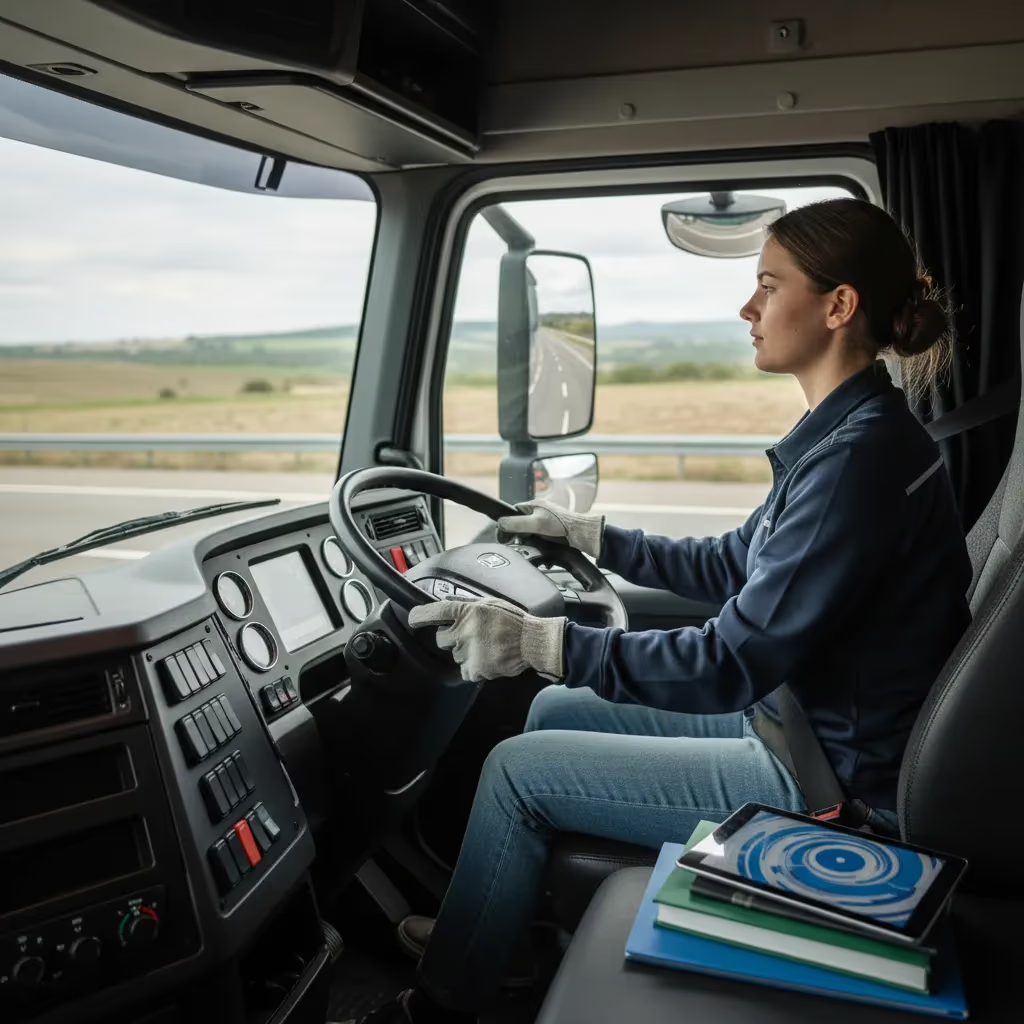
Getting a commercial driving license opens doors most people don't even know exist. The trucking industry moves roughly 72% of all freight in the United States — and it's short about 80,000 drivers right now. That gap keeps widening. If you've been weighing whether a CDL is worth the effort, the numbers say yes.
A commercial driver's license isn't just a piece of plastic. It's a federal credential regulated by the FMCSA that lets you operate vehicles over 26,001 pounds, transport hazardous materials, or carry 16+ passengers. Every state issues them, but the standards come from Washington. You'll need to pass a written knowledge test, a skills test behind the wheel, and a DOT physical exam before anything else happens.
Driver license renewal works differently for CDL holders than for regular motorists. Your CDL expires every 4 to 8 years depending on your state, and renewal requires a current medical certificate on file with your state's DMV. Miss that filing deadline and your CDL downgrades automatically — no warning letter, no grace period. Just a downgrade that locks you out of commercial vehicles until you fix it.
The Entry-Level Driver Training mandate that kicked in February 2022 changed everything for new applicants. Before ELDT, some states let you test without formal training. That's gone. Now you need documented instruction from an FMCSA-registered provider before you can even schedule your skills test. The old shortcut of having Uncle Jerry teach you in a parking lot doesn't fly anymore.
Whether you're chasing long-haul routes, local delivery gigs, or specialized tanker work, this page breaks down every CDL class, endorsement, cost factor, and testing requirement you'll run into. No fluff — just the stuff you actually need to know before spending $3,000 to $10,000 on training.
CDL Classes: A, B, and C Explained
The three CDL classes — A, B, and C — aren't ranked by difficulty. They're ranked by what you're allowed to drive. A commercial driver's license class determines your vehicle weight limits, trailer configurations, and which endorsements you can stack on top. Pick the wrong class and you'll need to retest later when you realize your job requires something different.
Class A is the heavyweight. It covers combination vehicles with a gross combination weight rating over 26,001 pounds, where the towed unit exceeds 10,000 pounds. Think tractor-trailers, flatbeds, livestock carriers, and tanker combinations. Most long-haul trucking jobs require Class A. A class c license sits at the opposite end — it covers vehicles that don't fit Class A or B definitions but still require a CDL because they carry 16+ passengers or transport hazardous materials.
Class B handles single vehicles over 26,001 pounds GVWR, or those towing a unit under 10,000 pounds. Straight trucks, large buses, segmented buses, box trucks, dump trucks with small trailers — all Class B territory. Local delivery drivers, transit operators, and concrete mixer operators typically hold this class.
Here's what catches people off guard: a Class A license automatically qualifies you to drive Class B and Class C vehicles. But a Class B doesn't cover Class A rigs. If you're not sure which direction your career will go, testing for Class A upfront saves you from retesting later — even if your first job only needs a Class B.
CDL Requirements: Age, Testing, and the DOT Physical
Age requirements split into two tiers. You can get a CDL at 18 in most states, but you're restricted to intrastate driving — meaning you can't cross state lines commercially. Interstate CDL holders must be at least 21. That three-year gap matters if you're planning routes that touch multiple states, which most long-haul jobs do. A class d license — your standard non-commercial driver's license — is the baseline prerequisite before you apply for any CDL class.
The testing process has three parts, and skipping any one kills your application. First, the written knowledge exam covers general knowledge, air brakes, and combination vehicles (for Class A). Each endorsement adds its own written test on top. Second, the pre-trip vehicle inspection — you walk around the truck identifying components and explaining what you're checking. Third, the skills test: basic vehicle control in a yard, then an on-road driving test in traffic.
A class a license requires the most extensive skills test because you're demonstrating control of an articulated vehicle — coupling, uncoupling, jackknife prevention, backing with a 53-foot trailer. The examiner watches everything. One automatic fail and you're rescheduling. Non cdl driving jobs exist for drivers who aren't ready for this level of testing — box trucks under 26,000 pounds, passenger vans under 16 seats, and local delivery vehicles.
The DOT physical is non-negotiable. Every CDL applicant needs a medical examiner's certificate from a provider listed on the FMCSA National Registry. The exam checks vision (at least 20/40 in each eye), hearing (forced whisper at 5 feet), blood pressure, and screens for conditions like uncontrolled diabetes, epilepsy, or cardiovascular disease. Your medical card is valid for up to 24 months — some conditions shorten it to 12.
CDL Endorsements Breakdown
The Hazardous Materials endorsement lets you haul chemicals, explosives, flammable liquids, radioactive materials, and other regulated cargo. It requires a written knowledge test plus a TSA background check that includes fingerprinting. The background check alone takes 30–60 days and costs around $86. You'll renew the TSA clearance every 5 years. HazMat drivers typically earn $5,000–$15,000 more annually than general freight haulers because fewer drivers qualify.
Classes on a Driving Licence: What Each Level Unlocks
Understanding the classes on driving licence categories isn't just academic — it determines which jobs you qualify for and how much you'll earn. The class system exists because operating a 80,000-pound tractor-trailer is fundamentally different from driving a 30,000-pound straight truck. Different vehicles, different risks, different skills.
Non CDL driving jobs have exploded in the last five years thanks to Amazon, FedEx Ground, and last-mile delivery services. These positions use vehicles under 26,001 pounds GVWR — sprinter vans, cargo vans, and light box trucks that don't require any commercial license at all. The pay is lower ($15–$22/hour versus $25–$35/hour for CDL holders), but there's no training investment, no DOT physical, and no drug consortium. For drivers testing the waters before committing to CDL school, it's a low-risk entry point.
Each CDL class builds on the previous one. Class C is the entry level — it covers specialty vehicles that require CDL designation due to passenger count or cargo type rather than weight. Class B expands into heavy single vehicles. Class A is the top tier and the most versatile. About 73% of all CDL holders carry a Class A because it opens every door. The remaining 27% split between B and C, mostly concentrated in transit, school bus, and local delivery sectors.
One thing most CDL guides skip: your class doesn't lock you into one industry. A Class A holder can drive a school bus (with the right endorsements), operate a concrete mixer, haul oversized loads, or run regional freight. The license is the foundation — endorsements and experience shape your actual career path.
CDL Training Costs and Financial Options
So what is a CDL license? At its core, a CDL a license is a federal authorization to operate commercial motor vehicles — but the path to getting one has a price tag that varies wildly by geography and program type. Private CDL schools charge between $3,000 and $10,000 for a complete program. Community colleges offer similar training for $1,500 to $5,000. Company-sponsored programs through carriers like Werner, Swift, or CRST cost nothing upfront but lock you into a contract — typically 12 to 18 months of employment at starting wages.
What is a commercial driver's license worth in real dollars? The median annual salary for heavy truck drivers sits at $54,320 according to the BLS, with top earners pulling $72,000+. Specialized endorsements push that higher. Owner-operators clearing their own freight can gross $200,000+ annually, though expenses eat roughly 60% of that. Even at the low end, CDL training pays for itself within the first 2–3 months of employment.
Financial aid options exist that most applicants overlook. WIOA grants through your local workforce center can cover full tuition. VA benefits under the GI Bill pay for approved CDL programs. Some states offer specific CDL training grants — California, Texas, and Ohio have particularly strong programs. Pell Grants don't typically cover short-term CDL programs, but community college CDL tracks that run 16+ weeks often qualify.
The ELDT mandate didn't just add a training requirement — it also standardized what "training" means. Before February 2022, some programs were essentially diploma mills: 3 days in a parking lot and a certificate. Now every training provider must be registered on the FMCSA Training Provider Registry, deliver specific curriculum modules, and certify completion electronically before you can take the skills test. That raised quality but also raised prices at the bottom end of the market.
CDL Career: Advantages and Drawbacks
- +High demand — 80,000+ driver shortage means jobs are plentiful and hiring is fast
- +No college degree required — earn $50K+ with just a CDL and clean driving record
- +Multiple career paths — long-haul, local, specialized, owner-operator options
- +Company-paid training available through major carriers with no upfront cost
- +Strong benefits packages — health insurance, 401k, paid time off at most carriers
- +Income growth — experienced drivers and owner-operators can earn $70K–$200K annually
- −Time away from home — OTR drivers spend 2–3 weeks on the road between home visits
- −Physical demands — loading, tarping, chaining cargo, and long sedentary hours
- −Strict regulations — hours-of-service limits, mandatory drug testing, ELD compliance
- −Health risks — higher rates of obesity, sleep apnea, and cardiovascular issues among drivers
- −Training cost — $3K–$10K out of pocket if you don't qualify for grants or company programs
- −Insurance costs — owner-operators pay $8,000–$15,000 annually for commercial auto insurance
The Immigrant CDL Debate and Legal Challenges
What is a commercial driver's license in the context of immigration law? That question landed in federal court multiple times over the past decade. The immigrant commercial driver's license lawsuit cases — most notably challenges in California, New York, and Illinois — tested whether states could issue CDLs to undocumented residents or DACA recipients. Federal law requires CDL applicants to provide proof of legal presence, which creates a direct conflict with state laws that issue standard driver's licenses regardless of immigration status.
The FMCSA draws a hard line: CDLs require a Social Security number and legal presence documentation. Some states tried workarounds — issuing "non-domiciled" CDLs or accepting Individual Taxpayer Identification Numbers — but the federal registry rejects CDLs that don't meet REAL ID requirements. This effectively blocks CDL access for millions of potential drivers who already hold state-issued non-commercial licenses.
Industry groups have pushed back, arguing the driver shortage can't be solved while excluding willing workers. The American Trucking Associations has lobbied for expanded work visa programs specifically targeting commercial drivers. Some carriers have sponsored H-2B visas for CDL holders from Canada, Mexico, and other countries with equivalent licensing standards. But the legal landscape remains fragmented — what's possible in one state may be impossible in the next.
For immigrants with legal work authorization, the path is straightforward: apply like any other resident, provide your documents, complete ELDT training, pass your tests. The complications only arise at the intersection of state-issued driving privileges and federal commercial vehicle regulations, where the two systems don't always align.
CDL Application Checklist
- ✓Verify you meet your state's minimum age requirement (18 intrastate, 21 interstate)
- ✓Obtain a valid Class D (standard) driver's license if you don't already have one
- ✓Schedule and pass your DOT physical with an FMCSA-registered medical examiner
- ✓Self-certify your driving type (interstate, intrastate, exempt) with your state DMV
- ✓Complete ELDT training at an FMCSA-registered training provider
- ✓Study for and pass the CDL written knowledge test (general knowledge + endorsement tests)
- ✓Obtain your Commercial Learner's Permit (CLP) — valid for 180 days in most states
- ✓Log required supervised driving hours with your CLP before scheduling the skills test
- ✓Pass the three-part CDL skills test: pre-trip inspection, basic controls, road test
- ✓Apply for endorsements (HazMat requires separate TSA background check — allow 30-60 days)
CDL Costs by State and Program Type
A class c driver license — meaning Class C CDL for passenger or HazMat vehicles — tends to cost less to train for because the vehicles are smaller and the skills test is shorter. But CDL license cost varies dramatically based on where you live and what class you're pursuing. Texas and Florida offer some of the cheapest CDL programs in the country: $1,500–$4,000 at community colleges. Northeast states like New York, New Jersey, and Massachusetts tend to run $5,000–$10,000 for equivalent programs. California sits somewhere in the middle at $2,500–$7,000.
Beyond tuition, hidden costs stack up faster than most people expect. The CDL knowledge test costs $10–$50 per attempt depending on your state. The skills test runs $50–$200. Your DOT physical is $75–$150 and isn't covered by most health insurance plans. If you need endorsements, each written test adds $5–$25. HazMat adds the $86 TSA fingerprinting fee on top. And you'll need a current medical certificate on file — which means paying for that physical every 24 months for the rest of your CDL career.
Company-sponsored programs eliminate upfront costs but come with strings. Most carriers require 12–18 months of employment after training completion. Leave early and you owe the training cost back — typically $3,000–$7,000. The pay during your contract period is usually $0.30–$0.40 per mile, which is 20–30% below what experienced drivers earn. It's not a scam, but it's not free either. You're trading lower wages for paid training. Run the math before signing anything.
WIOA funding through your local American Job Center is the best-kept secret in CDL training. If you qualify — and most unemployed or underemployed adults do — the grant covers tuition, testing fees, and sometimes even living expenses during training. The application process takes 2–4 weeks. Worth every minute of paperwork.
CDL Jobs: No Experience and Beyond
CDL license no experience jobs exist — and they're not all bottom-of-the-barrel positions. Major carriers like Schneider, Werner, Knight, and CRST specifically recruit new CDL holders. Starting pay ranges from $45,000 to $55,000 annually with full benefits. You'll typically spend your first year on over-the-road routes learning the trade, then transition to regional or local runs with better home time.
California driver license holders pursuing a CDL have access to one of the strongest job markets in the country. The Port of Long Beach and Port of Los Angeles alone employ thousands of CDL drivers for drayage — short-haul container transport between the port and local warehouses. These jobs pay $60,000–$80,000 and you're home every night. Similar port-based CDL jobs exist in Houston, Savannah, Newark, and Seattle.
Beyond traditional trucking, CDL holders work in construction (operating concrete mixers, dump trucks, heavy equipment transporters), emergency services (driving fire trucks requires a CDL in many jurisdictions), agriculture (hauling grain, livestock, produce), and energy (tanker drivers serving oil fields, refineries, and natural gas facilities). The license is more versatile than most people realize — it's not just about pulling a 53-foot trailer down I-80.
For drivers who want to skip the road entirely, non CDL driving jobs near me searches return thousands of results in every major metro area. Delivery vans, straight trucks under 26,001 pounds, and passenger vehicles under 16 seats don't require a CDL. These positions pay less but offer predictable schedules and zero regulatory burden. They're also excellent stepping stones — if you like driving commercially but haven't committed to CDL school yet, six months in a delivery van tells you everything you need to know.
All CDL holders are subject to FMCSA drug and alcohol testing — pre-employment, random, post-accident, reasonable suspicion, return-to-duty, and follow-up. A positive test or refusal goes into the FMCSA Drug & Alcohol Clearinghouse and stays on your record. Employers must query the Clearinghouse before hiring any CDL driver. A violation can sideline your career for 1–3 years depending on the substance and whether you complete a return-to-duty program.
CDL Practice Tests and Skills Preparation
A class a drivers license practice test is the smartest investment of your time before test day — and it costs nothing. The CDL knowledge exam uses a pool of questions maintained by each state, and most states pull from the same FMCSA-standard question bank. That means practicing with tests from any state prepares you for your own state's exam. The passing score is 80% on every section: general knowledge, air brakes, combination vehicles, and each endorsement.
Non CDL driving jobs near me searches spike every time the skills test fail rate gets published. Here's why: roughly 33% of applicants fail their CDL skills test on the first attempt. The pre-trip inspection portion trips up the most people — you have to identify and explain 100+ components from memory while walking around the vehicle. Practicing with a partner who reads from the official checklist cuts your failure risk in half. Most CDL schools include 2–3 full practice inspections before your test date.
The road test is where class a license holders face the biggest challenge. You're driving a fully loaded combination vehicle through city traffic, executing lane changes, navigating intersections, managing speed on grades, and making turns that swing the trailer across multiple lanes. Examiners use a point-deduction system — accumulate too many deductions and you fail even without a single automatic disqualification. Common point losses: not checking mirrors frequently enough, rolling stops, wide turns, and inconsistent speed control.
Study strategy matters more than study hours. Focus on the areas with the highest fail rates: air brake systems (know the components, pressure readings, and emergency procedures cold), vehicle inspection procedures (practice the walk-around until you can do it with your eyes closed), and backing maneuvers (offset and parallel backing are the yard-test killers). Two weeks of focused preparation beats two months of casual review every time.
CDL Practice Test Questions
Prepare for the CDL - Commercial Driver's License exam with our free practice test modules. Each quiz covers key topics to help you pass on your first try.
CDL Alabama CDL Combination Vehicles Pract...
CDL Exam Questions covering Alabama CDL Combination Vehicles Practice Test. Master CDL Test concepts for certification prep.
CDL Alabama CDL General Knowledge Practice...
Free CDL Practice Test featuring Alabama CDL General Knowledge Practice Test #. Improve your CDL Exam score with mock test prep.
CDL Alabama General Knowledge CDL Practice...
CDL Mock Exam on Alabama General Knowledge CDL Practice Test. CDL Study Guide questions to pass on your first try.
CDL Airbrakes Practice Test
CDL Test Prep for Airbrakes Practice Test. Practice CDL Quiz questions and boost your score.
CDL Air Brakes Practice Test
CDL Questions and Answers on Air Brakes Practice Test. Free CDL practice for exam readiness.
CDL CLASS A COMMERCIAL DRIVER'S LICENSE PR...
CDL Mock Test covering CLASS A COMMERCIAL DRIVER'S LICENSE PRACTICE TEST. Online CDL Test practice with instant feedback.
CDL Class B Commercial Driver's License Pr...
Free CDL Quiz on Class B Commercial Driver's License Practice Test. CDL Exam prep questions with detailed explanations.
CDL Combination Vehicles Practice Test
CDL Practice Questions for Combination Vehicles Practice Test. Build confidence for your CDL certification exam.
CDL Doubles and Triples Practice Test
CDL Test Online for Doubles and Triples Practice Test. Free practice with instant results and feedback.
CDL Doubles Triples Practice Test
CDL Study Material on Doubles Triples Practice Test. Prepare effectively with real exam-style questions.
CDL General Knowledge Practice Test
Free CDL Test covering General Knowledge Practice Test. Practice and track your CDL exam readiness.
CDL General Knowledge Practice Test1
CDL Exam Questions covering General Knowledge Practice Test1. Master CDL Test concepts for certification prep.
CDL Hazardous Materials (Hazmat) Practice ...
Free CDL Practice Test featuring Hazardous Materials (Hazmat) Practice Test. Improve your CDL Exam score with mock test prep.
CDL Hazardous Materials Hazmat Practice Test
CDL Mock Exam on Hazardous Materials Hazmat Practice Test. CDL Study Guide questions to pass on your first try.
CDL Hazmat Practice Test
CDL Test Prep for Hazmat Practice Test. Practice CDL Quiz questions and boost your score.
CDL Passenger Transport Practice Test
CDL Questions and Answers on Passenger Transport Practice Test. Free CDL practice for exam readiness.
CDL Road Signs and Signals Practice Test
CDL Mock Test covering Road Signs and Signals Practice Test. Online CDL Test practice with instant feedback.
CDL School Bus Endorsement Practice Test
Free CDL Quiz on School Bus Endorsement Practice Test. CDL Exam prep questions with detailed explanations.
CDL School Bus Endorsement S Practice Test
CDL Practice Questions for School Bus Endorsement S Practice Test. Build confidence for your CDL certification exam.
CDL Tanker Practice Test
CDL Test Online for Tanker Practice Test. Free practice with instant results and feedback.
CDL Class A Commercial Driver's License Pr...
CDL Study Material on Class A Commercial Driver's License Practice Test -1. Prepare effectively with real exam-style questions.
CDL Class A Driver's License Practice Test -2
Free CDL Test covering Class A Driver's License Practice Test -2. Practice and track your CDL exam readiness.
CDL Class A Driver's License Practice Test -3
CDL Exam Questions covering Class A Driver's License Practice Test -3. Master CDL Test concepts for certification prep.
CDL Class A Driver's License Practice Test -5
Free CDL Practice Test featuring Class A Driver's License Practice Test -5. Improve your CDL Exam score with mock test prep.
CDL Class B Commercial Driver's License Pr...
CDL Mock Exam on Class B Commercial Driver's License Practice Test -2. CDL Study Guide questions to pass on your first try.
CDL Class C CDL with Hazmat Endorsement Pr...
CDL Test Prep for Class C CDL with Hazmat Endorsement Practice Test. Practice CDL Quiz questions and boost your score.
CDL Class C CDL with Hazmat Endorsement Pr...
CDL Questions and Answers on Class C CDL with Hazmat Endorsement Practice Test -2. Free CDL practice for exam readiness.
CDL Class C CDL with Hazmat Endorsement Pr...
CDL Mock Test covering Class C CDL with Hazmat Endorsement Practice Test -3. Online CDL Test practice with instant feedback.
Class A CDL: The Most Versatile Commercial License
A class a commercial driver's license is the gold standard of the industry. It qualifies you for every CDL-required vehicle when paired with the right endorsements — from double trailers to passenger buses to HazMat tankers. About 2.5 million of the 3.5 million active CDL holders in the US carry Class A credentials. The reason is simple economics: Class A opens the most doors and pays the most money.
California license requirements for Class A CDL are among the strictest in the nation. The state requires a minimum of 15 hours behind-the-wheel training (versus the ELDT minimum), a separate California-specific air brake test, and a vehicle inspection that includes California-only emission components. California also restricts new CDL holders from hauling certain oversized loads during their first year. Despite the extra hurdles, California CDL holders access the highest-paying freight market in the country — LA to Bay Area lanes pay $3.50–$5.00 per mile for specialized freight.
The Class A skills test takes 2–3 hours and covers three distinct phases. Basic vehicle control happens in a yard: you'll perform straight-line backing, offset backing (driver-side and sight-side), and conventional parallel parking with a trailer. The pre-trip inspection runs 30–45 minutes as you walk around both the tractor and trailer identifying components. The road test covers 30–45 minutes of real-world driving — highways, residential streets, intersections, railroad crossings, and business districts.
Earning a Class A on your first attempt saves you $200–$500 in retest fees and 2–4 weeks of scheduling delays. The first-attempt pass rate hovers around 67% nationally. Drivers who complete full CDL programs (not just minimum-hour training) pass at rates above 85%. That gap alone justifies the higher tuition of comprehensive programs — you're paying for practice time that directly translates to first-attempt success.
CDL Questions and Answers
About the Author

Licensed Driving Instructor & DMV Test Specialist
Penn State UniversityRobert J. Williams graduated from Penn State University with a degree in Transportation Management and has spent 20 years as a certified driving instructor and DMV examiner consultant. He has personally coached thousands of applicants through written knowledge tests, skills assessments, and commercial driver licensing programs across more than 30 states.
Join the Discussion
Connect with other students preparing for this exam. Share tips, ask questions, and get advice from people who have been there.
View discussion (7 replies)