
CDL Book: Best Commercial Driver's License Study Manuals & Resources
Best CDL book picks: 🔎 free state CDL manual plus top paid guides like Mometrix, Barron's, and TruckingTruth for endorsements and sample questions.

Picking the right CDL book is the difference between passing your written exam on the first try and burning through retake fees. Truth is—most candidates don't fail because the test is unfair. They fail because they studied the wrong material, skipped chapters, or relied on outdated PDFs floating around online.
Here's the thing. Your state's official CDL Manual is free, it's the source the test writers actually use, and it's the single most important document you'll read before sitting for your permit. But it's also dry. Really dry. That's where commercial study books, sample question banks, and endorsement-specific guides come in—they translate the dense regulatory language into something you can actually absorb on a lunch break.
This guide walks through every type of CDL book worth your money (and several worth skipping). You'll see what to look for, how to combine free and paid resources, and which study companions match your learning style. Whether you're testing for Class A, going after a tanker endorsement, or just trying to nail the air brakes section—there's a book strategy that fits.
One quick note before we dive in: the CDL written test is not the same in every state. The federal FMCSA sets the baseline content, but each state DMV adds, removes, or rewords questions. That's why your state's manual matters more than any national bestseller. We'll come back to that, but it's worth holding in your head as you read.
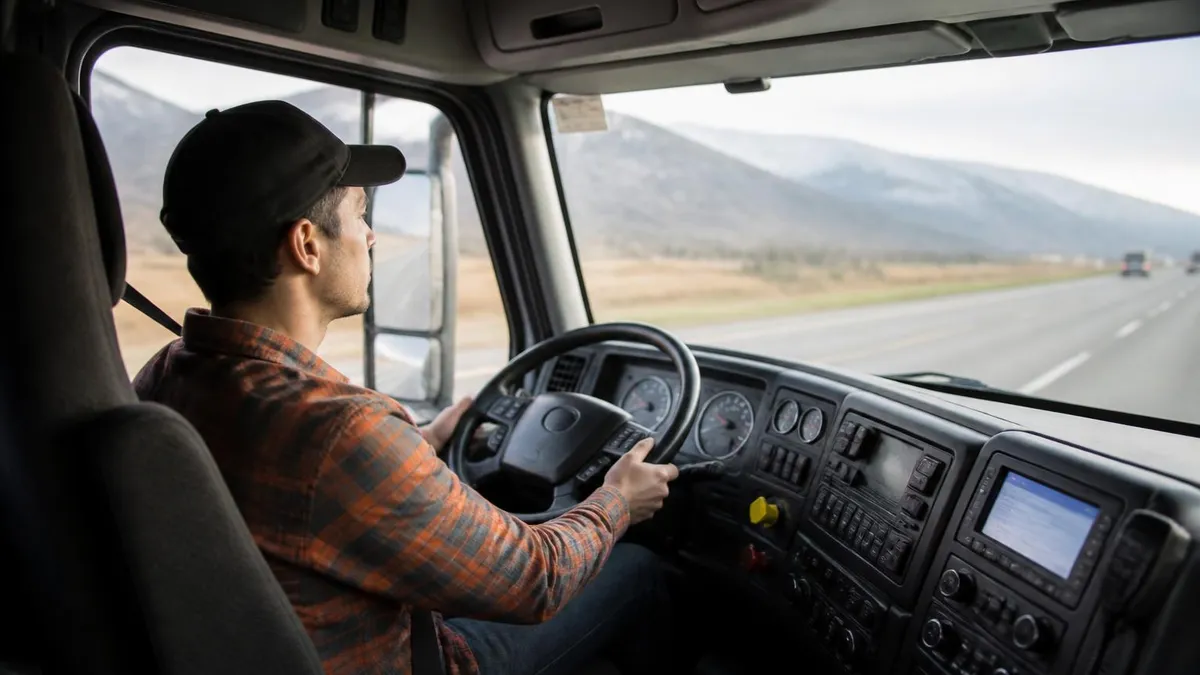
Why does your choice of CDL book matter so much? Because the written exam isn't one test—it's a stack of them. General Knowledge is mandatory. Then you layer Air Brakes, Combination Vehicles, Doubles & Triples, Tanker, HazMat, Passenger, and School Bus on top depending on what you want to drive. Each section has its own question pool, its own quirks, its own gotcha terms.
One generic study guide rarely covers all of that well. You'll need a primary text, and probably a sample question book on top. Maybe an endorsement-specific guide if you're chasing HazMat or Passenger. Don't try to wing it from a single 99-cent ebook—those are usually scraped content with broken formatting and wrong answer keys.
Think of it like this. The state manual is the textbook. A commercial guide is the tutor who explains the textbook in plain English. A sample question book is the practice exam. And an endorsement-specific guide is the specialist who tightens up your weakest area. Skip any of those four roles and you've got a gap. Cover all four and you're walking in confident.
The good news: you don't need to spend a fortune. The state manual is free. TruckingTruth's High Road program is free. One paid book usually runs $25 to $40. So even the full stack is under $50—less than a single CDL retake fee in most states.
Every state's DMV publishes a CDL Driver's Manual as a free PDF. This is the actual source material your test is built from. Download it from your state DMV website (search "[your state] CDL manual PDF"). It's free, it's current, and skipping it is the #1 reason people fail. Read this before spending money on any paid book. Bookmark the PDF, print key chapters, or load it on a tablet you'll actually open during downtime.
The state-issued CDL Manual covers everything the FMCSA requires—vehicle inspection, basic control skills, shifting, backing, signaling, hazard perception, and the regulatory side of commercial driving. Most state manuals run between 180 and 250 pages depending on which endorsements they include. California's is famously long. Texas, Florida, and New York all have solid, well-organized editions. Pennsylvania's is one of the more readable.
Read it once cover-to-cover. Then go back to the chapters that map to the endorsements you actually need. You don't need to memorize the doubles section if you're going for a straight Class B local route. Be efficient.
Now, the manual isn't perfect. It's written by committee, formatting is rough, and there are zero practice questions. The diagrams are usually the printed kind from the 1990s, the writing leans toward legal-document tone, and the chapter ordering jumps around in ways that don't always make sense. That's where commercial books earn their keep.
A trick that helps: print the table of contents and check off chapters as you finish them. The manual is long enough that it's easy to lose track of what you've covered. Or load the PDF on a tablet and use highlight tools. Whatever keeps you accountable. A few candidates I've talked to swear by printing the whole manual at a copy shop and three-hole-punching it into a binder. Sounds excessive. It's not—PDFs on a phone screen get scrolled past too easily.
The other thing to remember about your state manual: it gets updated. Usually once a year, sometimes more often if there are major federal regulation changes. Always download the newest version right before you start studying, not one you've had on your laptop for six months. The hours-of-service rules in particular have shifted multiple times in recent years.
Top CDL Books Worth Buying
Best-selling commercial guide. Covers all endorsements, includes practice questions, explains test-taking strategy. Around $40 paperback.
Long-standing classic. Heavy on practice questions and answer rationales. Solid for Class A candidates. Around $20-25.
Plain-English rewrite of FMCSA rules. Great if the state manual reads like legalese to you. Self-published, around $25.
Free online program (not a print book) but works like one. Chapter quizzes, progress tracking, used by thousands of candidates yearly.
Workbook format with fill-in exercises and chapter reviews. Good for tactile learners. About $30.
Endorsement-specific. If you're going for HazMat, the general books skim this section. Spend the extra $15 here.
How should you actually work through these books? Chapter by chapter, with active recall. Don't just read passively—that's how people "study" for 20 hours and remember nothing. Read a chapter, close the book, write down what you remember. Then check what you missed. It feels slow. It is slow. But the retention difference is huge.
Sample question banks help here. After each chapter, hit 20-30 questions on that topic. Get something wrong? Go back to the source paragraph. That feedback loop is what builds retention. Most candidates who fail did all their practice questions at the end—by then they'd already forgotten chapter one.
Also: use a notebook. Old-school pen and paper. Write down every number that shows up (following distances, weight thresholds, alcohol limits, hours-of-service caps) on its own page. The act of writing it cements it. The notebook becomes your night-before review tool too.
And if you're a re-reader rather than a writer, that's fine—but read each chapter at least twice with a few days in between. Spaced repetition beats cramming every single time, even for adults. Two passes a week apart will outperform four passes in one day, every time. That's not opinion—it's well-established learning science applied to a regulatory text.
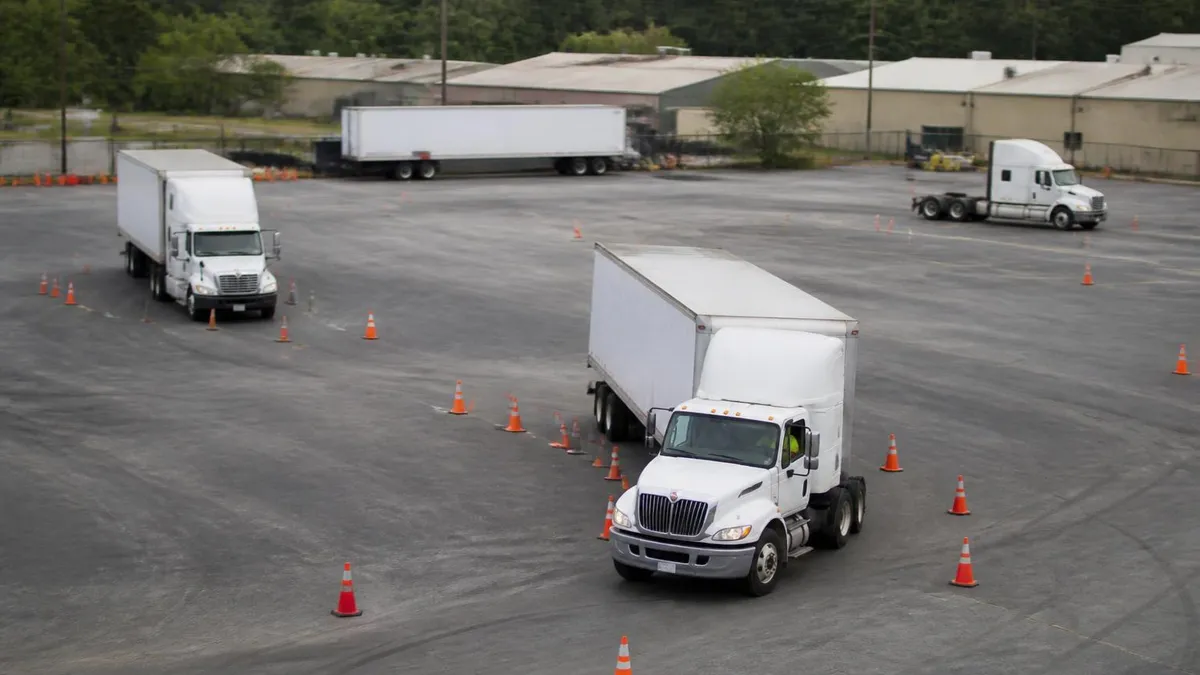
Types of CDL Books Explained
The official source. Free from your state DMV website. Pros: it's the actual test source, always current, costs nothing. Cons: dense, no practice questions, formatting is rough. Verdict: non-negotiable. Read it first.
So—free state manual or paid commercial book? Honestly, both. The state manual is the source of truth. Paid books are the translator. If money is tight, the manual plus TruckingTruth's free High Road program will get you across the line. If you've got $40 to spare, add one solid commercial guide on top.
What you should not do: buy four overlapping books, get overwhelmed, and study none of them thoroughly. One primary text, one question bank, the state manual. That's the stack. Three resources, used properly, beat ten resources skimmed.
Some candidates ask whether they should buy a guide specific to their state. The honest answer: it's nice to have but not essential. The federal content makes up the bulk of any state's test. State-specific quirks usually amount to a handful of questions about local regulations or fees. The state manual covers those already. A national guide plus your state's manual is enough.
One budget tip worth mentioning: libraries often carry CDL prep books. They're not always the newest editions, but if you pair a library copy with your current state PDF, you might not need to buy anything at all. Worth checking before clicking buy on Amazon.
The Amazon Kindle store and random ebook sites are flooded with $0.99 CDL guides that are scraped from older state manuals, contain wrong answer keys, or reference outdated regulations. If a book has no publisher, no author bio, and a generic stock cover—skip it. Stick with established names or the free state PDF.
Sample question books deserve their own moment. The CDL written exam pulls from a finite question pool per state. The more practice questions you've seen, the more likely you'll encounter familiar phrasing on test day. Familiar phrasing matters more than people realize. Two questions can ask the exact same thing in totally different words—and a candidate who's only seen one version freezes up.
Books like Barron's, Mometrix, and TruckingTruth all include 500+ practice questions across the sections. You should do every single one before you walk into the DMV. And not just once—until you can score above 85% consistently. The actual passing score is 80% in most states, so you want a buffer. If you're hovering at 80% on practice tests, you're one bad question away from failing the real thing.
One more sample-question tip. When you miss a question, don't just look at the right answer. Look at why each wrong answer is wrong. The DMV's distractors are not random—they're built to catch common misconceptions. Understanding the wrong-answer logic teaches you the underlying rule better than the right answer alone.
Online practice tests can supplement printed question banks. Free sites offer hundreds of questions split by section. Just be careful with the random ones—some of them are wildly out of date, especially around hours-of-service and ELD rules. Stick with established names that update their content yearly.
Your CDL Study Stack Checklist
- ✓Download your state's free CDL Manual PDF from the DMV website
- ✓Read it cover-to-cover at least once (highlight unfamiliar terms)
- ✓Buy ONE commercial study guide that matches your learning style
- ✓Add a sample question book or use free practice tests online
- ✓If chasing HazMat or Passenger, get an endorsement-specific guide
- ✓Take chapter quizzes after every reading session (active recall)
- ✓Score consistently above 85% on practice tests before booking the real exam
- ✓Re-read any chapter where you missed more than 3 questions
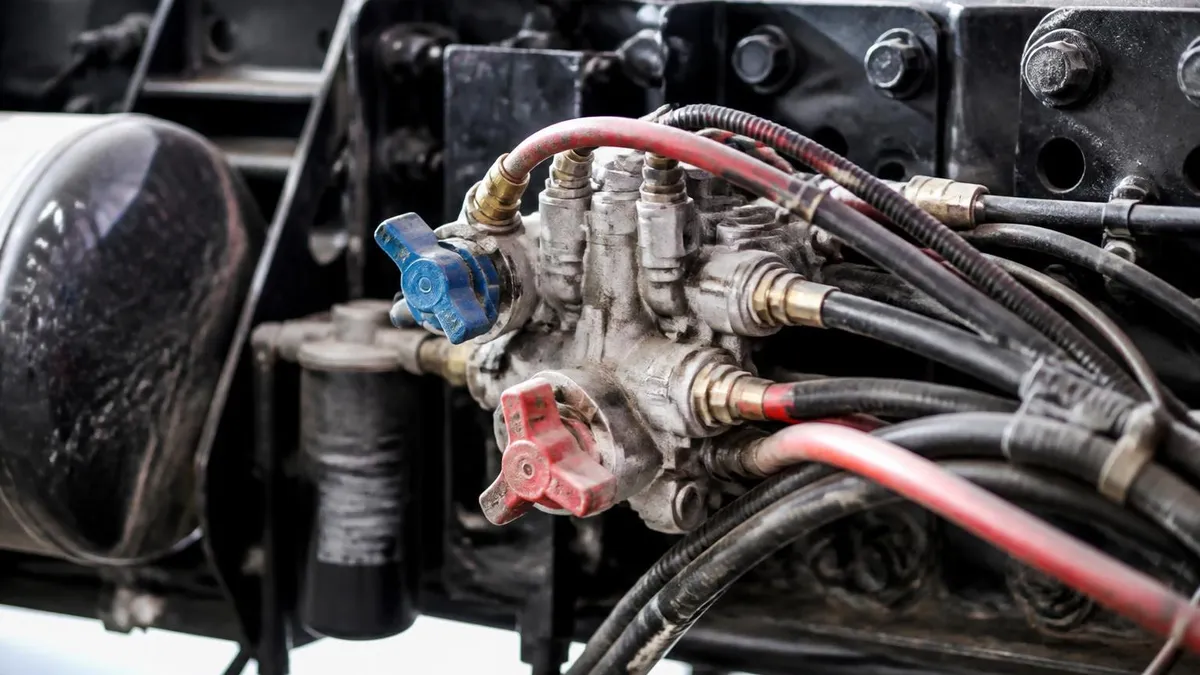
Endorsement books are where most candidates underspend. Your $30 general-purpose CDL book dedicates maybe 15 pages to HazMat. HazMat alone is worth a dedicated guide—the regulations are extensive, the penalties for getting it wrong on the road are severe, and the test reflects that. The TSA background check that comes with HazMat is another reason to take it seriously: fail twice and you've wasted both the test fee and your background-check window.
Tanker is similar. Surge dynamics, baffled versus unbaffled, liquid load distribution—these are concepts that show up on the test and that get skimmed in general books. If your job requires tanker, drop $15 on a focused guide. Same for Passenger and School Bus, though those are lighter than HazMat. Passenger covers loading procedures, emergency exits, and prohibited practices around bus operation. School Bus adds federal requirements specific to student transport: railroad crossings, mirror adjustment, the evacuation drill, student conduct.
Doubles & Triples is the one endorsement most general books actually cover well, since it's a logical extension of Combination Vehicles. You probably don't need a dedicated book for that one. Air Brakes likewise is woven through every general CDL guide—it's not really an endorsement, just a restriction removal—so a separate book is overkill.
One thing to confirm before buying any endorsement book: check that it's been updated since the 2022 HazMat regulation refresh and the latest hours-of-service rule. Older endorsement guides especially can drift out of date because their publishers don't reprint as often as the major brands do.
Free State Manual vs Paid Commercial Books
- +State manual is the official test source
- +Free state manual is always current with regulations
- +Paid books have clearer writing and structure
- +Paid books include hundreds of practice questions
- +Endorsement-specific paid guides cover niche topics deeply
- +Combining both gives best coverage
- −State manual is dense, dry, and hard to skim
- −State manual has zero practice questions
- −Cheap ebooks are often scraped or outdated
- −Buying multiple overlapping books wastes money
- −Some paid books lag behind regulation changes
- −No single book covers every endorsement deeply
Pros and Cons at a Glance
| Pros | Cons |
|---|---|
| State manual is the official test source | State manual is dense, dry, and hard to skim |
| Free state manual is always current with regulations | State manual has zero practice questions |
| Paid books have clearer writing and structure | Cheap ebooks are often scraped or outdated |
| Paid books include hundreds of practice questions | Buying multiple overlapping books wastes money |
| Endorsement-specific paid guides cover niche topics deeply | Some paid books lag behind regulation changes |
| Combining both gives best coverage | No single book covers every endorsement deeply |
Time-wise, plan on 40 to 60 hours of focused study to pass on the first attempt. That breaks down to roughly 4 to 6 weeks at one to two hours a day. Cram-studying a CDL test in a weekend almost never works—there's too much regulatory detail and too many specific numbers (following distances, weight limits, hours of service) to absorb that fast.
Build a schedule. Mondays and Tuesdays: General Knowledge. Wednesdays and Thursdays: Air Brakes and Combination Vehicles. Fridays: practice questions on what you read that week. Weekends: endorsements or review. Boring, yes. Effective? Also yes.
If you can study with a partner, even better. Quiz each other on numbers. Have them ask you the air brake checklist while you walk them through it. Teaching what you've just learned is one of the fastest ways to lock it in. Most CDL schools encourage paired study for exactly this reason.
If you can't find a study partner, record yourself reading the trickiest sections out loud and play it back during commutes. The combination of writing it down, saying it, and hearing it activates more memory pathways than reading alone. Sounds silly. Works anyway.
Another planning consideration: schedule your study around when you're sharpest. Most adults retain technical information better in the morning, before decision fatigue sets in. If you're trying to study after a 10-hour shift, expect retention to be lower. Pick mornings or weekend afternoons when you can.
Final scheduling note: don't book your test date until you're hitting 85% on practice exams across every section you're taking. Booking too early creates pressure to walk in unprepared, and the retake fees plus lost time add up faster than people expect. Some states limit how often you can retake within a 30-day window, which can really slow down your timeline if you fail.
One more thing. Don't read your CDL book in a vacuum. Talk to drivers who recently passed. Watch a few YouTube channels that walk through air brake checks or pre-trip inspection. The book teaches you what to memorize—real drivers teach you what actually shows up on the road and the test. Forums like r/Truckers and the TruckingTruth community are full of recent test takers who'll happily share what tripped them up.
And once you're past the written test, the real work begins: the skills test, behind-the-wheel training, finding a school or self-study path that gets you to road-ready. The book is the start. It's not the finish line. The skills test brings its own preparation needs—pre-trip inspection memorization, basic controls (offset backing, straight-line backing, parallel parking), and the on-road driving evaluation. A separate skills-test prep guide is worth picking up once your written exam is behind you.
A few extra book-buying tips before you click order. Check the publication date. Anything older than two or three years is probably outdated on hours-of-service rules and ELD requirements. Look at the table of contents—a good CDL book has at least 12 to 15 chapters, not three giant blocks. Check the reviews on Amazon, but ignore one-star reviews from people who didn't actually read the book. And if you're buying used, make sure no previous owner wrote answers in the practice questions.
For audio learners: a few publishers offer CDL audiobooks now. They're hit or miss because the material is so visual (diagrams, weight charts, intersection scenarios), but for the regulatory chapters they can work well during a long commute. Just don't make audio your only resource.
Bottom line: get the free state manual, add one solid paid guide, layer in a sample question bank, grab an endorsement book if you need one, and study consistently for a month. Do that, and you'll walk into the DMV ready. The drivers who fail almost always tried to skip one of those four ingredients. The drivers who pass on the first try almost always used all four. It's a remarkably consistent pattern.
Good luck with the test. The right CDL book won't drive the truck for you—but it'll get you to the seat.
CDL Questions and Answers
About the Author

Licensed Driving Instructor & DMV Test Specialist
Penn State UniversityRobert J. Williams graduated from Penn State University with a degree in Transportation Management and has spent 20 years as a certified driving instructor and DMV examiner consultant. He has personally coached thousands of applicants through written knowledge tests, skills assessments, and commercial driver licensing programs across more than 30 states.
Join the Discussion
Connect with other students preparing for this exam. Share tips, ask questions, and get advice from people who have been there.
View discussion (7 replies)