
BLS Test: Complete Study Guide & Certification Prep for 2026 September
✏️ Prepare for your BLS test with our complete study guide. Covers AHA exam format, CPR skills, passing scores, and free practice questions.

Understanding what is a BLS certification starts with knowing why it matters. Basic Life Support is the foundational emergency response training that teaches healthcare providers and first responders how to sustain life during cardiac arrest, respiratory failure, and choking emergencies. Every year, more than 350,000 out-of-hospital cardiac arrests occur in the United States, and immediate, high-quality CPR can double or triple a victim's chance of survival. Earning your BLS certification means you are prepared to act decisively in those critical first minutes.
The bls test is the written and skills assessment that validates your knowledge after completing a BLS course. Administered primarily by the American Heart Association and the American Red Cross, the exam tests your command of chest compression ratios, ventilation techniques, AED operation, and team-based resuscitation protocols. Passing the test earns you a two-year certification card recognized by hospitals, clinics, EMS agencies, and virtually every healthcare employer in the country.
Many candidates wonder what does BLS stand for before they even sign up for the course. BLS stands for Basic Life Support — a term coined by the American Heart Association to describe the level of care that trained rescuers provide when someone's heartbeat or breathing has stopped. It sits below Advanced Cardiac Life Support (ACLS) and Pediatric Advanced Life Support (PALS) in the AHA's training hierarchy, but it is the required prerequisite for both of those advanced certifications.
A common question is whether is BLS the same as CPR, and the answer is nuanced. CPR — cardiopulmonary resuscitation — is one critical component of BLS, but BLS is broader. In addition to adult and pediatric CPR, BLS training covers AED use, relief of foreign-body airway obstruction, bag-mask ventilation, and two-rescuer team dynamics. Think of CPR as a tool inside the BLS toolbox rather than a synonym for the entire certification.
The basic life support exam American Heart Association administers is structured around the BLS Provider Course, which is the gold standard for healthcare professionals. The course combines video-based instruction, hands-on skills stations, and a written knowledge exam of 25 questions. You must score at least 84 percent — meaning you can miss no more than four questions — to earn your card. Skills are evaluated separately by a certified AHA instructor who watches you perform CPR on a manikin and operate an AED trainer.
If you are preparing for the aha basic life support exam, this guide covers everything you need: the exam format, high-yield topics, study strategies, renewal requirements, and free practice questions. Whether you are a nursing student taking BLS for the first time or an experienced paramedic completing a basic life support renewal class, the content below is designed to get you to passing confidence as efficiently as possible. Read every section, take the practice tests, and you will walk into exam day knowing exactly what to expect.
This article also addresses the differences between the American Heart Association and American Red Cross Basic Life Support pathways so you can choose the right course for your employer's requirements. Both organizations offer rigorous, evidence-based training, but there are meaningful differences in course format, cost, and card acceptance that every candidate should understand before enrolling. Let's start with the numbers that define this certification landscape.
BLS Certification by the Numbers

BLS Test Study Schedule
- ▸Read the AHA BLS Provider Manual chapters 1–3
- ▸Memorize the adult Chain of Survival (6 links)
- ▸Watch AHA HeartCode BLS video modules
- ▸Take a baseline practice quiz to identify weak areas
- ▸Practice 30:2 compression-to-ventilation ratio on a manikin
- ▸Memorize compression depth: 2–2.4 inches (adult), 2 inches (child), 1.5 inches (infant)
- ▸Study bag-mask ventilation technique for one- and two-rescuer scenarios
- ▸Complete High-Quality CPR practice test 1 and 2 on this site
- ▸Study pediatric BLS differences vs. adult protocol
- ▸Review infant CPR: two-finger vs. two-thumb encircling technique
- ▸Practice team roles: compressor, airway, AED operator, team leader
- ▸Complete Special Situations & Scenarios practice tests 1–3
- ▸Take all six practice tests under timed conditions
- ▸Review every missed question and re-read corresponding manual section
- ▸Conduct a live manikin skills session with a partner or instructor
- ▸Confirm exam day logistics: location, required ID, course materials
The written portion of the BLS test covers a well-defined set of topics that the American Heart Association publishes in its BLS Provider Manual. If you understand these topics deeply — not just as memorized facts but as applied knowledge — you will answer every question with confidence. The exam is not designed to trick you; it tests whether you can make the right clinical decision in a described scenario, and every question maps back to a specific skill or concept from the course.
High-quality CPR mechanics are the single most tested area on the exam. The AHA defines high-quality CPR through five measurable parameters: compression rate of 100–120 per minute, compression depth of at least 2 inches (5 cm) in adults, full chest recoil between compressions, minimal interruptions (pause time under 10 seconds), and avoiding excessive ventilation. Questions will describe a rescuer's technique and ask you to identify which element needs correction. Knowing all five parameters by heart is non-negotiable before test day.
The Chain of Survival provides the structural framework for every BLS scenario question. The AHA's 2020 Guidelines expanded the adult out-of-hospital chain to six links: recognition and activation of the emergency response system, immediate high-quality CPR, rapid defibrillation, advanced resuscitation, post-cardiac arrest care, and recovery including rehabilitation. For in-hospital cardiac arrest, the first link changes to surveillance and prevention. Exam questions frequently ask which link was delayed or missing in a described scenario, so visualizing the chain as a narrative helps more than rote memorization.
AED use is tested both conceptually and procedurally. You need to know when to attach an AED (as soon as it arrives, minimizing CPR interruption), how to operate it (power on, attach pads, analyze, shock if advised, resume CPR immediately), and the special populations that require modified pad placement, including children under 8 years old where pediatric pads or an attenuator are used, and patients with implanted pacemakers where pads should be placed at least one inch from the device. Many candidates miss AED questions because they skip these edge cases.
Ventilation technique separates competent BLS providers from truly skilled ones. The exam tests the one-second inspiratory time standard — each breath should be delivered over one second and should produce visible chest rise without over-inflating the lungs. Excessive ventilation is explicitly flagged in AHA guidelines as harmful because it increases intrathoracic pressure, reduces venous return, and diminishes cardiac output during resuscitation. Questions describing a provider giving large, rapid breaths are testing whether you recognize gastric inflation and hyperventilation as errors, not signs of good technique.
Two-rescuer team dynamics are heavily tested because BLS for healthcare providers assumes you will often work in a team. Key concepts include switching compressors every two minutes to prevent fatigue, the team leader's role in directing resuscitation and communicating clearly, and the use of closed-loop communication to confirm orders. The exam may describe a scenario where compressions are interrupted too long during a rhythm check or where no one has been assigned to manage the airway, and ask you to identify the error or the correct intervention.
Understanding basic life support for healthcare providers also means knowing the differences between adult, child, and infant protocols. Children are defined as one year old to puberty, and infants are under one year. Compression depth for children is at least 2 inches (5 cm); for infants it is at least 1.5 inches (4 cm). The two-rescuer infant technique uses the two-thumb encircling hands method rather than two fingers. Rescue breathing ratios differ as well: with an advanced airway in place, ventilations are given every 6 seconds regardless of age, asynchronous from compressions. These distinctions are reliable exam topics.
AHA vs. Red Cross Basic Life Support: Which Course Is Right for You?
The American Heart Association BLS Provider Course is the most widely accepted BLS certification in U.S. healthcare settings. It runs approximately 4–5 hours in the classroom format, or can be completed as HeartCode BLS — a blended online and hands-on skills session. The written exam is 25 questions with an 84% passing threshold, and the skills test requires a certified AHA instructor. Most hospitals and health systems specify AHA BLS as a condition of employment, making it the default choice for nurses, physicians, respiratory therapists, and EMTs.
The AHA updates its guidelines every five years based on the International Liaison Committee on Resuscitation (ILCOR) evidence review. The most recent major update was the 2020 Guidelines for CPR and ECC, which added the sixth link in the chain of survival (recovery), reinforced the importance of dispatcher-assisted CPR, and strengthened guidance on the use of vasopressors and TTM. When studying for the aha basic life support exam, always use materials dated 2020 or later to ensure your knowledge aligns with current testing content.
Pros and Cons of Blended (Online + Skills) BLS Training
- +Complete the cognitive portion on your own schedule without commuting
- +Shorter in-person skills session (1–1.5 hours vs. 4–5 hours full classroom)
- +Pause and rewind video content to review difficult concepts at your own pace
- +Reduces total time away from clinical duties or class schedules
- +Available 24/7, so you can study at midnight before a 7am skills check
- +Interactive AHA HeartCode modules provide immediate feedback on knowledge questions
- −Requires access to a reliable internet connection and a compatible device
- −No real-time instructor feedback during the online cognitive portion
- −Skills session must still be scheduled and attended in person — not fully flexible
- −Some learners retain information better with live instructor-led discussion
- −Blended format can feel less cohesive than a single continuous classroom experience
- −Technical issues with online platform can delay completion before a deadline
BLS Test Prep Checklist: 10 Steps Before Exam Day
- ✓Obtain the current AHA BLS Provider Manual (2020 Guidelines edition) or confirm your course materials are post-2020.
- ✓Memorize all five parameters of high-quality CPR: rate, depth, recoil, interruptions, and ventilation volume.
- ✓Learn the six links of the adult out-of-hospital Chain of Survival and the five links of the in-hospital chain.
- ✓Practice the 30:2 compression-to-ventilation ratio on a manikin until it feels automatic.
- ✓Study AED pad placement for adults, children under 8, and patients with implanted pacemakers.
- ✓Review pediatric and infant differences: compression depth, hand position, and two-thumb encircling technique.
- ✓Complete all six BLS practice tests on this site and review every incorrect answer before moving on.
- ✓Understand the two-rescuer team dynamics: when to switch compressors, how to use closed-loop communication.
- ✓Confirm your exam location, start time, required government-issued ID, and any materials to bring.
- ✓Get at least 7–8 hours of sleep the night before and eat a light meal so you can focus during the skills session.

The 10-Second Rule Is Your Most Tested Concept
The AHA mandates that CPR interruptions for rhythm checks, pulse checks, or any other reason must be kept under 10 seconds. This single rule appears across multiple exam questions in different scenario formats. If a question describes a team pausing compressions to establish IV access, position an airway device, or discuss the next step — and that pause exceeds 10 seconds — the correct answer will always involve resuming compressions immediately. Internalize this threshold and you will gain points every time it appears.
BLS renewal is a requirement that catches many healthcare providers off guard when their two-year certification card expires at an inconvenient time. The good news is that the basic life support renewal class is shorter than the initial course — typically 3–4 hours for an in-person renewal or about 2.5 hours for a blended HeartCode BLS renewal — because you are presumed to have prior knowledge and are refreshing rather than learning from scratch. The passing threshold remains 84% on the written exam and satisfactory performance on the skills evaluation.
The AHA recommends starting the renewal process at least 60 days before your card's expiration date. Most hospitals and healthcare employers require a valid card on file at all times and will flag a lapse in certification during credentialing reviews.
A lapsed card does not mean you must retake the full initial course; you can take the renewal (or "recertification") class as long as your card expired within a reasonable window. However, policies vary by employer — some require the full initial course if the card has been expired for more than 30 or 90 days, so verify with your HR or education department.
One important change introduced in recent years is that the AHA now requires hands-on skills practice for renewal even in the blended format. Earlier versions of the HeartCode renewal allowed a purely online completion, but current policy requires a skills check with a certified AHA instructor. This change was driven by data showing that CPR skill quality degrades significantly within 6–12 months without practice, and that providers who only renewed via online testing performed worse on manikin assessments than those who practiced regularly.
The American Red Cross Basic Life Support renewal follows a similar structure. The red cross basic life support course renewal is available in a classroom format or through their blended Simulation Learning online system. Red Cross renewal participants complete online modules followed by a live skills session. One feature Red Cross offers that AHA does not is the ability to access free refresher videos between certifications through their online learning portal, which can help providers maintain skill quality without waiting for formal renewal time.
Some healthcare systems have implemented high-frequency, low-dose CPR training programs to address the skill degradation problem. Rather than waiting two years for formal renewal, providers complete a brief 10–15 minute skills check every 3–6 months using feedback manikins placed in break rooms or nursing stations. Research published in Resuscitation and other peer-reviewed journals has shown these micro-training programs significantly improve compression quality metrics compared to biennial renewal alone. If your employer offers this program, participate — it also makes renewal exams much easier.
For providers who hold multiple advanced certifications — ACLS, PALS, or NRP — a valid BLS card is the required foundation for all of them. Most advanced certification courses will not allow you to sit for the exam without a current BLS card in hand. When you plan your renewal schedule, work backward from your ACLS or PALS renewal dates and ensure your BLS card does not expire within the same cycle. Managing these dates proactively prevents the cascade of expired certifications that can disrupt clinical scheduling and credentialing.
If you hold both an AHA BLS card and a Red Cross BLS card and are wondering whether you need both, the answer is almost certainly no. Check with your primary employer and any secondary or per-diem facilities about which organization they accept. In most major health systems, AHA is the requirement — but confirming takes less than five minutes and saves you from paying for a redundant course. The basic life support for healthcare providers credential is treated as equivalent regardless of issuing organization as long as both follow current ILCOR guidelines and include a live skills component.
An expired BLS card can result in removal from the clinical schedule, failed credentialing reviews, and delayed start dates for new positions. Many hospitals require a valid card on file at all times and will not grant a grace period. Set a calendar reminder 60 days before your expiration date and register for a renewal class immediately — popular sessions fill up weeks in advance, especially in January and September when academic medical centers process large cohorts of new residents and students.
Understanding what does BLS stand for in the broader context of emergency medical response helps you answer scenario-based exam questions more accurately. Basic Life Support is defined by the AHA as the level of care that trained rescuers — both lay rescuers and healthcare providers — can provide when someone's breathing or circulation has stopped. Unlike Advanced Cardiac Life Support, which introduces medications, advanced airways, and 12-lead ECG interpretation, BLS relies entirely on physical interventions: hands, lungs, and an AED. This distinction shapes every question on the exam.
The scenario-based format of the AHA written exam is worth understanding in depth. Rather than asking "what is the correct compression rate?" as a standalone question, the exam will describe a nurse responding to a patient who has collapsed in a hospital hallway and ask which action should be taken first.
The answer sequence follows the BLS algorithm: ensure scene safety, check responsiveness, activate the emergency response system (or send someone to do so), check pulse and breathing simultaneously for no more than 10 seconds, and begin CPR if no definite pulse is felt within that window. Questions that describe a rescuer spending 15 seconds on a pulse check are testing whether you recognize that error.
The AED algorithm is similarly scenario-tested. A classic exam question describes two rescuers arriving at a collapsed patient: one begins CPR while the other retrieves the AED. When the AED arrives and is powered on, it analyzes the rhythm and advises a shock. The question asks what happens immediately after the shock is delivered.
The correct answer is to immediately resume CPR starting with chest compressions — not to recheck the pulse, not to wait for the patient to respond, not to deliver a second shock. The two-minute CPR-before-recheck cycle is a tested concept that many candidates miss because instinct says to check for a pulse after a shock.
Special situations on the exam include drowning, opioid overdose, pregnancy, and stroke. For drowning victims, ventilations are prioritized first because the arrest is hypoxic in origin rather than primarily cardiac, which is a meaningful departure from the compression-first approach for sudden witnessed cardiac arrest. For opioid overdose with a pulse but absent breathing, naloxone administration is addressed in the AHA's updated guidelines and may appear in newer exam versions. Pregnant patients require CPR with manual left uterine displacement to relieve aortocaval compression — a detail tested because it is counterintuitive to providers trained primarily on non-pregnant adults.
Stroke recognition is included in BLS training because early identification and rapid transport are the primary interventions at the BLS level — providers do not administer tPA, but they must recognize stroke and activate the appropriate response. The AHA teaches the BE-FAST mnemonic: Balance (sudden loss), Eyes (sudden vision change), Face drooping, Arm weakness, Speech difficulty, Time to call 911. Exam questions may describe a patient with one-sided facial droop and arm weakness and ask the provider to identify the most likely emergency and the appropriate immediate action, which is calling 911 and noting the time of symptom onset.
Team dynamics questions are among the most nuanced on the BLS exam because they require you to evaluate interpersonal and procedural errors rather than just clinical ones. A common scenario describes a resuscitation where compressions are paused for 20 seconds while a new provider takes over, or where one team member begins delivering ventilations before compressions are established, or where no one has been designated as team leader and multiple providers are giving conflicting instructions.
In each case, the question asks you to identify the most important correction. Knowing that the team leader should assign roles early and that closed-loop communication prevents errors will guide you to the right answers consistently.
Finally, remember that is BLS and CPR the same thing is a question many new providers ask — and the answer matters for how you approach exam prep. CPR encompasses compressions and ventilations, but the BLS written exam also covers AED operation, foreign-body airway obstruction relief (the Heimlich maneuver and back blows for infants), recognition of life-threatening emergencies, and system-level concepts like the Chain of Survival.
Studying CPR technique alone is not sufficient to pass the written portion. Allocate study time to every section of the BLS Provider Manual, not just the hands-on skills chapters, and you will be well-prepared for the full scope of the test.
Walking into your BLS test fully prepared means more than memorizing compression ratios — it means understanding how to apply those ratios under the time pressure and scenario framing of the actual exam. The most effective study strategy combines reading the AHA BLS Provider Manual, watching the HeartCode video modules, and completing targeted practice questions that mirror the exam's scenario-based format. Generic CPR flashcards will help you recall definitions, but only practice questions built around the AHA algorithm will train your brain to navigate the multi-step decision trees the exam uses.
Spacing your study sessions over 3–4 weeks produces better long-term retention than cramming the night before. Cognitive science research consistently shows that information reviewed in spaced intervals with sleep between sessions is encoded more deeply than information reviewed in one long block. For BLS, this means reading a chapter, doing 10–15 practice questions on that chapter, sleeping, and returning to the weak areas the next day. The four-week study schedule included in this guide was designed around exactly this principle — each week builds on the last with a final consolidation week before the exam.
Using feedback to guide your study is more efficient than simply retaking quizzes until you score high. When you answer a practice question incorrectly, read the explanation, find the corresponding page in the BLS Provider Manual, and re-read that section before attempting similar questions. This targeted review closes knowledge gaps faster than unfocused re-reading. Keep a running list of concepts you miss consistently — if "AED pad placement in children" appears three times on your error list, spend 20 minutes on that single topic rather than re-reading the entire manual.
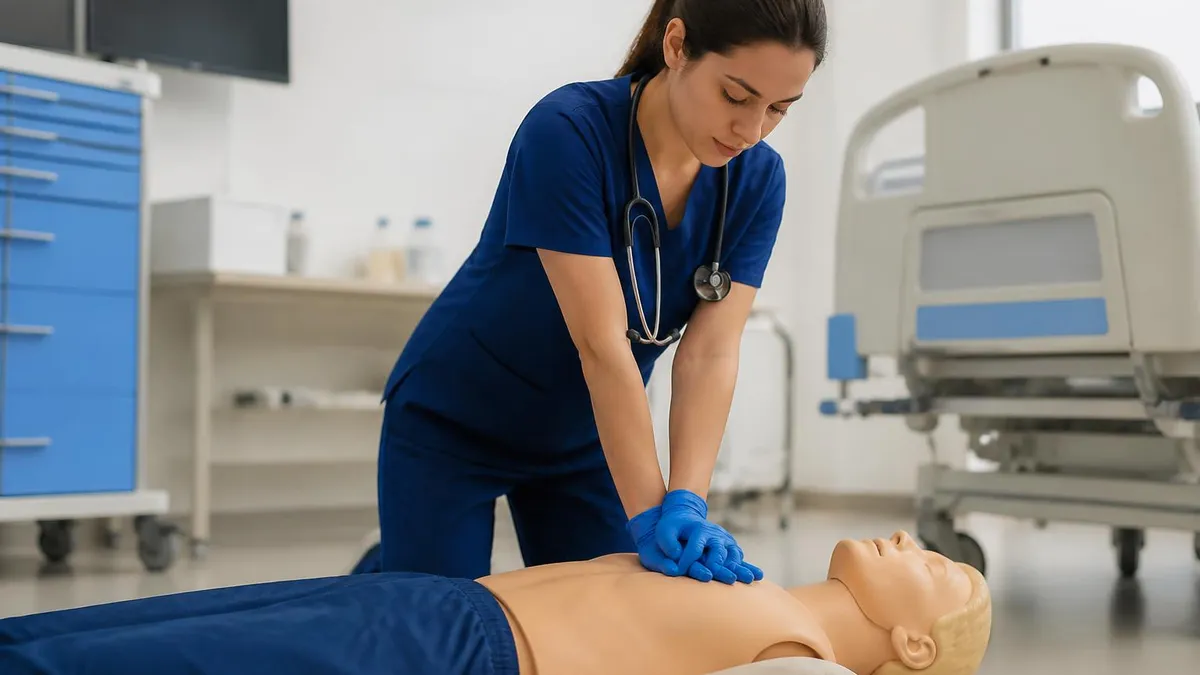
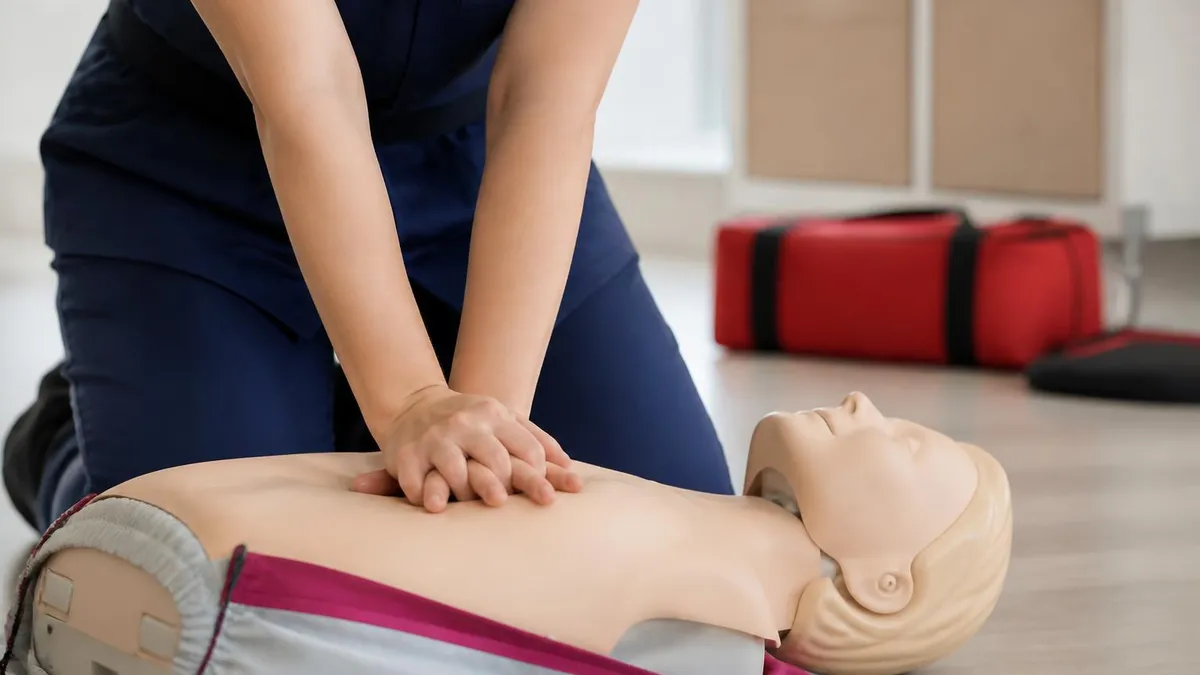
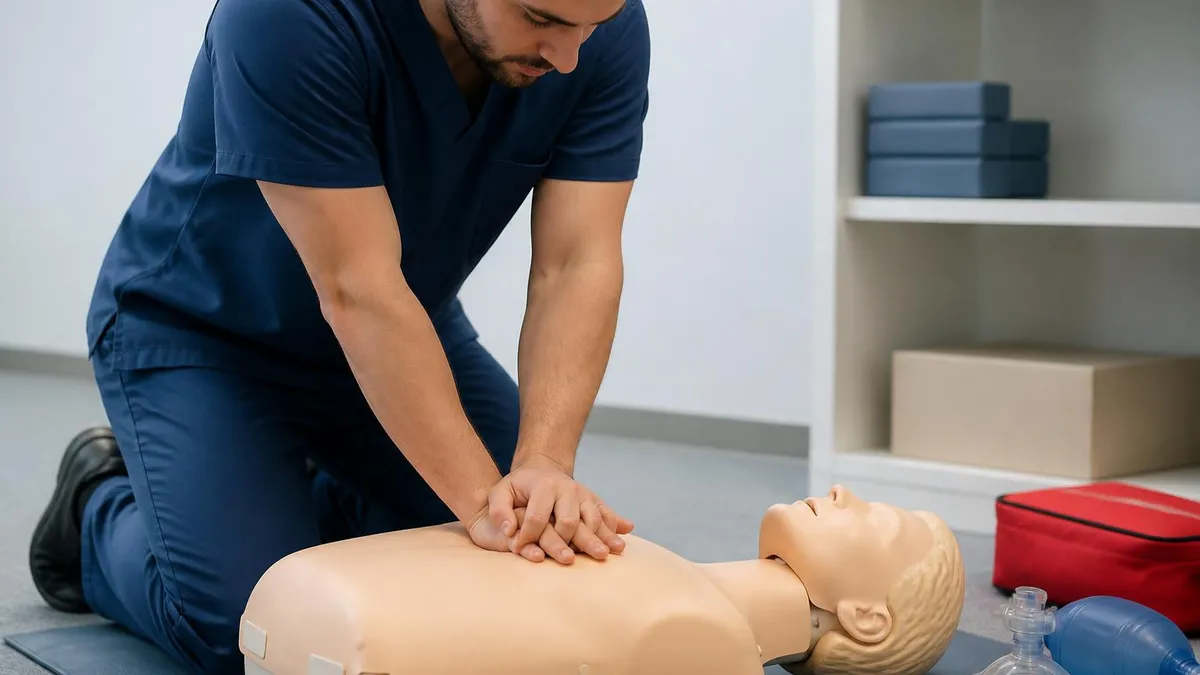
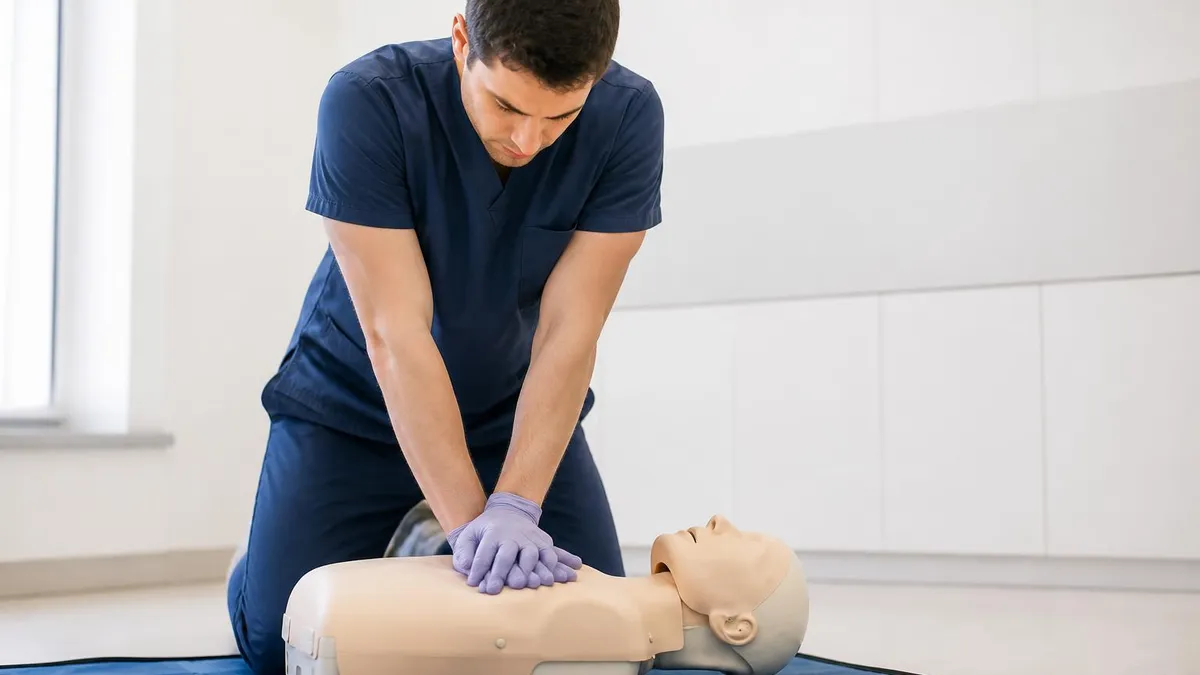
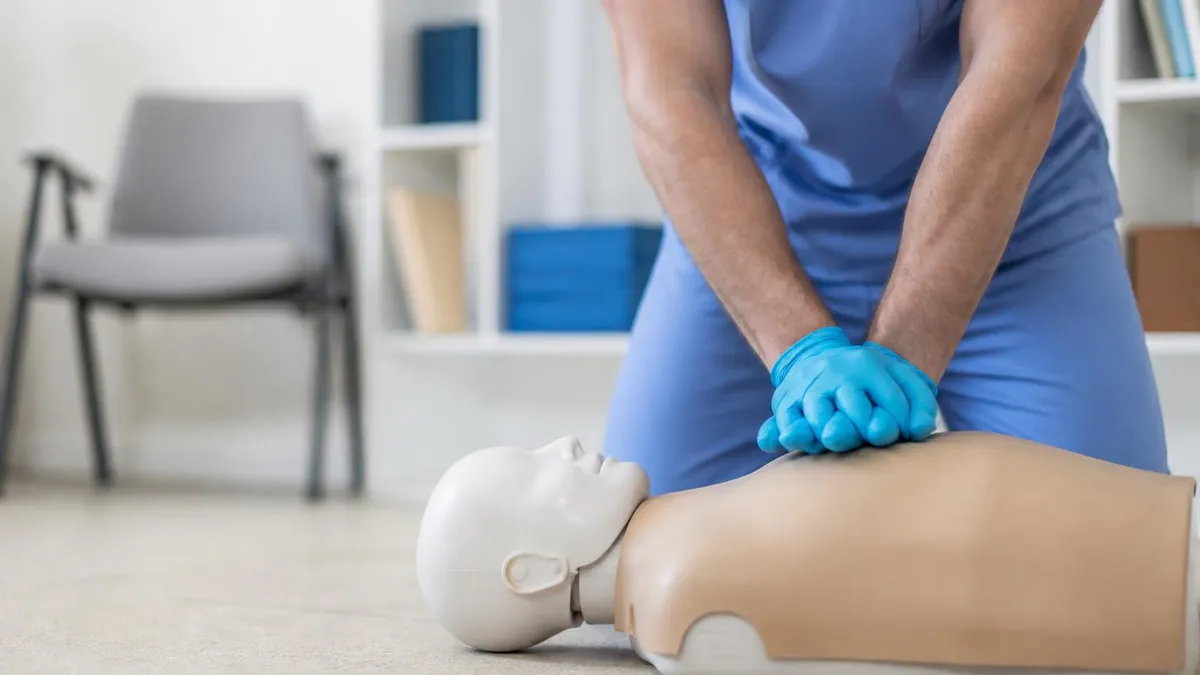
The skills portion of the BLS test requires physical practice, not just cognitive preparation. Reading about compression depth does not build muscle memory. If you have access to a manikin — through a hospital simulation lab, a nursing school skills lab, or a CPR training mannequin at a community center — schedule at least two 30-minute practice sessions before your skills check.
Focus on maintaining 100–120 compressions per minute (a metronome app is useful), achieving full recoil between compressions, and keeping your elbows locked with your shoulders directly over the patient's sternum. Instructors evaluate all of these mechanics simultaneously during the skills check.
On exam day itself, manage your time at the written test calmly. The AHA written exam is not timed by the minute — you typically have 45 minutes for 25 questions, which is generous. Read each question completely before looking at the answer options, because the scenario often contains a key detail (such as "the AED is not yet available" or "the patient is an 8-month-old infant") that changes the correct answer entirely.
If a question is genuinely unclear, use the process of elimination: identify which answers are definitively wrong based on your knowledge of the BLS algorithm and select the best remaining option.
After passing your written and skills exams, your AHA BLS Provider card will be issued immediately or emailed within a few days depending on your course format. Store a digital photo of your card in your phone's photo library and email a copy to yourself and to your employer's HR department the day you receive it. Physical cards can be lost or damaged, and having a digital backup prevents delays during credentialing. The AHA's eCard system also allows you to verify your certification online, which is useful when employers or licensing boards request verification directly from the issuing organization.
Building on your BLS certification is a natural next step once you have your card. ACLS (Advanced Cardiac Life Support) is the most common follow-on certification for nurses, physicians, and paramedics, and it requires a current BLS card as a prerequisite. PALS (Pediatric Advanced Life Support) is equally important for those working in pediatric or emergency settings.
Both certifications deepen the scenarios you studied for BLS — they add medications, advanced airways, ECG rhythm interpretation, and more complex team dynamics on top of the BLS foundation. Your BLS preparation, especially the team dynamics and algorithm-thinking you developed for this exam, will directly accelerate your success in those advanced courses.
BLS Questions and Answers
About the Author

Registered Nurse & Healthcare Educator
Johns Hopkins University School of NursingDr. Sarah Mitchell is a board-certified registered nurse with over 15 years of clinical and academic experience. She completed her PhD in Nursing Science at Johns Hopkins University and has taught NCLEX preparation and clinical skills courses for nursing students across the United States. Her research focuses on evidence-based exam preparation strategies for healthcare certification candidates.
Join the Discussion
Connect with other students preparing for this exam. Share tips, ask questions, and get advice from people who have been there.
View discussion (8 replies)