
How to Become a Bartender by State: Complete Requirements Guide for All 50 States
✅ How do I become a bartender in California, Texas, Florida, and beyond? Complete state-by-state guide to age, certification, licensing, and training...
If you have ever asked how do i become a bartender in California, the short answer is that you need to be at least 21 years old to pour spirits, complete a state-approved Responsible Beverage Service (RBS) course within 60 days of hire, and pass the ABC RBS exam. California is one of the few states with a mandatory statewide certification program, but every state in the country has its own mix of age limits, training requirements, and employer expectations that shape how new bartenders break into the industry.
The bartender path is not uniform across the United States. In some states, like Utah and Oregon, a server permit issued by the state liquor authority is required before you can legally touch alcohol behind a bar. In others, like New York and Colorado, training is technically optional but practically demanded by every reputable employer. Understanding which category your state falls into is the first decision point in your career planning, because it determines how much you will spend, how long you will wait, and which classes count toward eligibility.
Beyond legal requirements, employers look at hands-on skill: speed, recipe recall, cash handling, and the ability to manage intoxicated guests without escalation. Most bartenders begin as barbacks or servers, build a portfolio of cocktails and POS experience, and then transition into a full bar shift after three to twelve months. A formal bartending school is optional but can shave that timeline considerably by giving you the confidence to execute classic recipes, pour to a count, and survive a Saturday night rush.
This guide breaks down the requirements state by state, with special focus on the highest-demand markets: California, Florida, Texas, New York, Illinois, and Nevada. We cover age minimums, mandatory certifications like TIPS and ServSafe Alcohol, training school costs, expected timelines from class to first shift, and the legal liability rules that determine whether a bar will hire you. We also explain why some states require a permit costing under fifty dollars while others demand multi-week coursework backed by exams.
If you are considering bartending as a career rather than a side hustle, the financial case is compelling. The Bureau of Labor Statistics reports a median bartender wage near $31,510 annually, but tipped earners in busy metropolitan venues regularly clear $55,000 to $80,000 with experience. High-volume nightclubs in Las Vegas, Miami, and Manhattan can push top performers past six figures. Compensation varies wildly with venue type, tip share policy, and local wage laws, so location strategy matters as much as skill.
The most efficient path looks like this: confirm your state's legal minimum age, complete the mandated alcohol-server certification, log 200 to 500 practice pours at home or in a bartending course, apply for barback positions to learn bar flow, then move into full bar shifts within six months. Along the way, build a recipe binder of at least 75 classic cocktails, learn one POS system thoroughly, and study local liquor laws because dram-shop liability puts your job and your employer on the line every single shift.
Whether you live in a regulated state with mandatory training or a state where the requirements are looser, the goal of this article is to give you a clear, step-by-step understanding of what comes next. Use the table of contents below to jump to your specific state or skip to the certification breakdown if you already know your location. Every section ties back to actionable steps you can complete within the next 30 days to legally and confidently start working behind a bar.
Bartending by the Numbers Across the US
How State Requirements Cluster Into Four Groups
California, Utah, Oregon, Washington, New Mexico, and Alaska require state-approved RBS or server-permit programs. You must hold the cert within 30 to 60 days of being hired.
Texas, Illinois, and Pennsylvania leave it to municipalities. Cities like Chicago and Philadelphia mandate BASSET or RAMP. Always check city ordinances before applying.
Florida, New York, Nevada, and Georgia do not require state cert, but nearly every chain restaurant, hotel, and insured venue demands TIPS or ServSafe Alcohol as a hiring condition.
A handful of states only require you to meet the legal age. Even here, training is the practical norm because liability insurance and corporate policy effectively force compliance.
Most states require bartenders be 21 to serve spirits. Some allow 18 to 20 year olds to serve beer and wine only. Always check the exact statute for your state before applying.
California has the most structured statewide system in the country. Anyone who pours alcohol for on-premise consumption must complete RBS training certified by the Department of Alcoholic Beverage Control and pass a 50-question proctored exam within 60 days of hire. The training itself typically runs three to four hours online, costs between ten and twenty dollars from approved providers, and the ABC charges a three dollar registration fee. Bartenders must be 21 to pour spirits, though servers can be 18 in beer-and-wine establishments.
Florida takes a different approach. There is no state-mandated certification, but the overwhelming majority of bars, restaurants, and hotels require TIPS or ServSafe Alcohol before your first shift. The legal age to bartend is 18, which makes Florida attractive for younger applicants. Counties like Miami-Dade and Orange County have their own enforcement priorities, and many tourist-heavy venues will not consider applicants without a current responsible-vendor card. For a deeper local breakdown, see our Bartending License Florida guide.
Texas requires bartenders to be 18 and to complete a TABC-approved seller-server certification within 30 days of hire. The course covers ID checking, intoxication recognition, and Texas-specific dram-shop law. Certifications last two years and cost between ten and fifteen dollars. TABC publishes a list of approved providers, and the course can be completed entirely online with a final assessment. Many large employers like Topgolf and chain hotels require you to arrive with the cert already in hand.
New York has no statewide certification mandate, but New York City liquor inspectors and corporate venues universally demand TIPS or an equivalent. The state minimum age is 18 to serve alcohol, but most upscale bars and steakhouses prefer 21-plus applicants because spirits service dominates the menu. New York also has unusual rules around private events and catered service that bartenders should study before pursuing event work, particularly in the Hamptons summer market.
Illinois requires BASSET (Beverage Alcohol Sellers and Servers Education and Training) statewide as of 2018. The course is short, generally three hours, and the certification is good for three years. Bartenders must be 21 statewide to serve. Chicago additionally enforces strict ID-checking standards and routine compliance checks, so understanding both the state curriculum and city ordinances is essential before you walk into your first interview.
Nevada is unique because individual counties handle bartender requirements. Clark County, which includes Las Vegas, requires a Sheriff's Card (work permit) and TAM (Techniques of Alcohol Management) certification. The sheriff's card process includes fingerprinting and a background check that can take two to three weeks. Las Vegas also has a Health Card requirement for any food-handling staff, which most bartenders technically qualify under because they garnish drinks.
Wisconsin operates an Operator's License system administered at the municipal level. Bartenders must be 18 and obtain a license from the city or village where they work. The application typically includes a background check, an approved responsible-beverage-server course, and a fee that ranges from ten to one hundred dollars depending on the municipality. Our full breakdown is available in the Wisconsin Bartending License guide for anyone planning to work in Madison, Milwaukee, or smaller Wisconsin towns.
Bartender Practice Test Questions
Prepare for the Bartender Certification exam with our free practice test modules. Each quiz covers key topics to help you pass on your first try.
Bartender Certification Bar Inventory and ...
Bartender Exam Questions covering Certification Bar Inventory and Cost Control. Master Bartender Test concepts for certification prep.
Bartender Certification Bar Law and Liquor...
Free Bartender Practice Test featuring Certification Bar Law and Liquor Regulations. Improve your Bartender Exam score with mock test prep.
Bartender Certification Bar Sanitation and...
Bartender Mock Exam on Certification Bar Sanitation and Safety. Bartender Study Guide questions to pass on your first try.
Bartender Certification Bar Setup and Orga...
Bartender Test Prep for Certification Bar Setup and Organization. Practice Bartender Quiz questions and boost your score.
Bartender Certification Bar Tools and Glas...
Bartender Questions and Answers on Certification Bar Tools and Glassware. Free Bartender practice for exam readiness.
Bartender Certification Basic
Bartender Mock Test covering Certification Basic. Online Bartender Test practice with instant feedback.
Bartender Certification Cocktail Recipes a...
Free Bartender Quiz on Certification Cocktail Recipes and Techniques. Bartender Exam prep questions with detailed explanations.
Bartender Certification Customer Service a...
Bartender Practice Questions for Certification Customer Service and Sales. Build confidence for your Bartender certification exam.
Bartender Certification Customer Service S...
Bartender Test Online for Certification Customer Service Skills. Free practice with instant results and feedback.
Bartender Certification Mixology Fundamentals
Bartender Study Material on Certification Mixology Fundamentals. Prepare effectively with real exam-style questions.
Bartender Certification Responsible Alcoho...
Free Bartender Test covering Certification Responsible Alcohol Service. Practice and track your Bartender exam readiness.
Bartender Certification Spirits, Beer, and...
Bartender Exam Questions covering Certification Spirits, Beer, and Wine. Master Bartender Test concepts for certification prep.
Bartender Certification Spirits, Liqueurs,...
Free Bartender Practice Test featuring Certification Spirits, Liqueurs, and Cocktails. Improve your Bartender Exam score with mock test prep.
Bartender Responsible Alcohol Service
Bartender Mock Exam on Responsible Alcohol Service. Bartender Study Guide questions to pass on your first try.
Bartender Spirits, Liqueurs, and Cocktails
Bartender Test Prep for Spirits, Liqueurs, and Cocktails. Practice Bartender Quiz questions and boost your score.
Bartender Bar Sanitation and Safety
Bartender Questions and Answers on Bar Sanitation and Safety. Free Bartender practice for exam readiness.
Bartender Bar Setup and Organization
Bartender Mock Test covering Bar Setup and Organization. Online Bartender Test practice with instant feedback.
Bartender Bar Tools and Glassware
Free Bartender Quiz on Bar Tools and Glassware. Bartender Exam prep questions with detailed explanations.
Bartender Basic
Bartender Practice Questions for Basic. Build confidence for your Bartender certification exam.
Bartender Cocktail Recipes and Techniques
Bartender Test Online for Cocktail Recipes and Techniques. Free practice with instant results and feedback.
Bartender Customer Service and Sales
Bartender Study Material on Customer Service and Sales. Prepare effectively with real exam-style questions.
Bartender Customer Service Skills
Free Bartender Test covering Customer Service Skills. Practice and track your Bartender exam readiness.
Certification Programs Compared: How Do I Become a Bartender in California vs Other States
TIPS (Training for Intervention Procedures) is the most widely accepted certification in the United States. It is approved in 40-plus states for on-premise alcohol service, costs about forty dollars for the online version, and remains valid for three years. The course takes roughly three to four hours and ends with a 40-question final exam requiring a 70 percent pass score.
Most chain restaurants, hotel groups, and country clubs default to TIPS because of its national recognition and consistent curriculum. If you plan to bartend in multiple states or move jurisdictions frequently, TIPS gives you the most portable credential. The training covers ID checking, blood alcohol concentration, refusal of service, and the legal liability concepts that protect you, your employer, and your guests.
Should You Attend a Bartending School Before Applying?
- +Builds muscle memory for free pours, jiggering, and shaking technique in a low-pressure environment
- +Provides a written certificate that opens conversations with venue managers
- +Covers cash handling, POS systems, and tab management before your first shift
- +Connects you to alumni networks and local employer referrals in major cities
- +Teaches at least 75 classic recipes from a structured curriculum
- +Practices speed drills that mimic actual peak-hour bar volume
- +Includes mock interviews and resume coaching for hospitality positions
- −Tuition often costs $400 to $800 for a two-week intensive program
- −Many employers see school certificates as less valuable than real barback experience
- −Curriculum quality varies wildly between for-profit schools
- −Online versions cannot replicate the speed and chaos of a real Saturday shift
- −Job-placement guarantees are usually marketing claims, not contracts
- −Most school graduates still start as barbacks, not lead bartenders
Pros and Cons at a Glance
| Pros | Cons |
|---|---|
| Builds muscle memory for free pours, jiggering, and shaking technique in a low-pressure environment | Many employers see school certificates as less valuable than real barback experience |
| Provides a written certificate that opens conversations with venue managers | Curriculum quality varies wildly between for-profit schools |
| Covers cash handling, POS systems, and tab management before your first shift | Online versions cannot replicate the speed and chaos of a real Saturday shift |
| Connects you to alumni networks and local employer referrals in major cities | Job-placement guarantees are usually marketing claims, not contracts |
| Practices speed drills that mimic actual peak-hour bar volume | Most school graduates still start as barbacks, not lead bartenders |
Your 30-Day How Do I Become a Bartender in California Action Checklist
- ✓Confirm the legal minimum age and any state-specific certification requirement for your location
- ✓Choose and complete a state-approved RBS, TIPS, or ServSafe Alcohol course online this week
- ✓Pay the registration fee with your state ABC or local liquor authority if applicable
- ✓Pass the certification exam and download a printable, dated copy of your certificate
- ✓Print at least three updated copies of your resume highlighting any hospitality experience
- ✓Apply to barback or server positions at five local establishments to learn bar flow
- ✓Memorize 75 classic cocktail recipes from a structured list such as the IBA official list
- ✓Practice free pouring to a four-count using water in real liquor bottles at home
- ✓Learn one major POS system either through online tutorials or barback training
- ✓Schedule a stage shift (working interview) at one upscale venue within the next two weeks
Most rejections come from missing certification, not missing skill
Hiring managers in California, Illinois, and Texas report that the single most common reason applicants are eliminated is showing up without the legally required certification already completed. Spend the $15 and four hours before you start applying. It removes the largest filter in the hiring funnel and signals professional readiness.
The total cost to become a legally certified bartender varies from about ten dollars in Texas to several hundred dollars when you include optional bartending school. The bare minimum path in California costs approximately twenty-three dollars: roughly twenty dollars for the RBS training course from an approved provider and three dollars for ABC registration. Florida is similar if you use ServSafe Alcohol, which runs forty dollars, plus zero state fee. Most other states fall between these two anchors, with median spend around forty-five dollars for certification only.
If you add a private bartending school, the budget climbs dramatically. Two-week intensives in Los Angeles, Miami, and New York range from $500 to $1,200. Mobile bartending schools that visit your area cost less, typically $300 to $500. Online video courses run $100 to $250 and offer self-paced learning. None of these schools are legally required, but they shorten the learning curve and can be worth the investment if you struggle to find barback positions in your local market.
The timeline from decision to first paid shift is usually three to six weeks for someone starting from zero. Week one: complete certification. Week two: apply to ten or more venues and start any required school. Weeks three and four: stage interviews, get hired as a barback, and begin shadowing. Weeks five and six: take your first solo shifts in slow daytime or weekday positions. From there, advancing to peak-night bartender typically requires three to twelve months of consistent performance.
Salary expectations depend enormously on venue type and location. A barback in a small-town pub may earn ten dollars an hour with minimal tips. A senior bartender at a Las Vegas Strip nightclub can clear $100,000 with tip pool and event work included. Urban hotel bars and steakhouse positions in major cities like Chicago, Boston, and San Francisco regularly pay between $50 and $75 per hour all-in once tips are accounted for. The median figure published by the BLS understates what skilled bartenders actually take home.
Tipped wage laws matter enormously. Federal tipped minimum is $2.13 per hour, but California, Oregon, Washington, Nevada, Montana, Alaska, Minnesota, and Hawaii require the full state minimum wage in addition to tips. This means California bartenders earn the state minimum, currently $16 per hour as of 2024, plus all tips on top. In states like Texas and Florida that still use the federal tipped minimum, the base wage is much lower and tip volume determines total income.
Health insurance, retirement, and benefits vary by employer. Independent bars rarely offer formal benefits. Hotel groups and large restaurant chains often provide 401(k) matching, healthcare, and paid time off after a probationary period. Country clubs and corporate dining services typically provide the best benefits packages in the industry. Factor benefits into your venue-selection strategy, especially if bartending is a long-term career rather than a short-term gig.
One often overlooked cost is liability. Bartenders can be personally named in dram-shop lawsuits if they over-serve a guest who later causes injury. Some bartenders carry personal liability insurance, particularly in states with strict dram-shop laws like Texas and Pennsylvania. Premiums are typically $300 to $600 per year and may be worth the peace of mind for high-volume professionals working in liability-heavy markets like nightclubs and event venues.
Most state-approved certifications expire after two or three years. Letting yours lapse can make you ineligible to legally work even one shift, and some employers terminate immediately upon discovery. Set a calendar reminder 60 days before expiration to schedule renewal.
Certifications get you legally hireable, but real skill is what keeps you employed and earns you the better shifts. The highest-paid bartenders share a small set of habits: they know their recipes cold, they pour to a consistent four-count or jigger precisely, they keep their station clean, they ring their tabs accurately, and they read guests well enough to escalate or de-escalate before management has to intervene. None of those skills come from a certificate. They come from reps, observation, and deliberate practice over hundreds of shifts.
Start by building a personal recipe binder of at least 75 classics, organized by spirit. Memorize the core ratios for sours, highballs, stirred drinks, tiki, and martinis. A daiquiri, margarita, sidecar, and whisky sour all follow nearly the same template. Understanding that pattern lets you build dozens of cocktails from a small set of memorized ratios rather than thousands of isolated recipes. Once the framework clicks, learning new drinks becomes a matter of substitution, not memorization. Our shot bartending techniques guide breaks down speed and accuracy fundamentals in depth.
Speed comes from station setup. Mise en place behind the bar means having garnishes pre-cut, fruit pre-juiced, ice bins topped, glassware staged near the well, and your most-used spirits at hand. Top bartenders spend the first 30 minutes of every shift treating setup like a religious ritual, because every second saved during the rush is a tip earned. A well-prepared station can let you make 100 to 150 drinks an hour solo on a busy night. A poorly prepped station caps you near 40.
Cash handling is one of the silent skills that separates a good bartender from a great one. Modern POS systems automate most of it, but accurate tabs, proper voiding procedures, correct credit-card runs, and an honest till at end of shift are job-saving habits. Many bars run nightly variance reports, and unexplained shortages or overages of more than a few dollars trigger conversations with management. Build a habit of double-checking every transaction before moving on.
De-escalation skill is the second silent skill. You will encounter intoxicated guests, conflict between strangers, harassment situations, and the occasional medical emergency. Knowing how to cut someone off without confrontation, how to involve a manager or security at the right moment, and how to remain calm under pressure is what keeps your employer's liquor license intact. Many state certification courses cover the legal framework, but practical skill is built through observation of experienced colleagues and repeated practice in real settings.
Networking inside the industry matters more than most newcomers realize. Bartenders move between venues frequently and often refer one another to new opportunities. Joining the United States Bartenders' Guild (USBG) gives you access to local chapters, training events, and the community of working professionals who will eventually be your hiring managers. Attending industry tastings, brand educations, and competitions is also one of the fastest ways to develop your palate and build a network that pays off in better job offers over time.
Finally, never stop learning. The cocktail industry evolves continuously, and the bartenders earning the most are the ones who can speak intelligently about new spirits, emerging cocktail trends, mocktail demand, low-ABV programming, and changes in guest preferences. Spend at least two hours a week reading industry trade publications, watching technique videos, and tasting new products. The investment compounds. Over a five-year career, the bartender who studies will be earning double or triple what the bartender who coasts is earning.
Once you have your certification in hand and a few weeks of practice behind you, the final preparation phase is about positioning. Your resume should highlight any customer service, cash handling, or high-volume work, even if it is not in hospitality. Retail, fast food, and barista experience all translate. Lead with your certification right under your name and contact information, then list relevant experience in reverse chronological order. Keep it to one page. Most managers spend under 30 seconds scanning before deciding whether to invite you for a stage.
The stage shift, also called a working interview, is the single most important hurdle in bartender hiring. You will be put behind the bar during a service, given basic instructions, and observed. Show up 15 minutes early, dressed cleanly and in dark clothes, with a wine key, pen, and lighter in your pocket. Ask thoughtful questions about the menu and the venue's preferred recipes. Stay out of the way until invited in, then move with intention. Energy and humility matter as much as technical skill at this stage.
If you are looking for event-based work rather than a full-time bar position, the freelance bartender market has grown enormously. Weddings, corporate events, and private parties pay between $40 and $100 per hour depending on the market. Most freelancers also pick up gratuity. Building a profile on platforms that connect hosts with bartenders is a fast way to start. For perspective on what clients expect when hiring, see our Bartender for Hire guide written from the customer side.
Many bartenders start by combining a part-time bar job with event work. The bar job provides predictable income and skill development; the events provide higher hourly rates and flexibility. Over six to twelve months, you can decide which side of the industry you prefer and shift your focus accordingly. Bartenders working high-end private events in markets like the Hamptons, Aspen, and Napa can earn substantial income working only weekends and busy seasons.
Geographic strategy is another consideration. If you are not committed to your current city, moving to a high-tip market for a year or two can transform your earning potential and resume. Las Vegas, New York City, Miami, Chicago, Los Angeles, and Nashville all have deep hospitality markets with year-round demand. Resort towns like Aspen, Park City, and the Hamptons offer seasonal income that can equal a full year's earnings elsewhere. Recertifying to the new state takes only a few hours and a small fee.
If you are deeper into your career and considering ownership or management, document everything from your first shift forward. Sales totals, inventory variance, training certifications, awards, and references will all matter when you eventually apply for a bar manager, beverage director, or owner position. Many of the most successful bar owners in the United States started by treating their bartending years as an apprenticeship rather than just a job, and they took notes accordingly.
The bartender career path remains one of the most accessible high-tip jobs in the country. Modest upfront investment, fast entry timeline, and uncapped earning potential make it appealing to anyone willing to do the work. Take the certification, build the skills, network within the industry, and stay curious about products and trends. Within two years you can be earning a strong middle-class income, and within five you can be running a program, opening your own bar, or working any city in the country with confidence.
Sample Bartender Certification Practice Questions
Try these questions from our free Bartender Certification practice tests. The correct answer and an explanation follow each question.
State liquor laws typically set the legal drinking age in the United States at:
- A. 21 years of age
- B. 18 years of age
- C. 19 years of age
- D. 25 years of age
Answer: A. 21 years of age
The legal drinking age in all U.S. states is 21, enforced by the National Minimum Drinking Age Act of 1984. States that lower it risk losing 10% of federal highway funds.
A patron is slurring their speech, stumbling, and has become unusually loud. According to responsible alcohol service guidelines, what is the most appropriate immediate action?
- A. Ignore the behavior as long as they are not bothering other guests.
- B. Refuse further service of alcohol and offer water or food.
- C. Serve them one last drink, but make it a weaker one.
- D. Tell them to be quiet or they will be asked to leave.
Answer: B. Refuse further service of alcohol and offer water or food.
The visible signs of intoxication (slurred speech, stumbling, loud behavior) legally and ethically require a server to stop serving alcohol to the individual to prevent further intoxication and ensure their safety and the safety of others. Offering non-alcoholic alternatives like water or food is a professional way to manage the situation.
What is the legal Blood Alcohol Content (BAC) limit for driving in most US states?
- A. 0.10%
- B. 0.08%
- C. 0.05%
- D. 0.15%
Answer: B. 0.08%
The legal limit for driving under the influence (DUI) is 0.08% BAC in all 50 US states, though many states are moving toward a 0.05% limit.
A customer is exhibiting slurred speech, is having difficulty maintaining balance, and has become noticeably louder. Which of the following is the most appropriate immediate action?
- A. Ignore the behavior as it might be temporary.
- B. Serve them one last drink if they promise to leave afterward.
- C. Refuse further alcohol service politely and firmly, and offer water or food.
- D. Ask their friends to make sure they behave for the rest of the night.
Answer: C. Refuse further alcohol service politely and firmly, and offer water or food.
Recognizing signs of intoxication such as slurred speech, impaired coordination, and significant changes in behavior is a critical responsibility. The appropriate response is to cease alcohol service to prevent further intoxication and ensure the safety of the patron and others. Offering non-alcoholic alternatives like water or food is a professional way to handle the situation.
Bartender Bartender Questions and Answers
Bartender Near Me: How to Find, Vet, and Hire a Local Bartender in 2026
Wisconsin Bartending License: Operator's License Guide 2026
Shot Bartending Techniques: The Complete Guide to Speed, Style, and Service Behind the Bar
Bartender for Hire: How to Book, Pricing Guide, and What to Expect in 2026
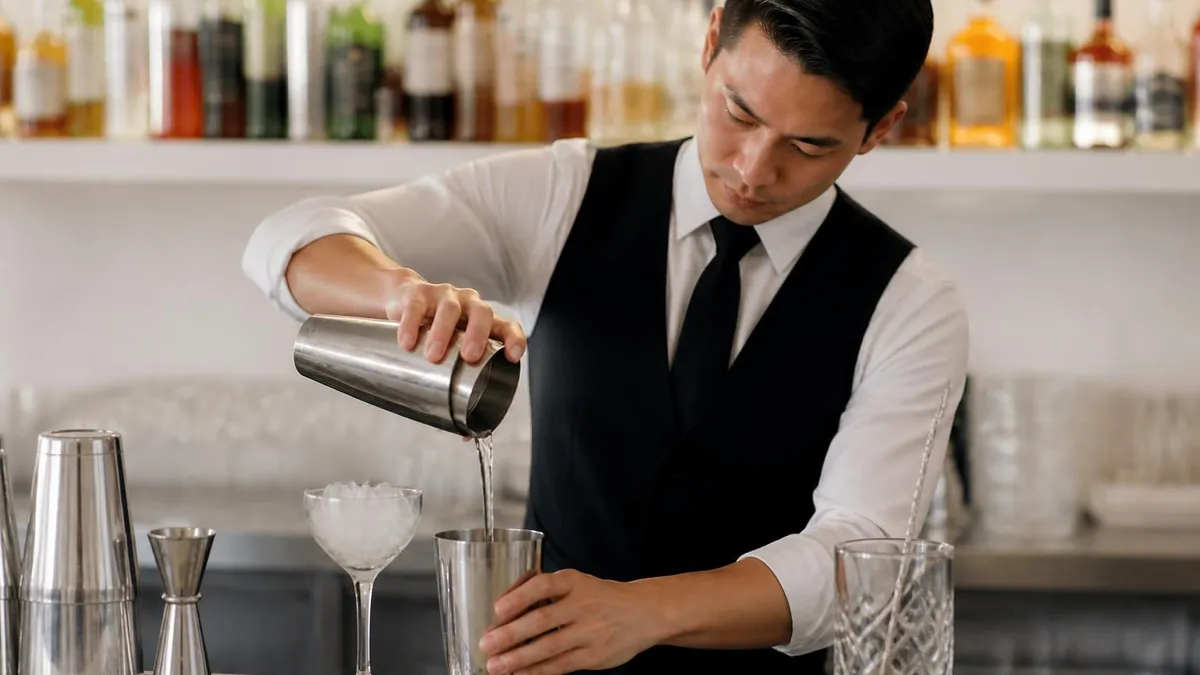
Bartending License Florida: Complete Certification & Permit Guide for 2026
About the Author
Executive Chef & Culinary Arts Certification Educator
Culinary Institute of AmericaChef Marco Bellini is a Certified Executive Chef and graduate of the Culinary Institute of America with over 20 years of professional kitchen experience in Michelin-recognized restaurants. He teaches culinary arts certification, food safety, and hospitality exam preparation, having guided thousands of culinary students through their ServSafe, ProStart, and professional chef certifications.
Join the Discussion
Connect with other students preparing for this exam. Share tips, ask questions, and get advice from people who have been there.
View discussion (7 replies)