
Do You Need a Liquor License to Be a Bartender? Complete US Requirements Guide
Do you need a liquor license to be a bartender? Learn US state requirements, server permits & certifications. ✅ Complete 2026 September guide.

Do you need a liquor license to be a bartender? This is one of the most common questions aspiring bartenders ask before stepping behind the bar for the first time, and the honest answer is: it depends on the state where you work. In the United States, liquor licensing laws vary dramatically from one jurisdiction to another.
Some states require individual bartenders to hold a personal server permit before they can legally pour alcohol, while others place licensing responsibility entirely on the establishment rather than the individual employee. Understanding this distinction is the first step toward building a legitimate and successful bartending career.
The term "liquor license" typically refers to a permit issued to a business — a bar, restaurant, hotel, or event venue — that authorizes that establishment to sell or serve alcoholic beverages. Bartenders, on the other hand, are employees of those licensed businesses. In most US states, the license belongs to the employer, not the worker. However, many states also have a separate category of individual permit, often called a server permit, alcohol server certification, or responsible beverage service (RBS) certificate, that bartenders themselves must obtain and maintain as a condition of employment.
States like California, Texas, Utah, and Oregon have mandatory individual certification requirements for anyone who serves alcohol professionally. In California, for example, the Responsible Beverage Service Training Act, which took full effect in 2022, requires all alcohol servers and their managers to complete a state-approved RBS training course and pass an exam within 60 days of hire. In Texas, the TABC (Texas Alcoholic Beverage Commission) certification is not legally mandated for all servers but is strongly encouraged and required by most major employers as a liability-reduction measure.
Beyond state-level requirements, local municipal governments sometimes layer additional rules on top of state law. A city like Las Vegas, located in Clark County, Nevada, may have its own card system — in this case, Nevada requires an alcohol awareness card issued through a state-approved training provider. New York City bartenders are not individually licensed but must work for establishments holding a State Liquor Authority (SLA) license. Knowing both your state and local requirements before you start job hunting will save you significant time, money, and potential legal headaches down the road.
It is also important to understand the difference between a liquor license and a bartending certification. A liquor license is a legal permit issued by a government authority. A bartending certification is typically a credential issued by a private training school or industry organization confirming that you have completed coursework in mixology, bar management, customer service, and alcohol awareness. While certifications from schools like the American Bartenders School or the BarSmarts program are valuable for employment, they are not legal substitutes for government-mandated server permits where those are required by law.
Employers across the country are increasingly requiring some form of documented alcohol server training regardless of whether their state mandates it. A certified bartender is less likely to over-serve a visibly intoxicated patron, less likely to serve a minor, and better equipped to handle challenging bar situations safely. These behaviors reduce the establishment's liability exposure. Many insurance underwriters now offer premium discounts to bars and restaurants whose entire service staff holds current RBS credentials, creating a strong financial incentive for employers to require certification even where the law does not demand it.
Reviewing your specific state's requirements before starting any bartending program is essential. You can explore the bartender liquor license requirements in detail to understand exactly what your state demands and how to satisfy those requirements efficiently before your first shift behind the bar.
Bartender Liquor Licensing by the Numbers

How to Get Licensed to Bartend: Step-by-Step
Research Your State's Requirements
Enroll in a State-Approved RBS Training Course
Pass the Certification Exam
Apply for Your Server Permit or Card
Present Your Credential to Your Employer
Track Your Renewal Deadline
Individual server permits for bartenders exist on a spectrum of legal enforceability across the United States. In mandatory permit states, working without a valid permit is a violation that can result in fines for both the bartender and the employer. California's RBS Training Act imposes fines of up to $500 on individual servers and up to $5,000 on employers who allow uncertified staff to serve alcohol. This makes compliance a financial necessity, not merely a professional courtesy. States with mandatory programs have generally seen measurable reductions in alcohol-related traffic fatalities and incidents of over-service following the implementation of certification requirements.
In voluntary certification states, the legal pressure falls on the establishment rather than the individual. The business holds the liquor license, and if alcohol is served to a minor or a visibly intoxicated person, the business — and potentially the individual server — can face dram shop liability lawsuits.
Dram shop laws exist in most US states and allow injured third parties to sue establishments and their employees for damages caused by the negligent service of alcohol. A bartender who can demonstrate current RBS certification at the time of an incident has a significantly stronger legal defense than one without any documented training.
The most widely recognized private certification programs in the US are TIPS (Training for Intervention ProcedureS), ServSafe Alcohol (operated by the National Restaurant Association), and the Learn2Serve Alcohol Seller-Server certification. Each of these programs covers similar core content: recognizing signs of intoxication, understanding blood alcohol content (BAC) and how it rises, checking identification documents including detecting fakes, handling difficult refusal situations without escalating conflict, and understanding the legal obligations of alcohol servers under both state and federal law.
TIPS certification, developed at Cornell University's hospitality program and now administered by Health Communications Inc., is accepted as a valid training credential in most US states that require documentation. The TIPS eTIPS online course takes approximately 3.5 hours to complete and costs around $35 to $45 per person. Upon passing the online exam with a score of at least 70 percent, participants receive a digital certificate and can order a physical wallet card. TIPS certification is valid for three years before renewal is required, making it one of the longer-validity credentials available.
ServSafe Alcohol is another industry standard, particularly common in restaurant chain environments. The National Restaurant Association Education Foundation administers ServSafe programs across the US, and many food service employers mandate ServSafe Alcohol specifically because it also integrates food safety concepts relevant to kitchen staff who may interact with alcohol service. The exam consists of 40 questions, with a passing threshold of 75 percent (30 correct answers). ServSafe Alcohol certification is valid for three years and costs approximately $30 to $50 depending on whether you take the course online or through an instructor-led session.
State-specific programs add another layer of complexity. Utah's DABC (Department of Alcoholic Beverage Control) requires server education through a state-approved provider and mandates that servers renew their certification every three years. Washington State's Mandatory Alcohol Server Training (MAST) requires any person who sells or serves alcohol for compensation to hold a valid MAST permit, which is obtained by completing a state-approved 3-hour online or in-person course and passing a 25-question exam with at least 70 percent accuracy. The MAST permit costs $35 and is valid for 5 years, making it one of the more cost-effective state credentials.
Oregon's OLCC (Oregon Liquor and Cannabis Commission) requires a Service Permit for all servers, which involves completing a 5-hour online training, passing an exam, and paying a $35 application fee. The Oregon permit is valid for 5 years. Importantly, Oregon allows servers to begin working for up to 90 days while their permit application is pending, provided they have completed the training. This grace period is a practical accommodation for the hospitality industry's high turnover rates and helps employers fill positions without waiting weeks for permit approvals to process.
Understanding Bartender Licensing by State Type
States with mandatory individual server permits include California, Oregon, Washington, Utah, Nevada, and Alaska, among others. In these jurisdictions, bartenders must complete a state-approved RBS training course, pass an exam, and obtain a physical or digital permit before serving alcohol legally. Employers in these states are required to verify permit status before scheduling servers and may face significant fines for non-compliance — in California, fines can reach $5,000 per violation for employing uncertified servers.
The mandatory permit model has proven effective at reducing alcohol-related harms. California reported a 19 percent reduction in alcohol-related DUI arrests in counties with the highest RBS training compliance rates following the rollout of the 2022 RBS Training Act. Washington State's MAST program, one of the oldest mandatory server permit systems in the US, is credited with measurably reducing over-service incidents in licensed establishments since its introduction in the 1990s. Bartenders in these states should treat their permit as non-negotiable professional credential, on par with a driver's license.

Getting a Bartender Certification: Pros and Cons
- +Meets legal requirements in mandatory permit states and protects against fines up to $500
- +Reduces personal dram shop liability exposure if an over-service incident occurs
- +Increases employability and hiring priority at major restaurant and hotel groups
- +Demonstrates professional commitment and improves on-the-job alcohol law knowledge
- +May qualify your employer for reduced liquor liability insurance premiums
- +Valid across multiple employers for the duration of the certification period (2–5 years)
- −Costs $20–$80 in fees plus 4–8 hours of time before earning your first shift
- −Must be renewed periodically, creating ongoing cost and administrative burden
- −State-specific permits may not transfer when you move to a new state or city
- −Online courses vary significantly in quality; some provide minimal practical preparation
- −Certification alone does not replace hands-on bartending skill training or mixology education
- −In voluntary states, some smaller employers do not require or value formal certification
Pros and Cons at a Glance
| Pros | Cons |
|---|---|
| Reduces personal dram shop liability exposure if an over-service incident occurs | Must be renewed periodically, creating ongoing cost and administrative burden |
| Increases employability and hiring priority at major restaurant and hotel groups | State-specific permits may not transfer when you move to a new state or city |
| Demonstrates professional commitment and improves on-the-job alcohol law knowledge | Online courses vary significantly in quality; some provide minimal practical preparation |
| May qualify your employer for reduced liquor liability insurance premiums | Certification alone does not replace hands-on bartending skill training or mixology education |
Bartender Liquor License and Certification Checklist
- ✓Check your state's ABC board website for mandatory individual server permit requirements.
- ✓Verify the minimum age to serve alcohol in your state (18 or 21 depending on jurisdiction).
- ✓Select a state-approved RBS training provider such as TIPS, ServSafe Alcohol, or a state-specific program.
- ✓Complete the required training hours (typically 3–8 hours online or in-person).
- ✓Pass the certification exam with the required minimum score (usually 70–75 percent).
- ✓Submit your permit application with ID, training certificate, and applicable fee to the state authority.
- ✓Provide a copy of your permit or certification to your employer's HR or management team.
- ✓Confirm that your employer's establishment holds a valid state liquor license before your first shift.
- ✓Check whether your city or county has additional local server training requirements beyond state law.
- ✓Set a renewal reminder in your calendar at least 60 days before your permit expiration date.
The Liquor License Belongs to the Bar — Your Permit Belongs to You
Most bartenders confuse "liquor license" and "server permit." The liquor license is issued to the business and authorizes that location to sell alcohol. Your individual server permit or RBS certification is a separate credential that authorizes you personally to serve — and it travels with you from job to job throughout your career.
The costs associated with obtaining a bartender's server permit or alcohol certification are modest compared to the financial risk of operating without one. Across the US, the total out-of-pocket investment for initial certification typically ranges from $20 to $80, covering both the training course and the permit application fee.
Some employers absorb this cost for new hires as part of their onboarding investment, particularly in high-volume establishments where rapid staff integration is a competitive priority. If your employer does not cover certification costs, the investment pays for itself within your first few shifts — and it protects you legally for years.
Renewal costs follow a similar pattern. Most state server permits require renewal every two to five years, and renewal typically involves either a shortened refresher course, an online knowledge assessment, or simply a fee payment if your underlying certification (such as TIPS or ServSafe Alcohol) remains current. California's RBS permit renewal requires completing the state's approved refresher training every three years at a cost of approximately $25 for the state exam.
Washington's MAST permit renewal involves a 3-hour refresher course every five years at most approved providers for $15 to $25. Compared to professional license renewal in fields like nursing or cosmetology, bartender permit renewal is among the least costly and least time-consuming in the service industry.
Age requirements intersect significantly with licensing rules across different states. The minimum age to serve alcohol in a licensed establishment is not uniform across the US. States like California, New York, and Florida allow 18-year-olds to serve alcohol in restaurants and bars.
However, Nevada requires servers to be at least 21 years old to work in establishments where alcohol is the primary product (casinos and bars), though 18-year-olds may serve alcohol in restaurant settings. Utah requires servers to be at least 21 in most alcohol-serving contexts. These age rules apply on top of certification requirements and must be satisfied simultaneously before you can legally bartend in a given state.
Criminal background considerations are another factor that affects server permit eligibility in some states. Oregon's OLCC, for example, reviews applicants' criminal histories and may deny a Service Permit to individuals with certain alcohol-related convictions within the past three years, including DUI convictions, furnishing alcohol to a minor, or felony convictions involving violence. California's RBS permit process does not currently conduct a background check, but employers may conduct their own screenings. Understanding your state's eligibility rules before investing in training prevents the unpleasant surprise of completing a course and then being denied a permit for an undisclosed background issue.
The relationship between tip income and certification status is one that many new bartenders underestimate. Experienced bartenders know that confidence behind the bar — including confidence in handling ID checks, refusal conversations, and intoxication assessment — directly affects service quality and, consequently, tip percentages. A bartender who hesitates or mishandles a guest interaction around alcohol service loses not just that table's tip but potentially their reputation with management. RBS training builds exactly the kind of assertive, legally grounded service confidence that translates into smoother guest interactions, fewer incidents, and stronger earnings over a career.
Multi-state bartenders — those who work seasonal positions, travel bartending jobs, or hold multiple part-time roles across state lines — face a unique certification challenge. Holding TIPS or ServSafe Alcohol certification provides a baseline credential that most states accept as evidence of training, even if it does not fully satisfy all local permit requirements. The practical approach for multi-state bartenders is to maintain a current TIPS or ServSafe certification as a universal baseline and then obtain any required state-specific permit in the primary state where they work most hours, supplementing with local credentials as needed for specific assignments.
The financial upside of bartending makes the initial certification investment a clear value proposition. The Bureau of Labor Statistics reports that bartenders in the US earn a median hourly wage of approximately $14.37 plus tips, with experienced bartenders in high-volume urban venues earning $50,000 to $80,000 annually including gratuities. Spending $40 and 5 hours on RBS certification to unlock access to those earnings opportunities represents one of the most favorable return-on-investment calculations in the entire service industry training landscape.

In California, Oregon, Washington, Utah, and other mandatory permit states, working even a single shift without a valid server permit is a legal violation. Fines for individual servers can reach $500 per incident, and employers face penalties up to $5,000. Always verify your permit status before accepting a scheduled shift at a new establishment.
Understanding the difference between a bartender certification from a private school and a government-issued server permit is critical for career planning. Private bartending school certifications — from institutions like the American Bartenders School, Mixology Academy, or local community college bartending programs — demonstrate hands-on skills in cocktail preparation, spirits knowledge, bar equipment operation, speed and efficiency, and customer service. These credentials signal to employers that you can actually make drinks, not just that you understand alcohol law. A private school certificate combined with a government-issued server permit gives you the most complete professional profile when entering the job market.
Some bartending school graduates mistakenly believe their school certificate satisfies state permit requirements. It does not. Private school certifications and state RBS permits are separate credentials issued by entirely different authorities for entirely different purposes. A diploma from even a well-regarded bartending school carries no legal weight in a state that requires an ABC-issued server permit. You need both: the school credential to get hired for your mixology skills, and the government permit to satisfy the legal requirement to serve alcohol in that jurisdiction. Treat them as complementary, not interchangeable.
Federal law also plays a background role in alcohol service regulation that bartenders should understand. The 21st Amendment to the US Constitution grants states broad authority to regulate alcohol within their borders, which is why the patchwork of different state requirements exists. Federal involvement is minimal and primarily concerns interstate commerce in alcohol products — importation, distribution, and the three-tier system (producer, distributor, retailer). Individual bartenders are regulated almost entirely by state and local law, not federal statute. This is why your Oregon server permit does not automatically satisfy California's RBS requirement when you cross the state line.
Local alcohol control boards — the ABCs, LCBs, DABCs, and OLCCs of the country — are the agencies bartenders interact with most directly for permit purposes. These state-level agencies issue business liquor licenses, approve RBS training providers, administer server permit programs, conduct compliance checks (where agents test whether establishments will sell to minors or visibly intoxicated individuals), and adjudicate violations. Getting familiar with your state's alcohol control board website before beginning any certification process is strongly recommended, as their official resources are the authoritative source for current requirements, approved provider lists, and current fee schedules.
Compliance checks, sometimes called sting operations, are a reality of the bartending profession that certified servers handle far more confidently than uncertified ones. In a typical compliance check, an underage decoy attempts to purchase alcohol from a licensed establishment while agents observe the transaction.
Bartenders who have completed RBS training know exactly what to look for when checking IDs — including expiration dates, holograms, raised lettering, and signs of alteration — and how to politely but firmly refuse service when ID verification fails. A failed compliance check can result in the establishment losing its liquor license temporarily or permanently, costing every employee their job.
The career trajectory for certified bartenders is generally more stable and upward-moving than for those who treat alcohol service as an afterthought. Bar managers and general managers at serious establishments specifically look for bartenders who demonstrate compliance awareness and professional training history when making promotion decisions.
A lead bartender or bar manager role almost universally requires not just mixology skills but demonstrated knowledge of alcohol law, inventory management, cost control, and responsible service — all areas covered in RBS training programs and in the practice tests available through resources like PracticeTestGeeks. Taking your certification preparation seriously from day one sets the foundation for a long-term career rather than just a series of short-term jobs.
For bartenders ready to formalize their credentials, reviewing the complete landscape of requirements is the right starting point. Explore the bartender liquor license page for a comprehensive breakdown of what each state requires, which training programs qualify, and how to submit your application efficiently without delays or rejections.
Preparing for your server permit exam is straightforward if you approach it systematically. Most state-approved RBS training courses are self-paced and available entirely online, which means you can complete them on your own schedule before starting a new bartending job. The core exam content across all major programs focuses on four primary areas: understanding how alcohol affects the human body, identifying signs of intoxication at different stages of consumption, legal duties and liabilities of alcohol servers, and ID verification techniques for legal age compliance. Mastering these four areas will prepare you for virtually any RBS exam in any US state.
Blood alcohol content (BAC) is one of the most tested topics in every RBS certification program. You should understand that BAC is affected by body weight, gender, food consumption, rate of drinking, and the type of beverage consumed. The legal driving limit in all US states is 0.08 percent BAC, but visible impairment often begins well below that threshold — many individuals show signs of intoxication at 0.05 percent BAC or lower.
As a server, you are not expected to calculate BAC; you are expected to recognize behavioral signs of impairment, including slurred speech, loss of coordination, glassy eyes, mood changes, and impaired judgment, and to respond by slowing or stopping service accordingly.
ID verification questions appear on nearly every RBS exam in the country. You should know that the only acceptable forms of ID for age verification are government-issued photo IDs: state driver's licenses, state ID cards, US passports and passport cards, and US military IDs. Foreign passports are generally accepted, though checking a foreign ID presents additional challenges around hologram verification and date format interpretation.
Novelty IDs, school IDs, and employee badges are never acceptable forms of age verification in any state. A useful rule of thumb taught in most RBS programs: when in doubt, do not serve. The legal and financial consequences of serving a minor far exceed the cost of a declined sale.
Refusal techniques are covered in depth in all major RBS programs because this is where many bartenders feel the most anxiety. Refusing service to a visibly intoxicated patron or a customer who cannot produce valid ID is a legal and professional obligation, but it can feel confrontational in a busy bar environment. RBS training teaches specific language and de-escalation techniques to make refusals firm, polite, and defensible.
Phrases like "I'm not able to continue serving you tonight, but I can get you some water and call you a ride" acknowledge the guest's humanity while clearly communicating that service has ended. Role-playing these scenarios during training preparation makes the real-world execution significantly smoother.
Dram shop liability is the legal doctrine most directly relevant to individual bartenders working in the US. Under dram shop laws, which exist in some form in 43 states plus the District of Columbia, an alcohol-serving establishment and its employees can be held civilly liable for injuries or damages caused by a patron who was over-served.
If a bartender serves visibly intoxicated guests who then drive drunk and injure a third party, the injured party can sue both the establishment and potentially the individual server. RBS certification, combined with clear documentation of reasonable service practices on the night in question, provides the strongest available defense against dram shop claims. This legal reality makes certification not just a professional nicety but a personal financial protection measure.
Practicing with realistic exam questions before your certification test is one of the most effective preparation strategies available. The PracticeTestGeeks platform offers bar law and liquor regulation practice tests that mirror the content and format of actual state RBS exams, including questions on dram shop liability, ID verification, intoxication recognition, and responsible service procedures. Using these practice resources in the days leading up to your exam significantly improves first-attempt pass rates and helps you identify knowledge gaps while there is still time to address them before the official test. Consistent practice is the most reliable path to exam success.
Finally, keeping your certification documentation organized throughout your bartending career is a practical habit that pays ongoing dividends. Store digital copies of your RBS certificate, server permit, and any renewal documents in a dedicated cloud folder so they are instantly accessible when a new employer requests verification.
Physical wallet cards should be kept with your ID or in your work bag. When your permit renewal date approaches, begin the renewal process at least 30 days in advance to avoid any lapse in your legal ability to serve alcohol — because even a brief gap in certification can complicate employment situations in mandatory permit states where compliance is actively monitored.
Bartender Bartender Questions and Answers
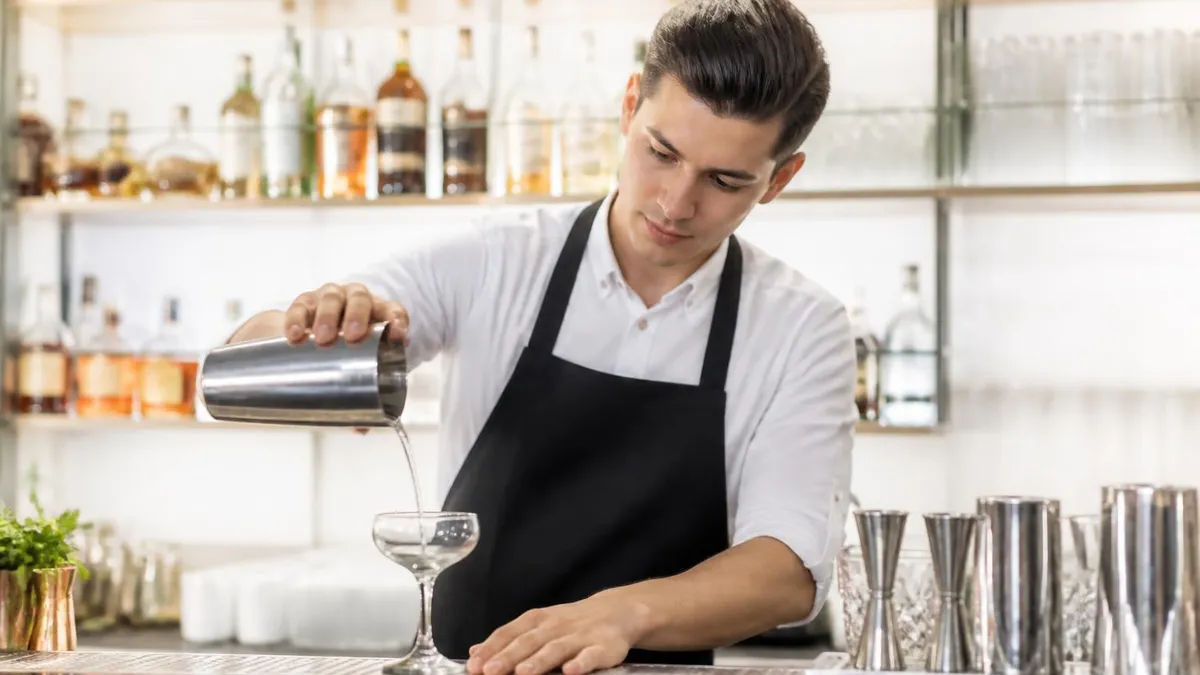
Bartender Age Requirements: Complete Certification & Licensing Guide for 2026
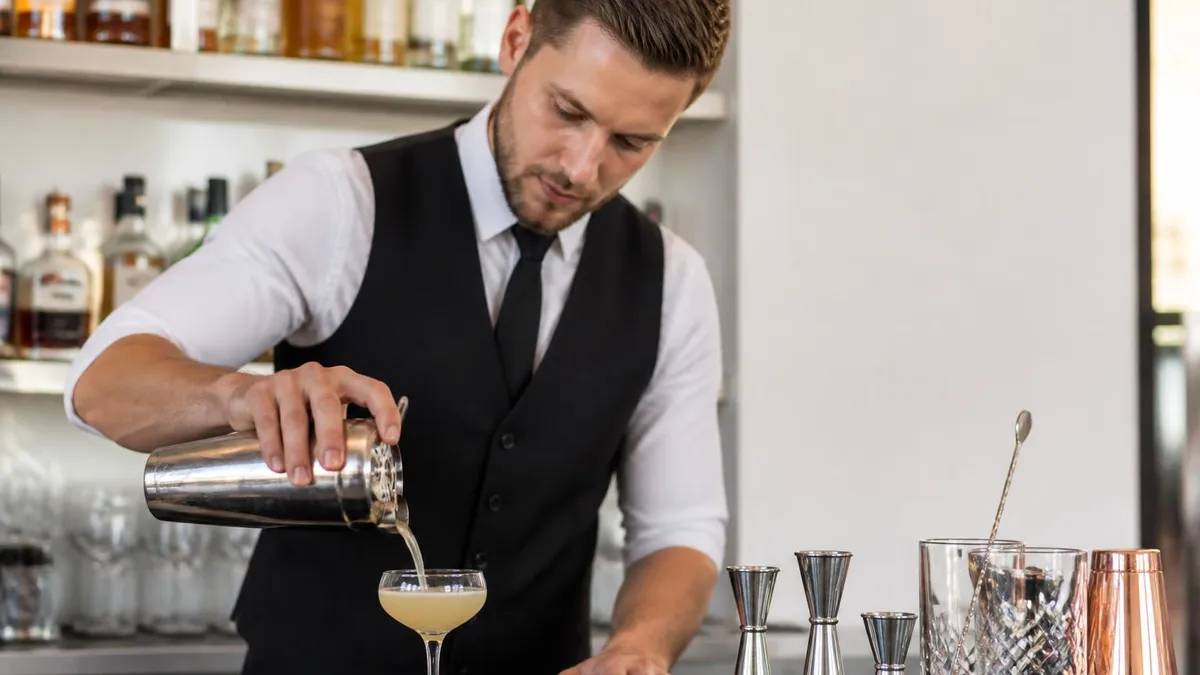
Bartending Classes Near Me: How to Find, Compare, and Choose the Right Local Training Program in 2026
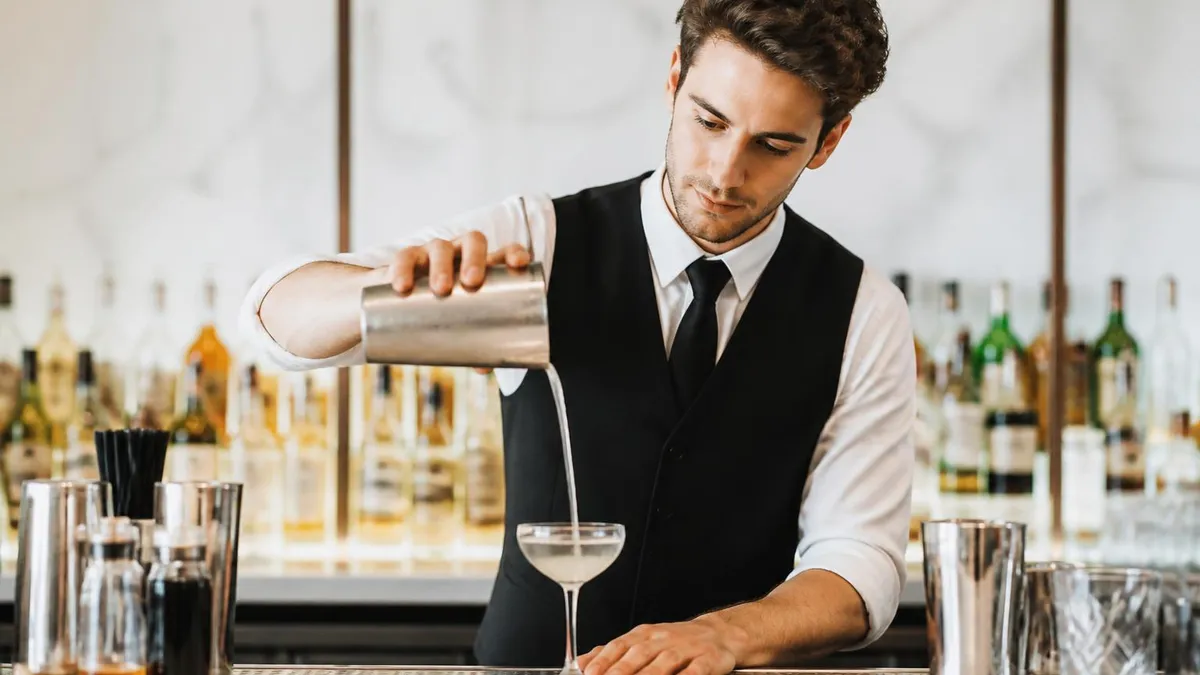
How to Become a Bartender by State: Complete Requirements Guide for All 50 States
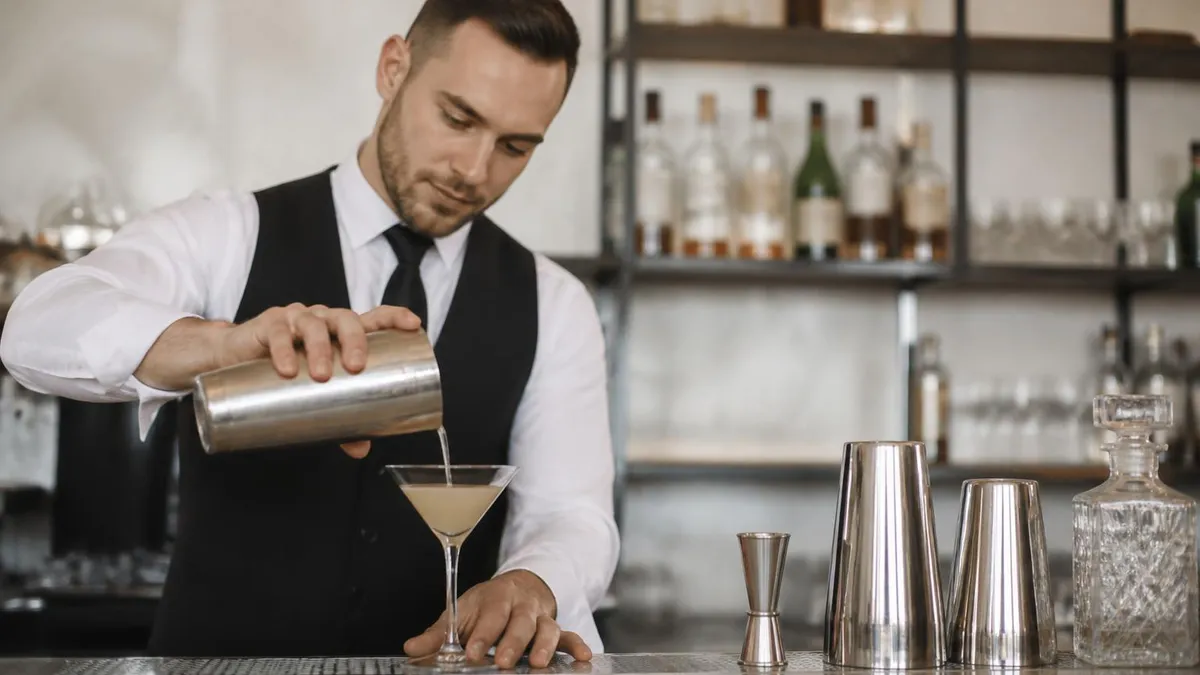
Lady Bartender: A Complete Guide for Women Behind the Bar in 2026

Did Ed Gein Really Kill the Bartender? The True Crime Myth vs. Bartending Reality
About the Author
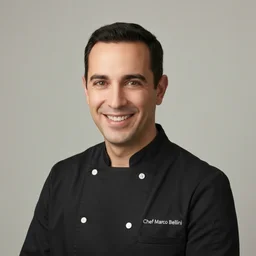
Executive Chef & Culinary Arts Certification Educator
Culinary Institute of AmericaChef Marco Bellini is a Certified Executive Chef and graduate of the Culinary Institute of America with over 20 years of professional kitchen experience in Michelin-recognized restaurants. He teaches culinary arts certification, food safety, and hospitality exam preparation, having guided thousands of culinary students through their ServSafe, ProStart, and professional chef certifications.
Join the Discussion
Connect with other students preparing for this exam. Share tips, ask questions, and get advice from people who have been there.
View discussion (7 replies)