
Requirements to Be a Bartender: Age, Training, Licenses & Skills in 2026 October
🗨️ Complete requirements to be a bartender in 2026 October — minimum age, alcohol server certifications, state licenses, training hours, and skills employers expect.
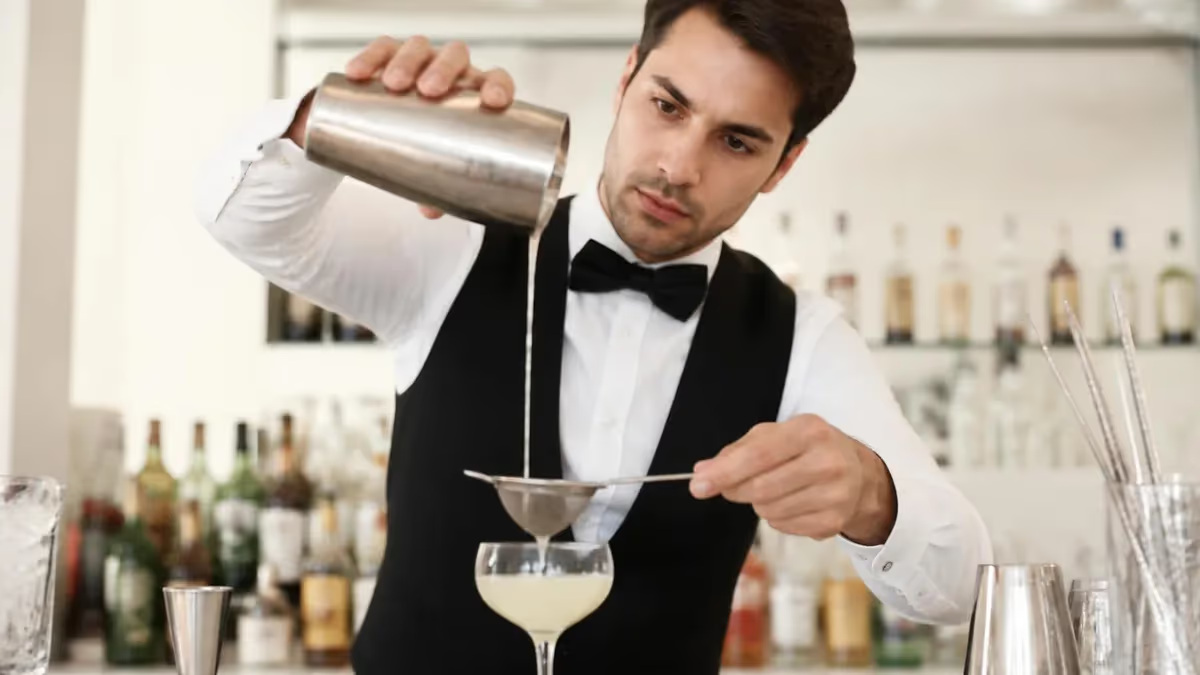
The requirements to be a bartender in 2026 are a mix of legal minimums, employer expectations, and practical skills you build over time. Most states set a minimum age of 18 to serve alcohol behind a bar, though several still require you to be 21. On top of age, you typically need a state-approved alcohol server certification, a clean background check, and the soft skills to manage a busy rail without losing accuracy or composure. This guide walks through each of those layers in plain language.
Bartending is unusual among service jobs because the legal floor varies dramatically by state. In Utah and Nevada you'll deal with stricter rules than in Texas or Florida. Some cities, like Chicago and Las Vegas, add their own permit on top of the state credential. Knowing which combination of cards you need before you apply for jobs can save you weeks of delay and a few hundred dollars in wasted course fees.
Beyond paperwork, hiring managers care about whether you can actually pour. They want speed, accuracy on classic recipes, register fluency, and the ability to read a room. A candidate who finished a weekend course but cannot make a proper Old Fashioned in 90 seconds will lose out to someone with two years of barback experience and no formal training. The smartest path combines both: a recognized certification plus real reps in a live bar.
Most new bartenders also underestimate the compliance side. You are personally liable in many states if you overserve a guest who then injures someone. That is why responsible beverage service training is not just a hiring checkbox — it is legal armor for you and the venue. Courses like TIPS, ServSafe Alcohol, and state-specific programs in California (RBS), Washington (MAST), and Pennsylvania (RAMP) all teach the same core skill: recognizing intoxication and refusing service safely.
Education itself is rarely a barrier. There is no degree requirement, no licensing exam at the federal level, and no apprenticeship that you must complete. Most working bartenders learned through a mix of barbacking, on-the-job training, and self-study. A two-week bartending school can accelerate your job search, but it is not a substitute for the certification card your state actually requires by law.
This article breaks the topic into the categories that matter for hiring: age and legal eligibility, alcohol service certification, state-by-state license differences, skills and physical demands, cost of entry, and the timeline from your first application to your first shift. By the end you should know exactly what to study, what to spend, and what order to do it in.
If you are still deciding whether this path fits you, also look at adjacent options like banquet bartending, event work, or mobile bar services. Each has slightly different requirements and very different lifestyles. The right credential mix depends on where you want to work, not just what you want to learn.
Bartender Requirements by the Numbers
Key Facts at a Glance
| Item | Value | Details |
|---|---|---|
| Minimum Age | 18-21 | Varies by state |
| Certification Cost | $15-$45 | Per card |
| Card Validity | 3 yrs | Most states |

The Five Core Requirements to Be a Bartender
Most states allow bartending at 18, but Utah, Alaska, and parts of Nevada require 21. Verify your state's bartending age — it is often different from the legal drinking age.
Programs like TIPS, ServSafe Alcohol, RBS, MAST, and RAMP are the most accepted nationally. Choose one approved by your state's alcohol control board, not just any online course.
Felony convictions involving alcohol, theft, or violence in the past 5-7 years can disqualify you in stricter states. Many jurisdictions still allow case-by-case approval with documentation.
Employers test pour accuracy, recipe recall for 30-50 classic cocktails, POS speed, and the ability to handle volume without errors. Most schedule a working interview shift before hire.
Cities like Las Vegas, Chicago, and parts of New York require a separate health card or city-issued bartender permit on top of your state certification. Check city ordinances before your first shift.
Age is the first hard gate. Federal law sets 21 as the legal drinking age, but the age at which you can serve or mix drinks for compensation is a state-level decision. In about 30 states you can bartend at 18, sometimes with a manager on premises. In states like California you can technically serve at 18, while in Utah, Alaska, and Nevada most bartender roles require 21. Always confirm with the state alcoholic beverage control board, not an old forum post.
Certification is the second gate, and it is where most new bartenders get confused. "Bartender license" is not a federal credential — it is shorthand for a state-approved responsible beverage service course plus, in some places, a local permit. The most widely recognized national programs are TIPS, ServSafe Alcohol, and 360training. Some states only accept their own curriculum: California requires RBS through ABC, Washington requires MAST, and Pennsylvania uses RAMP. Taking the wrong course is the most common mistake first-time applicants make.
Background checks vary by state and by employer. Casino properties, hotel groups, and military base bars typically run the most thorough screens, sometimes including credit checks for cash-handling positions. Independent bars may only verify your certification card and reference work history. Felony convictions are not always automatic disqualifiers, but you should be prepared to disclose them honestly during interviews and on permit applications. Lying on a state alcohol permit form is itself a disqualifying offense.
Physical and medical requirements are usually minimal but real. You will stand for 6-10 hours, lift kegs and cases (often 50-60 pounds), and work in environments with loud music, strong scents, and frequent temperature shifts. Some venues require a TB test or food handler's card alongside your alcohol cert. A surprising number of new hires wash out in week two because they did not anticipate the physical toll, especially the wrist and lower-back strain from repetitive shaker work.
Documentation you should gather before applying: a valid government-issued photo ID, Social Security number or work authorization, your alcohol server certification card, any required local permit, two professional references, and a current resume listing customer service or food-service experience. Some employers will also ask for proof of a recent food handler's card or a copy of your driving record if delivery is part of the role.
Soft skills matter as much as paperwork. Bar managers consistently rank attitude, reliability, and teamwork above technical skill when filling entry-level slots. A barback who shows up early, restocks proactively, and reads the room well will be promoted to bartender within months. A technically skilled candidate who shows up hungover and argues with servers will not last a season. If you only have time to invest in one thing this week, invest in showing up.
Finally, plan for ongoing requirements. Most certifications expire every three years, and several states require continuing education after a violation or after working a certain number of years. Building a folder — physical or cloud — with your current card, expiration dates, and renewal reminders will keep you employable without scrambling. Many bartenders have lost a shift because their card lapsed mid-week and the venue could not legally schedule them.
Bartender Practice Test Questions
Prepare for the Bartender Certification exam with our free practice test modules. Each quiz covers key topics to help you pass on your first try.
Bartender Certification Bar Inventory and ...
Bartender Exam Questions covering Certification Bar Inventory and Cost Control. Master Bartender Test concepts for certification prep.
Bartender Certification Bar Law and Liquor...
Free Bartender Practice Test featuring Certification Bar Law and Liquor Regulations. Improve your Bartender Exam score with mock test prep.
Bartender Certification Bar Sanitation and...
Bartender Mock Exam on Certification Bar Sanitation and Safety. Bartender Study Guide questions to pass on your first try.
Bartender Certification Bar Setup and Orga...
Bartender Test Prep for Certification Bar Setup and Organization. Practice Bartender Quiz questions and boost your score.
Bartender Certification Bar Tools and Glas...
Bartender Questions and Answers on Certification Bar Tools and Glassware. Free Bartender practice for exam readiness.
Bartender Certification Basic
Bartender Mock Test covering Certification Basic. Online Bartender Test practice with instant feedback.
Bartender Certification Cocktail Recipes a...
Free Bartender Quiz on Certification Cocktail Recipes and Techniques. Bartender Exam prep questions with detailed explanations.
Bartender Certification Customer Service a...
Bartender Practice Questions for Certification Customer Service and Sales. Build confidence for your Bartender certification exam.
Bartender Certification Customer Service S...
Bartender Test Online for Certification Customer Service Skills. Free practice with instant results and feedback.
Bartender Certification Mixology Fundamentals
Bartender Study Material on Certification Mixology Fundamentals. Prepare effectively with real exam-style questions.
Bartender Certification Responsible Alcoho...
Free Bartender Test covering Certification Responsible Alcohol Service. Practice and track your Bartender exam readiness.
Bartender Certification Spirits, Beer, and...
Bartender Exam Questions covering Certification Spirits, Beer, and Wine. Master Bartender Test concepts for certification prep.
Bartender Certification Spirits, Liqueurs,...
Free Bartender Practice Test featuring Certification Spirits, Liqueurs, and Cocktails. Improve your Bartender Exam score with mock test prep.
Bartender Responsible Alcohol Service
Bartender Mock Exam on Responsible Alcohol Service. Bartender Study Guide questions to pass on your first try.
Bartender Spirits, Liqueurs, and Cocktails
Bartender Test Prep for Spirits, Liqueurs, and Cocktails. Practice Bartender Quiz questions and boost your score.
Bartender Bar Sanitation and Safety
Bartender Questions and Answers on Bar Sanitation and Safety. Free Bartender practice for exam readiness.
Bartender Bar Setup and Organization
Bartender Mock Test covering Bar Setup and Organization. Online Bartender Test practice with instant feedback.
Bartender Bar Tools and Glassware
Free Bartender Quiz on Bar Tools and Glassware. Bartender Exam prep questions with detailed explanations.
Bartender Basic
Bartender Practice Questions for Basic. Build confidence for your Bartender certification exam.
Bartender Cocktail Recipes and Techniques
Bartender Test Online for Cocktail Recipes and Techniques. Free practice with instant results and feedback.
Bartender Customer Service and Sales
Bartender Study Material on Customer Service and Sales. Prepare effectively with real exam-style questions.
Bartender Customer Service Skills
Free Bartender Test covering Customer Service Skills. Practice and track your Bartender exam readiness.
State-by-State Bartender License Requirements
Roughly 17 states make alcohol server training legally mandatory for bartenders. California requires RBS certification within 60 days of hire through any ABC-approved provider. Washington mandates MAST Permit Class 12 or 13. Oregon requires an OLCC service permit within 45 days. Utah, New Mexico, Alaska, and Tennessee also enforce mandatory training, often with tighter age rules layered on top.
If you live in a mandatory state, do not start applying without the card in hand or actively enrolled. Hiring managers in these states will not interview candidates who show up uncertified because the venue absorbs the liability. Budget $15-$45 and 3-5 hours to complete the program online before scheduling interviews — it dramatically improves callback rates.
Is Meeting the Requirements Worth It?
- +Entry-level credentialing costs under $50 in most states
- +Cards transfer between employers, so you only pay once every three years
- +Certification opens higher-tipping venues that refuse to hire uncertified staff
- +Responsible service training reduces personal legal liability for overservice
- +Many courses are 100% online and finish in a single afternoon
- +Employers often reimburse course fees after 30-90 days of employment
- +A clean cert plus six months of barback experience beats most bartending school grads
- −Wrong-state certification means paying twice if you relocate
- −Background check disqualifications can be hard to predict in stricter states
- −Local permits add fees, fingerprinting, and processing delays
- −Cards expire every 2-3 years and renewals require new coursework
- −Some online courses are not accepted by certain employers despite being state-approved
- −Physical demands disqualify candidates with chronic wrist, back, or standing limitations
- −Late-night schedules and noise exposure are not optional in most roles
Bartender Requirements Pre-Application Checklist
- ✓Confirm your state's minimum bartending age and any local restrictions
- ✓Identify the specific alcohol server certification accepted by your state
- ✓Enroll in and complete the approved course within one week
- ✓Print and save digital copies of your certification card
- ✓Check whether your city requires an additional local permit or health card
- ✓Gather a valid photo ID, Social Security number, and work authorization documents
- ✓Run a self-background check to see what employers will see
- ✓Build a one-page resume listing customer service and cash-handling experience
- ✓Memorize at least 30 classic cocktail recipes including the IBA standards
- ✓Practice pouring to a four-count until you can hit 1.5 oz within a quarter ounce
- ✓Line up two professional references who can confirm reliability and attitude
- ✓Set calendar reminders for cert renewal 60 days before expiration
Get certified before you apply — not after
The single biggest reason qualified candidates lose bartending interviews is showing up without their state-required card. Managers in mandatory states cannot legally schedule you until the cert is verified, and they rarely hold a position open for 5-7 days while you finish a course. Spending $20 and one afternoon before applying turns rejections into offers.
The total cost to meet bartender requirements is surprisingly low. A state-approved online certification runs $15-$45. A local city permit, if your jurisdiction requires one, adds $50-$150. Optional bartending school is the big variable — anywhere from $300 for a weekend crash course to $1,200+ for a two-week program with job placement. Most working bartenders spend under $75 total in pure credentialing fees and learn the rest on the job as a barback earning $12-$18 per hour plus tip-out.
Timeline-wise, you can go from zero credentials to first shift in under two weeks in most states. Day one: register for the certification course and complete it the same day. Day two: order your local permit if required and start the background check. Days three through seven: apply to 15-25 bars and lounges with your card attached to the application. Week two: interview, do working trail shifts, and accept your first offer. Candidates who treat the application phase like a full-time job usually have a role lined up in 10-14 days.
Earning potential depends heavily on venue type. A neighborhood pub bartender in a mid-sized city earns roughly $35,000-$45,000 in combined wages and tips. A high-volume nightclub bartender in Las Vegas, Miami, or New York can clear $80,000-$120,000 with the right shifts. Hotel and resort bartenders sit in the middle but offer benefits, predictable schedules, and clearer promotion ladders. Tipped wage rules also vary — some states pay full minimum wage plus tips, while others use a tip credit and pay $2.13-$5.00 per hour in base wage.
Long-term, the bartenders who earn the most invest in skills beyond the minimum requirements. Certifications like Cicerone for beer, WSET for wine, and the BarSmarts spirits program can unlock fine-dining and craft cocktail roles that pay 30-50% more than volume bars. Some experienced bartenders move into bar management, beverage director, or brand ambassador roles that pay $60,000-$110,000 plus performance bonuses. None of those advanced paths are possible without first nailing the basic state requirements.
Insurance and self-employment add another layer for freelance bartenders. If you plan to work as a private bartender for weddings and corporate events, you will likely need general liability insurance ($25-$45 per month through Thimble or Next Insurance), a business license in your city, and possibly an LLC. Event hosts increasingly require certificates of insurance before booking, so factor this into your startup math. The good news is most freelance bartenders bill $200-$500 per event and recoup their setup costs in three to five gigs.
Renewal costs are easy to forget. Most state cards expire every two or three years, and the renewal course is shorter and slightly cheaper than the original — usually $10-$25 and 1-2 hours. Lapsing your card mid-employment can mean an unpaid week off the schedule while you re-certify, so set a reminder 60 days before expiration. Some employers track renewals for you, but you should not rely on them to do it.
Health and benefits considerations also belong in the cost conversation. Independent bars rarely offer health insurance, retirement matching, or paid sick days, while hotel chains, casinos, and unionized venues often do. If long-term financial stability matters to you, prioritize venues that include benefits even if the tipped income is slightly lower. The math usually favors the benefits role within 18 months once you account for healthcare, PTO, and 401(k) matching.
In 43 states, the bartender who served the final drink to a visibly intoxicated guest can be named personally in a civil suit if that guest later causes injury or death. Your responsible beverage service training is your primary legal defense — document refusals, follow house procedure, and never serve someone you suspect is over the limit, regardless of pressure from the guest or manager.
Once you meet the legal requirements, the next challenge is convincing an employer to actually hire you. Hiring managers screen for three things in roughly this order: reliability, learnability, and existing technical skill. Reliability shows in your resume gaps, references, and how punctually you arrive to interviews. Learnability shows in how you answer scenario questions — a candidate who admits they do not know a recipe but explains how they would look it up beats one who fakes confidence. Technical skill is honestly the least important factor for entry-level roles.
Your resume should be one page, top-loaded with cash-handling and customer-facing experience. Quantify everything you can: "served 80-120 guests per shift," "handled $1,500 in nightly cash deposits," "trained four new hires." List your certifications by name and expiration date in a visible block near the top. Below that, include 2-3 lines about cocktail or beer knowledge — name three classics you can make blindfolded and one craft beer style you genuinely enjoy. Specificity beats buzzwords every time.
For working interviews, dress like a bartender at the venue you're applying to — clean black shirt, dark non-slip shoes, hair tied back, minimal jewelry. Bring your certification card, ID, and a pen. Show up 15 minutes early and offer to help set up. During the trail shift, focus on three things: communicate constantly with the lead bartender, follow their pour standards exactly, and bus glasses without being asked. You're being evaluated on coachability more than speed.
If your local market is competitive, consider working as a barback for 3-6 months before applying for a bartender role. Barbacks earn $12-$18 per hour plus a tip-out share, learn the venue's systems from the inside, and almost always get first dibs on bartender openings. This path also fills the resume gap that haunts career-changers — six months as a barback at a busy venue is more credible to hiring managers than a two-week bartending school certificate. Your existing certification still applies, and many barbacks legally help build drinks during rushes anyway.
Networking matters more than online applications in this industry. The best bartender roles are filled before they ever get posted on Indeed. Follow local bar accounts on Instagram, attend industry tasting events, and introduce yourself to bartenders during slow afternoon shifts (Tuesday 3-5 p.m. is gold). A direct referral from a current employee bypasses most of the screening process and gets you to a working interview within a week.
Continuing education separates career bartenders from short-timers. After six months of working, sign up for a structured spirits program like BarSmarts Advanced or the United States Bartenders' Guild Master Accreditation. These are not legal requirements but they signal to higher-end venues that you take the craft seriously. Pair that with a basic wine cert and you become eligible for fine-dining roles that pay 40% more than your starting venue. If you're already considering this path, comparing bartending school options can help clarify whether structured instruction is worth it for you.
Finally, protect your physical and mental health from day one. Bartending injuries — wrist tendonitis, lower back strain, hearing damage — accumulate fast if you do not warm up, lift correctly, and use ear protection on loud nights. Burnout is also real. The bartenders who sustain 10+ year careers treat sleep, hydration, and time off as non-negotiable. Meeting the legal requirements gets you the job; protecting your body keeps you in it.
The first 90 days behind the bar are where most new hires either lock in their career or wash out. Set yourself up by mastering the venue's specific drink menu in your first two weeks — most bars have 20-40 signature cocktails and house variations on classics. Photograph the spec sheet on your first day and quiz yourself during downtime. Recipes are the technical skill that separates a confident bartender from one who pauses every order to ask the lead for help.
Speed comes from systems, not from rushing. Watch experienced bartenders and notice how they pre-batch the busy parts of cocktails, pre-chill glassware before a known rush, and stage garnishes in reach-bins. Steal these habits openly. By month two you should be building three to five drinks at a time in parallel, not sequentially. Speed without accuracy gets you fired faster than slowness, so always confirm pours and ingredients before garnishing and serving.
Pour cost discipline is a less obvious requirement but a career-extending one. Over-pouring by half an ounce per drink across 200 drinks per shift costs the venue roughly $200 in lost margin. Owners track this through weekly inventory variance reports, and the bartenders with the cleanest numbers get the best shifts. Use a jigger until your hand calibrates, and re-test your four-count weekly. If you want to advance into management, learning to read a pour cost report is a hard requirement.
Building regulars is the single highest-use skill in your second 90 days. Remember names, drink preferences, and one personal detail for every guest who comes back twice. Regulars tip 20-40% more than walk-ins, request your sections specifically, and follow you to new venues when you change jobs. A bartender with 30 strong regulars is essentially un-fireable because they represent meaningful nightly revenue. This is also the skill that translates directly into private event work and the rates that come with it.
Handle conflict with documented procedure, not personal judgment. When refusing service, use a calm script: "I appreciate you tonight, but I'm not able to serve you another. Can I get you some water and call you a ride?" Document the refusal in the shift log with time and reason. If the guest escalates, signal the manager or a fellow staff member rather than engaging. Your certification training covered this — review it quarterly so the response is automatic when you need it.
Track your tips and shifts from week one. Use a simple spreadsheet or an app like Tip Tracker to log nightly earnings, shift length, and which sections paid best. After 60 days you'll see clear patterns — Friday late-night might pay double Tuesday brunch — and you can negotiate for better shifts armed with data. This habit also makes tax season dramatically easier; tipped income is taxable and the IRS expects documentation.
Finally, plan your next credential before you finish your first six months. Whether that's a wine course, a state-specific manager certification, an event bartending insurance policy, or a spirits-focused program, having the next step queued up keeps your trajectory moving upward instead of plateauing. The bartenders who treat this as a career — not a stopgap — out-earn the ones who treat it as a paycheck within two years. The legal requirements are just the entry ticket; what you do after determines the actual outcome.
Sample Bartender Certification Practice Questions
Try these questions from our free Bartender Certification practice tests. The correct answer and an explanation follow each question.
What is an effective way for a bartender to remember regular customers' preferences?
- A. Writing down their preferences in a notebook
- B. Asking the customer to remind them every time they visit
- C. Using mnemonic devices or memory tricks
- D. Ignoring preferences and making random drinks
Answer: C. Using mnemonic devices or memory tricks
Using mnemonic devices or memory tricks is an effective mental strategy for bartenders to recall specific details about regular customers, such as their preferred drinks or names. This allows for personalized and efficient service without needing to constantly ask or consult notes. It makes customers feel recognized and valued, enhancing their experience.
What is the term for the process of heating wine must (grape juice) with grape skins during red wine production?
- A. Maceration
- B. Distillation
- C. Malolactic fermentation
- D. Riddling
Answer: A. Maceration
Maceration is the process of fermenting red wine with grape skins, seeds, and stems to extract color (anthocyanins), tannins, and flavor compounds from the solid material.
What is a 'tab' in bar operations?
- A. A customer loyalty program
- B. A running account where a customer's drinks are recorded and settled at the end of their visit
- C. A type of draft beer system
- D. A style of speed rail organization
Answer: B. A running account where a customer's drinks are recorded and settled at the end of their visit
A tab is an open running account that allows customers to order drinks throughout the evening and pay the total amount at the end of their visit.
What is a citrus 'twist' garnish made from?
- A. Dried citrus fruit
- B. A strip of citrus peel
- C. A slice of citrus fruit
- D. Candied citrus zest
Answer: B. A strip of citrus peel
A citrus twist is a thin strip of outer peel that is twisted over the drink to release aromatic oils, then placed on the rim or dropped in.
Bartender Bartender Questions and Answers

Bartender Near Me: How to Find, Vet, and Hire a Local Bartender in 2026
Wisconsin Bartending License: Operator's License Guide 2026
Bartender for Hire: How to Book, Pricing Guide, and What to Expect in 2026
Bartending School: Costs, What You Learn and If It's Worth It
Mobile Bartender Services: Costs, Booking & What to Expect
About the Author
Executive Chef & Culinary Arts Certification Educator
Culinary Institute of AmericaChef Marco Bellini is a Certified Executive Chef and graduate of the Culinary Institute of America with over 20 years of professional kitchen experience in Michelin-recognized restaurants. He teaches culinary arts certification, food safety, and hospitality exam preparation, having guided thousands of culinary students through their ServSafe, ProStart, and professional chef certifications.
Join the Discussion
Connect with other students preparing for this exam. Share tips, ask questions, and get advice from people who have been there.
View discussion (7 replies)