
Bartender Near Me: How to Find, Vet, and Hire a Local Bartender in 2026 October
Searching bartender near me? Compare local hourly rates, packages, certifications, and booking timelines to hire the right bartender for any event. 🎓
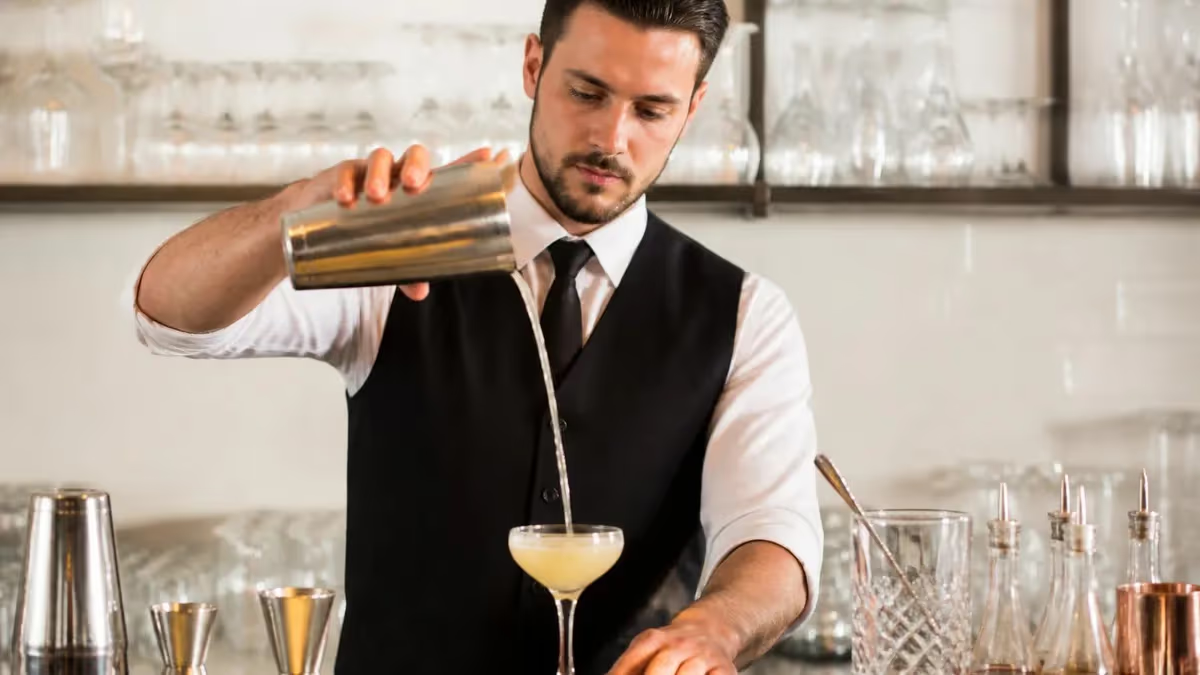
Typing bartender near me into a search bar usually means one of three things: you have a private event coming up, you run a venue that needs short-notice staffing, or you are a guest host trying to improve a backyard party beyond cheap beer and warm wine. Whichever camp you fall into, the search results can feel overwhelming because the term mixes mobile bartenders, staffing agencies, certified mixologists, and freelance gig workers into one big list. This guide untangles those options so you can hire the right person the first time.
The bartending market in the United States has shifted dramatically since 2020. According to the Bureau of Labor Statistics, there are roughly 720,000 bartenders working nationwide, and a growing share of them now operate as freelancers who book directly through Instagram, Thumbtack, or TextMyBar. That means the local talent pool is deeper than it was five years ago, but it also means quality varies wildly. A great local bartender can run an entire 80-person wedding solo; a weak one will leave guests waiting twelve minutes for a vodka soda.
Geography matters more than people expect. A bartender near me in Manhattan costs roughly double a bartender near me in Tulsa, and the certification rules differ by state. Texas requires TABC certification, Utah requires DABC training, and Washington requires MAST. If you book someone who is not legally allowed to pour in your state, your homeowner's insurance may refuse to cover an incident. That is the single most common mistake first-time hosts make, and it is preventable with a five-minute license check.
You also need to think about what kind of bartender you actually need. A craft cocktail specialist who can build a clarified milk punch is a different hire than a high-volume slinger who can push 150 vodka tonics per hour at a corporate happy hour. Most local bartenders specialize, even if their listings claim they do everything. Ask for a portfolio, a sample menu, and references from events similar in size to yours before signing anything.
Pricing in 2026 has stabilized after several years of post-pandemic volatility. Expect $45 to $90 per hour for a solo bartender in most US metros, with a four-hour minimum and travel fees added on top. Full-service mobile bar packages — meaning the bartender brings glassware, ice, mixers, garnishes, and a portable bar — run $600 to $1,800 for typical home events. Tipping is still customary and usually runs 18 to 22 percent of the total bill, though some bartenders include gratuity in their flat rate.
Finally, do not underestimate how much a certified bartender adds to the safety of your event. Anyone pouring drinks at a private function in the US is technically a social host under most state laws, which means liability for an over-served guest can land on the homeowner. Hiring a bartender with current responsible-service certification — TIPS, ServSafe Alcohol, or a state-specific permit — is the cheapest insurance you can buy. The rest of this guide walks through how to vet, compare, and book one.
Hiring a Local Bartender by the Numbers
What 'Bartender Near Me' Actually Means in 2026
A freelance pro who brings the bar to you — portable bar setup, glassware, shakers, ice, mixers, and garnishes. Best for backyards, lofts, and venues without built-in bars. Books direct, no agency markup.
Hired through a local agency that handles W-2 payroll, insurance, and replacements if your bartender calls out. Higher cost but lower risk. Common for corporate clients and high-stakes weddings.
A specialist who designs custom cocktail menus, sources rare ingredients, and treats the bar as a culinary station. Charges premium rates ($90-$150/hr) and usually books only for smaller, curated events.
Restaurant or hotel bartenders picking up side gigs through apps like Instawork or BarHire. Fast to book, often certified, but may not bring equipment. Best for venues that already have a bar.
Recent graduates building portfolios who charge $25-$40/hr. Quality varies; ideal for casual house parties and family events where speed and finesse are less critical than affordability.
Pricing for a local bartender hinges on five variables: market, experience, event length, equipment included, and travel distance. Understanding how each lever moves the final invoice helps you compare quotes apples to apples instead of getting fixated on the hourly rate. A $55-per-hour bartender who brings their own mobile bar setup is almost always cheaper than a $40-per-hour bartender once you add rental glassware, shakers, ice tubs, and a bar back. The cheapest hourly quote rarely wins on total cost.
Market is the biggest single factor. In New York, San Francisco, Boston, and Washington DC, expect $75 to $110 per hour for an experienced bartender. In secondary markets like Nashville, Denver, Charlotte, and Phoenix, the band shifts to $55 to $85. Smaller cities and rural areas can drop as low as $35 to $55, though availability is thinner and travel fees stack up if your bartender lives outside the immediate metro. Always ask whether the quote includes mileage or a flat travel charge.
Experience pricing is less linear than people assume. A bartender with five years behind a craft cocktail bar typically charges 30 to 50 percent more than someone with two years at a chain restaurant, but the gap narrows for high-volume events where speed matters more than artistry. If you are running a corporate happy hour with three signature cocktails on tap, a high-volume specialist with three years of experience may outperform a mixologist with ten. Match the resume to the event style.
Equipment-inclusive packages are where the math gets confusing. A typical full-service mobile bar package — bartender, portable bar, jockey box or ice tubs, glassware (real or eco-disposable), shakers, jiggers, strainers, napkins, straws, basic garnishes, and non-alcoholic mixers — runs $600 to $1,800 depending on guest count. The package usually covers four hours of service plus setup and breakdown. Alcohol is almost always client-supplied because liquor liability rules make it cleaner that way.
For people who would rather hire on-demand than build a custom package, mobile bartender services often publish flat-rate pricing tiers based on guest count. A 25-guest party might be $550 for four hours; a 100-guest event might be $1,400 for five hours. These platforms tend to vet bartenders, verify certifications, and handle disputes, which is worth the modest markup for first-time hosts.
Tipping practices vary by region and contract. Most freelance bartenders expect 18 to 22 percent gratuity on the pre-tax subtotal, paid in cash at the end of the event or built into the final invoice. Some pros include gratuity in their flat package price and explicitly note that on the contract — read the fine print. Tip jars at private events are a gray area; many hosts ask the bartender not to put one out so guests do not feel pressured. Decide before the event, not during.
Finally, watch out for hidden fees that quietly inflate the bill: travel surcharges over 30 miles, late-night fees after 11pm, holiday premiums for major dates, equipment rental for events larger than the standard package, and overtime billed in 15-minute increments. A trustworthy local bartender will list these upfront in a one-page contract. If you are getting quoted verbally with no paperwork, that is a red flag regardless of how friendly the conversation feels.
Bartender Practice Test Questions
Prepare for the Bartender Certification exam with our free practice test modules. Each quiz covers key topics to help you pass on your first try.
Bartender Certification Bar Inventory and ...
Bartender Exam Questions covering Certification Bar Inventory and Cost Control. Master Bartender Test concepts for certification prep.
Bartender Certification Bar Law and Liquor...
Free Bartender Practice Test featuring Certification Bar Law and Liquor Regulations. Improve your Bartender Exam score with mock test prep.
Bartender Certification Bar Sanitation and...
Bartender Mock Exam on Certification Bar Sanitation and Safety. Bartender Study Guide questions to pass on your first try.
Bartender Certification Bar Setup and Orga...
Bartender Test Prep for Certification Bar Setup and Organization. Practice Bartender Quiz questions and boost your score.
Bartender Certification Bar Tools and Glas...
Bartender Questions and Answers on Certification Bar Tools and Glassware. Free Bartender practice for exam readiness.
Bartender Certification Basic
Bartender Mock Test covering Certification Basic. Online Bartender Test practice with instant feedback.
Bartender Certification Cocktail Recipes a...
Free Bartender Quiz on Certification Cocktail Recipes and Techniques. Bartender Exam prep questions with detailed explanations.
Bartender Certification Customer Service a...
Bartender Practice Questions for Certification Customer Service and Sales. Build confidence for your Bartender certification exam.
Bartender Certification Customer Service S...
Bartender Test Online for Certification Customer Service Skills. Free practice with instant results and feedback.
Bartender Certification Mixology Fundamentals
Bartender Study Material on Certification Mixology Fundamentals. Prepare effectively with real exam-style questions.
Bartender Certification Responsible Alcoho...
Free Bartender Test covering Certification Responsible Alcohol Service. Practice and track your Bartender exam readiness.
Bartender Certification Spirits, Beer, and...
Bartender Exam Questions covering Certification Spirits, Beer, and Wine. Master Bartender Test concepts for certification prep.
Bartender Certification Spirits, Liqueurs,...
Free Bartender Practice Test featuring Certification Spirits, Liqueurs, and Cocktails. Improve your Bartender Exam score with mock test prep.
Bartender Responsible Alcohol Service
Bartender Mock Exam on Responsible Alcohol Service. Bartender Study Guide questions to pass on your first try.
Bartender Spirits, Liqueurs, and Cocktails
Bartender Test Prep for Spirits, Liqueurs, and Cocktails. Practice Bartender Quiz questions and boost your score.
Bartender Bar Sanitation and Safety
Bartender Questions and Answers on Bar Sanitation and Safety. Free Bartender practice for exam readiness.
Bartender Bar Setup and Organization
Bartender Mock Test covering Bar Setup and Organization. Online Bartender Test practice with instant feedback.
Bartender Bar Tools and Glassware
Free Bartender Quiz on Bar Tools and Glassware. Bartender Exam prep questions with detailed explanations.
Bartender Basic
Bartender Practice Questions for Basic. Build confidence for your Bartender certification exam.
Bartender Cocktail Recipes and Techniques
Bartender Test Online for Cocktail Recipes and Techniques. Free practice with instant results and feedback.
Bartender Customer Service and Sales
Bartender Study Material on Customer Service and Sales. Prepare effectively with real exam-style questions.
Bartender Customer Service Skills
Free Bartender Test covering Customer Service Skills. Practice and track your Bartender exam readiness.
Bartender Near Me: Service Styles by Event Type
Wedding bartenders typically work in pairs for events over 75 guests, with a one-bartender-per-75 ratio considered the industry standard. The lead bartender designs the signature cocktail menu, while the second handles beer, wine, and high-volume pours. Expect to book 4 to 6 weeks in advance during peak season — May through October — and longer for popular Saturdays in destination markets like Charleston, Napa, or the Hudson Valley.
Most wedding bartenders charge a flat package rate rather than hourly, usually $1,200 to $3,500 for a five-hour reception including setup. Add-ons that drive cost include custom cocktail design ($150-$300), specialty glassware rentals, signature cocktail signage, and a champagne tower attendant. Coordinate with your caterer early because some venues bundle bar staff into catering contracts, and double-booking creates awkward day-of conflicts.
Booking a Local Bartender vs. DIY Bar Service
- +Professional bartenders pace drinks responsibly and cut off intoxicated guests, reducing host liability
- +Faster service means shorter lines and happier guests — pros pour 60-100 drinks per hour
- +Custom cocktail menus and signature drinks improve the event beyond basic beer and wine
- +Most insured bartenders carry $1M liability policies that protect the host
- +Setup and cleanup are handled, freeing the host to enjoy their own party
- +Certified bartenders know state-specific service laws and last-call timing
- +Mobile setups bring a real bar aesthetic that boxed wine on a folding table cannot match
- −Hourly rates plus gratuity can add $400-$1,500 to a small event budget
- −Booking requires lead time — 2-4 weeks minimum, longer in peak season
- −You still supply the alcohol in most jurisdictions, adding logistics
- −Quality varies and online reviews can be misleading or paid
- −Travel fees and minimum-hour requirements can inflate quotes for short events
- −Last-minute cancellations leave you scrambling without backup
Pros and Cons at a Glance
| Pros | Cons |
|---|---|
| Professional bartenders pace drinks responsibly and cut off intoxicated guests, reducing host liability | You still supply the alcohol in most jurisdictions, adding logistics |
| Custom cocktail menus and signature drinks improve the event beyond basic beer and wine | Quality varies and online reviews can be misleading or paid |
| Setup and cleanup are handled, freeing the host to enjoy their own party | Travel fees and minimum-hour requirements can inflate quotes for short events |
| Certified bartenders know state-specific service laws and last-call timing | Last-minute cancellations leave you scrambling without backup |
Bartender Near Me: Vetting Checklist Before You Book
- ✓Verify current state-specific alcohol service certification (TIPS, ServSafe Alcohol, TABC, MAST, or equivalent)
- ✓Request a certificate of liability insurance with at least $1M coverage
- ✓Ask for three references from events similar in size and style to yours
- ✓Confirm what is included in the quote: bartender only, equipment, mixers, garnishes
- ✓Get the contract in writing with start time, end time, minimums, and cancellation terms
- ✓Discuss the drink menu and pour list in advance so they can plan inventory needs
- ✓Clarify who supplies alcohol, ice, garnishes, and glassware — and at what cost
- ✓Ask about backup plans if the bartender gets sick or has a vehicle issue day-of
- ✓Confirm tipping expectations and whether gratuity is built into the quoted package price
- ✓Walk through the venue logistics: parking, load-in access, water source, and trash plan
One bartender per 75 guests is the industry minimum for full-service events
Wedding planners, corporate event managers, and catering directors all use the same ratio: one bartender per 75 attendees for events that include beer, wine, and basic cocktails. Drop that ratio to one per 50 if you are offering a signature cocktail menu with three or more custom drinks, because hand-built cocktails take 60-90 seconds each versus 15-20 seconds for a beer pour. Understaffing the bar is the single most common complaint guests have at private events.
Liability is the unsexy part of hiring a local bartender, but it is also where DIY hosts get burned most often. Every US state has some version of social host liability, meaning that if a guest leaves your event drunk and causes harm — a car accident, a fight, a fall — you can be sued personally even if no money changed hands. Hiring a certified, insured bartender does not eliminate that risk entirely, but it shifts a significant portion of it onto a professional who knows when to cut someone off.
The certification landscape varies state by state. Texas requires TABC seller-server certification for anyone pouring alcohol commercially. Utah requires the DABC alcohol training program. Washington uses MAST permits, and Oregon uses OLCC service permits. California, Florida, and most other states accept TIPS or ServSafe Alcohol as the baseline credential. A bartender who cannot produce a current certification card for your state should not be working your event, full stop. The exam is short and inexpensive, so there is no excuse for missing one.
Insurance is the second pillar. Reputable freelance bartenders carry general liability policies in the $1 million to $2 million range, usually through specialty brokers like Front Row Insurance or Veracity. Ask for a certificate of insurance — not just a screenshot — and verify it is current. Some venues require the bartender to add the venue as additionally insured on the policy, which is a routine request that takes about 24 hours to process. Building this into your booking timeline prevents last-minute scrambles.
Bring-your-own-alcohol setups create their own liability layer. When the host supplies the booze and the bartender simply pours, most state liquor liability laws still attach some responsibility to the bartender for over-service decisions. This is why pros refuse to keep pouring for visibly intoxicated guests even when the host insists. A bartender who folds under host pressure is a bartender without insurance protection — they are betting nothing goes wrong, and the math eventually catches up.
Homeowner's and renter's insurance policies sometimes include limited host-liquor coverage, but the limits are usually low ($100,000 to $300,000) and exclusions are common. If your event is large or high-stakes, look into a one-day special event liability policy, which runs $150 to $400 and provides $1 million to $2 million of additional coverage. Pair this with a properly insured bartender and you have meaningful protection rather than crossed fingers.
State-specific rules matter for non-obvious situations too. Some states prohibit serving anyone visibly intoxicated, period. Others have dram-shop statutes that hold the server liable for damages caused by an over-served guest for hours after the event ends. Asking your bartender how they handle these situations during the initial booking call tells you whether they understand the legal landscape or are just winging it. The right answer involves specific protocols, not vague reassurances.
If you are hosting in a state with strict rules and want to understand the bigger picture of how bartenders are regulated, the resources covering how to become a bartender include state-by-state breakdowns of training requirements and legal expectations. Reviewing those helps you ask sharper questions during the booking process and identify pros who actually know the rules versus those who learned bartending entirely on the job.
If your event is at a venue, on a property covered by event insurance, or hosted by an employer, hiring an uncertified bartender can void coverage entirely. Insurers routinely deny claims when post-event investigations reveal the bar was staffed by someone without current alcohol service training. Always request a copy of the certification card and the policy COI before signing the booking contract — verbal confirmation is not enough when a claim is filed months later.
The booking timeline for a local bartender is more forgiving than most hosts expect for casual events, and far less forgiving than expected for weddings and corporate functions. For a 20-person backyard party on a Tuesday, you can often book a quality freelance bartender with 5 to 7 days of notice in most US metros. For a Saturday wedding in May or October, top bartenders in major markets book up 6 to 9 months in advance. Plan according to your event tier, not your gut.
Start your search by triangulating three sources: a marketplace platform (Thumbtack, GigSalad, or The Bash), local Instagram and TikTok hashtags (#cityname + bartender), and word-of-mouth referrals from caterers or venue coordinators. Caterer referrals are gold because caterers work with bartenders weekly and know who shows up on time, who cleans up properly, and who handles difficult guests gracefully. A caterer's recommendation usually beats a marketplace top result.
Always conduct a short discovery call before booking — 15 minutes is enough. Use the call to verify certifications, ask about insurance, walk through your event timeline, and gauge their communication style. A pro who answers questions clearly, sends a follow-up email with their contract, and asks smart questions about your venue is signaling that they treat the work seriously. A pro who is vague, dodges paperwork, or pressures you to book immediately is signaling the opposite.
Confirm the booking with a written contract and a deposit, typically 25 to 50 percent of the total. Reputable bartenders use simple one-page agreements covering date, time, location, services included, total cost, deposit, cancellation policy, and certification verification. Pay deposits via Venmo Business, Zelle, or credit card — avoid Cash App or personal Venmo because those provide no buyer protection if the bartender ghosts you.
Two weeks before the event, send a confirmation email that includes the final guest count, parking instructions, load-in details, the alcohol shopping list you plan to provide, and any special drink requests. Most bartenders will respond with a refined shopping list adjusted for guest preferences and pour ratios. A common mistake is overbuying liquor and underbuying mixers; a good bartender will tell you that 80 percent of guests at a typical American event drink beer, wine, or one of two simple cocktails like vodka soda or whiskey ginger.
The week of the event, do a final walkthrough by text or phone. Confirm arrival time (most bartenders arrive 60 to 90 minutes before guests), the bar location, water access, ice plan, and trash logistics. Send the bartender a photo of the bar area if they have not visited the venue. Surprises on the day-of are the leading cause of bad bartending experiences, and almost all of them are preventable with one short check-in call.
On the day of the event, treat your bartender like a professional teammate rather than service staff. Offer water, a meal break if the event runs over five hours, and a clear handoff at the end with the gratuity in an envelope or sent immediately via app. The reason this matters beyond basic decency is repeat booking — if you find a great bartender for your area, the second booking is dramatically easier because they already know your space, your guest list dynamics, and your preferences. Build the relationship.
Once you have booked a local bartender, the next 72 hours before the event are when small details determine whether the night runs smoothly or feels chaotic. The alcohol shopping list is the most common source of friction. Bartenders prefer 1.75L bottles of base spirits (vodka, gin, tequila, bourbon, rum) for events over 30 guests because they pour faster and waste less. For wine, the rule of thumb is half a bottle per drinking guest for events under three hours, slightly more for dinner-paired events.
Ice is the single most underestimated logistical item at private events. A 100-guest cocktail event needs 80 to 100 pounds of ice — far more than most hosts buy on their own. Order from a local ice supplier rather than buying convenience-store bags, and have it delivered the morning of the event so it does not melt sitting in a garage. Most mobile bartenders will coordinate ice delivery for a small fee; outsourcing this is almost always worth it.
Garnish prep is another small detail that signals professionalism. Lemons, limes, oranges, mint, and rosemary should be fresh, washed, and cut within four hours of service. Cocktail cherries (skip the bright red ones and use Luxardo or Filthy brand), olives, and cocktail onions belong in clean ramekins on the bar back, not in the jars they came in. A bartender who shows up with mason jars of crusty garnishes is a bartender cutting corners on everything else too.
Glassware planning depends on your service style. For weddings and upscale events, real glass — wine glasses, rocks glasses, highballs, and champagne flutes — is non-negotiable and runs $0.75 to $2 per piece through local rental companies. For casual events, eco-friendly disposables like sugarcane or birchwood cups work well and avoid the breakage liability that real glass creates. Some mobile bartenders include disposable cups in their package; clarify which you prefer when booking.
The bar layout matters more than people realize. A good bartender works from a 6-foot-wide L-shape or U-shape station with the speed rail in front, ice in a tub to the right, glassware behind, and garnishes in a row. If you are setting up the bar yourself, ask your bartender to send a layout diagram a week ahead. Done right, this lets them pour 80+ drinks an hour. Done wrong — with the ice across the room or glassware in another building — drink times balloon to three minutes and lines back up.
Music and ambient noise affect bartending speed too. If your event has a DJ or live band, position the bar at least 15 feet from the main speakers so guests can place orders without shouting. Bartenders who cannot hear orders make more mistakes and slow down considerably. This is the kind of detail venue coordinators check automatically but home hosts often miss until the bar line backs up at 9pm.
Finally, plan the soft close carefully. Most bartenders stop serving 15 to 30 minutes before the event's posted end time so they can break down the bar, pack their kit, and have last-call communicated cleanly to guests. Discuss this in advance and back-time your event flow accordingly. A toast at the official end time should happen with drinks already poured, not with guests crowding the bar for a final round. Smooth endings are what guests remember — and what gets your local bartender booked again.
Sample Bartender Certification Practice Questions
Try these questions from our free Bartender Certification practice tests. The correct answer and an explanation follow each question.
Which document should a bartender always check to verify a patron's age?
- A. Credit card
- B. Student ID only
- C. Government-issued photo ID
- D. Work ID badge
Answer: C. Government-issued photo ID
A government-issued photo ID (driver's license, passport, or state ID) is the accepted standard for verifying legal drinking age.
How does a bartender manage multiple guests simultaneously without making any guest feel neglected?
- A. Only focus on one guest at a time from start to finish
- B. Use eye contact and brief verbal acknowledgments to let all guests know they have been noticed while efficiently rotating attention
- C. Ask guests to wait and do not acknowledge them until ready
- D. Have all guests order at the same time to reduce back-and-forth
Answer: B. Use eye contact and brief verbal acknowledgments to let all guests know they have been noticed while efficiently rotating attention
Managing multiple guests requires efficient rotation of attention, using eye contact and brief verbal acknowledgments to signal awareness while completing tasks for other guests.
A bartender notices a small puddle of sticky liquid on the floor behind the bar near the soda gun, along with a few fruit flies. Which of the following is the most immediate and appropriate action to take?
- A. Ignore it until the end of the shift, as it's a low-traffic area.
- B. Spray insecticide in the area to eliminate the fruit flies quickly.
- C. Clean the spill immediately, check the soda gun for leaks, and set a pest trap.
- D. Inform the manager but continue serving drinks as normal.
Answer: C. Clean the spill immediately, check the soda gun for leaks, and set a pest trap.
Spills, especially sugary ones, attract pests like fruit flies and create slip hazards. The most appropriate action is to address the root cause immediately by cleaning the spill, inspecting for equipment malfunctions like a leaking soda gun, and implementing pest control measures. This prevents the problem from worsening and maintains a safe and sanitary environment.
A new cleaning chemical has been introduced for sanitizing bar surfaces. According to standard safety protocols, where should a bartender be able to find detailed information about its potential hazards, first aid measures, and proper handling instructions?
- A. On the product label itself.
- B. In the employee handbook.
- C. On the Safety Data Sheet (SDS).
- D. By asking a more experienced coworker.
Answer: C. On the Safety Data Sheet (SDS).
A Safety Data Sheet (SDS), formerly known as MSDS, is a standardized document that contains comprehensive information about a chemical's properties, hazards, handling precautions, and emergency procedures. Employers are required to make these sheets accessible to employees for all hazardous chemicals used in the workplace.
Bartender Bartender Questions and Answers
Wisconsin Bartending License: Operator's License Guide 2026
Bartender Jobs in Los Angeles: 2026 Guide to Pay, Hiring Hotspots, and Landing the Gig
Bartender Career FAQ: Pay, OLCC Rules and Must-Know Drinks
Mobile Bartender Services: Costs, Booking & What to Expect
How to Become a Bartender: Steps, Skills, and Realistic Path
About the Author
Executive Chef & Culinary Arts Certification Educator
Culinary Institute of AmericaChef Marco Bellini is a Certified Executive Chef and graduate of the Culinary Institute of America with over 20 years of professional kitchen experience in Michelin-recognized restaurants. He teaches culinary arts certification, food safety, and hospitality exam preparation, having guided thousands of culinary students through their ServSafe, ProStart, and professional chef certifications.
Join the Discussion
Connect with other students preparing for this exam. Share tips, ask questions, and get advice from people who have been there.
View discussion (7 replies)