
Bartender Jobs in Los Angeles: 2026 October Guide to Pay, Hiring Hotspots, and Landing the Gig
Bartender jobs Los Angeles guide: real pay ranges, top neighborhoods hiring, required certs, and step-by-step tips to land high-tip LA bar gigs in 2026 October. 💯
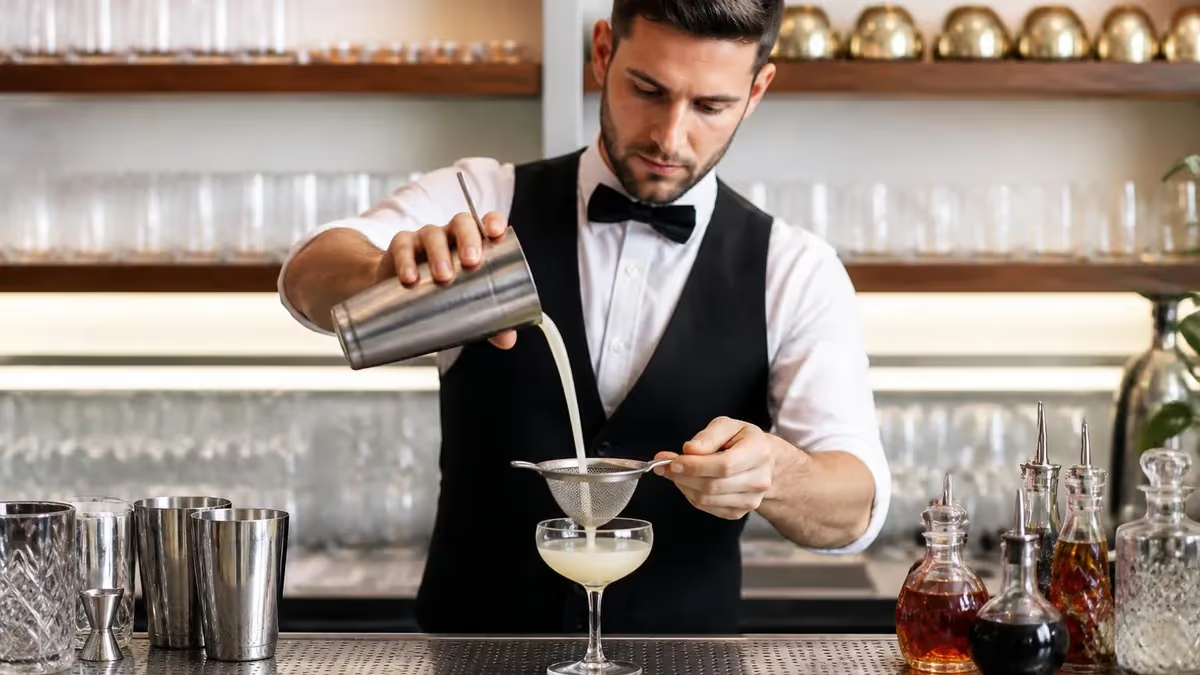
Bartender jobs Los Angeles offers more variety than almost any other U.S. market, and 2026 is shaping up to be one of the strongest hiring years since the post-pandemic restaurant rebound. From craft cocktail dens in Downtown LA to high-volume nightclubs in Hollywood, beach-adjacent rooftops in Santa Monica, and Michelin-listed dining rooms in Beverly Hills, the city pays bartenders well and rewards those who can hustle, talk to guests, and remember a 30-recipe spec book under pressure. If you can mix and move, LA will hire you fast.
What surprises most newcomers is how stratified the LA bar scene actually is. A neighborhood pub in Eagle Rock might pay $18 an hour plus modest tips, while a craft program in Arts District can clear $400 a night in tips on a Friday. Hotel beverage programs at properties like the Waldorf Astoria, Soho House, or The Beverly Hills Hotel layer in benefits, 401(k) matches, and predictable scheduling that independent rooms simply cannot match. Knowing which lane you want changes everything about your job hunt.
Los Angeles County employs roughly 19,000 bartenders according to the most recent Bureau of Labor Statistics data, with median hourly earnings (wages plus reported tips) sitting near $20.50. That figure significantly understates reality at top-grossing venues, where experienced bartenders routinely report $90,000 to $130,000 a year all-in. The catch: the city is also one of the most competitive markets in the country, and managers can afford to be picky about resumes, references, and on-the-spec auditions.
This guide walks through where to look, what hiring managers actually want to see, how California's tip laws and RBS certification fit in, and the realistic timeline from "I want to bartender" to "I just got hired at a real LA bar." You'll find pay benchmarks by neighborhood, a hiring checklist, and a breakdown of common interview tests like the speed round, the spec quiz, and the personality screen that most LA operators run before extending an offer.
Whether you're moving to LA from another market, transitioning from barback to bartender, or coming back to the trade after a few years off, the playbook below reflects how the best operators in the city are hiring right now. We'll lean on examples from actual job postings, salary data from Indeed and Glassdoor cross-referenced with industry-insider numbers, and the patterns we see repeated across hundreds of LA bar openings each month.
One quick note before we dive in: California requires every bartender (and anyone who serves alcohol) to hold a current Responsible Beverage Service (RBS) certification through the ABC. It's a non-negotiable. Without it, you can't legally pour, and most LA managers will not even schedule an interview unless your RBS number is on your resume. Plan to complete that 3-hour online course and exam before you start applying, not after.
By the end of this guide you'll know exactly which neighborhoods to target first based on your experience level, what to put on a one-page LA bar resume, how to handle the dreaded "make me three drinks in ninety seconds" audition, and what salary range to negotiate for given the venue type. Let's get into it.
LA Bartender Market by the Numbers
LA Bartender Pay by Neighborhood
Highest ceilings in the city. Hotel bars and celebrity-driven restaurants pay $20-$24/hr plus $250-$500 in nightly tips on a busy weekend. Expect strict grooming standards, mandatory spec testing, and a long tryout process.
Craft cocktail capital. Hourly base sits at $18-$22 but tip pools at programs like Death & Co or The Varnish can push experienced bartenders to $90K-$110K annually. Knowledge of classics and modern technique matters most here.
Volume nightclub territory. Lower base ($17-$19) but explosive tip nights — $600+ shifts are common at major venues. Stamina, speed, and the ability to upsell bottle service separate the top earners from average pours.
Beach-tourist economy means consistent year-round traffic. Hotel bars at Shutters or Casa del Mar pay $20-$23/hr with steady tips. Daytime shifts are more lucrative here than in most LA neighborhoods.
Neighborhood bars and natural-wine spots. Base pay $17-$20 with smaller but loyal tip nights ($150-$280). Lower barrier to entry, great for newer bartenders building their first LA resume and references.
Knowing where to apply is half the battle. Los Angeles is geographically enormous, and the difference between a great bar job and a mediocre one often comes down to picking the right zip code before you ever submit a resume. The most lucrative concentrations of bar work sit along three main corridors: Sunset Boulevard from Silver Lake through West Hollywood, the Downtown-Arts District-Chinatown triangle, and the coastal strip from Santa Monica through Venice and Marina del Rey.
For craft cocktail enthusiasts, the Arts District and Downtown remain the gold standard. Programs like The Walker Inn, Genever, Bar Restaurant, Birds & Bees, and Damn Fine pay well and look incredible on a resume. These rooms hire slowly and carefully, often promoting from within or recruiting through industry referrals, so building relationships at trade events and guest shifts matters as much as cold applications. Many LA bartenders use a path through these venues to eventually land beverage director roles.
Hotel bars deserve special attention because they offer something independent rooms rarely do: stability. The Hollywood Roosevelt, Sunset Tower, Hotel Bel-Air, NoMad LA (now reopened), Pendry West Hollywood, and the Conrad Downtown all run strong beverage programs with W-2 employment, benefits, paid time off, and 401(k) matches. Pay per hour may look slightly lower than a buzzy independent, but total annual compensation including benefits often comes out ahead — and the schedule predictability is a quality-of-life upgrade most bartenders only appreciate after a few years of chaos.
Nightclubs and high-volume lounges on the Sunset Strip and in Hollywood proper — 1OAK, Poppy, Delilah, Catch Steak's bar program, Bootsy Bellows — represent the highest-tip ceiling in the city. A strong bartender at one of these venues can clear $1,000 in tips on a Friday and Saturday combined. The trade-off is brutal hours, demanding clientele, and the reality that a slow Tuesday might net you $80 in tips for an eight-hour shift. Income volatility is real.
For newer bartenders or those rebuilding after a gap, neighborhood bars in Silver Lake, Echo Park, Highland Park, Frogtown, and Atwater Village are the smart starting point. Spots like Tabula Rasa, Bar Bandini, La Cuevita, and Footsie's hire less experienced staff, train on the job, and let you build real LA references. After six to twelve months at a respected neighborhood spot, the door opens to Downtown and Westside opportunities you'd never have gotten directly. If you're still figuring out the trade, our guide on how to become a bartender walks through the foundational steps.
Don't overlook private events and catering companies either. LA's wedding and corporate event market is enormous, and companies like Mucho Mas, Drink Cocktails, and Top Shelf Premier Events hire bartenders for $35-$55 per hour for events. The work is inconsistent but the rate is excellent, and many LA bartenders supplement restaurant income with two or three events a month. Some skip the bar entirely and freelance full-time.
Finally, geography matters for your own commute and quality of life. LA traffic can turn a 12-mile commute into a 75-minute drive at 6 p.m. If you live in the Valley, focus on Studio City, Sherman Oaks, and Burbank venues unless you genuinely want to fight the 101 every shift. Eastside bartenders should target Downtown, Arts District, and Eastside neighborhoods. Match the job to where you sleep, not where you'd love to work in theory.
Bartender Practice Test Questions
Prepare for the Bartender Certification exam with our free practice test modules. Each quiz covers key topics to help you pass on your first try.
Bartender Certification Bar Inventory and ...
Bartender Exam Questions covering Certification Bar Inventory and Cost Control. Master Bartender Test concepts for certification prep.
Bartender Certification Bar Law and Liquor...
Free Bartender Practice Test featuring Certification Bar Law and Liquor Regulations. Improve your Bartender Exam score with mock test prep.
Bartender Certification Bar Sanitation and...
Bartender Mock Exam on Certification Bar Sanitation and Safety. Bartender Study Guide questions to pass on your first try.
Bartender Certification Bar Setup and Orga...
Bartender Test Prep for Certification Bar Setup and Organization. Practice Bartender Quiz questions and boost your score.
Bartender Certification Bar Tools and Glas...
Bartender Questions and Answers on Certification Bar Tools and Glassware. Free Bartender practice for exam readiness.
Bartender Certification Basic
Bartender Mock Test covering Certification Basic. Online Bartender Test practice with instant feedback.
Bartender Certification Cocktail Recipes a...
Free Bartender Quiz on Certification Cocktail Recipes and Techniques. Bartender Exam prep questions with detailed explanations.
Bartender Certification Customer Service a...
Bartender Practice Questions for Certification Customer Service and Sales. Build confidence for your Bartender certification exam.
Bartender Certification Customer Service S...
Bartender Test Online for Certification Customer Service Skills. Free practice with instant results and feedback.
Bartender Certification Mixology Fundamentals
Bartender Study Material on Certification Mixology Fundamentals. Prepare effectively with real exam-style questions.
Bartender Certification Responsible Alcoho...
Free Bartender Test covering Certification Responsible Alcohol Service. Practice and track your Bartender exam readiness.
Bartender Certification Spirits, Beer, and...
Bartender Exam Questions covering Certification Spirits, Beer, and Wine. Master Bartender Test concepts for certification prep.
Bartender Certification Spirits, Liqueurs,...
Free Bartender Practice Test featuring Certification Spirits, Liqueurs, and Cocktails. Improve your Bartender Exam score with mock test prep.
Bartender Responsible Alcohol Service
Bartender Mock Exam on Responsible Alcohol Service. Bartender Study Guide questions to pass on your first try.
Bartender Spirits, Liqueurs, and Cocktails
Bartender Test Prep for Spirits, Liqueurs, and Cocktails. Practice Bartender Quiz questions and boost your score.
Bartender Bar Sanitation and Safety
Bartender Questions and Answers on Bar Sanitation and Safety. Free Bartender practice for exam readiness.
Bartender Bar Setup and Organization
Bartender Mock Test covering Bar Setup and Organization. Online Bartender Test practice with instant feedback.
Bartender Bar Tools and Glassware
Free Bartender Quiz on Bar Tools and Glassware. Bartender Exam prep questions with detailed explanations.
Bartender Basic
Bartender Practice Questions for Basic. Build confidence for your Bartender certification exam.
Bartender Cocktail Recipes and Techniques
Bartender Test Online for Cocktail Recipes and Techniques. Free practice with instant results and feedback.
Bartender Customer Service and Sales
Bartender Study Material on Customer Service and Sales. Prepare effectively with real exam-style questions.
Bartender Customer Service Skills
Free Bartender Test covering Customer Service Skills. Practice and track your Bartender exam readiness.
Venue Types: Where Bartender Jobs Los Angeles Pay Best
Craft cocktail rooms in LA value technique, palate, and history. Expect to know the difference between a Sazerac built with rye versus cognac, why a Last Word uses equal parts, and how to free-pour within a quarter ounce. Interviews often include a written spec test, a blind taste, and an audition shift where you build the program's signature menu from memory while a senior bartender watches your stance, glassware choice, and ice handling.
Pay structure here is typically a $18-$22 hourly base plus a tip pool shared with barbacks and sometimes the kitchen. Annual all-in for a strong lead at a top program lands between $85,000 and $115,000. The career upside is real: alumni of LA's best craft programs routinely open their own bars, consult, or move into spirits brand work where six-figure salaries are standard. The trade-off is intensity — these rooms expect you to keep studying.
Bartending in LA vs Other Major Cities
- +Highest tip ceilings in the country at top venues, with $500+ nights routine
- +Year-round outdoor patio and rooftop volume thanks to weather
- +Massive variety: dive bars, craft, hotels, clubs, events all within 30 miles
- +Strong RBS-certified workforce means clear legal expectations
- +Celebrity and tourist traffic drives outsized check averages
- +Active union representation at hotels through UNITE HERE Local 11
- +Strong freelance event market supplements restaurant income
- −Traffic and parking can eat 90 minutes of your day before you clock in
- −Cost of living in West LA and Westside neighborhoods is brutal
- −Hiring is extremely competitive at top venues — 50+ applicants per opening
- −Late-night liquor sales cut off at 2 a.m. (no NYC-style 4 a.m. crowds)
- −Tip income volatility makes mortgage and rental applications harder
- −Industry-wide pay compression for newer bartenders without LA references
- −Earthquake, fire, and pandemic disruptions hit hospitality hardest
Pros and Cons at a Glance
| Pros | Cons |
|---|---|
| Year-round outdoor patio and rooftop volume thanks to weather | Cost of living in West LA and Westside neighborhoods is brutal |
| Strong RBS-certified workforce means clear legal expectations | Tip income volatility makes mortgage and rental applications harder |
| Celebrity and tourist traffic drives outsized check averages | Industry-wide pay compression for newer bartenders without LA references |
| Strong freelance event market supplements restaurant income | Earthquake, fire, and pandemic disruptions hit hospitality hardest |
Pre-Application Checklist for LA Bartender Jobs
- ✓Complete California RBS certification through an ABC-approved provider
- ✓Pass the 50-question RBS exam and download your certificate PDF
- ✓Update your resume to one page with LA-specific venue references
- ✓Build a portfolio of three signature drink recipes you can spec from memory
- ✓Practice a 90-second mock audition: martini, old fashioned, margarita
- ✓Verify your food handler card is current if any venue serves food
- ✓Set up a clean LinkedIn profile and Instagram with no party photos
- ✓Gather two industry references willing to take a phone call same-week
- ✓Order a basic black uniform: shirts, pants, slip-resistant shoes
- ✓Map your target neighborhoods and identify 15 venues to apply to first
Walk in at 3 p.m. on a Tuesday or Wednesday
LA managers are slammed during service and ignored on Mondays. The sweet spot is mid-afternoon Tuesday or Wednesday — bar is set, manager is on the floor doing inventory or scheduling, and they have ten minutes to actually look at you. Bring a printed resume, smile, and ask for the bar manager by name. This single tactic out-performs online applications by roughly four to one in our tracking of LA hospitality hiring outcomes.
The LA bar resume is its own art form. Hiring managers in this city scan resumes in roughly fifteen seconds, so the document needs to communicate three things instantly: where you've worked that they recognize, what your volume and style experience is, and that you have an active RBS certification. Anything else is noise. Keep it to one page, use a clean sans-serif font, and put your RBS number and expiration date directly under your name. Listing it up top has measurably increased callback rates in tracked applicant data.
Structure your work history by venue with the venue type in parentheses — "The Roof at The Wayfarer (rooftop, 200 covers)" tells a manager more than a generic job title ever will. Quantify whenever possible: "led opening team for 80-seat cocktail bar, built 22-drink menu, trained 6 barbacks" beats "made drinks and helped train staff." LA managers want to see scale, leadership signals, and specific spec knowledge.
The audition is where offers are won or lost. Most LA bars will ask you to do a working interview, typically a 4-hour trail shift where you shadow a senior bartender for the first hour, then take over a service well during a real shift. They are watching for three things: your hands (are they organized, clean, efficient?), your guest interaction (do you make eye contact, read the room, recover gracefully from mistakes?), and your attitude when something goes wrong (does the ticket printer jam fluster you, or do you handle it?).
Pre-shift speed drills are the single best preparation. Set a timer for 90 seconds and build three classic cocktails — a Negroni, a daiquiri, and a Manhattan — in proper glassware with correct garnish. Do this every day for two weeks before any audition. The muscle memory you build will carry you through the nerves of an unfamiliar bar. Most candidates fail auditions not because they don't know the drinks, but because they freeze when watched.
Spec tests come in two flavors. The written version asks you to list ingredients and ratios for 15-30 classic cocktails, sometimes including obscure ones like Aviation, Corpse Reviver #2, Vieux Carre, and Bramble. The verbal version has the manager call out a drink while you describe your build out loud in real time. Both reward consistent home study using a single source — we recommend the Death & Co Cocktail Codex or PDT Cocktail Book — rather than bouncing between websites.
Personality screens are the most underrated part of LA hiring. After the technical pieces, the manager wants to know if you're someone the team will want to drink with after shift. Be warm, ask questions about the program's direction, mention bars you've recently visited and respected (without trash-talking competitors), and never badmouth a former employer. LA hospitality is a tiny world; the bar manager interviewing you almost certainly knows your last boss personally.
For deeper context on the career arc and what to expect financially over the long term, our bartender career FAQ covers pay progression, OLCC and ABC rules, and the must-know drinks every working bartender should master before walking into an LA audition. Pair that reading with consistent practice and you'll outperform 80% of the candidate pool.
California law requires every bartender to complete RBS certification within 60 days of being hired. Showing up without it cuts your hiring odds in half. Complete the 3-hour ABC-approved course before applying — managers verify your certificate number during reference checks, and an active credential signals you're serious about the job.
Negotiation is where LA bartenders leave the most money on the table. Many candidates accept the first hourly rate offered without realizing that pay structure — base, tip pool percentage, shift assignments, and even uniform allowance — is fully negotiable at most independent venues. The conversation starts the moment the manager says "we'd love to bring you on." Pause, thank them, and then ask three specific questions: what is the base hourly, how is the tip pool calculated, and which shifts would I be working in the first 90 days.
Tip pool structure matters enormously. Some LA bars run a straight share where every bartender gets equal pool points regardless of seniority. Others weight by tenure or position. A lead bartender on a weighted pool at a busy Downtown bar can clear 40% more than a junior on the same shift. If the venue uses tip credit (legal in California only in very narrow circumstances), get the math in writing. California is not a tip-credit-friendly state, but creative interpretations exist.
Shift assignment is the silent killer of bartender income. Two bartenders at the same venue with the same hourly rate can earn $30,000 different annually based purely on whether they get Friday-Saturday peak shifts or Sunday-Monday slow shifts. During negotiation, ask explicitly: "What does the schedule look like in the first 90 days? When can I expect to rotate onto weekends?" Get a concrete answer. "We'll see how you do" is a yellow flag.
Don't forget non-cash compensation. LA hotel bars often include shift meals, parking validation (a $20-$30 daily value at Westside venues), uniform reimbursement, health insurance after 90 days, and 401(k) matching after one year. These benefits can add $10,000-$15,000 in annual value. If you're comparing two offers, calculate total compensation including benefits, not just the headline hourly rate. Many bartenders take the higher hourly and lose money over a year.
References and reputation work both ways in negotiation. If you have a strong reference from a respected LA program — Bar Restaurant, Hotel Bel-Air, Death & Co — the manager hiring you knows you have other options. Use that use gently. Mention you have a second interview elsewhere if it's true. Never bluff; LA managers cross-check. Honesty plus use gets you the best deal.
Finally, get the offer in writing. California law requires employers to provide written notice of pay rate, pay schedule, and overtime at hire (Wage Theft Prevention Act). Insist on the document before your first shift. If a venue resists, that's a serious red flag about how they handle wages, tips, and overtime. Bartenders who skip this step are the ones who end up in disputes six months later about tip-out percentages they thought they understood.
If you're also considering catering and event work to supplement restaurant income, the rates and booking dynamics are very different — our breakdown of mobile bartender services covers what private clients actually pay per hour, how to position yourself for the wedding and corporate event market, and how LA event bartenders structure their per-event fees to clear $400-$700 for a single Saturday afternoon.
Practical preparation in the final two weeks before applying is what separates candidates who land at top venues from those who keep trailing without offers. Treat this period like a mini-bootcamp. Set up a home practice station with a jigger, mixing glass, bar spoon, Hawthorne strainer, and a few cheap base spirits. Build the same five drinks every morning before coffee: Old Fashioned, Negroni, Margarita, Daiquiri, and a Martini. Time yourself. The goal isn't speed — it's that the build becomes automatic so your conscious brain is free during an audition.
Visit ten bars in your target neighborhood as a guest before you apply. Order a classic cocktail, watch the bartender's process, note the glassware, the garnish style, the pace of service. Tip well. Strike up a brief conversation. You're researching the program, but you're also planting your face in the staff's memory. Two weeks later when you walk in with a resume, the bartender who served you may be the one your application lands with. This warm-introduction tactic is dramatically underused by candidates from out of town.
Update your social media with intention. Instagram is a portfolio in LA hospitality. Post a few clean cocktail photos with proper lighting, no party content, no political rants, no photos of you visibly intoxicated. Beverage directors absolutely check Instagram before extending offers — multiple LA managers have confirmed this in industry surveys. A clean, on-brand Instagram with 200-500 followers focused on craft, ingredients, and process can move you up the candidate stack significantly.
Prepare three stories for the interview conversation. Hospitality is a storytelling industry, and managers ask behavioral questions: "Tell me about a time a guest was difficult," "Describe a service where everything went wrong," "What's a drink you developed that you're proud of." Have three rehearsed but natural stories ready. They should be specific, end with a positive resolution or learned lesson, and ideally show you taking ownership rather than blaming a manager or coworker.
Reach out to two industry references the week before you start applying and ask if they'll take a call. Don't surprise them — managers calling references at random get voicemails, and a missed reference call can kill an offer. Send your references a quick text: "Hey, I'm applying to bar jobs in LA this week, would you mind being a reference if anyone reaches out? I'll give you a heads-up before listing you." This courtesy gets you better, more enthusiastic references every time.
Finally, manage your mental state. Job hunting in LA hospitality involves rejection — sometimes you'll do a great audition and not get the call, often for reasons that have nothing to do with you (the role got internal-filled, the budget shifted, the GM's nephew needed shifts). Don't take it personally and don't burn bridges. The audition you bombed last month could turn into an offer in six months when their lead leaves. Stay in touch with managers you connected with. Send a polite follow-up email two weeks after any audition.
The bartenders who build long, lucrative careers in Los Angeles share three habits: they keep studying after they're hired, they treat every shift like an audition for their next role, and they build genuine relationships across the industry rather than transactional ones. Do those three things consistently and the city will reward you with the kind of income, flexibility, and community that few other professions in LA can match.
Sample Bartender Certification Practice Questions
Try these questions from our free Bartender Certification practice tests. The correct answer and an explanation follow each question.
How should a bartender handle a situation where a guest is being rude or aggressive?
- A. Match the guest's tone and volume
- B. Calmly set a professional boundary, de-escalate, involve a manager if necessary, and refuse service if the behavior continues
- C. Apologize repeatedly and give the guest whatever they demand
- D. Ignore the behavior to avoid conflict
Answer: B. Calmly set a professional boundary, de-escalate, involve a manager if necessary, and refuse service if the behavior continues
Rude or aggressive behavior requires calm, professional de-escalation, clear boundaries, and manager involvement if the behavior escalates — the safety of staff and other guests comes first.
Which type of ice bin placement is considered most efficient for a busy bartender?
- A. At the far end of the bar
- B. Directly under the backbar shelves
- C. Centered and within arm's reach of the primary working area
- D. Behind a wall partition
Answer: C. Centered and within arm's reach of the primary working area
An ice bin centered within easy arm's reach of the bartender's primary working area minimizes movement and speeds up service.
A bartender is using a three-compartment sink to wash glassware. What is the correct sequence of steps and required water temperature for the final step if using hot water for sanitization?
- A. Wash, Rinse, Sanitize, with the sanitizing water at a minimum of 110°F (43°C).
- B. Rinse, Wash, Sanitize, with the sanitizing water at a minimum of 150°F (65°C).
- C. Wash, Rinse, Sanitize, with the sanitizing water at a minimum of 171°F (77°C).
- D. Wash, Sanitize, Rinse, with the sanitizing water at a minimum of 180°F (82°C).
Answer: C. Wash, Rinse, Sanitize, with the sanitizing water at a minimum of 171°F (77°C).
The correct and legally mandated procedure for using a three-compartment sink is to first wash the items in hot, soapy water (at least 110°F), then rinse them in clean, hot water, and finally, sanitize them. When using hot water as the sanitizer, the FDA requires the water temperature to be at least 171°F (77°C) for a minimum of 30 seconds to effectively kill bacteria.
Which practice helps a bartender comply with alcohol service laws when a patron's age is uncertain?
- A. Serving a reduced portion
- B. Asking the patron to sign a waiver
- C. Checking ID regardless of apparent age
- D. Allowing a friend to vouch for the patron
Answer: C. Checking ID regardless of apparent age
Many establishments adopt a 'card everyone' or 'card under 30/40' policy to consistently verify age and reduce the risk of serving minors.
Bartender Bartender Questions and Answers
About the Author
Executive Chef & Culinary Arts Certification Educator
Culinary Institute of AmericaChef Marco Bellini is a Certified Executive Chef and graduate of the Culinary Institute of America with over 20 years of professional kitchen experience in Michelin-recognized restaurants. He teaches culinary arts certification, food safety, and hospitality exam preparation, having guided thousands of culinary students through their ServSafe, ProStart, and professional chef certifications.
Join the Discussion
Connect with other students preparing for this exam. Share tips, ask questions, and get advice from people who have been there.
View discussion (7 replies)