
Bartender Career FAQ: Pay, OLCC Rules and Must-Know Drinks 2026 September
Bartender career FAQ: 💯 NY tipped wage, LA and Vegas pay, OLCC rules, top cocktails, no-experience path, and the skills bar owners actually hire.
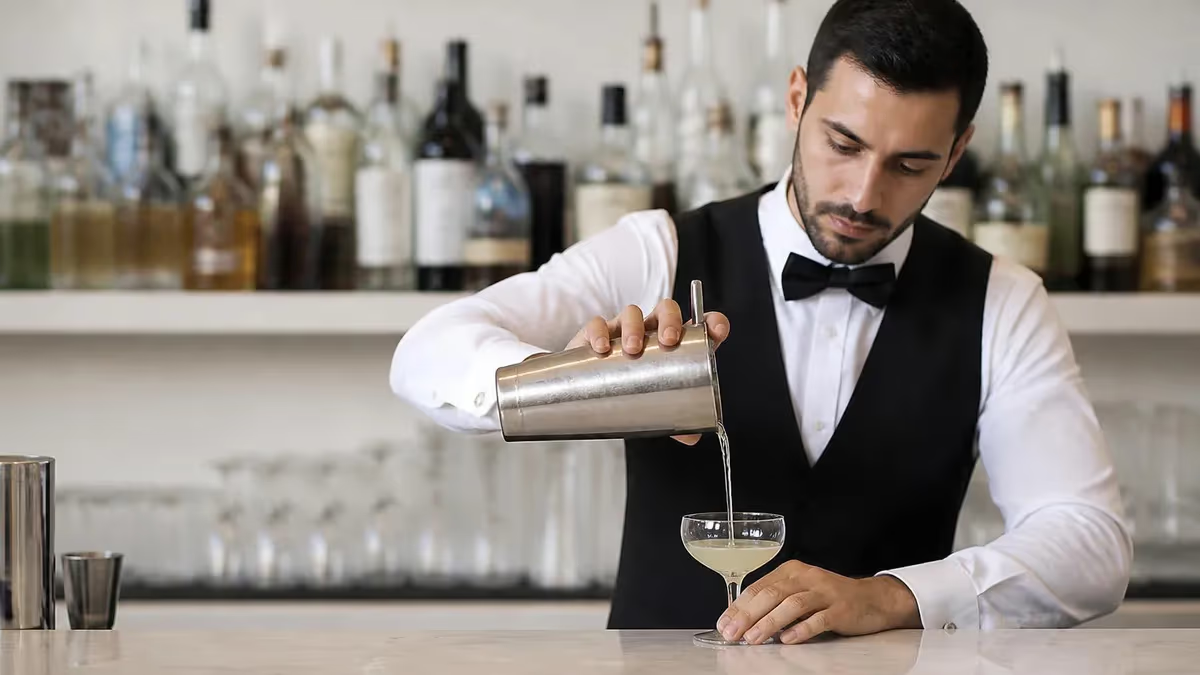
You want straight answers about bartending as a career, not glossy marketing copy. So this is the FAQ grab-bag we wish someone had handed us before we picked up a shaker — pay numbers from real markets, the licensing fine print that trips people up in Oregon, the cocktail list every bar owner expects you to nail, and the honest path in if you've never poured a drink for money before.
The job is part chemistry, part stagecraft, part risk management. A great Friday night earns you grocery money for two weeks. A bad scheduling decision costs you rent. We'll cover the questions that actually drive the search bar — male bartenders, names and nicknames for the trade, the "old-time" bartender persona, key skills, key responsibilities — and tie each one to something useful you can do this week.
Why trust this? Because the answers below pull from state regulator pages (Oregon's OLCC, New York's Department of Labor minimum-wage schedule), local pay-aggregator data for Las Vegas and Los Angeles, and the working consensus on what shows up on a real bar program test. Skim the headings, jump to what's bugging you, and bookmark the FAQ at the bottom for the questions you didn't know you had.
Quick framing before we go further. Bartending in 2026 is splitting into two markets: high-volume rooms where speed and crowd control win, and craft cocktail bars where technique and menu literacy win. Both pay well. Neither pays consistently. The pages you'll find linked below — our deeper guides on the bartender career ladder, on the bartender duties a manager checks for, and on how to become a bartender from a cold start — round out the practical playbook this FAQ touches on.
Bartender Career Snapshot
Mixology and bartending — same thing, or different jobs?
Short answer: they overlap, but they aren't identical. Mixology is the craft side — recipe development, technique, balance, ratios, bitters, ice programming, classic cocktail history. Bartending is the whole job — pouring fast, reading a room, running a tab, calling cabs, refusing service to a guest who's had too much, and cleaning the bar at 3 a.m. while your shoes stick to the floor.
Most working bartenders do plenty of mixology. Most pure mixologists also have to bartend somewhere to pay bills. The honest distinction is one of emphasis: a craft cocktail bar in Brooklyn weights mixology heavier than a high-volume sports bar in Vegas, which weights speed and crowd control heavier. Pick a path knowing the trade-offs in your daily pace and tip rhythm.
Here's the practical implication if you're choosing between the two paths. Craft cocktail rooms tend to pay tighter base wages with steady but smaller per-drink tips — the per-shift take is more predictable, the burnout rate lower, the career arc more about reputation and menu development. High-volume rooms pay big on weekend swings, less on weeknights, with night-to-night variance that can swing your monthly take by thirty percent. Neither is wrong. They're different jobs that share a uniform.
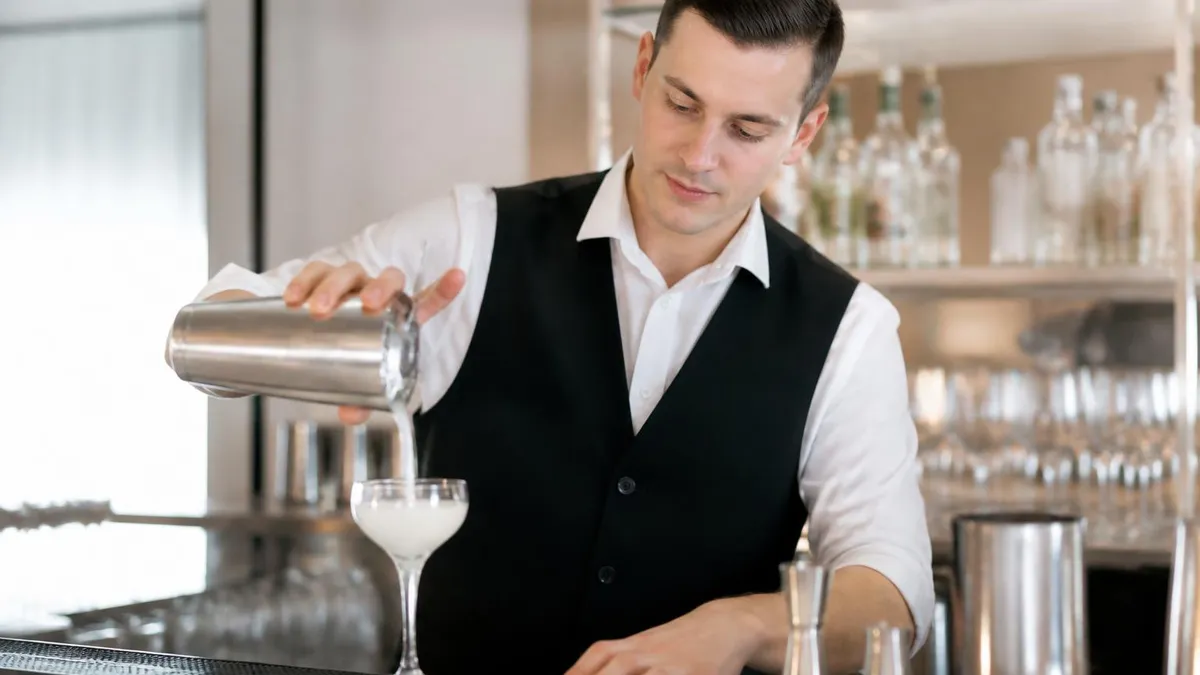
Bartender = generalist on the line. You make whatever's ordered, fast. Tickets win, drinks land, the bar stays clean. Mixologist = recipe builder. You write the cocktail menu, design specs, source obscure spirits, and care about whether a stirred drink lands at the right dilution.
In practice, most working pros are bartender-first with mixology skills layered on. Bar owners pay extra for craft chops, but they pay first for someone who can hold a Saturday rush without ticket times sliding.
If you're researching this as a career, here's the move: get hired on a busy bar, work the well for six to twelve months until your hands move without thinking, then start studying classics on your own time. Buy The Joy of Mixology by Gary Regan and Liquid Intelligence by Dave Arnold. Make every drink you read about. After a year, you'll be the person at the bar who knows the difference between a Sazerac and an Old Fashioned without Googling.
One more thing. The single biggest mistake aspiring bartenders make is studying mixology before they've ever worked a high-volume room. You can read every cocktail book on the market and still fall apart the first time you have nine tickets on the rail. Speed comes before craft. Get the reps. The classic-cocktail literacy you're chasing will come naturally as a side effect of working alongside bartenders who already have it.
Below is the list every working bartender should be able to build without a recipe card. We mean it. If a regular orders an Old Fashioned and you reach for the cocktail book, you've already told them you're new. Drill these nine until your hands move on autopilot — measure once for ratio, then build by sight from then on. We've laid out the spec, the technique, and the garnish so you can practice at home with cheap spirits before you ever set foot behind a paying bar.
9 Cocktails Every Bartender Has to Know
Bourbon or rye, sugar, Angostura bitters, orange peel. Stirred, served over a large rock. The benchmark — if a guest orders one, they're testing you.
- ▸2 oz bourbon or rye
- ▸1 sugar cube or 1 tsp simple
- ▸2 dashes Angostura
- ▸Stir 30 sec, strain over ice
- ▸Express orange peel
Equal parts gin, Campari, sweet vermouth. Stirred, served over a large ice cube with an orange twist. Bitter, complex, the cocktail that converts wine drinkers.
- ▸1 oz gin
- ▸1 oz Campari
- ▸1 oz sweet vermouth
- ▸Stir, strain over a rock
- ▸Orange twist garnish
Gin (or vodka) and dry vermouth. Stirred or shaken, very cold, lemon twist or olive. Knowing the right ratio for the guest is the whole game.
- ▸2.5 oz gin
- ▸0.5 oz dry vermouth
- ▸Stir 30 sec until ice-cold
- ▸Strain into chilled coupe
- ▸Garnish to order
Tequila, lime, orange liqueur. Shaken with ice, salt rim if requested. Whether on the rocks or up, the ratio is what guests remember.
- ▸2 oz blanco tequila
- ▸1 oz fresh lime juice
- ▸0.75 oz Cointreau or triple sec
- ▸Shake hard, strain
- ▸Salt rim if asked
White rum, lime, sugar, mint, soda. Muddled gently, built over crushed ice. A pain at high volume — get fast at it.
- ▸2 oz white rum
- ▸0.75 oz lime juice
- ▸0.75 oz simple syrup
- ▸8–10 mint leaves, slapped
- ▸Top with soda water
Rye whiskey, sweet vermouth, Angostura bitters. Stirred, up in a coupe, brandied cherry. The drink that proves you respect the classics.
- ▸2 oz rye
- ▸1 oz sweet vermouth
- ▸2 dashes Angostura
- ▸Stir 30 sec, strain up
- ▸Luxardo cherry garnish
Bourbon, lemon, sugar, optional egg white. Shaken hard, served up or on the rocks. The egg-white version is your tip generator.
- ▸2 oz bourbon
- ▸0.75 oz lemon juice
- ▸0.5 oz simple
- ▸Optional: 1 egg white
- ▸Dry shake then wet shake
White rum, lime, sugar. Shaken, served up. The simplest cocktail to make badly — the test of your fresh juice and your shake.
- ▸2 oz white rum
- ▸1 oz lime juice
- ▸0.75 oz simple
- ▸Shake hard, 12+ seconds
- ▸Strain into coupe, no garnish
Vodka, lime, ginger beer in a copper mug. Built, not shaken. Brunches and patios run on this drink.
- ▸2 oz vodka
- ▸0.5 oz lime juice
- ▸Top with ginger beer
- ▸Build over crushed ice
- ▸Lime wheel and mint sprig
How do you become a bartender with no experience?
The barback path. That's the honest answer. You apply for barback jobs — the support role behind the bar — at the busiest places in town, you keep ice topped up and glasses stocked for six to twelve months, and you watch every move the senior bartenders make. When someone quits or gets fired, you're the obvious internal promotion because you already know the menu, the regulars, and where the green chartreuse lives.
Skip the $500 bartending school unless your state requires one. Most don't. What employers actually want is proof you can survive a Friday rush, not a certificate from a strip-mall program. The certificates that do matter are responsible-service ones — TIPS, ServSafe Alcohol, your state-specific permit — and those run $20–$60 and take an afternoon online. Our deeper write-up on the various bartender license requirements by state walks through which permit you actually need.
One more thing about the no-experience path. Apply at multiple bars in the same week, not one at a time. The hospitality industry runs on turnover; you'll get a callback faster than you'd guess if your resume reads "available nights and weekends, can start this week." Show up in person between 2 and 4 p.m. when the bar is between shifts and the manager has time to talk.
Bring a printed resume even if you applied online. The first hire of your career is the hardest one — every subsequent job comes through someone you worked with at the last place.

Bartender Pay by Market
New York runs a tip-credit system that confuses everyone. The state's regulator sets a cash wage employers must pay plus a permitted tip credit the employer can apply against the full minimum wage — but only if tips actually bring the worker up to the minimum.
As of the 2024 fall update, the tipped-food-service minimum cash wage in most of New York State sits around $10.65/hr for food service workers, with a $5.35 tip credit, totaling the $16 statewide minimum. In NYC, Long Island, and Westchester, the full minimum is $16.50, and the tipped cash wage scales with that ceiling.
Real earnings: a competent bartender in a mid-volume Manhattan bar walks home with $250–$500 on a strong night. The cash wage is rounding error — your tips are the job.
What about Oregon — OLCC rules for bartenders?
Oregon takes alcohol service seriously. Anyone serving or mixing alcohol for on-premise consumption in Oregon must hold an OLCC Service Permit — the Oregon Liquor and Cannabis Commission's mandatory permit for servers. You apply through the OLCC's online portal, complete an approved alcohol-server education course (about five hours), pass a 50-question exam, and pay a small fee. The permit is good for five years.
The rules apply equally whether you're slinging beer in a Portland brewery or stirring Manhattans in a downtown craft bar. Common compliance points OLCC inspectors actually check: age verification with valid ID for any guest who appears under 26, the prohibition on serving visibly intoxicated patrons, no service to minors even by relatives present at the table, and required posting of OLCC information in employee areas. New servers get 45 days from their hire date to obtain the permit — work before that and both you and the employer take the hit.
The fines are not trivial. OLCC violations carry both employee-level and license-level consequences. A first offense for serving a minor can suspend or revoke the bar's license. Repeated violations can permanently bar an individual from holding a service permit in Oregon. The trade-off the regulator is asking you to make is simple: be the person who asks for ID even when the guest is clearly older, and you'll never run into trouble. The thirty seconds of "I'm sorry, can I see that one more time?" is cheaper than the alternative.
You can start working as a bartender or server in Oregon before your OLCC Service Permit is issued — but only for 45 days from your hire date, and only if you've registered with the OLCC. Miss the 45-day window and the OLCC can suspend your employer's license and fine you personally. The permit costs roughly $23 plus the $13 course fee through an approved provider, and it transfers between employers within Oregon — so once you have it, you're set for five years statewide.
Key responsibilities and skills bar owners actually hire for
When a bar manager screens applicants, the resume gets a 12-second skim. What they're looking for: did you survive a high-volume room before, do you have the responsible-service certs the state requires, and can you name three classics without stuttering. Everything else is interview material. Here's the working list of responsibilities a competent bartender owns from shift open to shift close — print it, tape it to the inside of your locker for the first month, and stop needing it by the end of week three.
One framing note before the list. Bar owners hire for reliability first and skill second. A bartender who shows up on time every shift, doesn't drink while working, and tells the truth about a busted register at close is worth more than a virtuoso mixologist who calls out twice a month. Internalize that and you'll outpace half the applicants who think tricks behind the bar matter more than basic professional behavior.
A second note that applies everywhere from a dive bar to a Michelin-starred cocktail program: the bar is a team. Barbacks, servers, security, the kitchen — all of them either make your shift easier or harder, and they remember the bartenders who help them. The fastest bartender in any room is the one whose barback already has the limes cut, whose server already has the round on the tray, and whose dishwasher likes them. That's not a personality test; it's the actual mechanic of how a fast bar works.

Bartender Key Responsibilities (Open-to-Close)
- ✓Open the bar: count the till, verify back-bar inventory, refresh garnishes, set up service well, check ice and beer keg levels
- ✓Mix and serve drinks accurately, balancing speed against quality without short-pouring or over-pouring
- ✓Verify ID for any guest who appears under 26 — a habit, not a judgment call
- ✓Refuse service to visibly intoxicated guests and document the refusal if there's any pushback
- ✓Run tabs, process credit cards and cash, split checks without making it a guest's problem
- ✓Manage a multi-seat bar so no guest waits more than 90 seconds without acknowledgment
- ✓Maintain bar cleanliness: wipe-down every 15 minutes, replace bar mats, change cutting boards, clean speed rails after each shift
- ✓Handle complaints — wrong drink, slow service, broken glass — without escalating to a manager unless legally required
- ✓Cash out the till at close, reconcile credit-card totals, prep deposit, restock for the next shift
- ✓Coach barbacks and newer staff in your downtime so the whole bar gets faster, not just you
So what does a great bartender actually look like?
It's a stack of skills, not a single talent. Speed without slop. Memory for regulars' drinks and their names. Math that adds tabs in your head while pouring three pints. The ability to read whether a guest wants conversation or to be left alone. Most of this isn't trainable in a classroom — it's reps. The skills below are the ones every bar manager checks for in the first month of a new hire, and the ones that separate a bartender who'll still be in the industry at 40 from one who'll be selling insurance by 28.
Worth being honest about the trade-offs too. The pros and cons list is real. Knees, backs, sleep schedules, and relationships all take a hit. Read it carefully before you commit a year of your life — and then read it again if you're considering jumping from a 9-to-5 because "bartending sounds fun." It can be a great career; it's also a job that grinds people down if they don't manage the lifestyle around it.
Bartender Career Pros and Cons
- +Cash earnings on weekend shifts beat many salaried entry-level jobs hour-for-hour
- +Flexible schedule — most bartenders trade shifts and pick up extra nights easily
- +Genuine craft growth — every menu development cycle teaches you something new
- +Career mobility: bartender to head bartender to bar manager to beverage director is a real ladder
- +Skills transfer globally — a working bartender from NYC can get hired in London or Sydney in a week
- +Daily payouts — most rooms tip out in cash at end of shift, no two-week wait
- −Late nights, weekends, holidays — your social calendar is everyone else's working week
- −Physical wear: standing 8–10 hours, lifting kegs, knife cuts, repetitive shoulder strain
- −Tip income is volatile — slow Tuesdays and dead winters can halve your monthly take
- −Few benefits in independent bars — no health insurance, no 401k, no PTO unless unionized
- −Career-shortening for some — knees and lower back at 50 don't tolerate what they did at 25
- −Alcohol exposure makes sober living harder; the industry has high rates of substance abuse
Pros and Cons at a Glance
| Pros | Cons |
|---|---|
| Cash earnings on weekend shifts beat many salaried entry-level jobs hour-for-hour | Late nights, weekends, holidays — your social calendar is everyone else's working week |
| Flexible schedule — most bartenders trade shifts and pick up extra nights easily | Tip income is volatile — slow Tuesdays and dead winters can halve your monthly take |
| Genuine craft growth — every menu development cycle teaches you something new | Alcohol exposure makes sober living harder; the industry has high rates of substance abuse |
What's an "old-time" bartender — and is that a real career?
The "old-time bartender" is a persona and a tradition more than a job title. Think mustache, vest, garters on the sleeves, polished bar, a guy who calls you "friend" and means it. The persona was forged in the late-1800s American saloons — Jerry Thomas wrote the first bartending manual in 1862 — and the craft cocktail revival from 2005 onward brought the aesthetic back hard. Bars like Death & Co in New York or The Aviary in Chicago are modern descendants of that lineage.
As a career: yes, it's real and it pays well in the right rooms. Craft cocktail bars hire for technique, classic-cocktail literacy, and the kind of unhurried hospitality that lets a guest feel like they're the only one at the bar. The drinks are slower, the tickets are smaller, but the per-drink tip is higher and the burnout rate is lower than high-volume work. Bartenders nicknamed "the bar chef" or "the mixologist" usually came up this lane.
If that's the lane you want, here's the playbook. Read about the pre-Prohibition era cocktails — punch, fix, daisy, sour, julep. Memorize Jerry Thomas's original 1862 specifications. Source the off-brand bitters lines (Bittermens, Bittercube, Scrappy's). Show up to one of the bars in your city that already runs craft cocktail programs and ask for a stage — an unpaid trail shift where you wash glassware and watch. After a year of that on top of a normal bartender job, you'll have the chops to interview for a craft-cocktail position with a straight face.
One more thing: names, nicknames, and the language of the bar
Bartender, mixologist, bar chef, barman, barkeep, bar tender (two words, mostly archaic), publican (British, technically the owner), saloonkeeper (American historical). On a working line you'll also hear "the boss," "the captain," and the irreverent ones — "doctor," "padre," "the wizard" — earned through years behind the same stick. Male bartenders historically dominated the trade through the saloon era, but women have run bars in America since the 1700s tavern keepers, and the industry today is closer to even than most outsiders assume.
The naming overlaps with reputation. A "bar chef" is the one who writes the menu. A "regular's bartender" is the one whose guests follow them when they switch jobs. A "service bartender" works behind a wait station rather than facing guests directly — common in big restaurants.
None of these are titles you put on a business card; they're how the industry talks about you to other people in the industry, and that talk is what gets you the next job. Reputation in this trade is built one shift at a time, and it travels faster than any resume you'll ever submit, which is both a warning and an opportunity.
Pick a path. Get the responsible-service permit your state requires. Apply to busy bars, take the barback offer if it comes, and learn the nine cocktails up top until you can build them in your sleep. The career rewards reps over credentials. We've got more answers below for the questions we didn't have room to cover up top — eight common ones, written for the people who searched the way you just did.
Bartender Questions and Answers
About the Author
Executive Chef & Culinary Arts Certification Educator
Culinary Institute of AmericaChef Marco Bellini is a Certified Executive Chef and graduate of the Culinary Institute of America with over 20 years of professional kitchen experience in Michelin-recognized restaurants. He teaches culinary arts certification, food safety, and hospitality exam preparation, having guided thousands of culinary students through their ServSafe, ProStart, and professional chef certifications.
Join the Discussion
Connect with other students preparing for this exam. Share tips, ask questions, and get advice from people who have been there.
View discussion (7 replies)