
Bartending Services for Weddings and Events: 2026 October Hire Guide
Hire bartending services for weddings and events: cost, staff ratios, insurance, and city guides for Atlanta, LA, Miami, OKC, and Austin. 🏆
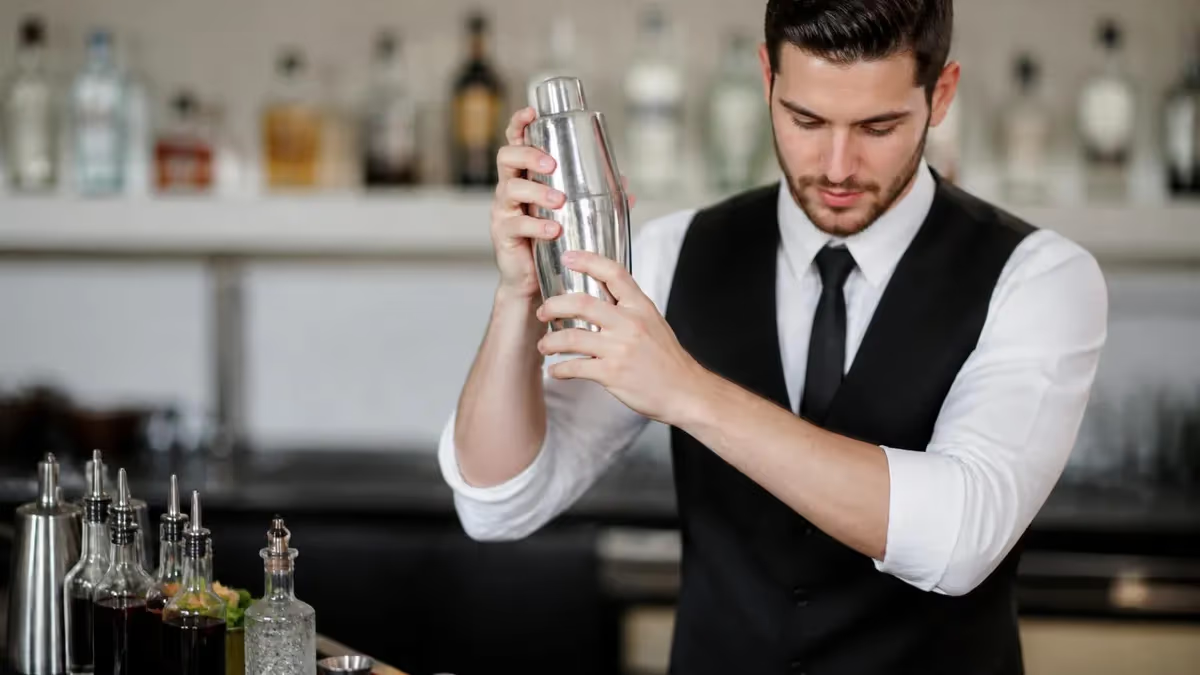
So you booked the venue, you locked in the caterer, and somewhere between the seating chart and the second-cousin drama, you realized nobody is pouring drinks. That is where bartending services step in. A mobile bartender (or a team of them) shows up with shakers, jiggers, ice, glassware, and the kind of calm energy a tipsy uncle desperately needs around 9 p.m.
Most couples and event planners hire one bartender per 50 guests for a cocktail-style reception, or one per 75 for beer-and-wine-only events. Expect to pay $250 to $600 per bartender for a standard four-to-six-hour block, plus a setup fee and (sometimes) a gratuity line item. Skip the up-front quote and you will be the one running to the gas station for more ice at 8 p.m. — trust us, it happens.
This guide walks through every variable that moves the price: staff-to-guest ratios, what is included, insurance and ABC licensing, and city-by-city pricing for Atlanta, Los Angeles, Miami, Oklahoma City, and Austin. We will also cover the seven questions you should always ask before signing a contract. Whether you are planning a 40-person backyard rehearsal or a 300-guest gala, the same fundamentals apply.
Quick note for the DIY-curious: a friend with a steady pour is great, but they are not insured. If a guest slips on a spilled mojito or drives home over the limit, your homeowner policy may not cover what comes next. Professional bartending services bring liquor liability insurance to the table — it is the single biggest reason to hire pros over volunteers.
Bartending Services by the Numbers
What Bartending Services for Weddings Actually Cost
The number nobody wants to say out loud first: plan on $35 to $75 per hour per bartender, with a four-hour minimum almost everywhere. For a 100-person wedding running a five-hour reception, two bartenders at $50/hour each lands you at $500. Throw in a $100 setup fee and a 20% gratuity and the all-in cost for bartending services for weddings sits around $720.
Now, that is the modest end. Hire bartenders in a downtown high-rise with elevator load-in restrictions, build a craft cocktail menu with six signature drinks, and require uniforms — suddenly you are at $1,200. Destination weddings and resort venues often charge a 20-25% service fee on top of the labor rate, so always ask whether the quote is gross or net.
What drives the price up:
- Headcount. Hiring a bartender for a wedding with 250 guests means at least four staff, sometimes five.
- Travel. Anything beyond 30 miles from the bartender's home base usually triggers a mileage surcharge.
- Custom menu. Three signature cocktails are standard; six pushes you into a tasting-session add-on ($75-$150).
- Glassware rental. Real glass instead of plastic adds $1.50-$3 per guest.
- Bar build. A mobile bar setup (think rustic wood or LED-lit acrylic) costs $200-$600 to rent.
Cost for bartender at wedding can also drop if you are smart about it. Choose a beer-wine-and-one-signature setup, host the event on a Sunday or Friday, and provide your own alcohol — three moves that can shave 25-40% off the final invoice. Most reputable bartending services for events offer a BYOB-friendly package where you supply the booze and they bring everything else.
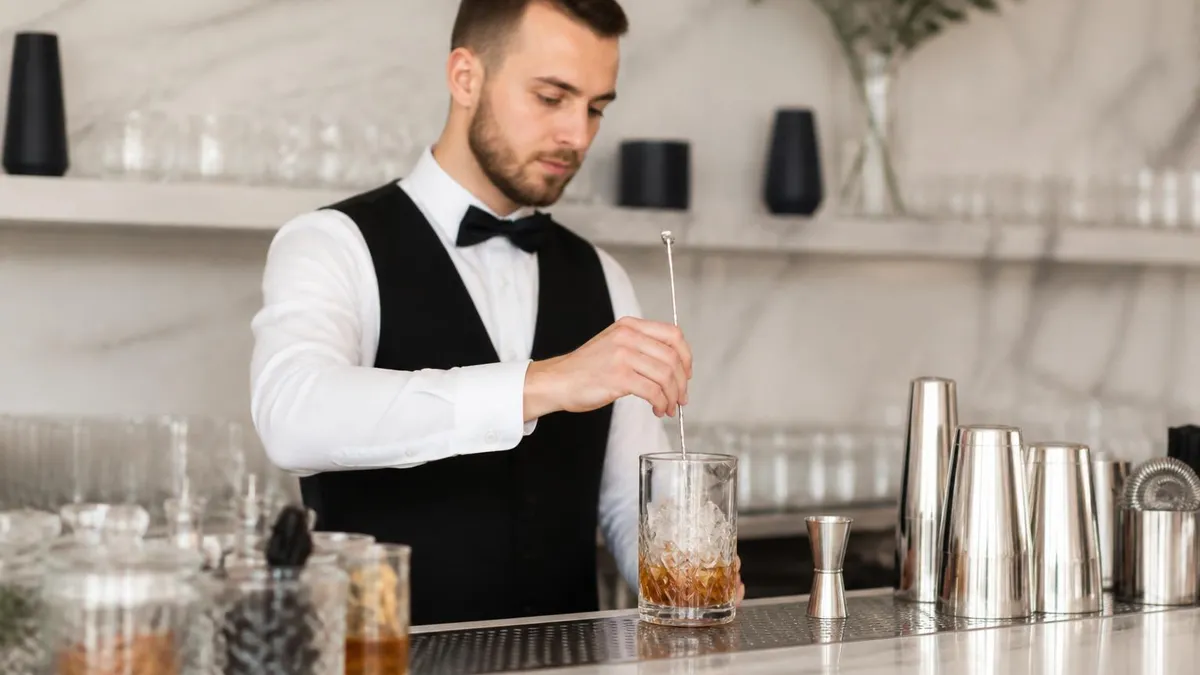
Rule of thumb: Take your guest count, divide by 50, and round up. That is how many bartenders you need for cocktail-style service. For a 150-guest wedding, that means three pros minimum — not two, even if your venue swears two is enough.
Always confirm in writing: (1) total staff count, (2) arrival and end times, (3) what is included (mixers, ice, garnishes, glassware), (4) liquor liability certificate, and (5) tip policy. A vague verbal yes from a vendor at a wedding expo is not a contract.
How Many Bartenders for 100 Guests (and Other Ratios)
The classic question — how many bartenders for 100 guests? — has a classic answer: two for a full bar, one or two for beer-and-wine. Anything less and your guests will be standing in line during the toasts, which is when the wait time gets really noticed (and complained about on the review you leave next week).
Here is the cheat sheet most professional bartending services use internally:
- Up to 50 guests: 1 bartender, full bar.
- 51-100 guests: 2 bartenders, full bar.
- 101-150 guests: 3 bartenders, full bar.
- 151-225 guests: 4 bartenders, full bar.
- 226-300 guests: 5 bartenders plus 1 barback.
Specialty cocktails change the math. A six-drink menu with shaken-and-strained builds slows each pour from 20 seconds to roughly 90 seconds. Translation: if you are doing craft cocktails, add one extra bartender to your headcount — full stop.
What is included in a standard package varies wildly between vendors, which is why you ask. Most bartending services for events include shakers, jiggers, strainers, muddlers, opener, cutting board, knives, ice scoop, drink dispensers, two cambros for ice, basic garnishes (lemon, lime, cherries, olives), straws, napkins, and a tip jar. What is almost never included: the alcohol itself, mixers, glassware, ice (the actual product), or a bar surface. Confirm each line on the contract — assumptions about who brings what are how 9 p.m. emergencies start.
Common Bartending Service Packages
Cheapest tier. One bartender per 75 guests, simple setup.
- ▸Per-bartender rate: $35-$50/hr
- ▸Ice, opener, glassware optional
- ▸Best for casual receptions and corporate happy hours
- ▸Setup time: 30 minutes
Most popular weddings tier. Two signature drinks named for the couple.
- ▸Per-bartender rate: $45-$60/hr
- ▸Includes recipe consultation
- ▸1 bartender per 50-60 guests
- ▸Mixers and garnishes included
Top-shelf liquor, mixers, full cocktail menu. Country-club standard.
- ▸Per-bartender rate: $55-$75/hr
- ▸1 bartender per 50 guests minimum
- ▸Premium garnish kit
- ▸Glassware add-on common
Six-plus signature drinks, fresh-squeezed everything, fancy ice.
- ▸Per-bartender rate: $75-$100/hr
- ▸Tasting session required ($75-$150)
- ▸1 bartender per 40 guests
- ▸Often includes mobile bar rental
Insurance and Licensing: The Stuff Nobody Reads
Liquor liability insurance is the single most important thing you confirm before you hire bartenders. If a guest leaves your event drunk, gets into a wreck, and sues, the legal trail will eventually land at whoever served them. Without proper coverage, that bill could land on you as the host. Reputable bartending services carry $1-2 million in liquor liability and general liability, and they will email you a Certificate of Insurance (COI) on request. If a vendor cannot produce a COI in 24 hours, walk away.
State licensing is the other big one. Every U.S. state regulates alcohol service through its Alcoholic Beverage Control (ABC) authority — though it goes by different names: ABC in California and Virginia, TABC in Texas, ATC in Indiana. A professional mobile bartender either holds the state's individual server certification (think TIPS, ServSafe Alcohol, or a state-issued permit) or works under a catering license that covers off-site alcohol service. Verifying that the person pouring is actually bartender license is non-negotiable.
One quirky thing to know: in many states (including Texas, Georgia, Florida, and Oklahoma) the bartender cannot legally sell alcohol at a private event. They can serve it, but the host owns it. If a vendor offers to sell drinks directly to guests at your wedding, that is usually a sign they do not have the right permit for it. Stick with the BYOB-style arrangement where you buy the alcohol and the bartending services for weddings handle service, ice, mixers, and the bar build.
Also worth asking: does the bartender carry workers' comp? If they slip carrying a case of champagne, you do not want that ambulance ride coming out of your pocket. A real mobile bartending company has all three — liability, liquor liability, and workers' comp — and will share certificates without hesitation.
City Spotlight: Bartending Services Near You
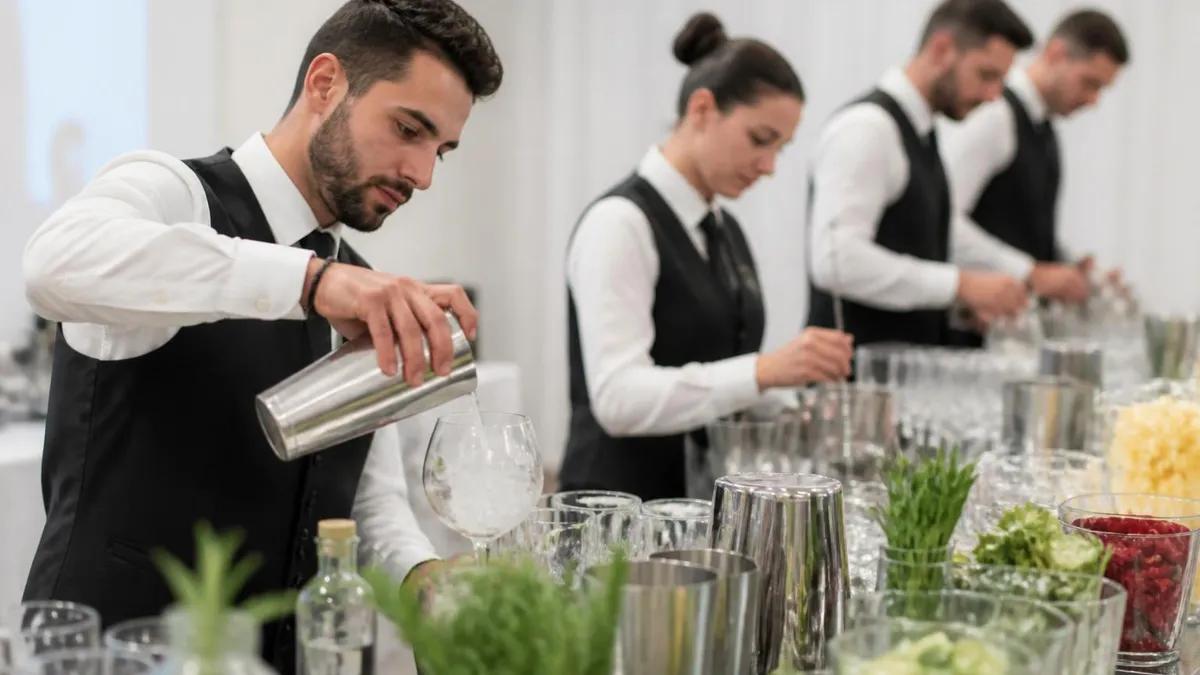
Atlanta's wedding market runs hot from March through November, and bartending services Atlanta vendors book up six to nine months out for Saturdays. Expect to pay $45-$65 per hour per bartender, slightly above the national average. Buckhead and Inman Park venues often require Certificate of Insurance for $2 million minimum.
Georgia is a control state for distilled spirits sold in counties that have voted dry, but the metro Atlanta area is wide-open. Most mobile bartenders here hold the state's MAST (Mandatory Alcohol Server Training) certificate — ask for the card.
Private Events, Corporate Parties, and Everything Else
Bartending services for weddings get all the press, but private parties are the bread and butter of most mobile bartending companies. Birthday parties, graduations, retirement bashes, holiday office parties — the same staff-to-guest math applies, but the price often runs 10-20% lower because the events are shorter (3-4 hours instead of 5-6).
To hire bartender for private event work, expect a flat-rate package: $400-$700 total for one bartender, three to four hours, including setup and a basic garnish kit. Many vendors offer a "home party" tier specifically for residential clients — it is the same skill set, just without the venue logistics.
Corporate gigs are a different animal. The company pays the invoice, drinks are usually free for guests, and the bartender's role tilts toward managing pace (no one wants the VP of sales doing tequila shots at 6:30 p.m.). Most pros charge a flat $500-$800 for a three-hour corporate happy hour, with a 1:75 ratio because beer-and-wine dominates.
Three settings where it pays to spend a little extra:
- Outdoor events — wind, sun, and bugs. A pro brings a portable umbrella and a fly fan; an amateur doesn't.
- Late-night runs (after 11 p.m.) — overtime rates kick in, but a tired volunteer pours sloppy and over-serves.
- Mixed-age events — when you have minors present, the bartender becomes your front line of compliance. Worth every dollar.
Do not assume the venue's in-house bartender is licensed for your specific event. Many venue bartenders only hold a state server card valid at that property. If you move drinks to an outdoor patio or auxiliary tent, the venue's coverage may not follow. Always confirm the bartender's individual certification and ask whether your event location is covered by their employer's COI.
Also: never pay 100% up front. Industry standard is 25-50% deposit at booking, balance due 7-14 days before the event. A vendor demanding full payment at signing is a yellow flag worth investigating.
Seven Questions to Ask Before You Sign
You found a vendor. The quote looks decent. Before the deposit clears, run through the questions below. They are the difference between a flawless reception and a 2 a.m. text from your venue manager about "a small issue with the ice supply."
The seven non-negotiables:
- Can I see your liquor liability COI naming our venue as additional insured? If they hesitate, walk away.
- How many bartenders will be on-site, and what is their experience level? A two-year-experienced lead is fine; a six-month rookie running the whole bar is not.
- What exactly is included in the price? Get a line-by-line list. Mixers? Ice? Garnishes? Tip jar? Each one is an add-on if not specified.
- What is your overtime rate, and when does it start? Usually $25-$50 per bartender per 30-minute block after the contracted end time.
- Do you have a backup bartender if someone gets sick? Reputable services for events keep a roster; one-person operations cannot.
- What is your cancellation and rescheduling policy? COVID taught us this matters. Look for refund tiers based on lead time.
- How do you handle visibly intoxicated guests? The right answer involves slowing service, swapping in water, and looping in event coordinators — not just cutting people off cold.
One bonus tip: ask for two recent client references and actually call them. Online reviews are gamed; a five-minute phone call with last month's bride tells you everything you need to know about how the bartender handled the wedding-day curveballs.
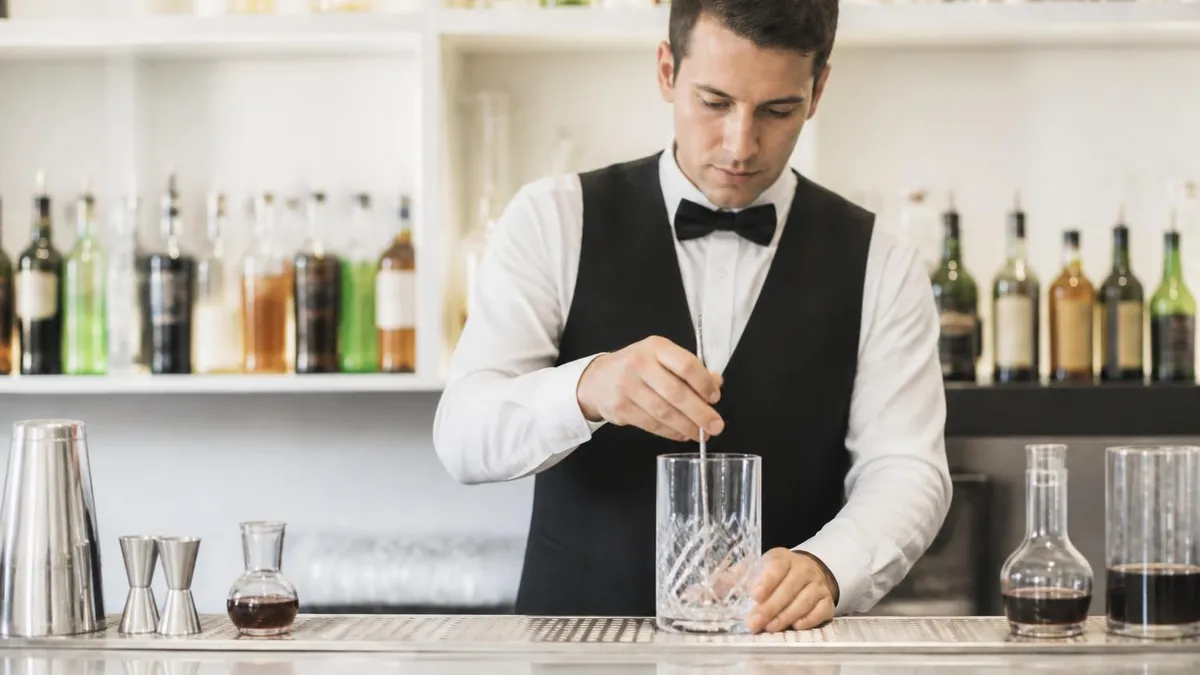
Pre-Event Booking Checklist
- ✓Confirm guest count and finalize staff ratio (1 per 50 for full bar)
- ✓Request and verify Certificate of Insurance ($1M-$2M minimum)
- ✓Confirm bartender certifications (TIPS, RBS, TABC, MAST as applicable)
- ✓Get itemized quote: labor, setup fee, gratuity, travel, equipment
- ✓Decide on alcohol source: vendor supplies vs BYOB
- ✓Confirm what equipment is included (shakers, ice, glassware, garnishes)
- ✓Lock in arrival, setup, service, and breakdown times in writing
- ✓Pay deposit (25-50%) and schedule final-payment date
- ✓Send venue's load-in instructions and parking info two weeks out
- ✓Confirm headcount 7 days before; adjust staff if needed
DIY Bartender vs. Hiring a Pro
The DIY route looks tempting on paper. You have a charismatic cousin who watched a YouTube tutorial last week, and he says he's got it covered. Save a thousand bucks, right? Maybe.
The reality: a trained bartender pours roughly 40-50 drinks per hour, manages a tip jar without forgetting whose card is whose, handles a guest who has clearly had enough, and never — ever — pulls a sneaky shot for themselves on the clock. Your cousin will do approximately none of those things consistently. He will also drink for free, which adds up.
Where DIY can actually work: small backyard parties under 25 guests, beer-and-wine only, with kegs and box wine doing the heavy lifting. At that scale you don't need a pro — you need a friend with a strong wrist and a smile.
Where DIY almost always fails:
- Anything with mixed-age guests (compliance risk).
- Weddings over 50 people (you'll have a six-person line by drink #2).
- Cocktail menus with three or more drinks.
- Outdoor events with no nearby water source.
- Any event where alcohol is being served to strangers.
Need to brush up on the fundamentals yourself? Check out the cost of a bartending school — a one-week intensive runs $400-$700 and covers TIPS or ServSafe Alcohol certification, which is enough for very small private gigs.
Hiring Bartending Services: Pros and Cons
- +Liquor liability insurance protects the host from lawsuits
- +Certified servers know when (and how) to cut someone off
- +Pro pace: 40-50 drinks per hour per bartender
- +All equipment included — no last-minute shaker hunt
- +Built-in backup if a staffer calls in sick
- +Handles tip jar, restocking, and bar breakdown cleanly
- +Frees up the host to actually enjoy the event
- −Costs $250-$600 per bartender on top of alcohol budget
- −Top vendors book 6-9 months out for peak season
- −20% gratuity often added on the invoice
- −Some vendors require minimum 4-hour booking
- −Custom cocktails add tasting fees ($75-$150)
- −Travel fees apply for venues 30+ miles out
Day-of Logistics That Save Your Sanity
Even with the best bartending services on the planet, day-of details can unravel. A few small moves on your end keep everyone happy.
First, designate a single point of contact — not the bride, not the groom. Pick a coordinator, planner, or in-law with a level head. The bartender should have one number to call when ice runs low or the keg blows.
Second, position the bar away from the dance floor entrance. Bottleneck-style placement causes lines that snake into the photo zone. The pros will suggest a corner setup with two clear approach lanes.
Third, brief the bartender on guests with conditions. Pregnant guests, people in recovery, designated drivers, kids' tables — five minutes of context saves five awkward conversations. A professional bartender-for-hire will keep all of that quiet and seamless.
Fourth, don't forget the bartender's basics: a meal break, a stocked bartender kit on-hand, a chair if you're booking five-plus hours, and a place to keep their bag. They will work harder for you, full stop.
Lastly, tip in cash at the end of the night. It is faster to settle and (in most states) doesn't go through tax until the next quarter. Twenty percent is standard for excellent service; 25% if they handled a curveball without breaking stride.
Final Word Before You Book
Bartending services are not a place to cheap out. The savings rarely beat the cost of one over-served guest, one missing certificate, or one ruined photo op because nobody could get to the bar. For a 100-guest wedding, the all-in budget of $700-$1,200 for two bartenders is one of the most predictable, lowest-stress line items on the whole event spreadsheet.
Three things to remember as you finalize:
- Match the package to the menu — beer-and-wine only doesn't need a craft cocktail tier.
- Lock the COI before the deposit, not after.
- Get every inclusion in writing, even the stupid ones ("napkins," "ice scoop," "backup garnish").
If you take only one thing from this guide: a $50 hourly bartender with $2 million in liability insurance is worth ten times your nephew with a TikTok mixology obsession. Plan it like a contract, treat the bartender like a partner, and the night runs itself.
One more thing — and this is the kind of detail your photographer will thank you for — leave room behind the bar for a quick photo. The bartender pose with a flame-garnished old fashioned is now an obligatory wedding shot. You're welcome.
Bartender Questions and Answers
About the Author

Executive Chef & Culinary Arts Certification Educator
Culinary Institute of AmericaChef Marco Bellini is a Certified Executive Chef and graduate of the Culinary Institute of America with over 20 years of professional kitchen experience in Michelin-recognized restaurants. He teaches culinary arts certification, food safety, and hospitality exam preparation, having guided thousands of culinary students through their ServSafe, ProStart, and professional chef certifications.
Join the Discussion
Connect with other students preparing for this exam. Share tips, ask questions, and get advice from people who have been there.
View discussion (7 replies)