
Mobile Bartending: How to Start, License, and Grow Your Business 2026 September
Complete guide to mobile bartending: licensing requirements, startup costs, equipment, event types, pricing, and how to build a profitable mobile bar 🔎
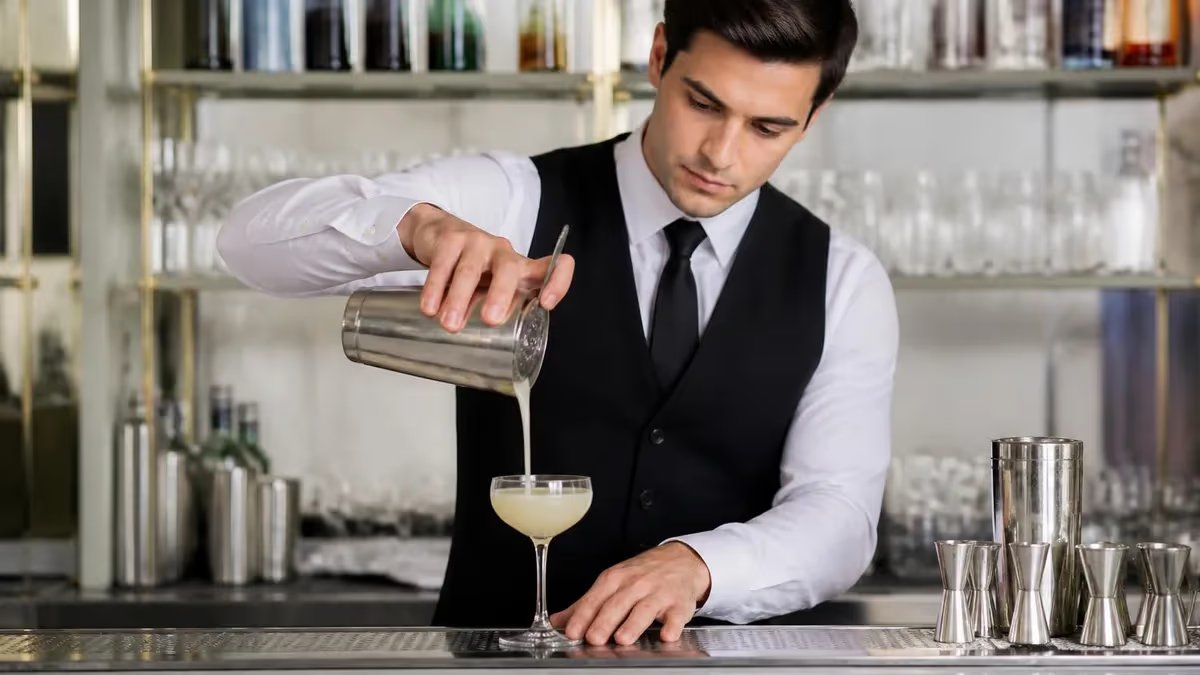
Mobile bartending is a service business model where a bartender or bartending team brings professional bar service to private events, corporate functions, weddings, and festivals rather than working from a fixed venue. Instead of working behind a permanent bar at a restaurant or nightclub, a mobile bartender arrives with their own equipment — portable bar setup, glassware, ice, mixers, and spirits — and delivers a full cocktail service experience at the client's chosen location.
The business model has grown substantially over the past decade as consumers have increased spending on personalized, experiential celebrations and as event venues have become increasingly open to allowing outside bar vendors.
The appeal of mobile bartending as a career or side business is significant: low fixed overhead compared to a physical bar, flexible scheduling, premium event pricing, and the creative satisfaction of crafting bespoke cocktail menus for different clients. Experienced bartenders who have worked bar programs at hotels, restaurants, and venues increasingly transition to mobile work as they build a client base and reputation, trading the fixed-schedule constraints of venue employment for the autonomy of running their own business.
Understanding the full licensing and business requirements before you start is essential — operating without proper licensing is not just a legal risk, it is a professional reputation risk that can end a mobile bartending business before it gains momentum. Starting with your bartending certification is the foundation of credibility that mobile clients and event venues look for.
The events industry supports mobile bartending particularly well because event hosts are willing to pay premium prices for services that create memorable guest experiences. A professional cocktail bar at a wedding or corporate party signals status, attention to detail, and hospitality — values that event hosts actively want to project to their guests. This cultural position allows mobile bartenders to charge rates that far exceed their hourly value in a venue employment context.
A mobile bartender who books 6 events per month at an average of $800 per event gross $57,600 annually from part-time work, before accounting for tips, which at properly managed premium events can add $100-$300 per event. The math of mobile bartending, once established, is substantially more favorable than the math of venue-based employment for experienced bartenders who are ready to operate independently.
Mobile Bartending Business Checklist
- Complete a bartending course or apprenticeship for foundational skills
- Obtain a responsible beverage service (RBS) or TIPS certification — required in most states
- Check your state and local alcohol beverage control (ABC) requirements for mobile/catering liquor licenses
- Register your business (LLC or sole proprietorship)
- Obtain general liability and liquor liability insurance
- Purchase portable bar equipment (bar unit, tools, glassware, coolers)
- Build a signature cocktail menu and calculate per-person pricing
- Create a professional contract template covering liability, minimums, and cancellation
- List on event vendor platforms and build social media presence
Licensing is the most legally complex aspect of mobile bartending and varies significantly by state and municipality. In most US states, the host of a private event is responsible for obtaining a temporary or special event liquor license for gatherings where alcohol is served. In this model, the mobile bartender is hired as a service provider using the host's license — the bartender does not need their own liquor license, but must hold a responsible beverage service (RBS) certification, which is required by law in California, Oregon, and several other states, and is a best practice everywhere else.
In contrast, some states require mobile bartenders who supply spirits (not just service) to hold a catering liquor license, a caterer's license with liquor endorsement, or a retail liquor permit. States with particularly complex mobile bartending regulations include Texas, Florida, and New York — research your specific state's ABC board requirements thoroughly before operating.
Responsible beverage service (RBS) training teaches bartenders to identify signs of intoxication, calculate blood alcohol content based on drinks served, recognize fake IDs, understand dram shop liability, and refuse service appropriately. TIPS (Training for Intervention ProcedureS) and ServSafe Alcohol are the two most widely recognized RBS certification programs nationally.
Completing RBS certification before your first event is not just a legal protection — it is a professional signal to clients that you take safety seriously. Many event venues and professional event planners specifically require RBS-certified bartenders for their events, making it a competitive differentiator as well as a compliance requirement. Full licensing details for bartenders are covered in the bartending license guide.
Liquor liability insurance is mandatory for any professional mobile bartender. Standard general liability insurance covers physical property damage and personal injury at events, but it explicitly excludes alcohol-related incidents. Liquor liability insurance (also called host liquor liability or dram shop insurance) specifically covers claims arising from alcohol service — a guest who becomes intoxicated and causes an accident after leaving your event, property damage caused by an intoxicated guest, or claims that you served alcohol to a minor.
Annual premiums typically run $400-$1,000 for individual mobile bartenders depending on the volume of events and coverage limits. Per-event liquor liability policies are also available for $50-$150 per event if you are just starting out and do not yet have enough volume to justify an annual policy. Operating without liquor liability insurance at any alcohol service event is a serious professional and personal financial risk.
State regulations are not the only licensing layer to navigate. Many municipalities require separate city or county business permits, and event venues may have their own insurance and licensing requirements for outside vendors. Large venues like country clubs, hotel ballrooms, and event centers often have approved vendor lists — getting on these lists requires proof of insurance, business registration, and sometimes a fee.
Proactively building relationships with event venue coordinators and getting on their vendor lists is one of the most effective ways to grow a mobile bartending business, as venues regularly refer clients to their approved vendors without the mobile bartender having to do any direct marketing.
Health code compliance is another regulatory dimension. Events serving food and beverages are subject to local health department rules about handwashing stations, food safety, and beverage handling. Most health departments require a portable handwashing station at events with food or drink preparation. This is a simple setup — a water container with a spigot, soap, and towels — but it is a compliance requirement that some mobile bartenders overlook and that can trigger event shutdown if an inspector attends.
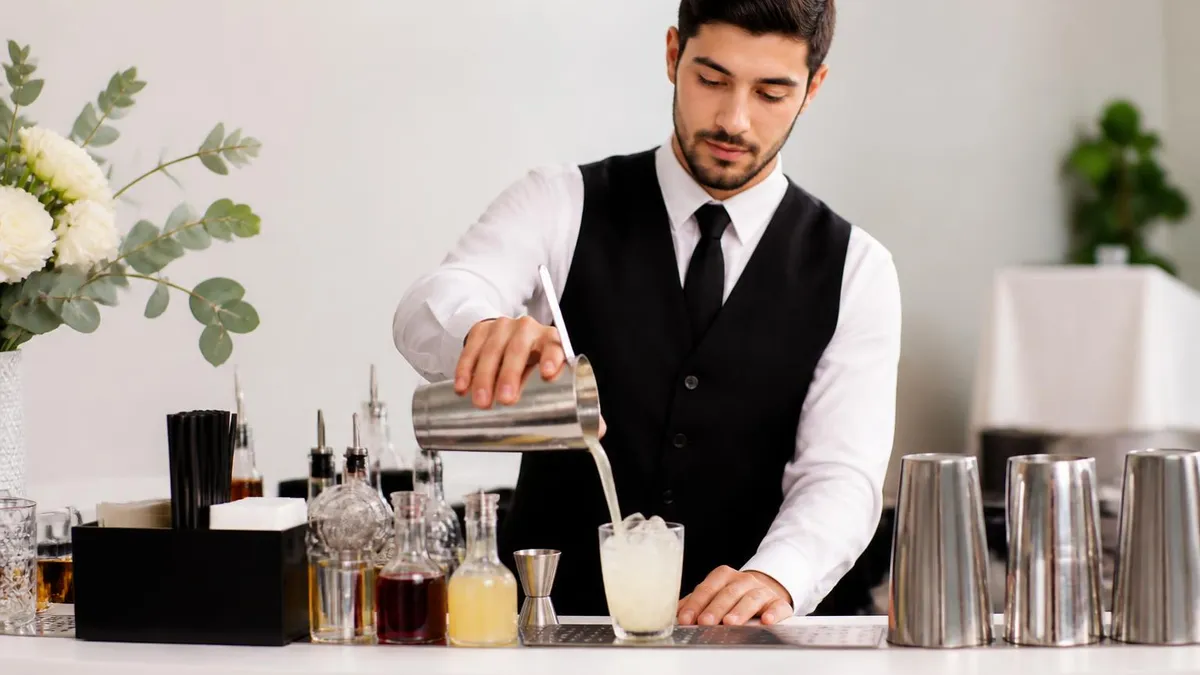
Mobile Bartending Service Models
The most common and highest-revenue category. Weddings typically involve 4-8 hours of service for 50-200 guests. Pricing runs $500-$2,500 per event for the bartender's fee, separate from alcohol costs. Long lead times and higher budgets make this the most profitable segment.
Happy hours, product launches, holiday parties, and team-building events. Often contracted through event planning companies or directly with HR departments. Corporate clients value professionalism, consistency, and liability documentation. Repeat business potential is high.
Beer gardens, cocktail pavilions, and craft markets. Require special event liquor permits, portable tap systems or batch cocktail setups, and high-volume efficiency. Lower per-transaction margins offset by volume. Weather risk is a significant factor.
Mocktail and craft non-alcoholic cocktail service that eliminates most licensing complexity. Growing demand from health-conscious clients, dry weddings, and events serving all ages. Significantly simpler to operate and still commands premium pricing for creative presentation.
Partnering with restaurants, boutiques, or venues for one-off branded cocktail experiences. The venue provides the location and built-in foot traffic; the mobile bartender provides the cocktail concept and execution. Revenue sharing or flat-fee arrangements both work.
Teaching cocktail making as a hosted experience — bachelorette parties, date nights, corporate team building. No alcohol service liability since participants prepare their own drinks. High-margin, highly bookable, and requires minimal equipment beyond a portable setup.
Equipment investment is the primary startup cost for mobile bartending. A portable bar unit — typically a folding bar table with a professional-looking facade — ranges from $200 for basic folding table setups to $2,500 for custom-built units with built-in speed rails, ice bins, and branded signage.
Beyond the bar itself, you need: bartending tools (shakers, strainers, jiggers, peelers, muddlers), glassware (typically rented or client-provided for large events), ice supply and coolers, a sanitation station (hand-washing setup is required by health codes at many events), a cash handling or card payment system, and transport vehicle with enough cargo space for the full setup. Total equipment investment for a professional mobile bar setup runs $1,500-$5,000 for a starter kit and $5,000-$15,000 for a fully custom branded rig with a commercial-grade cart or trailer.
Pricing mobile bartending services requires balancing market rates, cost recovery, and perceived value. The most common pricing model for private events is a flat service fee for a specified number of hours and guests, with alcohol supplied by the client (a BYOB model that simplifies licensing significantly). Service fees typically range from $300-$800 for a solo bartender at a 4-hour event for up to 50 guests, scaling up with guest count, event duration, and distance.
Full-service packages where you supply spirits are higher but require more licensing and investment in alcohol inventory. Understanding the bartender salary benchmarks for your area helps calibrate whether your pricing is competitive with the alternative of hiring a temporary agency bartender versus a dedicated mobile professional.
Batch cocktail preparation is a professional technique that transforms mobile bar efficiency dramatically. Pre-batching the main components of your signature cocktails — diluting spirit and mixer quantities in exact ratios, adding citrus just before service — allows a solo bartender to serve high-quality cocktails at the volume needed for a 100-200 person event without the throughput bottlenecks of building each drink individually.
A solo mobile bartender can typically serve 40-60 guests per hour with well-executed batch cocktails, compared to 20-30 with fully built-to-order cocktails. Batch preparation also allows for quality consistency across the full service period — the 15th cocktail from a batch pours identically to the first, which is difficult to achieve under pressure with on-the-fly builds.
Transport logistics require systematic thinking. Create a packing list that covers every item needed for a standard event and photograph your loaded vehicle before departure so you can verify nothing was left behind. Develop a loading and unloading sequence that minimizes heavy lifting and protects fragile glassware.
A dedicated cargo van or SUV with shelving and securing systems for equipment reduces setup time and protects your investment in glassware and bar units. Some mobile bartenders who have scaled to multiple simultaneous events use trailers or truck-mounted bar units that allow the complete bar rig to be towed to and from events without unloading.
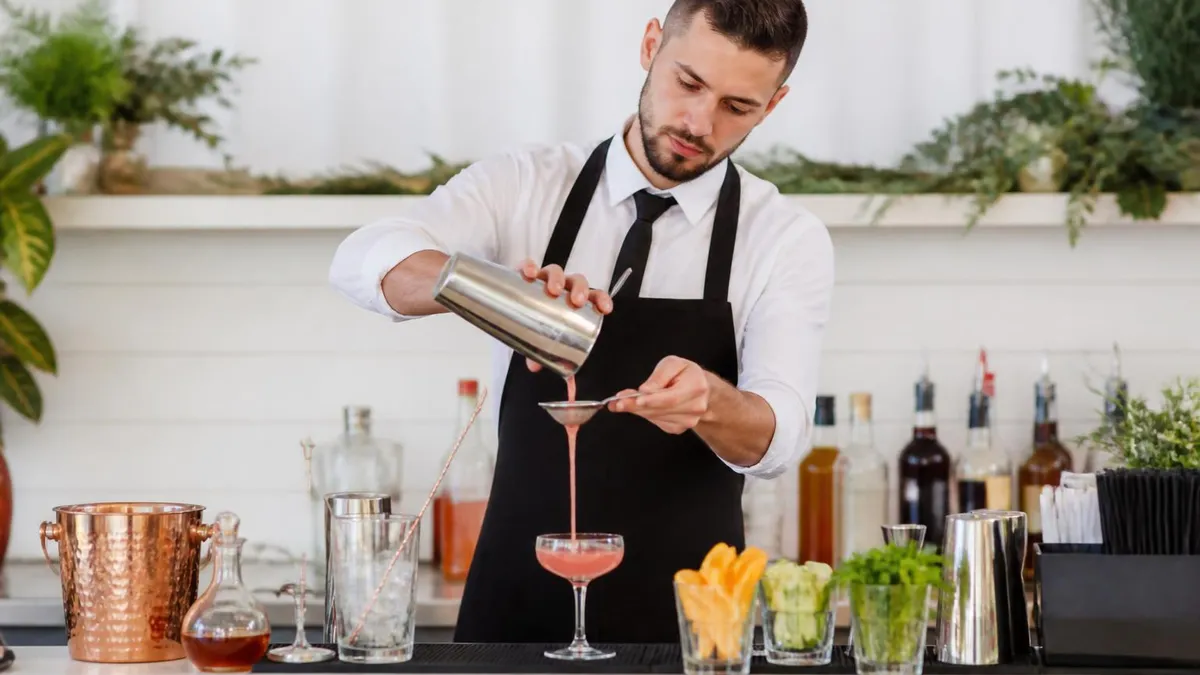
Developing a signature cocktail menu for each client — branded to their event, incorporating their favorite spirits or flavors — is one of the highest-value differentiators for mobile bartenders. Offer 3-5 signature cocktails plus standard classics and beer/wine service. Pre-batch signature cocktails when possible to reduce complexity during service.
Provide clients with an alcohol shopping list based on the expected number of guests and drinking patterns. Standard rule of thumb: 1 drink per person per hour, with 60-70% choosing cocktails, 20-30% beer/wine, 10% non-alcoholic. Over-order by 15-20% buffer to avoid running out mid-event — leftover unopened bottles return with the client.
Client contracts are essential for professional mobile bartending and protect both parties from misunderstandings about scope, liability, and payment terms. A basic mobile bartending contract should cover: event date, location, and hours of service; minimum guarantee (minimum payment regardless of event cancellation or shortened service); client responsibilities (alcohol supply, venue access, parking, power access); liability allocation (who is responsible for intoxicated guests, property damage); tipping policy; and cancellation and rescheduling terms.
Never provide service without a signed contract and deposit — verbal agreements are unenforceable and handshake deals routinely result in payment disputes. Many mobile bartenders require a 25-50% deposit at booking with the remainder due at or before the event, protecting against last-minute cancellations that leave your schedule block unused.
Building a strong online review profile is critical for mobile bartending business growth. Unlike restaurant bars where repeat foot traffic sustains the business, mobile bartending depends on new clients finding you for each event. Google Business, The Knot, WeddingWire, and Yelp reviews are the primary discovery channels. Systematically requesting reviews from satisfied clients — a follow-up message within 48 hours of the event while the experience is fresh — builds a review base that drives inbound inquiries.
Responding professionally to any negative feedback demonstrates client service maturity that prospective clients weigh heavily when choosing between vendors. Attending a bartending school with a strong curriculum in client relations and business operations prepares you not just for the craft side of mobile bartending but for the business fundamentals that determine long-term success.
Upselling additional services creates meaningful revenue per booking beyond the base service fee.
Common upsells include: custom branded cocktail menus printed on card stock or displayed in frames ($25-$75), signature cocktail naming after the couple or event theme ($50-$100), bar décor styling (florals, custom signage, themed elements) ($100-$500), non-alcoholic cocktail (mocktail) pairing menu ($75-$150), late-night coffee and tea service after bar close ($100-$200), and speed-round bartending demonstrations or cocktail-making activities for guests ($150-$300). Each of these upsells has minimal incremental cost and creates visible, photo-worthy moments that generate organic social media content from guests — the single best marketing channel available to mobile bartenders.
Seasonal planning is important for managing cash flow in a business with pronounced seasonal peaks. Weddings concentrate in May-June and September-October. Corporate holiday parties concentrate in November-December. Summer festivals and outdoor events fill July-August. The dead months — January through March — require advance planning: building up cash reserves during peak season, pre-booking events for the shoulder season, and potentially offering winter-specific services like valentine's day cocktail experiences or Super Bowl party bar service to maintain revenue through slow periods.
Check ABC requirements in your state before operating: Liquor licensing rules for mobile bartenders vary dramatically. Operating without required permits can result in fines, event shutdown, and permanent license denial.
Never serve visibly intoxicated guests: Dram shop liability means you can be held legally responsible for harm caused by guests you served while visibly intoxicated. Cut off service immediately and document the refusal.
ID everyone who looks under 30: Serving alcohol to a minor is a criminal offense regardless of whether you knew their age. Fake ID defense is available but requires that you made a reasonable, documented effort to verify age.
Never drive to or from events after consuming alcohol: This is obvious but bears stating. Mobile bartenders sometimes taste their own products during setup. Have a plan for the drive home that does not involve impaired driving under any circumstances.
Scaling a mobile bartending business beyond solo operation requires building a team of certified bartenders who can work your events when you are not available and take on overflow bookings. Vetting, training, and insuring additional bartenders is a significant management challenge but enables you to take multiple simultaneous bookings — the threshold that separates a solo practice from a genuine business. Many successful mobile bar businesses operate with a stable of four to eight freelance bartenders who work events on a per-event basis, with the business owner handling sales, contracts, and client management while deploying staff to the events themselves.
Specialty services command premium pricing and differentiation in a competitive market. Craft cocktail menus featuring local spirits, zero-waste programs using upcycled ingredients, interactive experiences like tableside cocktail finishing or custom flavor-infused spirits, non-alcoholic cocktail programs, and themed bar aesthetics tied to event themes (botanical garden bars, tropical tiki setups, vintage speakeasy styling) all provide reasons for clients to choose your business over a generic bar service vendor.
The mobile bartending market rewards creativity and professionalism in equal measure — clients who want a premium bar experience are specifically looking for vendors who bring something beyond pouring drinks from a standard menu.
The progression from solo mobile bartender to mobile bar business owner mirrors the trajectory of most service businesses: start solo, build reputation, expand capacity when demand consistently exceeds availability. Many successful mobile bar businesses started with a single person at a folding table and grew into branded operations with custom trailers, multiple staff, and signature aesthetics that clients recognize across social media platforms.
The key inflection point is when you turn down bookings due to schedule conflicts — at that point, the financial case for adding a second certified bartender to your team becomes clear. Managing multiple bartenders requires systems: standardized training on your cocktail menu and service standards, clear event briefing protocols, and reliable communication during events.
Mobile bartending is one of the most accessible paths to entrepreneurship in the events industry. The certification requirements are modest, the equipment investment is manageable, the market demand is genuine and growing, and the skills are directly transferable from any professional bartending background. With the right licensing, insurance, and professional approach, a mobile bartending business can generate strong income within 6-12 months of launch while providing the autonomy and creative fulfillment that venue employment rarely offers.
- +Set your own schedule and pricing rather than working employer-defined shifts
- +Premium event pricing — often 2-3x hourly rate of venue employment
- +No split tips with other bar staff — keep full client gratuity
- +Creative freedom to design cocktail menus and bar aesthetics per event
- +Grow a business asset that generates referrals and repeat bookings independently
- −Irregular income — feast or famine seasonality with peak in spring/fall
- −Upfront investment in equipment, licensing, and insurance
- −Client acquisition responsibility — no employer feeding you shifts
- −On-call logistics for weddings can disrupt personal scheduling
- −All administrative burden (contracts, invoicing, taxes) falls on you
Pros and Cons at a Glance
| Pros | Cons |
|---|---|
| Set your own schedule and pricing rather than working employer-defined shifts | Irregular income — feast or famine seasonality with peak in spring/fall |
| No split tips with other bar staff — keep full client gratuity | Upfront investment in equipment, licensing, and insurance |
| Creative freedom to design cocktail menus and bar aesthetics per event | Client acquisition responsibility — no employer feeding you shifts |
| Grow a business asset that generates referrals and repeat bookings independently | On-call logistics for weddings can disrupt personal scheduling |
Bartender Questions and Answers
About the Author
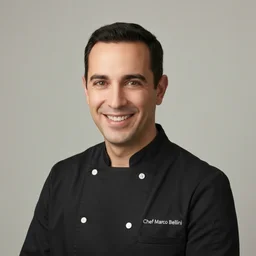
Executive Chef & Culinary Arts Certification Educator
Culinary Institute of AmericaChef Marco Bellini is a Certified Executive Chef and graduate of the Culinary Institute of America with over 20 years of professional kitchen experience in Michelin-recognized restaurants. He teaches culinary arts certification, food safety, and hospitality exam preparation, having guided thousands of culinary students through their ServSafe, ProStart, and professional chef certifications.
Join the Discussion
Connect with other students preparing for this exam. Share tips, ask questions, and get advice from people who have been there.
View discussion (7 replies)