
Bartending License: Requirements and How to Get Certified 2026
✅ Learn what a bartending license requires by state, how to get alcohol service certification (TIPS, TAM, BASSET), costs, and whether bartending school is...
What changed for Bartender Certification in 2026
- South Carolina enacted mandatory alcohol service certification in 2026 — joining roughly 14–17 states that now require server training for bartenders and servers. (source)
- TIPS (Training for Intervention ProcedureS) pricing remains stable at $38–$55 online, with 3–4 hour completion time and 3-year validity. (source)
- Texas TABC certification costs $10–$35 online with a 70% passing score requirement and 2-year renewal cycle. (source)
- ServSafe Alcohol ranges $30–$75 by provider (typically 3–5 hours), with state-specific renewal rules ranging 3–4 years. (source)
- Bartending school costs remain $200–$600 for 2–6 week programs, often with job placement assistance from established schools.
Last verified: October 14, 2026 against official certification providers and state licensing boards.
Essential Facts at a Glance
- No single national bartender license exists — requirements vary by state, county, and employer.
- Alcohol service certification cost: $10–$75 depending on the program (TIPS, TABC, ServSafe Alcohol).
- Time to complete: 3–5 hours for online alcohol service certs; 2–6 weeks for bartending school programs.
- TIPS certification validity: 3 years (most common standard).
- Pass rate data: Individual program pass rates not published; requires 70% on most state-specific exams (Texas TABC, others).
- Registration: Varies by provider and location — check your state's alcohol beverage control (ABC) board for local requirements.
"Bartending license" is a term that gets used loosely — and that looseness creates confusion for people trying to figure out what they actually need before they can legally work behind a bar. Here's the clearest way to understand it: there's no single national bartending license. What exists is a patchwork of state laws, local ordinances, employer requirements, and voluntary certification programs that together constitute "what you need" to bartend in a given location.
In some states, you're legally required to complete alcohol seller/server training before you can serve alcohol. In others, no state law requires it, but your employer mandates it anyway for liability reasons. In a few places, counties or municipalities add requirements on top of state law. And in some markets, completing a formal bartending program — a bartending school certificate — is expected by upscale venues as evidence of professional training even though it's not legally required.
The core distinction is between alcohol service certification and bartending skills training. Alcohol service certification (programs like TIPS, TAM, or BASSET) teaches responsible service of alcohol — how to identify intoxication, how to refuse service, your legal liability as a server, and how to handle difficult situations. It's the compliance credential. Bartending skills training teaches technique — pouring, mixing, spirits knowledge, cocktail preparation, bar operations. These are different things, and conflating them leads people to over-prepare in one area while underprepared in another.
Your immediate goal before your first bartending job should be: 1) determine what's legally required in your state/county, 2) get the required or strongly recommended certification before your first shift, and 3) develop your practical skills through whatever combination of training and practice suits your situation. Most bartending jobs won't wait weeks while you complete extensive training programs. Getting the compliance credential done quickly and supplementing with skills practice is usually the right sequence.
Age requirements are part of the licensing equation that varies by state. Most states require servers of alcohol to be at least 18, but some require 21 to actually pour behind the bar — an important distinction for hiring in those states. Some states distinguish between servers who handle alcohol incidentally (waitstaff who bring drinks to the table) and bartenders who actively mix and dispense alcohol, applying different age requirements to each role. Check your specific state law before assuming the minimum applies to your intended role.
For people entering the industry from outside, getting the bartending license process started before applying for jobs positions you as a more serious candidate. Employers — especially at volume-focused bars that turn over staff frequently — prefer candidates who've already completed their alcohol service training rather than hiring people contingent on completing it. Showing up to the interview with your TIPS or TAM card in hand is a small thing that signals professionalism disproportionate to the cost of getting it.
The most useful frame for thinking about bartending requirements is to separate the legal question from the practical one. Legally, you need whatever your state and employer require — and you should find that out specifically before assuming. Practically, you need enough training to serve guests competently, handle difficult situations without making the situation worse, and protect yourself and your employer from liability. The compliance credential and the skills training serve both purposes, just in different ways.
Bartending License Quick Facts
- No national bartending license exists — requirements vary by state and sometimes by county/city
- Alcohol service certification: TIPS, TAM, BASSET, ServSafe Alcohol — required or recommended by most employers
- Cost: $15–$50 for online alcohol service cert | $200–$600 for bartending school programs
- Time: 4–8 hours for alcohol service cert | 2–6 weeks for bartending school
- Minimum age: 18–21 depending on state and role
- Certificate validity: Most alcohol service certifications are valid 2–3 years
Types of Bartending Credentials
TIPS, TAM, BASSET, ServSafe Alcohol — responsible service training. Required by some states, strongly recommended everywhere. Most employers require this before first shift.
Completion certificate from an accredited bartending program. Covers mixing techniques, spirits knowledge, cocktail recipes, bar operations. Not a license — demonstrates skills training.
Issued to the business (bar, restaurant), not the individual. Required to legally sell alcohol. You don't need one as an employee — the establishment does.
Required alongside alcohol service training in some states. Typically a 2-hour online course covering food safety basics. Cheap and quick — usually $10–$20.
Nevada-specific alcohol service certification — required in Clark County (Las Vegas) for all alcohol service workers. One of the most rigorous state-specific programs.
State requirements for alcohol server certification fall into three broad categories. About half of U.S. states have mandatory alcohol service training laws — if you work as a bartender in these states, you must complete state-approved training before or shortly after starting the job. A second group of states strongly encourage (but don't legally require) certification, often through reducing employer liability when servers are certified. The remaining states have no state-level requirement, leaving it entirely to employers and local governments.
States with mandatory certification programs include California, Florida, Texas, Nevada (Clark County), Illinois, Oregon, and others — but the specifics vary. California's RBS (Responsible Beverage Service) training became mandatory in 2022 and requires all alcohol servers and their managers to complete an ABC-approved training program and obtain a Responsible Beverage Service certification from the California ABC. The program must be completed within 60 days of hire. This is a state government-administered requirement, not a voluntary employer policy.
Nevada — particularly Clark County, which includes Las Vegas — requires TAM certification for all gaming and alcohol industry workers. TAM is administered by the Nevada Resort Association and covers responsible service topics plus the specific regulatory environment of Nevada's hospitality industry. Clark County takes TAM compliance seriously, and working in Las Vegas hospitality without current TAM certification is a genuine employment barrier, not just a formality.
In states without mandatory certification, the requirement comes from the employer side. Most chain restaurants, hotel bars, and established independent establishments require TIPS or another approved program as a condition of employment regardless of state law. The liability reason is concrete: establishments that employ certified servers receive liability protection in most states — in a lawsuit following an alcohol-related incident, the employer can demonstrate that their servers were trained in responsible service practices. That documentation has real value in litigation.
Local requirements add another layer in some markets. Some cities and counties impose requirements that exceed the state minimum. Cook County, Illinois has its own requirements in addition to Illinois state law. Certain tourist-heavy beach communities have local ordinances around alcohol service certification. If you're working in a major metro area or a hospitality-heavy market, it's worth checking both state and local requirements rather than assuming the state rule covers everything.
Reading the actual statute or regulation — not a summary, not a blog post — is the most reliable way to understand what your state requires. Your state's Alcohol Beverage Control Board (or equivalent agency) publishes the current requirements on their official website. When in doubt, call them — the staff who answer those lines are usually genuinely helpful to individuals trying to understand compliance requirements, not just industry lawyers calling about licensing disputes.
Most widely recognized alcohol service certification in the U.S. Available online and in-person. Accepted by employers in all 50 states and covers:
- Recognizing signs of intoxication
- Refusing service legally and safely
- Checking IDs and identifying fake identification
- Liability exposure for servers and establishments
- Handling difficult customer situations
Duration: 4–5 hours online | Cost: ~$22–$35 | Valid: 3 years
TIPS is the dominant choice for most bartenders outside of state-specific program requirements, and for good reason. It's accepted everywhere, it's been around since 1982 so employers recognize the credential, and the online version can be completed in an afternoon from your phone. If you're not in a state with a mandatory program, TIPS is the default answer to "what certification should I get."
The cost comparison between programs is straightforward: most alcohol service certifications run $15–$35 for the online version. State-administered programs like California's RBS can cost $40–$50 because they involve state-approval testing and a state-issued certificate number tracked in a database. Either way, you're spending less than $50 on a credential that most employers require and that protects you personally from liability exposure.
Personal liability is something first-time bartenders often don't think about. Dram shop laws in most states create potential civil liability for individual servers who serve visibly intoxicated guests who then cause harm — not just liability for the employer. The specifics vary enormously by state. Some states protect individual servers who've completed training programs; others don't. Knowing your state's dram shop law matters for your personal risk exposure, not just for passing a certification test. A few minutes reading your state's alcohol beverage control board's guidance on server liability is time well spent.
For people pursuing bartending jobs in competitive markets — big city hotel bars, high-volume nightclubs, craft cocktail establishments — alcohol service certification is table stakes. The differentiating credential in those markets is demonstrable technique and cocktail knowledge. Hiring managers at upscale venues are looking for candidates who can talk fluently about spirits categories, can build classic cocktails correctly, and demonstrate professional bar etiquette. The compliance credential matters, but it's not what gets you the interesting jobs.
Specialty certifications worth knowing about include the WSET (Wine and Spirit Education Trust) awards, which are globally recognized credentials for beverage knowledge. WSET Level 1 or 2 demonstrates systematic spirits or wine knowledge and positions you as a more knowledgeable candidate for sommelier-adjacent positions or high-end cocktail bars. The BarSmarts program from Pernod Ricard is another industry-specific education program focused on cocktail knowledge and technique that's respected in the craft spirits segment. These aren't licenses — they're professional development credentials that distinguish people who take the craft seriously.
The practical implication of not having certification in a dram shop liability state is that if you serve a visibly intoxicated person who later causes an accident, you face potential personal civil liability without the protection that completing a training program would have provided. Most servers who face these situations were doing their best in a busy environment — but courts look at whether training was completed and whether the establishment documented responsible service practices. The $25 cost and four hours for an online certification is extraordinarily cheap insurance against that exposure.
Your employer may require certifications that exceed what state law mandates — and you must meet both. Many corporate restaurant chains require TIPS or ServSafe Alcohol even in states with no state-level requirement. Some venues require periodic renewal even if your existing certificate hasn't expired. Some require additional training (food handler, harassment prevention) before your first shift. When you accept a bartending job, ask HR or the bar manager specifically what certifications are required and what timeline you have to complete them. Don't assume state compliance equals employer compliance — it often doesn't.
Bartending school is a genuinely useful path for some people and an unnecessary expense for others — and the decision depends heavily on your situation. For someone with no bar experience, no hospitality industry contacts, and who learns well in a structured classroom environment, a reputable bartending program provides foundational skills training that would otherwise take months of trial and error to acquire. For someone who already has some bar or hospitality experience and can learn through practice, paying $400–$600 for a bartending program may not be the best use of that money.
What bartending schools actually teach varies widely by program. Most cover the mechanics of pouring, the standard ratio cocktails, classic recipes, spirits categories, bar setup and breakdown, speed pouring, and customer service basics. Good programs include simulated bar scenarios where students practice behind a working bar with mock customers. The programs that skip this practical component in favor of classroom lectures produce weaker graduates than programs that integrate hands-on time from the start.
Reputation matters enormously in bartending school selection. Some schools have placement programs with real employer relationships that actively help graduates find bartending jobs near me in their local market. Others hand you a certificate and wish you luck. Ask prospective schools about job placement rates, which specific employers they work with, and whether you can speak with recent graduates before enrolling. If a school can't provide references from recent graduates, that's a red flag.
The national bartending school chains have mixed reputations in the industry. Local independent schools sometimes have stronger community relationships and more personalized instruction. In major hospitality markets (Las Vegas, New York, New Orleans, Miami), employer relationships and name recognition of the school carry more weight. In smaller markets, any formal training credential is viewed similarly by employers — the specific school matters less.
Online bartending courses are increasingly available, but they have an obvious limitation: you can't develop pouring technique, muscle memory for bottle handling, or speed through video instruction alone. Online courses can effectively teach recipes, spirits knowledge, menu design, and business operations — all valuable — but they're not substitutes for physical practice behind a bar. If cost is a barrier, an online course supplemented by extensive at-home practice (with water, measuring cups, and a shaker set) produces better preparation than no training, but not as much as hands-on instruction.
For prospective bartenders weighing school vs. no school, the practical question is whether the employer you're targeting requires it or values it. Call the bar manager directly at establishments where you want to work and ask what they look for in candidates. Some will say they prefer candidates from bartending schools; others will say they care more about prior bar experience; others will say they train everyone from scratch regardless. This intelligence shapes where to invest your time and money before you start applying.
Check State and Local Requirements
Choose a Certification Program
Complete the Online Course
Complete Any Additional Requirements
Develop Practical Skills
Apply for Positions
Career trajectory in bartending is strongly influenced by the type of establishment you start in. Starting in a high-volume casual setting — chain restaurant bar, sports bar, hotel lobby bar — builds speed and efficiency but doesn't develop deep cocktail craft. Starting in a quality cocktail bar or craft spirits establishment builds technique, product knowledge, and palate. Neither is wrong, but they're different apprenticeships that lead to different career paths.
The income variation in bartending is dramatic. A weekday daytime bartender at a casual chain restaurant might earn $15–$25 per hour with tips. A bartender at a busy upscale cocktail lounge in a major city can earn $60,000–$100,000+ annually, heavily weighted toward tips on busy weekend nights. The establishments where earning potential is highest are also the most selective in hiring — which is the practical argument for investing in skills development early in your career, even if it means lower-paying starting positions while you build your resume.
Managing the business side of bartending involves understanding cash handling, inventory management, opening and closing procedures, and the legal obligations around selling alcohol — all subjects that certification and bartending school programs address, but that are reinforced through actual work experience. Bartenders who understand the business dimensions of the role — waste reduction, efficient pouring, upselling appropriately without being pushy — are more valuable to employers and more likely to be offered management progression.
For bartenders looking to advance toward bar management, beverage director, or eventually their own establishment, the business education pathway matters as much as the craft pathway. Understanding beer distribution relationships, wine program management, cocktail menu development and costing, and the regulatory requirements of holding a liquor license yourself (distinct from the employment credentials we've discussed) forms the knowledge base for those roles. Industry organizations like the US Bartenders Guild offer professional development resources for bartenders pursuing that progression.
Tipping culture varies by market and establishment type, and new bartenders should understand how tip-out structures work before accepting a position. Many establishments require bartenders to tip out barbacks, bussers, and sometimes servers from their tips — percentages of total bar sales rather than tips received. A lucrative bar income looks different when you understand what percentage gets distributed to support staff. Ask about tip structure during your interview; it's a professional question that experienced establishments expect candidates to ask.
- +Structured curriculum covers fundamentals systematically — no gaps from learning randomly on the job
- +Hands-on practice with real equipment and mock bar scenarios builds muscle memory faster than at-home practice
- +School placement programs help connect graduates with employer contacts, especially valuable in competitive markets
- −Cost of $200–$600+ is significant when many entry-level bartending jobs will train you on the job for free
- −Quality varies widely between schools — a poor school costs the same as a good one without equivalent value
- −Certificate from a bartending school is not equivalent to work experience in employers' eyes — both are still needed
Sample Bartender Certification Practice Questions
Try these questions from our free Bartender Certification practice tests. The correct answer and an explanation follow each question.
What does 'muddling' accomplish in cocktail making?
- A. Cools the drink rapidly
- B. Extracts oils, juices, and flavors from fresh ingredients like herbs and fruit
- C. Strains ice from the drink
- D. Creates carbonation
Answer: B. Extracts oils, juices, and flavors from fresh ingredients like herbs and fruit
Muddling uses a muddler to gently crush fresh ingredients, releasing their essential oils and juices to infuse the drink with flavor.
A customer shows slurred speech, bloodshot eyes, and poor balance. These are classic signs of:
- A. Visible intoxication requiring refusal of service
- B. Minor fatigue that will pass quickly
- C. Allergic reaction to alcohol
- D. Normal social drinking behavior
Answer: A. Visible intoxication requiring refusal of service
Slurred speech, bloodshot eyes, and poor balance are classic signs of visible intoxication. State law and responsible service guidelines require bartenders to refuse further alcohol service to visibly intoxicated customers.
What is the standard jigger measurement for a 'single' shot in the United States?
- A. 1 oz
- B. 1.5 oz
- C. 2 oz
- D. 0.75 oz
Answer: B. 1.5 oz
A standard single shot in the US is 1.5 oz (44 ml). This is the most common pour size used in bars for base spirits in cocktails.
What is a 'jigger' primarily used for in bar inventory control?
- A. Chilling glasses
- B. Measuring precise alcohol portions to control pour cost
- C. Straining cocktails
- D. Storing bulk spirits
Answer: B. Measuring precise alcohol portions to control pour cost
A jigger is a measuring tool that ensures consistent portion sizes, which directly controls pour cost and prevents over-pouring.
Bartending License Questions and Answers
About the Author
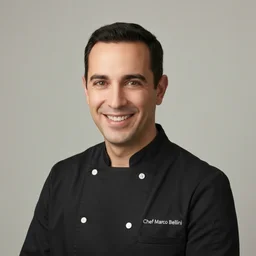
Executive Chef & Culinary Arts Certification Educator
Culinary Institute of AmericaChef Marco Bellini is a Certified Executive Chef and graduate of the Culinary Institute of America with over 20 years of professional kitchen experience in Michelin-recognized restaurants. He teaches culinary arts certification, food safety, and hospitality exam preparation, having guided thousands of culinary students through their ServSafe, ProStart, and professional chef certifications.
Join the Discussion
Connect with other students preparing for this exam. Share tips, ask questions, and get advice from people who have been there.
View discussion (7 replies)