
Drinks Bartenders Should Know — Complete Guide (2026 October)
💡 The drinks bartenders should know in 2026 October: IBA classics, highballs, shots, tropicals, and modern hits with recipes, ratios, and pro pour tips.
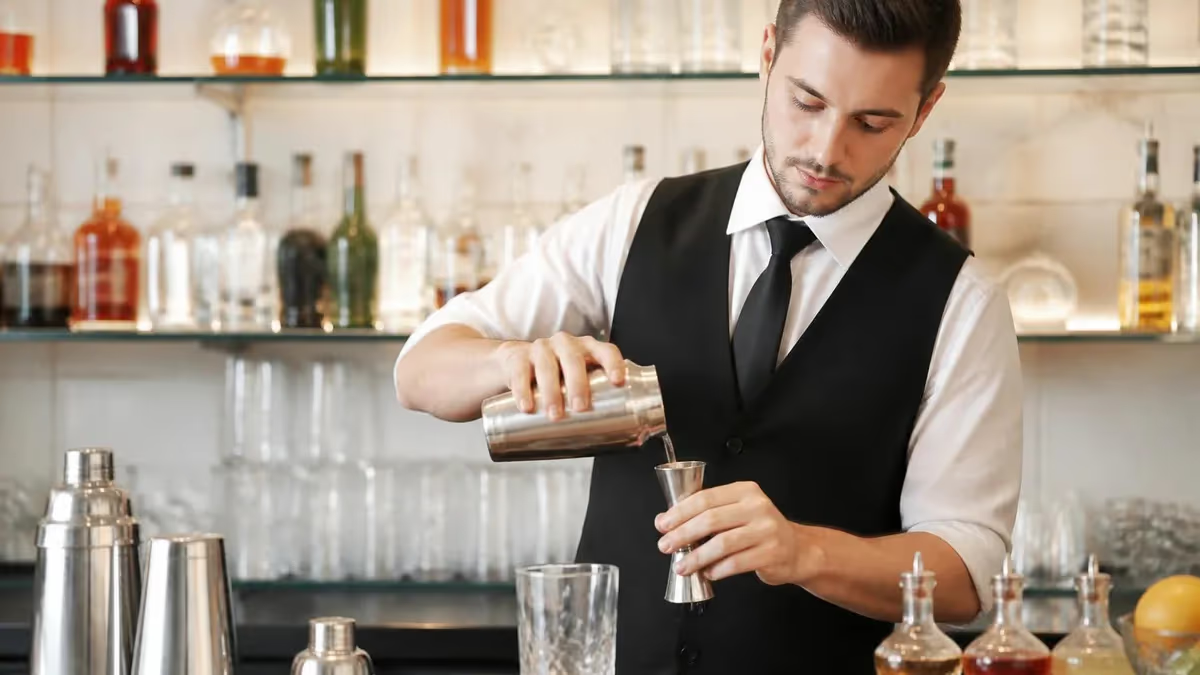
Drinks Bartenders Should Know by the Numbers
Drinks Bartenders Should Know — Complete Guide (2026)
Walk into any interview and the manager will fire off five drink names. Get one wrong, you do not get the call back. That is the bar. The drinks bartenders should know are not a vague suggestion — there is a real, defensible list and most working pros can build every one of them from memory in under a minute.
Here is the honest split. About 50 cocktails cover roughly 95 percent of orders in a typical American bar. Of those 50, eleven are the IBA Unforgettables — the official International Bartenders Association classics that show up on every bar exam and every job test. The rest are highballs, shots, tropical drinks, and the modern hits guests have been ordering since 2018 (looking at you, Espresso Martini).
This guide walks the full list. You will get the recipes, the ratios in ounces, the glassware, the garnish, and the common modifications guests actually ask for. Sugar-free, low-ABV, dairy-free, you name it. We also cover speed pour technique so you can hit 1.5 oz in four counts without ever reaching for a jigger.
Need the underlying credentials first? Start with the bartender certification overview. Want to test what you already know? Jump straight into the bartender certification or browse the bartending terminology glossary so the prep talk in this guide actually lands.
One more thing before the recipes. Bar speed matters more than encyclopedic knowledge. A bartender who builds 35 perfect Old Fashioneds an hour beats one who can name 200 drinks but takes two minutes per build. Memorize the core fifty, drill the pour counts, and the rest is repetition. Most pros tell new hires the same thing: nail the basics, then layer everything else on top.
So why this article and not another one? Because most cocktail lists online are written by people who have never spent a Friday night behind a service well. They give you 200 recipes nobody orders and skip the speed-rail drinks you will actually pour fifty times a shift. We flipped the model. This is the working bartender's list — the drinks that move, the ratios that stick, the swaps that keep guests happy. Drink lists change. The fundamentals do not.
And one last note before we dive into the IBA cocktails. Every recipe below uses US ounces (not metric), assumes you are working with a standard 1.5 oz pour, and lists the garnish as part of the build — not as an afterthought. Garnish is half the drink in 2026. A Margarita without a perfect salt rim and a lime wheel is just a tequila sour in a salty glass. Take pride in the presentation. Guests notice.
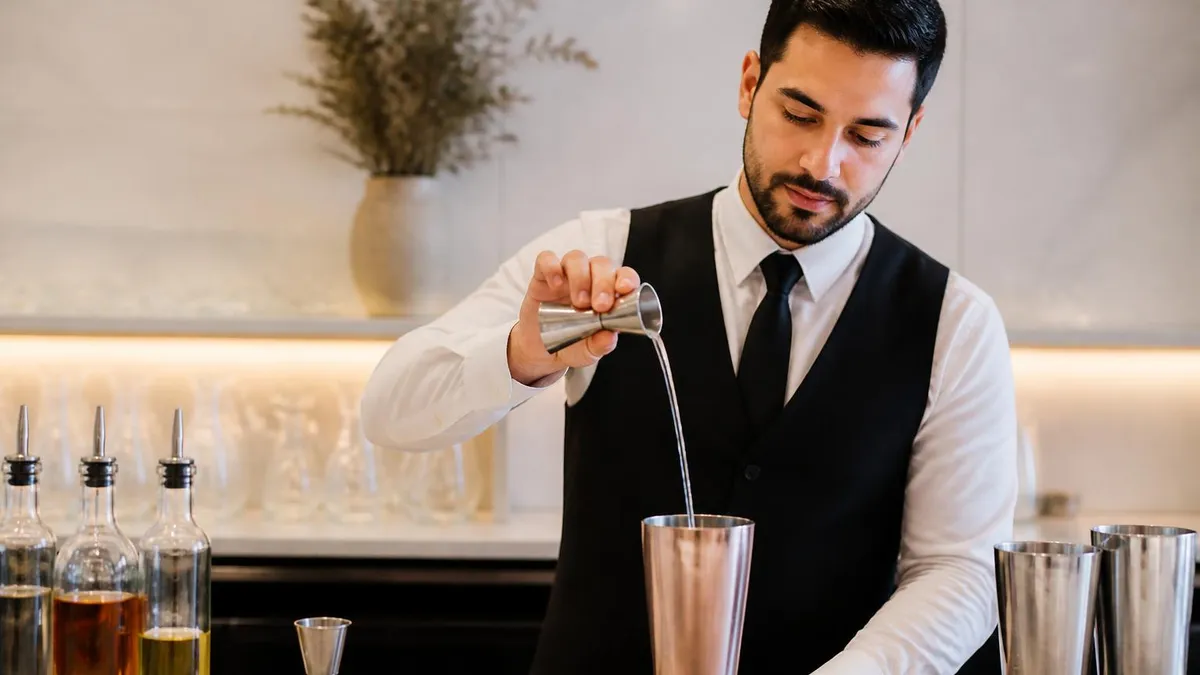
The 11 IBA Unforgettables — The Drinks All Bartenders Should Know
2 oz bourbon or rye, 1 sugar cube, 2 dashes Angostura bitters, splash of water. Muddle, stir over a large rock, orange peel garnish. Built in a rocks glass. The most-ordered classic cocktail in America in 2026.
- Glass: Rocks
- Method: Build & stir
2.5 oz gin (or vodka), 0.5 oz dry vermouth, stirred 30 seconds with ice, strained into a chilled martini glass. Lemon twist or olive garnish. Ask dry, dirty, or wet — guest preference dictates vermouth ratio.
- Glass: Martini coupe
- Method: Stir
2 oz white rum, 1 oz fresh lime juice, 0.75 oz simple syrup. Shake hard with ice, double strain into a chilled coupe. No fruit, no blender — the classic is short and tart.
- Glass: Coupe
- Method: Shake
2 oz rye whiskey, 1 oz sweet vermouth, 2 dashes Angostura bitters. Stir with ice, strain into a chilled coupe, brandied cherry garnish. Order it Perfect with half sweet and half dry vermouth.
- Glass: Coupe
- Method: Stir
1 oz gin, 1 oz Campari, 1 oz sweet vermouth — the famous equal-parts build. Stir over ice in a rocks glass, orange peel garnish. The bartender's drink. Variations: White Negroni, Boulevardier, Negroni Sbagliato.
- Glass: Rocks
- Method: Build
2 oz blanco tequila, 1 oz fresh lime juice, 1 oz triple sec or Cointreau. Shake with ice, strain into a salt-rimmed rocks glass or coupe. Top three best-selling cocktail in the US — you will build 50 a shift.
- Glass: Rocks (salted)
- Method: Shake
2 oz white rum, 1 oz lime juice, 2 tsp sugar, 8-10 mint leaves, soda water. Muddle mint and sugar gently, add rum and lime, top with soda over crushed ice. Mint sprig garnish. Patio season favorite.
- Glass: Highball
- Method: Muddle & build
1.5 oz citron vodka, 0.5 oz triple sec, 0.5 oz fresh lime juice, 1 oz cranberry juice. Shake hard, double strain into a chilled coupe. Flamed orange peel. Pink and pretty, still ordered nightly.
- Glass: Coupe
- Method: Shake
2 oz cognac, 0.75 oz Cointreau, 0.75 oz fresh lemon juice. Shake, strain into a chilled coupe with a half-sugar rim. The original brandy sour and parent template of every modern Triple-Sec-and-citrus drink.
- Glass: Coupe (sugar rim)
- Method: Shake
2 oz bourbon, 1 oz fresh lemon juice, 0.75 oz simple syrup, 1 egg white (optional). Dry shake without ice, then wet shake with ice. Strain into a rocks glass, three drops of bitters on the foam.
- Glass: Rocks
- Method: Dry shake
2 oz gin, 0.5 oz maraschino liqueur, 0.5 oz creme de violette, 0.75 oz fresh lemon juice. Shake, double strain into a chilled coupe, brandied cherry sunk to the bottom. Pale purple. Less common but on every IBA exam.
- Glass: Coupe
- Method: Shake
Essential Recipe Ratios and Glassware by Category
Every sour family cocktail follows a 3-2-1 framework — 3 parts spirit, 2 parts citrus, 1 part sweetener — sometimes adjusted to 2-1-0.75 for a slightly stronger build. The Daiquiri, Margarita, Whiskey Sour, Sidecar, Gimlet, and Tom Collins all live here. Memorize this ratio and you can riff any new sour without a recipe card.
Glassware: coupe for shaken-and-strained styles, rocks for served-over-ice variations. Always shake sours hard for 12 to 15 seconds — undershaking leaves the drink flabby and warm, oversbarating dilutes the citrus brightness.
The pour count rule
Free pour standard in the US is the four-count: one Mississippi equals roughly 0.375 oz. Four counts of a controlled-flow speed pourer gives you a 1.5 oz pour. Drill this with water in a graduated cylinder for 30 minutes a day for a week and you will hit 1.5 oz within a tenth of an ounce every time.
If your bar uses jiggers (most upscale cocktail bars do), the 1.5 oz / 0.75 oz double-jigger is the universal tool. Always pour to the rim and over the glass — never short the customer because you tipped the jigger early.
Highballs, Shots, and Tropicals — The Speed-Rail Drinks Bartenders Should Know
Bartender Practice Test Questions
Prepare for the Bartender Certification exam with our free practice test modules. Each quiz covers key topics to help you pass on your first try.
Bartender Certification Bar Inventory and ...
Bartender Exam Questions covering Certification Bar Inventory and Cost Control. Master Bartender Test concepts for certification prep.
Bartender Certification Bar Law and Liquor...
Free Bartender Practice Test featuring Certification Bar Law and Liquor Regulations. Improve your Bartender Exam score with mock test prep.
Bartender Certification Bar Sanitation and...
Bartender Mock Exam on Certification Bar Sanitation and Safety. Bartender Study Guide questions to pass on your first try.
Bartender Certification Bar Setup and Orga...
Bartender Test Prep for Certification Bar Setup and Organization. Practice Bartender Quiz questions and boost your score.
Bartender Certification Bar Tools and Glas...
Bartender Questions and Answers on Certification Bar Tools and Glassware. Free Bartender practice for exam readiness.
Bartender Certification Basic
Bartender Mock Test covering Certification Basic. Online Bartender Test practice with instant feedback.
Bartender Certification Cocktail Recipes a...
Free Bartender Quiz on Certification Cocktail Recipes and Techniques. Bartender Exam prep questions with detailed explanations.
Bartender Certification Customer Service a...
Bartender Practice Questions for Certification Customer Service and Sales. Build confidence for your Bartender certification exam.
Bartender Certification Customer Service S...
Bartender Test Online for Certification Customer Service Skills. Free practice with instant results and feedback.
Bartender Certification Mixology Fundamentals
Bartender Study Material on Certification Mixology Fundamentals. Prepare effectively with real exam-style questions.
Bartender Certification Responsible Alcoho...
Free Bartender Test covering Certification Responsible Alcohol Service. Practice and track your Bartender exam readiness.
Bartender Certification Spirits, Beer, and...
Bartender Exam Questions covering Certification Spirits, Beer, and Wine. Master Bartender Test concepts for certification prep.
Bartender Certification Spirits, Liqueurs,...
Free Bartender Practice Test featuring Certification Spirits, Liqueurs, and Cocktails. Improve your Bartender Exam score with mock test prep.
Bartender Responsible Alcohol Service
Bartender Mock Exam on Responsible Alcohol Service. Bartender Study Guide questions to pass on your first try.
Bartender Spirits, Liqueurs, and Cocktails
Bartender Test Prep for Spirits, Liqueurs, and Cocktails. Practice Bartender Quiz questions and boost your score.
Bartender Bar Sanitation and Safety
Bartender Questions and Answers on Bar Sanitation and Safety. Free Bartender practice for exam readiness.
Bartender Bar Setup and Organization
Bartender Mock Test covering Bar Setup and Organization. Online Bartender Test practice with instant feedback.
Bartender Bar Tools and Glassware
Free Bartender Quiz on Bar Tools and Glassware. Bartender Exam prep questions with detailed explanations.
Bartender Basic
Bartender Practice Questions for Basic. Build confidence for your Bartender certification exam.
Bartender Cocktail Recipes and Techniques
Bartender Test Online for Cocktail Recipes and Techniques. Free practice with instant results and feedback.
Bartender Customer Service and Sales
Bartender Study Material on Customer Service and Sales. Prepare effectively with real exam-style questions.
Bartender Customer Service Skills
Free Bartender Test covering Customer Service Skills. Practice and track your Bartender exam readiness.
Free-Pour Speed Technique — Should You Trust the Count?
- +Two-handed pouring — you can build two drinks simultaneously
- +Cuts ticket times by 30 to 40 percent versus jigger-only service
- +Looks confident to guests, generates better tips
- +Critical at high-volume bars where 200+ tickets pour per hour
- +Easier to multi-task: pour while you talk, ring, or grab garnish
- +Standard at most dive bars, sports bars, and chain restaurants
- −Inconsistent pour = inconsistent cost percentage — managers track this weekly
- −Most craft cocktail bars require jiggers regardless of your skill
- −Local laws in some states (Utah, Pennsylvania) mandate measured pours
- −Hard to recover when fatigued late in a shift — counts get sloppy
- −Failed pour test costs you the job at most upscale venues
- −Standard 1.5 oz can drift to 1.8 oz under pressure — drains profit
Pros and Cons at a Glance
| Pros | Cons |
|---|---|
| Two-handed pouring — you can build two drinks simultaneously | Inconsistent pour = inconsistent cost percentage — managers track this weekly |
| Looks confident to guests, generates better tips | Most craft cocktail bars require jiggers regardless of your skill |
| Easier to multi-task: pour while you talk, ring, or grab garnish | Local laws in some states (Utah, Pennsylvania) mandate measured pours |
| Standard at most dive bars, sports bars, and chain restaurants | Hard to recover when fatigued late in a shift — counts get sloppy |
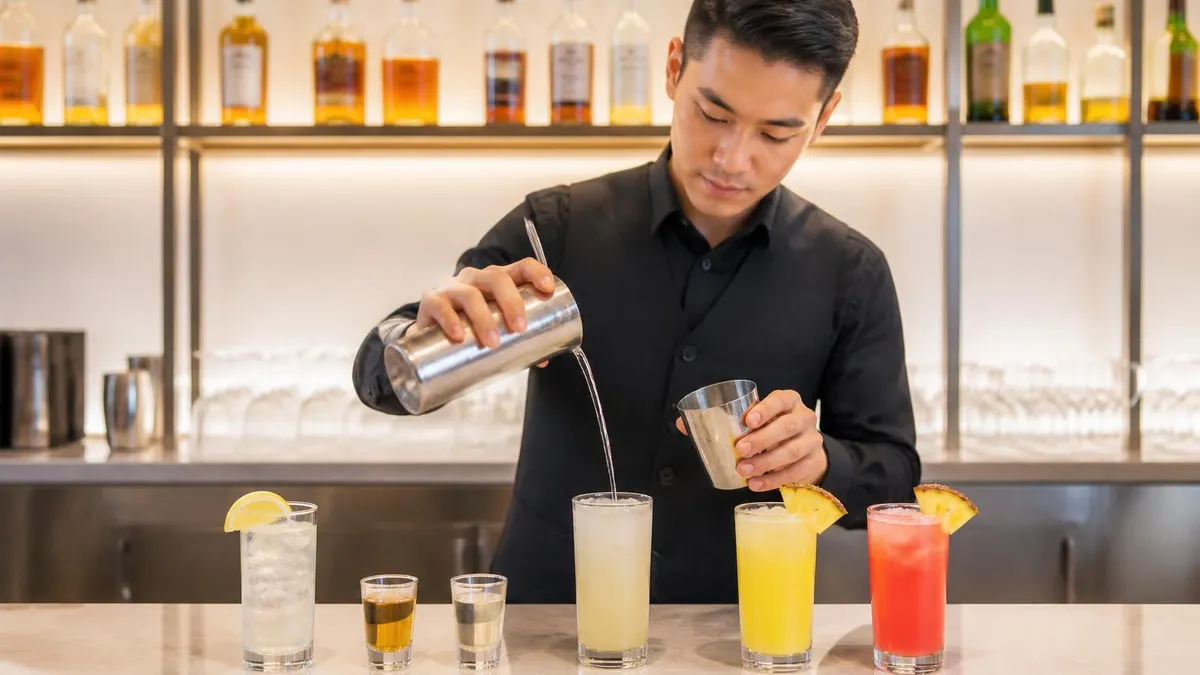
Cocktail Memorization Checklist — Drill This Before Your Interview
- ✓Memorize all 11 IBA Unforgettables — recipe, glass, garnish, method
- ✓Drill the 3-2-1 sour ratio until you can build any new sour blind
- ✓Practice the four-count free pour with water — hit 1.5 oz ten times in a row
- ✓Learn the top 20 modern hits guests actually order (Espresso Martini, Aperol Spritz, Paloma, Penicillin)
- ✓Identify every base spirit by smell and color — vodka, gin, rum, tequila, whiskey, brandy
- ✓Know the difference between shaken and stirred and when to use each
- ✓Memorize 10 shot recipes — bachelorette parties live and die on these
- ✓Practice expressing citrus peels over the glass, then dropping correctly
- ✓Build a Bloody Mary mix from scratch — tomato, horseradish, Worcestershire, celery salt
- ✓Know dietary swaps cold: agave for simple syrup, oat milk for cream, mezcal-vegan
- ✓Time yourself building 4 cocktails simultaneously — target under 90 seconds total
Modifications, Dietary Swaps, and Common Variations
Guests order modified drinks constantly. Sugar-free, dairy-free, low-ABV, no-alcohol entirely. Get used to it. The good news? Every classic has a clean swap that does not break the drink. Here are the ones you will hear nightly behind a busy rail.
Sugar-free and low-calorie
Replace simple syrup with monk fruit syrup, allulose syrup, or stevia liquid. Start at half the volume because stevia is much sweeter than sugar. Skip flavored vodkas with added sugar entirely. Use fresh-squeezed citrus instead of bottled sour mix. A skinny Margarita is just 2 oz tequila, 1 oz lime, and 0.5 oz agave nectar.
That build drops the calorie count by half versus the standard recipe with triple sec. Guests love it. You will see this order three times a night, especially from the post-workout crowd that comes in around 7pm. Keep agave in a labeled speed-pour bottle on the rail so you can hit the swap without slowing down service.
Dairy-free swaps
Oat milk and coconut cream replace dairy cream in Piña Coladas, White Russians, and Mudslides without compromising mouthfeel. For Espresso Martinis that need a foam, oat milk actually foams almost as well as egg white when shaken hard for 15 seconds. Avoid almond milk in coffee cocktails because it curdles with hot espresso.
Stock both oat milk and coconut cream in your prep cooler. Label them clearly. When a guest with a dairy allergy orders, do not just sub — confirm the swap out loud and check that no other prep ingredient (Baileys, half-and-half, butter syrup) sneaks in. Cross-contamination kills trust faster than any other bar mistake.
Gluten-free
Most spirits are gluten-free after distillation, including the wheat-based vodkas. Tito's, Ketel One, and Grey Goose all test under the gluten threshold by a wide margin. Beer cocktails (Michelada, Black Velvet, Shandies) need a swap to a gluten-free beer like Glutenberg, Bard's Tale, or Stone Delicious IPA. Always confirm with the guest because some are highly sensitive.
For more context on guest preferences and modern bar trends, browse bartending techniques and read up on bartending supplies so your station is stocked for every modification. A well-stocked back bar saves three trips to the dry storage room per shift.
Quick Modification Cheat Sheet — Three Swaps to Memorize Cold
1:1 volume swap, slightly sweeter than simple, lower glycemic index. Use in any sour — Margaritas, Daiquiris, Whiskey Sours. Keep agave in a labeled speed-pour bottle right on the rail next to your simple syrup.
- Ratio: 1:1
- Drinks: All sours
1:1 dairy swap that foams beautifully when shaken hard. Coconut cream for Piña Coladas and tropical drinks, oat milk barista blend for Espresso Martinis and White Russians. Almond milk curdles in coffee — skip it.
- Ratio: 1:1
- Drinks: Cream cocktails
Cuts 60 calories per drink and brightens the flavor profile dramatically. Replace 1 oz triple sec with 0.5 oz fresh-squeezed citrus juice and 0.25 oz agave. This is the Tommy's Margarita move — guests immediately taste the upgrade.
- Saves: 60 cal/drink
- Drinks: Margaritas, Sidecars
Low-ABV and zero-proof drinks
The non-alcoholic spirit market exploded between 2022 and 2026. Seedlip, Lyre's, and Ritual now offer gin, rum, and whiskey alternatives that hold up in classic builds. A zero-proof Negroni made with Lyre's Italian Spritz, Lyre's Dry London, and Lyre's Aperitif Rosso tastes about 80 percent of the real thing. Charge the same price — guests gladly pay it.
For low-ABV, look to Aperol Spritz (11 percent ABV), Hugo Spritz with elderflower liqueur, Sherry Cobbler, and the Bicicletta. These cap at 8 to 11 percent ABV total and matter for guests pacing themselves through long dinner services. Sherry-based cocktails are having a real moment in 2026 — learn three of them and you will stand out on the line.
Worth noting: many bars now charge full cocktail prices for zero-proof builds. Some guests bristle at that. Be ready to explain the price honestly — Seedlip is $30 a bottle wholesale, the labor is identical, and the prep work matches a regular cocktail. Most guests accept the reasoning when you walk them through it.
Common Cocktail Variations You Need to Know
Old Fashioned variants
Smoked Old Fashioned (apply applewood smoke under a glass cloche), Maple Old Fashioned (sub real maple syrup for the sugar cube), Brown-Butter Old Fashioned (fat-wash the whiskey 24 hours ahead), Mezcal Old Fashioned, Rum Old Fashioned with aged Jamaican rum. Manager will absolutely test you on at least two of these during the tryout shift.
The smoked version is the most-ordered upgrade. Stock applewood chips and a small kitchen torch behind your well. The whole build takes 90 seconds with the smoke. Charge five dollars extra. Guests will photograph it and post it to Instagram — free marketing for the bar.
Martini variants
Dirty (olive brine added), Filthy (extra olive brine, more than a teaspoon), Vesper (gin plus vodka plus Lillet Blanc, James Bond's specification), Gibson (cocktail onion garnish), Wet (more vermouth than standard), Dry (less vermouth), Bone Dry (just a rinse of vermouth in the glass). Each variation has a non-negotiable garnish. Get it wrong and you get sent back.
Also memorize the Espresso Martini, French Martini (vodka, Chambord, pineapple), and the Pornstar Martini with passion fruit and a Champagne sidecar. Modern guests order these constantly. The Pornstar is the single most-Instagrammed cocktail of the last three years in upscale bars worldwide.
Margarita variants
Spicy Margarita (muddle two jalapeno slices, taste before shaking), Mezcal Margarita (sub mezcal for tequila for smoke), Tommy's Margarita (no triple sec at all, agave only, lime), Cadillac Margarita (top with a Grand Marnier float), Picante, Watermelon, and Skinny. The Tommy's Margarita is what most cocktail bartenders consider the platonic ideal of the form.
You will pour 50 Margaritas on a Friday in any decent restaurant. Knowing the five or six core variations cold makes you faster than the bartender who has to think about each modification. Speed plus knowledge equals tips. Drill the variants until they are muscle memory.
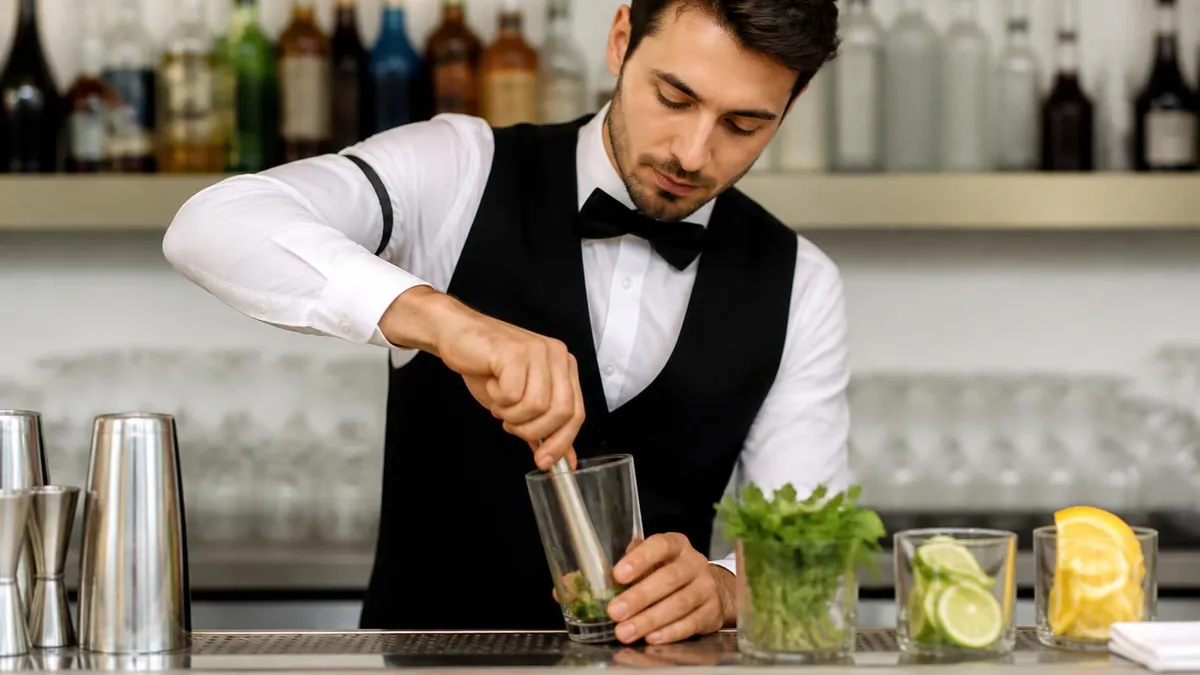
Speed Pour Drills That Actually Work — Four Week Plan
Fill a speed pourer bottle with water. Pour into a graduated cylinder for a count of four (one-Mississippi, two-Mississippi, three-Mississippi, four-Mississippi). Measure. Adjust. Repeat 20 times per session, twice daily for seven days. By day four, your four-count should hit 1.5 oz plus or minus 0.1 oz consistently. By day seven you should not even think about counting — the rhythm becomes automatic.
This is the single most important week of the entire drill regimen. Bartenders who skip it never develop reliable free-pour. Stick with it even when it feels boring — boredom is when the muscle memory locks in.
What Bar Managers Actually Test on Tryout Shifts
Here is what nobody tells you about a bartender tryout. The manager is not testing whether you know every cocktail on Earth. They are testing five specific things, in this order: speed, accuracy of pour, accuracy of recipe, customer interaction, and station cleanliness. Get four out of five right and you get the job. Miss two and you go home with a polite handshake.
Speed test
Most tryouts open with a manager calling out three to four drinks at once. They time you with their phone. Anything over 90 seconds for four standard cocktails and you are out. Practice the multi-ticket drill from week four above until you can hit 45 to 60 seconds for four drinks. That margin gets you the job.
Pour accuracy test
The classic test is the empty-bottle, four-count pour into a 1.5 oz jigger. Some bars use a glass-floor pour into the trash drain (Bacardi has been doing this version since 1996). You get five shots. Three out of five within 0.1 oz passes. Four out of five impresses. Five out of five and the manager will fight to hire you immediately.
Recipe accuracy test
The manager calls a cocktail (usually a Sidecar, Aviation, or Negroni — drinks you cannot fake) and watches you build it. They want to see correct ratio, correct glassware, correct technique (shake versus stir), and correct garnish. Missing any one of those four signals an inexperienced bartender. Drill the 11 IBA Unforgettables until you can build any one cold.
Customer interaction
The manager will pretend to be a difficult guest. They order something obscure (an Adonis or a Bee's Knees) to see how you handle not knowing. Correct answer: ask one clarifying question, suggest a similar drink you do know, and offer to make whatever they want with guidance. Never lie. Never get defensive.
Station cleanliness
This is the silent killer. Managers walk your station mid-shift looking for sticky surfaces, dirty rags, empty garnish trays, full trash bins, and bottles facing the wrong way. A clean station tells them you will not be a liability when the real Friday rush hits at 9:30pm. Wipe down between every drink, never let a tin sit dirty for more than 30 seconds.
If you nail those five tests, you are working that bar by next Tuesday. The drinks themselves are almost secondary. Speed and presentation win the job — recipe knowledge keeps it. Most managers will tell you within an hour whether they want to hire you. Pay attention to body language during the tryout.
Beverage Mix on a Typical Friday Night
Cocktails get the glory but they are only part of the ticket. Know your full beverage program cold.
Wine, Beer, and the Drinks That Are Not Cocktails
Bartenders pour more than cocktails. On a typical Friday night, your ticket mix breaks down to about 40 percent cocktails, 30 percent beer, 25 percent wine, and 5 percent shots and shooters. Know your beer and wine cold or the cocktail knowledge alone will not save you when 12 tickets stack at once.
Beer essentials
Memorize your tap list including ABV, IBU, and style for every line. Know the difference between an IPA, a hazy IPA, a West Coast IPA, and a double IPA. Be able to explain a sour, a saison, a kolsch, a pilsner, and a stout in one sentence each. Most guests want a recommendation based on what they normally drink — practice the upsell from Miller Lite to a local pilsner.
Pouring technique matters more than guests realize. A clean pour is 75 percent beer, 25 percent head. Tilt the glass at 45 degrees, pour halfway, straighten the glass, pour to the top. The head releases aroma and protects the carbonation. Flat beer with no head means a dirty tap line or a lazy pour. Never serve flat draft beer.
Wine basics every bartender needs
You do not need a sommelier certification, but you should know the difference between Pinot Noir, Cabernet, Merlot, Malbec, and Syrah on the red side. White wines: Chardonnay, Sauvignon Blanc, Pinot Grigio, Riesling, Albarino. Be able to suggest a pairing with the three most-ordered entrees on the menu. The standard pour is 5 to 6 oz — use a wine pourer or pour by line on the glass.
Champagne and sparkling wine open without drama. Hold the cork firmly, twist the bottle slowly (never the cork), let the gas escape gradually. A loud pop is unprofessional in upscale bars. Pour into chilled flutes or coupes. Top with a fresh strawberry or a sugar cube for special occasions.
Coffee cocktails and after-dinner drinks
Coffee cocktails are a growth category. The Espresso Martini is the obvious one, but learn the Irish Coffee, the Spanish Coffee with rum and crema, the Carajillo (espresso plus Licor 43), and the Italian Coffee with Sambuca. After-dinner drinks like the Grasshopper, Brandy Alexander, and Stinger still show up at dessert.
Stock fresh espresso. Pre-batched coffee for cocktails dies after two hours. If your bar has an espresso machine, learn to pull a shot. If not, a strong cold brew works. Never use drip coffee in a cocktail — it lacks the body and crema that make the drink work properly. The crema is what gives an Espresso Martini its signature foam top.
Final word — repetition beats memorization
The bartenders who last in this industry are not the ones with the biggest recipe encyclopedia in their head. They are the ones who built the same five drinks a thousand times each. Old Fashioned, Margarita, Manhattan, Martini, Espresso Martini. Master those five and you can fake your way through almost any tryout shift while you fill in the gaps on the rest. Bar work rewards depth over breadth — pick the drinks that move the most and obsess over the technique.
Build your reps deliberately. Every shift, pick one cocktail from the IBA Unforgettables list and make it three times in a row to your own standard — perfect pour, perfect garnish, perfect glass temperature. Track your reps in a small notebook. Within two months you will have built each of the eleven IBA classics at least 50 times, which is when the technique becomes automatic and you can finally stop thinking about it during service.
Build Order on a Six-Drink Ticket — Pro Sequence
Step 1 — Beers and Wines First
Step 2 — Shaken Cocktails Together
Step 3 — Stirred Cocktails Together
Step 4 — Highballs and Builds
Step 5 — Garnish All at Once
Step 6 — Ring and Present
Garnish prep is what separates pro bartenders from amateurs on busy nights. Cut a full hotel pan of lemon and lime wheels, orange peels, brandied cherries, and mint sprigs before service. Running out of garnish at 9pm on a Saturday is the most common reason new bartenders get cut from the rotation. Always restock garnish before you slow down.
Sample Bartender Certification Practice Questions
Try these questions from our free Bartender Certification practice tests. The correct answer and an explanation follow each question.
A group of friends is ordering drinks. One individual is visibly intoxicated, but their sober friend offers to buy the next round for them. What should the bartender do?
- A. Serve the drink to the sober friend to give to the intoxicated person.
- B. Refuse to serve any more alcohol to the intoxicated person, explaining the policy to the sober friend.
- C. Only serve the intoxicated person a beer or wine instead of a cocktail.
- D. Ask the entire group to leave the establishment immediately.
Answer: B. Refuse to serve any more alcohol to the intoxicated person, explaining the policy to the sober friend.
It is illegal to serve alcohol to a visibly intoxicated person, and this includes knowingly providing a drink to a third party who will give it to them. The correct action is to politely but firmly refuse service for the intoxicated individual and explain the legal responsibility to the friend.
Why is it important for bartenders to have knowledge of common allergens in drinks?
- A. To avoid legal issues and ensure customer safety
- B. To impress customers with their knowledge
- C. To charge more for allergen-free drinks
- D. To make the job more interesting
Answer: A. To avoid legal issues and ensure customer safety
Knowledge of common allergens is critical for bartenders to protect customers from potentially severe allergic reactions, which can range from mild discomfort to life-threatening anaphylaxis. Ensuring customer safety by preventing exposure to allergens is a fundamental responsibility. This also helps the establishment avoid serious legal issues and maintain its reputation for responsible service.
A new cleaning chemical has been introduced for sanitizing bar surfaces. According to standard safety protocols, where should a bartender be able to find detailed information about its potential hazards, first aid measures, and proper handling instructions?
- A. On the product label itself.
- B. In the employee handbook.
- C. On the Safety Data Sheet (SDS).
- D. By asking a more experienced coworker.
Answer: C. On the Safety Data Sheet (SDS).
A Safety Data Sheet (SDS), formerly known as MSDS, is a standardized document that contains comprehensive information about a chemical's properties, hazards, handling precautions, and emergency procedures. Employers are required to make these sheets accessible to employees for all hazardous chemicals used in the workplace.
How should a bartender handle a situation where a customer appears to be intoxicated?
- A. Ignore the situation and continue serving drinks
- B. Politely refuse to serve them more alcohol and offer water or food instead
- C. Offer them a stronger drink to keep them happy
- D. Call the police immediately
Answer: B. Politely refuse to serve them more alcohol and offer water or food instead
Bartenders have a legal and ethical responsibility to prevent over-intoxication and ensure customer safety. Politely refusing to serve more alcohol and offering non-alcoholic alternatives like water or food demonstrates responsible service. This approach helps de-escalate the situation, protects the customer, and prevents potential legal liabilities for the establishment.
Bartender Questions and Answers
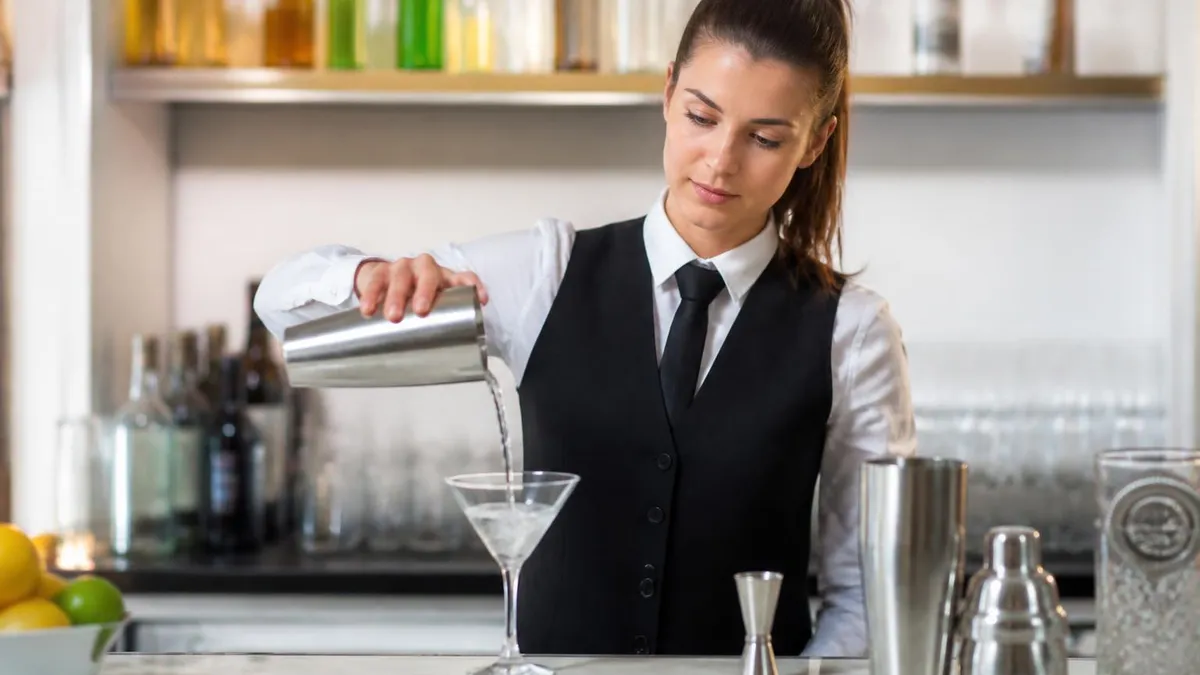
Bartending Certification: Complete Guide to Licensing, Training, and Career Success in 2026
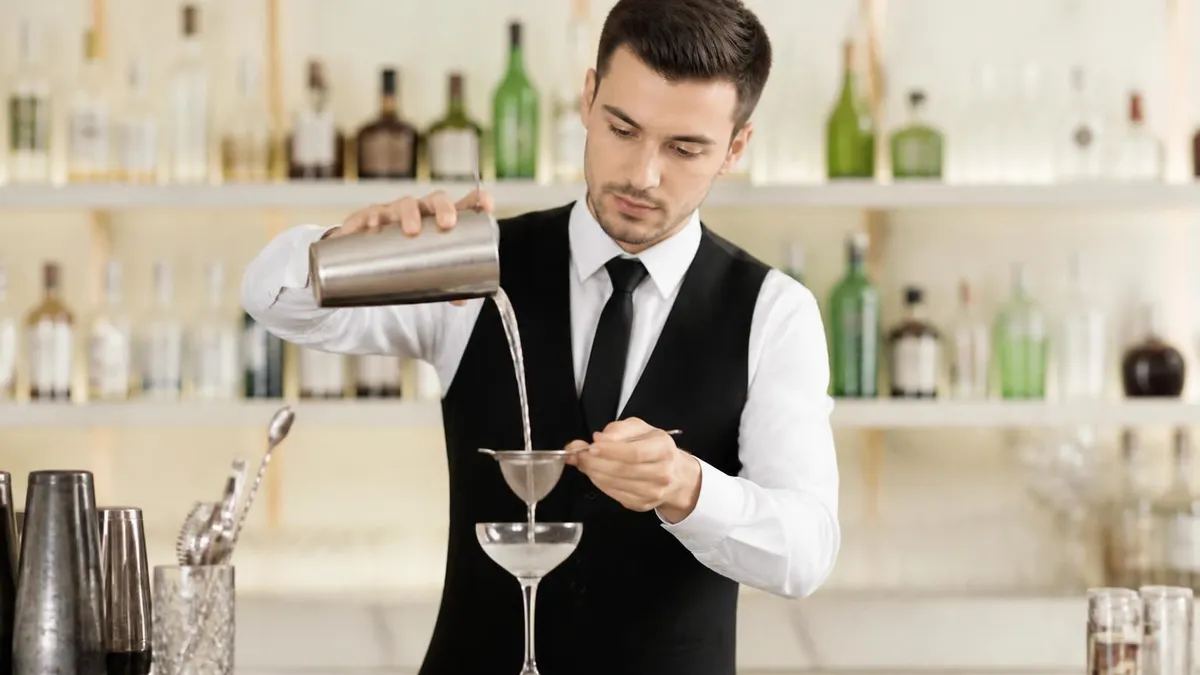
Shot Bartending Techniques: The Complete Guide to Speed, Style, and Service Behind the Bar
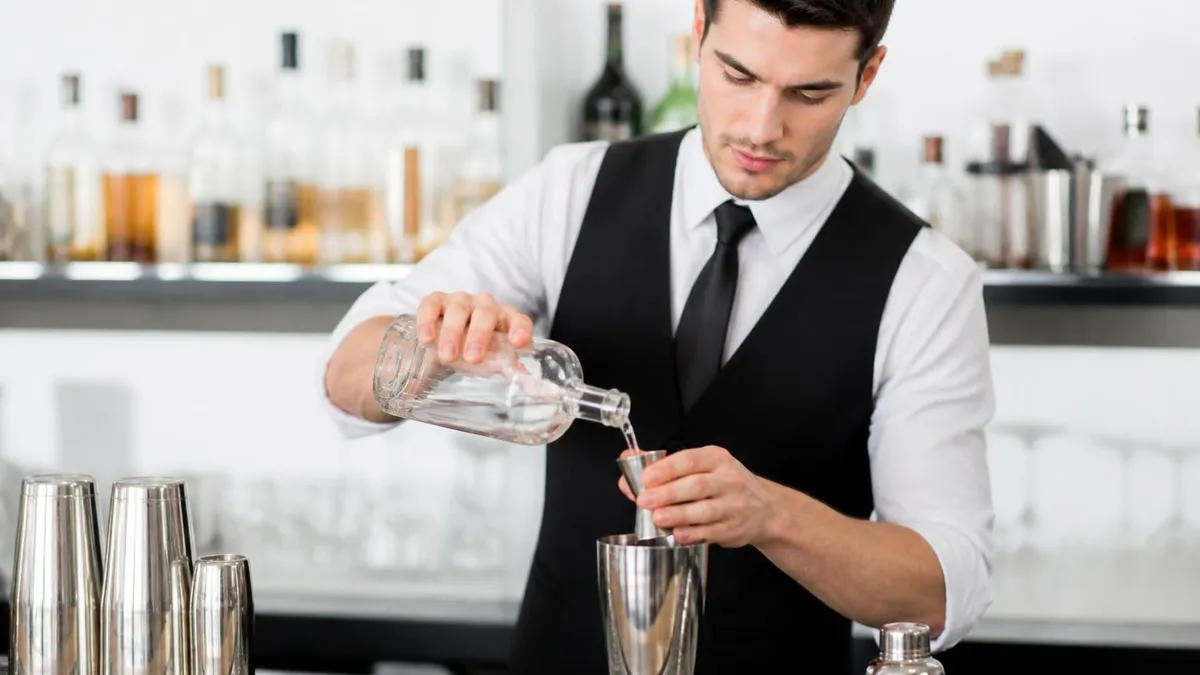
Bartending Terminology: The Complete Glossary of Bar Lingo, Drink Terms, and Industry Slang for 2026
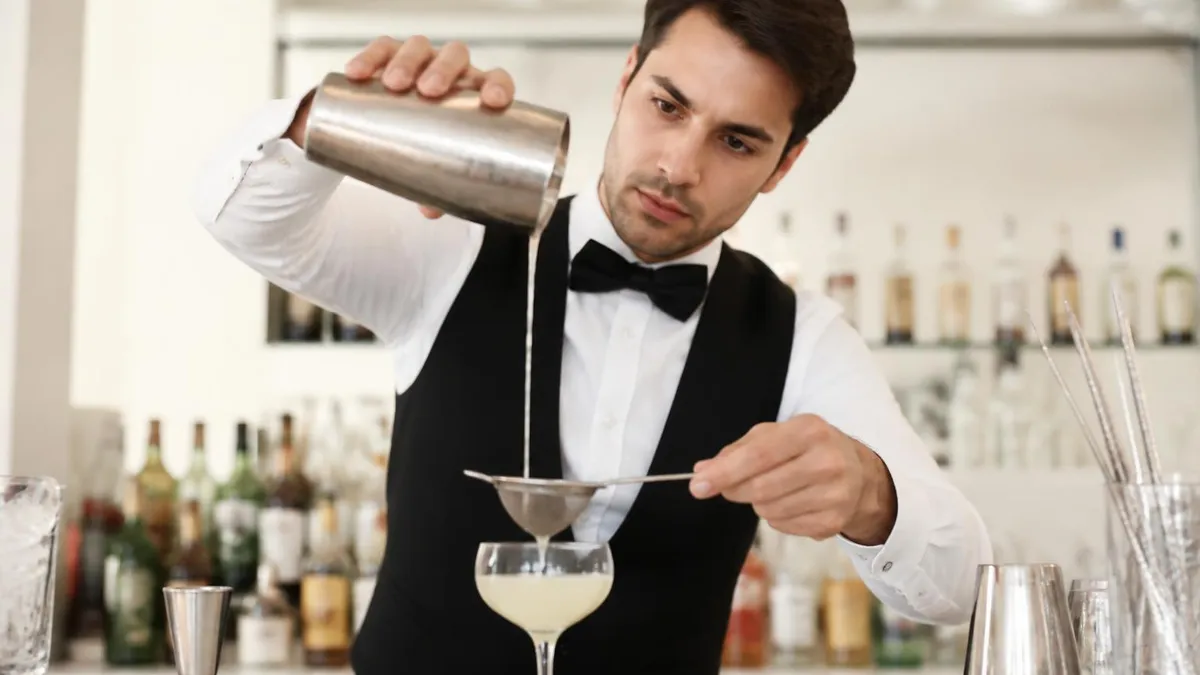
Requirements to Be a Bartender: Age, Training, Licenses & Skills in 2026
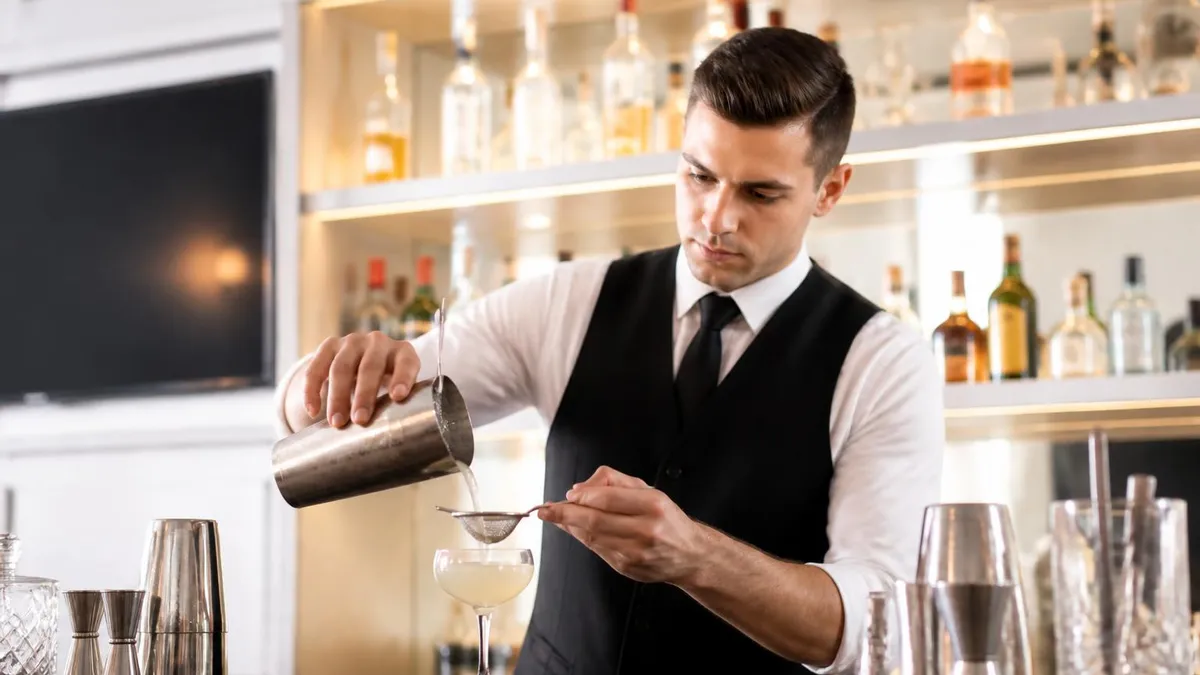
Bartender Interview Questions: 50+ Real Questions With Sample Answers for 2026
About the Author
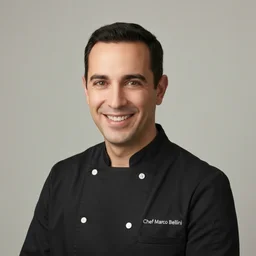
Executive Chef & Culinary Arts Certification Educator
Culinary Institute of AmericaChef Marco Bellini is a Certified Executive Chef and graduate of the Culinary Institute of America with over 20 years of professional kitchen experience in Michelin-recognized restaurants. He teaches culinary arts certification, food safety, and hospitality exam preparation, having guided thousands of culinary students through their ServSafe, ProStart, and professional chef certifications.
Join the Discussion
Connect with other students preparing for this exam. Share tips, ask questions, and get advice from people who have been there.
View discussion (7 replies)