
Ice in Bartending Lingo: The Complete Guide to Bar Terminology Every Bartender Must Know
Learn ice in bartending lingo and essential bar terminology. 🧠 Master the language of professional bartending for certification success.

Understanding ice in bartending lingo is one of the most overlooked yet critically important skills a new bartender must master. When a seasoned bartender calls for a "rocks" drink or asks you to "crack some cubes," they're not speaking casually — they're using a specialized professional vocabulary that has developed over more than a century of craft bartending. Whether you're preparing for your bartender certification exam or stepping behind the stick for the first time, fluency in this language separates beginners from true professionals who can keep pace in any fast-moving bar environment.
Bar lingo extends far beyond ice terminology, though ice is undeniably central to the craft. The type of ice used in a cocktail directly affects dilution, temperature, presentation, and overall drink quality. A "neat" pour contains no ice whatsoever, while a "rocks" drink is served directly over ice in an old-fashioned glass. A "bruised" spirit refers to one that has been over-shaken with too much force, causing excessive aeration and dilution. Knowing these distinctions lets you communicate instantly with colleagues and execute orders precisely, even during the most chaotic Saturday night rush you'll ever experience.
Professional bartending lingo also covers every facet of drink preparation, from glassware and measurements to technique and service. Terms like "up," "straight up," "dry," "dirty," and "perfect" each carry precise meanings that shape the final product a guest receives. A misunderstood term can mean the difference between a satisfied regular and a returned drink, which costs the bar money and chips away at your professional reputation faster than almost anything else behind the bar.
For certification candidates, mastering bar terminology is not just a nice-to-have skill — it is frequently tested on bartending exams and evaluations. Questions about proper techniques, drink categories, and ingredient ratios all rely on a shared vocabulary. If you don't know that "float" means to gently layer a spirit on top of a drink rather than mixing it in, or that "muddle" means to gently crush herbs and fruit at the bottom of a glass to release their essential oils, you will struggle both on paper tests and during live practical assessments that evaluators conduct on the floor.
The history of bartending vocabulary is rich and surprisingly deep. Many terms trace back to the golden age of the American cocktail in the late 1800s and early 1900s, when legendary bartenders like Jerry Thomas codified drink-making in their published guides. Other terms emerged from Prohibition-era speakeasies, regional bar cultures, and the global craft cocktail renaissance of the 2000s that introduced new techniques, glassware, and preparation styles that required entirely new descriptive language to communicate efficiently between staff members.
This guide breaks down the most essential bartending terms you need to know, with a special focus on ice terminology, preparation techniques, drink modifiers, and the professional language used during bar service. Whether you are studying for the Responsible Vendor exam, a state-specific alcohol awareness certification, or a general bartending skills assessment, the vocabulary covered in this article will sharpen your knowledge and boost your confidence when answering terminology-based questions on any official evaluation.
By the time you finish reading, you will have a comprehensive working vocabulary that covers ice types and usage, classic drink modifiers, pouring terminology, glassware names, and customer service language. These are the building blocks of professional bar communication, and fluency in them will help you pass your certification, impress during job interviews, and perform with precision once you are working regular shifts behind any bar.
Bartending Lingo by the Numbers

Ice Types Every Bartender Must Know
The workhorse of the bar. Standard 1-inch cubes are used for shaking, stirring, and serving most mixed drinks. They melt at a moderate rate, providing controlled dilution while keeping drinks cold during preparation and service.
Irregular pieces broken from larger ice blocks. Used in juleps and swizzles where fast chilling and moderate dilution are desired. Cracked ice increases surface area contact with liquid, cooling drinks more rapidly than whole cubes.
Fine, snow-like ice used in tiki drinks, mint juleps, and certain blended cocktails. It chills instantly but dilutes quickly, so bartenders must work fast. Crushed ice is also used decoratively to fill serving vessels like coconut shells.
A 2-inch or larger single cube placed in an old-fashioned glass for spirit-forward cocktails like Manhattans or Old Fashioneds. Melts slowly to minimize dilution while keeping the drink cold for extended sipping periods.
Soft, chewable ice popular in highballs and non-alcoholic beverages. It absorbs liquid flavors and has a satisfying texture. Found in commercial ice machines at bars that prioritize guest experience and drink presentation quality.
Once you have a solid grasp of ice terminology, the next layer of essential bar vocabulary covers drink modifiers — the qualifying words guests add to their orders that fundamentally change how a drink is prepared or served. These modifiers are non-negotiable knowledge for any working bartender. A guest who orders a "martini" is making a choice, but a guest who orders a "dry martini, up, with a twist" is giving you a precise four-part specification that requires you to understand every component of that instruction to execute the order correctly.
The term "neat" is one of the most important modifiers in bar vocabulary. It means a spirit is poured at room temperature directly into a glass with zero ice, zero mixers, and zero dilution of any kind. This is how serious whiskey and brandy drinkers often prefer their pours.
By contrast, "straight up" or simply "up" means a drink has been chilled — typically shaken or stirred with ice — but then strained into a stemmed glass with no ice in the final serving vessel. These two terms are frequently confused by new bartenders, and that confusion can lead to incorrect pours that disappoint guests who have very specific preferences about how their drinks should be served.
The modifier "on the rocks" means served over ice, usually in a lowball or old-fashioned glass. "Dirty" in the context of a martini means olive brine has been added to the mix, giving the drink a salty, savory quality that changes both flavor and appearance. "Dry" means very little or no vermouth in a martini — sometimes just a rinse of the glass, sometimes a single small dash. "Perfect" refers to an equal split between sweet and dry vermouth, most commonly used in classic Manhattan and martini variations, giving the drink a balanced, slightly bitter herbal quality.
Pouring terminology is equally important. A "free pour" is when a bartender measures spirits by counting seconds rather than using a jigger. Most bars train bartenders to pour at a rate that delivers approximately one-half ounce per second, so a four-count pour equals two ounces. A "jigger pour" uses a measured metal cup to ensure exact volume every time, which is preferred in craft cocktail bars where precision is paramount and recipe consistency is a core brand value that management actively monitors and enforces on every shift.
"Floating" a spirit means pouring it very slowly over the back of a bar spoon so it rests on top of the drink without mixing in. This technique is used in layered shots and specialty cocktails to create visual appeal. A "roll" means to pour a drink back and forth between two tins without a shaking motion — it blends ingredients gently without introducing significant aeration. Rolling is commonly used for Bloody Marys, where a smooth texture without bubbles is preferred by most guests ordering this classic brunch cocktail.
Muddling is a fundamental technique with its own vocabulary. A "muddled" drink has herbs, fruit, or sugar pressed at the bottom of the glass using a muddler tool to release essential oils and juices. Over-muddling herbs like mint releases bitter chlorophyll from the plant stems and leaves, which ruins the freshness of the drink. Under-muddling fails to extract enough flavor. The skill is in applying just enough pressure to release oils without destroying the plant material entirely, a distinction that separates competent bartenders from excellent ones.
Glassware lingo is another area where certification candidates must be fluent. A "highball" glass is a tall, straight-sided glass for drinks like gin and tonic or rum and Coke. A "rocks" or "old-fashioned" glass is short and wide, used for spirit-forward drinks served over ice. A "coupe" is a shallow, stemmed glass ideal for serving cocktails "up" with elegant presentation. A "pint" glass is used for beer service. Knowing these names instantly — without hesitation — is a baseline expectation at any professional bar, and misidentifying glassware during a certification practical exam will cost you points.
Bar Lingo by Category: Spirits, Service, and Tools
Spirit terminology covers the base alcohols and their classifications. A "well" spirit is the house-brand liquor used in standard mixed drinks when no brand is specified by the guest. A "call" drink uses a specific named brand the guest requests, such as Tanqueray gin or Patron tequila. A "top shelf" spirit is a premium brand displayed at eye level, typically commanding a higher price point. Understanding these tiers helps bartenders upsell, manage inventory, and respond correctly to vague orders like "give me a gin and tonic" without asking unnecessary clarifying questions.
Cocktail families also have defined vocabulary. "Sours" are drinks made with a base spirit, citrus juice, and a sweetener. "Highballs" combine a spirit with a large volume of a non-alcoholic mixer like soda or juice over ice. "Stirred" cocktails like the Negroni or Manhattan are mixed exclusively with ice and a bar spoon, never shaken, to maintain a clear appearance and silky texture. A "shooter" is a small-volume drink meant to be consumed in one sip, while a "chaser" is a drink consumed immediately after a shot to moderate the alcohol's intensity.

Free Pour vs. Measured Pour: Which Method Is Right for You?
- +Free pouring is faster during high-volume service rushes
- +Experienced bartenders can maintain consistent pours through muscle memory
- +Eliminates time spent picking up and replacing jiggers between drinks
- +Creates a more fluid, theatrical bartending style that engages guests
- +Reduces equipment to clean and maintain at end of shift
- +Allows subtle adjustments based on guest preference without obvious measuring
- −Free pouring introduces variance that increases pour cost over time
- −New bartenders rarely have consistent enough technique for reliable free pours
- −Most craft cocktail programs and upscale bars require measured jigger pours
- −Alcohol compliance audits and inventory checks expose over-pouring instantly
- −Inconsistent pours mean guests who return get different tasting drinks each visit
- −Free pouring is prohibited or discouraged by policy at many hotel and chain bar programs
Bartending Lingo Certification Vocabulary Checklist
- ✓Define and distinguish 'neat,' 'straight up,' and 'on the rocks' without hesitation
- ✓Name all six common ice types and explain when each is used in drink preparation
- ✓Explain the difference between 'dry,' 'dirty,' and 'perfect' cocktail modifiers
- ✓Identify a Boston shaker, cobbler shaker, Hawthorne strainer, and julep strainer by name
- ✓Define 'well,' 'call,' and 'top shelf' and explain how each affects drink pricing
- ✓Explain what 'float,' 'layer,' 'roll,' and 'muddle' mean as preparation techniques
- ✓Name the correct glassware for: martini, old fashioned, highball, pint, and shot
- ✓Define 'last call,' '86'd,' 'running a tab,' and 'two-top' as service terms
- ✓Explain what a 'free pour' is and how a four-count equals approximately two ounces
- ✓Define 'bitters,' 'tincture,' 'shrub,' and 'syrup' as bar ingredient categories
The Right Ice Is Not Optional — It's a Technique
Using the wrong ice type is one of the most common mistakes new bartenders make. A large-format King cube in a spirit-forward cocktail reduces dilution and preserves flavor integrity for up to 30 minutes of slow sipping. Crushed ice in the same drink would cause over-dilution within five minutes, fundamentally altering the guest's experience and undermining the quality of premium spirits being served.
Applying bartending lingo correctly on the job is a skill that develops through active use, not passive memorization. When you first start working behind the bar, you may feel self-conscious about using terminology confidently, especially in a fast-paced environment where senior bartenders and kitchen staff are moving quickly around you. The key is to practice speaking in bar vocabulary during every interaction — with your colleagues, your trainers, and even when practicing at home with your bar tools — so that the language becomes second nature before you ever face a busy Friday night service on your own.
Communication speed is a major reason bar lingo evolved in the first place. Shouting "I need a chilled, strained, spirit-and-vermouth drink in a stemmed glass with no garnish" is impractical when dozens of orders are coming in simultaneously. Instead, "one dry martini, up, no garnish" communicates the same information in six words. This compression is the functional purpose behind professional bar vocabulary. Every term that seems like jargon to outsiders actually represents a meaningful, precise shortcut that makes the entire team work more efficiently when everyone on staff understands the shared language perfectly.
During on-the-job training at your first bar position, you will likely encounter house-specific lingo that supplements the universal bar vocabulary. Every bar has its own nicknames for house cocktails, preferred shorthand for common orders, and internal codes for specific situations. Adapting to these house terms while retaining your foundation of universal bar vocabulary is part of becoming a versatile professional who can transfer their skills from one establishment to another without a steep re-learning curve each time they change jobs or shift venues.
Customers often use their own imprecise versions of bar terms, and part of a skilled bartender's job is to interpret those casual requests correctly. A guest who says "make it a little lighter" after receiving a cocktail probably wants more mixer and less spirit, but they might also be referring to color, sweetness, or temperature. Learning to read context clues — glass type, what the guest ordered before, their body language — alongside the actual words they use is a form of professional communication that goes beyond vocabulary and enters the realm of genuine hospitality expertise.
Training newer staff on bar terminology is often part of a senior bartender's unofficial responsibilities. When you become the experienced one on the team, your ability to explain terms clearly, demonstrate techniques, and correct misconceptions quickly becomes a valuable leadership quality. Bars that maintain high standards of vocabulary consistency tend to have fewer drink errors, fewer guest complaints, and more efficient service overall, which translates directly into better sales performance and higher tip averages for the entire bar team working any given shift.
Technology is also changing bar communication. Digital point-of-sale systems now include modifier buttons for most of the common bar terms, making it faster for servers to input precise orders. But the underlying vocabulary still needs to be understood by the bartender receiving those printed tickets. A ticket that reads "2 Titos Soda tall extra ice" requires the bartender to know that "tall" means a highball glass, "extra ice" means filled to the brim, and the standard pour of Tito's should remain the same unless the modifier "double" or "light" appears on the ticket alongside those other specifications.
Ultimately, mastering bar lingo is an investment that pays dividends throughout your entire career in the hospitality industry. Bartenders who communicate with precision and confidence earn the respect of their peers, build stronger relationships with regular guests, perform better on certification assessments, and advance more quickly into lead bartender and bar manager roles where communication skills are just as important as technical drink-making ability. The language of bartending is the foundation on which every other professional skill is built.

Many state bartending certification and responsible vendor exams include questions that test your knowledge of drink preparation terms, service vocabulary, and alcohol category definitions. Candidates who treat terminology as background knowledge rather than testable material often lose easy points on questions they could have answered correctly with focused vocabulary review. Include at least two full study sessions dedicated entirely to bar lingo before your exam date.
Preparing for a bartending certification exam requires a study strategy that explicitly addresses bar vocabulary, and one of the most effective approaches is to create category-based flash cards that group related terms together rather than studying them in random order. Group ice terms together: neat, rocks, cracked, crushed, large format.
Group service terms together: 86'd, last call, running a tab, camper. Group technique terms together: shake, stir, roll, float, muddle, layer. This categorical approach creates mental clusters that are easier to recall under the time pressure of an actual exam environment, where seconds of hesitation can cost you points across multiple questions.
Practical application reinforces vocabulary far more effectively than reading alone. If you have access to a home bar setup or a practice kit, make a point of narrating your actions using correct terminology while you build practice cocktails. Say out loud "I'm adding standard cubed ice to the Boston tin for shaking" or "I'm straining this stirred Manhattan through a julep strainer into a chilled coupe." Saying the terms while performing the actions creates muscle memory associations between words and movements that make recall much more reliable when you need to perform on demand during a practical skills evaluation.
Study groups with other certification candidates are particularly valuable for vocabulary retention. Peer quizzing, where one person calls out a term and another must define it within three seconds, simulates the rapid recall demands of both exam questions and real bar service. Group members often remember different terms clearly, which means that pooling knowledge and teaching each other creates stronger collective mastery than individual study alone. Many bartending schools actively encourage this format during the preparation weeks leading up to certification testing dates throughout the year.
Online resources can supplement your terminology study effectively. Reputable bartending websites, certification program study guides, and published cocktail reference books like the Bar Smarts Advanced program materials or the International Bartenders Association official cocktail guide all contain standardized vocabulary that aligns closely with what certification exams test. Cross-referencing multiple sources ensures you encounter the same terms presented in different contexts, which deepens your understanding beyond simple definition memorization into genuine conceptual comprehension of why each term matters in practice.
Don't overlook the vocabulary embedded in bar law and regulations, which certification exams test separately from drink preparation terminology. Terms like "dram shop liability," "third-party liability," "visible intoxication," "blood alcohol concentration," and "safe harbor" all represent legal concepts that bartenders in most US states must understand to hold responsible vendor certification. These regulatory terms have precise legal meanings that differ meaningfully from casual everyday language, and confusing them on an exam — or worse, in a real service situation — carries serious professional and legal consequences.
As you advance in your bartending career, your vocabulary will naturally expand to include regional specialties, craft cocktail movement terminology, and the specific lexicon of whatever style of bar you work in most often. Craft cocktail bars have a vocabulary that includes terms like "fat washing," "clarification," "force carbonation," "oleo saccharum," and "barrel aging" that you won't find in a standard certification study guide but are essential knowledge for high-end cocktail programs. Sports bars and neighborhood taverns have their own operational vocabulary centered on speed, volume, and draft beer service rather than artisanal preparation.
The foundation you build now — through systematic study of the core vocabulary covered in this guide — will support all of that future specialized learning. Bartending lingo is a living language that continues to grow and evolve as the industry does, but the central vocabulary around ice, preparation techniques, drink modifiers, and professional service communication has remained remarkably stable for decades and continues to form the backbone of how professional bartenders talk to each other, to their managers, and to the guests who sit down at their bars every single night.
The most practical piece of advice for bartenders learning bar terminology for the first time is to focus on the terms that appear most frequently in real bar interactions rather than trying to memorize every possible piece of vocabulary at once.
The 80/20 rule applies powerfully here: roughly 20 percent of bar terms account for about 80 percent of the vocabulary you'll actually use and be tested on during a typical shift. Ice modifiers, drink preparation terms, standard glassware names, and basic service vocabulary form this essential core that you should master first before diving into more obscure or specialized terminology.
When studying ice-related terminology specifically, practice connecting each ice type to the drinks it is used in. Crushed ice belongs in juleps and tiki drinks. Large format ice belongs in spirit-forward sippers. Standard cubed ice goes into shaken and stirred drinks during preparation. Cracked ice goes into swizzles and juleps where you want fast surface-area chilling. Making these drink-to-ice connections in your mind means that when an exam question asks which ice type should be used for a specific cocktail style, you can answer from practical logic rather than abstract memorization alone.
Shadowing experienced bartenders during training shifts is one of the highest-value activities available to certification candidates who have access to it. Watch how senior bartenders call out orders, respond to guest modifiers, describe preparation techniques to new staff, and communicate with the kitchen and floor team. Every time you hear a term you don't know, write it down and look it up during your break. This real-world vocabulary absorption happens faster than any study guide can replicate, because you're hearing terms used in context by professionals who have internalized them through years of repetitive daily use in real service environments.
Mock exams are an invaluable vocabulary assessment tool in the weeks leading up to your certification test. When a practice question uses a term you don't immediately recognize, flag it, look it up, and add it to your active review list. Many candidates make the mistake of only tracking questions they answered wrong without also tracking the terms that caused hesitation even when they guessed correctly. Hesitation on a term during a timed exam costs you time that compounds across the full question set, potentially preventing you from finishing all questions before the clock runs out.
Physical repetition of techniques alongside vocabulary works especially well for kinesthetic learners. If you are studying what "bruised" means, actually shake a drink too hard and observe how the aeration changes its texture. If you are studying what "neat" looks like, pour a whiskey neat and a rocks whiskey side by side and compare them. Making the vocabulary tactile and visual rather than purely abstract dramatically accelerates retention and recall, especially for practical skills components of certification programs that include both a written exam and a hands-on demonstration of your ability to prepare drinks correctly and safely.
Finally, remember that the goal of certification vocabulary is not to impress anyone with technical language but to communicate precisely in a high-stakes professional environment. Every term you master is a tool that reduces misunderstandings, speeds up service, ensures drink quality consistency, and contributes to the overall culture of professionalism that distinguishes great bars from average ones. Your command of bar lingo is a direct reflection of your commitment to the craft, and guests, managers, and colleagues will notice and appreciate that level of dedication from the very first shift you work with confidence in the vocabulary of your profession.
Whether you are weeks away from your first certification exam or already working shifts and looking to sharpen the professional vocabulary you use daily, consistent focused practice with the terms in this guide will produce measurable improvements in both your test scores and your on-the-job performance. The investment of time is modest compared to the career-long returns that come from speaking the language of professional bartending with genuine fluency, precision, and confidence in every setting where your skills are evaluated or displayed.
Bartender Bartender Questions and Answers
Bartending Kit: The Complete Tool Guide for Certification Prep
Bartender Age Requirements by State
Wisconsin Bartending License: Operator's License Guide 2026
Bartending Classes Near Me: How to Find, Compare, and Choose the Right Local Training Program in 2026
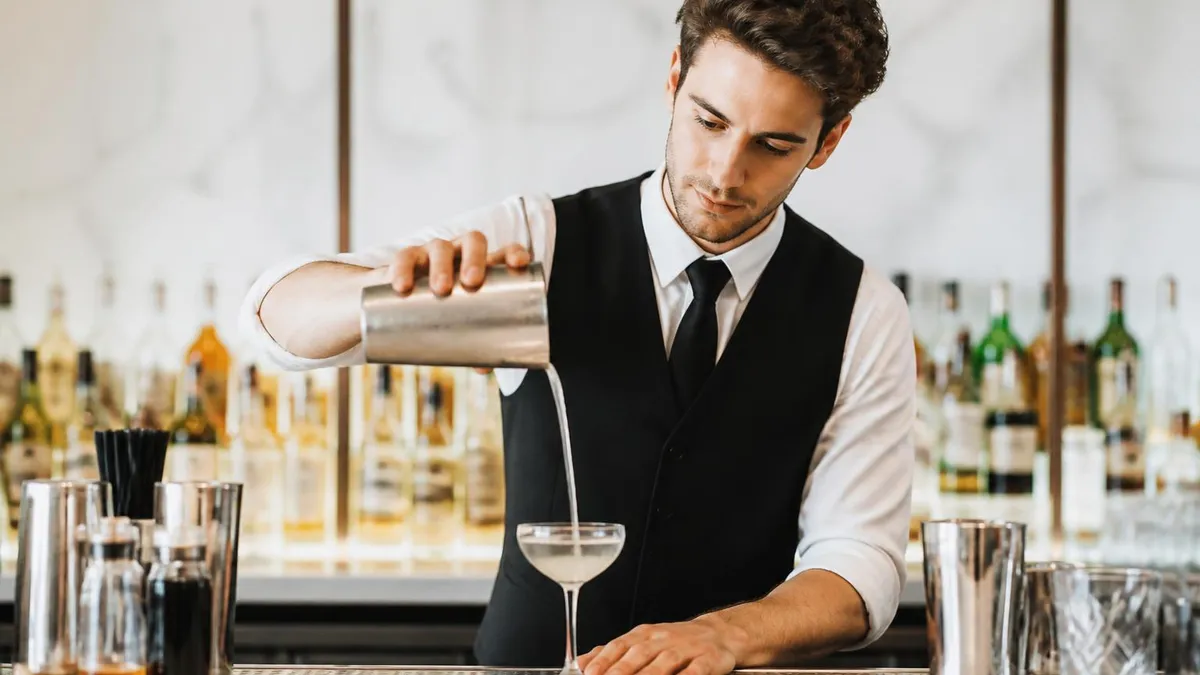
How to Become a Bartender by State: Complete Requirements Guide for All 50 States
About the Author
Executive Chef & Culinary Arts Certification Educator
Culinary Institute of AmericaChef Marco Bellini is a Certified Executive Chef and graduate of the Culinary Institute of America with over 20 years of professional kitchen experience in Michelin-recognized restaurants. He teaches culinary arts certification, food safety, and hospitality exam preparation, having guided thousands of culinary students through their ServSafe, ProStart, and professional chef certifications.
Join the Discussion
Connect with other students preparing for this exam. Share tips, ask questions, and get advice from people who have been there.
View discussion (7 replies)