
ARRT License: Complete 2026 October Guide to Getting Licensed as a Radiologic Technologist
ARRT license guide: ❓ eligibility, application steps, exam, state licensure, renewal CE, and costs. Everything radiologic technologists need in 2026 October.
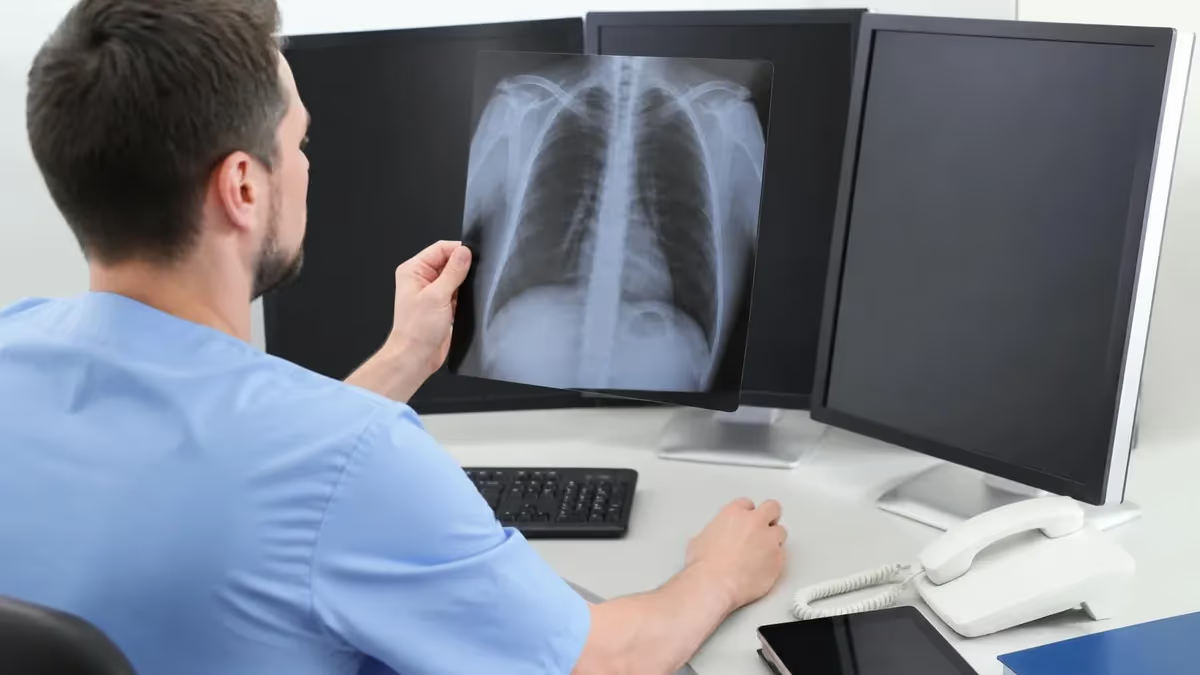
Earning your ARRT license is the single most important credential milestone for any aspiring radiologic technologist in the United States. The ARRT license — formally a certification and registration issued by the American Registry of Radiologic Technologists — verifies that you have met rigorous education, ethics, and examination standards required to operate medical imaging equipment safely on real patients. For most employers and 41 state regulatory boards, this credential is non-negotiable, which is why understanding the licensure pathway early can save you months of wasted effort and thousands in misdirected tuition dollars.
The road to an ARRT license is structured but unforgiving. You must graduate from a JRCERT-accredited program, complete documented clinical competencies, pass an ethics review, and then sit for a computer-based certification exam delivered by Pearson VUE. Each of these steps carries its own paperwork, fees, and deadlines, and missing any one element can delay your credential by an entire testing cycle. The good news is that the ARRT publishes its rules transparently, so candidates who plan ahead almost always succeed on their first attempt.
Most candidates confuse certification with state licensure, and that confusion costs careers. ARRT certification is national — a private credential awarded by the ARRT organization. State licensure, by contrast, is a legal permit issued by your state's department of health that allows you to actually practice on patients within that jurisdiction. In states like California, Texas, Florida, and New York, you must hold both the ARRT credential and a separate state-issued license before you can step into a clinical setting and operate equipment unsupervised.
The radiologic technology profession is growing roughly 6% through 2032 according to the Bureau of Labor Statistics, with average salaries of $77,360 nationally and significantly higher in metropolitan markets. That growth is driven by an aging population, expanded use of CT and MRI in emergency medicine, and a wave of retirements among technologists who entered the field in the 1980s. Holding a current ARRT license positions you to capture those opportunities, especially if you pursue post-primary certifications in modalities like mammography, computed tomography, or interventional radiography.
This guide walks through every component of ARRT licensure in detail: the eligibility pathway, the application process, exam logistics, state-by-state licensure rules, ongoing continuing education requirements, and the cost breakdown most candidates underestimate. We also cover the Structured Self-Assessment (SSA) process that the ARRT introduced to replace traditional CE for some renewal cycles, plus the ethics review process that trips up applicants with prior misdemeanors or academic discipline issues.
Whether you're a high school senior choosing a program, a current student preparing to apply for the exam, or a working tech navigating your first renewal cycle, this resource maps the entire credential lifecycle. We've cross-referenced ARRT's 2026 handbook, JRCERT accreditation standards, and current state licensure statutes to make sure every detail reflects today's rules — not outdated guidance from older blog posts that still circulate online and routinely mislead candidates about fees, deadlines, and documentation.
By the end of this guide, you'll know exactly what stands between you and your ARRT credential, how long each phase takes, what it costs, and how to avoid the procedural pitfalls that delay roughly 15% of first-time applicants. We've also included a complete FAQ addressing the questions most candidates ask their program directors in the final weeks before graduation — including renewal timing, license verification, name changes, and reciprocity between states.
ARRT License by the Numbers
Key Facts at a Glance
| Item | Value | Details |
|---|---|---|
| Initial Exam Fee | $225 | Primary pathway certification |
| Exam Duration | 3.5 hr | 200 questions including pilot |
| Renewal Credits | 24 CE | Every 2-year biennium |
Core ARRT License Requirements
Graduate from a program accredited by the JRCERT or an ARRT-recognized mechanism. Most candidates complete a two-year associate degree in radiologic technology covering anatomy, physics, positioning, and patient care.
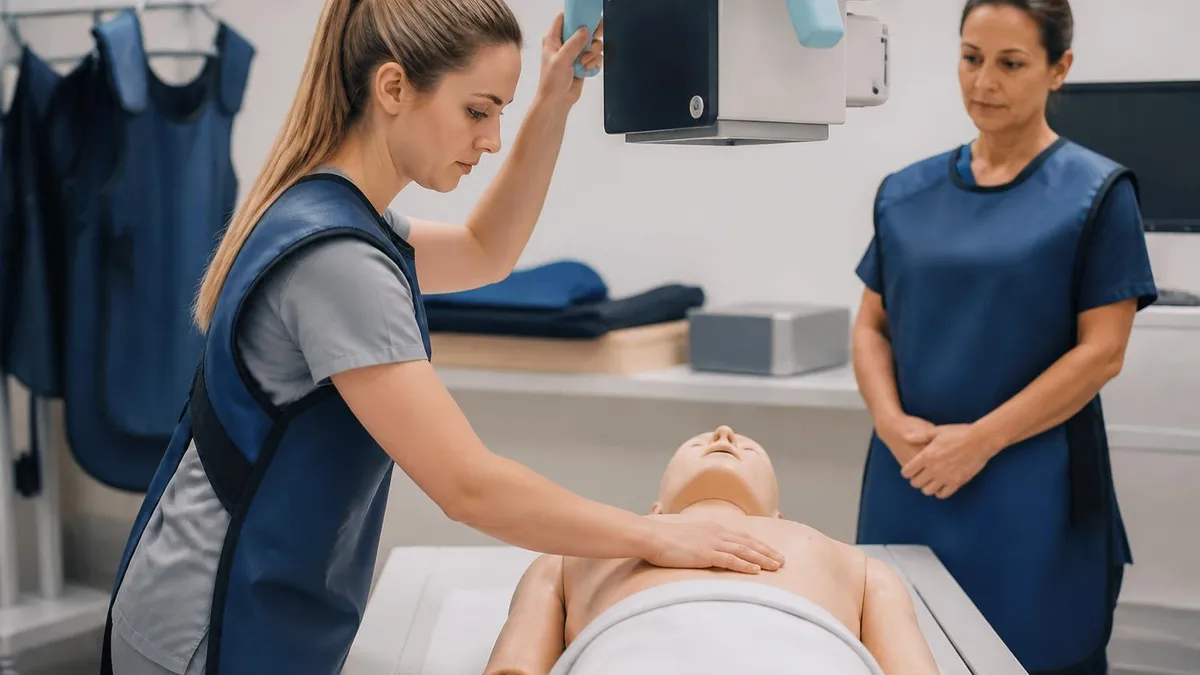
Document successful completion of all required clinical procedures including mandatory and elective imaging exams. Programs verify each competency through observed performance and supervisor signatures across multiple clinical rotations.
Pass the ARRT ethics review by disclosing any criminal convictions, academic discipline, or honor code violations. Pre-application reviews are available for candidates worried about disqualifying history.
Score 75 or higher on the computer-based examination administered at Pearson VUE testing centers. The radiography exam contains 200 multiple-choice questions across five major content categories.
Obtain a separate state license if your state regulates radiologic technologists. Forty-one states require state-level credentialing in addition to ARRT certification before you can practice clinically.
The educational foundation for an ARRT license begins with enrollment in a program accredited by the Joint Review Committee on Education in Radiologic Technology (JRCERT) or another ARRT-recognized accrediting body. Effective January 1, 2015, the ARRT requires candidates to hold at least an associate degree from an institutionally accredited college — a rule that eliminated the older certificate-only pathway. Most accredited radiography programs run 22 to 24 months and combine didactic coursework with roughly 1,500 hours of supervised clinical rotation across multiple imaging settings.
Coursework typically includes radiographic anatomy and physiology, positioning, image production and evaluation, radiation physics, radiation biology, radiation protection, pathology, pharmacology for the imaging professional, and patient care. Programs also embed digital imaging principles, fluoroscopy fundamentals, computed tomography basics, and quality assurance procedures. Students must master ALARA principles — keeping radiation exposure As Low As Reasonably Achievable — because the ARRT certification exam tests this safety philosophy in dozens of scenario-based questions across multiple content domains.
Clinical education is the proving ground where classroom knowledge meets real patients. Students rotate through hospital radiology departments, outpatient imaging centers, urgent care facilities, and specialty units performing examinations under the supervision of registered technologists. The ARRT mandates documented competency in 36 mandatory procedures plus 15 of 34 elective procedures, with each competency requiring satisfactory demonstration on actual patients (not simulated phantoms) and verified by a supervising technologist's signature in the official competency log.
Beyond procedural competencies, candidates must complete general patient care competencies including CPR certification, vital signs measurement, sterile and aseptic technique, venipuncture (in some programs), and patient transfer techniques. These soft skills matter just as much as positioning accuracy because radiologic technologists work directly with vulnerable patients, including pediatric, geriatric, trauma, and intensive care populations. Failure to complete patient care competencies blocks ARRT exam eligibility even if all imaging procedures are documented.
Many candidates pursue the bachelor of science route through programs that integrate the JRCERT-accredited associate-level radiography curriculum into a four-year degree. While the ARRT only requires an associate degree, bachelor's-prepared technologists earn approximately 8-12% more on average, advance more quickly into leadership roles, and find post-primary certifications in CT, MRI, mammography, and interventional radiography easier to pursue. Some employers, particularly academic medical centers, now prefer or require bachelor's-prepared candidates for specialized positions.
Candidates who completed radiography training outside the United States must follow the foreign-educated candidate pathway, which involves credential evaluation by an ARRT-approved agency, demonstration of English proficiency, and verification that the foreign program meets ARRT's didactic and clinical requirements. This process typically takes 6 to 12 months longer than the domestic pathway and may require completion of bridge coursework at a U.S. institution to fill curriculum gaps before exam eligibility is granted.
For comprehensive information about training programs and the broader certification landscape, the American Registry of Radiologic Technologists overview covers accredited program selection, tuition expectations, and post-graduation outcomes in detail. Once you've identified a program that matches your goals, contact the admissions office early because radiography programs are competitive — many accept only 20 to 30 students per cohort and maintain waitlists of qualified applicants stretching one to two years out.
ARRT Practice Test Questions
Prepare for the ARRT - American Registry of Radiologic Technologists exam with our free practice test modules. Each quiz covers key topics to help you pass on your first try.
ARRT - American Registry of Radiologic Tec...
ARRT Exam Questions covering - American Registry of Radiologic Technologists Equipment Operation and QA. Master ARRT Test concepts for certification prep.
ARRT - American Registry of Radiologic Tec...
Free ARRT Practice Test featuring - American Registry of Radiologic Technologists Head and Neck Procedures. Improve your ARRT Exam score with mock test prep.
ARRT - American Registry of Radiologic Tec...
ARRT Mock Exam on - American Registry of Radiologic Technologists Image Acquisition and Evaluation. ARRT Study Guide questions to pass on your first try.
ARRT - American Registry of Radiologic Tec...
ARRT Test Prep for - American Registry of Radiologic Technologists Lower Extremity Procedures. Practice ARRT Quiz questions and boost your score.
ARRT - American Registry of Radiologic Tec...
ARRT Questions and Answers on - American Registry of Radiologic Technologists Patient Care and Management. Free ARRT practice for exam readiness.
ARRT - American Registry of Radiologic Tec...
ARRT Mock Test covering - American Registry of Radiologic Technologists Radiation Physics and Radiobiology. Online ARRT Test practice with instant feedback.
ARRT - American Registry of Radiologic Tec...
Free ARRT Quiz on - American Registry of Radiologic Technologists Radiation Protection Principles. ARRT Exam prep questions with detailed explanations.
ARRT - American Registry of Radiologic Tec...
ARRT Practice Questions for - American Registry of Radiologic Technologists Spine and Pelvis Procedures. Build confidence for your ARRT certification exam.
ARRT - American Registry of Radiologic Tec...
ARRT Test Online for - American Registry of Radiologic Technologists Thorax and Abdomen Procedures. Free practice with instant results and feedback.
ARRT - American Registry of Radiologic Tec...
ARRT Study Material on - American Registry of Radiologic Technologists Upper Extremity Procedures. Prepare effectively with real exam-style questions.
ARRT Contrast Media and Pharmacology
Free ARRT Test covering Contrast Media and Pharmacology. Practice and track your ARRT exam readiness.
ARRT Digital Imaging and Exposure Factors
ARRT Exam Questions covering Digital Imaging and Exposure Factors. Master ARRT Test concepts for certification prep.
ARRT License Application Phases
Candidates apply for the ARRT certification exam approximately 90 days before their program completion date through the ARRT's secure online portal. The application requires personal identifying information, education details, ethics disclosures, and the $225 examination fee. Your program director must submit the official program completion documentation directly to ARRT — applicants cannot upload their own transcripts because the verification chain prevents fraud and ensures only legitimate JRCERT-accredited graduates earn eligibility for the certification examination.
Once ARRT processes the application and education verification, you receive a Candidate Status Report and 90-day window to schedule your exam at any Pearson VUE testing center nationwide. The 90-day clock starts the moment ARRT issues your authorization, so candidates should have testing dates and study plans ready before applying. If you fail to test within the 90-day window, you forfeit the fee entirely and must reapply from scratch — a costly mistake that catches roughly 5% of candidates each cycle.
ARRT License: Advantages and Challenges
- +Nationally recognized credential accepted by virtually every U.S. hospital and imaging center
- +Opens pathways to post-primary certifications in CT, MRI, mammography, and interventional radiography
- +Higher starting salary compared to non-credentialed imaging assistants by roughly 35%
- +Eligibility for state licensure in all 41 regulated jurisdictions without additional examination
- +Strong job security with 6% projected employment growth through 2032
- +Demonstrates commitment to professional ethics and ongoing competency to employers
- +Provides legal authorization to perform medical imaging procedures unsupervised
- −Initial certification cost exceeds $225 plus state licensure fees of $50-$300 additional
- −Requires completion of an accredited two-year associate degree program minimum
- −Renewal demands 24 continuing education credits every two years plus annual fees
- −Ethics review may disqualify candidates with felony or moral turpitude convictions
- −Exam application window of only 90 days creates scheduling pressure for new graduates
- −State licensure rules vary widely, complicating relocation across state lines
ARRT License Pre-Application Checklist
- ✓Confirm your radiography program is JRCERT-accredited and in good standing
- ✓Verify all 36 mandatory clinical competencies are documented and signed
- ✓Complete at least 15 of 34 elective imaging procedures in the official log
- ✓Hold current BLS or CPR certification valid through your expected exam date
- ✓Gather two forms of valid government-issued identification for testing center entry
- ✓Review ARRT Standards of Ethics and complete honest self-disclosure of any violations
- ✓Request pre-application ethics review if you have concerning legal or academic history
- ✓Confirm your program director is ready to submit education verification to ARRT
- ✓Budget $225 for exam fees plus $50 to $300 for state licensure application costs
- ✓Schedule your Pearson VUE exam within the 90-day authorization window immediately
Apply 90 Days Before Graduation
ARRT allows candidates to submit exam applications up to 90 days before their program completion date. Applying early means your authorization to test arrives the moment your program director verifies completion, letting you test within weeks of graduation rather than waiting months. Most successful candidates schedule their exam for 2 to 4 weeks post-graduation to maximize freshness of clinical knowledge while still allowing focused review time on weaker content domains identified through practice testing.
State licensure for radiologic technologists is a parallel credentialing system that operates alongside ARRT certification. Currently 41 states plus Puerto Rico require state-issued licenses or permits to practice medical imaging on humans, while a handful of states — including Alabama, Idaho, Missouri, Nevada, North Carolina, and South Dakota — currently have no state licensing requirement. In unregulated states, ARRT certification alone is sufficient to obtain employment, but most employers still require it as a baseline qualification regardless of state law because hospital accreditation standards demand credentialed personnel.
In regulated states, the process typically requires submitting proof of ARRT certification (or equivalent passing score), completing a state-specific application, paying a fee ranging from $40 to $300, and sometimes passing a state-specific jurisprudence examination covering local radiation control regulations. Texas, California, and New York operate particularly rigorous licensing boards with detailed application requirements, fingerprint-based background checks, and review timelines that can stretch 8 to 12 weeks. Apply for state licensure the same week you pass the ARRT exam to avoid employment delays.
Some states extend licensure requirements beyond general radiography to specialty modalities. Texas requires separate Medical Radiologic Technologist (MRT) licensure with category-specific endorsements for limited scope, mammography, CT, and other modalities. California operates the Radiologic Health Branch, which issues certified radiologic technologist (CRT) credentials with specialized fluoroscopy and mammography permits. New Jersey, Massachusetts, and Florida each maintain distinct application portals, fee schedules, and continuing education requirements that overlap but don't perfectly align with ARRT's national framework.
Reciprocity between states is inconsistent and frequently misunderstood. Holding ARRT certification provides reciprocal recognition in most states because the national credential satisfies the core competency requirement, but each new state will still require its own application, fees, background check, and sometimes additional jurisprudence testing. Plan 6 to 8 weeks lead time when relocating, and never accept clinical employment in a new state until your state license actually issues — practicing without state licensure where required can result in fines, criminal charges, and permanent ARRT ethics violations.
Several states are exploring participation in interstate compacts modeled after the Nurse Licensure Compact, which would allow technologists to practice across member states under a single multistate license. As of 2026, no such compact exists for radiologic technologists, but professional organizations including ASRT continue to advocate for one. Until then, travel technologists working through staffing agencies must obtain individual licenses in every state where they accept assignments, which is why agencies often handle the application logistics on behalf of their contractors as a recruitment benefit.
Limited scope radiography presents an alternative pathway in some states for professionals who only need to perform specific imaging examinations like chest or extremity radiographs. The ARRT offers a Limited Scope of Practice in Radiography exam used by 30 states for licensing non-traditional imaging personnel such as medical assistants in physician offices. This pathway carries lower educational requirements but also limits the scope of allowable procedures, and it does not lead to full R.T.(R) credentialing or the broader career mobility that comes with full ARRT certification.
For a detailed walkthrough of the certification exam itself — including content categories, scoring methodology, and proven study strategies — review the comprehensive arrt exam. Combined with state-specific licensure research through your state health department's website, this resource will eliminate most surprises during the credentialing process and let you focus on what actually matters: passing the exam on your first attempt and stepping into clinical practice without delay.

In the 41 states with radiologic technologist licensing laws, performing imaging procedures on patients before your state license officially issues is illegal — even if you've already passed the ARRT exam and have certification in hand. Penalties include fines, possible criminal charges, employer termination, and permanent ethics violations recorded on your ARRT file. Always verify your state license is active through the state health department's online verification tool before your first day of paid clinical work.
Maintaining your ARRT license requires annual registration renewal and a structured continuing education cycle that ARRT calls the biennium. Each registrant must complete 24 Category A or A+ continuing education credits during every two-year biennium, plus pay the annual renewal fee — currently $80 for the first credential and $35 for each additional certification. Failure to renew on time results in a lapsed credential, which requires reinstatement fees of $200 or more and may trigger a competency demonstration depending on how long the lapse persisted before reinstatement application.
Continuing education credits must come from ARRT-approved sponsors and cover topics directly relevant to medical imaging practice. Acceptable formats include online self-study courses, in-person conference sessions, academic coursework, journal-based learning activities, and instructor-led webinars. Each credit equals one contact hour of education, and at least one credit per biennium must specifically address the ARRT's directed reading topic, which rotates between subjects like radiation safety, patient care ethics, or emerging modality applications relevant to all credentialed technologists.
The ARRT introduced the Continuing Qualifications Requirements (CQR) process in 2011 for technologists certified after January 1, 2011, requiring completion of a Structured Self-Assessment (SSA) every 10 years to demonstrate ongoing competence in your primary discipline. The SSA identifies knowledge gaps through a diagnostic assessment, then assigns personalized continuing education to address weak areas before a competency check-in. Technologists certified before 2011 are grandfathered and exempt from CQR, though most pursue it voluntarily to stay current with practice standards.
Renewal happens through the ARRT online portal during your designated month each year, typically the month of your original certification date. Reminders arrive 90, 60, and 30 days in advance via email, but registrants are responsible for tracking their own deadlines regardless of notification receipt. The renewal process takes about 15 minutes online and requires confirmation of continuing education compliance, ethics attestations, and payment. A grace period of one month allows late renewals with a small late fee before formal lapse status triggers and more expensive reinstatement begins.
Post-primary certifications dramatically expand your career options and earning potential. Once you hold your primary R.T.(R) credential and complete 16 hours of structured education in the target modality plus documented clinical competencies, you can apply for credentials in computed tomography R.T.(R)(CT), magnetic resonance imaging R.T.(R)(MR), mammography R.T.(R)(M), bone densitometry, cardiac-interventional radiography, vascular-interventional radiography, sonography, or radiologist assistant. Each post-primary credential adds $40 to renewal fees but increases salary potential by $8,000 to $25,000 annually depending on modality demand.
License verification is straightforward for employers and licensing boards through the ARRT's public verification portal, which displays current registration status, expiration date, and any credentials held. This transparency benefits both employers conducting hiring due diligence and technologists demonstrating their credentials when applying for new positions or state licenses in additional jurisdictions. Always carry a printable verification certificate during job interviews and bring it to your first day of new employment for the HR file regardless of digital verification availability through the portal.
For broader strategic context on building a long-term radiologic technology career, the rt certification details how primary credentials, post-primary specializations, advanced practice pathways, and management certifications layer together over a career arc. Strategic credentialing — pursuing CT certification within two years of primary credentialing and MRI within five — typically produces the strongest salary trajectory and the broadest geographic flexibility for technologists who want to maximize professional options throughout a 30 to 40 year career in medical imaging.
Practical preparation for your ARRT license combines disciplined study, smart use of practice questions, and realistic logistical planning during the final weeks before exam day. Most successful candidates begin focused exam review 10 to 12 weeks before their scheduled test date, dedicating 15 to 20 hours weekly to content review and question-bank practice. The proven formula divides time across the five content categories — Patient Care, Safety, Image Production, Procedures, and Equipment Operation — with weight matching the ARRT exam blueprint that allocates roughly 35% of questions to Procedures alone.
Question-bank practice is the highest-yield study activity because it builds the rapid pattern recognition needed under exam time pressure. Aim for 50 to 100 practice questions daily during the final six weeks, reviewing every rationale carefully — not just the questions you got wrong. The questions you guessed correctly often reveal knowledge gaps that the test will exploit later through differently worded scenarios. Track your accuracy by content category and devote extra time to the two weakest domains rather than spreading effort evenly across topics you already understand well.
Mock examinations under timed conditions in the final two weeks reveal pacing issues that classroom-style study cannot expose. The ARRT exam allows roughly 60 seconds per question, including the time needed to read lengthy clinical scenarios. Many otherwise prepared candidates fail because they spend three minutes wrestling with a difficult positioning question and then rush through the final 30 items. Practice walking away from a stuck question within 90 seconds, flagging it for review, and returning only after attempting every remaining item that you can answer with confidence first.
Logistical preparation matters as much as content mastery. Confirm your testing center address, parking situation, and traffic patterns at least one week before exam day. Pack your ID and confirmation documents the night before. Avoid cramming on test day — sleep, hydration, and a moderate breakfast outperform any last-minute review attempt. Arrive 30 minutes early to handle check-in without rushing, because heightened cortisol from running late demonstrably reduces working memory performance during the first 45 minutes of high-stakes testing.
If you don't pass on the first attempt, ARRT allows up to three total attempts within a three-year window from initial application. After three failures, candidates must complete additional remedial education before retesting becomes possible. The good news is that failed candidates receive a detailed score report breaking down performance by content category, providing a precise roadmap for targeted retake preparation. Most second-attempt candidates pass when they invest 6 to 8 additional weeks specifically addressing the two weakest categories identified through their score report.
Day-one employment preparation should begin while waiting for exam results because the gap between passing and starting your first job often determines your first paycheck date. Update your resume to reflect R.T.(R)(ARRT) credentials, gather references from clinical instructors, and submit applications to hospitals and imaging centers in your target geographic area. Many employers offer signing bonuses ranging from $2,500 to $10,000 for new graduates willing to commit to two-year contracts, particularly in rural markets and high-cost-of-living urban centers where staffing shortages persist throughout 2026.
Finally, plan your continuing education strategy from day one of credential issuance rather than waiting until renewal deadlines approach. Subscribe to an ARRT-approved CE provider that offers unlimited annual access for $80 to $150, complete two to three credits monthly through online journal articles or directed reading modules, and track everything in the ARRT continuing education tracking system as you go. This habit-based approach virtually eliminates the renewal-cycle panic that drives so many technologists to expensive last-minute conference attendance just to meet biennium requirements before deadline pressure forces emergency action.
Sample ARRT - American Registry of Radiologic Technologists Practice Questions
Try these questions from our free ARRT - American Registry of Radiologic Technologists practice tests. The correct answer and an explanation follow each question.
Under HIPAA, a radiologic technologist may share a patient's imaging results with:
- A. The patient's employer upon request
- B. Another treating physician directly involved in the patient's care
- C. A family member without the patient's consent
- D. An insurance company's marketing department
Answer: B. Another treating physician directly involved in the patient's care
HIPAA permits disclosure of protected health information to other treating providers for the purposes of treatment without additional patient authorization.
When positioning a combative patient for imaging, the radiologic technologist should FIRST:
- A. Apply physical restraints immediately
- B. Administer sedation without physician order
- C. Communicate calmly and assess the cause of agitation
- D. Proceed quickly to minimize exposure time
Answer: C. Communicate calmly and assess the cause of agitation
De-escalation through calm communication and identifying the cause of agitation is the first priority before considering physical or chemical restraints.
According to the National Council on Radiation Protection and Measurements (NCRP), the annual effective dose limit for occupational exposure to a radiologic technologist is:
- A. 1 mSv (0.1 rem)
- B. 5 mSv (0.5 rem)
- C. 150 mSv (15 rem)
- D. 50 mSv (5 rem)
Answer: D. 50 mSv (5 rem)
The NCRP recommends an annual effective dose limit for occupational exposure of 50 mSv (5 rem). This limit is set to minimize the risk of stochastic effects over a worker's career. The limit for the general public is significantly lower.
A patient undergoing an IVU procedure begins to experience urticaria, wheezing, and throat tightness. What is the most appropriate initial action for the radiologic technologist to take?
- A. Administer oxygen and call for a nurse.
- B. Stop the infusion and call for immediate medical assistance.
- C. Administer a dose of epinephrine from the emergency cart.
- D. Reassure the patient that these are common side effects.
Answer: B. Stop the infusion and call for immediate medical assistance.
The patient is exhibiting signs of a moderate to severe anaphylactic reaction to the contrast media. The first and most critical step is to stop the infusion of the contrast agent to prevent the reaction from worsening. Immediately after, the technologist must call for a physician or emergency response team.
Take the full ARRT - American Registry of Radiologic Technologists practice test
ARRT Questions and Answers
American Registry of Radiologic Technologists: Complete Training Guide & Requirements
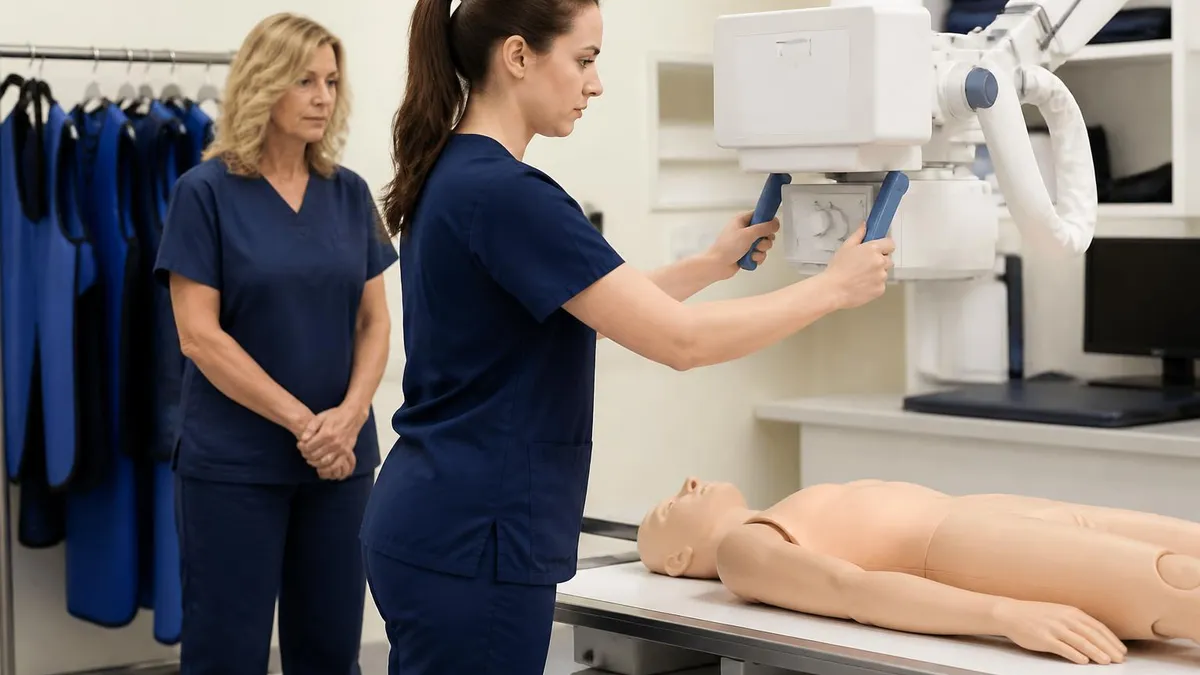
ARRT Exam 2026: Complete Guide to Radiography Certification, Format, Eligibility & Pass Strategy

ARRT Certification 2026–2026 — How to Get Certified as a Radiologic Technologist
ARRT Certification Online: Complete 2026 Training Guide & Requirements
ARRT Certification: Requirements, Exam & How to Get Certified
About the Author

Medical Laboratory Scientist & Clinical Certification Expert
Johns Hopkins UniversityDr. Sandra Kim holds a PhD in Clinical Laboratory Science from Johns Hopkins University and is certified as a Medical Technologist (MT) and Medical Laboratory Scientist (MLS) through ASCP. With 16 years of clinical laboratory experience spanning hematology, microbiology, and molecular diagnostics, she prepares candidates for ASCP board exams, MLT, MLS, and specialist certification tests.