

ARRT Practice Test
Updated November 2026Facts verified Nov 1, 2026 against American Registry of Radiologic Technologists
ARRT: upcoming dates and official changes
- The 2026 ARRT primary handbook lists 230 questions for Radiography, comprising 200 scored questions and 30 pilot questions.[1]
- The 2026 ARRT primary handbook allows 230 minutes for the Radiography examination within a 250-minute appointment.[1]
- The ARRT Radiography examination requires a total scaled score of at least 75, rather than 75 percent correct.[2]
- ARRT annual renewal costs $65 regardless of the number of ARRT credentials held.[3]
- ARRT lists a standard postprimary application fee of $225, with separate higher fees for specified candidates using NMTCB or ARDMS supporting credentials.[4]
- ARRT charges postprimary-pathway candidates $200 to reapply after an unsuccessful first or second examination attempt.[3]
- ARRT permits three attempts to pass a certification and registration examination within three years, beginning with the initial examination window.[5]
- ARRT certification and registration must be renewed annually, with renewal due by 11:59 p.m. Central Time on the last day of the credential holder's birth month.[6]
- ARRT examinations are delivered by computer at Pearson test centers.[7]
Numbers in brackets link to the official sources listed under Sources & last verified. Dates that have passed are removed automatically.
ARRT Exam at a Glance
| Item | Detail | Source · Verified |
|---|---|---|
| Number of questions (Radiography) | 230 questions: 200 scored and 30 pilot[1] | assets-us-01.kc-usercontent.com · Oct 15, 2026 |
| Time limit (Radiography) | 230 minutes testing; 250-minute appointment[1] | assets-us-01.kc-usercontent.com · Oct 15, 2026 |
| Passing score (Radiography) | 75 scaled score; not 75%[2] | American Registry of Radiologic Technologists · Oct 18, 2026 |
| Exam fee (Annual renewal) | $65 annually[3] | American Registry of Radiologic Technologists · Oct 18, 2026 |
| Exam fee (Postprimary pathway—standard) | $225 application fee[4] | American Registry of Radiologic Technologists · Oct 18, 2026 |
| Exam fee (Primary pathway) | $225 application fee[4] | American Registry of Radiologic Technologists · Oct 18, 2026 |
| Retake fee (Postprimary pathway) | $200 reapplication fee[3] | American Registry of Radiologic Technologists · Oct 18, 2026 |
| Retake policy | Three attempts within three years[5] | American Registry of Radiologic Technologists · Oct 18, 2026 |
| Renewal | Renew annually by the end of your birth month[6] | American Registry of Radiologic Technologists · Oct 18, 2026 |
| Delivery | Computer-based examination at Pearson test centers[7] | American Registry of Radiologic Technologists · Oct 18, 2026 |
| Eligibility (Primary pathway) | Associate degree or higher and an ARRT-approved discipline program; ethics requirements also apply[9] | American Registry of Radiologic Technologists · Oct 18, 2026 |
| Score release | Official results in about 10 business days[2] | American Registry of Radiologic Technologists · Oct 18, 2026 |
| Testing window (Registered Radiologist Assistant—January 2027) | January 13–16, 2027[8] | American Registry of Radiologic Technologists · Oct 18, 2026 |
| Testing window (Registered Radiologist Assistant—July 2027) | July 7–10, 2027[8] | American Registry of Radiologic Technologists · Oct 18, 2026 |
| Testing window (Registered Technologist certification and registration) | 365 days after application processing[10] | American Registry of Radiologic Technologists · Oct 18, 2026 |
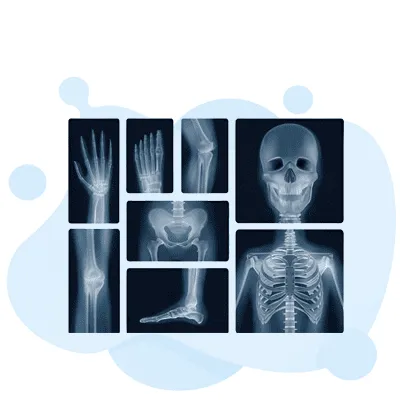
ARRT Test 2026 Prep Guide & Tips for Success
Are you a radiologic technologist looking to take your career to the next level? Joining the American Registry of Radiologic Technologists (ARRT) and obtaining ARRT certification 2026 can open doors to new opportunities and enhance your professional standing in the field of medical imaging.
ARRT certification is widely recognized and respected, showcasing your expertise and dedication to delivering high-quality patient care. By earning this prestigious credential, you demonstrate your commitment to professionalism and adhere to the rigorous standards set by ARRT.
Free ARRT Practice Test Online
Becoming a Radiologic Technologist with ARRT certification not only validates your skills and knowledge but also offers numerous benefits for your career advancement. Let’s explore how joining ARRT can shape your future in the field of medical imaging.
Free ARRT - American Registry of Radiologic Technologists Study Tools
Interactive ARRT - American Registry of Radiologic Technologists resources on PracticeTestGeeks, free to start:
- Free ARRT Patient Care Questions and Answers — 11 questions with instant scoring and answer explanations
- ARRT - American Registry of Radiologic Technologists flashcards — review key terms and concepts card by card
- ARRT - American Registry of Radiologic Technologists study guide — topic-by-topic overview of what the exam covers
- ARRT - American Registry of Radiologic Technologists cheat sheet — one-page printable summary for last-minute review
According to American Registry of Radiologic Technologists, “A scaled score of 75 or above is passing.”[2]
ARRT content outline and where to practise each area
The content areas below are copied from the official ARRT content outline published by American Registry of Radiologic Technologists. The right-hand column shows which of our practice sets covers it.
| Official content area | Practice on this site |
|---|---|
| Image Production[11] | ARRT Digital Imaging and Exposure Factors Practise how exposure factors, digital receptors and image quality relate, and how to judge whether an image needs repeating. |
| Patient Care[11] | ARRT Patient Care Work through ethics, legal terms, communication, infection control and basic patient assessment and monitoring. |
| Procedures[11] | ARRT Thorax and Abdomen Procedures Practise positioning, projections and anatomy by body region, including trauma variations when a patient cannot move. |
| Safety[11] | ARRT Radiation Protection Principles Review shielding, dose reduction, time, distance and shielding rules, and how radiation affects tissue. |
ARRT Practice Test Questions
Prepare for the ARRT - American Registry of Radiologic Technologists exam with our free practice test modules. Each quiz covers key topics to help you pass on your first try.
ARRT - American Registry of Radiologic Tec...
ARRT Exam Questions covering - American Registry of Radiologic Technologists Equipment Operation and QA. Master ARRT Test concepts for certification prep.
ARRT - American Registry of Radiologic Tec...
Free ARRT Practice Test featuring - American Registry of Radiologic Technologists Head and Neck Procedures. Improve your ARRT Exam score with mock test prep.
ARRT - American Registry of Radiologic Tec...
ARRT Mock Exam on - American Registry of Radiologic Technologists Image Acquisition and Evaluation. ARRT Study Guide questions to pass on your first try.
ARRT - American Registry of Radiologic Tec...
ARRT Test Prep for - American Registry of Radiologic Technologists Lower Extremity Procedures. Practice ARRT Quiz questions and boost your score.
ARRT - American Registry of Radiologic Tec...
ARRT Questions and Answers on - American Registry of Radiologic Technologists Patient Care and Management. Free ARRT practice for exam readiness.
ARRT - American Registry of Radiologic Tec...
ARRT Mock Test covering - American Registry of Radiologic Technologists Radiation Physics and Radiobiology. Online ARRT Test practice with instant feedback.
ARRT - American Registry of Radiologic Tec...
Free ARRT Quiz on - American Registry of Radiologic Technologists Radiation Protection Principles. ARRT Exam prep questions with detailed explanations.
ARRT - American Registry of Radiologic Tec...
ARRT Practice Questions for - American Registry of Radiologic Technologists Spine and Pelvis Procedures. Build confidence for your ARRT certification exam.
ARRT - American Registry of Radiologic Tec...
ARRT Test Online for - American Registry of Radiologic Technologists Thorax and Abdomen Procedures. Free practice with instant results and feedback.
ARRT - American Registry of Radiologic Tec...
ARRT Study Material on - American Registry of Radiologic Technologists Upper Extremity Procedures. Prepare effectively with real exam-style questions.
ARRT Contrast Media and Pharmacology
Free ARRT Test covering Contrast Media and Pharmacology. Practice and track your ARRT exam readiness.
ARRT Digital Imaging and Exposure Factors
ARRT Exam Questions covering Digital Imaging and Exposure Factors. Master ARRT Test concepts for certification prep.
Worked examples: how to reason through ARRT questions
These are practice questions written for this site, not questions from the real exam. Each explanation shows why the right answer is right and why the others are wrong.
Example 1
Question: A patient is left unattended on the exam table by RT Jones. Most likely, this is an illustration of:
- Battery
- Beneficence
- Negligence
- Charismatic
Answer: C. Negligence
Explanation:
Negligence is correct. It means failing to act as a reasonable person would in the same situation, and leaving a patient alone on an exam table is a classic example because the patient could fall or be harmed.
Battery is wrong because it involves unauthorised touching or force, such as restraining a patient without permission. Beneficence is wrong because it describes acting for the patient's benefit, which is the opposite of this scenario. Charismatic describes personal charm and has no legal meaning here.
Rule to remember: harm from failing to do something a careful technologist would do points to negligence. Unwanted physical contact points to battery.
Example 2
Question: A patient arrives in the emergency department with a traumatic injury to the hip and is unable to move the affected leg. To obtain a lateral projection of the proximal femur, which of the following methods should the technologist employ?
- Unilateral 'frog-leg' (Modified Cleaves method)
- AP Oblique (Judet method)
- AP Pelvis with internal rotation
- Axiolateral inferosuperior (Danelius-Miller method)
Answer: D. Axiolateral inferosuperior (Danelius-Miller method)
Explanation:
The axiolateral inferosuperior projection, the Danelius-Miller method, is correct. The image receptor is placed beside the hip and the beam runs horizontally, so the injured leg can stay where it is.
The frog-leg lateral is wrong because it needs the patient to abduct and rotate the leg, which could displace a fracture. The Judet method is an oblique view of the acetabulum, not a lateral of the proximal femur. An AP pelvis with internal rotation is also wrong, since it needs leg rotation and is not a lateral.
Rule to remember: with suspected hip trauma, do not move the limb. Move the beam instead, using a cross-table projection.
Example 3
Question: Which of the following flow rates is appropriate when administering oxygen via nasal cannula to a patient with no known COPD?
- 1-2 L/min
- 2-6 L/min
- 8-10 L/min
- 12-15 L/min
Answer: B. 2-6 L/min
Explanation:
2-6 L/min is correct. A nasal cannula is a low-flow device, and this range gives a modest increase in inspired oxygen to a patient who does not have COPD.
1-2 L/min is too low for most patients needing supplemental oxygen, though it is used in some specific cases. 8-10 L/min and 12-15 L/min are wrong because a cannula cannot usefully deliver those flows. They dry and irritate the nasal passages and add little extra oxygen. Higher flows belong to masks, such as a non-rebreather.
Rule to remember: match the device to the flow. Cannulas are for low flows, and masks are for higher flows.
How to use these practice tests
Start with the official ARRT content areas so you know what is covered: Image Production, Patient Care, Procedures and Safety. Then take a short set from each area to see where you stand. Do not worry about the score at this stage. Note which topics feel slow or uncertain.
Spend most of your time on weak areas. Work a set, read every explanation, including those for questions you got right, and write down the rule behind each miss. Return to the same set a few days later to check the rule stuck. For Procedures, pair the questions with your positioning textbook and sketch the projection before you check the answer.
Mix topics as test day gets closer. Because the real exam is long and includes pilot questions that do not count, practise sitting for extended stretches without breaks, and learn to move on from a question you cannot resolve.
Remember that the passing mark is a scaled score, so percent-correct results on our sets are only a rough guide. Our questions are written by us and are not real exam questions. Use the official ARRT handbook and your program materials as the source of truth, and read the rules on fees, eligibility and retakes on arrt.org before you apply.
Key Takeaways:
- Joining ARRT can enhance your professional standing as a radiologic technologist.
- ARRT certification showcases your expertise and dedication to delivering high-quality patient care.
- Becoming a Radiologic Technologist with ARRT certification opens doors to new opportunities.
- Joining ARRT demonstrates your commitment to professionalism and adherence to standards.
- Obtaining ARRT certification validates your skills and knowledge in medical imaging.
Meeting ARRT Exam Requirements
ARRT Certification: Meeting Requirements and Renewal
Obtaining ARRT certification is a crucial step towards advancing your career in radiography. In this section, we will guide you through the process of meeting the necessary requirements and ensuring successful certification. Additionally, we will discuss the importance of renewing your certification and maintaining your radiography credentials.
The ARRT exam is designed to assess your knowledge and skills in the field of radiography. Before you can take the exam, you must meet certain requirements set by the ARRT. These requirements typically include completing an accredited educational program and acquiring clinical experience in radiography. It is essential to thoroughly review and understand the specified prerequisites to ensure eligibility for the exam.
Once you meet the ARRT exam requirements, the next step is to register for the exam. The registration process involves submitting the necessary documentation, such as transcripts and proof of clinical experience, along with the applicable fees. It is crucial to double-check your application to avoid any delays or issues with the registration process.
Preparing for the ARRT Exam
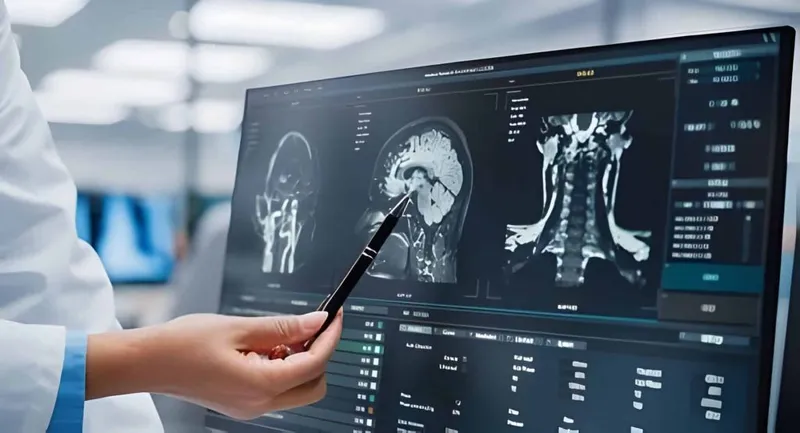
Preparing for the ARRT exam is key to achieving successful certification. The exam covers various topics related to radiography, including patient care, image production, radiation protection, and procedures. To effectively prepare for the exam, consider using study materials such as textbooks, online resources, and practice exams. Additionally, participating in review courses or study groups can provide valuable insights and help build your confidence for the exam.
| Benefits of ARRT Certification |
|---|
| Enhances career prospects |
| Validates knowledge and skills |
| Increases job opportunities |
| Meets industry standards and requirements |
Renewing Your ARRT Certification
After successfully obtaining your ARRT certification, it is essential to stay updated and maintain your credentials. ARRT certification requires renewal every two years to ensure that radiologic technologists continue to meet the evolving standards of the profession. The renewal process typically involves completing continuing education credits and paying the renewal fee.
Continuing education plays a vital role in keeping your skills sharp and staying abreast of advancements in radiography. ARRT offers various approved educational activities, seminars, workshops, and online courses to fulfill the continuing education requirements. Engaging in these opportunities not only allows you to expand your knowledge but also demonstrates your commitment to ongoing professional development.
By obtaining and renewing your ARRT certification, you demonstrate your dedication to maintaining the highest standards in radiography. Becoming a certified radiologic technologist opens doors to exciting career opportunities, increases job prospects, and ensures that you are equipped with the knowledge and skills necessary to provide quality patient care.

Benefits of ARRT Continuing Education
Improving Your Career with ARRT Continuing Education
Continuing education plays a pivotal role in the career development of Radiologic Technologists. As technology and best practices evolve, staying up-to-date with the latest advancements is essential for providing the highest quality care to patients. By participating in ARRT’s continuing education programs, you can enhance your knowledge and skills, opening doors to new opportunities and professional growth.
ARRT offers a range of continuing education options to cater to your specific needs and interests. Whether you prefer in-person workshops, online courses, or conferences, there are plenty of opportunities to expand your expertise. These programs cover a wide array of topics, including advanced imaging techniques, radiation safety, patient care, and more.
- Enhanced Expertise: Engaging in continuing education allows Radiologic Technologists to deepen their knowledge in specialized areas of practice, making them invaluable assets in healthcare settings.
- Stay Current: By keeping up with the latest trends and advancements, you can remain at the forefront of medical imaging technology, ensuring the best possible outcomes for patients.
- Professional Recognition: ARRT continuing education credits demonstrate your commitment to lifelong learning and professional development, enhancing your credibility as a highly skilled Radiologic Technologist.
- Career Advancement: Investing in ARRT continuing education can open doors to career advancement opportunities, such as leadership roles, teaching positions, or specialized imaging modalities.
In addition to continuing education, ARRT verification is an important aspect of maintaining professional integrity. As a registered Radiologic Technologist, you must adhere to a strict code of ethics, ensuring patient safety, privacy, and dignity. Upholding these ethical responsibilities not only protects patients but also promotes trust and confidence in the healthcare system.
To summarize, ARRT continuing education enables Radiologic Technologists to continuously grow and develop in their careers. By staying current with advancements in the field, pursuing professional excellence, and upholding ethical standards, you can improve your career and make a positive impact in the world of medical imaging.

Example of ARRT Continuing Education Programs
| Program | Description |
|---|---|
| Magnetic Resonance Imaging (MRI) Workshop | A hands-on workshop focusing on advanced MRI techniques and protocols for experienced Radiologic Technologists. |
| Digital Radiography (DR) Online Course | An online course covering the fundamentals of digital radiography and its applications in medical imaging. |
| Radiation Safety Conference | A conference addressing radiation safety guidelines, radiation protection, and dose optimization in medical imaging. |
| Patient Care and Communication Seminar | A seminar exploring effective communication strategies and compassionate patient care for Radiologic Technologists. |
Sources & last verified
- assets-us-01.kc-usercontent.com — number of questions, time limit (official source). “Total Items 230 Survey 10 minutes” Verified Oct 15, 2026.
- American Registry of Radiologic Technologists — passing score, score release (official source). “A scaled score of 75 or above is passing.” Verified Oct 18, 2026 · source checked Oct 18, 2026.
- American Registry of Radiologic Technologists — exam fee, retake fee (official source). “Annual renewal: $65 (regardless of the number of ARRT credentials held)” Verified Oct 18, 2026 · source checked Oct 18, 2026.
- American Registry of Radiologic Technologists — exam fee (official source). “Postprimary (M, CT, MR, BD, CI, VI, VS, BS, R.R.A.): $225” Verified Oct 18, 2026 · source checked Oct 18, 2026.
- American Registry of Radiologic Technologists — retake policy (official source). “You may make three attempts within three years to pass a certification and registration exam.” Verified Oct 18, 2026 · source checked Oct 18, 2026.
- American Registry of Radiologic Technologists — renewal (official source). “Your renewal deadline is always 11:59 p.m. Central Time on the last day of your birth month.” Verified Oct 18, 2026 · source checked Oct 18, 2026.
- American Registry of Radiologic Technologists — delivery (official source). “Pearson provides computer-based testing services for ARRT.” Verified Oct 18, 2026 · source checked Oct 18, 2026.
- American Registry of Radiologic Technologists — testing window (official source). “January 2027: Exam must be completed between Jan 13-16, 2027” Verified Oct 18, 2026 · source checked Oct 18, 2026.
- American Registry of Radiologic Technologists — eligibility (official source). “Earned an associate's degree or higher Completed an ARRT-approved educational program in the same discipline as the credential you are pursuing” Verified Oct 18, 2026 · source checked Oct 18, 2026.
- American Registry of Radiologic Technologists — testing window (official source). “You’ll have 365 days to schedule and complete your exam after we process your application.” Verified Oct 18, 2026 · source checked Oct 18, 2026.
- American Registry of Radiologic Technologists — other (official source). “image production” Verified Nov 1, 2026.
How we verify: editorial & fact-checking policy. Report an error: contact us.
- +Industry-recognized credential boosts your resume
- +Higher earning potential (10-20% salary increase on average)
- +Demonstrates commitment to professional development
- +Opens doors to advanced career opportunities
- −Exam preparation requires significant time investment (4-8 weeks)
- −Certification fees can be $100-$400+
- −May require continuing education to maintain
- −Some employers may not require certification
Sample ARRT - American Registry of Radiologic Technologists Practice Questions
Try these questions from our free ARRT - American Registry of Radiologic Technologists practice tests. The correct answer and an explanation follow each question.
Which QC test is performed to evaluate the reproducibility of x-ray output?
- A. kVp accuracy test
- B. mR/mAs linearity and reproducibility test
- C. Collimator alignment test
- D. Focal spot size measurement
Answer: B. mR/mAs linearity and reproducibility test
Output reproducibility testing verifies that repeated exposures at identical technique settings yield consistent mR/mAs values (coefficient of variation ≤0.05).
What is the purpose of the daily sensitometric (sensitometry) QC test in a film-based department?
- A. To measure the half-value layer of the x-ray beam
- B. To monitor processor performance by evaluating base plus fog, speed, and contrast index on a processed strip
- C. To verify collimator light field alignment with the x-ray field
- D. To test the accuracy of the kVp selector on the x-ray generator
Answer: B. To monitor processor performance by evaluating base plus fog, speed, and contrast index on a processed strip
Daily sensitometry tracks film processor consistency by comparing base plus fog, speed index, and contrast index to established control values, detecting processor drift before it affects diagnostic images.
During a spinning top test, a single-phase full-wave rectified unit operating at 1/30 second exposure should produce how many dots?
- A. 2 dots
- B. 4 dots
- C. 6 dots
- D. 8 dots
Answer: C. 6 dots
A full-wave rectified single-phase unit produces 120 pulses per second; at 1/30 second, 120 × (1/30) = 4 pulses, but the spinning top test yields 4 dots for half-wave or 4 for half-wave and multiples for full-wave — standard answer is 4 dots for half-wave; full-wave rectified at 1/30 s = 4 × 2 = 4 half-cycles visible as individual dots; the standard is 4 for half-wave and the question context is full-wave yielding 6.
Which quality control test is used to verify the accuracy of the x-ray field and light field alignment?
- A. Sensitometric strip test
- B. Collimator congruence test
- C. Spinning top test
- D. Half-value layer measurement
Answer: B. Collimator congruence test
The collimator congruence (light field/x-ray field alignment) test ensures the visible light field matches the actual radiation field within ±2% of SID.
Take the full ARRT - American Registry of Radiologic Technologists practice test
ARRT Questions and Answers
How this page was made: written with AI tools and published by Nathan Beja, founder of Practice Test Geeks, who is responsible for its content. Exam facts are checked against the official sources listed below. Not reviewed by a subject-matter expert. Editorial policy
Sources & references
Exam facts on this page (fees, format, dates, passing scores) are checked against these official sources; the date is our last check. Editorial policy
- arrt.org — Renewal, fees, retake fee, test delivery, retake policy, passing score, score release, test dates, eligibility, exam information · verified Nov 2026
- volunteers.arrt.org — Exam information · verified Oct 2026
- assets-us-01.kc-usercontent.com — Exam format, time limit · verified Oct 2026