
ARRT License Renewal: Complete Guide to Requirements, CE Credits & Deadlines
Master ARRT license renewal requirements, CE credits, deadlines & costs. ✅ Step-by-step guide for radiologic technologists renewing certification in 2026 October.

ARRT license renewal is one of the most important professional responsibilities a radiologic technologist faces every two years. The American Registry of Radiologic Technologists requires all credential holders to complete a structured continuing education and ethics process to maintain their certification in good standing. Missing a renewal deadline can result in lapsed credentials, which may prevent you from practicing legally in your state and cost you additional fees to reinstate. Understanding the full renewal process — from CE credit requirements to ethics obligations — helps you plan ahead and avoid last-minute scrambles that put your career at risk.
The renewal cycle runs on a two-year biennium calendar, and your specific deadline depends on when you first earned your credential. Most technologists renew between January and December of their renewal year, with ARRT sending reminder notices roughly six months before the deadline. However, relying solely on those reminders is a risky strategy. Many experienced technologists build CE completion into their annual routine, spreading the required 24 continuing education credits across the full two-year period rather than rushing to accumulate them in the final weeks before the deadline arrives.
Continuing education requirements form the backbone of the renewal process. During each biennium, registered technologists must complete 24 Category A continuing education credits. These credits must come from ARRT-approved providers and must relate to your primary discipline or other approved content areas. Category A credits are structured learning activities — formal courses, online modules, webinars, and hands-on workshops — that carry a defined learning outcome and assessment component. Not all CE activity qualifies, so it is critical to verify that any course you take is specifically designated as ARRT-approved Category A content before investing your time and money.
Ethics requirements add another layer to the renewal process. Every technologist must complete a mandatory ethics continuing education requirement during each renewal period. For most credential holders, this means completing an ARRT-approved ethics CE module as part of their overall 24-credit requirement. The ethics component reinforces professional standards, patient rights, HIPAA compliance, and the ethical frameworks that guide radiologic practice. ARRT takes ethics violations seriously, and a documented breach can result in credential suspension or revocation regardless of whether your CE credits are otherwise complete and current.
Costs associated with renewal are straightforward but worth budgeting for in advance. ARRT charges a renewal fee that varies slightly depending on the number of primary credentials you hold and whether you are renewing on time or reinstating a lapsed credential. As of the most recent fee schedule, the standard biennial renewal fee is $40 per credential for most primary disciplines. Technologists who let their credential lapse face a higher reinstatement fee plus a potential requirement to demonstrate additional competency, making timely renewal the far more cost-effective path.
For technologists preparing for renewal, using arrt license renewal study resources can help reinforce the clinical knowledge that underpins many CE modules. Staying sharp on core content areas — radiation physics, image acquisition, patient care, and equipment operation — ensures that your CE learning activities translate into genuine competency improvements rather than checkbox exercises. The most successful technologists treat renewal not as a bureaucratic hurdle but as a meaningful opportunity to update their skills and stay current with evolving imaging technology and patient care standards.
Whether you are approaching your first renewal after initial certification or your tenth renewal as a seasoned professional, the fundamentals remain the same: track your CE credits throughout the biennium, complete your ethics requirement early, verify all credits with approved providers, and submit your renewal application before the deadline with accurate documentation. This guide breaks down every step of that process with specific numbers, timelines, and practical strategies to help you renew your ARRT credential confidently and on time.
ARRT License Renewal by the Numbers
Key Facts at a Glance
| Item | Value | Details |
|---|---|---|
| Category A CE Credits Required | 24 | Per 2-year biennium |
| Renewal Cycle Length | 2 Years | Biennium period |
| Standard Renewal Fee | $40 | Per primary credential |
| Ethics CE Credits Required | 1+ | Included in 24-credit total |

ARRT Renewal Requirements at a Glance
All 24 required continuing education credits must be Category A, meaning they come from ARRT-approved providers with defined learning outcomes and a formal assessment component. Category B self-study credits do not count toward the renewal total.
Every technologist must complete an ethics CE module during each biennium. This requirement is embedded within the 24-credit total and must come from an ARRT-approved ethics provider covering topics like patient rights, HIPAA, and professional standards.
Your renewal deadline falls at the end of your specific biennium period, which is determined by your initial certification date. ARRT sends reminder notices, but technologists are personally responsible for tracking and meeting their deadline.
Renewal applications are submitted through My ARRT, the online portal at arrt.org. You will report your completed CE credits, confirm your ethics completion, pay the renewal fee, and receive immediate confirmation of your updated credential status.
Many states require ARRT renewal as a condition of state radiologic technology licensure. Check your state radiation control board's requirements, as some states have additional CE requirements or shorter renewal cycles beyond the federal ARRT standard.
Understanding how Category A continuing education credits work is essential for every radiologic technologist navigating the ARRT license renewal process. Category A credits are the only type ARRT accepts for satisfying the 24-credit biennial requirement. These are structured, provider-based learning activities that include a defined set of learning objectives, instructional content, and a post-activity assessment or evaluation. The assessment component is what distinguishes Category A from self-directed reading or informal learning. Without a formal assessment, an activity typically cannot qualify as Category A, regardless of how relevant its content may be to your practice area.
ARRT-approved CE providers span a wide range of organizations and formats. Major professional societies such as the American Society of Radiologic Technologists (ASRT), the Society of Nuclear Medicine and Molecular Imaging (SNMMI), and the Society of Diagnostic Medical Sonography (SDMS) all offer extensive Category A CE libraries. Hospital-based education departments, accredited colleges and universities, and online CE platforms also offer approved content. Before enrolling in any course, verify the provider's ARRT approval status either through the provider's documentation or by searching the ARRT-recognized CE provider database on the ARRT website.
CE credit formats have expanded significantly in recent years, giving technologists more flexibility than ever to complete their requirements on their own schedule. Online self-paced modules remain the most popular format because they allow technologists to learn during off-hours without disrupting their work schedule. Webinars and live virtual conferences offer real-time interaction and are increasingly common following the expansion of remote learning options in healthcare education. In-person workshops, hospital grand rounds, and professional conference sessions continue to be valid and valuable options, particularly for hands-on procedural topics that benefit from practical demonstration.
The 24 Category A credits do not all need to come from a single provider or a single content area. ARRT allows technologists to combine credits from multiple approved sources across various relevant topics. However, your CE content should relate meaningfully to radiologic technology practice.
Credits earned in completely unrelated fields — even if offered by an approved provider — may be questioned during an audit. Sticking to topics like radiation safety, imaging protocols, patient care, contrast media management, quality assurance, and anatomy keeps your CE portfolio clearly relevant and defensible if ARRT ever selects your renewal for a compliance review.
ARRT conducts random compliance audits of CE documentation. If you are selected for an audit, you will be required to provide proof of completion for every CE credit you reported. This documentation typically includes a certificate of completion, a transcript from the provider, or official attendance records from a conference or workshop. Keeping organized records of all your CE activities — ideally in a dedicated folder or digital storage system — makes audit compliance straightforward. Do not assume that ARRT can independently verify your credits with providers; the documentation burden falls on you as the credential holder.
Discipline-specific requirements add nuance to the CE credit landscape. Technologists who hold multiple ARRT credentials — for example, both Radiography (R) and Computed Tomography (CT) — renew all credentials on a single biennium cycle and satisfy the 24-credit requirement collectively rather than separately for each credential. However, if you hold a postprimary credential in a specialty area, some of your CE content should demonstrably relate to that specialty. ARRT provides detailed content specifications for each discipline, and reviewing those specifications when planning your CE activities helps ensure your credits align with professional expectations and any future audit requirements.
Staying organized throughout the biennium rather than rushing CE completion in the final months is the single most effective strategy for stress-free renewal. Setting a goal of completing six Category A credits per quarter breaks the full 24-credit requirement into manageable chunks and eliminates the risk of scrambling for last-minute courses that may be unavailable or overpriced due to high demand near common renewal deadlines.
Many technologists find it helpful to use ASRT's CE tracker or a simple spreadsheet to log each completed activity, the provider, the number of credits, and the completion date. This habit takes minutes per activity and saves hours of reconstruction work if an audit ever arises.
ARRT Renewal Timelines, Bienniums & Deadlines
Your ARRT biennium is a fixed two-year period that begins the January 1st following your initial certification or last renewal. For example, if you certified in March 2024, your first biennium runs January 1, 2025 through December 31, 2026, and your renewal deadline is December 31, 2026. ARRT sends reminder notices approximately six months before the deadline, typically via the email address on file in your My ARRT account. Keeping your contact information current in the portal ensures you receive these critical reminders without delay.
CE credits earned before the start of your current biennium cannot be applied to the current renewal period, even if they are recent. Only activities completed within your active biennium dates count toward the 24-credit requirement. This rule catches many technologists off guard, particularly those who completed CE courses in December of the year before their biennium began. Planning your CE schedule around your specific biennium start and end dates — not just the calendar year — is essential for accurate credit tracking and on-time renewal.

Pros and Cons of ARRT's Biennial Renewal System
- +Ensures all registered technologists maintain current clinical knowledge through structured CE requirements
- +24 credits over two years is achievable at a modest pace of one credit per month without significant disruption
- +Online CE options give busy technologists maximum scheduling flexibility to complete requirements on their own time
- +Ethics CE requirement reinforces professional standards and patient protection across the profession
- +Single renewal cycle covers all credentials simultaneously, reducing administrative burden for multi-credentialed technologists
- +My ARRT online portal makes credit tracking, application submission, and fee payment fast and paperless
- −CE costs can accumulate significantly over a biennium, particularly for specialty courses from professional societies
- −Random compliance audits require technologists to retain detailed documentation for every credit claimed
- −Credits earned outside the biennium window are non-transferable, penalizing technologists who complete CE too early
- −State licensure may impose additional CE requirements beyond ARRT's 24-credit minimum, creating a dual compliance burden
- −Lapsed credentials result in immediate loss of registered status and require a separate reinstatement process with higher fees
- −Technologists in rural areas may have limited access to in-person CE events, making online options the default rather than a supplement
ARRT License Renewal Checklist: Complete These 10 Steps
- ✓Confirm your biennium start and end dates by logging into your My ARRT account at arrt.org.
- ✓Review ARRT's approved CE provider list to identify courses that align with your discipline and specialty.
- ✓Complete your mandatory ethics CE requirement early in the biennium to remove it from your checklist.
- ✓Accumulate all 24 Category A CE credits from ARRT-recognized providers before your renewal deadline.
- ✓Save certificates of completion and provider transcripts for every CE activity in a dedicated folder or cloud storage.
- ✓Check your state's radiation control board for any additional CE requirements beyond ARRT's 24-credit minimum.
- ✓Log into My ARRT and verify that all completed CE activities are recorded accurately in the portal.
- ✓Review your personal and contact information in My ARRT to ensure renewal reminders reach your current email address.
- ✓Submit your renewal application through the My ARRT portal once all CE credits and ethics requirements are complete.
- ✓Pay the $40-per-credential renewal fee online and save your payment confirmation and renewed credential certificate.
Start Your Ethics CE in Month One — Not Month 23
The single most common cause of last-minute renewal panic is technologists discovering their ethics CE requirement is incomplete in the final weeks of the biennium. Ethics modules from ARRT-approved providers fill up quickly near common renewal deadlines. Completing your ethics CE in the first quarter of your biennium eliminates this risk entirely and frees the rest of your CE planning to focus on clinical content that directly benefits your daily practice.
The financial dimension of ARRT license renewal deserves careful planning, especially for technologists who hold multiple credentials or who are navigating CE costs alongside other professional development expenses. The base renewal fee is $40 per primary credential, billed through the My ARRT portal at the time of submission. A technologist holding a single Radiography credential pays $40 for the renewal cycle. A technologist holding Radiography, Computed Tomography, and Mammography credentials pays $120 total — $40 for each of the three credentials renewed simultaneously on the shared biennium calendar.
CE course costs represent a far larger expense than the renewal fee itself for most technologists. Category A CE courses from professional societies typically range from $15 to $75 per credit, depending on the provider, the format, and the content area. A full biennium of 24 credits completed through paid providers could cost anywhere from $360 to $1,800 or more.
However, many technologists significantly reduce this cost by taking advantage of employer-sponsored CE programs, hospital grand rounds that offer free Category A credits, and ASRT member benefits that provide discounted or bundled CE access. Membership in ASRT, which costs approximately $120 to $200 annually, often pays for itself many times over through CE savings alone.
Lapsed credential reinstatement fees add a significant financial penalty for technologists who miss their renewal deadline. ARRT charges a reinstatement fee that is substantially higher than the standard renewal fee — historically ranging from $50 to over $100 per credential on top of the standard renewal amount.
Beyond the fees, a lapsed credential may require the technologist to submit additional documentation, complete extra CE to demonstrate current competency, and notify their employer of the lapse. In states where ARRT registration is tied to state licensure, a lapsed credential can trigger a separate state-level compliance process with its own fees and requirements.
Technologists experiencing financial hardship have limited formal options for fee waivers through ARRT, as the organization does not publicize a hardship program for renewal fees. However, many employers will cover or reimburse ARRT renewal fees and CE costs as part of professional development benefits. It is worth reviewing your employee benefits package and speaking with your HR department about available reimbursement options before assuming these costs must come out of pocket. Some hospital systems and imaging centers budget specifically for ARRT renewal costs as part of annual staff credentialing expenses.
Planning a CE budget at the start of each biennium prevents financial surprises near the renewal deadline. A simple approach is to divide your target CE spending by the number of months in the biennium — 24 months — and set aside that amount monthly. For example, if you plan to spend $600 on CE over the biennium, setting aside $25 per month in a dedicated savings account or expense category ensures the funds are available when courses are purchased. This approach is especially useful for technologists in private practice or PRN positions who do not have employer-sponsored CE support.
Free CE opportunities are more numerous than many technologists realize and can meaningfully reduce the out-of-pocket cost of renewal. ARRT itself periodically offers free CE webinars on topics relevant to its credentialing mission. Professional society conferences often include free CE sessions for members or attendees.
Hospital education departments regularly offer grand rounds, in-service training, and case review sessions that qualify for Category A credit. Searching specifically for free ARRT-approved CE at the start of your biennium — rather than waiting until you need credits urgently — gives you access to the widest selection of no-cost options before they fill up or expire.
For technologists navigating the cost landscape while also preparing for specialty credential exams, budgeting for both CE and exam preparation simultaneously requires deliberate planning. Study resources, practice test subscriptions, and exam registration fees can add up quickly alongside renewal costs. Prioritizing CE activities that both satisfy renewal requirements and reinforce the content areas covered on upcoming specialty exams maximizes the return on your professional development investment, ensuring that every dollar and hour spent advances your credentials on multiple fronts at the same time.
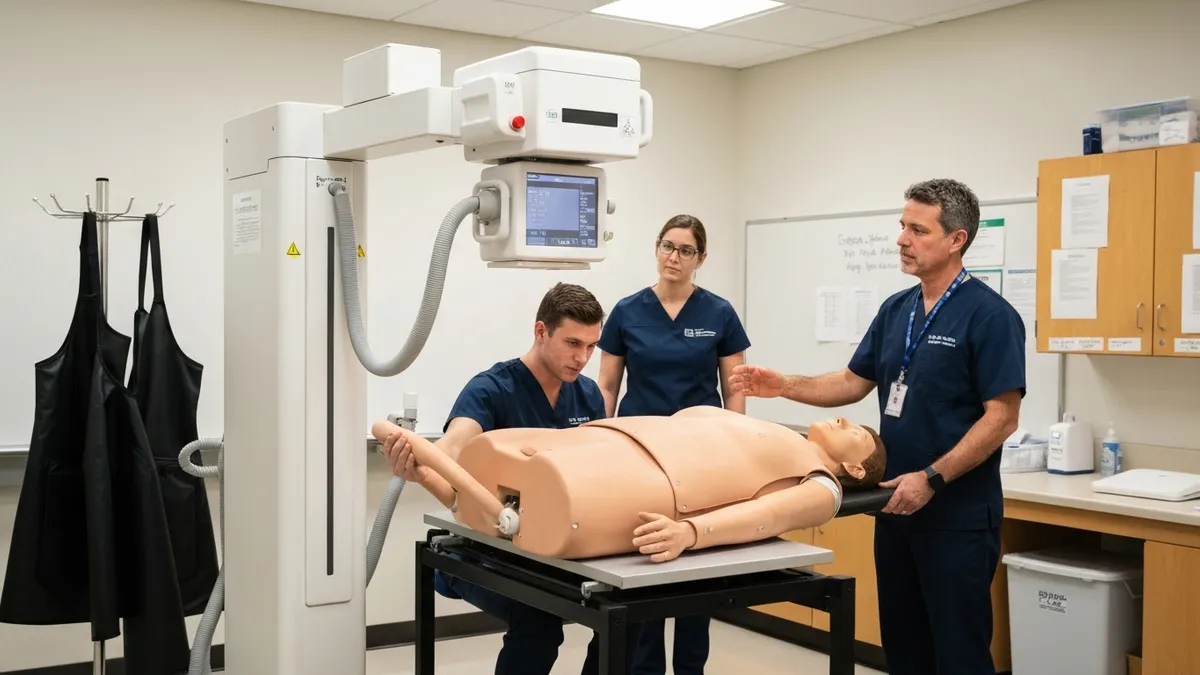
ARRT renewal deadlines fall on December 31 of your biennium year, and CE providers experience dramatically higher demand in October, November, and December as technologists scramble to complete requirements. Popular courses sell out, server load slows online platforms, and last-minute technical issues can prevent timely completion. If your biennium ends December 31, target completing all 24 credits by October 31 at the latest to ensure a smooth, stress-free submission with a two-month buffer for unexpected issues.
Staying compliant with ARRT license renewal requirements over a long career requires building systematic habits that make the process routine rather than stressful. The technologists who consistently renew on time without drama are not necessarily the most motivated or the most organized by nature — they are the ones who have established simple systems that track their progress automatically and flag potential issues before they become crises. The good news is that building these systems requires only modest upfront effort and pays dividends across every renewal cycle that follows.
The most fundamental habit is tracking CE credits in real time rather than reconstructing them at renewal time. Every time you complete a CE activity, record it immediately: the provider name, course title, number of Category A credits earned, completion date, and certificate storage location.
A simple spreadsheet with these five columns takes seconds to update and gives you an accurate running total of your progress toward the 24-credit requirement. When renewal time arrives, you simply verify the total and submit — no detective work required. The ASRT also offers an online CE tracker for members that integrates with many approved providers and simplifies documentation management considerably.
Diversifying your CE sources across the biennium is another hallmark of experienced, low-stress renewal. Technologists who rely on a single provider or format risk being disrupted if that provider changes its catalog, loses ARRT approval, or raises prices significantly. Mixing online self-paced modules from major CE platforms with employer-sponsored hospital education programs, professional conference sessions, and society webinars creates a resilient CE portfolio that is not vulnerable to any single point of failure. This diversity also tends to produce better clinical learning outcomes, as different formats engage different aspects of professional knowledge and practice.
Maintaining an updated My ARRT profile is a small but important compliance habit. ARRT sends renewal reminders, audit notifications, and policy update communications to the email address on file. A technologist who changes employers, moves to a new address, or switches email providers without updating My ARRT risks missing critical communications about their credential status.
Taking five minutes once per year to verify that all contact information in the portal is current prevents this entirely avoidable problem. While you are in the portal, also verify that your CE credits are accurately logged and that your credential status shows as active and in good standing.
Understanding the intersection of ARRT renewal and state licensure is essential for technologists who have moved between states or who practice in multiple states. Unlike ARRT certification, which is a national credential governed by a single organization with uniform standards, state radiologic technology licensure varies significantly across the 50 states.
Some states have no licensure requirement and simply use ARRT certification as the de facto standard. Others have their own CE requirements, licensure fees, and renewal deadlines that are entirely separate from ARRT's biennium calendar. Practicing in a state with independent licensure requirements means tracking two separate compliance cycles — a complexity that catches many mobile technologists off guard.
For technologists who are also pursuing specialty credentials or postprimary certifications, the renewal period is an ideal time to align CE activities with upcoming exam preparation. Many Category A CE courses directly cover content areas tested on ARRT specialty exams in Computed Tomography, Magnetic Resonance Imaging, Mammography, and other disciplines. Choosing CE that serves double duty — satisfying renewal requirements while building exam-relevant knowledge — is an efficient use of professional development time. Check the content specifications for your target specialty credential on the ARRT website and compare them against available CE catalogs to identify the highest-overlap courses.
Finally, connecting with professional communities of radiologic technologists can significantly ease the renewal experience. Online forums, LinkedIn groups, and professional society communities are full of experienced technologists sharing CE recommendations, alerting peers to free opportunities, and offering practical advice about navigating renewal complications.
Many working technologists have encountered and solved every renewal challenge imaginable — from audit requests to state licensure conflicts to employer reimbursement negotiations — and their experience is freely available in these communities. Investing a small amount of time in professional community engagement pays back in practical knowledge and peer support that makes every future renewal cycle smoother and more manageable than the last.
Practical preparation strategies make the difference between technologists who approach each ARRT renewal with confidence and those who face recurring stress and uncertainty. The most effective strategy begins not at renewal time but at the very start of the biennium, when the full 24-credit window is open and the widest variety of CE options are available at competitive prices. Treating the first month of each new biennium as your CE planning month — identifying target courses, budgeting costs, and scheduling initial completions — sets a productive cadence for the entire two-year period.
Building CE into your professional development calendar alongside other career goals is more sustainable than treating renewal as a separate administrative chore. Technologists who attend one major professional conference per year — such as the ASRT Annual Symposium or specialty society meetings — often earn six to eight Category A credits in a single event while also benefiting from networking opportunities, exposure to emerging technologies, and updates on evolving clinical standards. Combined with a few online modules to fill the remainder of the 24-credit requirement, a single annual conference can anchor an efficient, high-quality CE strategy for the whole biennium.
Specialty CE selection matters beyond just accumulating credits. ARRT's content specifications describe the knowledge domains that define competency in each discipline, and the best CE activities address the areas where current practice is evolving most rapidly. In radiography, topics like digital image optimization, dose management, and pediatric patient care considerations are areas of active development.
In CT, iterative reconstruction techniques and cardiac imaging protocols represent growing content areas. Choosing CE that covers genuinely evolving clinical practice — rather than well-established fundamentals you mastered years ago — produces the greatest professional benefit and keeps your skill set current with the imaging technology your patients rely on.
Documentation habits developed early in the biennium save enormous time during renewal submission. Rather than searching through email archives or provider portals for completion certificates months after the fact, create a standardized file-naming convention for CE certificates and store them in a dedicated cloud folder from the moment you receive them. A naming format like YYYY-MM-DD_ProviderName_CourseTitle_Credits makes files instantly findable and sortable. This system requires no special software and works equally well for a single credential holder or a technologist managing CE across multiple disciplines and specialty certifications simultaneously.
Peer accountability is an underused but highly effective strategy for consistent CE completion. Finding one or two colleagues on a similar biennium calendar and agreeing to check in quarterly on CE progress creates a light social accountability structure that motivates consistent action.
Colleagues can also share CE recommendations, split the cost of multi-seat webinar licenses, and alert each other to free CE opportunities from employers or professional societies. This informal system costs nothing and produces substantially better CE completion rates than solo self-management alone, particularly during busy clinical periods when CE can easily slip to the back of the priority list.
Understanding ARRT's compliance review process removes the anxiety that many technologists feel about audits. ARRT's random audit process is routine and not an indication of suspected fraud or wrongdoing. If selected, you will receive a formal notification requesting documentation for your reported CE credits within a specific timeframe — typically 30 to 60 days. Responding promptly with organized documentation resolves audits quickly and without penalty. Technologists who cannot produce adequate documentation may face credential suspension, which is why real-time record-keeping throughout the biennium is so much safer than reconstructing records after the fact from fragmented email trails and memory.
As you complete your renewal and look ahead to the next biennium, taking a few minutes to evaluate your CE experience pays forward into future planning. Which courses delivered the most relevant clinical content? Which formats best fit your learning style and schedule? Which providers offered the best combination of quality and cost-effectiveness?
Answering these questions at the end of each biennium builds a personalized CE strategy that improves with each renewal cycle. Over a 30-year career, a technologist who consistently chooses high-quality, strategically aligned CE accumulates a depth of current clinical knowledge that directly benefits patients, supports career advancement, and makes every renewal a genuine professional milestone rather than a perfunctory administrative event.
Sample ARRT - American Registry of Radiologic Technologists Practice Questions
Try these questions from our free ARRT - American Registry of Radiologic Technologists practice tests. The correct answer and an explanation follow each question.
Which of the following is an example of informed consent?
- A. A patient signing a general hospital admission form
- B. A patient verbally agreeing to a chest X-ray because 'the doctor said so'
- C. A patient acknowledging risks, benefits, and alternatives after a clear explanation before agreeing to a procedure
- D. A radiologic technologist explaining the procedure only after positioning the patient
Answer: C. A patient acknowledging risks, benefits, and alternatives after a clear explanation before agreeing to a procedure
True informed consent requires that the patient understands the procedure, its risks and benefits, and alternatives, then voluntarily agrees before the procedure begins.
Which of the following describes the detective quantum efficiency (DQE) of an imaging system?
- A. The percentage of x-ray photons absorbed by the detector compared to those incident upon it
- B. A measure of how efficiently a detector converts absorbed x-ray signal into useful image information relative to an ideal detector
- C. The ratio of scatter to primary radiation reaching the detector
- D. The maximum spatial frequency that a detector can resolve
Answer: B. A measure of how efficiently a detector converts absorbed x-ray signal into useful image information relative to an ideal detector
DQE expresses how well a detector uses the incident x-ray signal; it combines quantum detection efficiency and noise performance, with a perfect detector having DQE = 1.0.
On a correctly positioned lateral forearm radiograph, the distal radius and ulna should appear:
- A. Completely separated
- B. Superimposed at the distal radioulnar joint
- C. Parallel with a 1 cm gap
- D. Crossed
Answer: B. Superimposed at the distal radioulnar joint
A true lateral forearm shows slight superimposition of the distal radius and ulna at the distal radioulnar joint.
When positioning a combative patient for imaging, the radiologic technologist should FIRST:
- A. Apply physical restraints immediately
- B. Administer sedation without physician order
- C. Communicate calmly and assess the cause of agitation
- D. Proceed quickly to minimize exposure time
Answer: C. Communicate calmly and assess the cause of agitation
De-escalation through calm communication and identifying the cause of agitation is the first priority before considering physical or chemical restraints.
Take the full ARRT - American Registry of Radiologic Technologists practice test
ARRT Questions and Answers

ARRT Practice Test PDF (Free Printable 2026)

ARRT Mock Exam 2026: Free Practice Tests for Radiologic Technologists

ARRT Radiography Exam 2026: Complete Practice Test & Study Guide

ARRT Passing Score: What You Need to Know to Pass the Registry Exam

How Many CE Credits Do I Need for ARRT? Complete Continuing Education Guide
About the Author

Medical Laboratory Scientist & Clinical Certification Expert
Johns Hopkins UniversityDr. Sandra Kim holds a PhD in Clinical Laboratory Science from Johns Hopkins University and is certified as a Medical Technologist (MT) and Medical Laboratory Scientist (MLS) through ASCP. With 16 years of clinical laboratory experience spanning hematology, microbiology, and molecular diagnostics, she prepares candidates for ASCP board exams, MLT, MLS, and specialist certification tests.