
ARRT Mammography Clinical Requirements: Complete Guide to Clinical Experience and Documentation
Master the ARRT mammography clinical experience documentation form ✅ Learn requirements, competencies, and how to complete your clinical hours.
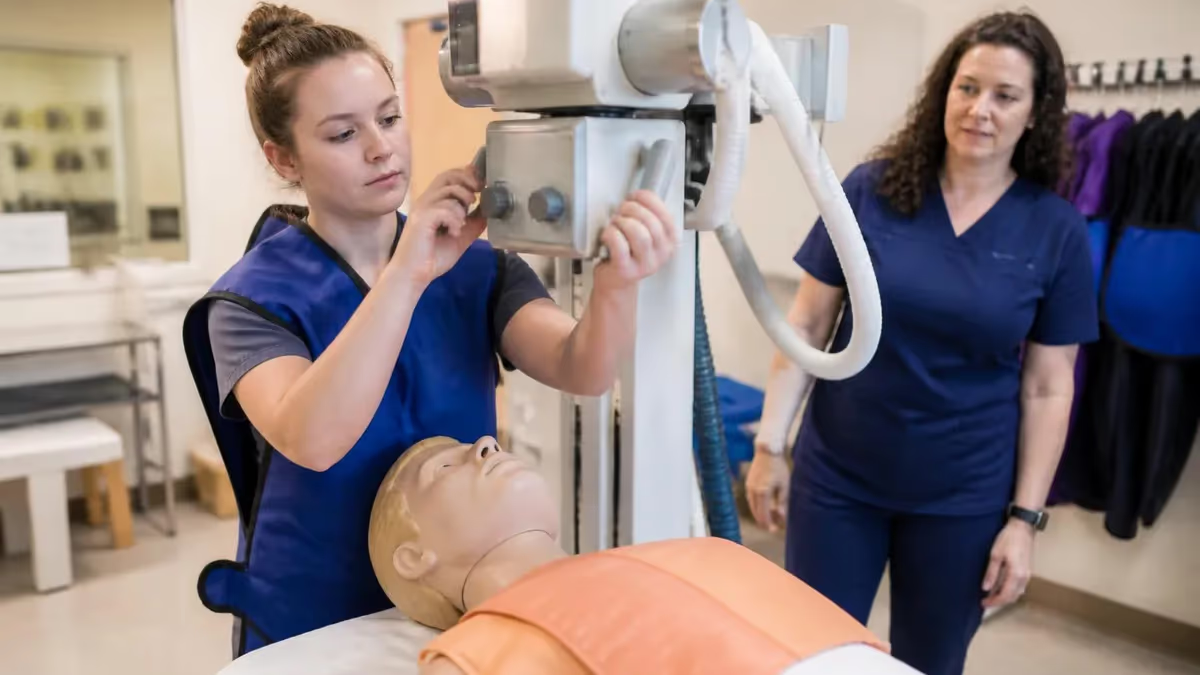
The ARRT mammography clinical experience documentation form is one of the most important documents you will complete on your path to earning the Mammography (M) post-primary credential. This form serves as official proof that you have performed the required mammographic procedures under appropriate supervision during your clinical training period.
Without a properly completed and submitted documentation form, your application for the ARRT mammography examination will not be accepted, no matter how well-prepared you are academically. Understanding exactly what this form requires — and how to fill it out correctly — is essential before you even begin scheduling procedures in the clinic.
ARRT's Mammography post-primary certification is designed for registered radiologic technologists who want to specialize in breast imaging. Unlike entry-level ARRT credentials, the mammography pathway requires that you first hold a primary ARRT certification — typically in Radiography (R) — before you can apply. Once that prerequisite is in place, you must document a defined set of clinical competencies across multiple mammographic procedure categories. These competencies span routine screening examinations, diagnostic views, special projections, and quality control tasks, all of which must be completed within a supervised clinical environment that meets ARRT's facility standards.
Many candidates underestimate the complexity of the clinical documentation process. The ARRT mammography clinical experience documentation form is not a simple checklist you fill out on your last day of training. It is an ongoing record that must reflect real patient encounters, verified by a qualified supervisor at your clinical site. Each procedure entry must indicate whether you performed the exam independently or under direct supervision, and your supervising technologist or radiologist must attest to your competency. Errors, omissions, or signatures from unqualified supervisors are common reasons applications get delayed or rejected.
This guide walks you through every aspect of the ARRT mammography clinical requirements — from the total number of procedures you need, to the specific competency categories, to tips for documenting your hours accurately and efficiently. Whether you are just starting your clinical rotation or are close to submitting your application, this resource will help you avoid costly mistakes and stay on track. You will also find guidance on understanding ARRT's eligibility window, how to handle transfers between clinical sites, and what to do if your documentation is flagged for review.
It is equally important to understand that meeting the arrt mammography clinical requirements is not just about hitting a number. ARRT expects that your clinical experience reflects genuine competence, not merely task completion. Supervisors who sign off on procedures are attesting that you demonstrated proper positioning, appropriate compression, accurate exposure technique, and sound patient communication skills. If a supervising technologist has concerns about your technique, it is far better to address them during your clinical rotation than to have your competency questioned after submission.
Throughout this article, we provide concrete examples, real numbers from ARRT's published requirements, and practical strategies drawn from the experiences of technologists who have successfully navigated the mammography credentialing process. We also address frequently asked questions about documentation deadlines, resubmission policies, and what happens if you fall short of the required procedure count. By the end of this guide, you will have a clear, step-by-step understanding of everything the ARRT mammography clinical experience documentation process involves — giving you the confidence to complete your application correctly the first time.
ARRT updates its requirements periodically, so always verify current standards directly on the ARRT website before submitting your application. The figures and requirements cited in this article reflect ARRT's published policies as of the most recent update cycle, but clinical requirement counts and documentation procedures can change with little advance notice. Bookmark the ARRT candidate handbook for your specific credential pathway and check it regularly throughout your training period to ensure you are always working toward the current standard.
ARRT Mammography Clinical Requirements by the Numbers
Key Facts at a Glance
| Item | Value | Details |
|---|---|---|
| Required Competency Exams | 25+ | Minimum procedure count for documentation |
| Primary ARRT Credential Required | 1 | Must hold R or equivalent before applying |
| Typical Clinical Rotation Length | 6 Months | Average time to complete all competencies |
| Supervisor Verification Required | 100% | Every procedure must be attested by a qualified supervisor |
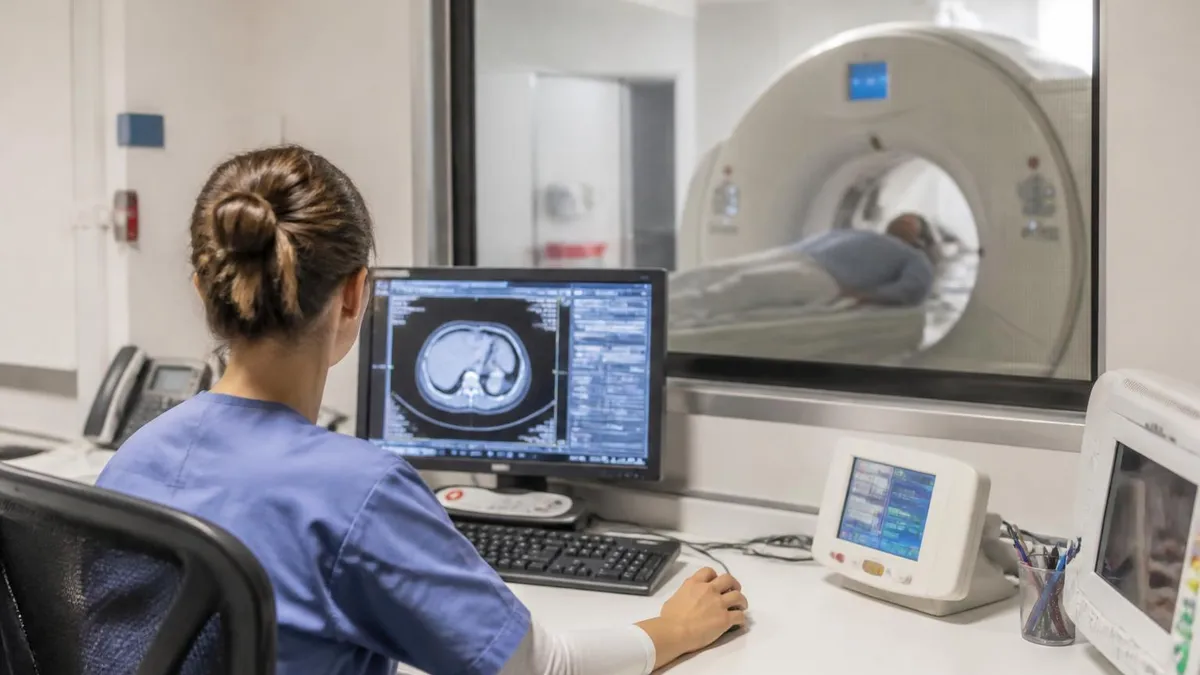
Core ARRT Mammography Clinical Procedure Categories
Candidates must document bilateral screening exams including standard craniocaudal (CC) and mediolateral oblique (MLO) projections. These routine views form the foundation of mammographic practice and are the highest-volume procedure in any mammography department.
Diagnostic imaging requires additional projections beyond routine screening. You must demonstrate competency in spot compression, magnification views, and targeted imaging of specific areas of clinical concern identified by the radiologist's recall order.
Special projections include exaggerated craniocaudal (XCCL), cleavage views, rolled views, and imaging of patients with implants. These techniques address challenging clinical scenarios and must be documented across diverse patient presentations.
QC tasks include phantom imaging, detector calibration checks, compression force testing, and ACR phantom scoring. ARRT requires that candidates demonstrate hands-on QC competency, not just observational experience with these critical safety procedures.
Documentation must reflect competency in patient positioning, education, and communication across diverse populations including patients with mobility limitations, postmastectomy patients, and patients requiring accommodations for anxiety or claustrophobia.
Filling out the ARRT mammography clinical experience documentation form correctly requires attention to detail at every step. The form is available as a PDF download from the ARRT website, and it must be printed, completed in ink or typed, and submitted along with your examination application.
The form is divided into sections that correspond to the procedure categories outlined in ARRT's Mammography Content Specifications — each section contains a list of specific procedures, and for each procedure you must record the number of times you performed it, the date range during which the procedures were completed, and the name and credentials of your supervising technologist or radiologist.
One of the most common sources of confusion is understanding the difference between procedures that require demonstrated competency versus those that only require observation or participation. ARRT's mammography documentation framework distinguishes between procedures you perform independently under indirect supervision versus those that require direct hands-on supervision from a credentialed mammographer.
For most routine screening views, you may be permitted to perform the procedure with your supervisor available but not physically present at the machine, provided your facility's policies allow this. For more complex procedures — particularly those involving implants or patients with unusual anatomical presentations — direct supervision may be required throughout your clinical training period until competency is formally demonstrated.
The documentation form also requires that your clinical supervisor verify each competency block with their signature, credentials, and ARRT registration number. This is a critical requirement that many candidates overlook until they are preparing to submit. Your supervisor must hold an active ARRT credential in Mammography or an equivalent qualification recognized by ARRT.
A supervisor who holds only a general Radiography credential, without a mammography-specific credential or demonstrated mammography expertise, may not be an acceptable verifying supervisor — and using an unqualified supervisor can invalidate your entire clinical documentation. Verify your supervisor's credentials at the outset of your rotation, not after you have accumulated months of documented procedures.
Candidates who rotate through multiple clinical sites face additional documentation challenges. If you complete procedures at more than one facility during your training period, you will need a separate supervisor signature block and facility verification for each site.
The procedures from all sites are combined to meet the total required count, but each site's contribution must be clearly documented and separately verified. Keep a copy of your documentation from each site as you go — relying on your memory or on clinical site records alone is risky, because sites sometimes lose paperwork or have staff turnover that makes follow-up verification difficult.
Timing is another critical factor in mammography clinical documentation. ARRT requires that your clinical experience be completed within a specific eligibility window — typically the 12 months preceding your application submission, though the exact window may vary based on when you enrolled in your clinical program.
Procedures completed outside this window generally cannot be counted toward your documentation requirements, even if they were performed in a supervised mammography environment. This means that if you had to pause your clinical rotation for personal or professional reasons, you may need to plan carefully to ensure enough time remains in your eligibility window to complete all required competencies before your application deadline.
Digital record-keeping can be a valuable complement to the paper-based ARRT documentation form. Many experienced candidates maintain a running spreadsheet or mobile app log of every procedure they perform, recording the date, patient type, specific projection, and supervising technologist for each encounter.
This backup record is invaluable if any discrepancy arises between your documentation and the clinical site's records, or if a supervisor leaves the facility before signing your form. While ARRT accepts only the official paper form as your formal submission, having detailed personal records gives you the information you need to reconstruct or verify your documented procedures if questions arise during the application review process.
Finally, remember that submitting an incomplete or inaccurate documentation form is not merely an administrative inconvenience — it constitutes a potential ethics violation under ARRT's Rules of Ethics. The ARRT Standards of Ethics require that all information submitted in connection with certification applications be accurate and truthful.
Candidates who submit falsified or inaccurate clinical documentation face consequences ranging from application denial to permanent revocation of all ARRT credentials. The integrity of your documentation matters as much as the completeness of it, so never estimate procedure counts, backfill dates, or allow a supervisor to sign for procedures they did not actually witness or supervise.
ARRT Mammography Competency Categories: What You Need to Know
Screening mammography competencies form the largest single block of the ARRT mammography clinical documentation requirement. Candidates must demonstrate proficiency in bilateral two-view screening exams on a diverse patient population, including patients of varying body habitus, breast density, and mobility levels. The standard CC and MLO projections must be performed with proper compression, appropriate exposure technique, and acceptable positioning as defined by ACR quality standards. Supervisors assess image quality, patient communication, and workflow efficiency as part of the competency evaluation.
Beyond standard bilateral screening, ARRT's documentation requirements also encompass baseline screening documentation and annual repeat imaging scenarios. Candidates should seek exposure to patients across the full range of breast tissue types described in the ACR BI-RADS density classification system — from almost entirely fatty (Category A) through extremely dense (Category D). Documenting procedures across diverse tissue types demonstrates that your positioning and technique skills are adaptable rather than calibrated only for average or straightforward cases.

Mammography Post-Primary Credential: Is It Worth the Clinical Investment?
- +Significantly expands career opportunities in breast imaging centers and women's health clinics
- +Mammography technologists typically earn 10-15% more than general radiographers in comparable markets
- +Post-primary credential demonstrates specialized expertise that sets you apart in competitive job markets
- +Clinical training builds hands-on competency that improves your patient care skills across all imaging modalities
- +Credential opens doors to senior technologist, lead mammographer, and QC coordinator positions
- +Growing demand for mammography services as screening guidelines expand to younger age groups
- −Clinical documentation process is time-intensive and requires careful record-keeping from day one
- −Must hold an existing primary ARRT credential before beginning the mammography application process
- −Finding a qualified clinical supervisor and approved training site can be challenging in rural or underserved areas
- −Clinical rotation may require scheduling adjustments that conflict with current employment obligations
- −Documentation errors or unqualified supervisors can invalidate months of clinical work requiring repetition
- −Continuing education requirements add ongoing time and cost commitments after initial credentialing
ARRT Mammography Clinical Documentation Submission Checklist
- ✓Verify you hold an active primary ARRT credential (Radiography or equivalent) before beginning your clinical rotation.
- ✓Download the current ARRT mammography clinical experience documentation form directly from the ARRT website.
- ✓Confirm your clinical training site is an approved facility that meets ARRT's requirements for supervised clinical education.
- ✓Verify that each of your clinical supervisors holds a valid ARRT Mammography (M) credential or equivalent qualification.
- ✓Maintain a personal log of every procedure performed, including date, projection type, patient category, and supervising technologist.
- ✓Complete the minimum required number of competency procedures across all required categories before submitting your application.
- ✓Obtain supervisor signatures, credentials, and ARRT registration numbers for each procedure category before supervisors leave the facility.
- ✓Document procedures from multiple clinical sites separately, with individual supervisor verification for each facility.
- ✓Confirm that all documented procedures fall within ARRT's required eligibility window for your application cycle.
- ✓Review completed documentation form for accuracy, completeness, and legibility before attaching to your examination application.
Start Your Documentation on Day One — Not Your Last Week
The single most common reason mammography candidates experience application delays is waiting until the end of their clinical rotation to organize their documentation. Supervisors change jobs, facilities close, and memories fade. Record every procedure the same day you perform it, obtain supervisor verification weekly rather than monthly, and keep signed copies stored securely off-site from the clinical facility.
One of the most significant challenges candidates face during the mammography clinical experience documentation process is navigating situations where their documentation is incomplete, inaccurate, or flagged for review by ARRT's credentialing staff. Understanding the most common errors — and how to avoid them — can save you weeks of delay and significant stress during the final stages of your application process.
The first category of common errors involves procedure count discrepancies, where the numbers recorded on the documentation form do not match the records available at the clinical site. This most often happens when candidates fill out their forms from memory at the end of a long rotation rather than maintaining contemporaneous records throughout the training period.
The second major category of errors involves supervisor qualification issues. ARRT's requirements for who may serve as a verifying supervisor are specific and non-negotiable. If you worked primarily with a supervising technologist who holds a general Radiography credential but not a Mammography post-primary credential, your documentation may be flagged even if that individual was competent and experienced in mammography practice.
Always verify supervisor credentials at the beginning of your rotation by asking to see their current ARRT certification card or by looking up their credentials on the ARRT online verification tool. Do not assume that working in a mammography department automatically makes someone a qualified ARRT verifying supervisor.
Facility approval is a third area where candidates sometimes encounter problems. ARRT requires that clinical training occur at a facility that meets specific standards for equipment, caseload volume, and supervisory staffing. Not every mammography facility where technologists work is an approved ARRT clinical training site, and not every facility that is approved remains in good standing throughout the year.
Before committing to a clinical rotation at a particular site, ask the facility's education coordinator to confirm their current ARRT approval status in writing. This documentation protects you if questions arise later about the facility's eligibility during the period of your training.
Some candidates encounter a scenario where they have completed most of their required procedures but fall short in one specific category — for example, they have met the overall count but have not documented enough implant-displacement procedures or adequate QC tasks. In these situations, it is tempting to try to count borderline cases or to interpret the requirements more loosely than ARRT intends.
Resist this temptation. Instead, contact ARRT's credentialing staff directly to clarify whether specific procedures you have performed qualify for the category in question. ARRT staff are available to answer pre-submission questions, and getting an authoritative answer before you submit is far better than having your application rejected after submission.
Another common issue involves the timing of supervisor signatures relative to the documentation submission deadline. If you complete your rotation in October but do not submit your application until the following March, you need to ensure your supervisor's signature and credentials are still valid and current at the time of submission.
ARRT verifies supervisor credentials as part of the application review process, so a supervisor whose ARRT registration has lapsed between the time they signed your form and the time you submitted your application can create complications. Where possible, obtain final supervisor signatures as close to your submission date as practical, rather than months in advance.
Candidates who transfer between clinical sites mid-rotation face a particularly complex documentation challenge. If your primary clinical site closes, loses its ARRT approval, or if you relocate to a different market, you may need to start a new documentation block with a new supervisor at a new facility.
The procedures you completed at the original site are not automatically invalidated, but you will need to obtain documentation retroactively from the original site and combine it with documentation from the new site in a way that clearly presents the total combined count. ARRT's credentialing staff can advise on how to handle this situation for your specific circumstances.
Finally, do not overlook the importance of maintaining copies of all submitted documentation for your own records. Once you submit your application, ARRT retains the original documentation. If any question arises about your application — either during the initial review or in connection with a future audit or ethics inquiry — having complete personal copies of everything you submitted protects you.
Store digital scans of all signed forms in a secure cloud location and keep physical copies in a safe place for at least five years after you receive your credential. This level of record-keeping may seem excessive, but it reflects the professional standard that ARRT's Rules of Ethics expect from all credentialed radiologic technologists.

ARRT enforces strict eligibility windows for clinical experience documentation. Procedures performed outside the defined window — typically the 12 months immediately preceding your application submission — cannot be counted toward your required competency total, regardless of the supervised clinical setting in which they were performed. If you pause your clinical rotation for any reason, recalculate your eligibility window immediately and contact ARRT if you have concerns about whether your timeline remains viable.
Once your ARRT mammography clinical experience documentation form is complete and your application has been submitted, the focus shifts from documentation compliance to examination preparation. The ARRT Mammography examination is a computer-adaptive test administered at Pearson VUE testing centers, consisting of scored and unscored items drawn from the Mammography Content Specifications.
The exam covers six major content areas: patient care, positioning and anatomy, equipment operation and quality control, image production, procedures, and radiation protection. Your clinical experience provides the practical foundation for most of these content areas, but passing the exam requires additional structured study beyond what you encountered during your rotation.
Most candidates spend between eight and sixteen weeks in focused exam preparation after completing their clinical requirements. The most effective study strategies combine content review using ARRT's published content specifications, practice testing using realistic multiple-choice question sets, and targeted review of weak areas identified through practice test performance. Content areas that tend to be underrepresented in typical clinical rotations — such as radiation physics, radiobiology, and the quantitative aspects of quality control — require additional dedicated study time even for candidates who performed well during their clinical training.
Practice testing is particularly valuable for the ARRT Mammography examination because the test uses a computer-adaptive format in which the difficulty of subsequent questions adjusts based on your performance on earlier items. This format rewards consistent, accurate performance across all content areas rather than mastery of a few high-frequency topics.
Candidates who study only the material they feel comfortable with based on their clinical experience often underperform on content areas they overlooked, dragging down their overall scaled score below the passing threshold. A balanced study plan that covers all six content areas systematically is more reliable than a narrow approach focused on your clinical strengths.
Reviewing ARRT's published mammography content specifications is the single most important study resource available to candidates. The content specifications document tells you exactly what topics can appear on the exam and the approximate weight of each major content area. Aligning your study plan with these specifications ensures that you do not spend disproportionate time on low-weight topics while neglecting high-weight areas. ARRT updates its content specifications periodically, so download the current version from the ARRT website at the start of your study period rather than relying on older study materials that may reflect outdated content distributions.
For candidates who want structured review beyond the ARRT content specifications, several textbooks and online platforms offer mammography-specific content aligned with the ARRT exam blueprint. Topics such as film-screen mammography principles, digital detector technology, tomosynthesis imaging, and MQSA regulatory requirements are all testable areas that benefit from dedicated textbook review. Supplement textbook study with quality control case studies and positioning scenario questions — these applied content types appear frequently on the ARRT exam and require a different type of recall than straightforward factual questions about anatomy or physics principles.
Time management during the examination itself is an area where many candidates benefit from deliberate practice during their preparation period. ARRT allocates a generous time allowance for the mammography exam, but candidates who are not accustomed to the pacing required for a computer-adaptive test sometimes misallocate their time — spending too long on early items and rushing through later questions.
Practice tests that simulate the timing and format of the actual exam help you calibrate your pace and develop the discipline to flag and move past items you find particularly challenging rather than allowing them to derail your overall time management.
Finally, self-care in the days before your exam date matters more than most candidates expect. ARRT examination performance is influenced not just by content knowledge but by cognitive function, attention, and stress management on exam day. Schedule your exam appointment for a time of day when you are typically alert and focused, plan your route to the testing center in advance, and arrive early enough to complete check-in without rushing.
Bring acceptable identification as required by Pearson VUE, and follow all testing center security protocols carefully. A calm, prepared arrival sets the psychological tone for the examination experience and allows you to apply the knowledge and clinical skills you have worked so hard to develop.
Building a practical study schedule that integrates seamlessly with your work and personal obligations is one of the most underappreciated aspects of ARRT mammography exam preparation. Most candidates who fail their first attempt do not fail because they lacked the clinical experience or intelligence to pass — they fail because they did not manage their study time systematically enough to achieve consistent coverage across all tested content areas.
Creating a written study calendar, blocked by week and topic, dramatically improves the odds that you will cover everything before your exam date rather than discovering knowledge gaps in the final days before you sit for the test.
A realistic eight-week study plan for the ARRT Mammography exam might look like this: spend the first two weeks reviewing patient care and positioning content, with an emphasis on difficult positioning scenarios and special populations. Weeks three and four cover equipment operation, quality control procedures, and radiation protection — the content areas most directly tied to MQSA compliance and the technical aspects of mammography practice.
Weeks five and six focus on image production, including digital detector principles, exposure technique, artifact identification, and image evaluation criteria. Week seven is dedicated to procedures, including biopsy guidance, stereotactic localization, and emerging technologies like digital breast tomosynthesis and contrast-enhanced mammography. Week eight is reserved exclusively for full-length practice testing, review of flagged questions, and final refinement of any persistent weak areas.
Practice question banks are an essential component of this study schedule, not an afterthought. Research consistently shows that active recall through practice testing is more effective for long-term retention than passive re-reading of textbook content. Aim to answer at least 20 to 30 practice questions per study session, and review every question — both those you answered correctly and those you missed. Understanding why a correct answer is right is just as important as understanding why the wrong answers are wrong, because the reasoning behind correct answers reveals the clinical and technical principles that the exam is testing.
Group study can be a valuable supplement to individual preparation, particularly for candidates who benefit from discussing clinical scenarios and troubleshooting positioning problems with peers. If you have colleagues who are also preparing for the ARRT Mammography exam, consider forming a weekly study group focused on case discussion and mutual quizzing. Teaching a topic to a peer is one of the most powerful ways to identify gaps in your own understanding — if you cannot explain a concept clearly, you probably do not understand it well enough to apply it correctly on a timed examination.
Mentorship from an experienced mammography technologist who has already earned the post-primary credential is another resource that many candidates overlook. A credentialed mentor can share insights about the practical application of exam content, flag topics that she found challenging during her own preparation, and provide encouragement during the inevitable periods of self-doubt that accompany high-stakes professional examinations. Many state radiologic technology societies and ARRT-affiliated professional organizations offer formal mentorship programs — check with your professional association to see what resources are available in your market.
Do not neglect the psychological dimension of examination preparation. Test anxiety is real and can significantly impair performance even among well-prepared candidates. If you have a history of anxiety during high-stakes testing, address this proactively rather than hoping it will not be an issue on exam day.
Techniques such as progressive muscle relaxation, mindfulness meditation, and cognitive reframing of test-related thoughts have strong empirical support for reducing examination anxiety. Some candidates also benefit from a formal practice run at the Pearson VUE testing center — arriving a few days before your exam to walk through the check-in process and familiarize yourself with the physical environment can reduce situational anxiety on the actual test day.
Earning the ARRT Mammography post-primary credential is a meaningful professional achievement that reflects genuine clinical competence and commitment to specialization. The process is rigorous — from completing your clinical documentation to passing the examination — but it is designed to ensure that every credentialed mammography technologist has the skills and knowledge required to provide safe, high-quality breast imaging services.
Approach each stage of the process with the same care and professionalism you bring to your clinical work, and you will be well-positioned to join the ranks of ARRT-credentialed mammography technologists who serve as the backbone of breast health programs across the country.
Sample ARRT - American Registry of Radiologic Technologists Practice Questions
Try these questions from our free ARRT - American Registry of Radiologic Technologists practice tests. The correct answer and an explanation follow each question.
A grid with a ratio of 16:1 is most appropriate for which clinical scenario?
- A. Pediatric chest at low kVp
- B. Large body part requiring high kVp technique
- C. Extremity imaging without scatter
- D. Fluoroscopic spot imaging
Answer: B. Large body part requiring high kVp technique
High-ratio grids (12:1 or 16:1) are used for large anatomical areas where significant scatter is produced, especially at higher kVp settings.
Barium sulfate is contraindicated when which clinical condition is suspected?
- A. Hiatal hernia
- B. Bowel perforation
- C. Peptic ulcer disease
- D. Constipation
Answer: B. Bowel perforation
Barium sulfate is contraindicated with suspected bowel perforation because leakage into the peritoneum causes severe peritonitis.
A patient is scheduled for a sialography procedure to evaluate the submandibular gland. Which of the following is a primary clinical indication for this examination?
- A. To assess for sinusitis.
- B. To diagnose a fracture of the mandible.
- C. To rule out temporomandibular joint (TMJ) dysfunction.
- D. To investigate suspected calculi or strictures in the salivary duct.
Answer: D. To investigate suspected calculi or strictures in the salivary duct.
Sialography is a specialized contrast-enhanced radiographic examination of the salivary glands and their ducts. Its primary indications include the evaluation of suspected obstructions, such as calculi (stones) or strictures (narrowing), as well as fistulas and other ductal pathologies.
A patient undergoing an IVU procedure begins to experience urticaria, wheezing, and throat tightness. What is the most appropriate initial action for the radiologic technologist to take?
- A. Administer oxygen and call for a nurse.
- B. Stop the infusion and call for immediate medical assistance.
- C. Administer a dose of epinephrine from the emergency cart.
- D. Reassure the patient that these are common side effects.
Answer: B. Stop the infusion and call for immediate medical assistance.
The patient is exhibiting signs of a moderate to severe anaphylactic reaction to the contrast media. The first and most critical step is to stop the infusion of the contrast agent to prevent the reaction from worsening. Immediately after, the technologist must call for a physician or emergency response team.
Take the full ARRT - American Registry of Radiologic Technologists practice test
ARRT Questions and Answers

ARRT Membership: Complete Guide to Joining, Renewing, and Maximizing Your Registration

ARRT Practice Test PDF (Free Printable 2026)

How to Apply for ARRT Certification: Complete Step-by-Step Guide

ARRT Passing Score: What You Need to Know to Pass the Registry Exam

How to Report CE Credits to ARRT: Complete Step-by-Step Guide
About the Author

Medical Laboratory Scientist & Clinical Certification Expert
Johns Hopkins UniversityDr. Sandra Kim holds a PhD in Clinical Laboratory Science from Johns Hopkins University and is certified as a Medical Technologist (MT) and Medical Laboratory Scientist (MLS) through ASCP. With 16 years of clinical laboratory experience spanning hematology, microbiology, and molecular diagnostics, she prepares candidates for ASCP board exams, MLT, MLS, and specialist certification tests.